
This Illinois Museum Should Be On Your Weekend Radar This June
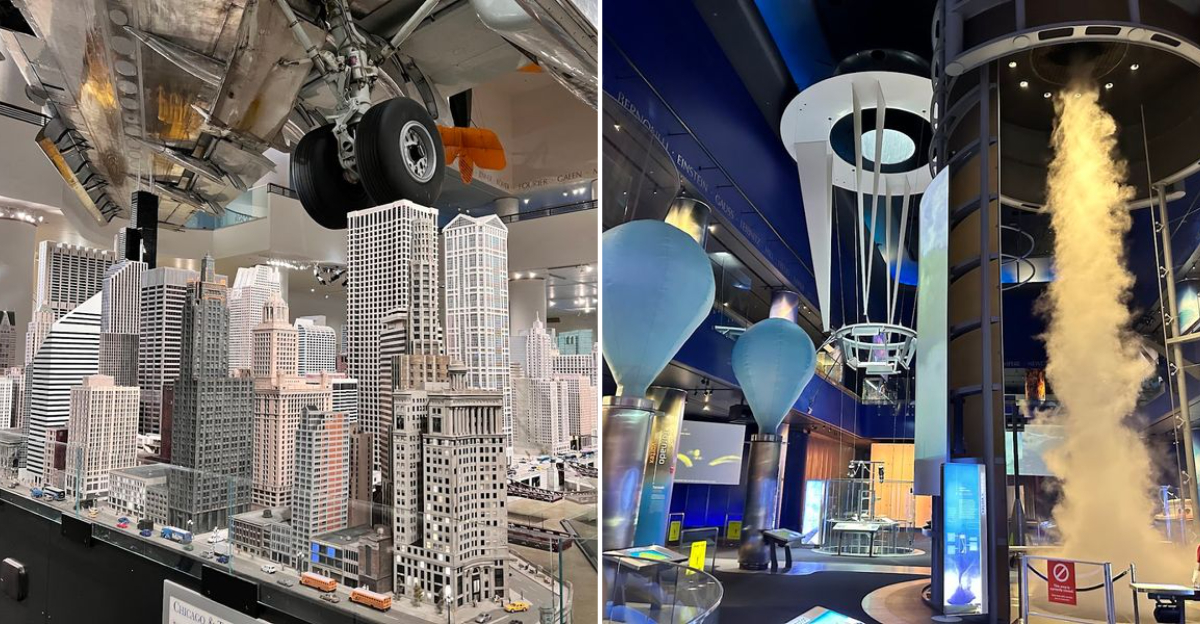
Illinois has plenty going on in June, but there is one lakefront spot in Chicago that makes a surprisingly perfect weekend plan. It is the kind of place where you walk in thinking you will spend an hour or two, then suddenly realize half the day is gone.
Inside, you can see a captured wartime submarine, stand near a swirling indoor tornado, look at a space capsule that once circled Earth, explore a coal mine beneath the building, and get lost in a tiny train world full of incredible detail.
Families love it, but so do solo visitors and anyone who still likes learning something new just for fun.
Summer in Chicago usually means patios, parks, and festivals, but this South Side classic proves an indoor adventure can be just as memorable.
A Palace With A Past

Before you even step inside, the building itself tells you something important. The Griffin Museum of Science and Industry at 5700 S DuSable Lake Shore Dr, Chicago, IL 60637 is housed in a stunning neoclassical structure that was originally built for the 1893 World’s Columbian Exposition.
It served as the Palace of Fine Arts during that legendary fair. After the exposition ended, the building sat largely unused for decades before being transformed into the science and industry museum that opened in 1933.
That is nearly a century of stories layered into one address.
The architecture alone makes for incredible photos, with massive columns, a grand dome, and a lakeside setting that feels almost cinematic. Many visitors spend time outside before they even buy their tickets, soaking in the scale of the place.
Knowing what this building has witnessed over more than 130 years makes every room inside feel that much more meaningful.
Face-To-Face With A U-Boat
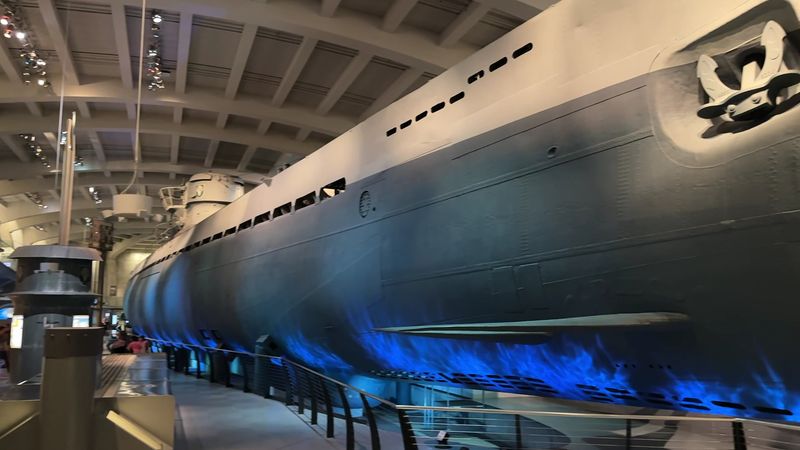
Few museum exhibits anywhere in the world can match the sheer physical impact of coming face to face with a real German U-boat from World War II. The U-505 submarine is a centerpiece of the Griffin Museum of Science and Industry, and it earns that title completely.
Captured in 1944 by the United States Navy in the Atlantic Ocean, the U-505 is one of only a handful of surviving German submarines in existence. The museum brought it to Chicago and created an entire underground hall just to house it.
You can actually book a guided tour to go inside the submarine, which gives you a vivid sense of just how tight and demanding life was for the crew.
The exhibit surrounding the U-505 includes artifacts, personal items, and historical context that make the whole experience feel grounded and real. Book your inside tour in advance because spots fill up quickly, especially on busy June weekends.
Science Storms
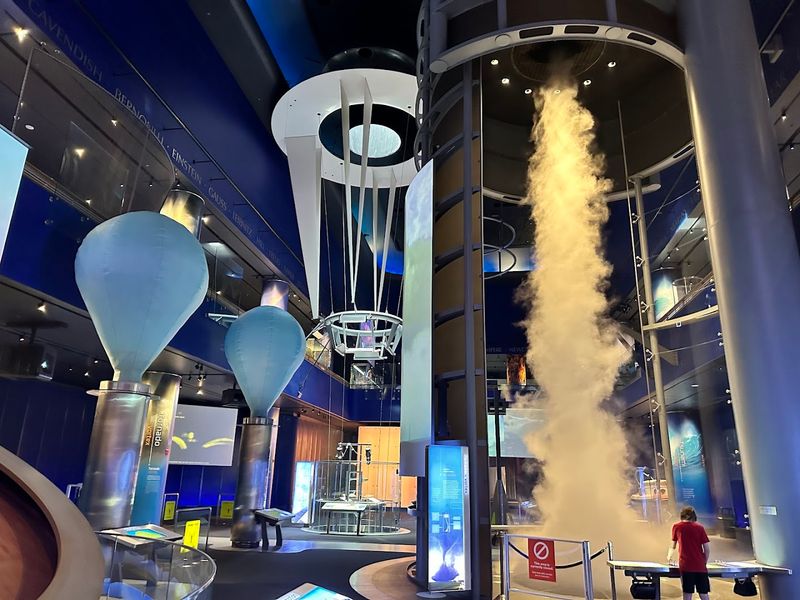
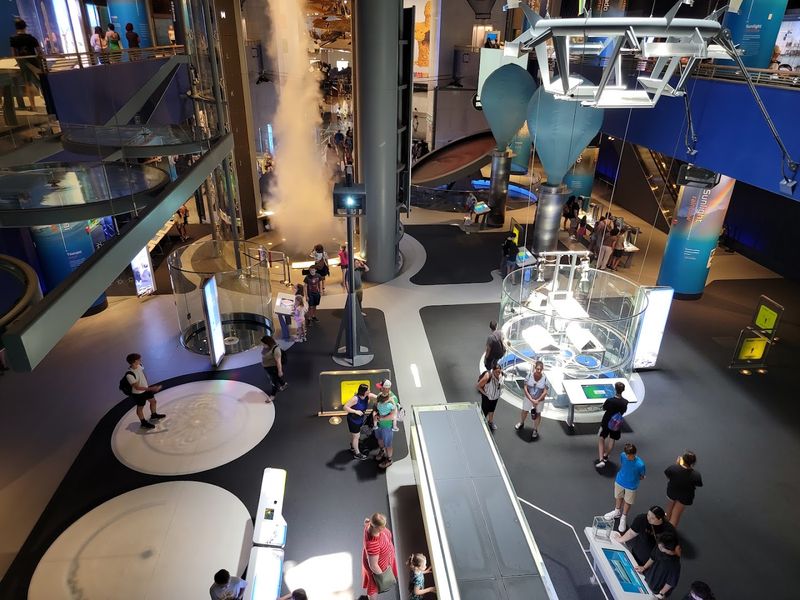
Walking into the Science Storms exhibit feels like stepping into a place where the laws of nature have been put on full display for your personal inspection.
This massive two-story gallery explores the physics behind some of the most dramatic natural phenomena on Earth, including tornadoes, avalanches, lightning, fire, and tsunamis.
The centerpiece is a 40-foot simulated tornado that churns and spins right in front of you. Nearby, a Tesla coil fires off bolts of electricity with a crack so loud it makes first-time visitors jump back.
The exhibit is designed to be interactive, so you are not just watching science happen but actually engaging with it through hands-on stations.
For kids who are drawn to big, dramatic experiences, this gallery is genuinely hard to pull them away from. For adults, it is a reminder that science is not just textbook material.
It is alive, loud, and surprisingly beautiful when you see it up close.
The Henry Crown Space Center
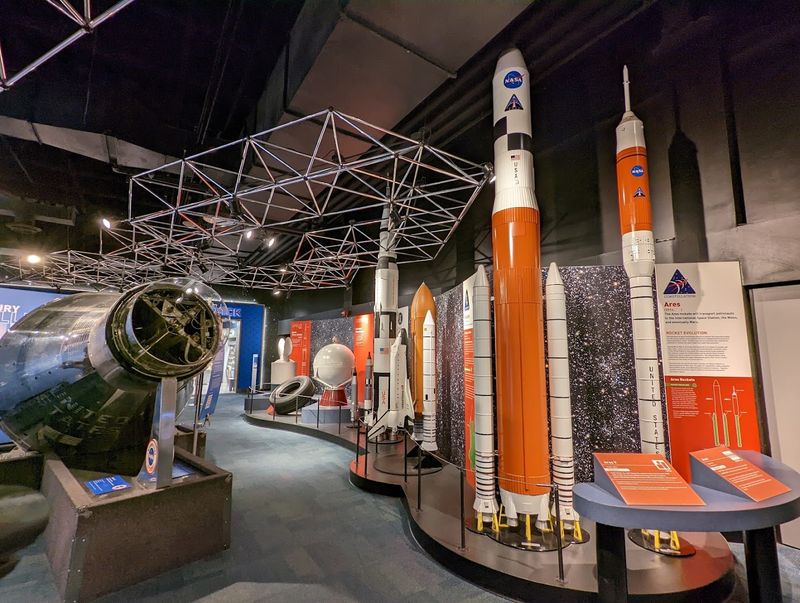
Space exploration has a way of making you feel small and inspired at the same time, and the Henry Crown Space Center at the Griffin Museum of Science and Industry captures that feeling well.
The gallery takes you through the history of human spaceflight with artifacts, spacecraft, and interactive displays that span from early aviation to modern missions.
One of the most striking pieces on display is the Aurora 7 space capsule, which carried astronaut Scott Carpenter into orbit in 1962. Seeing the actual capsule up close, with its scorch marks and compact interior, makes the bravery of early astronauts feel very real and very personal.
The exhibit also covers aviation history with a genuine appreciation for how far human flight has come in a relatively short time.
Whether you are a lifelong space enthusiast or someone who has never given much thought to orbit, this gallery has a way of sparking curiosity that stays with you long after you leave.
The Model Train Layout
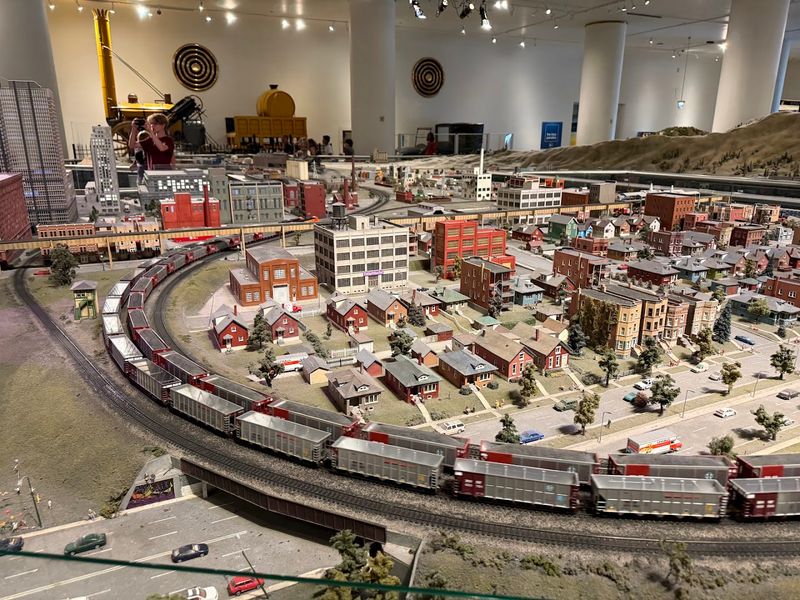
There is something wonderfully nostalgic about a great model train display, and the one inside the Griffin Museum of Science and Industry is genuinely one of the best in the country.
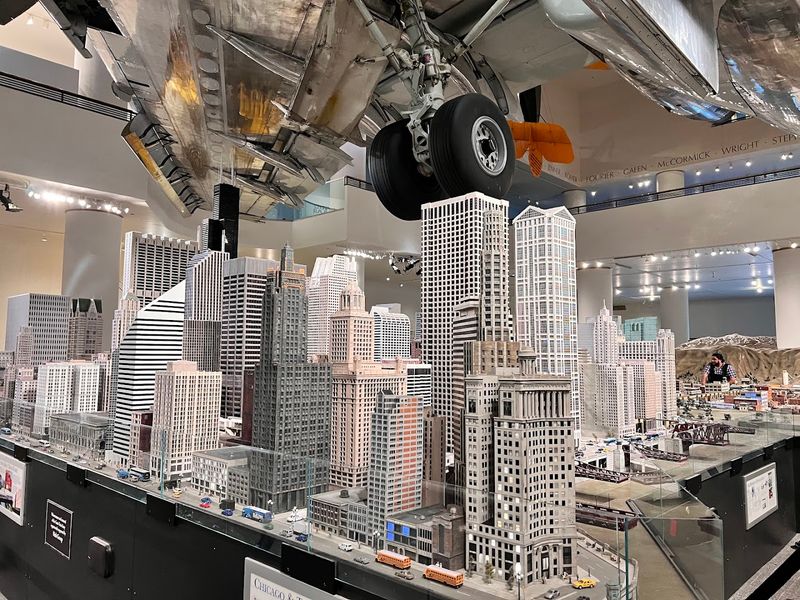
The exhibit, The Great Train Story, follows a detailed model railroad journey from Chicago to Seattle, with miniature city scenes, landscapes, landmarks, and trains running throughout the display.
The layout is enormous and incredibly detailed, with tiny figures, working lights, and moving parts that reward careful observation. Kids press their faces against the glass to follow the trains, while adults find themselves pointing out buildings and streets they recognize from the real city outside.
The exhibit highlights modern American railroading through a detailed cross-country model layout, adding an educational layer to what could easily just be a visual treat. If you only have time for a handful of exhibits during your June visit, this one earns a spot on the shortlist without any hesitation.
Down Into The Coal Mine
Not every museum can say it has a coal mine inside its walls, but the Griffin Museum of Science and Industry has been sending visitors underground for decades. The simulated coal mine is one of the museum’s oldest and most beloved exhibits, and it holds up remarkably well even by modern standards.
You board a mine elevator and descend into a recreation of an actual working coal mine, complete with authentic equipment, narrow tunnels, and the kind of dim, close atmosphere that makes the experience feel genuinely immersive.
Guides walk groups through the space and explain the history of coal mining in Illinois, including the tools, the dangers, and the communities that built their lives around this industry.
For younger visitors, it is an eye-opening introduction to industrial history that goes far beyond what any textbook can deliver. For older visitors, it often stirs up memories of family history connected to mining communities across the Midwest.
It is a quiet but powerful corner of the museum.
The Museum’s Play Lab
Bringing very young children to a museum can sometimes feel like a gamble, but the Idea Lab at the Griffin Museum of Science and Industry removes that uncertainty entirely.
This dedicated space, The Idea Factory, is designed for children age 10 and under and their families, with hands-on stations that encourage building, experimenting, and creative thinking at a pace that suits little learners.
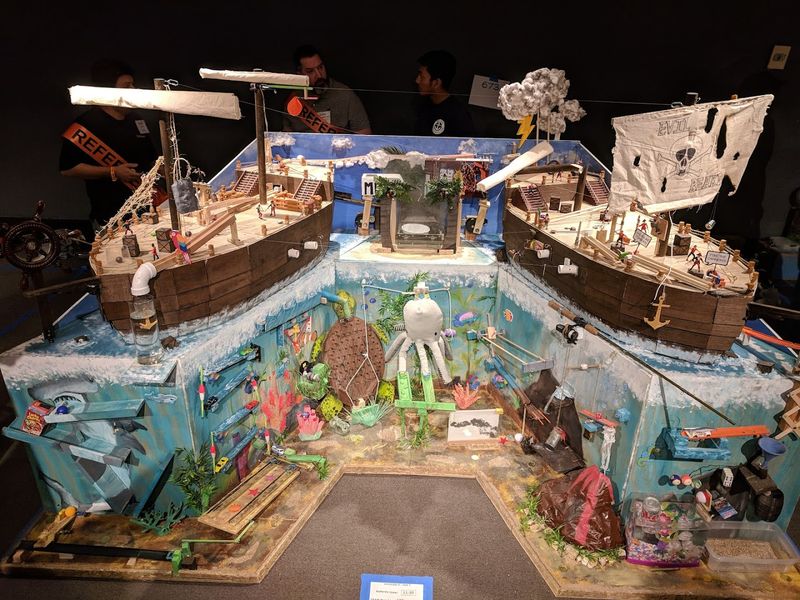
The exhibit includes hands-on activities such as water play, construction, simple machines, and shape-based challenges. Kids can tinker with simple machines, explore cause and effect through water and sand play, and work through engineering challenges that feel more like play than study.
Parents appreciate that the space is designed with safety and supervision in mind, allowing children to roam and explore without constant redirection.
The energy in the Idea Lab is cheerful and genuinely joyful, which is a good sign that the design team understood exactly what young visitors need. It is a highlight for families visiting in June.
Plastic, Oceans, And A Wake-Up Call
The Blue Paradox is one of the newer additions to the Griffin Museum of Science and Industry, and it brings a subject that affects every person on the planet directly into your field of vision.
The exhibit focuses on the health of the world’s oceans, exploring themes of pollution, climate impact, and the complex relationship between human activity and marine ecosystems.
What makes this exhibit stand out is its commitment to immersive design. A large screen room wraps visitors in sweeping ocean imagery while delivering information about pollution and environmental change in a way that feels urgent without being heavy-handed.
The balance between beauty and hard truth is handled thoughtfully throughout. Interactive stations allow visitors to engage with data, make connections between everyday choices and ocean health, and explore potential solutions.
It is the kind of exhibit that sticks with you after you leave, prompting conversations on the drive home or at dinner that evening. June is a great time to experience it with the whole family.
Practical Tips

A little planning goes a long way at a museum this size. The Griffin Museum of Science and Industry is open Tuesday through Friday from 9:30 AM to 4:00 PM, and on Saturdays from 9:30 AM to 4:00 PM as well.
Monday and Sunday hours extend to 5:30 PM, which makes those days ideal if you want extra time to explore without feeling rushed.
Arriving early is genuinely the best strategy, especially on June weekends when the museum draws larger crowds.
The coat check near the entrance is convenient for storing bags, and color-coded stairways throughout the building make navigation much easier than you might expect for a place this large.
Parking is available in the museum’s underground garage, while nearby outdoor metered parking is managed separately and may have different rates. The museum also has a food court with a solid variety of options, and there is a Stan’s Donuts location inside for a mid-visit treat.
Why June Is The Right Month To Go

June sits in a sweet spot for visiting Chicago, and the Griffin Museum of Science and Industry benefits directly from that seasonal timing.
The weather along DuSable Lake Shore Drive is warm enough to enjoy the outdoor surroundings before and after your visit, and the long daylight hours give you flexibility with your schedule in a way that shorter winter days simply do not allow.
Summer programming at the museum often includes special exhibitions, seasonal events, and expanded programming for school-age children who are freshly out of class and ready to engage with something stimulating.
June also tends to bring rotating exhibits that are worth checking on the museum website before your visit. The lakefront location means you can pair your museum day with a walk along the water, a visit to nearby parks, or a look at the Museum of Science and Industry’s own scenic surroundings.
A full June day here rarely feels wasted, and most visitors leave already planning their return trip.