
This Ancient North Carolina Rock Is Covered In Mysterious Carvings That Still Puzzle Visitors
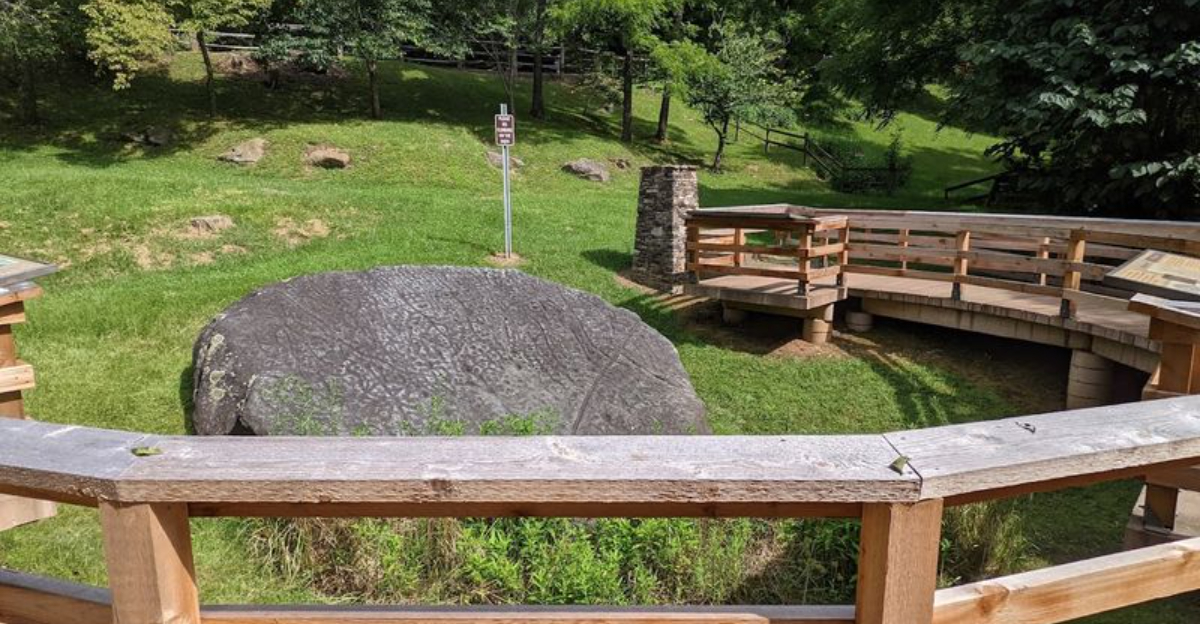
Have you ever stood in front of something carved long before written history ever reached this land, and felt like it was still trying to speak?
In North Carolina, there is a massive stone surface covered in strange markings that refuse to be easily explained.
These aren’t random scratches. They are carefully etched symbols, spirals, figures, and pathways, left behind by the ancestors of the Cherokee people, long before modern maps or languages defined the world around them.
For the Cherokee, this place is not just rock.
It is tied to stories of Judaculla, a powerful spiritual being said to watch over the mountains and the hunt. And yet, when you look at it today, you are left with more questions than answers.
What did these carvings mean to the people who made them?
Are they stories, maps, warnings… or something even deeper? Standing there, you don’t just observe history. You feel like you’ve stepped into a language that time never fully translated.
A Boulder Like No Other
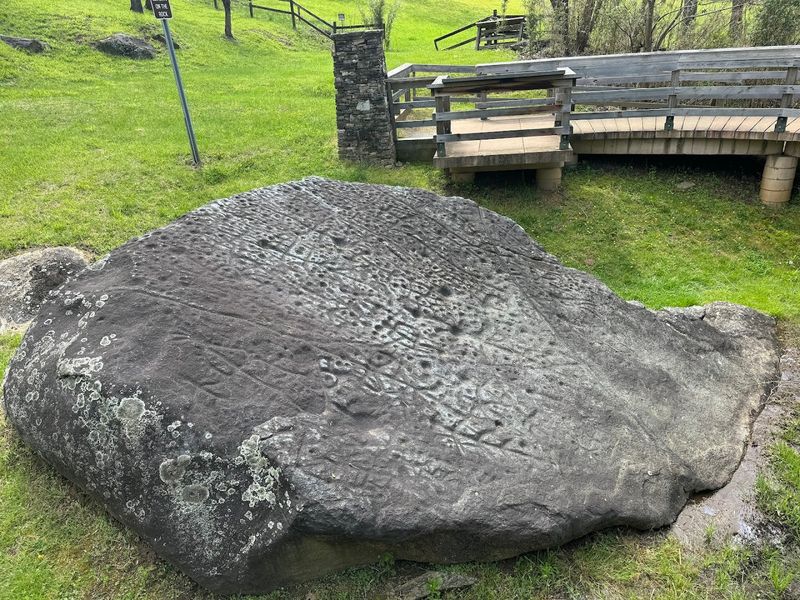
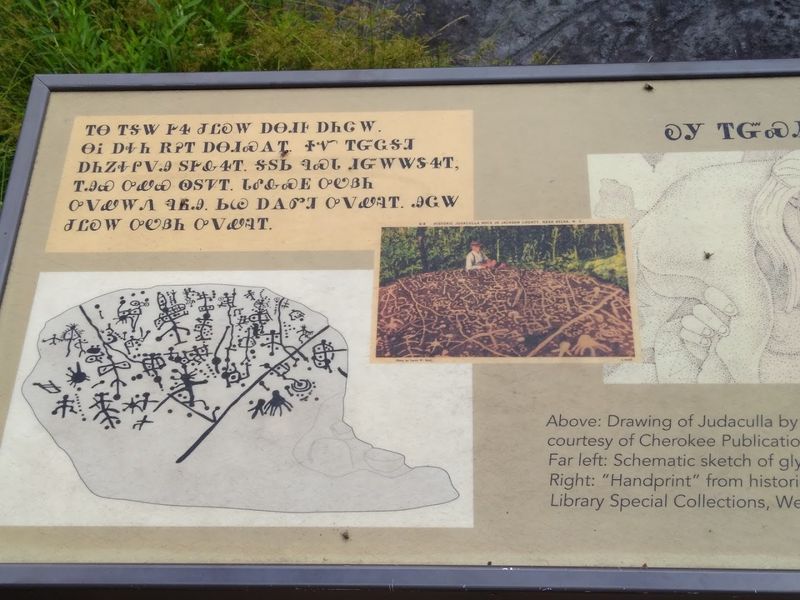
Some rocks just sit there looking pretty. Judaculla Rock decided to go a completely different route and cover itself in nearly 1,548 distinct carved motifs, making it the most extensive petroglyph collection east of the Mississippi River.
That is not a small claim to make.
The sheer density of symbols across the boulder’s surface is genuinely jaw-dropping when you see it in person.
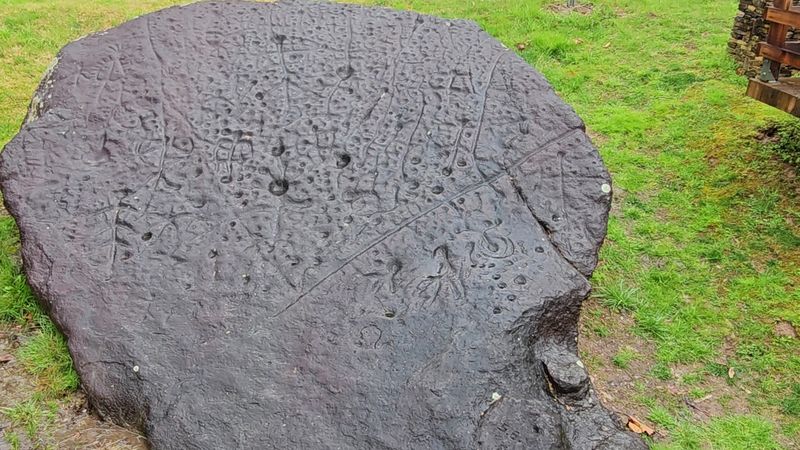
Circles, lines, footprints, and abstract shapes overlap and intertwine in ways that feel intentional, purposeful, and deeply layered with meaning. Standing before it, you get the strong sense that someone had a lot to say.
Petroglyph carving at this site is believed to have started around 1,500 years ago and continued right up until European settlement arrived in the region. Some designs may even trace back roughly 4,000 years to the Archaic Period, when indigenous people quarried soapstone from this very area.
The rock is not just old, it is a living timeline carved in stone. Every symbol represents a moment, a message, or a mystery that still echoes across the centuries today.
Getting To 552 Judaculla Rock Road
Getting somewhere off the beaten path is half the adventure, and the drive to Judaculla Rock absolutely delivers on that promise.
Located at 552 Judaculla Rock Road in Cullowhee, NC 28723, the site sits along a scenic stretch of road off Highway 107, winding through pastures framed by the Blue Ridge Mountains.
Fair warning: your GPS signal might flicker out before you arrive, so it helps to note the directions before you leave. The road itself is part of the charm, rolling through quiet farmland with mountain ridges rising on either side and a river running nearby.
It feels like driving into a painting.
Parking is straightforward, with space available right next to the exhibit area.
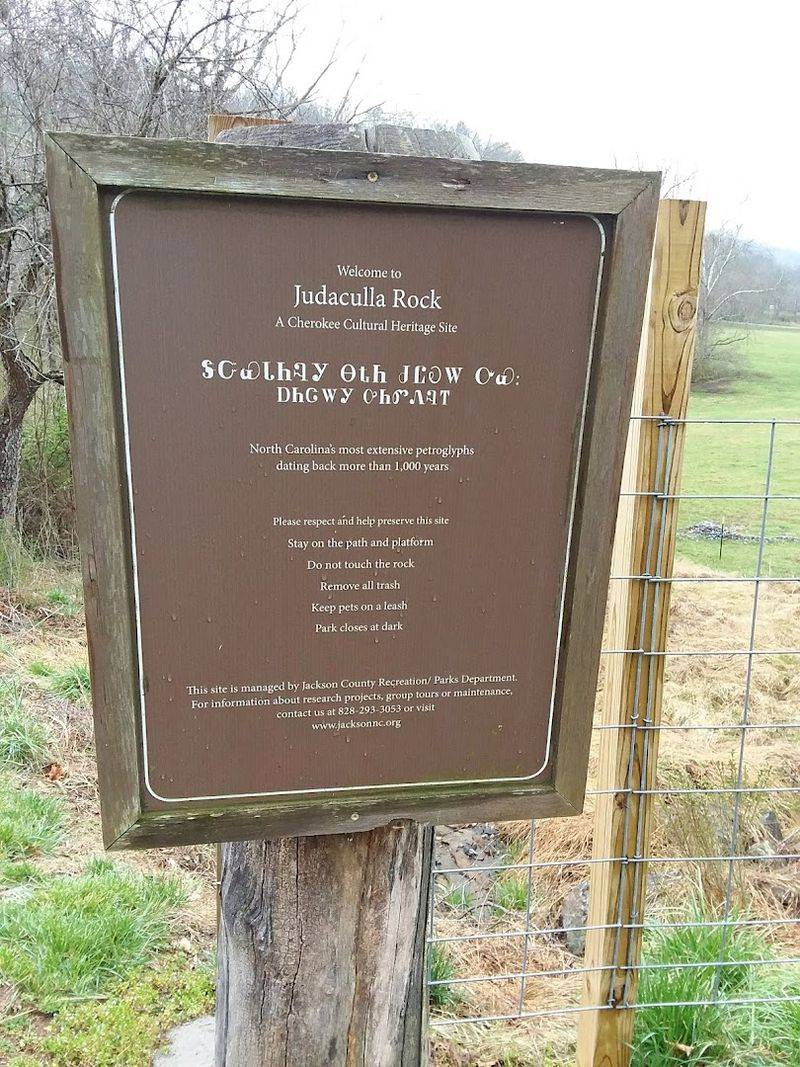
The site is open 24 hours a day, every single day of the year, which means early risers and sunset chasers are equally welcome. A boardwalk keeps your feet dry as you approach the rock, and informative display boards line the path to give you context before you even lay eyes on the boulder.
Arriving prepared makes the whole experience richer and far more rewarding.
The Legend Behind The Rock
Every great mystery needs a compelling origin story, and Judaculla Rock has one of the most fascinating ones around.
Cherokee oral traditions speak of a powerful being named Tsul Kalu, often described as a slant-eyed giant who ruled over all game animals in the surrounding wilderness.
According to legend, the carvings on the rock are connected directly to Tsul Kalu himself. Some stories say the marks are his handprint left behind after a great leap.
Others suggest they record the hunting laws he established for the Cherokee people to follow across generations.
Perhaps the most striking belief is that the rock serves as a spirit’s stepping-stone into the physical world of mortal beings. Cherokee tradition holds that the markings reveal how to enter the spiritual realm, giving the boulder a sacred quality that goes far beyond archaeology.
This is not just a tourist attraction, it is a living piece of spiritual heritage.
The legend of Tsul Kalu transforms a puzzling collection of symbols into something deeply human, rooted in storytelling, reverence, and a profound relationship between people and the land they called home.
What Do The Carvings Actually Mean? Theories That Will Blow Your Mind
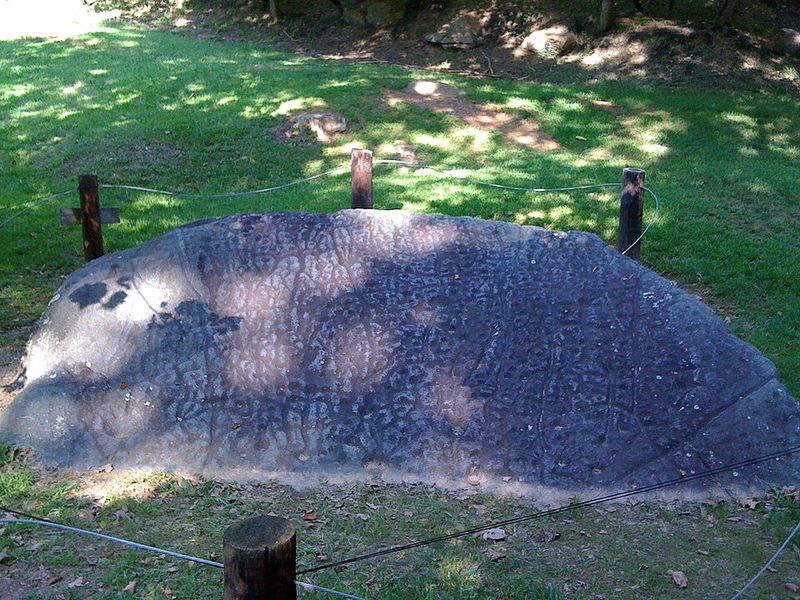
Here is where things get really interesting. Archaeologists, historians, and independent researchers have floated so many theories about the Judaculla Rock carvings that keeping track of them feels like binge-watching a mystery series with no finale in sight.
The National Park Service suggests the boulder may function as a stylized three-dimensional map of the surrounding terrain, with certain markings corresponding to actual local landmarks.
That idea alone is remarkable when you consider how ancient the carvings are. Other theories propose the symbols represent hunting laws, a peace treaty between tribes, or records of important events in Cherokee history.
Some researchers have gone even further, drawing comparisons between the symbols and Bronze Age petroglyphs found in Ireland and Scandinavia.
Others have noted similarities to the Itza Maya writing system, hinting at cultural connections that stretch across continents and centuries.
One particularly creative theory suggests the carvings depict microscopic organisms, which raises more questions than it answers.
The honest truth is that no single explanation has won the debate. Every theory adds another fascinating layer to a rock that seems almost designed to keep humanity guessing forever.
What The Rock Means To The Eastern Band Of Cherokee Indians
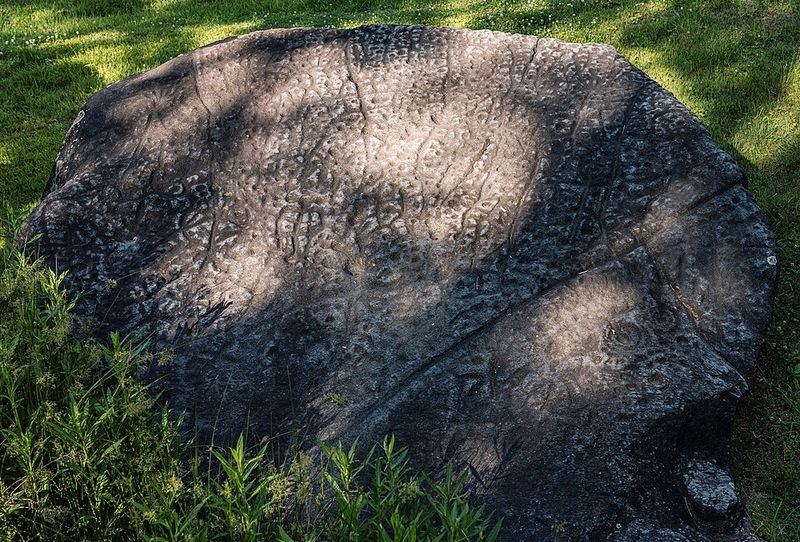
Beyond the academic debates and tourist curiosity, Judaculla Rock holds something far more profound for the Eastern Band of Cherokee Indians.
This boulder is not a relic of a forgotten past, it is an active, living sacred site that continues to hold spiritual significance today.
Some Cherokee members still fast at the site, seeking connection with the ancient messages they believe are encoded in the stone.
The rock is viewed as a threshold between the physical world and the spiritual one, a place where the boundary between realms grows thin and meaningful. That kind of reverence is impossible to ignore when you stand there.
Respecting the cultural weight of this place matters deeply. Visitors are strongly encouraged not to touch the carvings, both to honor their sacred nature and because physical contact accelerates erosion.
The symbols are gradually disappearing due to weather exposure, which makes every visit feel a little more urgent.
Jackson County now owns the land, donated by the Parker family in 1959, and preservation efforts continue to protect what remains. Honoring this place means understanding it belongs to a living culture, not just history books.
The Soapstone Connection
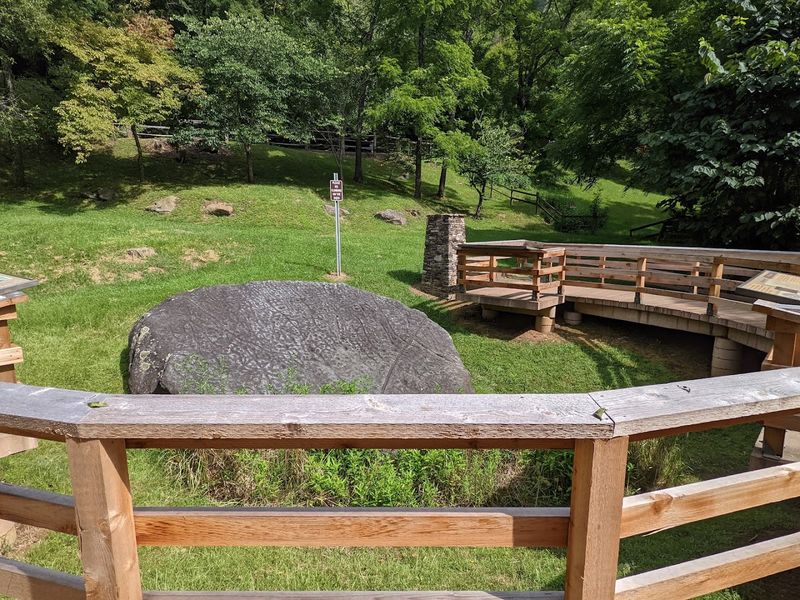
Not just any boulder gets chosen as the canvas for thousands of years of cultural expression. Judaculla Rock is composed of soapstone, a soft and workable material that indigenous people in this region prized long before the first carving was ever made.
During the Archaic Period, roughly 4,000 years ago, indigenous communities actively quarried soapstone from this very area.
They shaped it into bowls, tools, and other practical objects because of how easily it could be worked with stone implements. The boulder that stands today was already a known and valued resource in the landscape.
That history gives the carvings an extra dimension of meaning. The people who etched symbols into this rock were not choosing a random surface.
They were marking a place that already held cultural, practical, and possibly spiritual weight in their community. Soapstone’s smooth texture made it ideal for carving fine details that would last centuries, even millennia.
The material itself is part of the story.
When you look at those ancient symbols, you are also looking at thousands of years of human ingenuity, resourcefulness, and a deep understanding of the natural world surrounding them.
On The National Register
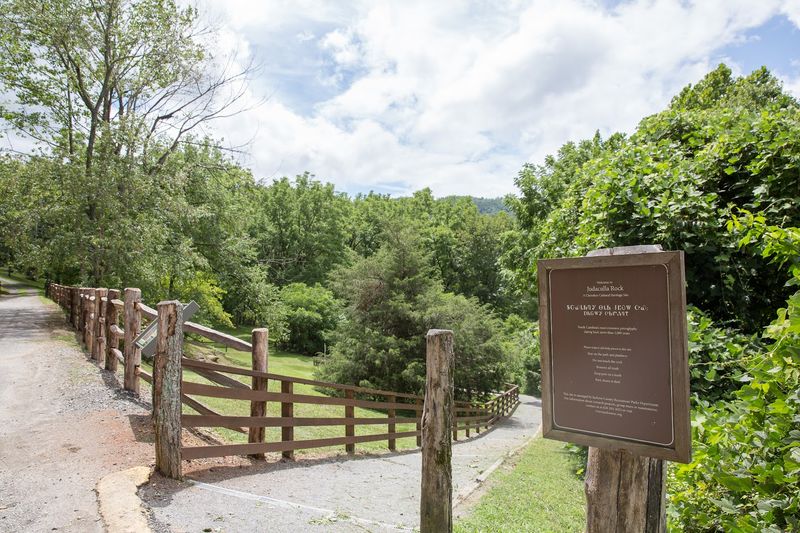
Official recognition does not come easy in the world of historic preservation, but Judaculla Rock earned its spot on the National Register of Historic Places in 2013. That designation was a long time coming for a site that holds this much archaeological and cultural weight.
Being listed on the National Register acknowledges the boulder’s irreplaceable value to American history and indigenous heritage.
It also brings greater attention to preservation needs, helping ensure the site receives the care and protection it deserves going forward. The designation felt like a formal nod to what the Cherokee people already knew for generations.
The site is managed by Jackson County, and the surrounding land has been placed in a trust to guarantee its protection for future generations.
Informative signage along the boardwalk walk tells the story clearly and accessibly, making the visit educational without feeling like a lecture.
Whether you are a first-time visitor or someone returning after years away, the signage adds real depth to what you are seeing.
Standing at a National Register site feels different somehow, like the weight of history becomes tangible beneath your feet and the carvings suddenly feel even more extraordinary.
Global Connections
One of the most mind-bending aspects of Judaculla Rock is what happens when researchers start comparing its symbols to carvings found on the other side of the world.
Similarities between the Judaculla Rock petroglyphs and Bronze Age carvings in Ireland and Scandinavia have caught the attention of multiple independent researchers over the years.
Connections have also been noted between the symbols and the Itza Maya writing system, suggesting that either ancient cultures shared more communication than previously understood, or that certain symbols represent universal human experiences.
Both possibilities are equally thrilling to consider. The idea that a boulder in the mountains of western North Carolina might echo something carved in ancient Europe is the kind of thought that keeps historians up at night.
Researchers have also pointed out similarities between Judaculla Rock and petroglyphs found in North Georgia, suggesting regional networks of indigenous communication and shared symbolism.
None of these connections have been conclusively proven, but they open up conversations about how ancient peoples moved, communicated, and expressed meaning across vast distances.
Judaculla Rock keeps pulling the lens wider, turning a local mystery into a genuinely global conversation about human creativity across time.
What To Know Before You Go
Judaculla Rock is one of those places that rewards a little preparation. The site is open around the clock every day of the week, so there is real flexibility in when you choose to show up.
Early morning visits offer soft light and a quieter atmosphere that makes the carvings easier to study and appreciate.
The boardwalk keeps visitors comfortably above any muddy patches while ensuring the surrounding area stays protected.
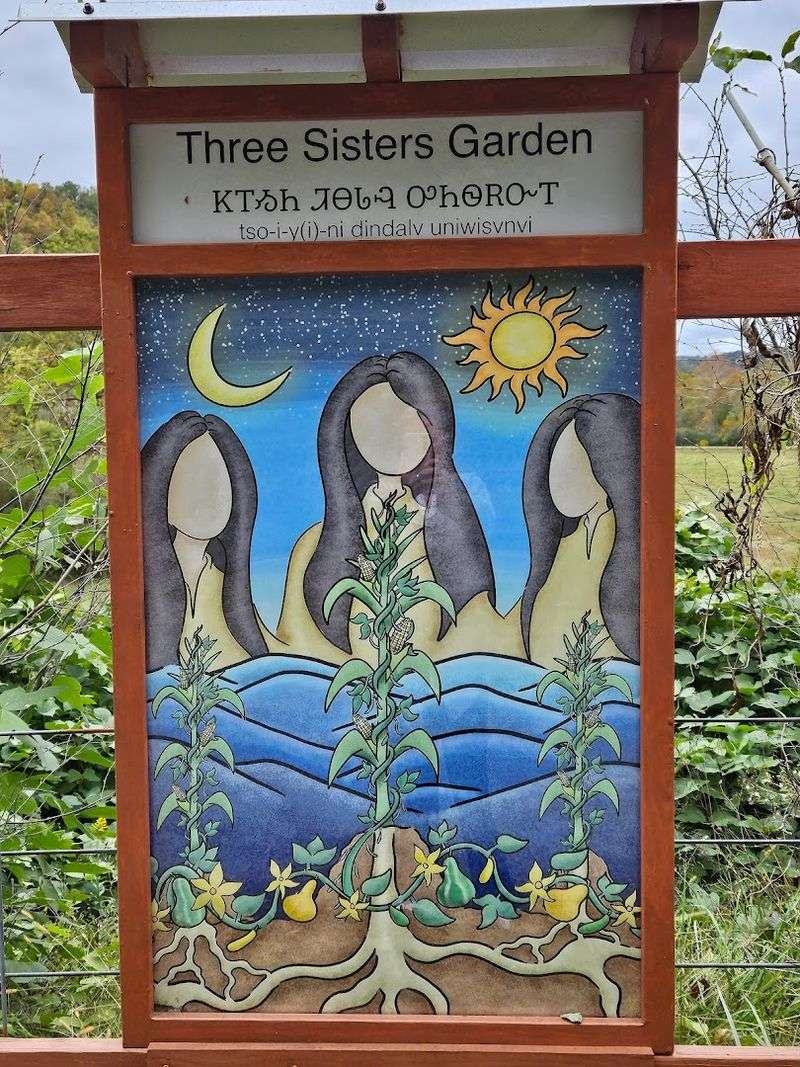
Informative display boards along the path explain the history, the legends, and the ongoing preservation challenges in a way that genuinely enhances the experience.
Reading them before approaching the rock gives your visit real context and depth.
A small free book exchange station adds a charming community touch to the site. Visitors are reminded not to touch the rock surface, as even well-meaning contact speeds up erosion and fades the symbols further.
Bringing a camera is highly recommended because the carvings photograph beautifully in natural light, especially on overcast days when shadows reveal the etched details most clearly.
If you find yourself anywhere near Cullowhee, skipping Judaculla Rock would be a genuine missed opportunity.