
This South Dakota Chapel In The Woods Feels Like A Norwegian Postcard With A Prairie Accent
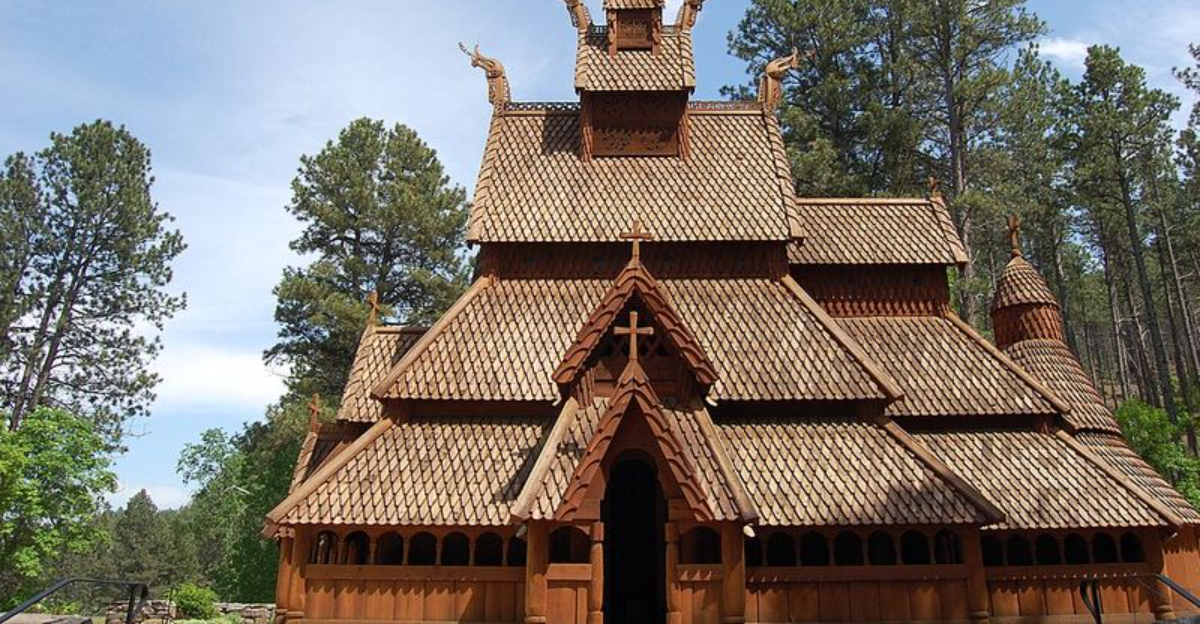
Looking at it, you’d swear someone accidentally picked up a tiny piece of Scandinavia and dropped it onto the South Dakota prairie.
Surrounded by peaceful woods and timeless beauty, this charming chapel looks less like a roadside attraction and more like the cover of a travel magazine dedicated to hidden European villages.
The architecture instantly raises a question, “Are we still in South Dakota, or did Google Maps quietly reroute us to Norway?” Surprisingly, the answer is both.
Inspired by Norwegian traditions and craftsmanship, this picturesque chapel brings a touch of the fjords to the American Midwest. Without requiring a passport or a transatlantic flight.
And that’s part of its magic. Between the tranquil setting, storybook design, and atmosphere that practically demands you slow down for a moment, this woodland gem feels worlds away from everyday life.
It’s the kind of place that turns a simple road trip stop into a memory.
And leaves you wondering how such a Nordic-looking treasure ended up tucked among the rolling prairies of South Dakota.
The Borgund Stavkirke Replica
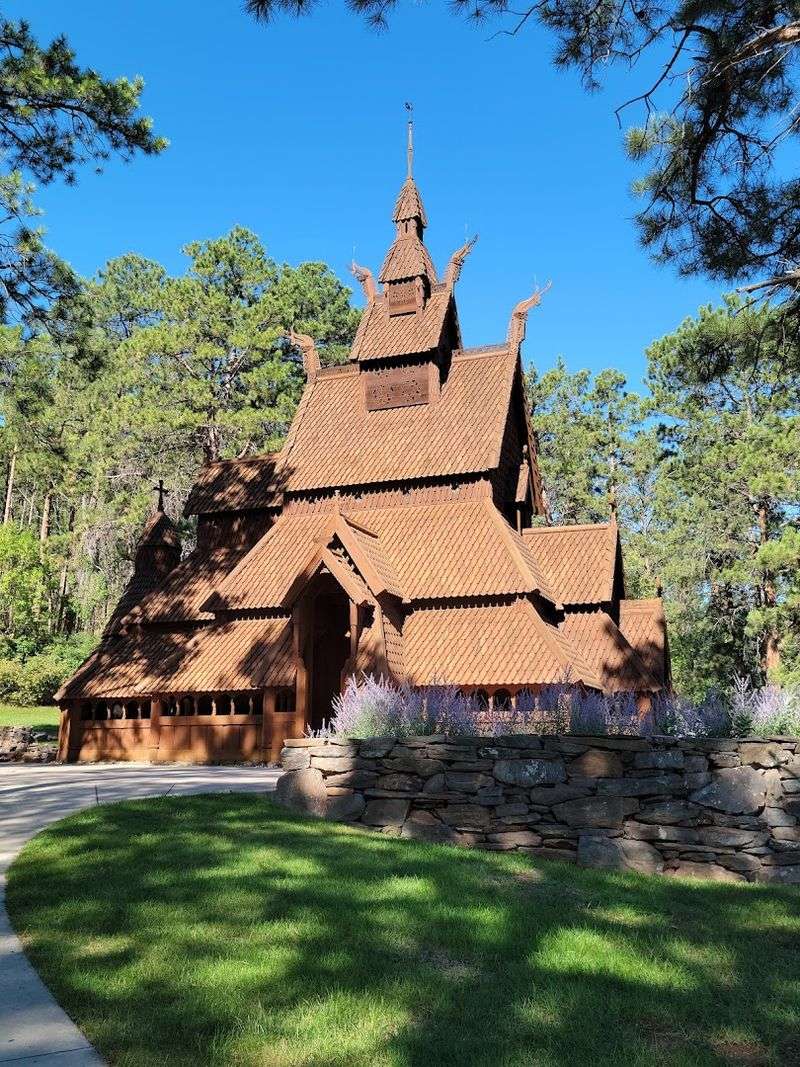
Somewhere between a fairy tale and a history lesson, the Chapel in the Hills stands as one of the most unexpected architectural wonders in the American Midwest.
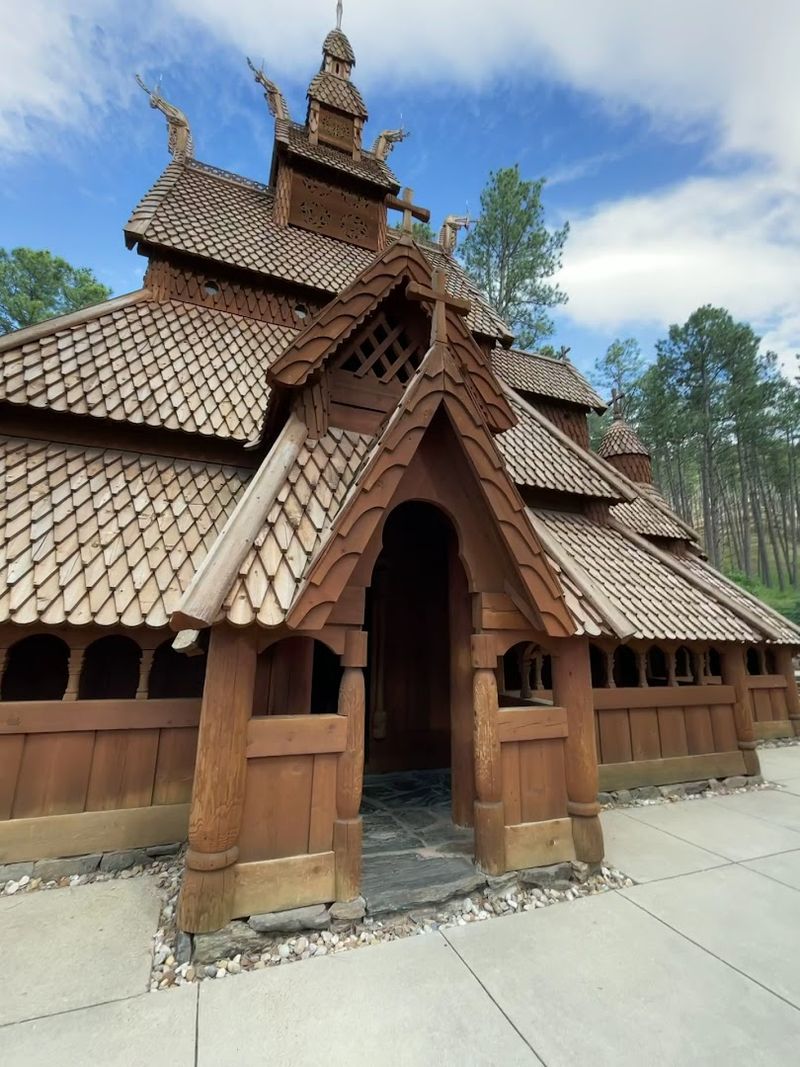
Built as an exact replica of Norway’s Borgund Stavkirke, this structure transports you across an ocean without a passport. The original Norwegian church was constructed around 1150 A.D., and the South Dakota version mirrors it with remarkable precision.
The Norwegian Department of Antiquities handed over the official blueprints, meaning every detail here is rooted in authentic medieval craftsmanship.
Steep layered rooflines stack dramatically upward, crowned with carved dragon heads that peer outward like ancient guardians. The dark-stained wood gives the whole structure a moody, almost mythical presence among the pines.
Construction was completed using Douglas fir timber with traditional post-and-beam joinery and wooden dowels instead of metal fasteners. That detail alone is worth pausing to appreciate.
The chapel was dedicated on July 6, 1969, and has welcomed visitors ever since with open doors and no admission fee. Standing in front of it for the first time genuinely feels like stumbling onto a movie set, except everything here is completely, wonderfully real.
The Address You Need To Save Right Now
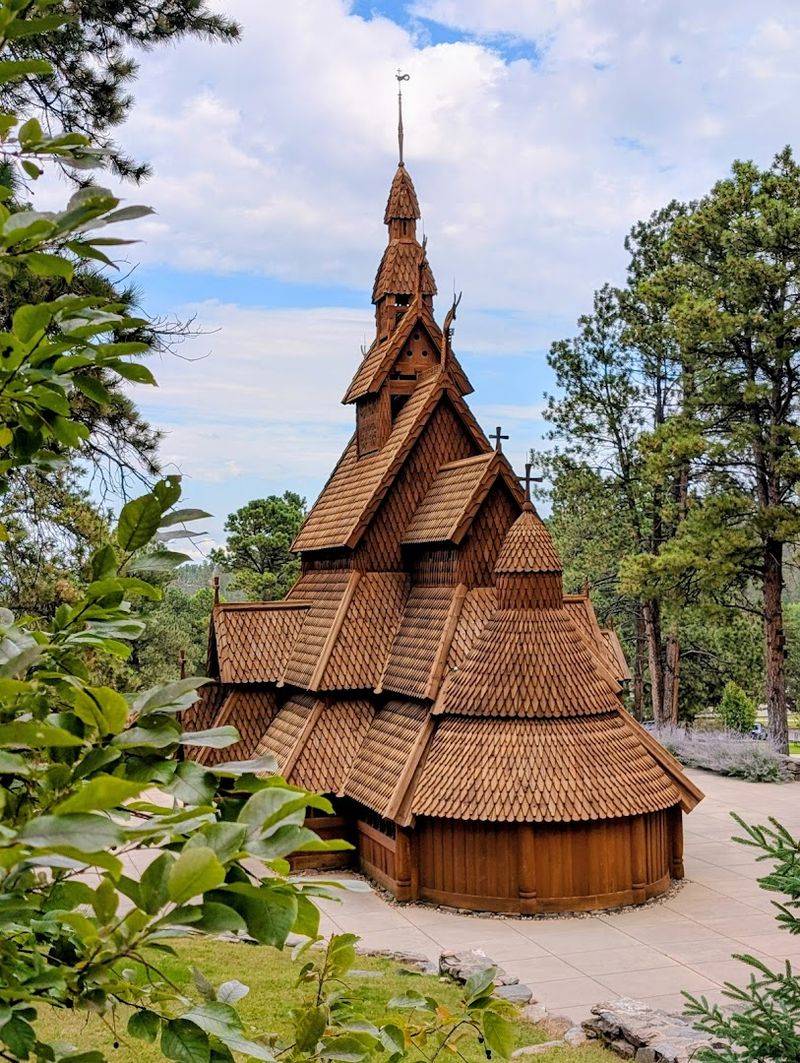
Getting to Chapel in the Hills is half the adventure. Nestled at 3788 Chapel Lane, Rapid City, SD 57702, the site sits quietly off the beaten path in the Black Hills, surrounded by a thick canopy of ponderosa pines.
The address practically sounds like a storybook setting, and the approach through the trees only builds the anticipation.
The chapel is open to the public from May through September, generally from 8 AM to 8 PM daily. There is no admission charge, though donations are warmly welcomed to help preserve this remarkable place.
Planning a morning visit is a great idea because the light filtering through the pines in the early hours creates a genuinely magical atmosphere around the chapel.
Parking is available on site, and the grounds are easy to navigate on foot. The chapel is operated by a non-profit organization under the South Dakota Synod of the Evangelical Lutheran Church in America.
Evening worship services are held during summer months, adding another layer of atmosphere to an already unforgettable place. If your GPS has ever led you somewhere truly worth the drive, this is that destination.
Wood Carvings That Would Make A Viking Weep With Pride
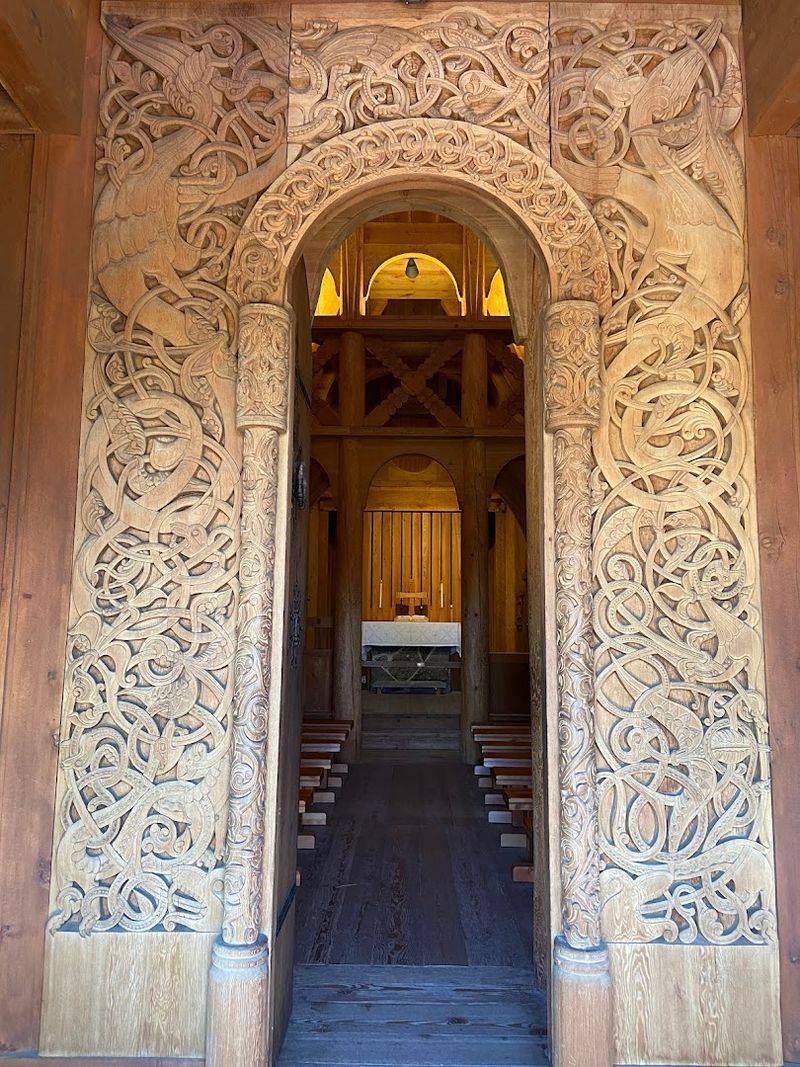
Every inch of this chapel tells a story carved in wood. Norwegian woodcarver Erik Fridstrom and Rapid City resident Helge Christiansen collaborated to create the stunning carvings that cover both the interior and exterior of the structure.
Their work is breathtaking up close, full of interlocking knotwork, serpentine dragons, and ornate patterns drawn from Norse artistic tradition.
The exterior dragon heads jutting from the roofline are perhaps the most iconic visual detail. They serve the same symbolic purpose as their medieval Norwegian counterparts, warding off evil and marking this as a sacred, protected space.
Inside, the carved panels and decorative woodwork feel almost impossibly detailed for a building constructed in the late 1960s.
Even practical elements like the rain spouts were crafted from wood, maintaining the integrity of the original Borgund design throughout.
Pressing the audio button near the front door triggers a recorded narration that walks you through the meaning behind every carved symbol and structural choice.
It turns what might seem like beautiful decoration into a rich, layered conversation between centuries. These carvings are not just ornamental; they are the language the builders used to honor an entire cultural heritage.
A Norwegian Storehouse With A Grass Roof
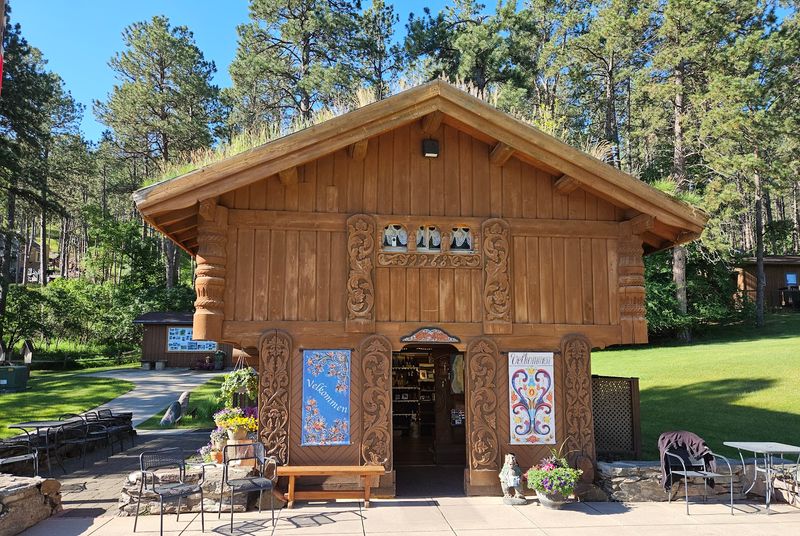
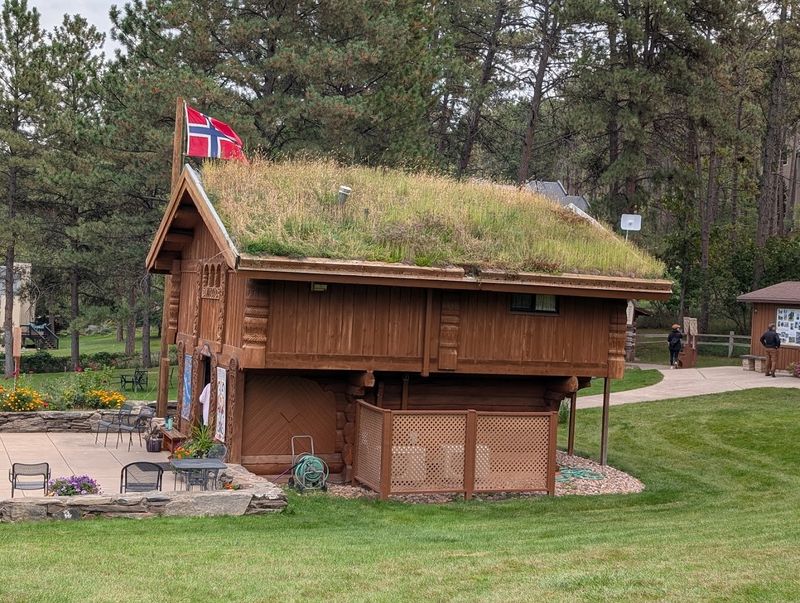
Right next to the chapel stands one of the most charming structures on the entire property: a traditional Norwegian Stabbur. A Stabbur is a historic Scandinavian storehouse, typically elevated on posts to keep food and supplies dry and protected.
This one has a living grass roof, which is both wildly photogenic and deeply authentic to Norwegian building tradition.
What makes this Stabbur even more remarkable is its origin story. It was actually built in Norway, then carefully disassembled, shipped across the Atlantic Ocean, and reassembled right here in Rapid City.
That level of commitment to authenticity is genuinely impressive and sets this place apart from any ordinary heritage attraction.
Today, the Stabbur serves as the Visitor Center and Gift Shop, stocked with Scandinavian merchandise ranging from traditional wooden items to cultural keepsakes.
Browsing the shop feels like a mini cultural field trip, and picking up a souvenir here carries a story worth sharing. The grass roof alone is worth a photograph.
Standing beside a centuries-old architectural form that traveled from Norway to South Dakota is the kind of detail that makes you appreciate how seriously the founders took every single element of this project.
Where Gold Rush History Lives On
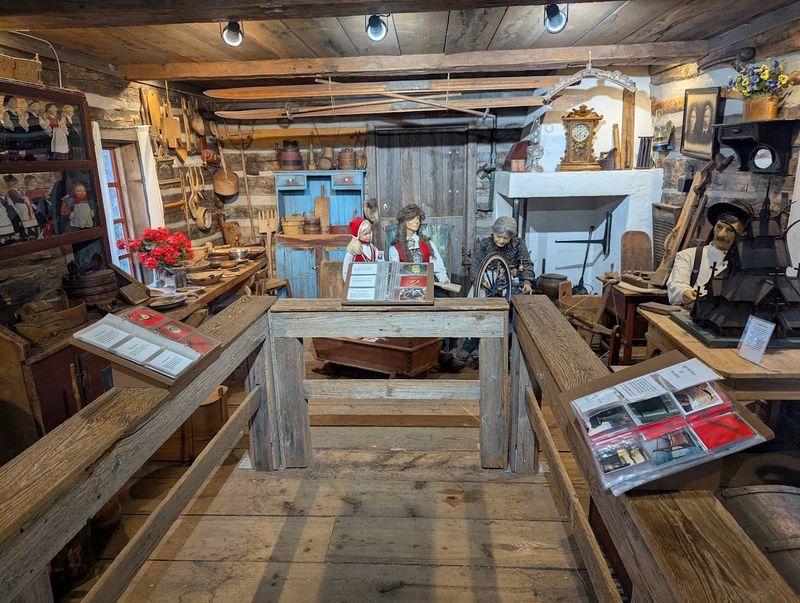
History has a way of stacking up in the most unexpected places. On the Chapel in the Hills grounds, a log cabin museum sits quietly nearby, originally constructed in 1876 by Norwegian immigrant Edward Nielsen, a gold prospector who came west chasing the promise of the Black Hills.
The cabin itself is a genuine artifact, not a reproduction, which gives it a completely different energy from the rest of the site.
Inside, the cabin houses a collection of historic Scandinavian items that document the lives of early Norwegian settlers in the Dakotas.
From household objects to cultural relics, the collection paints a vivid picture of what it meant to carry an entire cultural identity across an ocean and plant it on the prairie. It is a small space, but the weight of what it holds is considerable.
Visiting the cabin alongside the chapel creates a fascinating contrast between sacred architecture and everyday pioneer life.
Both tell the same larger story about a community determined to preserve its roots in a new land. The cabin is free to explore and sits just steps from the chapel, making it an easy and deeply worthwhile addition to any visit here.
Seven Statues And A Forest Full Of Stillness
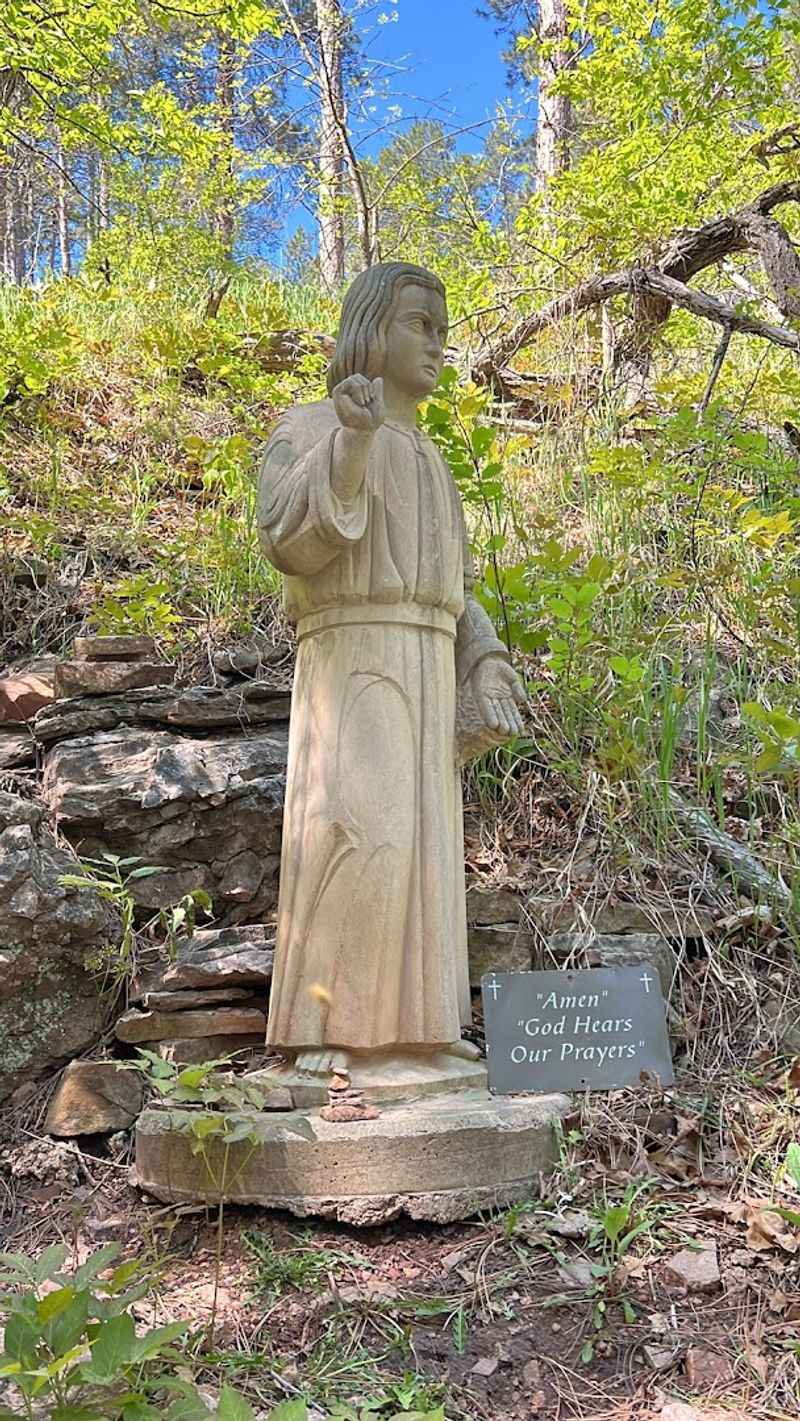
Behind the chapel, the ponderosa pines open up into one of the most quietly powerful experiences on the entire property.
A meditation and prayer walk winds through the woods, marked by seven thoughtfully placed statues tucked among the trees. The trail is short, unhurried, and designed to encourage reflection rather than speed.
Each statue along the path represents a moment of spiritual significance, and encountering them one by one in the natural setting feels genuinely moving.
The forest itself does a lot of the work here. The sound of wind through the pines, the dappled light on the forest floor, and the complete absence of traffic noise create an atmosphere that feels both ancient and immediately calming.
Benches are scattered along the walk, inviting visitors to sit, breathe, and simply be present for a moment. In a world where everything moves fast, this trail operates on a completely different clock.
It is suitable for all ages and requires no special preparation, just a willingness to slow down.
Many visitors describe the prayer walk as the highlight of their entire visit, which says a great deal given how stunning the chapel itself already is. Go slowly here.
The Engineering Marvel Behind The Walls
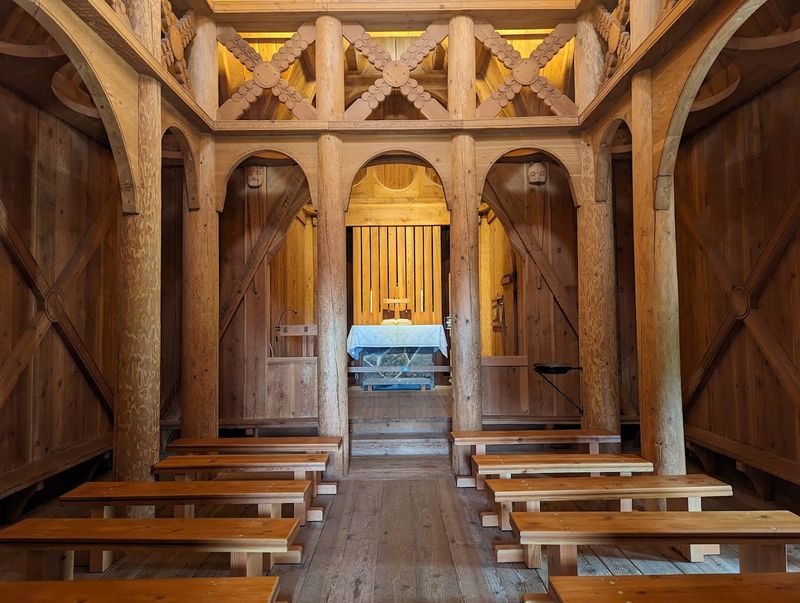
Here is a detail that stops most visitors cold when they first hear it: this entire chapel was built without a single nail or metal fastener.
Every joint, every beam, every structural connection relies on traditional post-and-beam technique using wooden dowels. It is the same method used to construct the original Borgund Stavkirke back in 1150 A.D., and it still holds everything together beautifully today.
The primary material is Douglas fir, chosen for its strength and workability. The builders followed the Norwegian Department of Antiquities blueprints with extraordinary fidelity, ensuring that the construction methods matched the original as closely as modern circumstances allowed.
Walking inside and knowing that nothing above your head is held together by metal is a surprisingly stirring realization.
An audio recording available inside the chapel near the front door explains the structural logic behind stave church construction in clear, accessible language. It transforms the building from a beautiful object into an engineering conversation spanning nearly a thousand years.
The fact that this technique produces a structure still standing strong after more than five decades in the Black Hills climate is a testament to how brilliantly the original Norse builders understood their materials. Medieval engineering, it turns out, holds up just fine.
Weddings, Worship, And The Summer Evening Services
There is something about this chapel that makes people want to mark their most meaningful moments here. The Chapel in the Hills hosts numerous weddings throughout the year, and it is not hard to understand why.
Exchanging vows inside a medieval-style Norwegian stave church surrounded by pine forest is the kind of setting that photographs cannot fully capture, though everyone certainly tries.
Beyond weddings, the chapel holds evening worship services during the summer months, adding a living, breathing spiritual dimension to what might otherwise be purely a heritage tourism site.
Attending one of these services as the sun drops behind the Black Hills and the pine shadows lengthen around the chapel is a genuinely memorable experience. The atmosphere during those evenings is something entirely its own.
The chapel is operated by a non-profit organization under the South Dakota Synod of the Evangelical Lutheran Church in America, which means its mission has always been rooted in both community and faith.
Between 20,000 and 25,000 visitors arrive each year, yet the grounds never feel overwhelmed or commercialized.
The balance between welcoming the public and maintaining a sense of sacred purpose is one of the most impressive things about how this place is managed. It feels intentional in the best possible way.
Don’t Miss This Free Hidden Gem In The Black Hills
Free admission, genuine history, stunning architecture, a forest walk, a grass-roofed storehouse, and a pioneer-era log cabin all in one location.
The Chapel in the Hills somehow manages to deliver all of that without charging a single entry fee. It runs entirely on donations and the dedication of a non-profit organization committed to keeping this extraordinary place accessible to everyone.
The site is open from May through September, typically 8 AM to 8 PM daily, making it easy to work into almost any Black Hills road trip schedule.
Whether you spend thirty minutes or two hours here, the experience scales beautifully to whatever pace you bring with you. There is no pressure, no timed entry, and no crowds that overwhelm the space.
Rapid City itself offers plenty of well-known attractions, from Mount Rushmore to Badlands National Park.
But Chapel in the Hills occupies a completely different category: it is the kind of place that slows everything down and reminds you that the most surprising discoveries are often the ones nobody put on the official tourist map.