
11 Beautiful Southern Maine Lighthouses Worth Visiting This Year
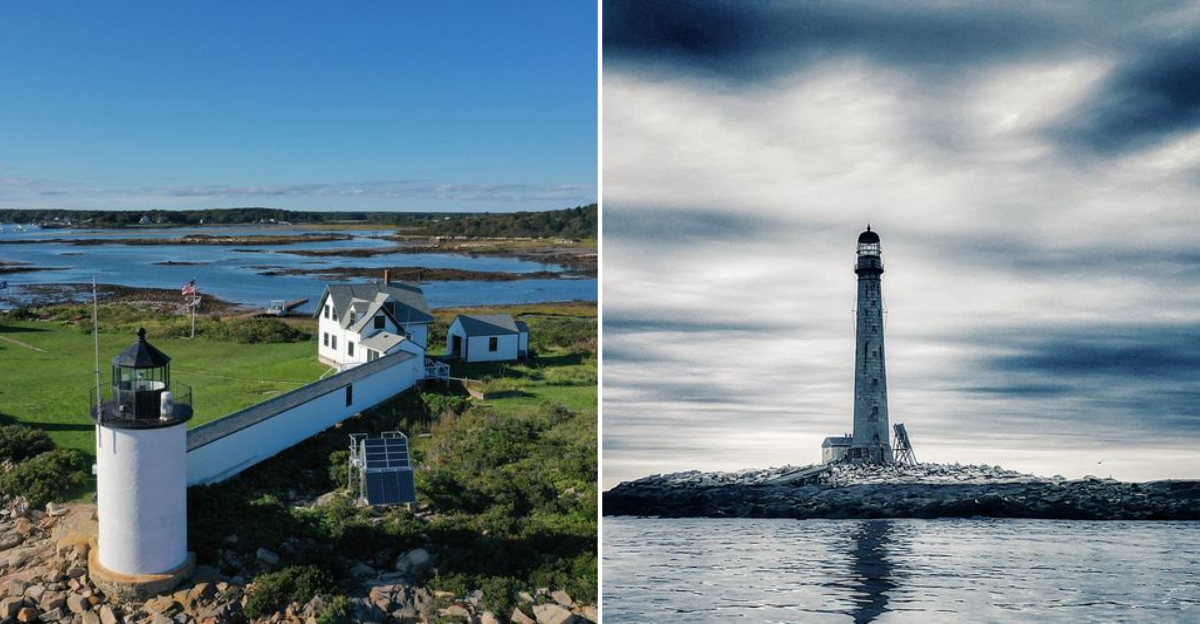
Maine’s southern coast has a way of pulling you in fast. One minute you’re watching waves hit the rocks, and the next you’re staring at a lighthouse that looks like it has been standing there forever.
These towers are not just pretty landmarks, either. They carry stories of sailors, storms, shipwrecks, keepers, and small coastal communities built around the sea.
Some are easy to reach on a walk through a park or along a breakwater, while others sit offshore, best seen by boat or at a quiet overlook. That mix is part of the fun.
You get dramatic ocean views, real history, and plenty of classic Maine scenery in one trip. If you’re someone who loves the coast, these eleven lights are well worth seeking out.
1. Portland Head Light
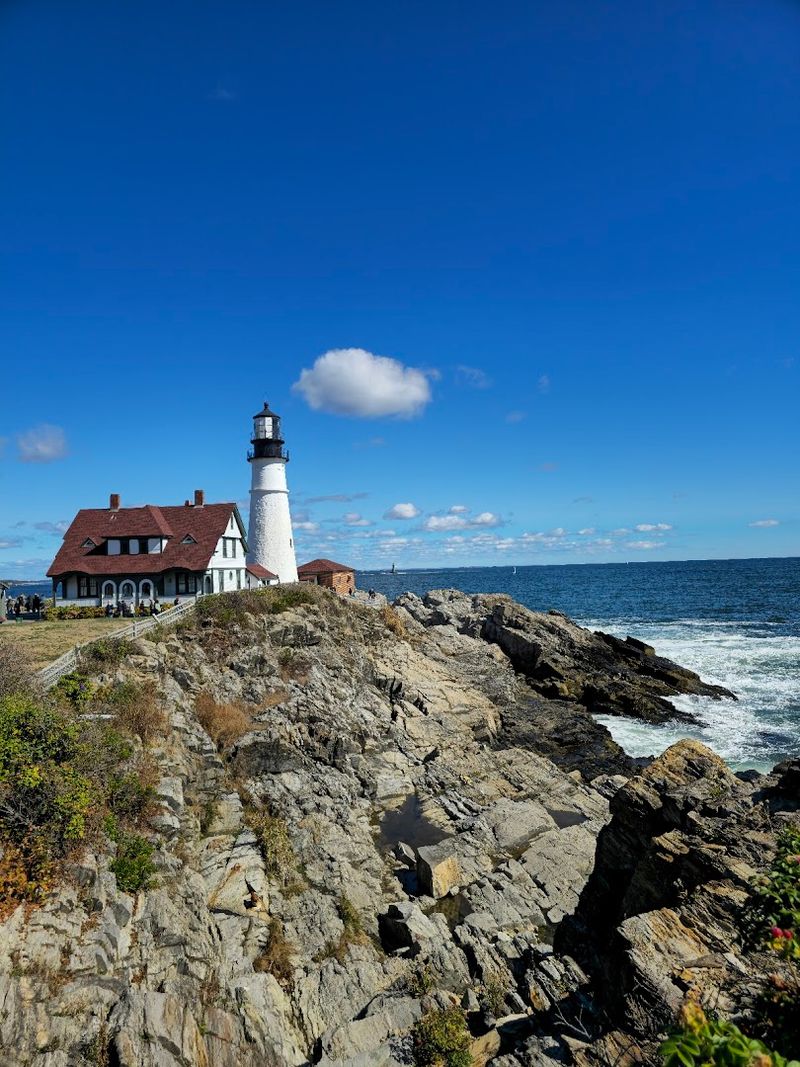
Few lighthouses in the entire country stop people in their tracks the way Portland Head Light does.
Perched dramatically on the rocky headland of Fort Williams Park in Cape Elizabeth, Maine, this tower has been guiding ships since 1791, making it one of the oldest continuously operating lighthouses in the United States. The views from the surrounding park are nothing short of spectacular.
On a clear day, you can see the lighthouse framed against the open Atlantic while waves crash against the granite ledges below.
The keeper’s quarters have been converted into a small museum where you can learn about the history of the light and the families who maintained it through brutal Maine winters. The grounds are free to explore, and the park itself offers picnic areas and walking paths.
This is a genuinely great spot for photographers, families, and history lovers alike. Plan to arrive early in the morning to catch soft light on the tower before the crowds arrive.
Portland Head Light is located at 1000 Shore Road in Cape Elizabeth, and it remains one of the most photographed spots on the entire East Coast for very good reason.
2. Cape Neddick Light
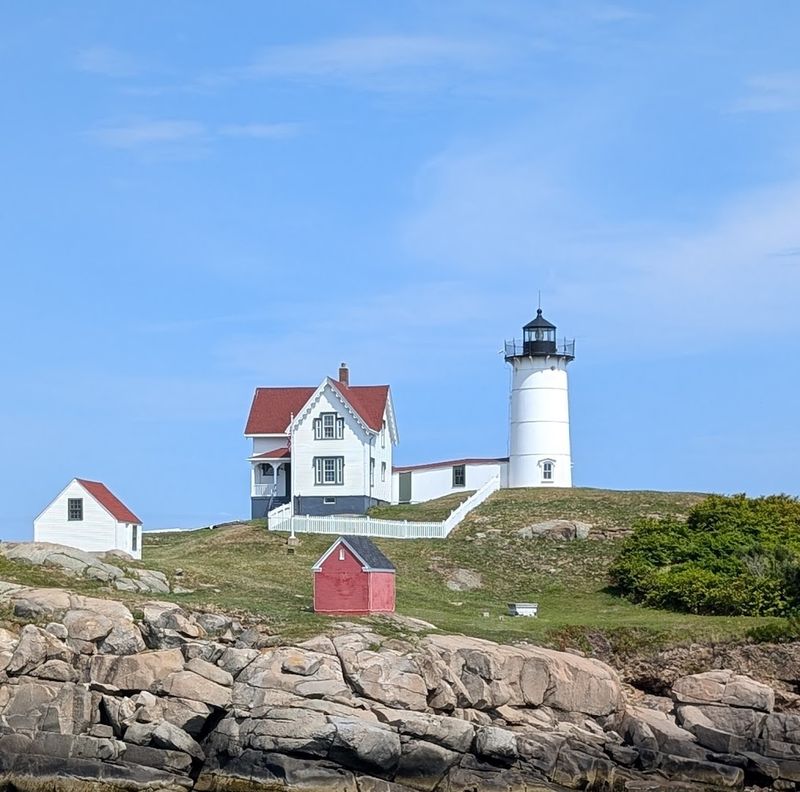
Affectionately known as Nubble Light, Cape Neddick Light sits on a tiny island just a short distance off the coast of York, Maine, and it looks almost too perfect to be real.
The bright white tower with its red-roofed keeper’s house and the surrounding blue-green water make it one of the most photogenic lighthouses anywhere on the Atlantic coast. Visiting feels a little like stepping into a postcard.
You cannot walk out to the lighthouse itself since it is separated from the mainland by a narrow channel, but the viewing area at Sohier Park gives you an excellent vantage point.
There is also a small gift shop nearby and benches where you can sit and simply watch the light do its thing. The park is free to visit and open year-round.
Cape Neddick Light dates back to 1879, and it was actually sent into space in 1977 as part of NASA’s Voyager Golden Record, representing human civilization to the cosmos.
That is a pretty remarkable claim to fame for a lighthouse in York, Maine. Address: Sohier Park, Cape Neddick, York, Maine 03909.
Come at sunset for colors that are genuinely hard to believe.
3. Wood Island Lighthouse
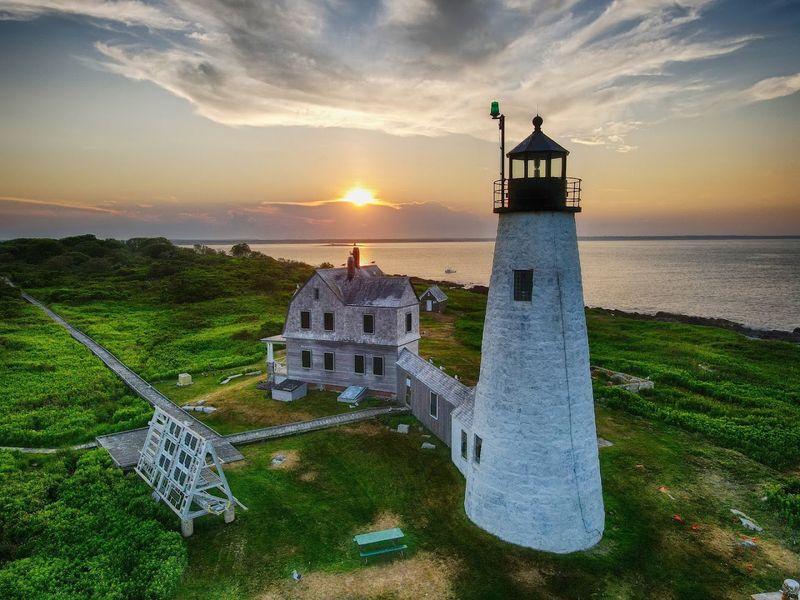
There is something quietly adventurous about reaching Wood Island Lighthouse, because getting there requires a boat ride to a small island off the coast of Biddeford Pool, Maine.
The Friends of Wood Island Lighthouse organization operates seasonal tours that bring visitors across the water to explore the 1808 tower and its beautifully restored keeper’s quarters. It is the kind of outing that feels like a real expedition.
The lighthouse is one of the oldest in Maine, and the restoration work done over the past two decades has been remarkable. Volunteers have put serious effort into preserving the original architecture and historical artifacts found on the property.
Inside the keeper’s house, you get a vivid sense of what daily life looked like for lighthouse keepers and their families in the 1800s.
Wood Island itself is a peaceful place with walking trails through the trees and lovely views back toward the mainland. Birders will appreciate the island’s position as a migratory stopover, and wildlife sightings are common during the warmer months.
For schedules and booking, check the Friends of Wood Island Lighthouse website. This underrated gem rewards curious travelers who make the effort to reach it.
4. Spring Point Ledge Lighthouse
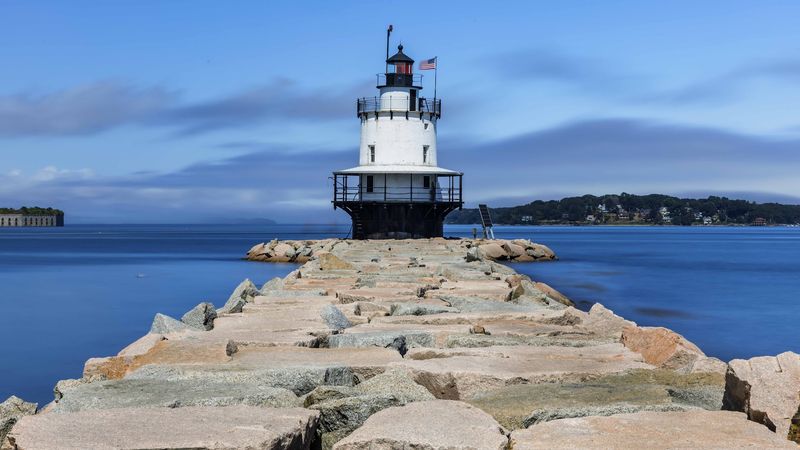
Spring Point Ledge Lighthouse offers something most lighthouses simply cannot: you can actually walk right up to it. A 900-foot granite breakwater connects the lighthouse to the shore in South Portland, Maine, making it one of the most accessible lighthouses on the entire coast.
The walk out along the breakwater is fun, breezy, and gives you sweeping views of Portland Harbor and Casco Bay.
The lighthouse itself is a classic spark plug design, a cylindrical cast-iron tower that has marked the dangerous Spring Point Ledge since 1897. The surrounding area is part of Fort Preble, and the grounds are managed by Southern Maine Community College.
The Spring Point Ledge Light Trust offers tours of the interior during the summer months, which is well worth the small fee.
From the end of the breakwater, you can watch lobster boats, sailboats, and ferries moving through one of Maine’s busiest working harbors. It is a lively scene that gives you a real feel for how important maritime activity still is to this part of the state.
Spring Point Ledge Lighthouse is located at 1000 Fort Road, South Portland, Maine 04106. Parking is available nearby, and the walk out to the light takes only about ten minutes each way.
5. Portland Breakwater Light
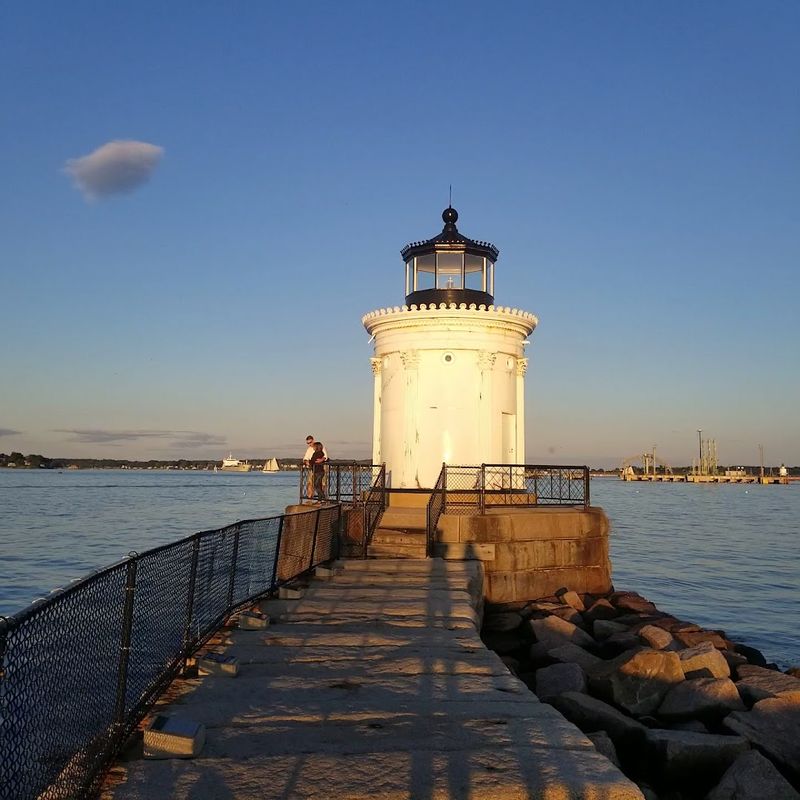
Nicknamed Bug Light for its tiny stature, Portland Breakwater Light is one of the most charming and unusual lighthouses you will encounter anywhere in New England.
Built in 1875 and modeled after an ancient Greek monument, its ornate cast-iron design looks almost too elegant for its surroundings at the edge of Portland Harbor in South Portland, Maine. The contrast between the delicate architecture and the rugged working waterfront is genuinely striking.
The lighthouse stands at the end of a short granite pier in Bug Light Park, a well-maintained public green space with sweeping views of Portland Head Light across the water and the busy shipping channel just beyond.
On summer weekends, the park fills with locals walking dogs, flying kites, and watching the harbor traffic. It has a relaxed, community-centered feel that is different from the more touristy lighthouse stops.
Bug Light Park also serves as a memorial to the workers who built Liberty Ships at the South Portland shipyard during World War II, adding a meaningful layer of history to the visit.
The lighthouse itself is not open for interior tours, but the exterior and surrounding park are free and open year-round. Find it at Bug Light Park, 1 Madison Street, South Portland, Maine 04106.
Bring a camera and comfortable shoes.
6. Cape Elizabeth Lighthouse
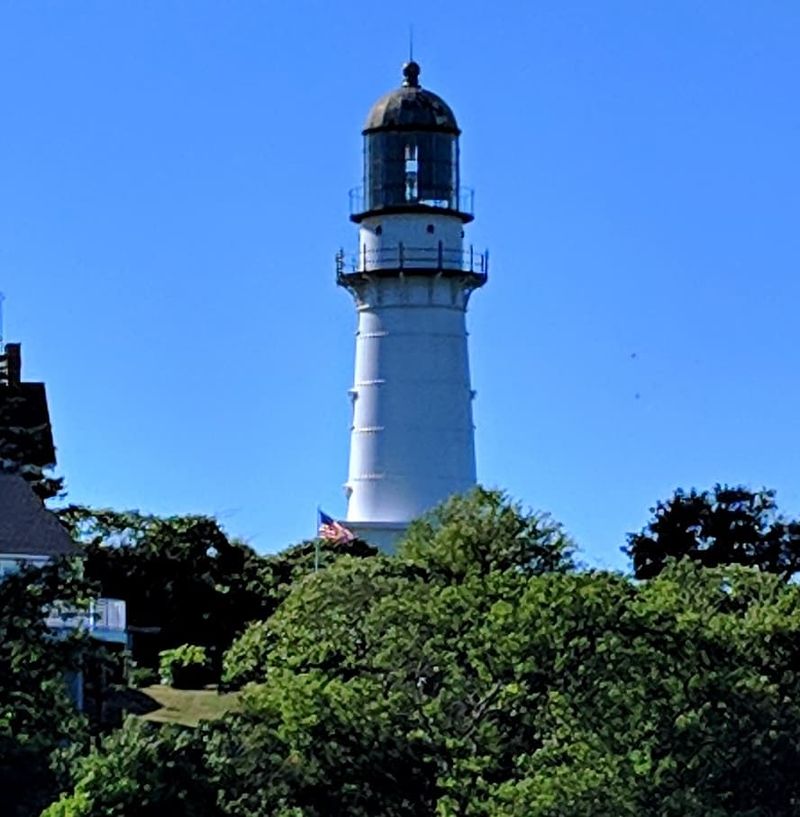
Cape Elizabeth Lighthouse, often called Two Lights because of its famous twin towers, has a bold presence on the rocky shoreline of Cape Elizabeth, Maine.
Originally built as a pair in 1828 to help sailors distinguish it from other lights along the coast, only one tower remains active today. The inactive tower is privately owned, which gives the whole scene an intriguingly layered quality.
Two Lights State Park sits nearby and offers some of the most dramatic coastal scenery in southern Maine, though the lighthouse grounds themselves are not open to the public.
The park’s rocky shoreline is a fantastic place to watch the ocean do its most impressive work, especially during a storm or at high tide when waves roll in with serious force. Picnic tables and open grassy areas make it a popular spot for families and outdoor enthusiasts throughout the warmer months.
Edward Hopper famously painted the lighthouse here in the 1920s and 1930s, and standing on the headland, it is easy to understand what drew him to this particular stretch of coast. The light and shadow play on the granite rocks and white tower walls is remarkable at almost any time of day.
Cape Elizabeth Lighthouse is located near Two Lights Road, Cape Elizabeth, Maine 04107. Combine this visit with a stop at the Lobster Shack at Two Lights for a full afternoon well spent.
7. Goat Island Lighthouse
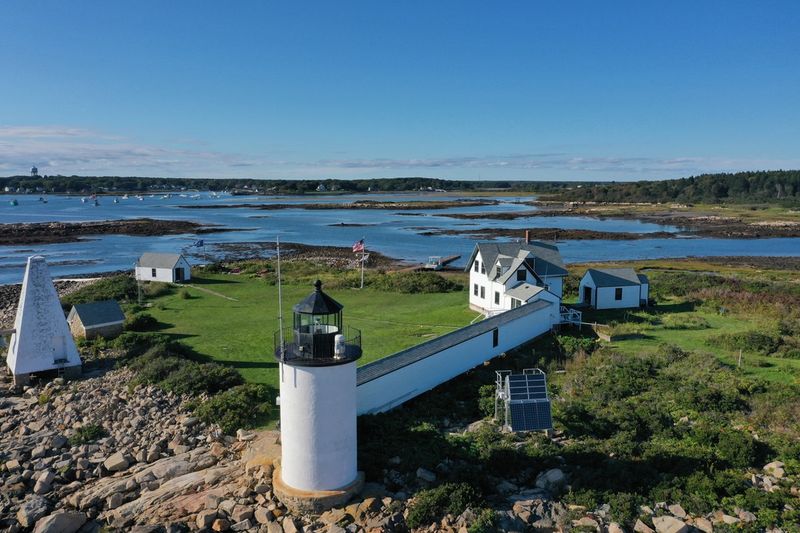
Goat Island Lighthouse sits on a small, low-lying island in Cape Porpoise Harbor in Kennebunkport, Maine, and it has a quiet, almost secretive quality that sets it apart from the more heavily visited lights along the coast.
The light station dates to the 1830s, while the current tower was first lit in 1859, and the property is now managed by the Kennebunkport Conservation Trust, which has done excellent work preserving the historic structures.
Getting a good look at Goat Island Light requires either a kayak or a boat tour, since the island is not connected to the mainland.
Several local outfitters in Kennebunkport offer water-based tours that pass by the lighthouse, giving you a close-up view of the tower and its charming keeper’s cottage. Paddling out on your own is also a popular option when conditions are calm.
From the water, the lighthouse frames beautifully against the open sky, and on clear days you can see the Walker’s Point estate nearby, a well-known landmark in its own right.
The surrounding waters are rich with wildlife, and harbor seals are frequently spotted lounging on the ledges around the island. Goat Island Lighthouse is located off the coast of Kennebunkport, Maine 04046.
It is a rewarding destination for anyone willing to get out on the water.
8. Whaleback Lighthouse
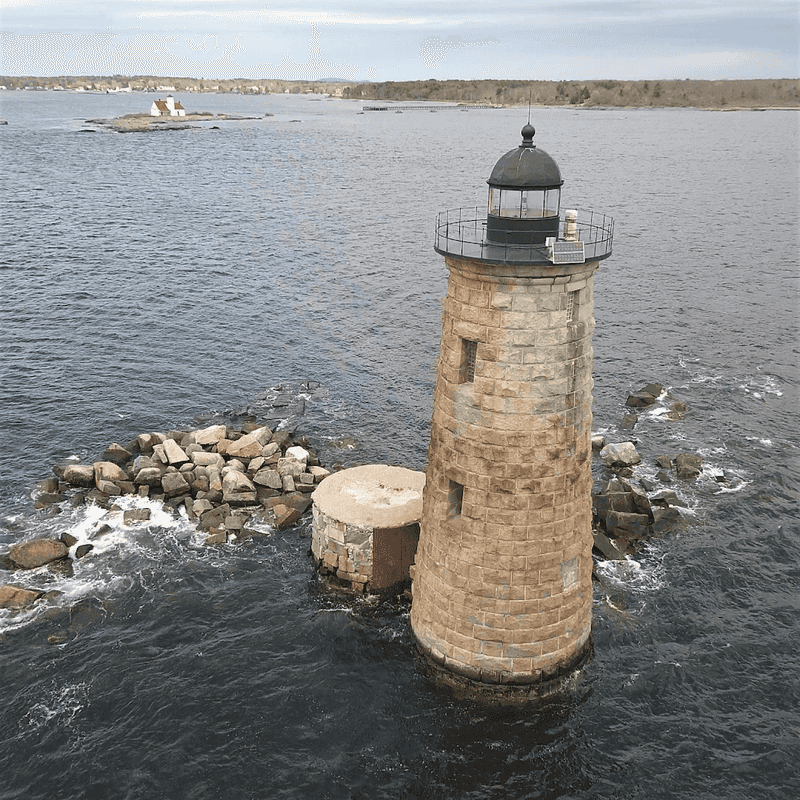
Bold, dark, and seemingly growing straight out of the ocean, Whaleback Lighthouse is one of the most visually striking towers on the southern Maine coast.
Perched on a submerged granite ledge at the mouth of the Piscataqua River between Kittery, Maine and Portsmouth, New Hampshire, this lighthouse looks like it was carved from the sea floor itself.
The current granite structure dates to 1872 and replaced an earlier tower that was repeatedly battered by storms.
Whaleback is not accessible by land, so the best way to appreciate it is from a boat tour departing from Portsmouth or from the shore at Fort Foster Park in Kittery Point.
On clear days, the tower is visible from several points along the southern Maine coastline, and it photographs exceptionally well from the water. Its dark granite exterior makes it look dramatically different from the white towers that dominate the region.
The lighthouse marks a historically important shipping channel that has been active for centuries, and the engineering required to build a stable structure on such an exposed ledge was genuinely impressive for its era.
There are no interior tours available, but the exterior views from the water are more than worth the trip. Fort Foster Park is located at 92 Pocahontas Road, Kittery Point, Maine 03905, and offers a solid vantage point on a clear day.
9. Ram Island Ledge Lighthouse
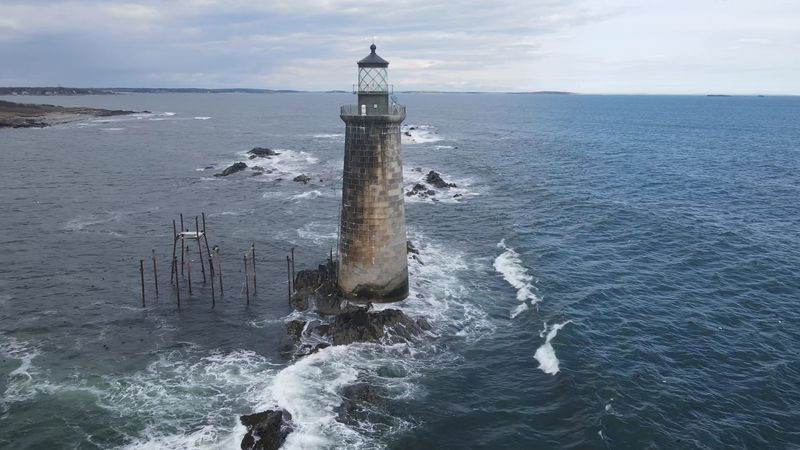
Ram Island Ledge Lighthouse rises with impressive confidence from a rocky ledge in Casco Bay, just offshore from Portland, Maine.
The granite tower, completed in 1905, rises about 90 feet, with a focal plane of roughly 77 feet, and was built to mark a dangerous reef that had caused numerous shipwrecks over the years. Its solid, no-nonsense construction reflects the serious maritime purpose it was designed to serve.
Like several of the offshore lights in this region, Ram Island Ledge is not reachable by land. Boat tours operating out of Portland Harbor often include it in their itineraries, and it is also visible from various points along the Cape Elizabeth shoreline on clear days.
The lighthouse was automated in 1959 and is now privately owned while remaining an active aid to navigation.
What makes Ram Island Ledge especially interesting to lighthouse enthusiasts is its construction story. Workers faced brutal conditions on the exposed ledge while assembling the granite blocks, and the project required years of careful planning and execution.
The result is a tower built to last, and more than a century later it is still doing exactly that. For the best views, consider booking a Casco Bay Lines ferry trip or a dedicated lighthouse boat tour departing from Portland, Maine 04101.
10. Halfway Rock Lighthouse
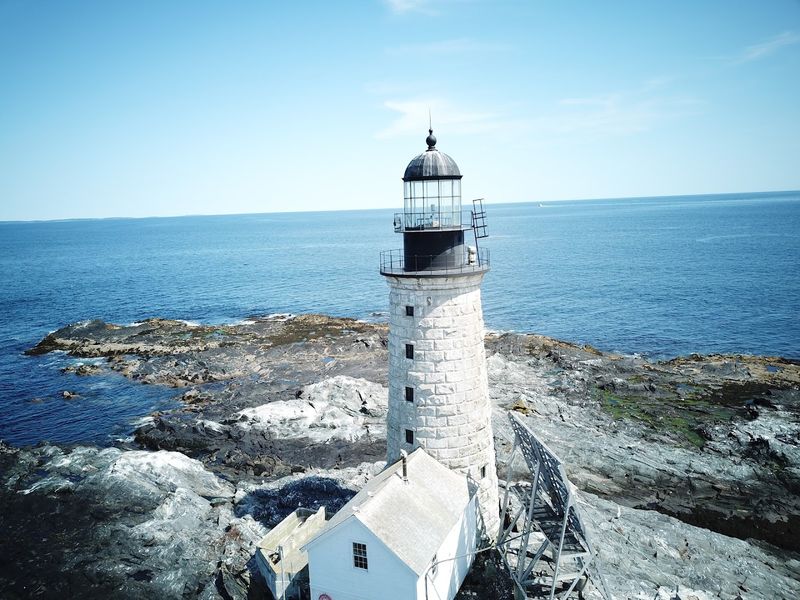
Halfway Rock Lighthouse earns its name honestly. It sits on a tiny, isolated ledge almost exactly halfway between Cape Small and Cape Elizabeth in Casco Bay, Maine, roughly ten miles from the nearest shore.
That kind of remoteness gives it a mystique that is hard to match along this coastline. Sailors have relied on this light since 1871 to navigate one of the busiest stretches of water in New England.
The square granite tower stands about 76 feet tall and was built to withstand the full fury of open ocean conditions.
Lighthouse keepers stationed here in the 19th and early 20th centuries endured long, isolated postings with limited contact with the mainland, and reading about their experiences gives you a real appreciation for the dedication required. The light was automated in 1975.
Getting a close look at Halfway Rock requires a private boat or a specialized lighthouse cruise, as it sits well offshore with no public access to the ledge itself.
Casco Bay boat tours sometimes pass near enough for good photographs, and on exceptionally clear days the tower is visible from elevated points along the shore.
Halfway Rock Lighthouse is part of what makes Casco Bay so rich in maritime history, and spotting it from the water feels like a small but satisfying adventure.
11. Boon Island Lighthouse
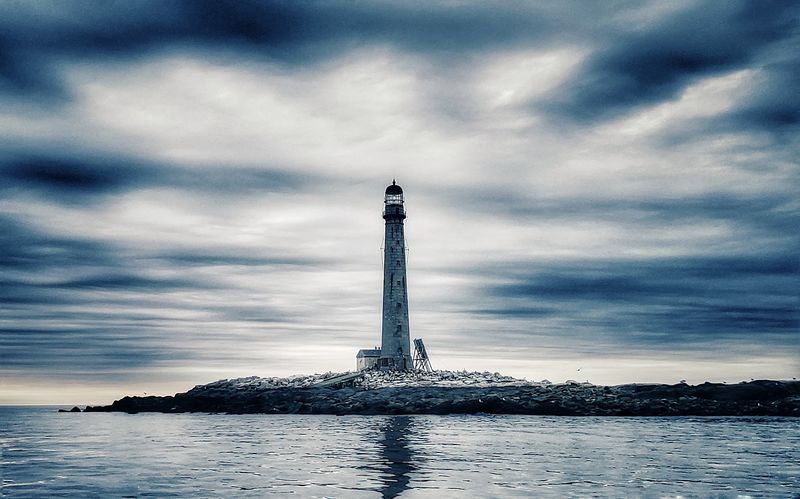
Standing at 133 feet tall, Boon Island Lighthouse is the tallest lighthouse in Maine and one of the most dramatically isolated in all of New England. The tower sits on a tiny, treeless island about six miles off the coast of York, Maine, completely exposed to the open Gulf of Maine.
On stormy days, waves wash entirely over the island, and it is hard to imagine a more demanding environment for a lighthouse station.
The history of Boon Island is as gripping as its setting. A shipwreck here in 1710 stranded survivors on the island for weeks before rescue arrived, and that story inspired Kenneth Roberts to write a historical novel bearing the island’s name.
The current granite tower was completed in 1855 after earlier structures were repeatedly destroyed by storms. It is a monument to persistence as much as engineering.
Reaching Boon Island requires a private charter or a specialized boat tour from York or nearby communities, and landing on the island itself is generally not permitted.
The best approach is to book a tour that circles the island so you can appreciate the full scale of the tower from the water. For boat tours out of York Harbor, check local outfitters near York Harbor, Maine 03911.
Seeing Boon Island Light up close, rising alone from the sea, is a quietly unforgettable experience.