
The Soo Locks Are Opening Their Walls To Michigan Visitors For One Day Only This June
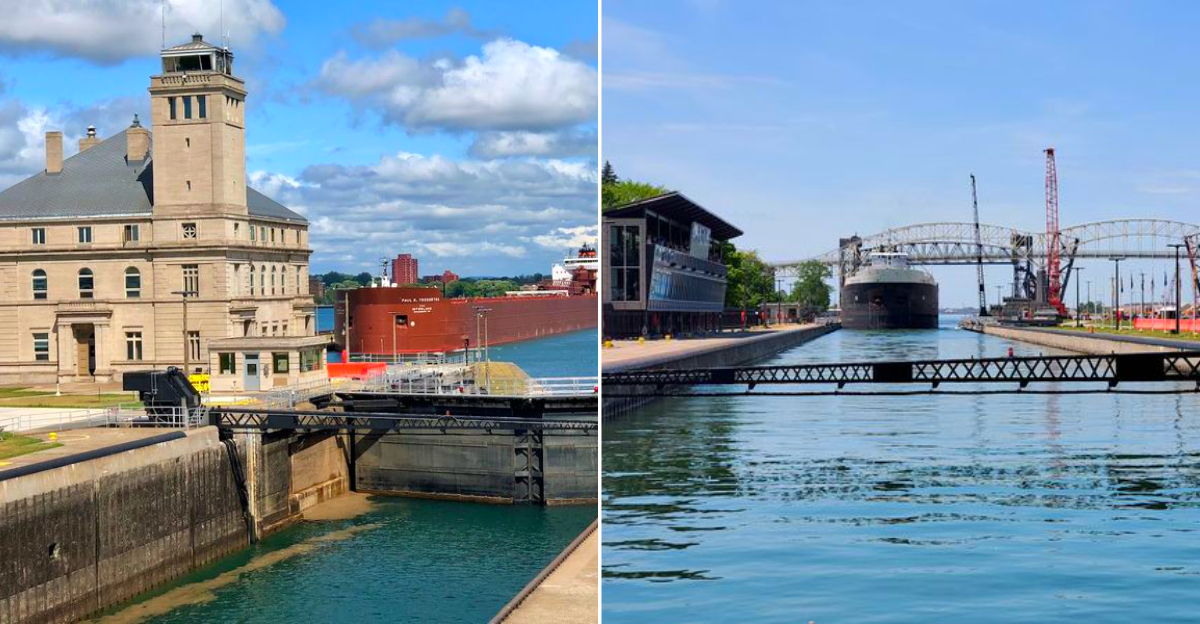
One day each year, the Army Corps of Engineers opens the gates and lets the public walk directly into the chambers that move thirty-eight thousand tons of steel through a forty-foot drop between two Great Lakes.
Engineers Day at the Soo Locks turns a piece of infrastructure most people only see from an observation deck into something you can touch, stand inside, feel beneath your boots. Concrete walls rise around you on every side.
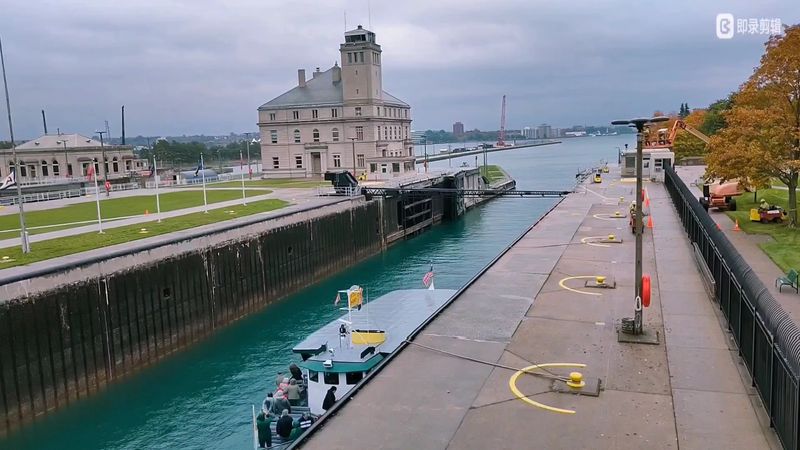
The scale suddenly feels personal. Freighters pass through the working locks while you watch from a catwalk above, hulls close enough to read the rust stains like a timeline.
Inside the visitor center, exhibits explain how this single engineering marvel makes possible the iron ore, limestone, plus coal shipments that keep the upper Midwest running.
A single June afternoon in Michigan lets you stand where the water level drops, feeling the force of something most never experience up close.
Arrive Early For The Best Rhythm
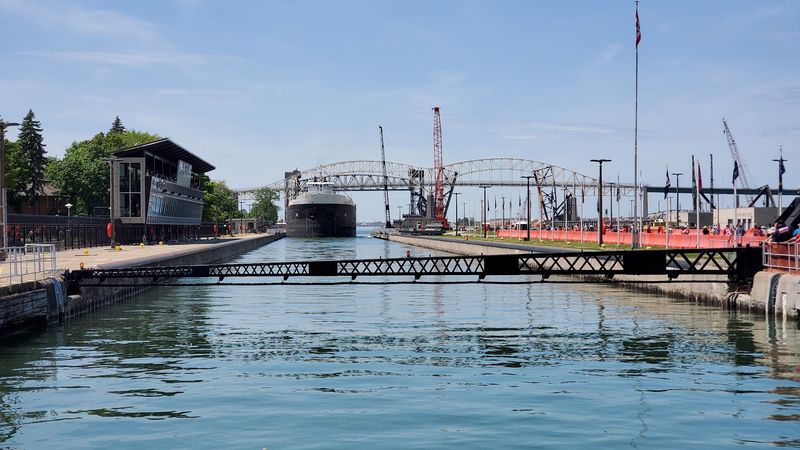
The smartest move is arriving early on Friday, June 26, 2026, before the park settles into its busiest midday rhythm. On Engineers Day, Soo Locks Canal Park is open to the public from 9 a.m. to 3:30 p.m., while the observation deck remains open until 10 p.m.
That longer evening window matters if you want more space to watch the river after the daytime crowds thin. Entry is one way through the main gate, with security screening for everyone. A clear bag no larger than 12 by 6 by 12 inches is required, with an exception for medical bags.
If you show up organized, the day begins with curiosity instead of fumbling, which feels like the right tone for a place built on precision and timing.
The Road North Ends Just Minutes From The Soo Locks
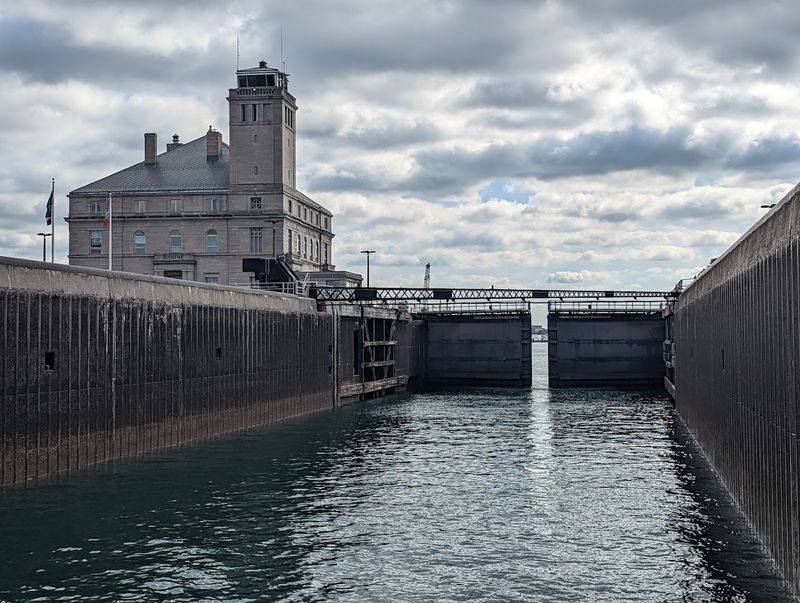
The Soo Locks sit at 209 Portage Avenue in downtown Sault Ste. Marie, Michigan. Drivers arriving on Interstate 75 can take Exit 394 onto Easterday Avenue, which leads toward the city center and riverfront.
From there, follow the downtown streets to Portage Avenue and look for the entrance to Soo Locks Park. The site feels woven into the city rather than isolated outside it, so the final approach passes storefronts and walkable downtown blocks.
Metered spaces are available along Portage Avenue, with additional free parking found around downtown. Once parked, the locks are reached by walking through the park entrance toward the waterfront.
Use The Observation Deck Like A Stage Seat
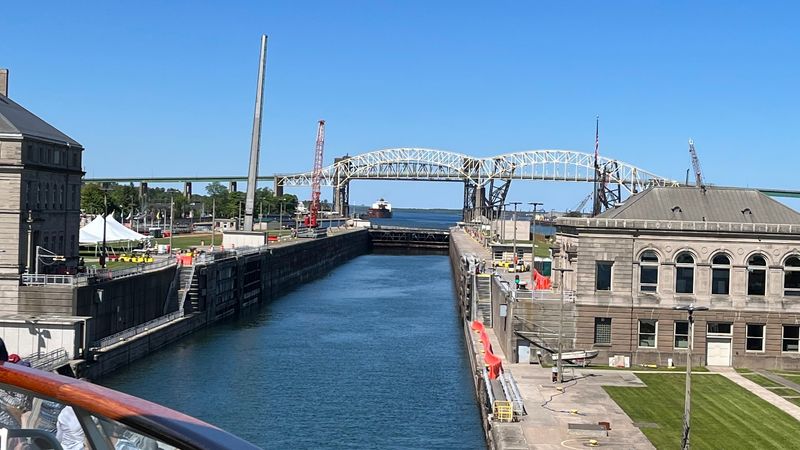
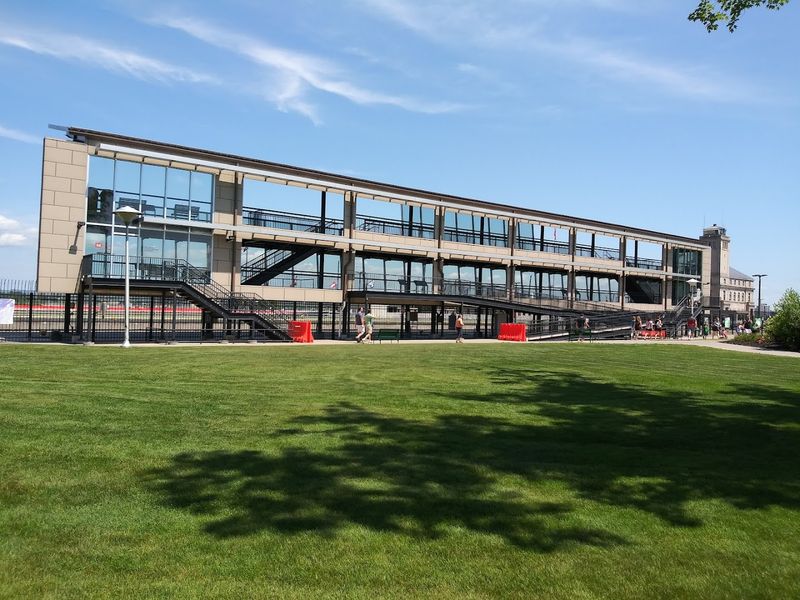
The observation deck is where scale stops being abstract and becomes almost physical. From there, ships do not simply pass through a lock chamber, they seem to negotiate with it, inch by inch, steel against geometry.
The roofed viewing setup also helps when lake weather turns moody, which it often can along the St. Marys River.
This is the place to linger rather than rush toward the next booth or sign. Watch the pace of gates, water, and line handling, and the whole site starts making sense.
The Soo Locks exist to move vessels between Lake Superior and the lower Great Lakes, bypassing river rapids and a 21-foot change in elevation, but on the deck, that fact becomes surprisingly vivid.
Give The Visitor Center A Proper Half Hour
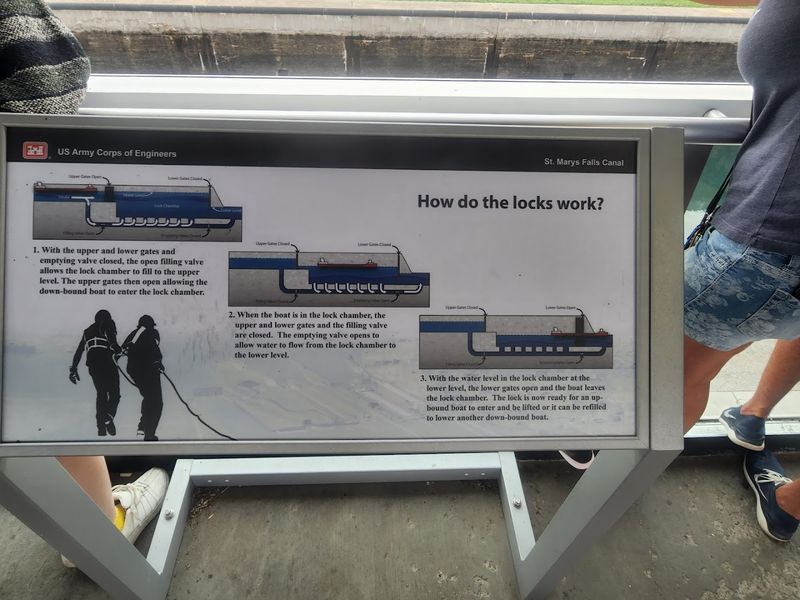
The Visitor Center is easy to underestimate because the river action outside is so magnetic. Still, giving it a solid half hour changes the rest of your visit, especially if you want the mechanics and history to click into place.
It is open from 10 a.m. to 7 p.m. on Engineers Day, which gives you a wider window than Canal Park itself.
I like visiting after watching one lockage first, not before. Once you have seen the gates, walls, and vessels in motion, the exhibits land with more force.
The center explains the role of the U.S. Army Corps of Engineers, the locks’ operating context, and the broader story of Great Lakes navigation without asking you to pretend engineering is dry or detached from daily life.
Treat Engineers Day As A Working Celebration
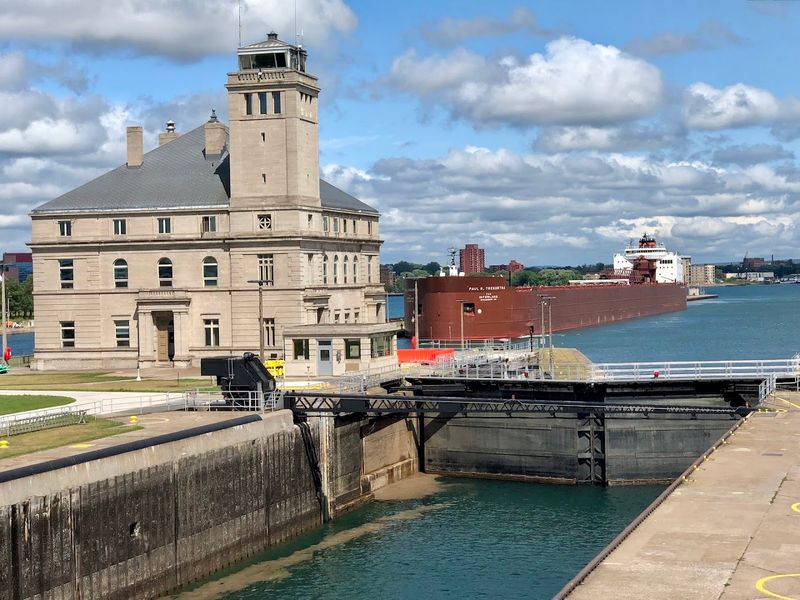
There is a civic texture to Engineers Day that sets it apart from a standard sightseeing stop. The event has been hosted since 1975, except for 2020, and it honors both the engineers who built the Soo Locks and the people who maintain them now.
That lineage gives the day a grounded feeling, more purposeful than nostalgic.
You can feel it in the mix of exhibits, stakeholder missions, community groups, and informational booths inside the park. Rather than staging the locks as a spectacle alone, the event frames them as an active public asset.
For visitors, that means the most rewarding approach is curiosity over checklist behavior. Ask questions, read carefully, and let the place explain itself in its own technical, river-shaped language.
Pack Light And Respect The Security Reality
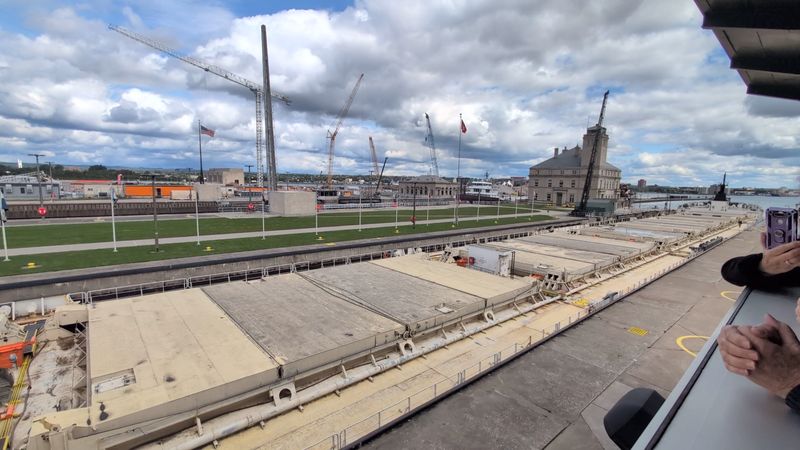
The practical rules here are not decorative, and ignoring them will waste your time. All visitors entering Soo Locks Park are subject to a security search, and prohibited items include firearms, weapons including knives of any size, drugs, pets except service animals, skateboards, and bicycles.
Even a small pocketknife can turn into an annoying detour back to the car.
The bag policy is equally specific, so treat it like an airport-lite situation. Clear bags must be no larger than 12 inches long, 6 inches deep, and 12 inches wide, while diaper bags are not permitted and medical bags are exempt.
A little discipline before you leave your hotel or parking spot makes the whole day noticeably calmer and faster.
Let The Construction Story Be Part Of The Visit
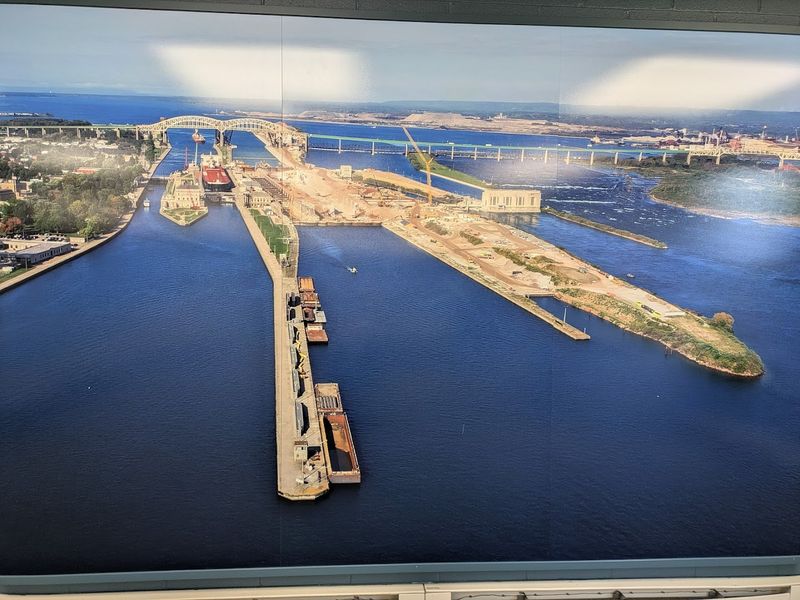
One of the most interesting things about visiting in 2026 is that the site is not frozen for admiration. Construction activity tied to the New Lock at the Soo project is one reason visitors cannot cross the locks during Engineers Day this year.
Instead of reading that as a disappointment only, it helps to see it as evidence that this landscape is still evolving.
The Soo Locks have always been about adaptation, maintenance, and large-scale problem solving. Standing near them while another chapter is actively under construction gives the place a live-wire quality.
You are not merely looking at industrial heritage, but at an unfinished sentence in Great Lakes transportation, which is a rarer and more memorable travel experience than polished completeness.
Pair The Park With Downtown Portage Avenue
The day spills beyond the lock walls, and that broader footprint makes it feel bigger than a single attraction. On June 26, 2026, part of West Portage Avenue between Ferris Street and Osborn Boulevard is closed to vehicle traffic from 6 a.m. to 6 p.m. and opened to pedestrians and vendors.
More than 50 vendors are expected, which gives the afternoon a local pulse.
This is where the engineered grandeur of the river meets ordinary town life. After a few focused hours at Canal Park, the shift in texture is welcome: sidewalks, browsing, and conversation instead of concrete chambers and vessel schedules.
If you plan your timing well, downtown keeps the day from feeling like a one-note infrastructure pilgrimage.
Make Time For The Other Freshwater Stops Nearby
Engineers Day rewards a wider lens, especially if you care about how a town interprets its river. Beyond the locks themselves, downtown hosts an Arts, Crafts and Family Fun Fair at the City Hall grounds from 10 a.m. to 6 p.m.
The Lake Superior State University Center for Freshwater Research and Education also offers an open house from 10 a.m. to 4 p.m.
Those companion events keep the day from becoming visually repetitive. After enough steel, water, and observation railings, it helps to step into spaces that connect the locks to community life and freshwater knowledge.
I would not skip the university stop if you enjoy seeing how a working maritime corridor also sits inside a region shaped by research, ecology, and public education.
Stay Long Enough To Notice The Soundscape
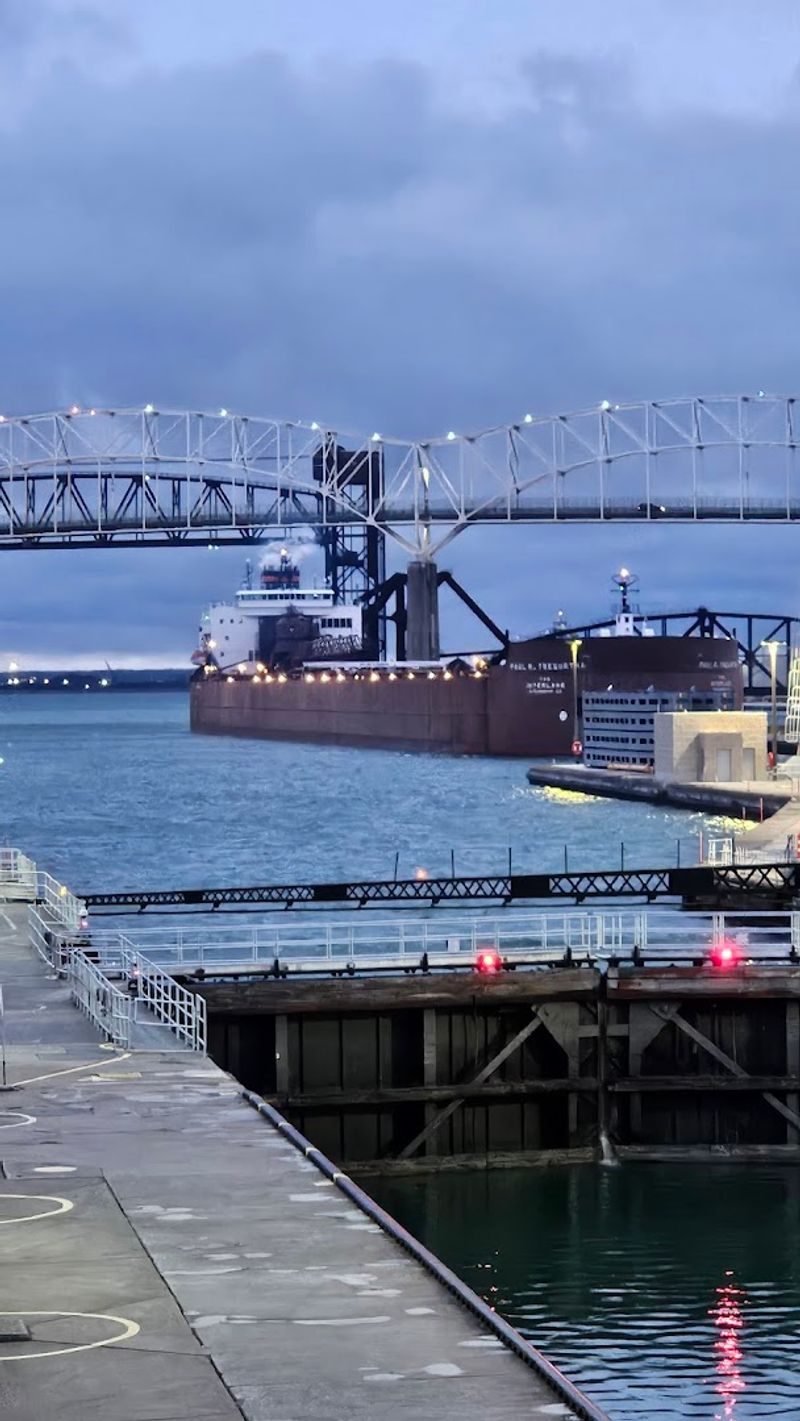
At first, the locks announce themselves through size, but sound is what makes them linger in memory. There is the churn of managed water, the metallic clank of operations, gulls stitching the air together, and the occasional low authority of a ship moving through.
If you stay beyond the busiest afternoon stretch, the whole place starts sounding more legible.
Because the park and observation deck remain open until 10 p.m., you can let the day loosen around the edges. That later hour often gives industrial landscapes a strange calm, less demonstrative and more reflective.
You stop trying to photograph everything and begin noticing cadence instead: how infrastructure speaks when no one is rushing you past it.
Remember Why The Locks Matter Beyond The View
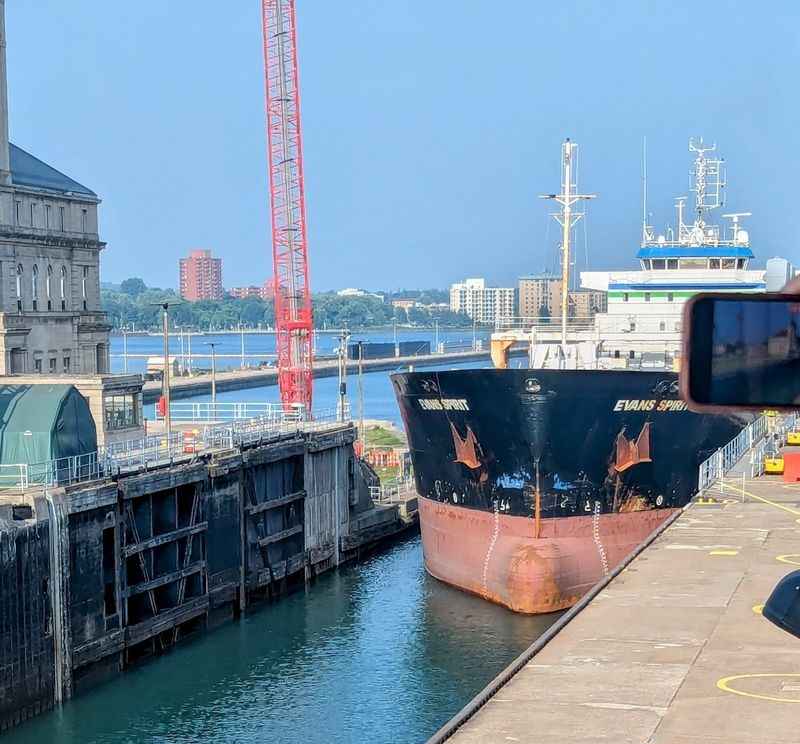
It is possible to visit the Soo Locks as a spectacle and leave satisfied, but that feels a little shallow. These parallel locks, operated and maintained by the U.S.
Army Corps of Engineers, let ships travel between Lake Superior and the lower Great Lakes by bypassing the St. Marys River rapids. The river drops about 21 feet here, and the locks make that obstacle manageable.
That functional fact is the reason the place has such gravity. Even on a lively June event day, what you are seeing is not performance but infrastructure doing essential work.
The reward of visiting is that usefulness and beauty are inseparable here. Few attractions make practical intelligence feel so visible, or so oddly moving, once you really pay attention.