
This Towering Maine Statue Has A Backstory As Big As The Monument

Some roadside giants make you laugh at first, then somehow leave you genuinely impressed. In Bangor, Maine, a towering lumberjack on Main Street does exactly that, standing more than 31 feet tall with an axe in hand and the kind of expression that makes passing cars feel tiny.
Photos give you the idea, but they do not prepare you for the moment you stand near his boots and have to tilt your head way back just to take him in. This larger-than-life landmark may look like a quirky photo stop, but its story runs deeper than flannel, folklore, and oversized boots.
Built with local pride and tied to Maine’s lumber history, it has become one of Bangor’s most memorable sights.
Built For Bangor’s Big Year
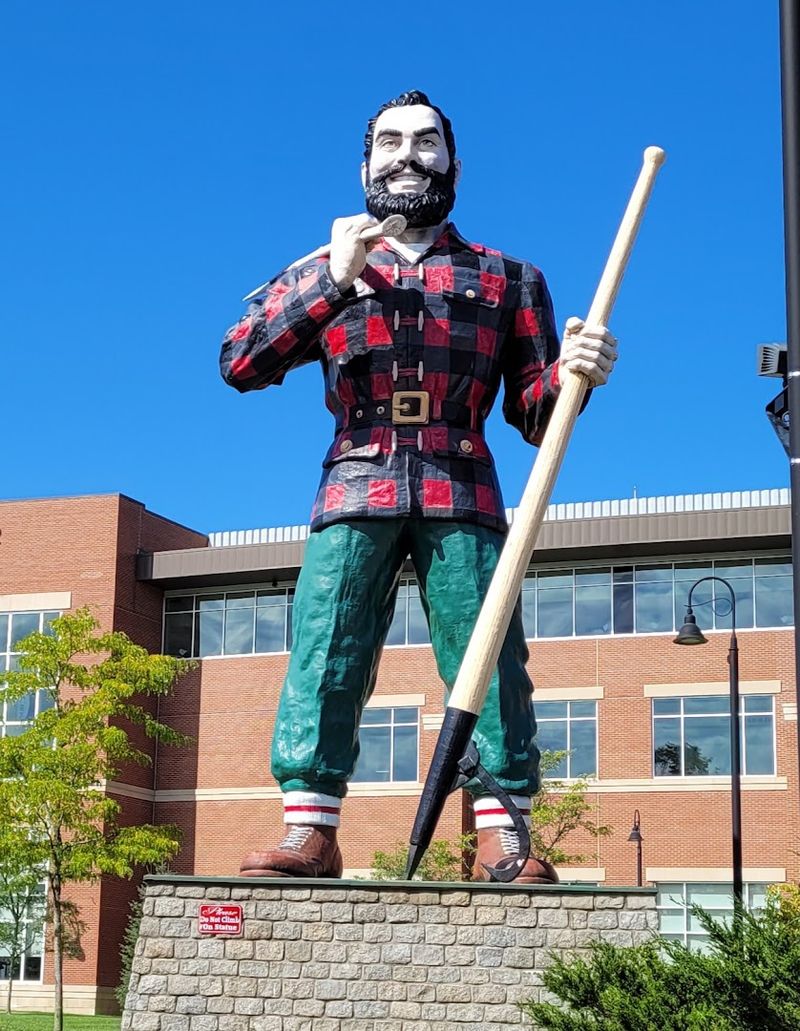
Back in 1959, Bangor was gearing up for a major milestone: its 125th anniversary as an incorporated city. Local organizers wanted something bold and unforgettable to mark the 125th anniversary celebration, and a towering statue of Paul Bunyan fit the bill perfectly.
The statue was commissioned specifically for the centennial celebration, giving the monument a clear and meaningful origin story tied to local pride. It was not a random artistic project or a tourist trap dreamed up by a marketing team.
It was a genuine tribute from a city that wanted to honor its own history in a big way.
Bangor had long been one of the most important lumber towns in the entire country during the 19th century, so connecting the city’s birthday to the most famous lumberjack in American folklore made perfect sense.
The centennial gave the statue a purpose that still resonates with visitors today who take the time to read the informational plaques surrounding it.
Bangor’s 31-Foot Giant

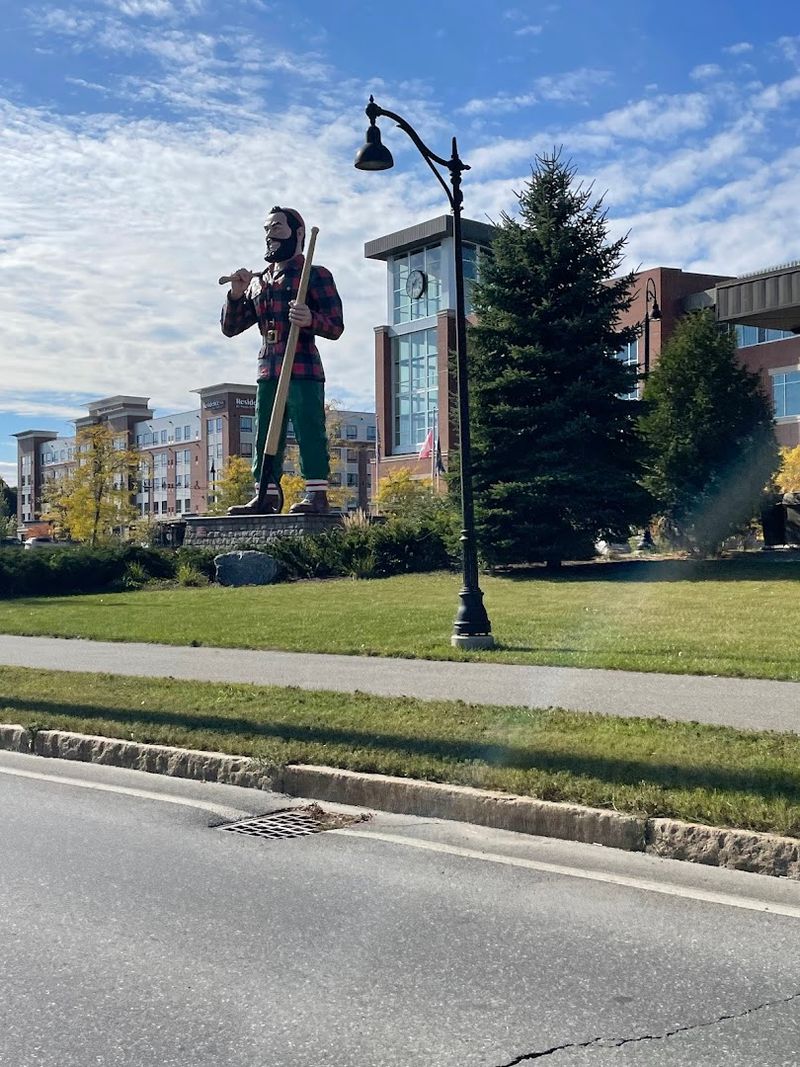
Height is kind of Paul Bunyan’s whole brand, so it makes sense that the Bangor statue does not hold back in the vertical department. The figure stands approximately 31 feet tall and weighs about 3,700 pounds, making it one of Bangor’s most recognizable roadside landmarks.
When you walk up to the base, the sheer size hits you in a way that photographs simply cannot capture. Children standing nearby look like action figures, and even tall adults feel surprisingly small.
That sense of scale is part of what makes the visit so memorable and photo-worthy.
The statue weighs around 3,700 pounds, which is a detail that somehow makes the whole thing even more impressive once you are standing underneath it.
Engineers had to design a sturdy internal framework to support that kind of mass while keeping the exterior looking sharp and detailed. Every inch of that height was intentional, and it shows.
The Legend Starts Here… Maybe
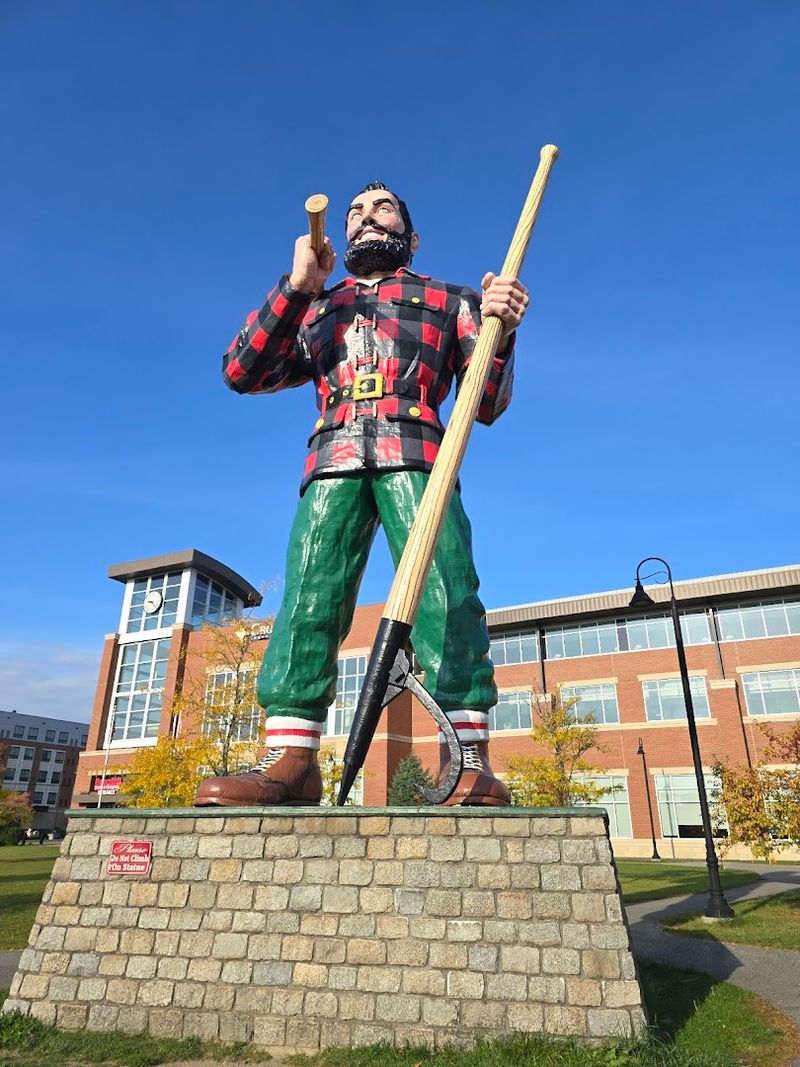
Here is where things get a little competitive. Bangor, Maine proudly claims to be the birthplace of Paul Bunyan, a claim that not everyone agrees with since the legendary lumberjack is also claimed by several other towns across the northern United States and Canada.
The folklore surrounding Paul Bunyan is genuinely murky when it comes to origins. Some historians trace early versions of the stories to French-Canadian logging camps, while others point to Michigan or Minnesota as the true cradle of the legend.
Bangor, however, leans into its claim with enthusiasm and a 31-foot statue to back it up. What gives Bangor’s claim some weight is the city’s deep historical connection to the logging industry.
During the 19th century, Bangor was one of the busiest lumber ports in the world, shipping timber across the globe. That real-world logging heritage makes it easy to see why the city felt a natural kinship with the most famous lumberjack ever invented.
The Statue Is Made From Fiberglass

Long before fiberglass became a common material for everything from boats to bathtubs, it was already being used to build oversized roadside attractions across America.
The Paul Bunyan Statue in Bangor is one of those classic fiberglass monuments, constructed using techniques that were considered quite modern for their time in the late 1950s.
Fiberglass was a smart choice for an outdoor statue meant to survive New England winters. The material resists rust, handles freezing temperatures reasonably well, and can be painted and repainted to keep the colors looking fresh over the decades.
That is partly why the statue has held up as well as it has since 1959.
The craftsmanship on the fiberglass surface is genuinely detailed, with visible texture in the flannel shirt, realistic facial features including a full beard, and carefully painted colors.
Maintaining that level of detail on a structure that spends every day outdoors in Maine weather is no small achievement, and it speaks to the quality of the original construction work.
Stephen King Made Him Scary

Stephen King fans visiting Bangor already have a built-in reason to swing by Main Street, and the Paul Bunyan Statue adds an extra layer of pop culture significance to the stop.
The statue makes an appearance in King’s novel IT, set in the fictional town of Derry, which is widely understood to be based on Bangor.
In the story, the statue takes on a sinister quality, which is a very Stephen King thing to do with a perfectly innocent roadside landmark. King has lived in Bangor for decades and has drawn on the city’s streets, landmarks, and atmosphere throughout his writing career.
The Paul Bunyan Statue is one of the most recognizable real-world touchstones woven into his fictional universe.
For fans of the book or the film adaptations, standing in front of the statue carries a different kind of chill than it does for casual tourists. It is a rare opportunity to see a real location that inspired one of the most famous horror writers of all time, which gives the visit a genuinely unique dimension.
The Statue Is Open 24 Hours A Day

One of the most visitor-friendly things about the Paul Bunyan Statue is that it never closes. The monument stands outdoors on Main Street and is accessible around the clock, every single day of the year, with no admission fee required to visit.
That kind of open access makes it an easy addition to any itinerary, whether you are passing through Bangor at noon or rolling in late after a long road trip.
I personally arrived in the early evening and had the whole area to myself for a few minutes, which made for a surprisingly peaceful and personal experience with the statue.
The 24-hour accessibility also means the statue looks completely different depending on when you visit. Daytime visits are great for reading the informational plaques and getting clear photographs.
Evening visits offer a moodier atmosphere with streetlights casting interesting shadows across the fiberglass figure. Both versions of the experience are worth trying if you happen to be in Bangor more than once.
The Story At His Feet
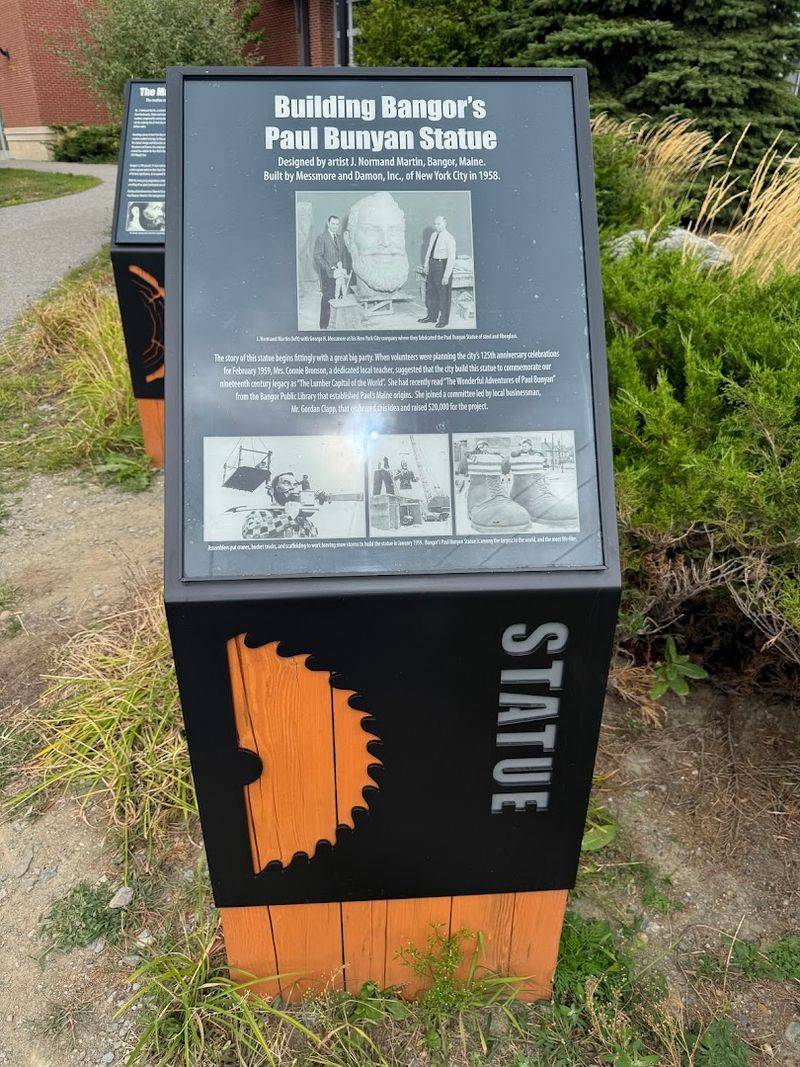
A statue this size deserves some context, and the city of Bangor delivers on that front with a series of informational plaques arranged around the base of the monument.
These panels cover the mythology of Paul Bunyan, the history of the statue itself, and the logging heritage that connects Bangor to the legend.
I spent a good ten minutes reading through the plaques on my visit, and I genuinely learned things I did not expect to find on a quick roadside stop.
The writing is accessible and engaging, covering folklore, local history, and construction details in a way that holds your attention without feeling like a textbook.
The plaques transform what could be a simple photo opportunity into a small but satisfying educational experience.
Families with curious kids will find plenty to talk about while standing there, and solo travelers who enjoy context with their landmarks will appreciate the extra effort the city put into telling the full story. It is a thoughtful addition that elevates the whole visit.
Flannel, Beard, And Green Pants
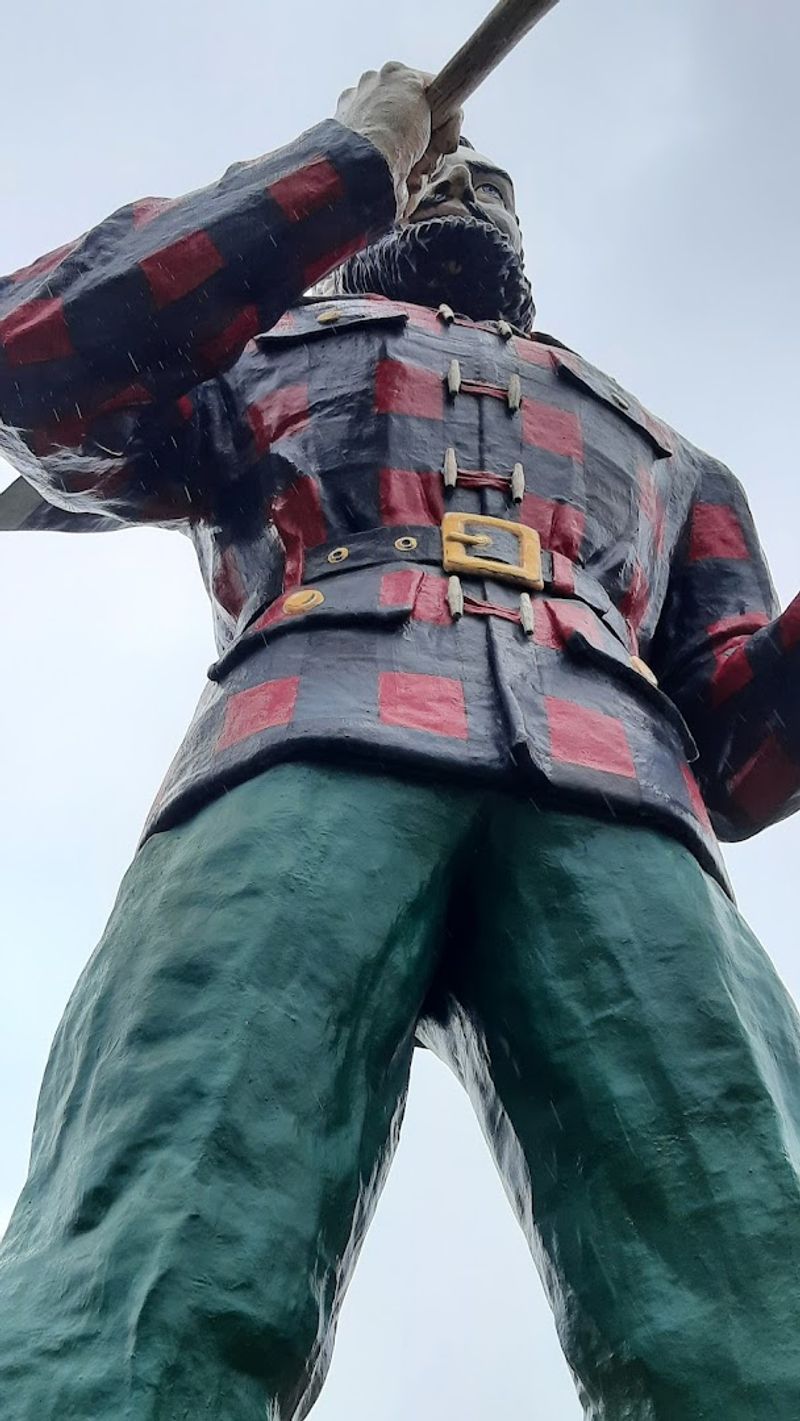
Paul Bunyan’s outfit is one of the most debated details about the Bangor statue, and once you see it in person, you will understand why.
The figure is dressed in a bold red and black flannel shirt, which is exactly what you would expect from a legendary lumberjack. The pants, however, are a vivid shade of green that has raised more than a few eyebrows over the years.
The green pants are not a mistake or a faded color. They were painted that way intentionally, and they have become one of the statue’s most memorable quirks.
Some visitors find them charmingly eccentric, while others simply accept it as part of the monument’s character.
Beyond the outfit, the statue also features a full beard, a sturdy build, and a large axe held firmly in one hand.
The overall look captures the rugged, larger-than-life image that Paul Bunyan has carried through American folklore for generations. It is a surprisingly well-detailed figure for a roadside attraction built in the late 1950s.
A Quick Parking Heads-Up

Here is a practical heads-up that will save you a few minutes of circling: the Paul Bunyan Statue does not have its own dedicated parking lot. It sits right on busy Main Street, and street parking directly in front of the monument is limited and sometimes unavailable during peak hours.
Most visitors end up parking in a nearby business lot or along a side street and walking a short distance to the statue.
The Cross Insurance Center nearby has a lot that some visitors use, and there are other options within a block or two. A quick scan of the surrounding streets usually turns up a workable spot without too much trouble.
The good news is that the walk from wherever you park is short, and the statue is visible from a distance so you will not get lost. Planning to spend about 15 to 20 minutes at the site is usually enough time to take photos, read the plaques, and soak in the full experience before heading back to your car.
Make It A Bangor Stroll
Location matters when you are planning a day out, and the Paul Bunyan Statue scores well on that front. It sits on Main Street in a part of Bangor that puts you within easy walking distance of the city’s waterfront along the Penobscot River, making it a natural pairing for a broader afternoon outing.
The waterfront area offers a relaxed change of pace after standing in the shadow of a 31-foot lumberjack. There are walking paths, views of the river, and a generally pleasant atmosphere that rounds out a visit to the statue nicely.
Combining both stops into a single afternoon gives you a fuller sense of what Bangor has to offer beyond the famous monument.
The neighborhood around the statue also includes other points of interest, and Stephen King’s former Bangor home is not far away for those who want to make a themed drive-by stop, though it is not open for public tours.
The whole area rewards a slow, curious walk more than a rushed drive-by, and the waterfront is the perfect way to finish the experience on a relaxed note.