
15 Stunning Chicago, Illinois Lobbies You Can Walk Into For Free
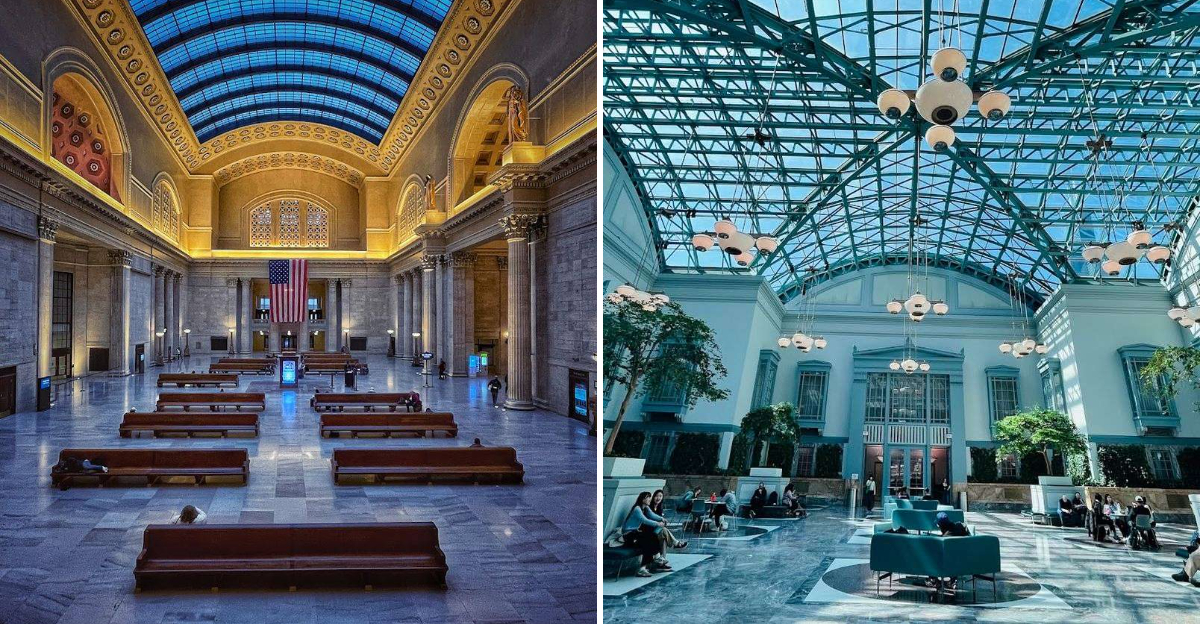
You do not need a museum ticket to see some of the most beautiful architecture in Illinois. In Chicago, some of the best moments are waiting right inside buildings people rush past every day.
One minute you are walking down the street, and the next you are standing under a glittering mosaic ceiling, a giant glass atrium, or a lobby that feels almost too grand for a quick visit. That is the fun of this kind of architecture walk.
It turns ordinary errands and busy blocks into little surprises. These 15 free lobbies prove that the city’s design magic is not locked away or reserved for experts.
You just need comfortable shoes, a curious eye, and a good reason to look up.
1. The Marquette Building
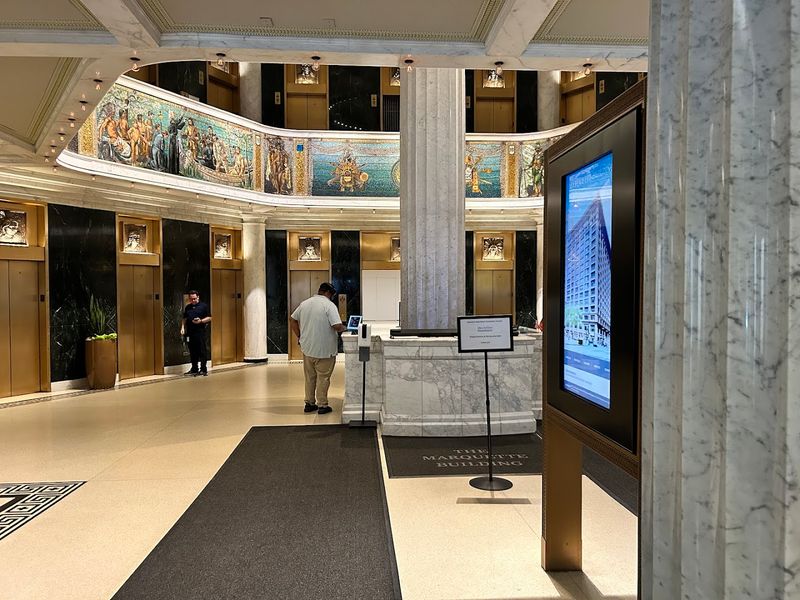
Few lobbies in Chicago reward curiosity quite like this one. The Marquette Building, located at 140 South Dearborn Street in the Loop, was completed in 1895 and stands as one of the finest surviving examples of the Chicago School of architecture.
What makes it genuinely unforgettable is the two-story rotunda covered in Tiffany glass mosaics depicting explorer Jacques Marquette’s journey through the Great Lakes region.
The bronze reliefs surrounding the elevator banks were crafted by Edward Kemeys, the same sculptor behind the famous lions at the Art Institute.
Look up, look around, and look closely because every inch of this lobby was designed to tell a story. Guided docent tours are available on weekday mornings, but even a solo visit during lunch hour will leave you speechless.
This is old Chicago showing off its best outfit.
2. The Old Post Office
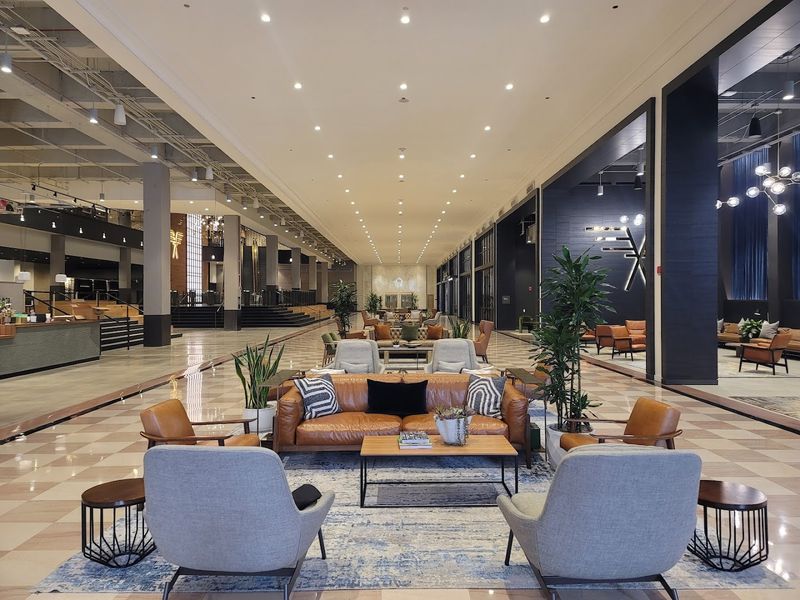
Straddling the Congress Parkway like a colossus, the Old Post Office at 433 West Van Buren Street is one of the largest buildings in the United States, and its restored public spaces are genuinely awe-inspiring.
After sitting vacant for over two decades, the building reopened in 2019 following a massive renovation that brought its Art Deco grandeur back to life.
The lobby features enormous terrazzo floors, soaring ceilings, and a scale that makes you feel wonderfully small in the best possible way. Originally opened in 1921 and expanded in 1932, the building once processed millions of mail pieces daily.
Today, it houses offices and event spaces, and visitors can generally see the public-facing areas, though access may vary with security, tenant rules, and private events. The building’s sheer size alone makes it worth the detour on any Chicago itinerary.
3. The Chicago Board Of Trade
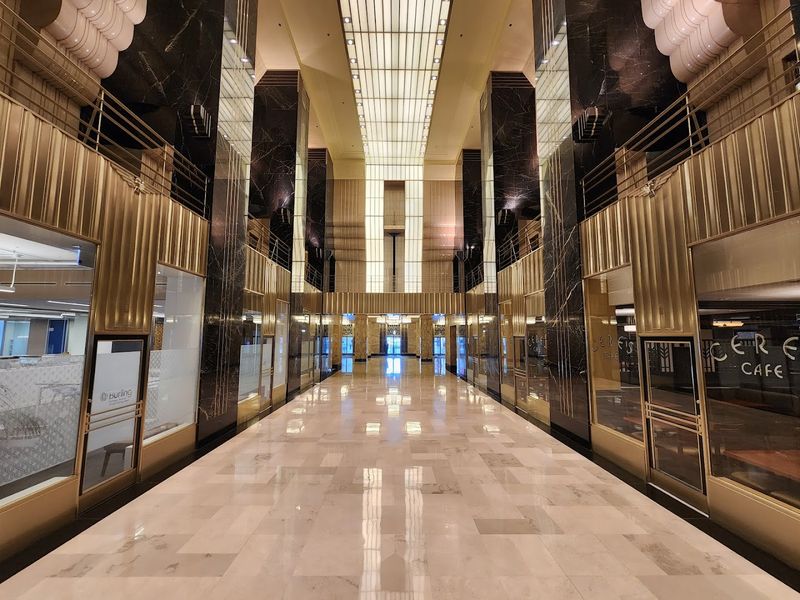
At 141 West Jackson Boulevard, the Chicago Board of Trade is one of the most recognizable silhouettes on the city skyline, crowned by a statue of Ceres, the Roman goddess of grain. But the exterior is just the beginning.
The lobby inside is a masterclass in Art Deco design, with sleek black marble walls, geometric floor patterns, and a sense of gravity that suits a building where financial history was made daily.
Constructed in 1930 and designed by the firm Holabird and Root, this was the tallest building in Chicago for nearly four decades.
Open-outcry trading is no longer the daily spectacle it once was, but the lobby and first-floor public areas remain accessible during posted weekday hours, with security screening.
There is something thrilling about standing in a space where commodities traders once sprinted past you on their way to the floor. History has a way of lingering in places like this one.
4. The Rookery Building
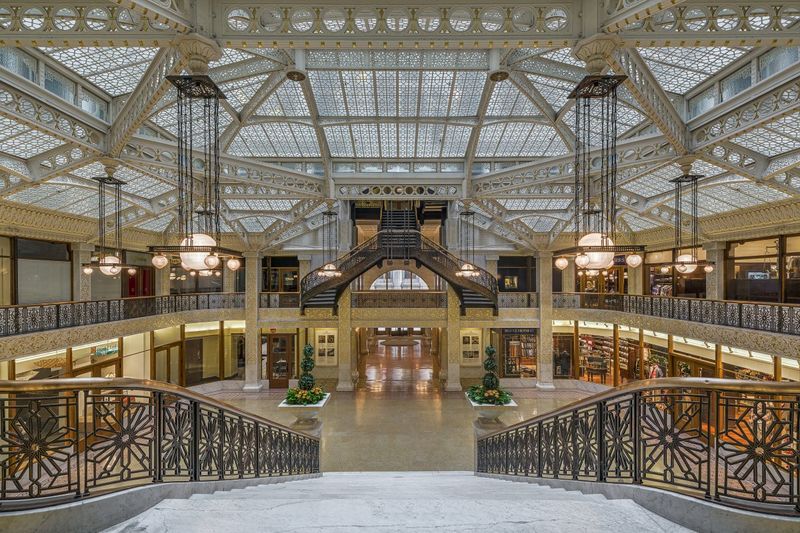
Originally completed in 1888, the Rookery Building at 209 South LaSalle Street carries a renovation story as impressive as its original construction.
The building’s light court was redesigned in 1905 by none other than Frank Lloyd Wright, who replaced its dark Victorian ironwork with a brighter, more refined aesthetic featuring white-painted metal and gold leaf accents.
The result is one of the most photographed interior spaces in the entire city, and rightfully so. Natural light pours through the glass ceiling and bounces off the intricate metalwork, creating an atmosphere that feels both grand and intimate at the same time.
The Rookery was designated a National Historic Landmark in 1972. The first-floor Light Court can generally be viewed for free during building hours, while paid guided tours run on a schedule for those who want the full story behind every decorative detail.
Plan to linger longer than you expect to.
5. The Palmer House Hilton
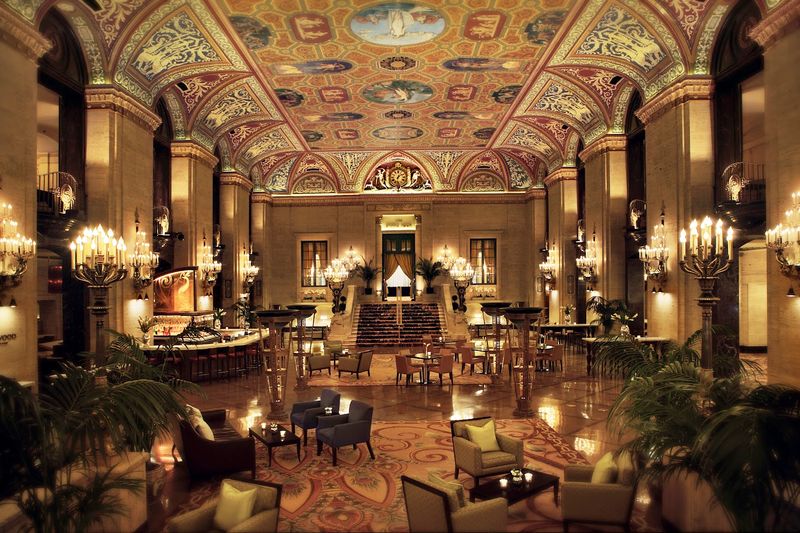
The Palmer House Hilton at 17 East Monroe Street has been a centerpiece of Chicago hospitality since 1871, making it one of the longest continuously operating hotels in the United States.
The current structure, the third incarnation of the original, was completed in 1925 and designed in a lavish Beaux-Arts style that pulls no punches when it comes to grandeur.
Walk through the lobby and tilt your head back to see the hand-painted ceiling murals, gilded moldings, and enormous crystal chandeliers that make the space feel more like a European palace than a hotel hallway. The Empire Room and grand corridor are open to the public during regular hours.
Fun fact: the hotel claims to have invented the brownie, created at the request of Bertha Palmer for the 1893 World’s Columbian Exposition. That alone makes it worth a visit and a stop at the bakery.
6. The Chicago Athletic Association Hotel
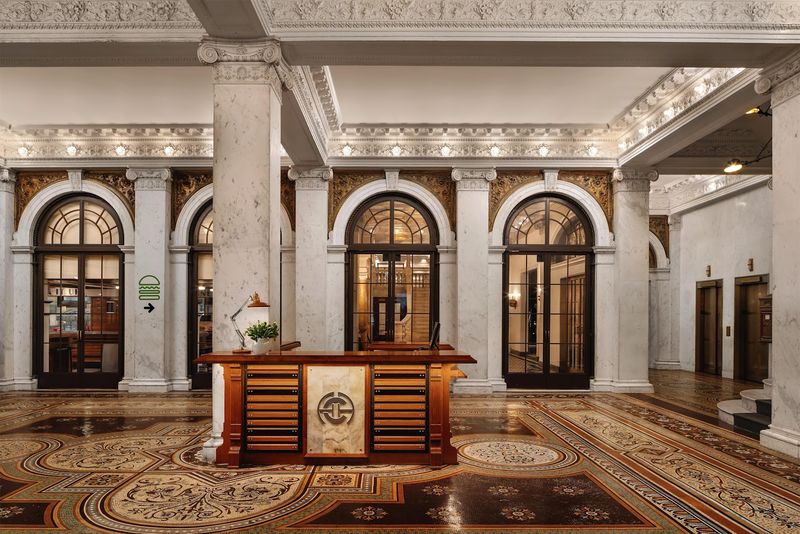
Right across from Millennium Park at 12 South Michigan Avenue, the Chicago Athletic Association Hotel occupies a building that opened in 1893 as a private men’s club.
The Gothic Revival and Venetian Gothic architecture on the exterior gives way to an interior that feels like a well-loved private library crossed with a grand sporting hall.
Dark wood paneling, exposed brick arches, vintage athletic memorabilia, and warm amber lighting create an atmosphere unlike any other hotel lobby in the city.
The building served as a social club for Chicago’s elite athletes and businessmen for most of the twentieth century before being converted into a boutique hotel in 2015.
Visitors are welcome in the public lobby areas, and the ground-floor spaces are worth exploring even if you are not a guest. The whole building feels like a secret Chicago kept to itself for far too long.
7. The Chicago Cultural Center
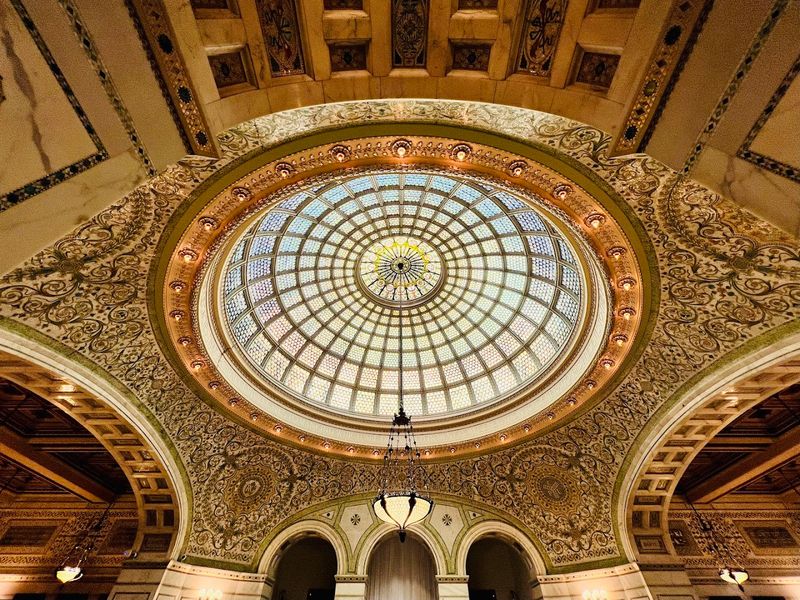
Built in 1897 as the city’s first public library, the Chicago Cultural Center at 78 East Washington Street is now one of the most spectacular free public buildings anywhere in the United States.
The building features two stunning stained glass domes, and the one in Preston Bradley Hall is widely considered among the finest Tiffany glass installations in the world.
Intricate marble mosaics, grand staircases, and ornate plasterwork fill every corridor, making a simple walk-through feel like a slow tour through a palace. Admission is completely free, and the building hosts rotating art exhibitions, concerts, and public programs year-round.
The Preston Bradley Hall dome measures nearly 38 feet in diameter and contains more than 30,000 individual pieces of Favrile glass. If you only visit one lobby on this entire list, make it this one and give yourself at least an hour to do it justice.
8. The Harold Washington Library Center
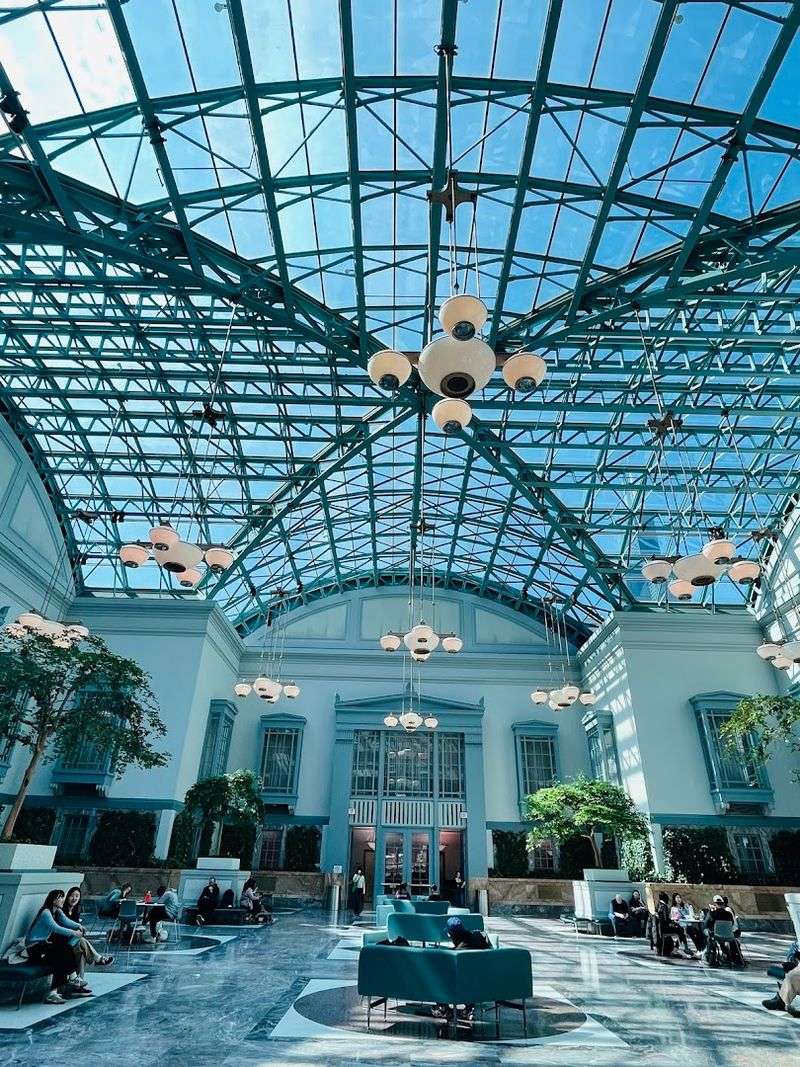
Named after Chicago’s first African American mayor, the Harold Washington Library Center at 400 South State Street has long been cited among the largest public library buildings in the world.
Opened in 1991, the building’s postmodern design blends Romanesque, Classical, and Chicago School influences into something that is either boldly original or wonderfully strange, depending on your taste.
The massive terracotta owls perched on the rooftop cornices are a beloved city landmark, but the interior is where the real magic happens.
The ninth-floor winter garden is a soaring glass atrium filled with natural light and greenery, offering one of the most peaceful free spaces in the entire Loop.
The lobby itself features grand arched windows and public art installations that change regularly. It is a working library, so keep your voice down, but do not hesitate to wander and look up at every opportunity.
9. THE MART (Merchandise Mart)
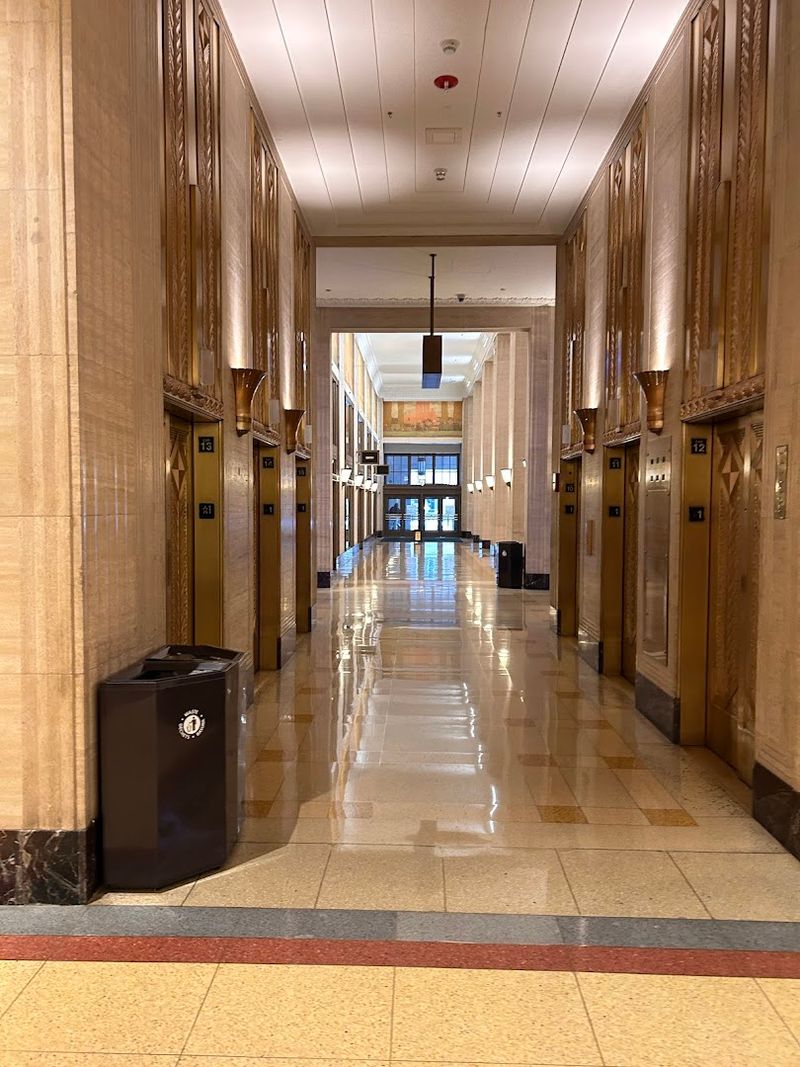
When it was completed in 1931, the Merchandise Mart along the Chicago River at 222 Merchandise Mart Plaza was the largest building in Illinois and the world by floor space, a title it held for over a decade.
Today it remains one of the largest commercial buildings on the planet, and its Art Deco lobby reflects that ambition at every turn.
Polished marble floors, bronze elevator surrounds, and a ceiling that seems to go on forever make the main lobby feel like the interior of a very well-dressed ocean liner. The building was once owned entirely by the Kennedy family from 1945 to 1998, which adds a layer of American history to every visit.
The public areas along the river level are accessible during business hours, and the building’s exterior riverfront plaza is a great spot for photos. Few buildings in Chicago carry this much commercial history wrapped in this much architectural elegance.
10. Freehand Chicago
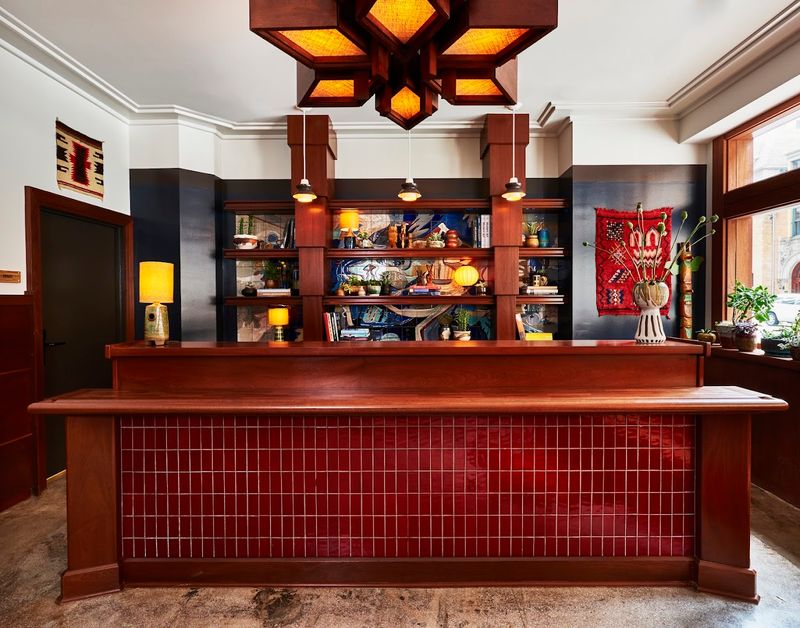
At 19 East Ohio Street in the River North neighborhood, Freehand Chicago occupies a 1927 building that once served as the Maryland Hotel.
The conversion into a design-forward boutique hotel brought a refreshingly relaxed and creative energy to a Loop-adjacent address, and the lobby is a perfect expression of that spirit.
Exposed brick, warm wood finishes, carefully curated vintage artwork, and mismatched but intentional furniture arrangements give the space a lived-in, creative-house feeling that stands in sharp contrast to the marble-and-gold lobbies elsewhere on this list.
The ground floor public areas flow openly between the lobby, a coffee counter, and social seating zones, making it easy to pop in without feeling like an intruder.
It is one of those rare hotel lobbies that actually makes you want to sit down and stay awhile. The vibe is creative, unhurried, and genuinely welcoming to curious visitors.
11. 311 South Wacker
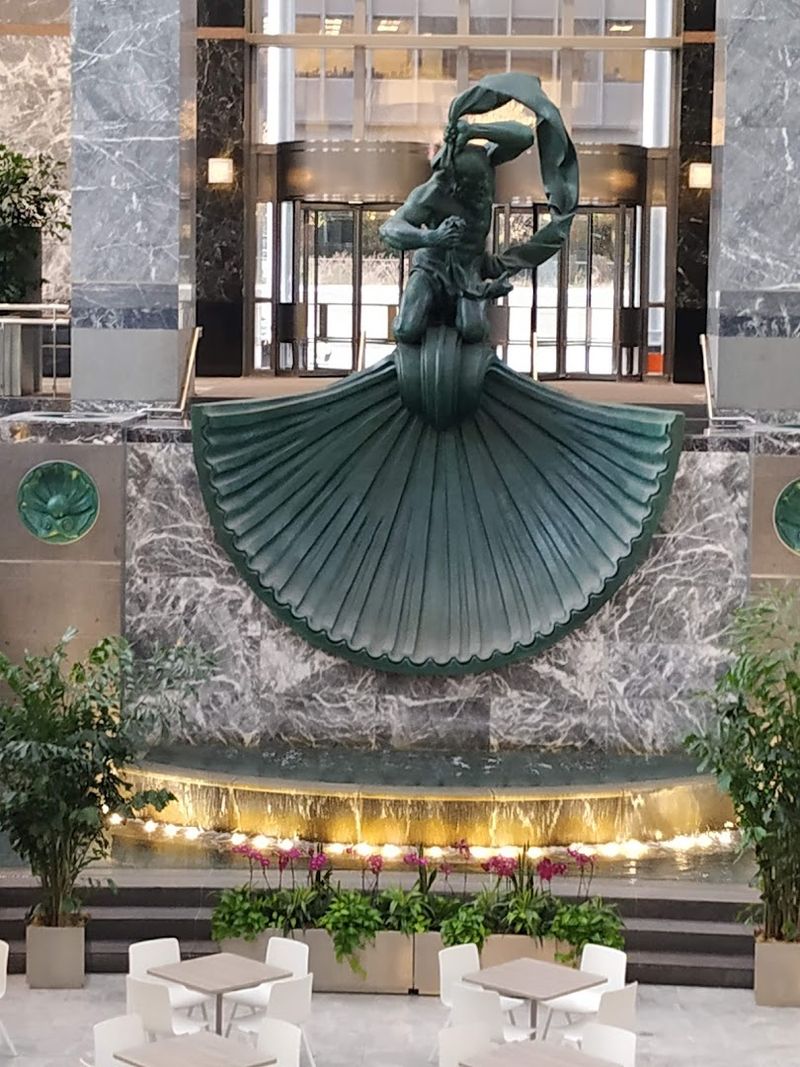
Completed in 1990, 311 South Wacker Drive was the first all-concrete skyscraper in Chicago and the tallest concrete building in the world at the time of its construction.
The tower’s distinctive pink granite exterior and illuminated crown make it a recognizable part of the skyline, but the lobby is what earns its spot on this list.
The ground-floor winter garden atrium features soaring glass walls, tropical plantings, a central fountain, and a sense of lush calm that feels completely removed from the busy streets outside.
Pink granite columns rise dramatically through the space, and the natural light that pours in throughout the day changes the mood from morning brightness to a warm afternoon glow.
The atrium is open to the public during business hours and provides one of the best free indoor retreats in the West Loop area. It is grand, unexpected, and genuinely restorative.
12. Fine Arts Building
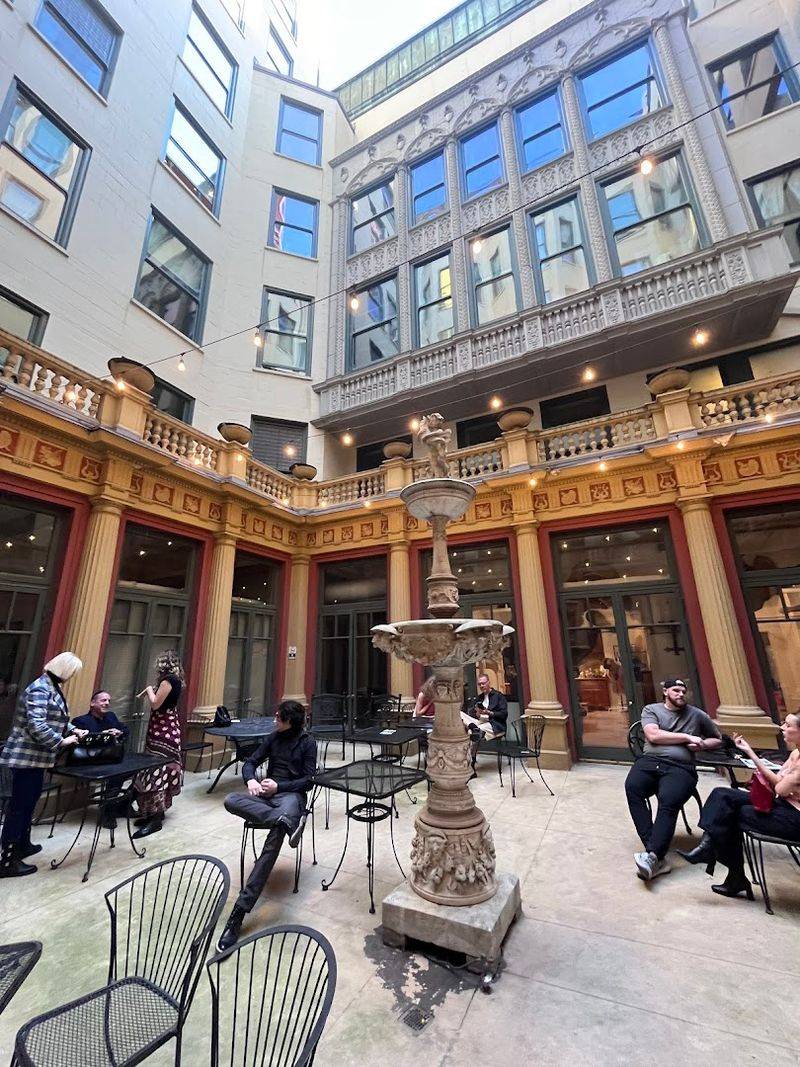
The Fine Arts Building at 410 South Michigan Avenue has been home to artists, musicians, and creative thinkers since 1898, and walking through its lobby feels like pressing your ear to a wall and hearing a century of creative work humming back at you.
Originally built for Studebaker’s carriage operations, the building was converted into studios and performance spaces in 1898 and has been a cultural hub ever since.
The lobby features original mosaic tile floors, carved wood detailing, antique brass fixtures, and an atmosphere of quiet artistic purpose that is hard to manufacture and impossible to fake. Tenants over the years have included L. Frank Baum, Frank Lloyd Wright, and Harriet Monroe.
Ride the manually operated Otis elevator if you get the chance since it is a genuine Chicago experience. The building is open to the public during regular hours, and the character it carries is completely free to absorb.
13. The Carbide and Carbon Building (Pendry Chicago)
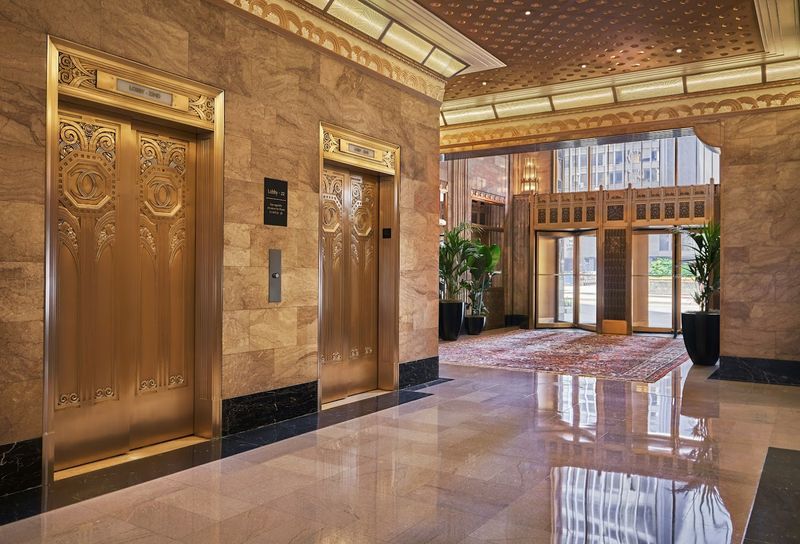
Dark green marble, gold leaf trim, and polished bronze fixtures make the lobby of the Carbide and Carbon Building one of the most glamorous spaces in all of Chicago.
Located at 230 North Michigan Avenue and completed in 1929, the building was designed by the Burnham Brothers and is said to have been inspired by a bottle of French champagne, though no bubbly references are needed to appreciate how stunning it looks in person.
Now operating as the Pendry Chicago hotel, the building’s lobby has been carefully restored and updated while preserving the original Art Deco drama that made it famous.
The tower itself is clad in dark terra cotta with gold and bronze details that shimmer beautifully at night.
The public lobby areas are accessible to visitors, and the rich color palette and intricate metalwork make it one of the most photographed interiors on the Magnificent Mile. Pure 1920s showmanship at its finest.
14. The Monadnock Building
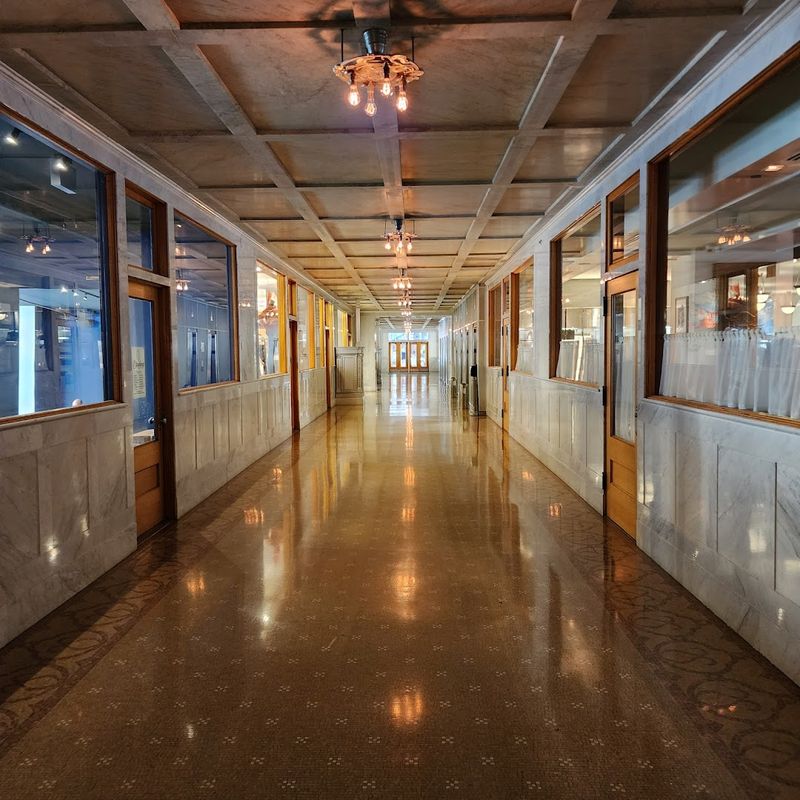
The Monadnock Building at 53 West Jackson Boulevard holds a unique place in architectural history as a building split between two completely different design philosophies.
The north half, completed in 1891 by Burnham and Root, is a masonry load-bearing structure with beautifully subtle curved bay windows.
The south half, added in 1893 by Holabird and Roche, used a more advanced metal-frame structural system.
Walking through the lobby means experiencing both approaches side by side, a rare opportunity that architecture enthusiasts travel specifically to see. The interior features original cast iron staircases, mosaic tile floors, and a straightforward elegance that prioritizes structure over decoration.
At 16 stories, the Monadnock is widely cited as one of the tallest buildings ever built primarily supported by brick masonry, and its walls at the base are six feet thick to support the weight above.
The lobby is publicly accessible, and the building remains fully occupied by offices and retail tenants today.
15. Chicago Union Station (The Great Hall)
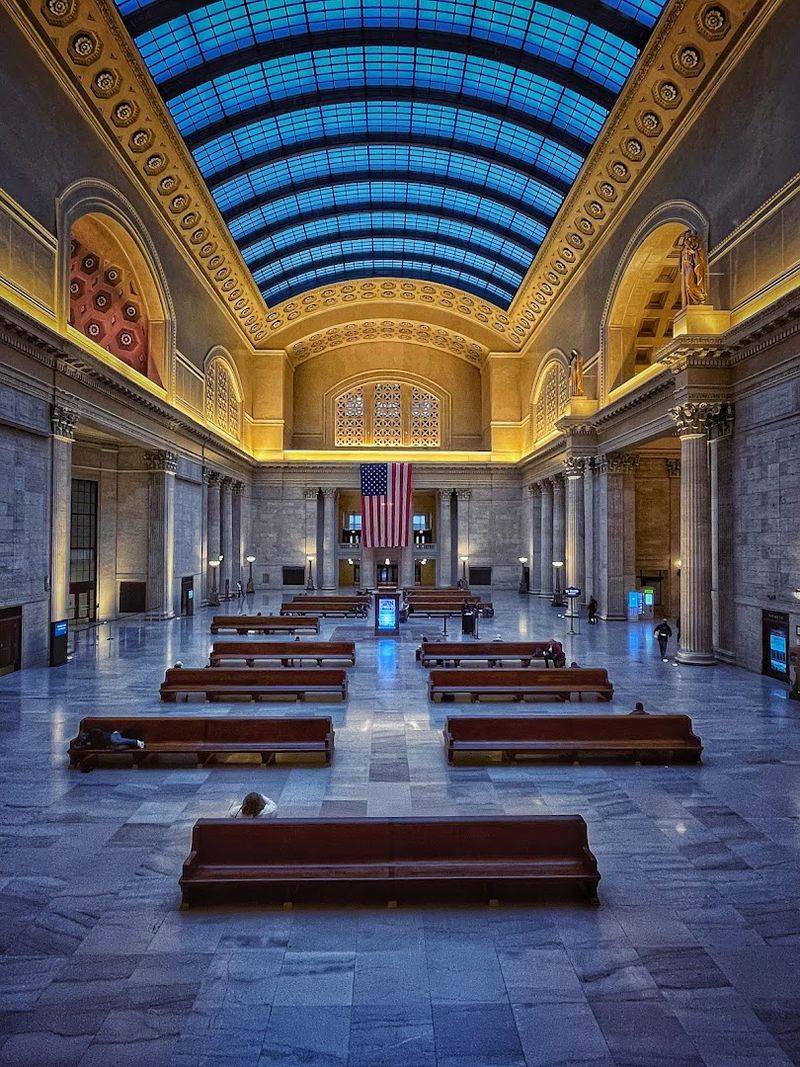
Opened in 1925 and designed by the firm Graham, Anderson, Probst and White, Chicago Union Station at 225 South Canal Street is one of the last great Beaux-Arts train stations in the United States.
The Great Hall waiting room is the crown jewel of the building, a soaring space with a 115-foot barrel-vaulted skylight ceiling supported by towering Corinthian columns that make you feel appropriately small and appropriately impressed.
Rows of wooden benches, classical statuary, and the ambient hum of a working transit hub give the Great Hall an energy that no museum replica could ever capture. The station serves Amtrak and Metra, with Greyhound connections nearby, meaning it is genuinely alive with travelers at all hours.
A famous scene from the film The Untouchables was filmed here in 1987. Walk in, find a bench, look straight up at the skylight, and take a moment to appreciate the fact that this one is completely free.