
These 10 Hidden Natural Wonders In Utah Look Like They’re From Another World
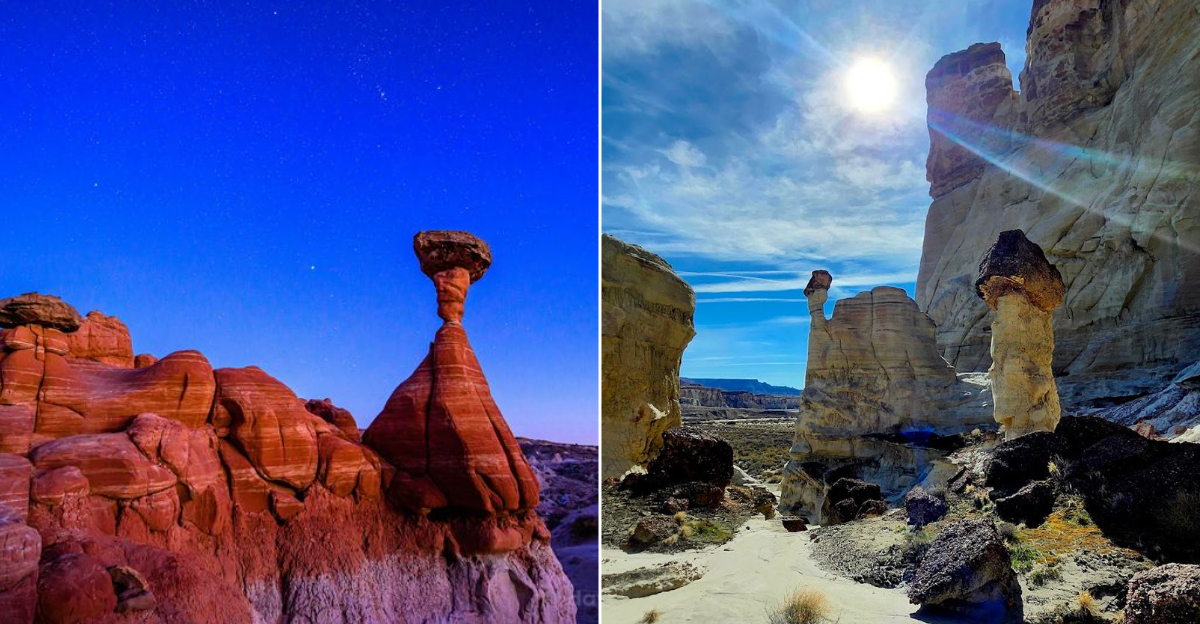
Utah does not do scenery politely. The state seems to enjoy making visitors question basic geography, gravity, and occasionally their own sense of scale.
One minute the land looks calm and sun-baked, and the next it throws out a canyon, arch, cavern, salt flat, or strange stone formation that looks like it was designed during a very dramatic day on another planet.
That is the thrill of exploring Utah. Its wildest natural spots do not need loud signs or big promises.
They just sit there, quietly looking impossible. Some feel ancient enough to hush a crowd.
Others look playful, weird, and almost too perfectly shaped to be real. These natural wonders prove that the state still has plenty of surprises hiding in plain sight.
1. Fantasy Canyon Recreation Site
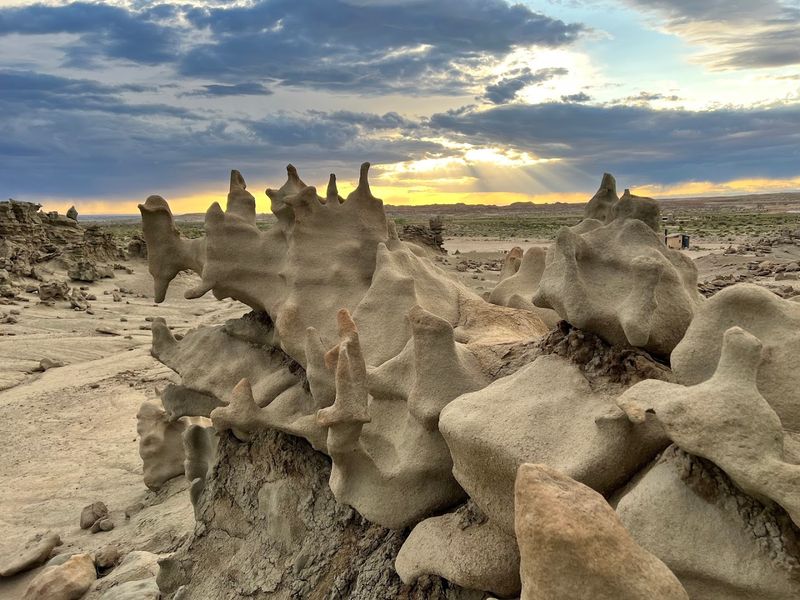
Forget everything you think you know about what a canyon looks like. Fantasy Canyon near Vernal, Utah, plays by its own rules entirely.
Located along Glen Bench Road in Vernal, UT, this 10-acre site is sometimes called Nature’s China Shop, and once you see it, that nickname makes complete sense.
The formations here are unlike anything else in Utah. Wind and water worked for millions of years to carve delicate, almost impossibly fragile shapes from sandstone.
You get arches, spirals, mushroom caps, and figures that look like they belong in a fantasy novel illustration.
The scale is surprisingly intimate. Everything feels close enough to study, like a museum exhibit that forgot to put up the velvet ropes.
What makes Fantasy Canyon especially special is how few people actually know about it. The drive involves unpaved roads, which keeps the crowds thin and the experience quiet.
You can actually hear the wind working on those formations in real time.
It is a geologist’s dream and a photographer’s playground wrapped into one strange, beautiful package.
Fantasy Canyon proves that Utah’s weirdest treasures are often the ones hiding just far enough off the highway to reward the people willing to make the extra effort.
2. Goblin Valley State Park
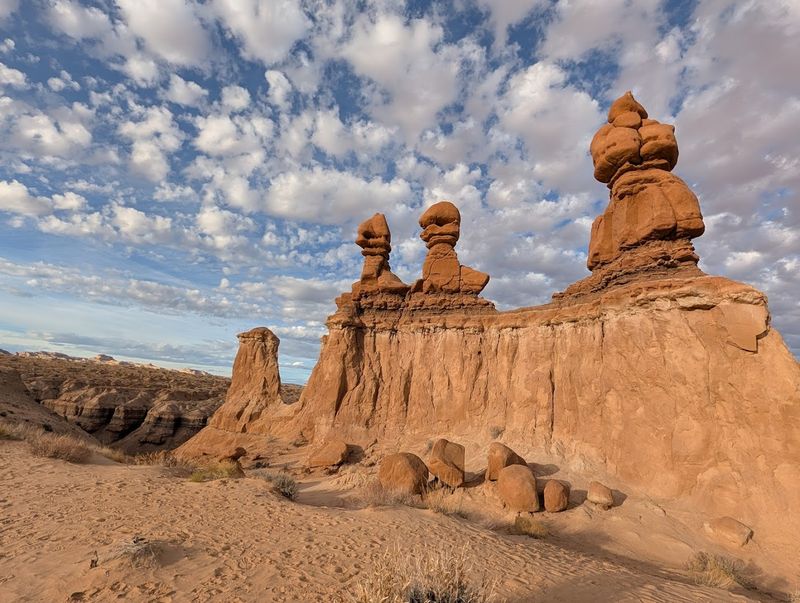
Walking into Goblin Valley feels like stumbling onto a film set for a movie nobody told you about. Thousands of rounded, mushroom-shaped hoodoos cluster together across the valley floor, each one looking like it has a personality of its own.
Situated at 18630 Goblin Valley Road in Green River, UT, this park is one of the most legitimately bizarre landscapes on the continent.
The hoodoos here are sculpted from Entrada Sandstone that formed around 170 million years ago. Some of them reach up to 50 feet tall.
They erode at different rates depending on their composition, which is exactly how you end up with thousands of chunky, rounded figures standing around like they are waiting for something. The whole scene shifts dramatically depending on the light.
At golden hour, those goblins glow amber and rust, and the shadows between them grow long and theatrical.
Goblin Valley was actually used as a filming location for the 1999 sci-fi film Galaxy Quest, which honestly tracks completely.
The park has three distinct valleys of formations to explore, so you can wander for hours without seeing the same goblin twice. There is something genuinely playful about this place that makes it impossible to visit without smiling the entire time.
3. Bentonite Hills
Some landscapes make you stop mid-sentence because your brain simply cannot process what your eyes are seeing.
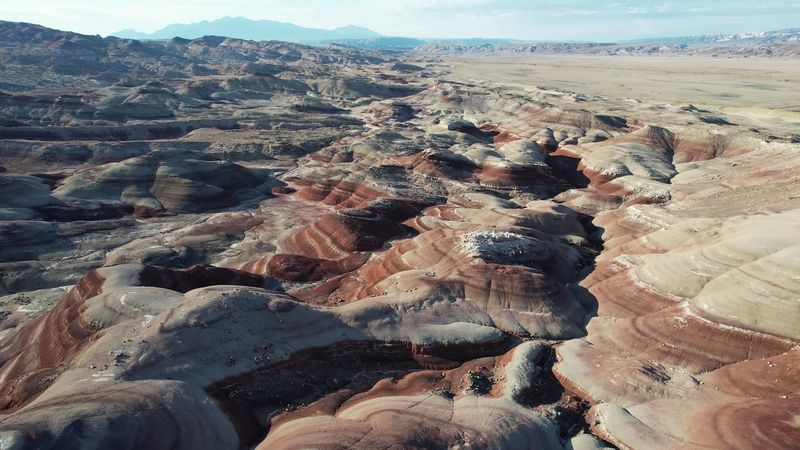
The Bentonite Hills near Cathedral Valley do exactly that. Found along Hartnet Road in Cathedral Valley, UT, these rolling mounds of clay erupt in swirling layers of red, purple, gray, and white that look less like Earth and more like a painting made by someone with no interest in realism.
The hills are made of bentonite clay, which expands when wet and cracks into strange geometric patterns when dry.
That means the surface texture changes depending on the season and recent rainfall. After a rain, the colors deepen and the clay takes on an almost glossy sheen.
In dry conditions, the cracked patterns across the surface look like the skin of some enormous sleeping creature.
This area is so geologically unusual that the Mars Desert Research Station was established nearby to simulate Martian conditions.
Scientists literally use this landscape to practice for space exploration. That detail alone should tell you everything about how otherworldly this place feels in person.
Visiting the Bentonite Hills requires a high-clearance vehicle and some patience with unpaved roads, but the payoff is a landscape so surreal it makes you genuinely reconsider your understanding of what planet you are standing on.
4. Factory Butte Recreation Area
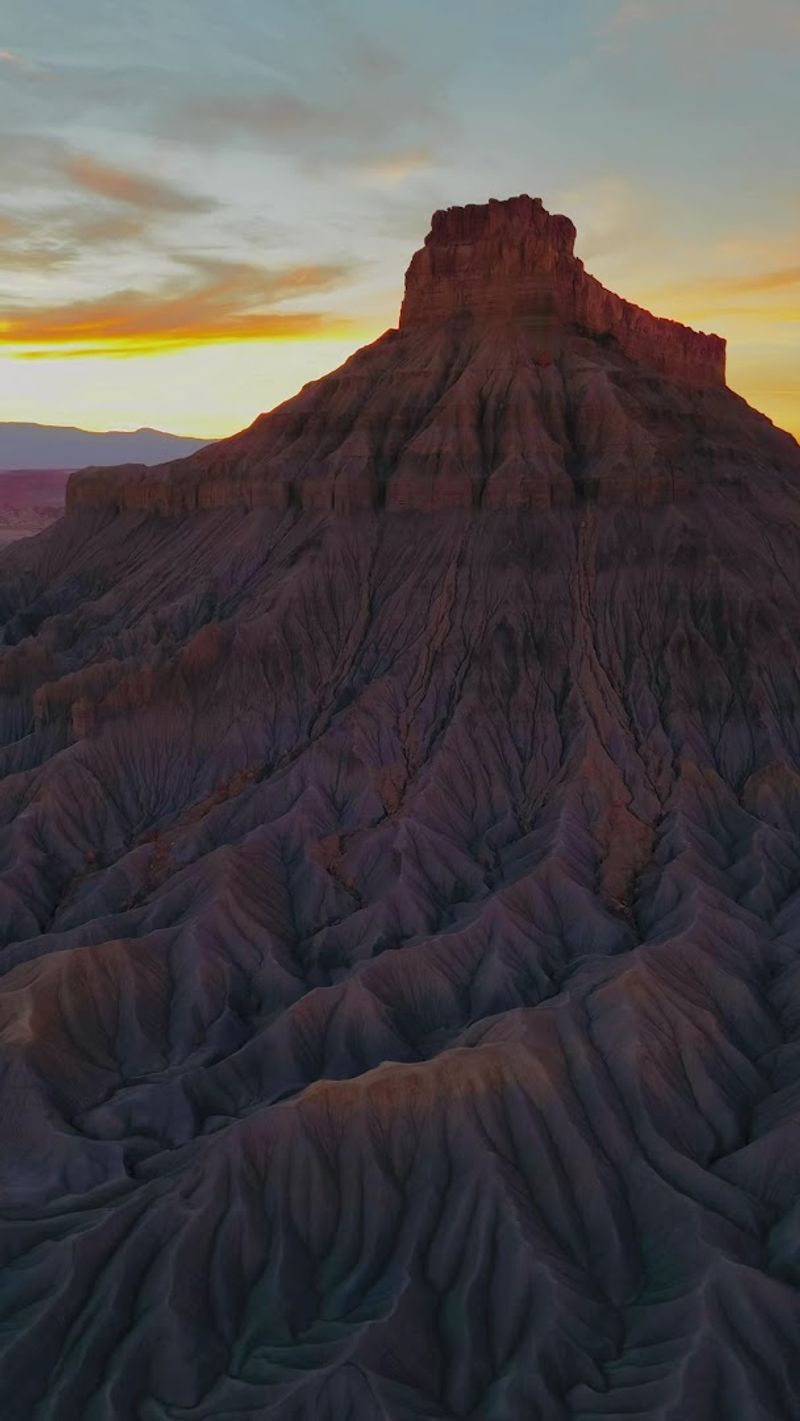
Factory Butte does not ease you into the experience. It just appears on the horizon like a declaration.
Rising sharply from a flat expanse of blue-gray badlands near Hanksville, this formation commands attention from miles away.
The recreation area sits along UT-24 in Hanksville, UT, and it is the kind of place that makes you pull over immediately, even if you had no intention of stopping.
The butte itself climbs to about 6,000 feet in elevation and is surrounded by eroded badlands that shift between blue, gray, and muted purple depending on the light.
The surrounding terrain is almost completely devoid of vegetation, which amplifies the starkness of the whole scene. Standing at the base and looking up feels like being at the foot of some ancient monument that nobody commissioned.
Off-road enthusiasts love Factory Butte for its open terrain and challenging trails, but you do not need a dirt bike to appreciate it. Simply parking and walking toward the butte gives you a sense of scale that photographs cannot fully capture.
The silence out here is remarkable. No background hum of traffic, no distant music, just wind and the occasional crunch of gravel underfoot.
Factory Butte is the kind of landscape that makes you feel both very small and completely alive at the same time.
5. The Toadstools
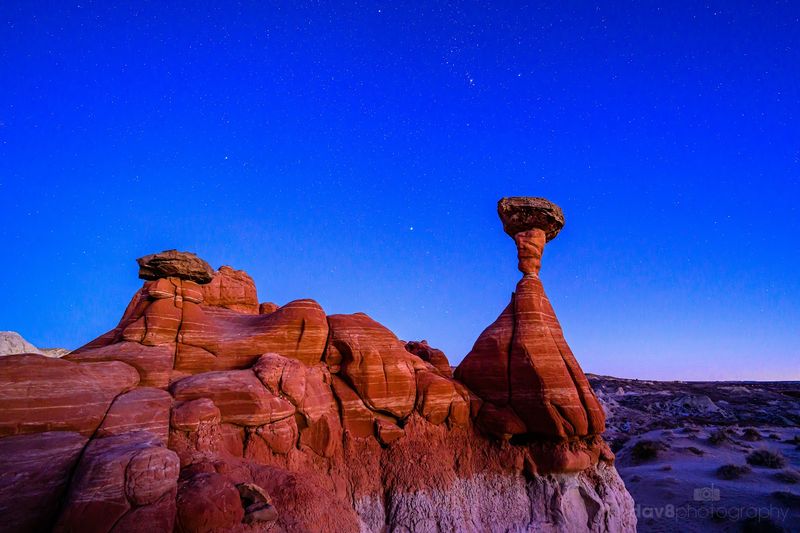
Nature has a sense of humor, and The Toadstools near Big Water are the punchline. These formations look exactly like their name suggests: giant mushrooms made of stone, balancing wide sandstone caps on narrow mudstone pedestals.
Found near US-89 Milepost 19.3 in Big Water, UT, they sit just a short hike from the highway and reward every step of the walk.
The formations develop through a process called differential erosion. The harder caprock protects the softer material beneath it while everything around erodes away.
Over thousands of years, you get these perfectly balanced, whimsical shapes that look like props from a fairy tale. Some of the caps are enormous relative to their pedestals, which makes them look structurally impossible in the best possible way.
The hike to reach The Toadstools is only about 1.5 miles round trip, making it accessible for most visitors. The trail winds through a mix of sandy wash and open desert, with views of the Grand Staircase-Escalante landscape stretching out around you.
Sunrise and sunset visits are especially rewarding because the warm light turns the sandstone caps into glowing amber discs hovering above the pale pedestals below. If you are looking for a short hike with a maximum wow-to-effort ratio, this is genuinely one of Utah’s best-kept secrets.
6. Little Wild Horse Canyon
There is something about stepping into a slot canyon that feels deeply cinematic.
The walls close in, the light shifts, and suddenly the whole world becomes a narrow ribbon of carved sandstone above your head. Little Wild Horse Canyon near Goblin Valley delivers exactly that experience, and it does so in a way that feels almost theatrical in its beauty.
The trailhead sits along Wild Horse Road in Green River, UT.
The canyon was carved by water flowing through Entrada Sandstone over millions of years. The result is a corridor of smooth, curving walls that undulate and twist as you move through them.
In some sections, the walls narrow to just a few feet across, and the rock takes on warm shades of orange, red, and cream that glow when sunlight filters down from above. It is the kind of place that makes you slow down involuntarily.
Little Wild Horse is often combined with Bell Canyon to create a loop of about 8 miles total, though shorter out-and-back options are just as satisfying.
Unlike some famous slot canyons in the Southwest, this one requires no permit and no guided tour, which means you can explore at your own pace.
The canyon rewards patience.
The deeper you go, the more dramatic the walls become, and the more the outside world simply ceases to exist.
7. Coral Pink Sand Dunes State Park
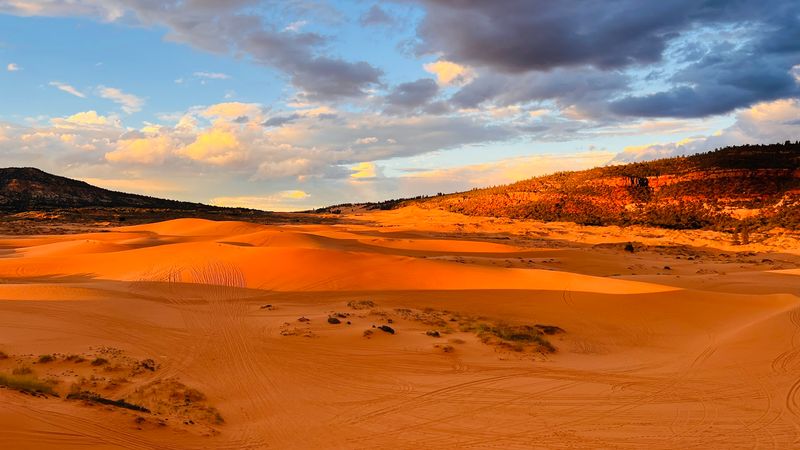
Pink sand sounds like something invented for a luxury resort brochure, but Coral Pink Sand Dunes is the real thing and it is even more striking in person.
The dunes here stretch across more than 3,700 acres near Kanab, and their color comes from iron oxide minerals in the eroded Navajo Sandstone. The result is a landscape that glows peach, coral, and deep orange depending on the time of day.
The park entrance sits at 95 Sand Dune Road in Kanab, UT.
The dunes reach heights of up to 50 feet and shift constantly as wind moves sand across the surface. Walking barefoot across the warm sand while looking out at the surrounding red rock canyon walls creates a sensory experience that is genuinely hard to describe.
The contrast between the soft, rolling dunes and the rigid sandstone cliffs surrounding them is visually stunning from every angle.
Sunset at Coral Pink Sand Dunes is a full event. The colors deepen dramatically as the sun drops, and the shadows across the dune faces create a constantly shifting sculpture of light and texture.
The park also has a campground for those who want to catch the sunrise, which hits the dunes at a low angle and makes the whole landscape look like it is lit from within. This place earns its name every single day.
8. Snow Canyon State Park
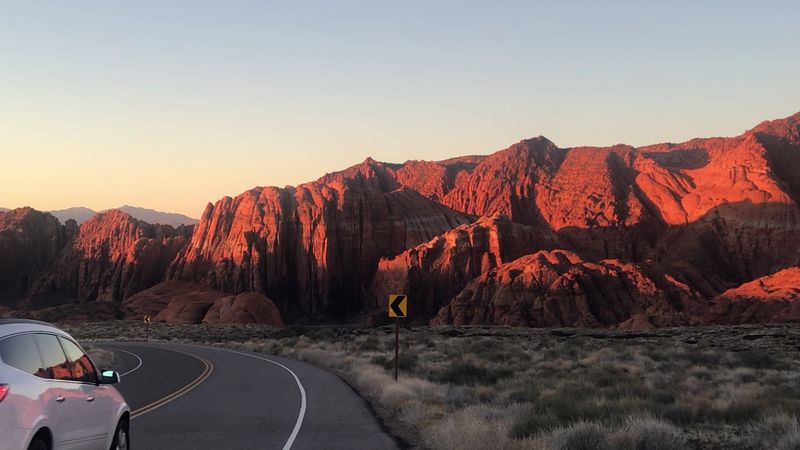
The name Snow Canyon is one of geology’s greatest plot twists. There is no snow.
What you get instead is a landscape of red sandstone cliffs, black lava flows, and white Entrada dunes that together create one of the most visually complex environments in Utah.
Located at 1002 Snow Canyon Drive in Ivins, UT, this park sits just outside St. George and somehow remains wildly underrated compared to its famous neighbors.
The canyon was formed by a combination of volcanic activity and water erosion, which is why you see such dramatic contrast between the dark lava rock and the warm red sandstone. Ancient lava tubes run beneath parts of the park, and some are open for exploration.
The petrified sand dunes inside the canyon are particularly striking, their frozen ripple patterns preserved in solid rock like a snapshot of wind from thousands of years ago.
Snow Canyon has more than 38 miles of trails ranging from easy strolls to technical climbs. The Hidden Pinyon Trail offers sweeping panoramic views without requiring serious hiking experience.
Film fans might recognize the landscape from Butch Cassidy and the Sundance Kid, which used the canyon as a backdrop.
Every trail here tells a different chapter of the same geological story, and each one is worth reading. Snow Canyon is the kind of place that earns repeat visits without ever feeling repetitive.
9. Valley Of The Gods
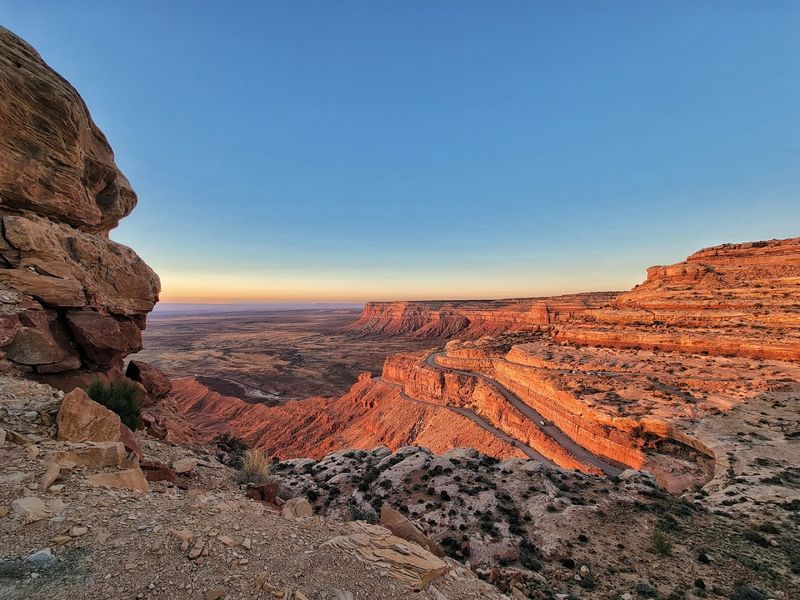
Monument Valley gets all the postcards, but Valley of the Gods is having a quiet moment of glory for anyone paying attention.
The landscape here is remarkably similar in character, with towering sandstone buttes and monoliths rising from a wide open valley floor, but without the tour buses and entrance fees.
The road runs along Valley of the Gods Road near Mexican Hat, UT, and it is one of the most scenic drives in the entire American Southwest.
The formations here have names like Setting Hen Butte, Rooster Butte, and Seven Sailors, each one a distinctive silhouette against the enormous sky.
The 17-mile dirt road that winds through the valley puts you at eye level with these formations in a way that viewing areas rarely allow. You feel surrounded by them rather than just looking at them from a distance, which completely changes the experience.
The area sits within Bears Ears National Monument, which adds layers of cultural and historical significance to the geological drama.
The valley has been considered sacred land by Indigenous peoples for generations, and that history gives the landscape a weight and meaning beyond its visual impact.
At dawn, the buttes cast long shadows across the valley floor and the whole scene turns a deep, rich red that makes you want to stand completely still and just absorb it. Valley of the Gods earns that name without any argument.
10. Wahweap Hoodoos
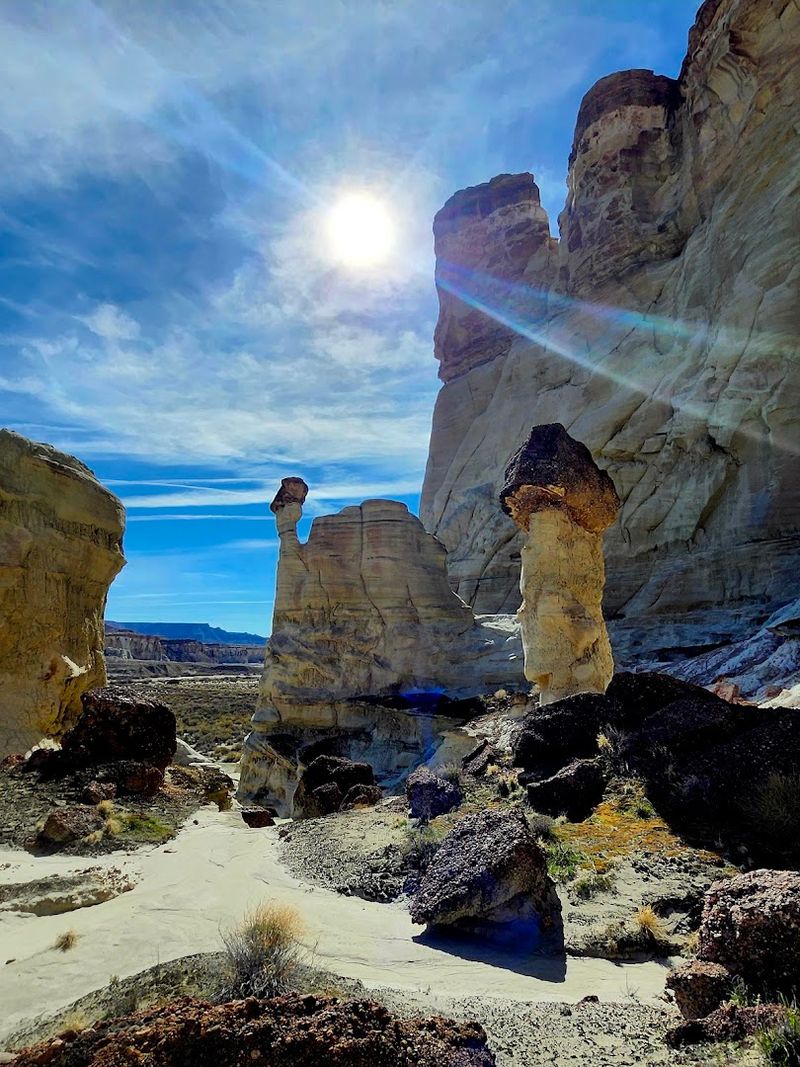
Wahweap Hoodoos look like they were designed by someone who had only heard a description of hoodoos and decided to make them as dramatic as possible.
These towering formations near Big Water stand in clusters of cream and white, each one topped with a dark caprock that makes them look like they are wearing little hats.
The trailhead is accessed via Ethan Allen Road in Big Water, UT, and reaching them requires a hike of roughly 5 miles round trip.
The formations here are made of Entrada Sandstone capped with harder Carmel Formation rock. The contrast between the pale bodies and dark caps gives them an almost architectural quality, like columns someone forgot to finish.
Some hoodoos in this area reach 15 to 20 feet tall, and they cluster together in groups that feel intentional, as if the desert arranged them for a specific effect.
The hike to Wahweap Hoodoos crosses open desert and sandy washes, with the formations appearing gradually on the horizon before suddenly becoming enormous as you approach.
Visiting in early morning gives you soft light that emphasizes the texture of the rock without washing out the detail.
Unlike the more accessible toadstool formations nearby, Wahweap rewards the effort with a sense of genuine discovery.
Standing among these pale giants with nothing but open sky above you is the kind of moment that makes Utah’s hidden landscapes feel like the best-kept secret on the planet. Have you started planning your road trip yet?