
10 Forgotten Places In California With Fascinating Stories Behind Them
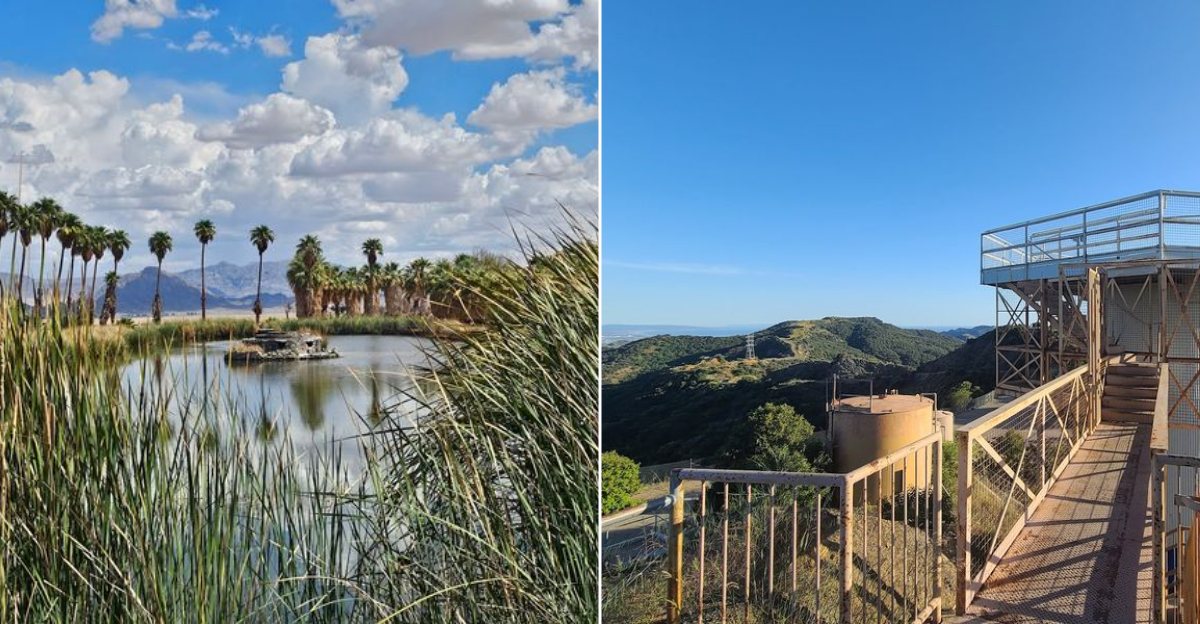
California is famous for Hollywood, beaches, and national parks. But some of its most intriguing attractions are the ones that time almost forgot.
Scattered across the state are abandoned colonies, mysterious desert outposts, crumbling mansions, and even Cold War relics, each with a story stranger than fiction.
One stop might transport you to the dream of a utopian community, while the next reveals a hidden missile site or the haunting remains of an unfinished estate. It’s a little like opening a history book where every chapter takes an unexpected turn.
These forgotten places aren’t just old landmarks.
They’re snapshots of ambitious ideas, dramatic setbacks, and moments that helped shape California in surprising ways.
If you enjoy destinations with a side of mystery and a story worth telling, these hidden pieces of the Golden State deserve a place on your travel list.
1. Llano Del Rio Cooperative Colony Ruins
Picture a thousand people showing up to the Mojave Desert with shovels, big dreams, and absolutely zero air conditioning.
That was Llano del Rio, California’s most ambitious socialist experiment. Lawyer Job Harriman founded this utopian colony on May Day, 1914, with a vision of a self-sustaining community where everyone contributed and everyone thrived.
Located near CA-138 and 165th Street East in Llano, California 93544, this colony was no small operation. At its peak in 1916, it housed over a thousand members who grew more than 90% of their own food.
They had schools, a hotel, workshops, a printing press, and even a dramatic theater club called the Live Wires.
Here is the wild part: in 1916, colonists built one of the Antelope Valley’s very first airplanes. It caught fire and was gone before its first flight.
The cause was never discovered. The colony itself did not last much longer.
Water shortages, financial strain, and internal disagreements brought the whole experiment to a halt by 1918.
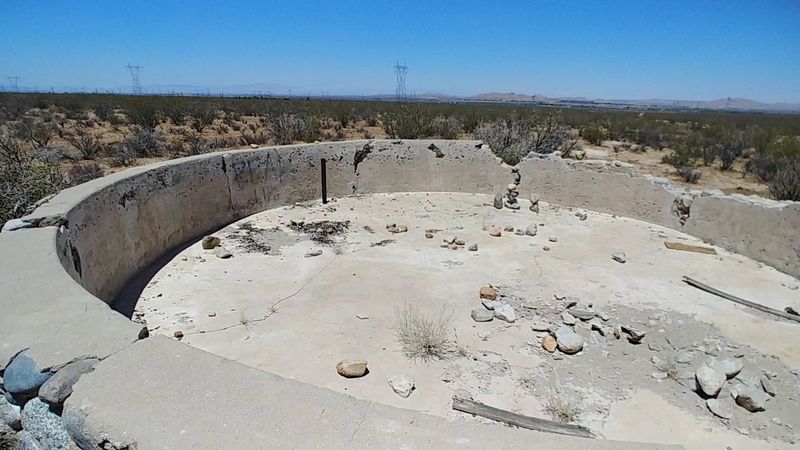
About 60 families packed up and headed to Louisiana to start fresh with “New Llano.” Today, the stone walls still stand quietly in the desert, asking absolutely no one what could have been.
These ruins are a reminder that even the boldest visions can crumble under the weight of reality.
2. Old Los Angeles Zoo
Most people visit Griffith Park for the observatory or the hiking trails. Fewer people realize they are walking right past a full abandoned zoo, and that feels like a missed opportunity of epic proportions.
The Old Los Angeles Zoo opened in 1930 and operated for over three decades before a newer, bigger facility replaced it in 1966.
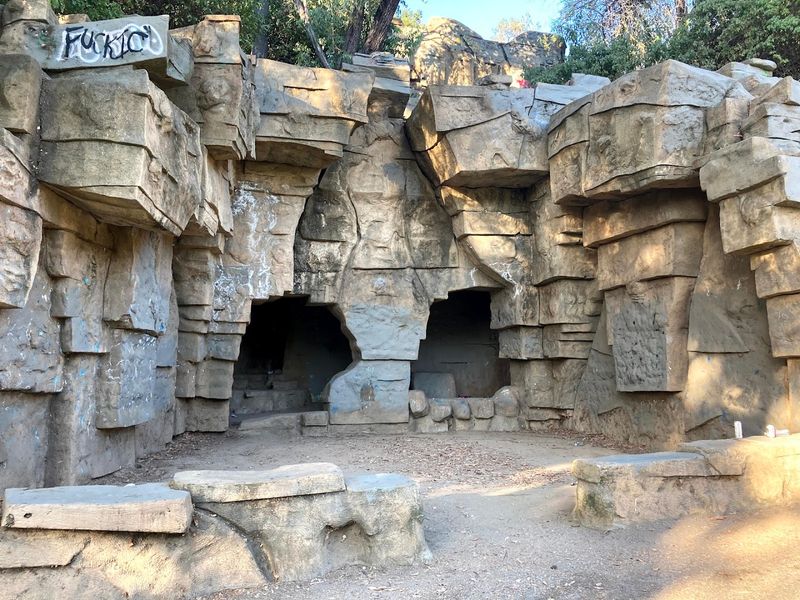
Tucked away at 4730 Crystal Springs Drive in Los Angeles, California 90027, the old zoo’s concrete enclosures and iron cages are still standing.
Vines creep over the bars. Graffiti decorates the walls.
It looks like something straight out of a post-apocalyptic movie set, but with better hiking shoes required.
What makes this place so fascinating is how completely it was left behind. The cages, the feeding stations, and even some of the exhibit signs are still there, frozen in time.
Picnickers now set up blankets inside the old bear grottos, which is either charming or extremely chaotic depending on your perspective.
The site is technically open to the public as part of Griffith Park, so there are no ropes or velvet barriers keeping you out.
You can literally walk through the old lion enclosure and contemplate your life choices. Few places in Los Angeles offer that kind of unfiltered, slightly eerie, completely free history lesson.
3. Echo Mountain Ruins
Reaching Echo Mountain feels like earning a secret. You hike up the old Mount Lowe Railway trail, legs burning, and suddenly the ruins of a Victorian-era mountaintop observatory appear out of nowhere.
It is the kind of moment that makes you feel like a character in a Jules Verne novel.
The Echo Mountain complex was built in the 1890s by Professor Thaddeus Lowe, the same eccentric genius who gave the mountain its name.
Accessed from the trailhead near 3302 Lake Avenue in Altadena, California 91001, the site once featured an observatory, a hotel, a searchlight, and even a small zoo at the summit.
A combination of fires, storms, and shifting fortunes slowly dismantled the whole operation by 1928.
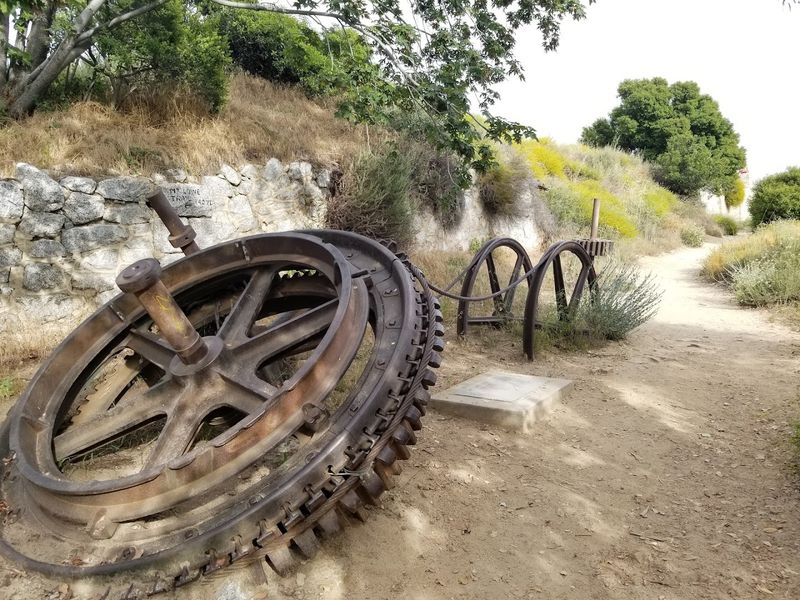
What remains today are concrete foundations, a rusted bullwheel from the old incline railway, and the kind of views over the Los Angeles basin that would have made those Victorian visitors absolutely lose their minds.
The hike itself is about three miles round trip, moderate in difficulty, and completely worth every step. Standing on those ruins with the city sprawling below you, it is easy to imagine the buzz of a Victorian crowd arriving by rail to stare at the stars.
Echo Mountain is proof that California has always attracted people who think slightly too big, and that is honestly wonderful.
4. Mentryville
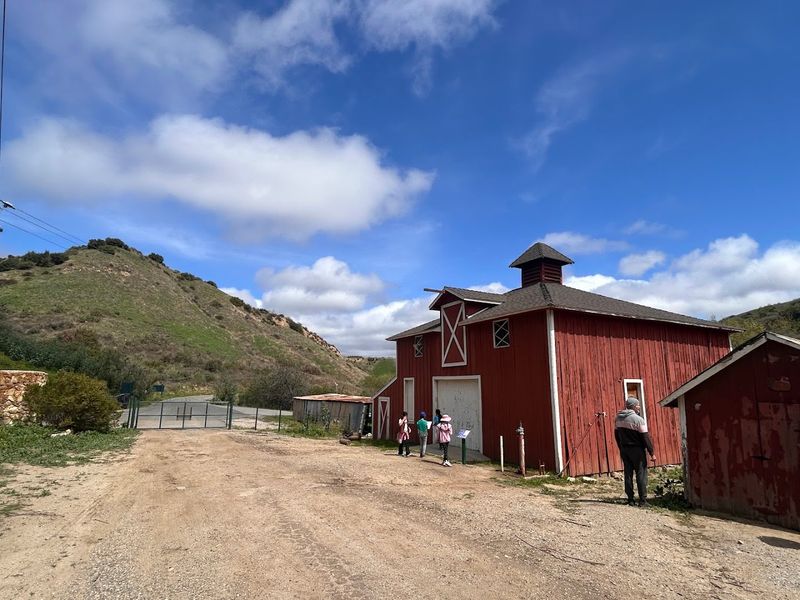
Before Texas became the face of American oil, California had Pico Canyon, and Pico Canyon had Mentryville.
This tiny ghost town in the hills above Newhall is where California’s commercial oil industry essentially began, and almost nobody talks about it. That feels like a serious oversight.
Mentryville sits at 27201 Pico Canyon Road in Newhall, California 91381, and it was built around Pico Well No. 4, which began producing oil in 1876.
The well ran continuously for decades, making it one of the longest-running oil wells in history. A small company town grew up around it, complete with homes, a schoolhouse, and a manager’s mansion.
The man behind it all was Charles Alexander Mentry, a French-born oil driller who oversaw operations until his passing in 1900.
The town carried his name and his legacy long after operations wound down. Today, the original schoolhouse and several Victorian-era buildings still stand, remarkably intact for structures over a century old.
Los Angeles County Parks manages the site now, and guided tours are available on certain weekends. Walking through Mentryville feels like stepping into a forgotten chapter of California’s economic story.
Before Silicon Valley, before Hollywood, there was oil. And it all started in a quiet canyon that most Angelenos drive past without a second glance.
Sometimes the biggest stories hide in the smallest places.
5. Zzyzx Mineral Springs
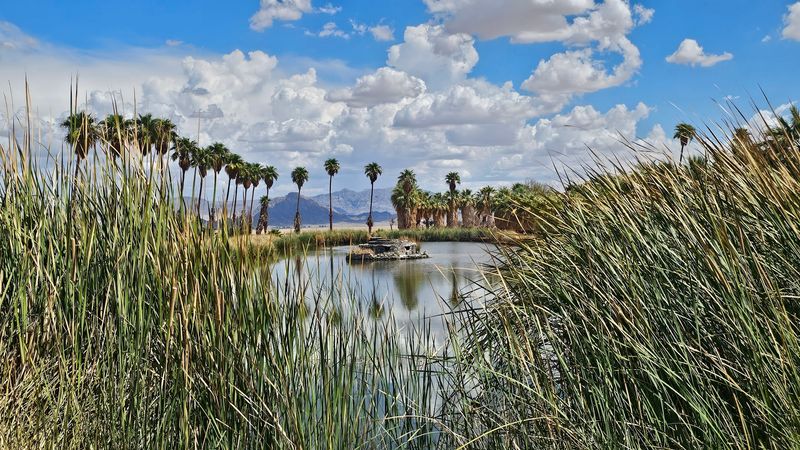
The name alone is worth the trip. Zzyzx is real, it is in the middle of the Mojave Desert, and its backstory is one of the most gloriously bizarre in California history.
This is not a place you stumble upon accidentally. You have to want to find it.
Located at 49441 Zzyzx Road in Baker, California 92309, Zzyzx Mineral Springs was the creation of Curtis Howe Springer, a self-proclaimed minister and radio personality who occupied federal land in 1944 without permission.
He built a resort, bottled spring water, sold miracle health cures, and named the place Zzyzx so it would be the last word in the dictionary.
For nearly three decades, Springer operated his unauthorized desert spa, broadcasting radio programs and welcoming guests to his mineral pools and health treatments. Federal authorities eventually removed him from the property in 1974.
The California State University system now operates the site as a desert research station.
The palm trees Springer planted still sway around a small lake that attracts migratory birds. Researchers and curious visitors can still access the area.
There is something poetic about a place built on one man’s wild ambitions being transformed into a center for serious scientific study. Zzyzx went from con to conservation, and that is a California story if there ever was one.
The desert has a funny way of outlasting everyone’s plans.
6. Donner Summit Railroad Tunnels
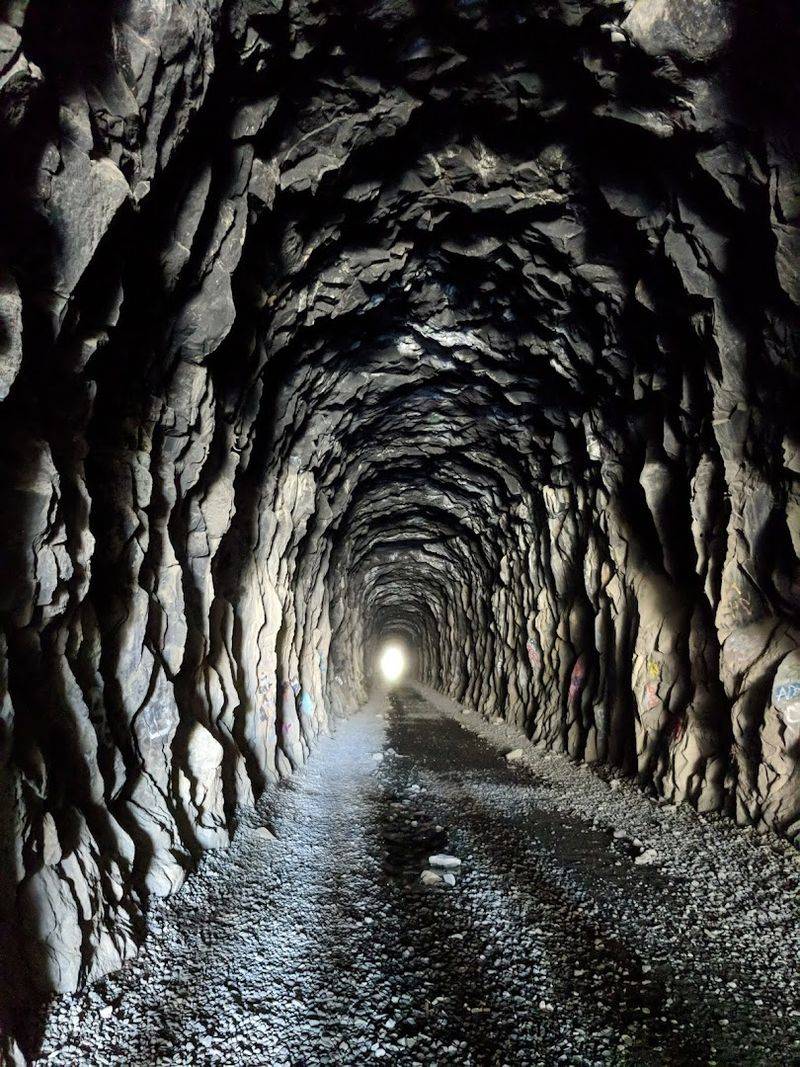
Carved entirely by hand through solid Sierra Nevada granite, the Donner Summit Railroad Tunnels are one of the most staggering feats of human determination ever attempted in California.
The sheer scale of what was accomplished here, with hand tools and sheer grit, is almost impossible to wrap your head around.
The tunnels were built between 1866 and 1867 as part of the First Transcontinental Railroad. Workers, many of them Chinese immigrants, drilled and blasted through miles of rock to push the railroad over the Sierra Nevada.
Near 19291 Donner Pass Road in Norden, California 95724, the old Summit Tunnel and surrounding passages still exist, accessible by trail.
The Central Pacific Railroad used an innovative technique at the time, drilling from multiple points simultaneously to speed up progress. In winter, workers tunneled through snow so deep they built entire underground cities of snow to live and work in.
The conditions were brutal, the timeline was relentless, and the result was extraordinary.
A newer railroad bore replaced the original tunnels in 1993, leaving the historic passages to hikers and history enthusiasts.
Walking through them today, with the cold mountain air and the granite walls pressing close, you can almost feel the weight of what was accomplished here.
These tunnels are not just infrastructure. They are monuments to an overlooked workforce that literally moved mountains for a nation’s ambition.
7. Wolf House Ruins
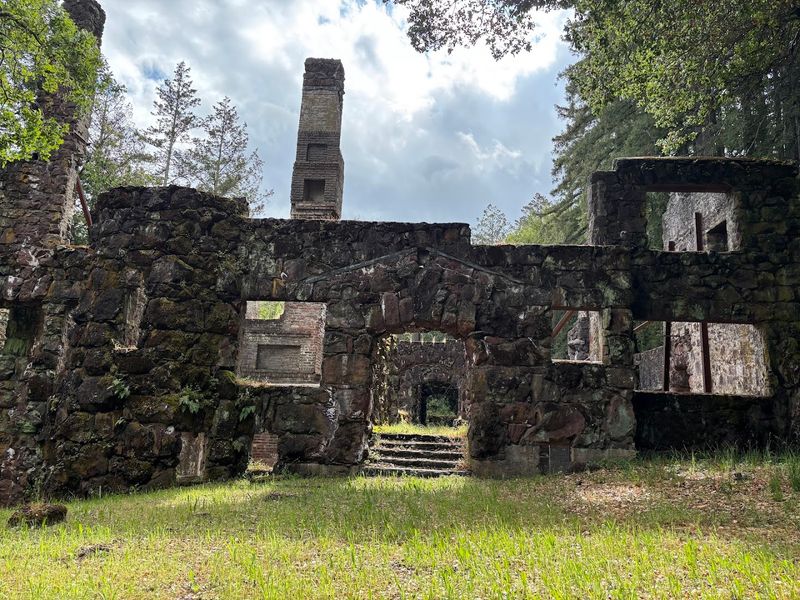
Jack London built Wolf House to last a thousand years. It lasted exactly zero.
The story of this grand, unfinished mansion is one of California’s most heartbreaking tales of ambition and misfortune, and the ruins are somehow even more beautiful than the original plans suggested.
London spent years designing his dream home in the Sonoma Valley, a 26-room stone and redwood masterpiece nestled at 2400 London Ranch Road in Glen Ellen, California 95442.
Construction wrapped up in 1913, and London was preparing to move in when a fire tore through the building just weeks before he was set to occupy it.
The cause of the fire was never officially determined, though theories have swirled for over a century. London was devastated but vowed to rebuild.
He never got the chance. The ruins were left standing as a monument to the dream, and they have been quietly magnificent ever since.
Today, Wolf House sits within Jack London State Historic Park, surrounded by redwood forest and accessible via a short trail.
The roofless stone walls rise dramatically from the hillside, draped in moss and framed by towering trees. It is the kind of place that makes you want to sit quietly and read every book London ever wrote.
Some ruins carry sadness.
This one carries something closer to inspiration, a reminder that the attempt itself matters enormously.
8. Somersville Townsite
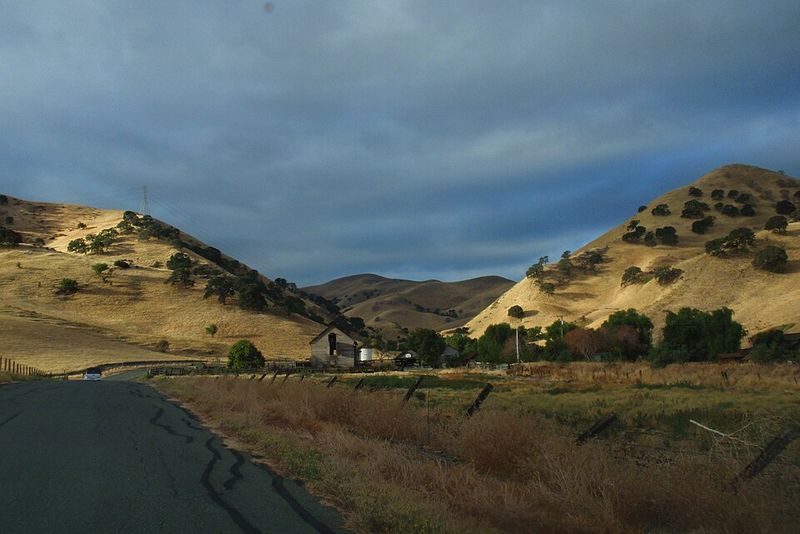
California and coal mining do not exactly come up in the same sentence very often, which is exactly what makes Somersville such a surprising find.
Tucked into the rolling hills east of the Bay Area, this ghost town is the quiet legacy of a coal rush that most Californians have no idea ever happened.
Somersville was one of several mining towns that boomed in the Mount Diablo foothills during the 1860s and 1870s.
Located within Black Diamond Mines Regional Preserve near 5175 Somersville Road in Antioch, California 94509, the town once housed thousands of miners and their families who extracted coal from the hills to fuel San Francisco’s growing industries.
When cheaper coal from the Pacific Northwest made California’s mines unprofitable, the towns emptied out fast.
By the 1880s, Somersville was largely abandoned. Later, a silica sand mining operation moved in during the early 20th century, adding another layer to the site’s industrial history.
Today, the East Bay Regional Park District manages the area, and visitors can explore trails, tour the historic mines, and wander through the old cemetery where many of the original miners are buried.
There is something quietly powerful about standing in a field that was once a bustling industrial town. Somersville is a reminder that California’s economic history is far stranger and more layered than the gold rush story we all learned in school.
9. Fort Ord Dunes Ammunition Bunkers
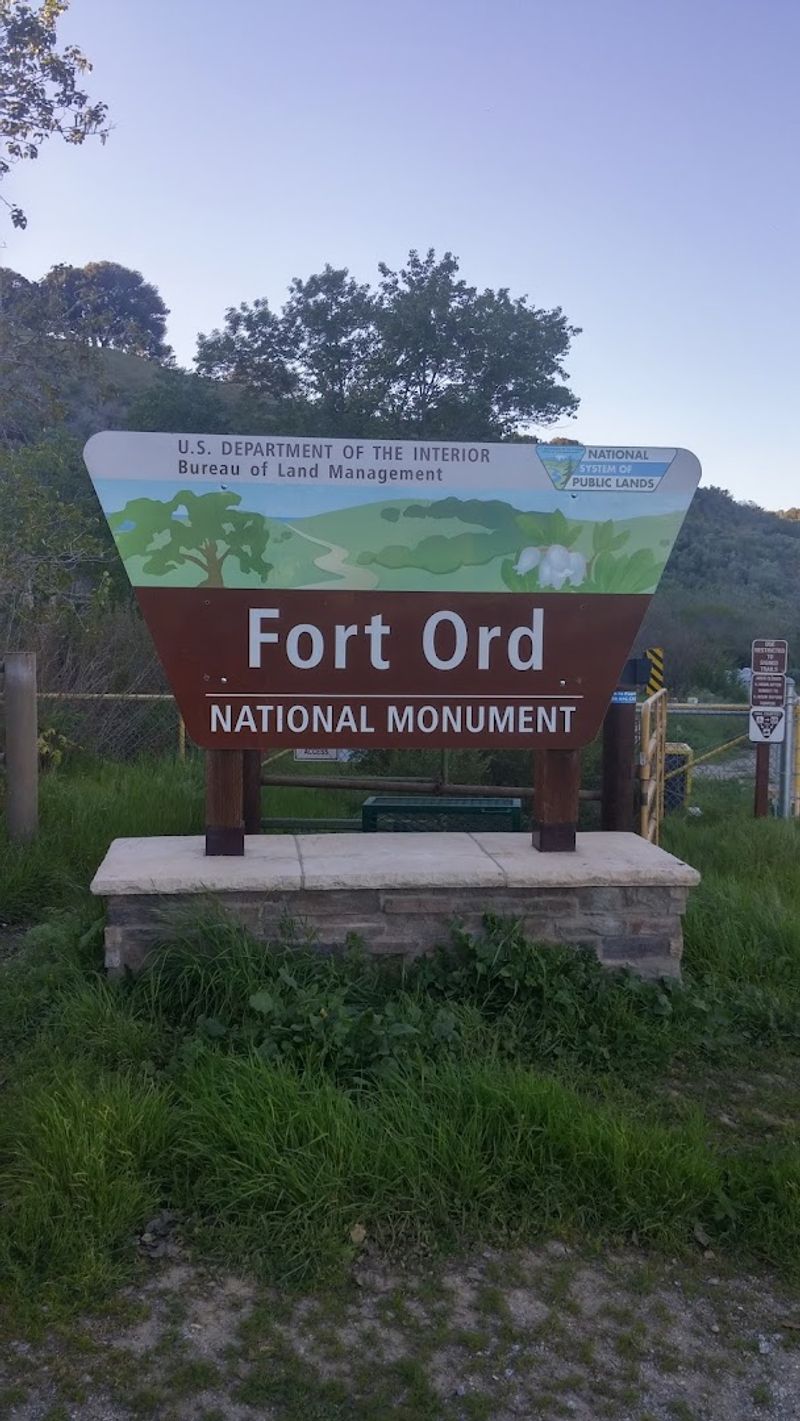
Walking through the Fort Ord dunes feels like stumbling onto a movie set that nobody cleaned up after filming. Concrete bunkers poke out of the sand.
Rusted infrastructure disappears into the brush. The Pacific Ocean hums in the background.
It is atmospheric in the best possible way.
Fort Ord was a major U.S. Army base from 1917 through 1994, and the ammunition bunkers near 8th Street in Marina, California 93933 are among the most visually striking remnants of its military past.
Soldiers trained here before heading overseas during multiple conflicts throughout the 20th century.
When the base closed in 1994, it left behind an enormous landscape of abandoned infrastructure, unexploded ordnance concerns, and ecological potential.
The Bureau of Land Management converted much of the area into Fort Ord National Monument in 2012, opening it to hikers, mountain bikers, and history seekers willing to stay on marked trails.
The bunkers themselves are hulking, graffiti-covered, and oddly photogenic.
They were designed to store ammunition safely away from populated areas, built low and reinforced against accidental detonation. Seeing them half-swallowed by coastal dunes gives them an almost mythological quality.
Fort Ord is one of those rare places where military history, environmental restoration, and pure visual drama collide in a single location. Few forgotten places in California feel this cinematic, this complex, and this worth exploring.
10. Nike Missile Control Site LA-96
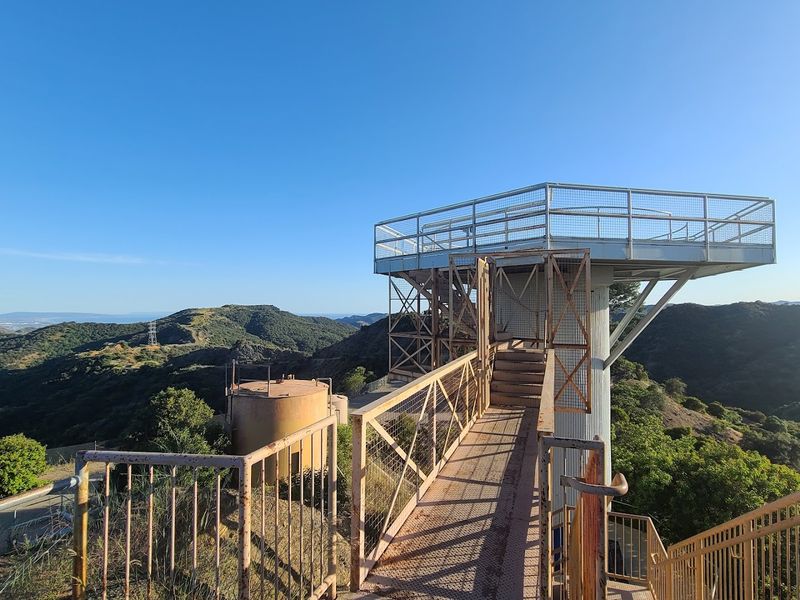
There is a fully restored Cold War missile site sitting in the Santa Monica Mountains, and most Angelenos have driven right past it on Mulholland Drive without ever knowing it was there.
That is the kind of local secret that makes you feel like you have been missing out on something genuinely cool.
Nike Missile Control Site LA-96 sits at 17500 Mulholland Drive in Encino, California 91436, tucked into the hills above the San Fernando Valley. During the 1950s and 1960s, it was part of a nationwide network of surface-to-air missile batteries designed to protect American cities from potential aerial threats during the Cold War era.
The site is one of the best-preserved Nike missile installations in the entire country.
The National Park Service restored it to its 1960s operational appearance, complete with a Nike Hercules missile on display. Volunteer guides, many of them veterans who actually served at Nike sites, lead tours on select weekends throughout the year.
Standing next to a missile that was once ready for launch, surrounded by the suburban sprawl of Los Angeles spread out below you, is a genuinely surreal experience.
The Cold War feels abstract in history books. Standing at LA-96, it feels remarkably, almost uncomfortably, real.
Which places on this list are you adding to your California road trip itinerary first?