
11 Colorado Trails With Views You’ll Still Think About Later
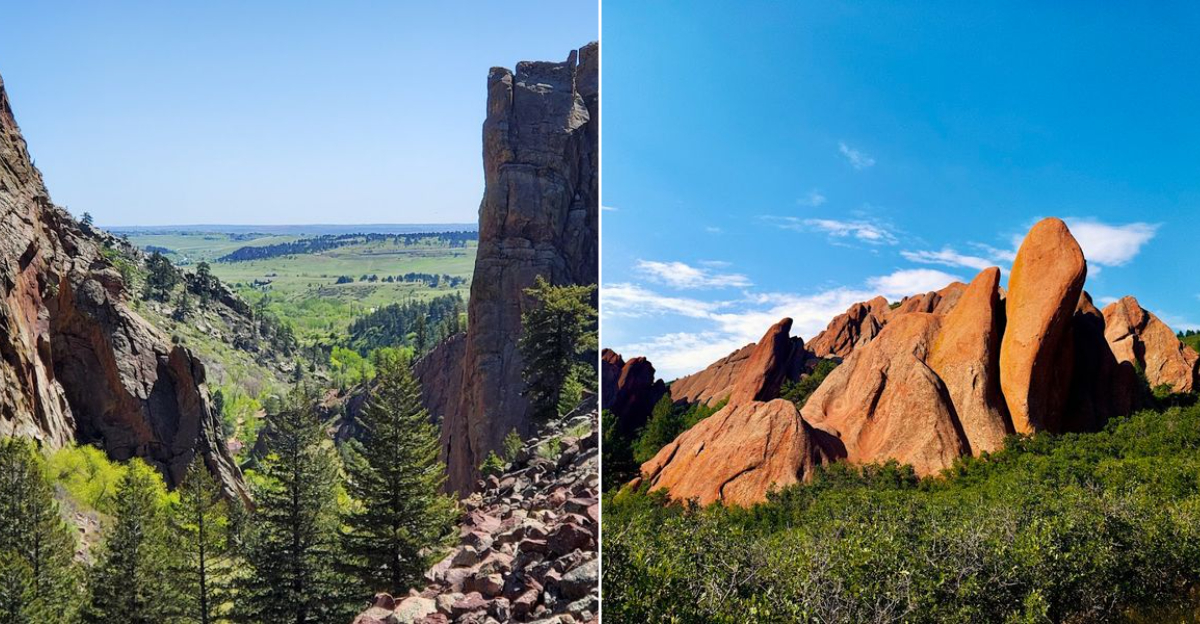
A great trail does not simply lead somewhere, it edits the noise out of your day. Across Colorado, the best hikes turn ordinary weekends into moving postcards, with sharp ridgelines, pine-scented air, wildflower pockets, and views that make conversation fall quiet for a second.
Some routes ask for strong legs and an early alarm, while others reward a slower pace with creek crossings, shaded bends, and lookout points that feel almost unfairly beautiful. That mix is the fun of it.
You can chase a sunrise, wander after lunch, or build an entire day around one unforgettable stretch of dirt. Bring water, layers, sturdy shoes, and the friend who always says yes to one more viewpoint.
By the final overlook, Colorado’s wilderness has usually done its best work, turning tired calves into bragging rights and a simple walk into the story you keep retelling.
1. Perkins Central Garden Trail, Garden of the Gods
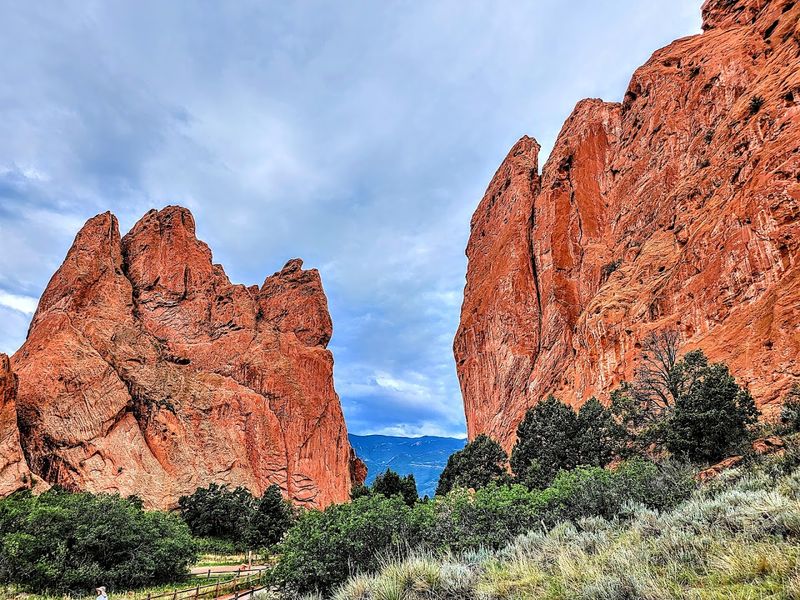
Walking into Garden of the Gods feels like the earth decided to show off. The Perkins Central Garden Trail puts you right in the middle of towering red sandstone formations that look like they were sculpted by someone with very strong opinions and a lot of time.
Located at 1805 N. 30th Street in Colorado Springs, this trail is paved, accessible, and open daily from 5 a.m. to 10 p.m. in summer, making it one of the most welcoming spots on this list.
You do not need to be a seasoned hiker to feel the full impact here. Families push strollers, kids dart between boulders, and couples stop every few feet for photos.
The loop is easy enough that you can complete it without breaking a sweat, yet the scenery is dramatic enough to make your jaw drop repeatedly. Pikes Peak looms in the background like a bonus gift.
My honest advice: arrive before 9 a.m. on weekends. The parking lot fills fast, and the magic of feeling small next to those red towers is best enjoyed without a crowd pressing behind you.
This one earns its reputation every single time.
2. Emerald Lake Trail, Rocky Mountain National Park
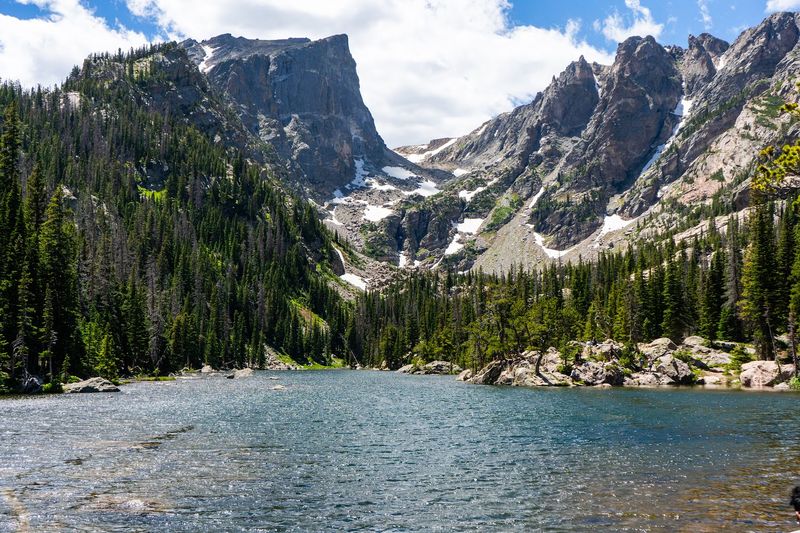
Rocky Mountain National Park is one of those places where the name actually undersells the experience. The Emerald Lake Trail starts at the Bear Lake Trailhead off Bear Lake Road and covers 3.6 miles round trip, threading past Nymph Lake and Dream Lake before delivering you to Emerald Lake, which shimmers with the kind of green that makes you question whether nature has a filter.
Current conditions note some wet and muddy sections, so waterproof boots are a smart call rather than an afterthought. The elevation gain is real but manageable, and the trail rewards every uphill push with a view that gets better the further you go.
Dream Lake alone is worth the trip, but stopping there would be like leaving a movie during the best scene.
I have done this trail at different times of year, and fall is quietly the winner. The crowds thin out, the aspens turn gold, and the reflections on the lakes become almost unreasonably beautiful.
Timed entry permits are required for the park during peak season, so check the NPS website before you load the car and head out.
3. Maroon Lake Scenic Trail and Crater Lake Trail, Maroon Bells
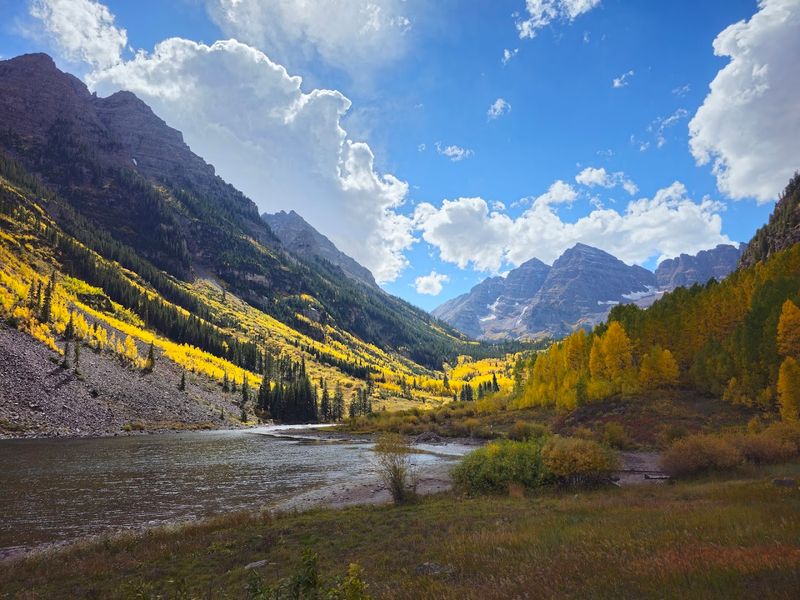
Few images in Colorado get reproduced as often as the Maroon Bells reflected in Maroon Lake, and yet standing there in person still manages to feel like a surprise.
The Maroon Lake Scenic Trail and Crater Lake Trail begin at the Maroon Lake Trailhead on Maroon Creek Road near Aspen, and the scenery starts delivering before you even finish stretching.
Access to the Maroon Bells Scenic Area requires either a shuttle or a parking reservation during peak season, which sounds like a hassle until you realize it keeps the crowds from completely overwhelming one of Colorado’s most photogenic corners.
The shuttle ride itself is pleasant, winding through aspen groves that in September turn into a gold and orange spectacle that feels almost theatrical.
Crater Lake adds a satisfying destination to what could otherwise be a wander-and-stare situation. The round trip to Crater Lake is roughly 3.6 miles with a moderate climb.
Go in early fall if you can swing it; the combination of peak color, crisp air, and the Bells towering overhead is the kind of thing you will describe to people for years. Plan ahead, book early, and bring layers.
4. Mayflower Gulch Trail, Copper Mountain
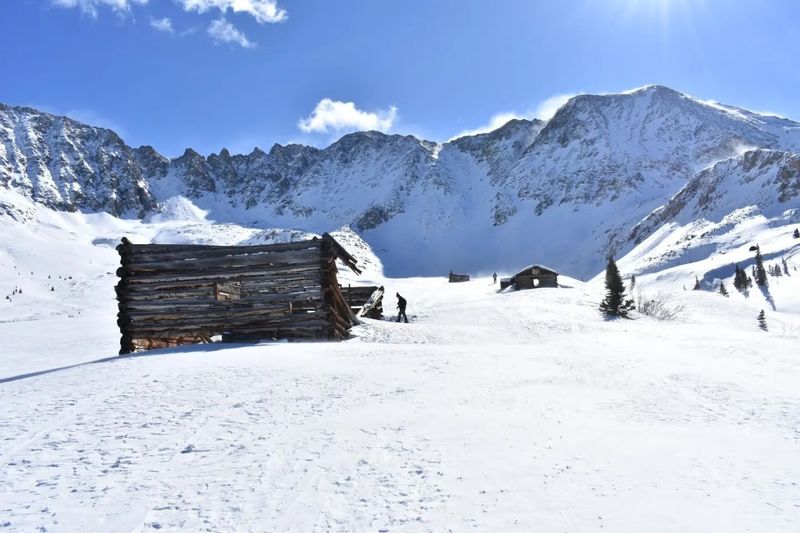
Mayflower Gulch is the kind of trail that rewards people who did not plan on being impressed. Starting from the trailhead on Colorado Highway 91, about 5.3 miles south of I-70 Exit 195 near Copper Mountain, this path moves through open alpine terrain that feels generously wide and wonderfully exposed to sky.
The upper gulch views stretch across a bowl of peaks that gives you the honest feeling of being above the world.
Old mining ruins dot the landscape, adding a layer of history that makes the walk feel like more than exercise. There is something quietly moving about standing next to a collapsed cabin at 11,000 feet and imagining what it took to live and work up here.
The USFS trail page highlights the open terrain, and they are not wrong; this place breathes.
Snowshoers love Mayflower Gulch in winter, when the whole scene turns into a hushed white panorama. Summer hikers get wildflowers and easier footing.
Either way, the trail is roughly 4.5 miles round trip with a steady climb. Pack snacks, watch for afternoon thunderstorms, and do not rush the upper section.
The views there deserve a proper pause, not a quick glance over your shoulder.
5. Flatirons Vista Trail, Boulder
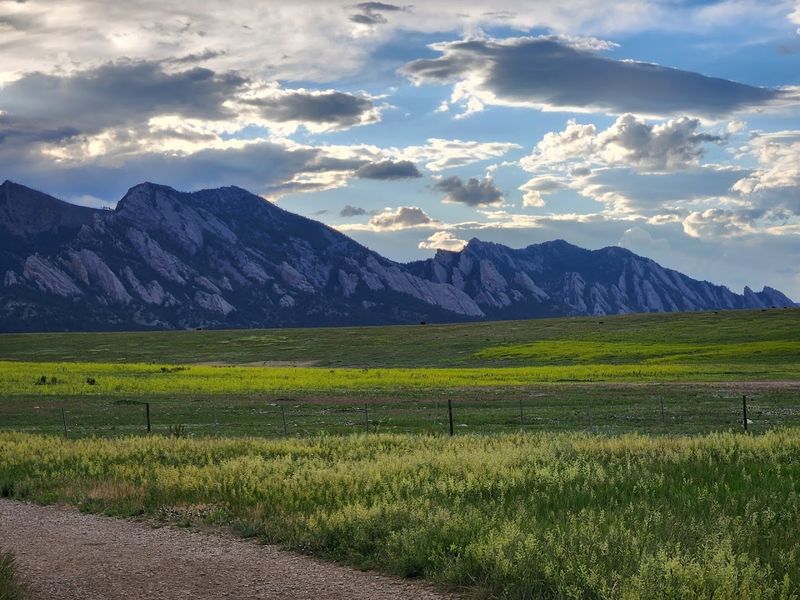
Boulder has a habit of making outdoor experiences feel effortless, and the Flatirons Vista Trail lives up to that reputation without being smug about it. The trailhead sits on CO-93, just 0.3 miles south of Highway 128, and official hours run from 5 a.m. to 11 p.m., which means early risers and evening walkers both get their moment.
Check for muddy-trail closures before heading out, especially after spring rains.
The trail winds through open grasslands with the Flatirons looming to the north in a way that feels both monumental and strangely personal, like a landmark that belongs to you specifically.
The views here are wide and layered, with the plains stretching east and the foothills rising west in a satisfying contrast that photographers and casual walkers appreciate equally.
This is a solid choice for a weekday morning when the parking lot has breathing room and the light hits the rock faces at a low, flattering angle. The trail system offers multiple loop options, so you can customize the distance to fit your energy level.
I find the southern sections particularly peaceful. Bring a hat, sunscreen, and an appetite, because downtown Boulder’s food scene is a logical and delicious next stop.
6. Castle Trail, Mount Falcon Park, Morrison
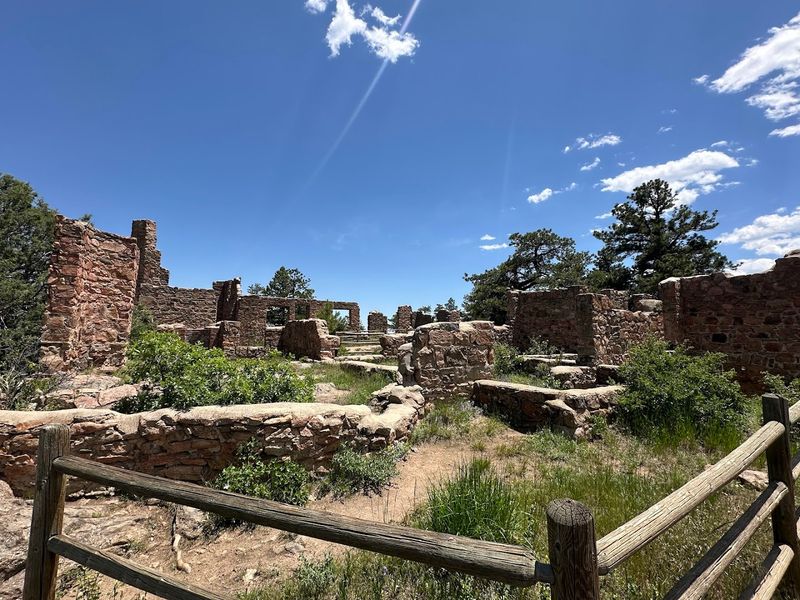
Mount Falcon Park near Morrison is one of those places that quietly outperforms its name recognition. The Castle Trail starts from the Morrison Trailhead at 3852 Vine Street and climbs with purpose, especially on the steep east-side approach that earns you every view it delivers.
The destination is the stone ruins of a castle that John Brisben Walker began building in the early 1900s, a project interrupted by fire and never completed.
Standing among those ruins with the Front Range spread out below you is a genuinely peculiar and wonderful feeling. You are simultaneously in a history lesson and a postcard.
The castle walls frame the mountains in a way that no landscape architect could have planned better. Kids find the ruins fascinating, and adults find the benches nearby extremely well-timed.
The trail system at Mount Falcon offers enough variety to fill a half day comfortably. The east-side climb is steep enough to be satisfying without being punishing, and the summit area rewards you with views that stretch toward Denver on clear days.
Arrive early on weekends, bring more water than you think you need, and consider looping back on a different route. The park consistently surprises people who expect something ordinary.
7. Paint Mines Interpretive Park Trails, Calhan
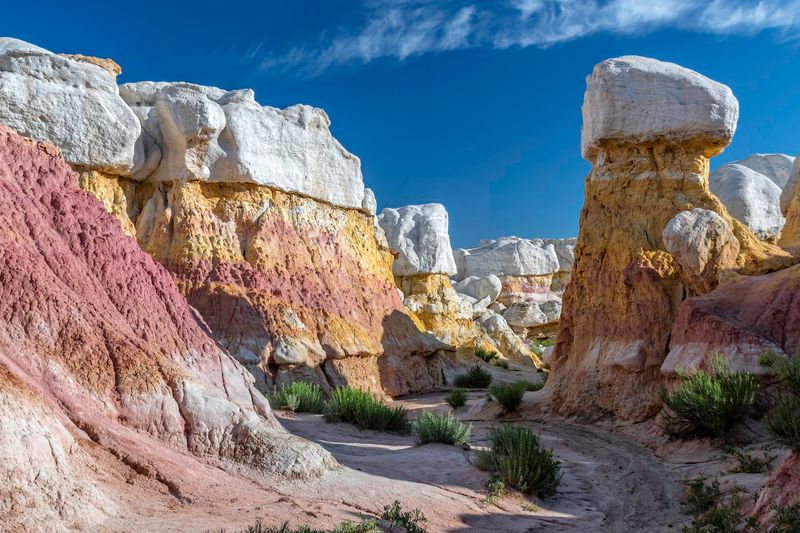
Paint Mines Interpretive Park does not look like anything you expect from the Colorado plains, which is exactly what makes it worth the drive to 29950 Paint Mines Road in Calhan.
Free and open year-round from dawn to dusk, this park contains a collection of eroded clay formations in colors that range from soft pink to deep lavender to chalky white, all carved by wind and water over thousands of years.
The trail system here is relatively flat and short, which means the visual payoff arrives quickly and without much physical investment. That is a welcome change of pace after some of Colorado’s more demanding hikes.
The formations cluster in a dry gulch, and walking among them feels like visiting a miniature canyon designed by someone with an unusually bold color palette.
Archaeological evidence suggests humans have been visiting this area for roughly 9,000 years, which gives the place a weight that the cheerful colors do not immediately suggest. Go on a weekday if possible; the parking area is modest and the experience is best when you have space to wander quietly.
Sunrise and late afternoon light bring out the warmest tones in the formations. Honestly, this one surprised me more than almost anything else on this list.
8. Rattlesnake Gulch Trail, Eldorado Canyon State Park
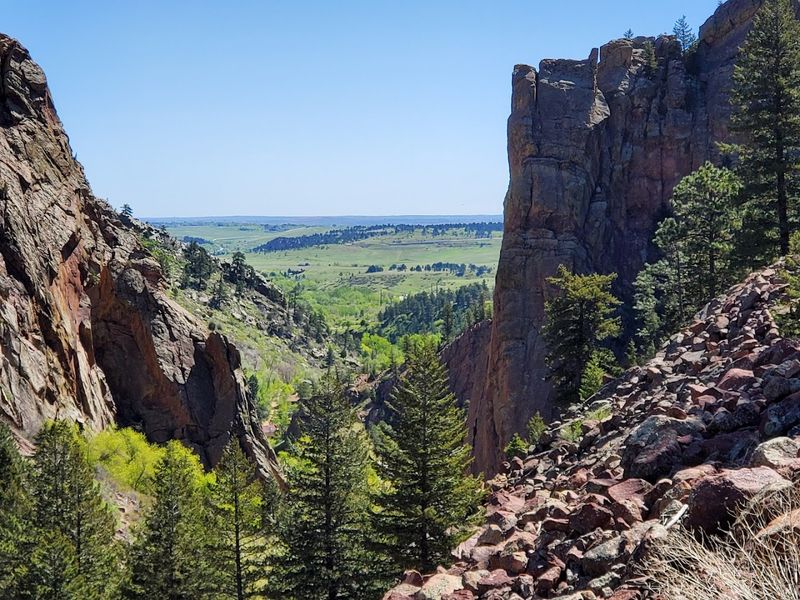
Eldorado Canyon State Park has a reputation among climbers, but the Rattlesnake Gulch Trail gives hikers their own reason to show up. Starting from 9 Kneale Road in Eldorado Springs, the trail climbs steadily through a canyon that feels genuinely wild despite being a short drive from Boulder.
Colorado Parks and Wildlife highlights views of the canyon, the eastern plains, and the Continental Divide from the upper sections, and that description is accurate and generous at the same time.
The trail gains elevation in a way that feels earned rather than punishing. You move from the canyon floor through scrubby terrain and then emerge at viewpoints that suddenly open the world up in every direction.
The ruins of the old Crags Hotel sit near the upper trail, another unexpected historical detail that adds texture to what is already a rich experience.
Morning visits are strongly recommended, both for the light quality and to avoid sharing the parking area with everyone else who figured out this trail is excellent. The park charges a day-use fee, which is worth every penny.
Bring trekking poles if you have them; the descent can be slick on loose rock. This trail consistently rewards hikers who come in with no particular expectations and leave with a long list of things to say about it.
9. Fountain Valley Trail, Roxborough State Park
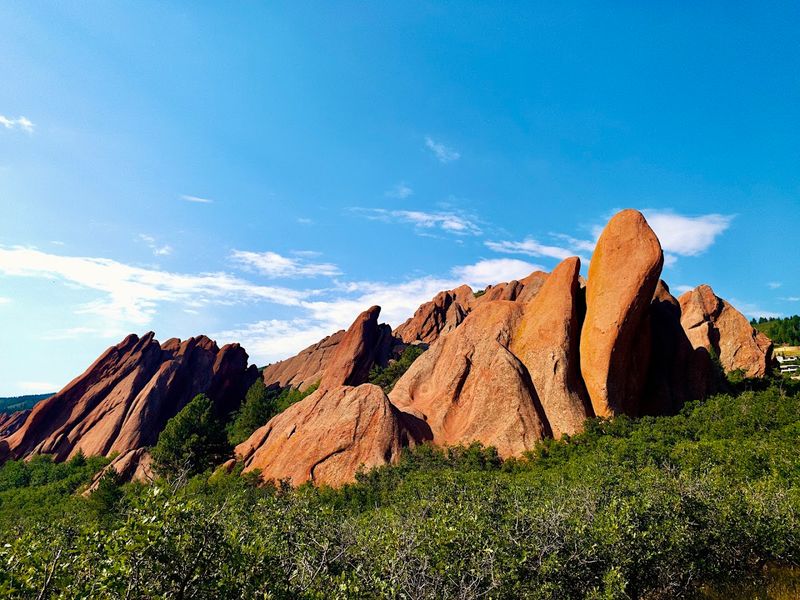
Roxborough State Park is one of Colorado’s most underappreciated gems, and the Fountain Valley Trail is the best way to understand why. Located at 4751 East Roxborough Drive in Roxborough, the park is open daily and the trail delivers a front-row experience with the park’s dramatic red and white layered rock formations without requiring a serious fitness commitment.
The Fountain Valley Trail loops through the heart of the park’s most photogenic terrain, putting those tilted sandstone fins at eye level and then above you and then beside you in a sequence that keeps the scenery feeling fresh throughout the walk. Wildlife sightings are common here; mule deer treat the meadows like their personal dining room, and raptors circle overhead with impressive confidence.
What I appreciate most about this trail is its approachability. It is not trying to intimidate anyone.
Families, casual walkers, and serious hikers all find something to enjoy, and the park’s no-dogs policy keeps the atmosphere calm and the wildlife relaxed. The park requires a day-use fee and has limited parking, so an early arrival is wise on weekends.
Pair it with a stop at Waterton Canyon nearby and you have assembled a genuinely excellent Colorado day.
10. Rim Rock Trail, Black Canyon of the Gunnison National Park
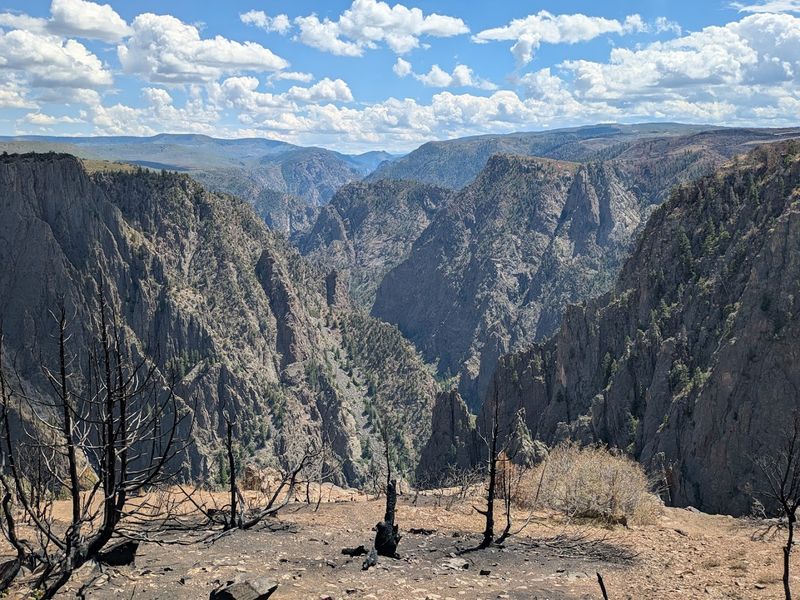
Black Canyon of the Gunnison does not ease you in gently. From the first overlook on the Rim Rock Trail, the canyon drops away so steeply and so darkly that your brain takes a moment to process what it is looking at.
The trail runs along the South Rim, starting near the South Rim Visitor Center at 9800 Highway 347 in Montrose, and the NPS lists it as open and dry, with views of the Gunnison River and the West Elk Mountains.
The canyon is famously narrow and deep, carved over millions of years by the Gunnison River into some of the oldest rock in North America. Walking the rim trail gives you a series of overlooks that each present the canyon at a slightly different angle, and none of them feel redundant.
The West Elk Mountains visible to the north add a sweeping backdrop that balances the raw drama of the canyon itself.
This is not a crowded trail by Colorado standards, which makes the experience feel more personal and a little more intense. The park sits in western Colorado, making it a natural anchor for a road trip through the region.
Go in shoulder season for the best combination of manageable crowds and cooperative weather. The views here are the kind that settle into your memory and stay there.
11. High Dune on First Ridge, Great Sand Dunes National Park
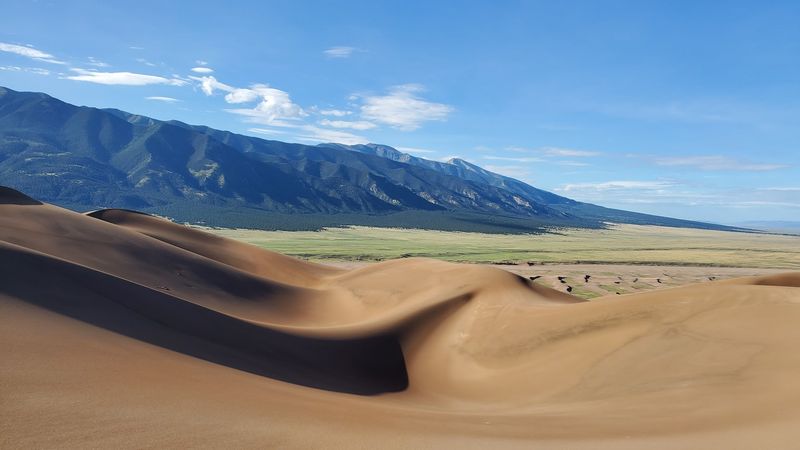
Great Sand Dunes National Park is the kind of place that makes you stop and question what you know about Colorado. The dunes rise over 700 feet from the San Luis Valley floor, and climbing to High Dune on the First Ridge is the most direct way to understand their scale.
The Dunes Parking Area is located at 11999 State Highway 150 in Mosca, the park is open 24 hours year-round, and the NPS specifically recommends High Dune for a full view of the entire dunefield.
There is no marked trail up the dunes, which sounds alarming until you realize the whole point is to pick your own line through an ever-shifting landscape. The sand makes every step feel like a negotiation, and the climb is genuinely tiring in a way that feels disproportionate to the distance.
But the view from the ridge, with the Sangre de Cristo Mountains framing the scene behind you, is one of the most surreal panoramas in the American West.
Start early in summer; the sand surface temperature can reach extreme levels by midday. Medano Creek, which flows seasonally at the base of the dunes, is a favorite spot for families to cool off after the climb.
Bring sandals for the creek crossing and sturdy shoes for the dunes. This place earns its designation every single visit.