
The Oldest Amish House In Illinois Is Still Standing At This Country Museum
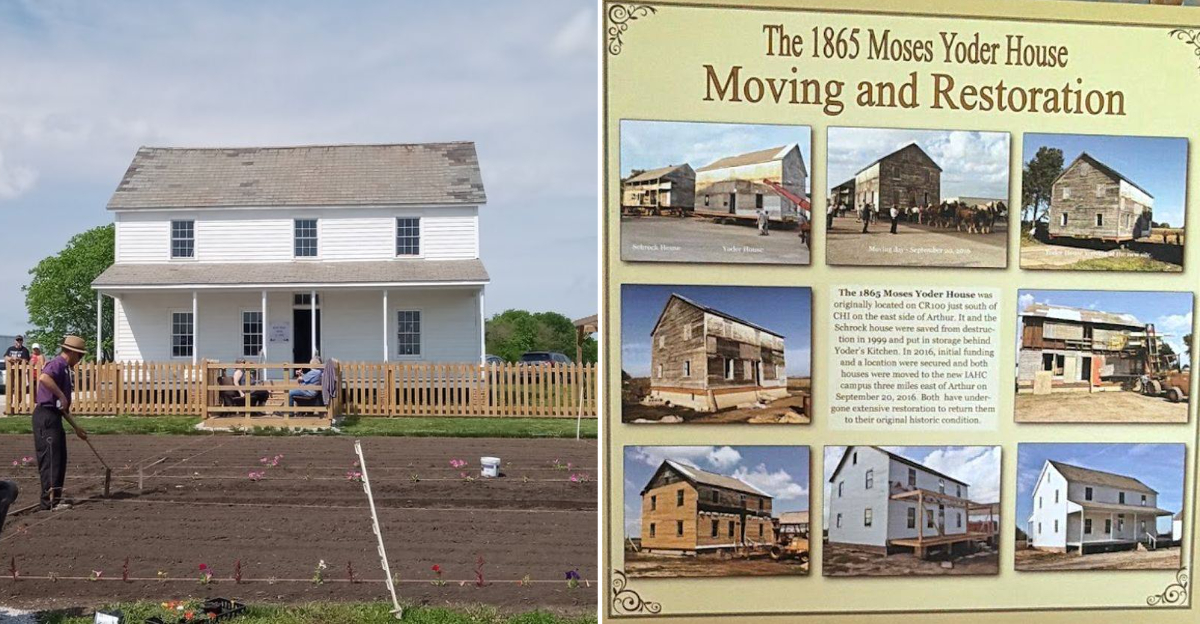
A white farmhouse along Route 133 holds a secret most drivers never notice. Built in 1865, it has survived generations of change while preserving a rare glimpse of early Amish life in Illinois.
Now part of an open-air heritage site near Arthur, the house is recognized as the state’s oldest surviving Amish home. Its simple rooms and weathered wooden frame tell a larger story about families who built their lives around faith, practical skills, and strong community ties.
This is not history sealed behind glass. Visitors can step inside, study the craftsmanship, and imagine daily routines during the nineteenth century.
The surrounding grounds add even more context, with preserved buildings that reveal how Amish settlers lived, worked, and learned.
The House That Outlasted Everything
When the Civil War was still fresh in people’s memories, Moses Yoder was building something meant to last.
Constructed in 1865, the Moses Yoder House is recognized as the oldest surviving Amish house in Illinois, a title that carries real weight when you consider how many buildings from that era have vanished over time.
The house was built using traditional Amish construction methods, relying on hand-cut timber framing and locally sourced materials.
There were no power tools, no modern conveniences, and no shortcuts. Every joint, beam, and plank reflects the careful, deliberate craftsmanship that defined Amish building practices in the nineteenth century.
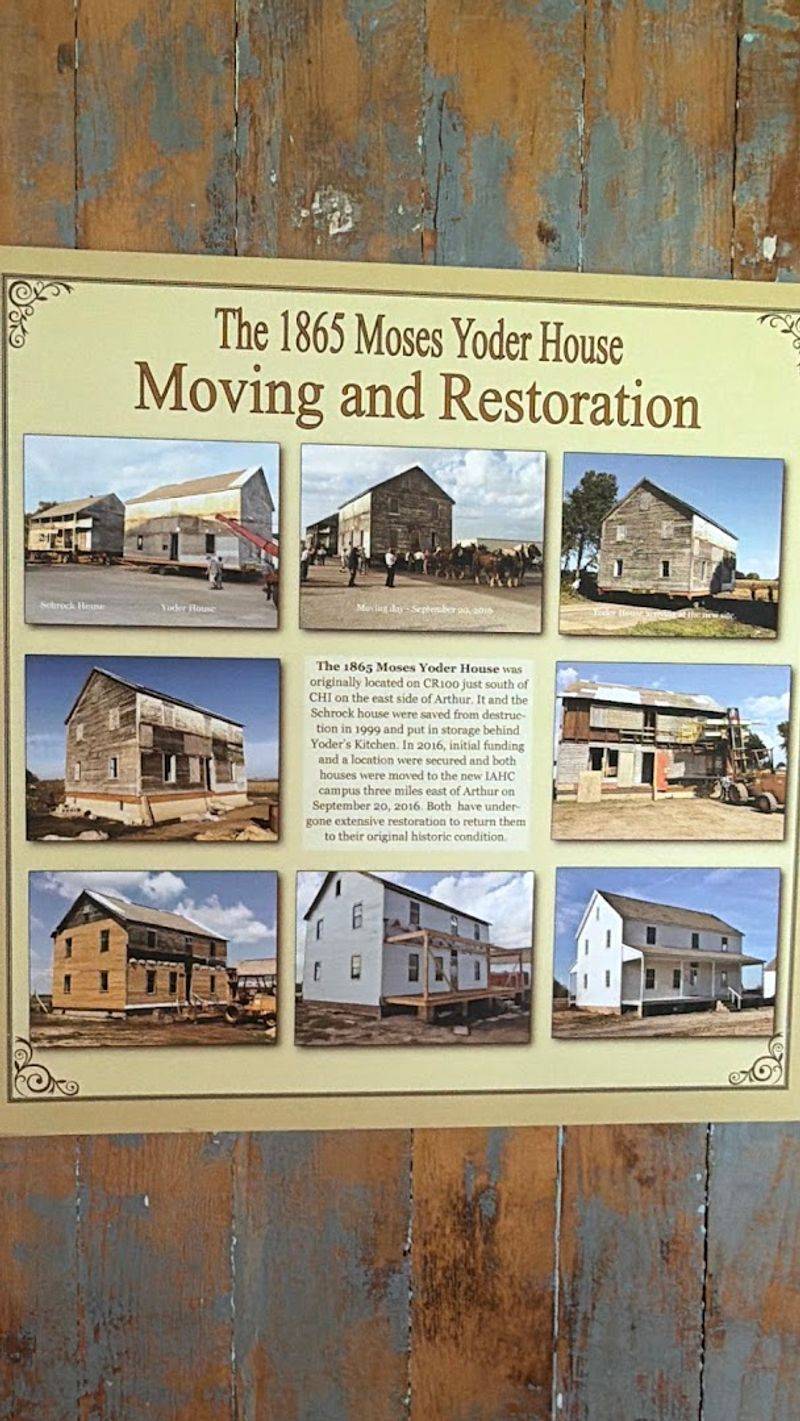
Standing in front of this structure today, it is hard not to feel a quiet sense of awe. The house has survived more than a century and a half of history, although it has been relocated and restored to preserve it. That kind of staying power says everything.
Who Was Moses Yoder?
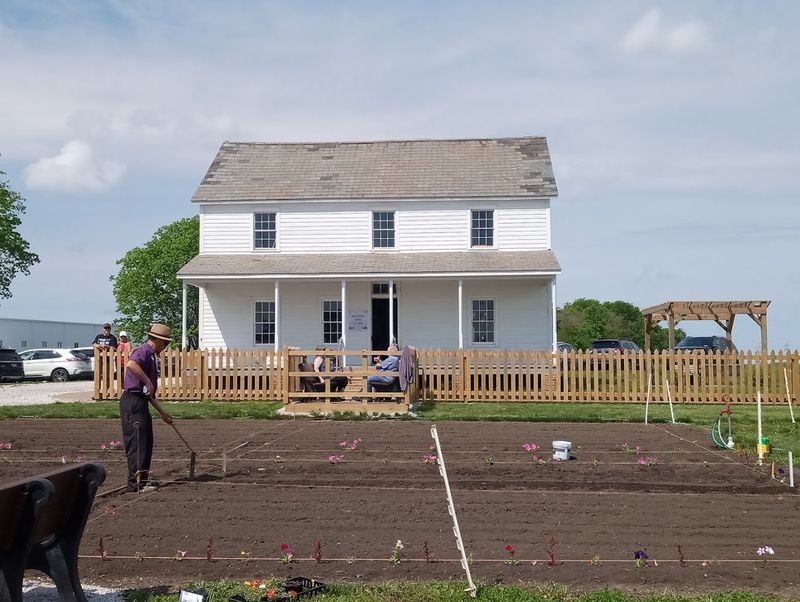
Moses Yoder was among the early Amish settlers who put down roots in Moultrie and Douglas counties in central Illinois during the mid-1800s.
He was part of a wave of Amish families who left Ohio and Pennsylvania in search of affordable farmland and the freedom to live according to their faith and traditions.
Moses Yoder was one of the early Amish residents associated with the developing settlement around Arthur. His house served as a family residence, a gathering place, and a physical symbol of the values his community held dear.
Learning about Moses Yoder adds a personal dimension to visiting the heritage center. Rather than just walking through an old building, you get a sense of the real person behind it, a man who shaped the early Amish presence in Illinois in ways that are still visible today. History has a face here.
The Illinois Amish Heritage Center
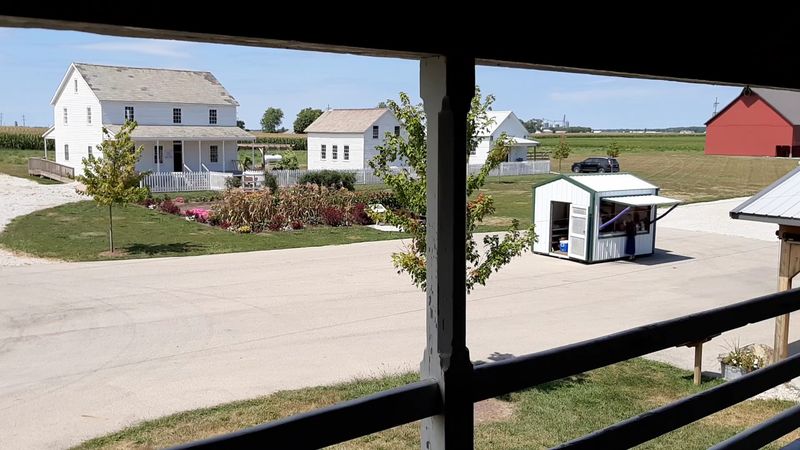
The Illinois Amish Heritage Center sits in Arthur, Illinois, a small town in the heart of one of the largest Amish communities in the United States. The center is an open-air museum dedicated to preserving and sharing the history of Amish life in central Illinois, and the Moses Yoder House is its crown jewel.
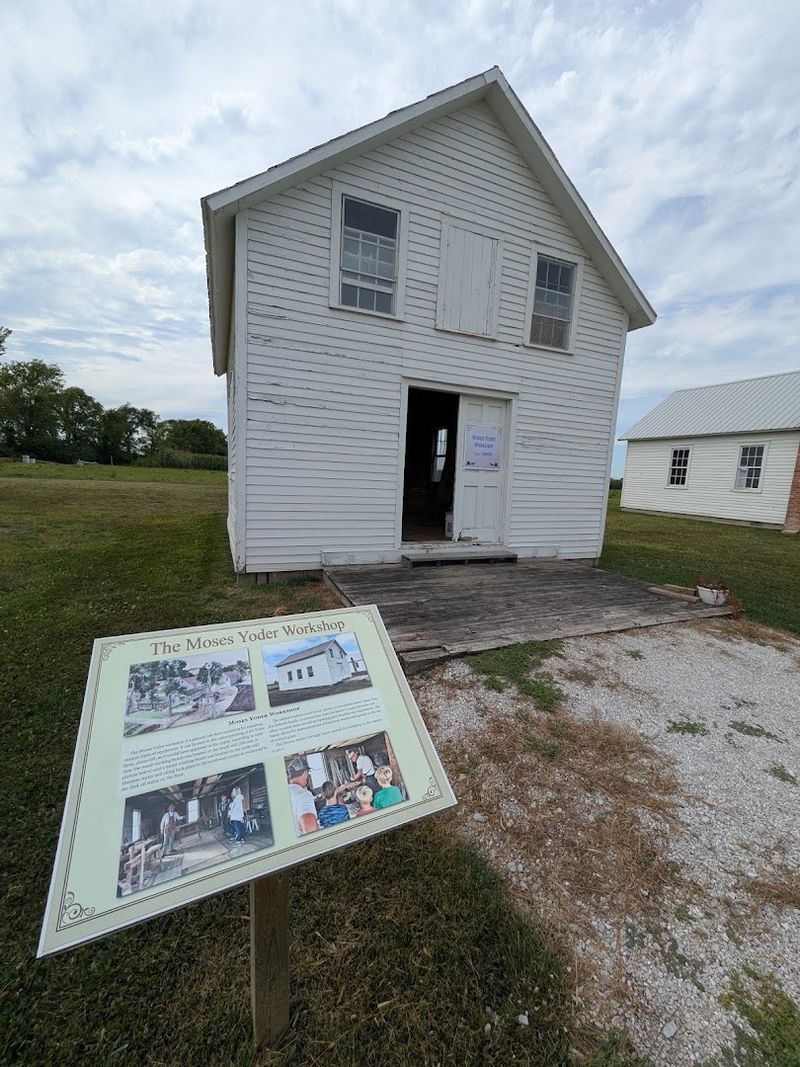
Beyond the Yoder House, the grounds include other relocated historic structures such as a one-room schoolhouse, a workshop, and additional period homes.
Each building has been carefully preserved and arranged to give visitors a sense of what an Amish settlement actually looked and felt like in the nineteenth century.
The center is run by people who are deeply connected to the local Amish community, which gives every visit an authentic quality that a typical museum often struggles to achieve. Walking these grounds feels less like a tour and more like a genuine conversation with the past.
That distinction matters enormously.
Hand-Built Construction
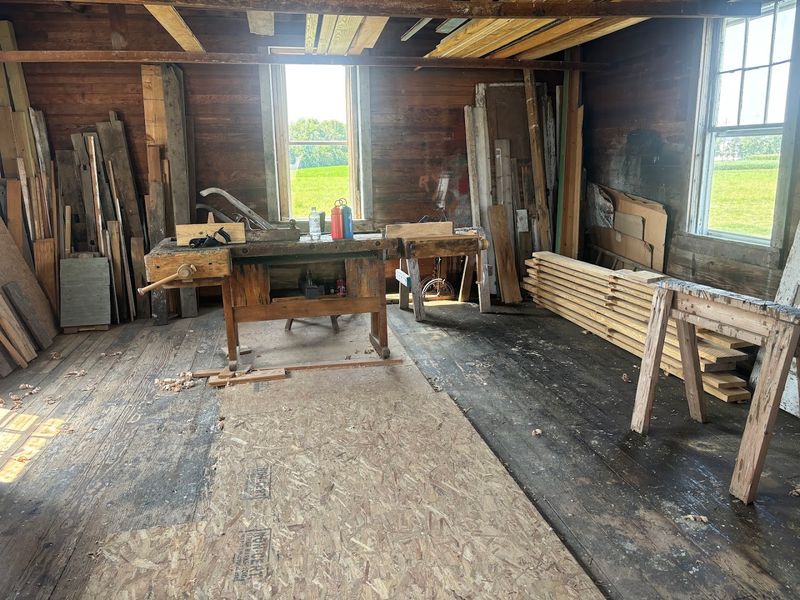
One of the most striking things about the Moses Yoder House is the quality of its construction. Every element of the structure was built entirely by hand, using techniques passed down through generations of Amish craftsmen who treated building as both a practical skill and a form of devotion.
The timber framing relies on mortise and tenon joinery, a method that locks wooden beams together without the need for metal fasteners.
This approach creates an incredibly strong and flexible structure, which is a large part of why the house has remained standing for over 160 years despite the harsh freeze-thaw cycles of Illinois winters.
Visitors who take a closer look at the interior woodwork often find themselves genuinely surprised by the precision involved. These were not rough, rushed joints.
They were carefully measured, hand-chiseled connections made by people who understood that a well-built home was a reflection of character. The craftsmanship here is its own kind of quiet poetry.
A Peek Inside
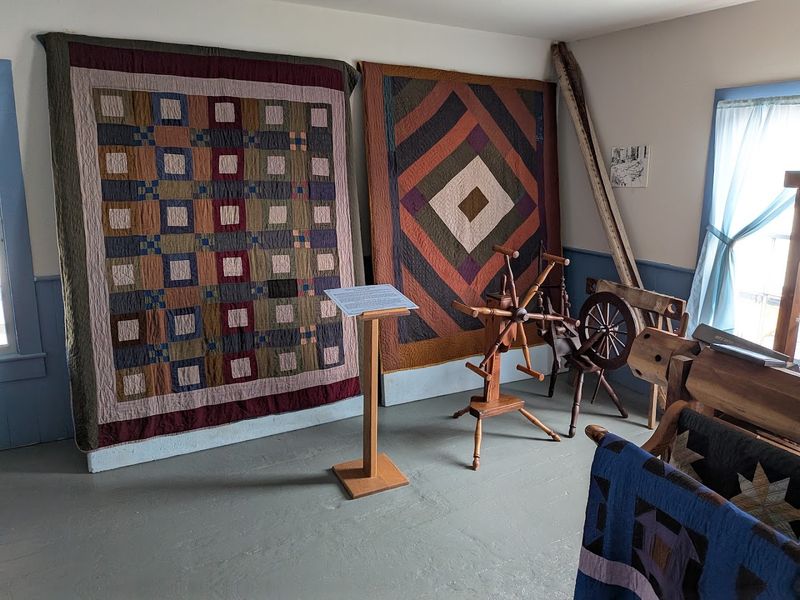
Stepping inside the Moses Yoder House is a genuinely different kind of experience. The interior is spare, intentional, and quietly powerful in a way that modern homes rarely manage to be.
Plain white walls, simple wooden furniture, and small windows that let in just enough natural light define the atmosphere.
There are no decorative flourishes, no wallpaper, and no unnecessary ornamentation of any kind. Every object inside the house had a clear purpose.
A cast iron stove for warmth and cooking, a sturdy wooden table for family meals, basic sleeping arrangements that prioritized rest over comfort.
The Amish concept of Gelassenheit, which roughly translates to yielding to God and community, is visible in every design choice.
What makes the interior so compelling is how much it communicates without saying a word. The layout of the rooms, the placement of furniture, and even the direction of the windows all reflect a philosophy of life that is radically different from modern American culture.
It is thought-provoking in the best possible way.
The Arthur, Illinois Amish Community
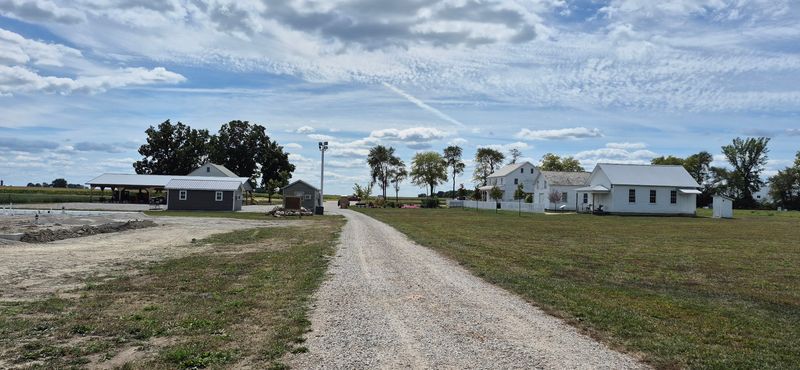
Arthur, Illinois sits at the center of one of the largest Amish communities in the entire country, with thousands of Amish residents spread across Douglas and Moultrie counties.
This is not a preserved historical curiosity. It is a living, active community where traditional Amish values and practices continue to shape daily life in the twenty-first century.
Visiting the heritage center in this context adds a meaningful layer to the experience.
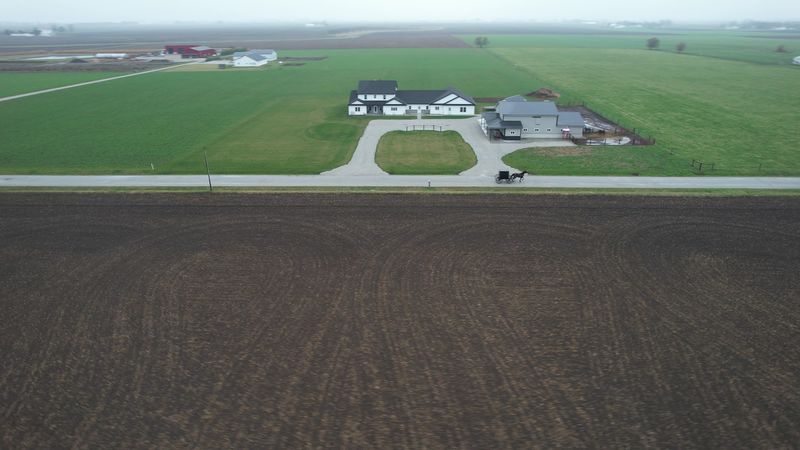
As you drive along Route 133, you are likely to pass horse-drawn buggies, roadside farm stands, and hand-painted signs advertising handmade furniture or fresh baked goods. The museum and the surrounding community feel like two parts of the same ongoing story.
Understanding that the Moses Yoder House exists within a still-thriving Amish community, rather than as an isolated relic, changes how you relate to what you are seeing.
The heritage center is not preserving something that ended. It is celebrating something that continues to grow and adapt with each passing generation.
The Stories A Tour Brings To Life
There is a real difference between walking through a historic building on your own and having someone walk you through it who actually grew up connected to that history.
The Illinois Amish Heritage Center offers guided tours led by people with firsthand knowledge of Amish culture and tradition, and that difference is immediately noticeable.
Guides explain the significance of architectural details that most visitors would walk right past. They discuss the social and religious context behind the design choices in the Yoder House, explain how families used each room, and answer questions with a depth of understanding that no printed placard can replicate.
Tours run on Saturdays from 10 AM to 4 PM, and the center is closed the rest of the week, so planning ahead is essential.
The admission fee is modest for what you receive. A good guided tour does not just teach you facts.
It rewires the way you look at a place, and the guides here do exactly that with genuine warmth.
More Than Just One Building
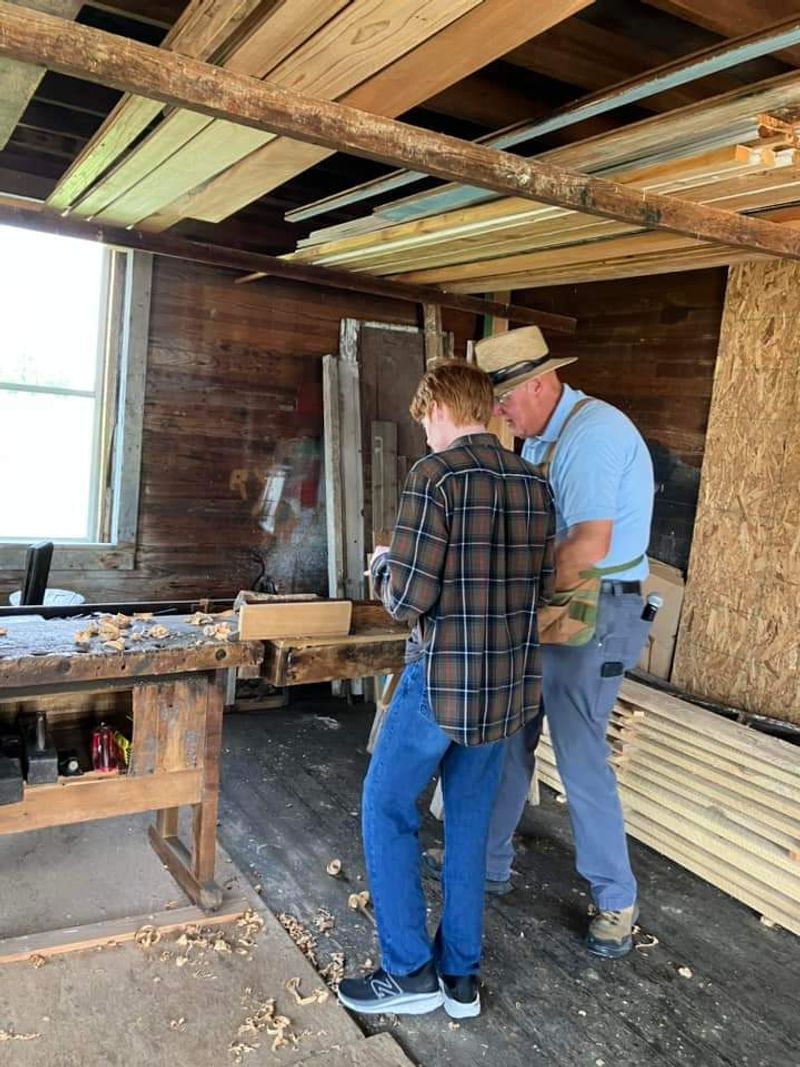
The Moses Yoder House may be the headliner, but the other structures on the heritage center grounds deserve serious attention too. A restored one-room Amish schoolhouse stands nearby, offering a vivid picture of how Amish children were educated in the nineteenth and early twentieth centuries.
Inside the schoolhouse, rows of plain wooden desks face a single chalkboard, and the simplicity of the setup is striking. Amish education historically focused on practical knowledge, reading, writing, arithmetic, and the values of community and faith.
School typically ended after eighth grade, after which young people transitioned into the trades and farm work that sustained their communities.
The workshop on the grounds is equally fascinating, filled with hand tools and equipment that illustrate the range of skilled trades Amish men practiced.
Carpentry, blacksmithing, and harness-making were not just jobs. They were expressions of identity.
Taken together, these buildings create a layered portrait of a community where every person had a role and every role had genuine meaning.
Keeping 1865 Alive For The Future
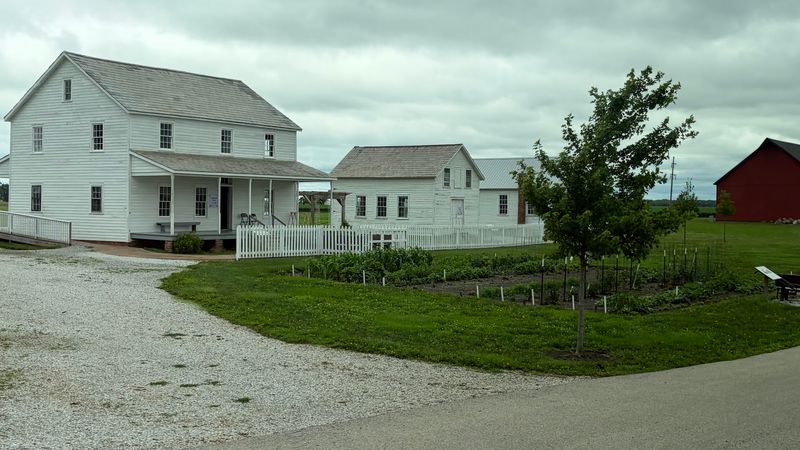
Preserving a 160-year-old wooden structure in the Illinois climate is no small undertaking.
The Illinois Amish Heritage Center has worked consistently to maintain the Moses Yoder House and the other buildings on its grounds, using restoration techniques that respect the original materials and construction methods as much as possible.
Wood rot, foundation settling, and weather damage are constant challenges for any open-air museum, and the heritage center approaches these issues with care.
The goal is not to make the buildings look brand new. It is to stabilize them so that future generations can experience the same sense of connection that visitors feel today.
This kind of preservation work requires ongoing funding, community support, and a clear sense of purpose. The center operates as a nonprofit, and the dedication of its staff and volunteers is evident in the condition of the grounds and buildings.
Planning Your Visit
The Illinois Amish Heritage Center is open exclusively on Saturdays from 10 AM to 4 PM, which makes it one of the more schedule-dependent attractions in central Illinois.
If you are planning a road trip through the area, building your visit around a Saturday is the key move. The address is 284 East Illinois Route 133, Arthur, IL 61911, approximately three miles east of town.
Admission is charged per person, so it is worth checking the current pricing at the website before you arrive. The grounds are best explored at a relaxed pace, so budget at least two hours to walk through all the structures and absorb what each one has to offer.
Arthur itself rewards a little extra time. The surrounding community has farm stands, Amish-owned bakeries, and handcraft shops that make for a full and satisfying day trip.
Pair the heritage center with a slow drive through the countryside, and you have a Saturday that is genuinely hard to top.