
11 Natural Wonders In Oregon That Will Make You Feel Like You Left The Country
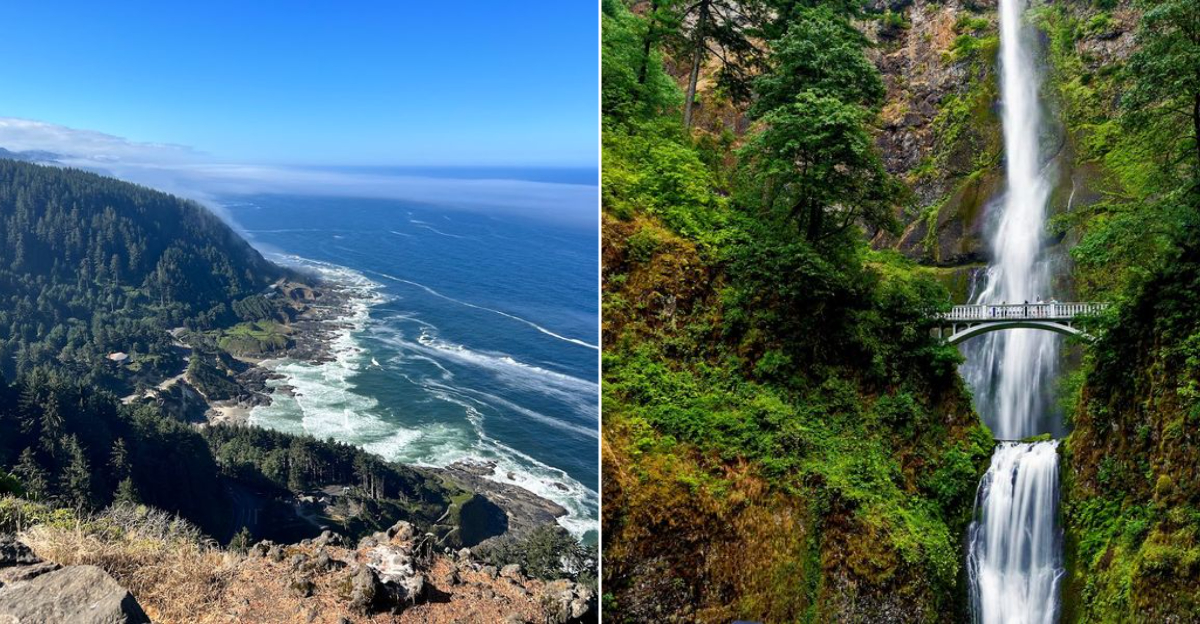
Oregon has a strange habit of making people question where they actually are. One minute you’re driving through the Pacific Northwest, and the next you’re staring at a landscape that looks like it belongs on another continent.
A desert that feels like Africa?
A coastline that could rival a tropical island? Somehow, Oregon managed to collect a little bit of everything.
And the wildest part is you don’t need a passport, a long flight, or a suitcase full of travel snacks to see it. These natural wonders feel worlds away while still being right at home.
From dramatic cliffs to otherworldly forests, each spot proves that Oregon’s scenery doesn’t just impress. It completely changes your sense of place.
1. Crater Lake National Park
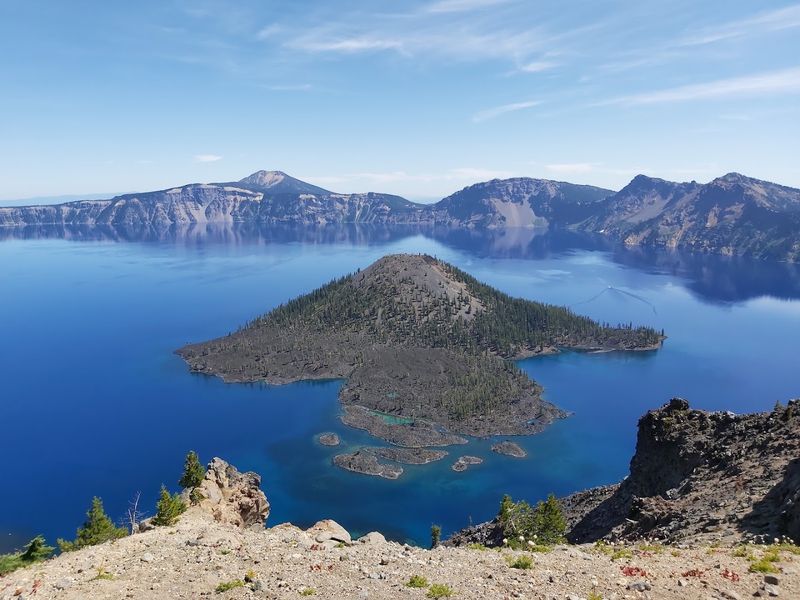
Some places you see in photos and think they must be exaggerated. Then you actually stand on the rim of Crater Lake and realize no filter on earth could do this justice.
Sitting at 570 Rim Village Drive, Crater Lake, OR 97604, this is the deepest lake in the United States, plunging to a staggering 1,943 feet.
The water gets its legendary electric-blue color because it is fed entirely by rain and snowmelt, with no rivers flowing in or out. That purity creates a clarity so intense it almost looks fake.
Born from the catastrophic collapse of ancient Mount Mazama over 7,000 years ago, the caldera slowly filled over centuries into what you see today.
Wizard Island, a perfectly shaped cinder cone rising from the lake’s center, adds a theatrical touch to an already dramatic scene.
The park also holds the title of one of the snowiest inhabited places in North America, receiving an average of 43 feet of snow annually. Crater Lake does not whisper its greatness.
It announces it with full geological authority.
2. Painted Hills Unit
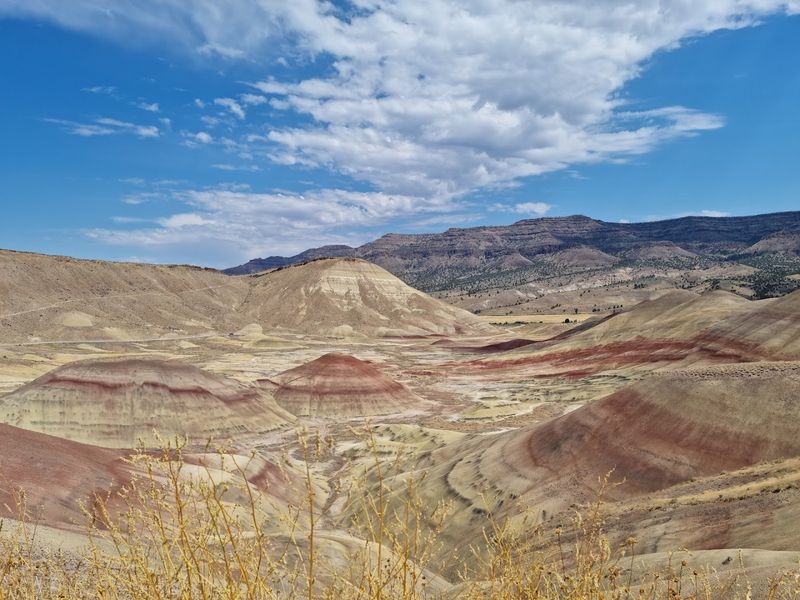
Walking through the Painted Hills feels like stepping inside a geology textbook that somehow became a masterpiece painting.
Located at 37375 Bear Creek Road, Mitchell, OR 97750, this unit of the John Day Fossil Beds National Monument showcases millions of years of Earth’s history in vivid, layered color.
The hills shift between deep red, burnt orange, creamy tan, jet black, and warm gold depending on the time of day and moisture in the air.
That color-changing quality makes every visit feel like a completely different experience. The distinct hues reflect ancient volcanic ash deposits and varying soil compositions formed under radically different climates over eons.
Beyond the visual drama, the Painted Hills hold a rich fossil record that has helped scientists reconstruct ancient ecosystems going back 33 million years. Short, accessible boardwalk trails keep the fragile formations protected while still letting you get beautifully close.
Sunrise and sunset light transform the hills into something almost supernatural, with colors deepening and glowing in ways that feel more like a special effect than a natural phenomenon. Mars called.
It wants its aesthetic back.
3. Smith Rock State Park
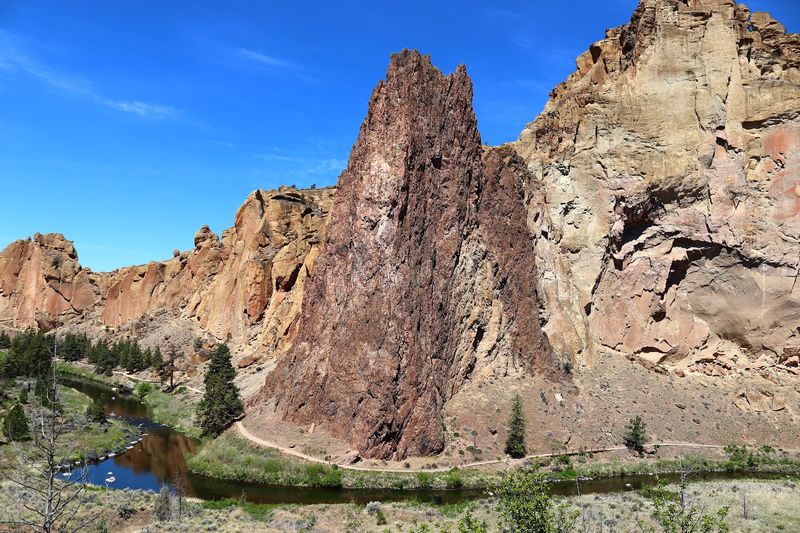
There is a moment on the trail at Smith Rock when you round a corner and the full scale of those towering cliffs hits you like a wall of pure awe.
Situated at 9241 NE Crooked River Drive, Terrebonne, OR 97760, this park is where high desert drama reaches its absolute peak.
Smith Rock is widely credited as the birthplace of modern American sport climbing, and with over 2,000 established routes scaling its volcanic tuff and basalt walls, the reputation is more than earned.
Even if climbing is not your thing, the hiking trails deliver views that rival anything you would find in a national park. The Crooked River snakes through the canyon below, reflecting the amber cliffs in its calm bends.
Golden eagles soar overhead, mule deer graze along the riverbanks, and river otters occasionally pop up to remind you that wildlife here is equally unbothered and magnificent.
The Misery Ridge Trail earns its dramatic name with a steep climb that rewards you with a panoramic payoff. Smith Rock is not just a park.
It is proof that Oregon plays in a completely different league.
4. Samuel H. Boardman State Scenic Corridor
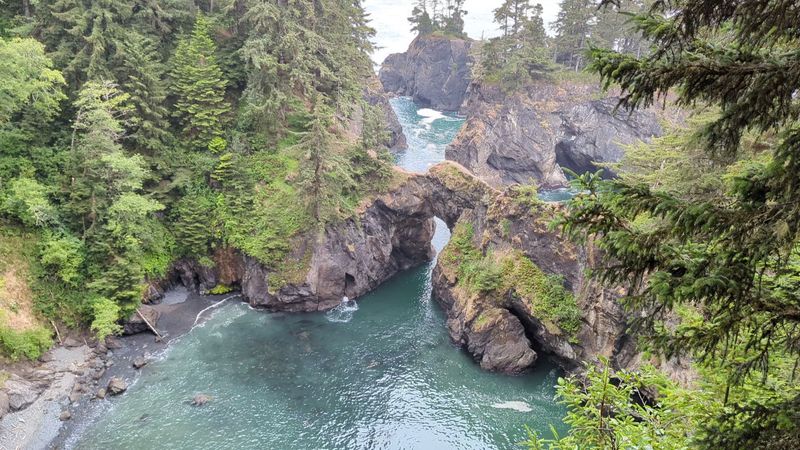
If Oregon’s coastline had a highlight reel, Samuel H. Boardman State Scenic Corridor would be every single clip.
This 12-mile stretch along US Highway 101, Brookings, OR 97415, strings together one coastal masterpiece after another in a way that makes you question whether you have accidentally wandered into a fantasy novel setting.
Natural Bridges is the showstopper, where the relentless Pacific has carved dramatic stone archways right out of the cliffs. Arch Rock and Thunder Rock Cove add their own jaw-dropping chapters to the story.
Ancient Sitka spruce trees, some standing over 300 years old, line the trail and frame every ocean view with towering green elegance.
The Oregon Coast Trail weaves through the entire corridor, offering hikers a chance to experience this stretch at the best possible pace: slowly, with plenty of stops for wide-eyed staring.
Archaeological evidence suggests humans have been drawn to this coastline for as many as 12,000 years, and honestly, that tracks completely.
Once you see it, leaving feels like a minor personal tragedy. The corridor is a reminder that Oregon’s coast does not do subtle.
5. Oregon Dunes National Recreation Area
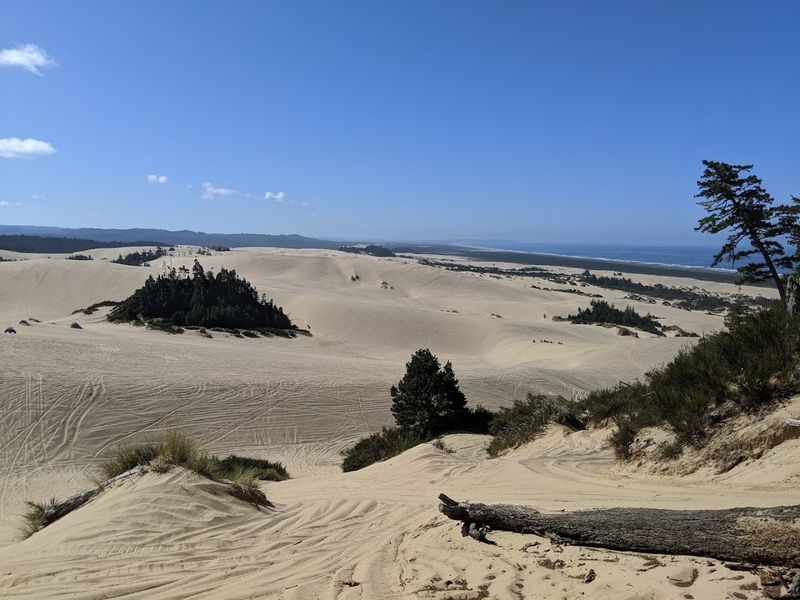
Frank Herbert did not just imagine Arrakis out of thin air. He drew inspiration from the Oregon Dunes, and once you stand at the top of a 500-foot sand mountain staring out at the Pacific, that connection makes complete sense.
Stretching 40 miles along the Oregon Coast, the Oregon Dunes National Recreation Area at 855 Highway 101, Reedsport, OR 97467, is the largest expanse of coastal sand dunes in North America.
These are not your average beach dunes. Some soar nearly 500 feet above sea level, shaped by millions of years of wind and wave action into sweeping, cinematic forms.
Tucked between the dunes are over 30 freshwater lakes, lush forests, and wetlands that create a surprisingly rich and layered ecosystem.
The recreation options are genuinely staggering, from off-highway vehicle adventures that send sand flying in every direction to peaceful hikes, kayaking, fishing, and lakeside camping.
Watching the dunes shift colors from pale gold to deep amber as the sun moves across the sky is a slow-motion spectacle worth every quiet moment. Oregon hid a desert on its coast and somehow kept it a secret.
6. Cape Perpetua Scenic Area
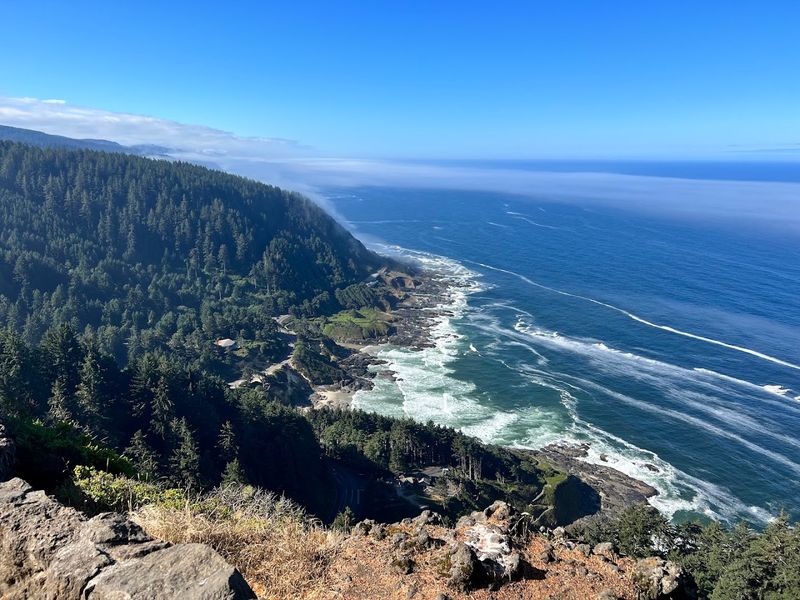
Cape Perpetua does not ease you in gently. It grabs you by the collar and says, look at this.
Rising over 800 feet above the Pacific, this forested headland at 2400 Highway 101, Yachats, OR 97498, offers views stretching 70 miles up and down the Oregon coast and 37 miles out to sea on a clear day.
Down at the base, the real theater begins. Thor’s Well appears to endlessly drain the ocean into a bottomless pit, while Spouting Horn sends powerful jets of saltwater skyward and Churn churns the sea into white chaos.
These basaltic formations were shaped by ancient lava flows from a massive shield volcano that existed here roughly 50 million years ago.
Above the waterline drama, 2,700 acres of old-growth temperate rainforest offer 26 miles of trails winding through towering Sitka spruce, Douglas fir, and western hemlock.
Hidden along those paths is a Sitka spruce nicknamed the Silent Sentinel of the Siuslaw, a tree that has been growing for 600 years. Cape Perpetua is where the ocean and the forest decided to compete for your attention simultaneously.
7. Silver Falls State Park
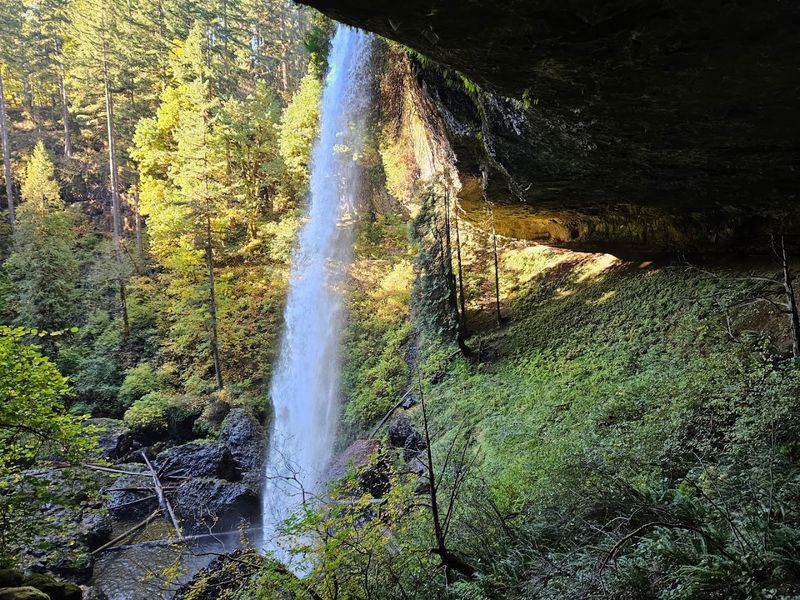
Walking behind a waterfall is one of those experiences that sounds made-up until you are actually standing there, soaked in mist, completely rethinking your priorities.
Silver Falls State Park at 20024 Silver Falls Highway SE, Sublimity, OR 97385, offers that exact moment four times over on a single trail.
The legendary Trail of Ten Falls is a 7.2-mile loop that guides you past ten separate waterfalls, each with its own personality and power. South Falls drops a breathtaking 177 feet, while Double Falls edges it out at 178 feet for the tallest title.
The unique geology here, where water flows over hard basalt sitting atop softer eroded rock, is what creates those incredible walk-behind chambers that feel like nature’s own cathedrals.
Oregon’s largest state park at over 9,000 acres also offers more than 35 additional miles of trails for hiking, mountain biking, and horseback riding through old-growth forest.
The entire park has a lush, mossy, almost enchanted quality that makes it feel removed from the regular world entirely. Silver Falls is the kind of place that makes a Tuesday feel like the best day of your life.
8. Multnomah Falls
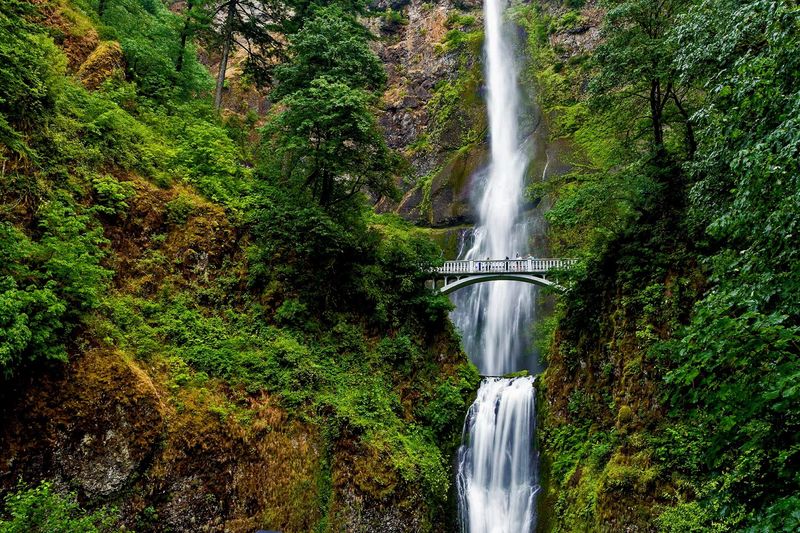
At 620 feet tall, Multnomah Falls does not just impress you. It humbles you.
Located at 53000 E Historic Columbia River Highway, Bridal Veil, OR 97010, this two-tiered cascade is the most visited natural attraction in the entire Pacific Northwest, pulling in over two million people every single year.
The falls run year-round, fed by underground springs from Larch Mountain and boosted by snowmelt and rainfall through the seasons.
Each season brings its own version of the spectacle, from icy edges in winter to thundering summer flows. The historic Benson Bridge, built in 1914, arches gracefully across the lower falls and gives you a front-row perspective that no photograph fully captures.
The exposed basalt cliff face tells a geological story spanning over 400,000 years, revealing six distinct lava flows in its layered walls.
According to Multnomah tribal legend, the falls were created through the selfless act of a young princess, adding a layer of human meaning to the raw geological drama. Multnomah Falls is not just a waterfall.
It is the kind of landmark that earns its reputation every single day.
9. Lava Lands Visitor Center
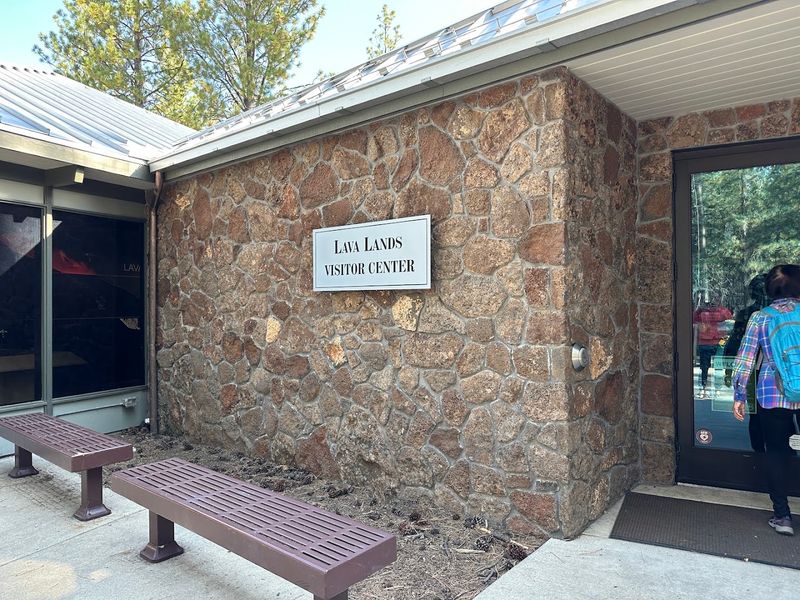
Standing on a 7,000-year-old lava flow and realizing the ground beneath your feet was once a river of molten rock is the kind of reality check that makes everyday problems feel refreshingly small.
The Lava Lands Visitor Center at 58201 S Highway 97, Bend, OR 97707, is the gateway into the Newberry National Volcanic Monument, and it sets the tone immediately.
The center features engaging exhibits on the region’s fiery geological history, including an impressive 3D topographic map that makes the scale of Newberry Volcano suddenly click into focus.
Just steps away, Lava Butte rises 500 feet above the surrounding landscape, a 6,100-year-old cinder cone offering panoramic views across a terrain shaped entirely by ancient eruptions.
The Trail of Molten Land winds directly over hardened lava flows, giving you a ground-level sense of the volcanic forces that shaped this corner of Oregon.
For the adventurous, the nearby Lava River Cave offers a mile-long underground journey through Oregon’s longest lava tube. Newberry Volcano itself is the largest in the entire Cascade Range, with over 400 cinder cones scattered across its flanks.
Oregon’s geology is not quietly sitting in the background here.
10. Wallowa Lake State Park
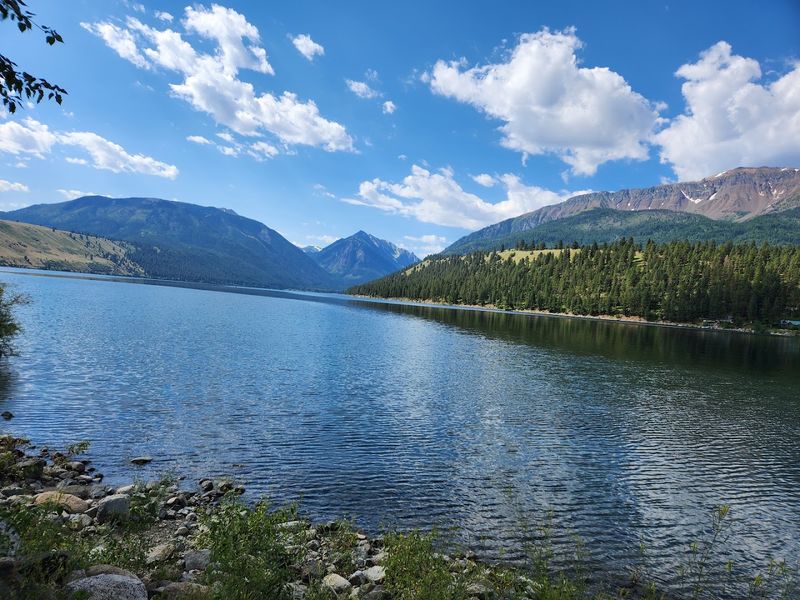
Nobody tells you that Oregon is hiding its own version of the Swiss Alps in the northeastern corner of the state, and that feels like a genuine oversight.
Wallowa Lake State Park at 72214 Marina Lane, Joseph, OR 97846, sits cradled between dramatic glacial moraines with the imposing Wallowa Mountains rising on three sides like a natural fortress.
The lake itself was carved by massive Pleistocene glaciers and filled with water so clear and deeply blue it looks almost theatrical.
The surrounding Eagle Cap Wilderness Area, Oregon’s largest wilderness, begins right at the park’s edge, opening into hundreds of miles of backcountry trails. Wallowa Lake is the kind of place where silence actually sounds like something.
The Wallowa Lake Tramway, one of the steepest gondolas in North America, climbs Mt. Howard for panoramic views that stretch across four states on a clear day.
Fishing, boating, swimming, and hiking fill the days, while the area’s deep connection to the Nez Perce tribe gives the landscape a historical and cultural weight that makes it feel even more significant. Oregon’s Alps are very much real, and they are very much worth the drive.
11. Yaquina Head Outstanding Natural Area
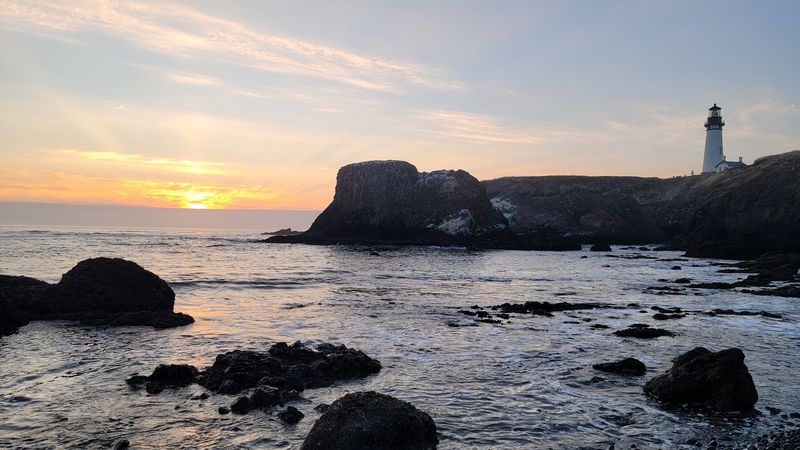
A basalt headland jutting a full mile into the Pacific Ocean, topped by the tallest lighthouse in Oregon, surrounded by thousands of nesting seabirds and some of the richest tide pools on the coast.
Yaquina Head Outstanding Natural Area, just north of Newport, is the kind of place that makes you feel like a nature documentary host just by standing there.
The Yaquina Head Lighthouse has been guiding ships since 1873 and still operates using its original 1868 French-made Fresnel lens.
That kind of continuity is quietly remarkable. The basalt cliffs themselves are ancient lava flows that traveled hundreds of miles from eastern Washington and Oregon millions of years ago before hardening into the dramatic formations you see today.
At low tide, the adjacent tide pools explode with marine life, from sea stars and purple urchins to hermit crabs and anemones. Overhead, thousands of common murres and tufted puffins nest on the offshore rocks, creating a chaotic and wonderful aerial scene.
Harbor seals lounge on nearby rocks, and gray whales pass through during their seasonal migrations. Yaquina Head is designated a Globally Important Bird Area, and every visit makes that title feel completely obvious.
Which of these eleven wonders is calling your name first?