
12 Under-The-Radar Things To Do In South Carolina That Even Locals Don’t Know About
South Carolina’s most famous attractions are easy to find.
The most unforgettable ones rarely advertise themselves.
They hide behind quiet country roads, deep inside forests, at the end of forgotten trails, or in towns most travelers never think to visit. There are no giant welcome signs telling you to stop.
No tour buses lined up outside. Just remarkable places waiting patiently for the curious people willing to look beyond the obvious.
That is where the real adventure begins.
South Carolina has spent decades surprising me, not with the destinations everyone already knows, but with the ones almost nobody talks about. Every detour has led to another hidden waterfall, mysterious landmark, untouched beach, or small-town discovery that somehow never makes the front page of a travel guide.
The best part?
Finding a place that still feels like your own little secret.
These South Carolina hidden gems prove that the greatest adventures are often waiting just a few miles beyond the places everyone else stops.
1. Botany Bay Heritage Preserve, Edisto Island
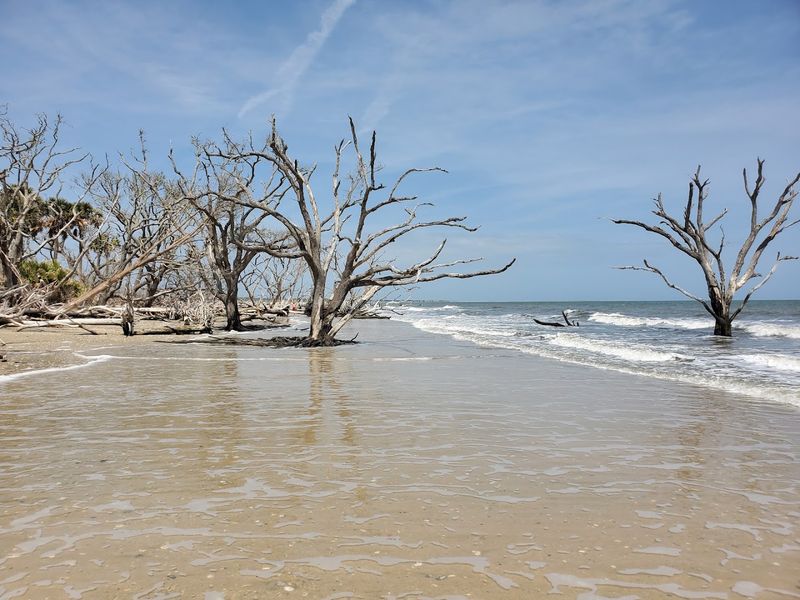
Walking onto Botany Bay feels like stepping into a world that time forgot, where bleached tree trunks rise from the sand like sculptures carved by wind and tide.
This 4,687-acre preserve sits on the southern tip of Edisto Island, a place where nature has been allowed to reclaim what hurricanes and erosion slowly took away.
The famous Boneyard Beach stretches along the shoreline, its ghostly trees creating one of the most photographed and hauntingly beautiful landscapes in the state.
I remember my first visit, arriving just before sunset and watching the light turn everything golden while shorebirds picked their way between the driftwood.
The preserve opens only on Fridays, Saturdays, and Sundays, which keeps the crowds thin and the experience feeling almost private.
Beyond the beach, maritime forest trails wind through palmetto groves and past old plantation roads that hint at the island’s layered history.
Every visit reveals something new, whether it is a dolphin offshore, a rare bird in the marsh, or simply the quiet satisfaction of having this strange, beautiful place nearly to yourself.
2. Stumphouse Tunnel, Walhalla
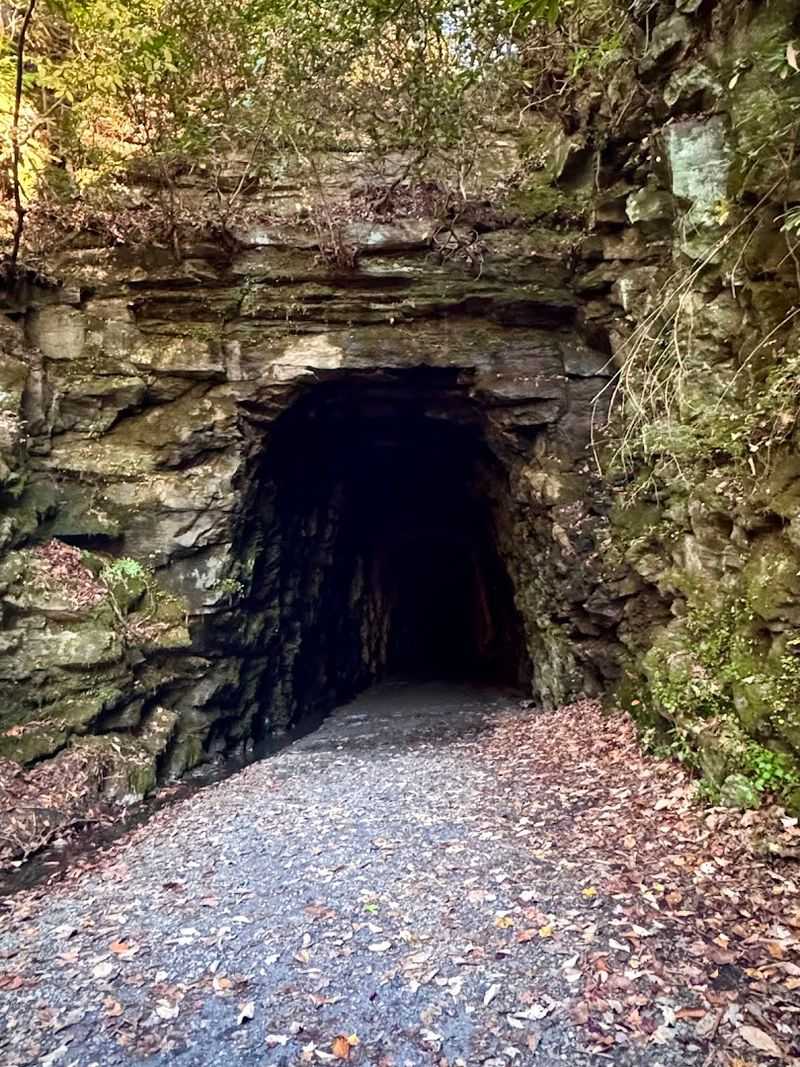
Carved straight into the mountain in the 1850s, Stumphouse Tunnel was meant to be part of a railroad line that would connect Charleston to the Midwest, but construction stopped before the tracks were ever laid.
Now the 1,617-foot tunnel sits abandoned near Walhalla, its cool interior staying around 50 degrees year-round and creating the perfect conditions for aging blue cheese in the mid-1900s.
Yes, you read that right: this place was once a cheese cave.
I hiked up to the entrance on a sweltering July afternoon and felt the temperature drop the moment I stepped inside, the darkness swallowing the summer heat.
The tunnel walls are damp and mossy, and the echo of your footsteps bounces back in a way that makes you feel like you are walking through history itself.
Just a short trail beyond the tunnel, Issaqueena Falls drops 200 feet down a rock face, adding another layer of beauty to this already unusual spot.
Bring a flashlight, wear sturdy shoes, and prepare to feel like you have discovered something that most people will never know exists.
3. Sassafras Mountain Observation Tower, Sunset
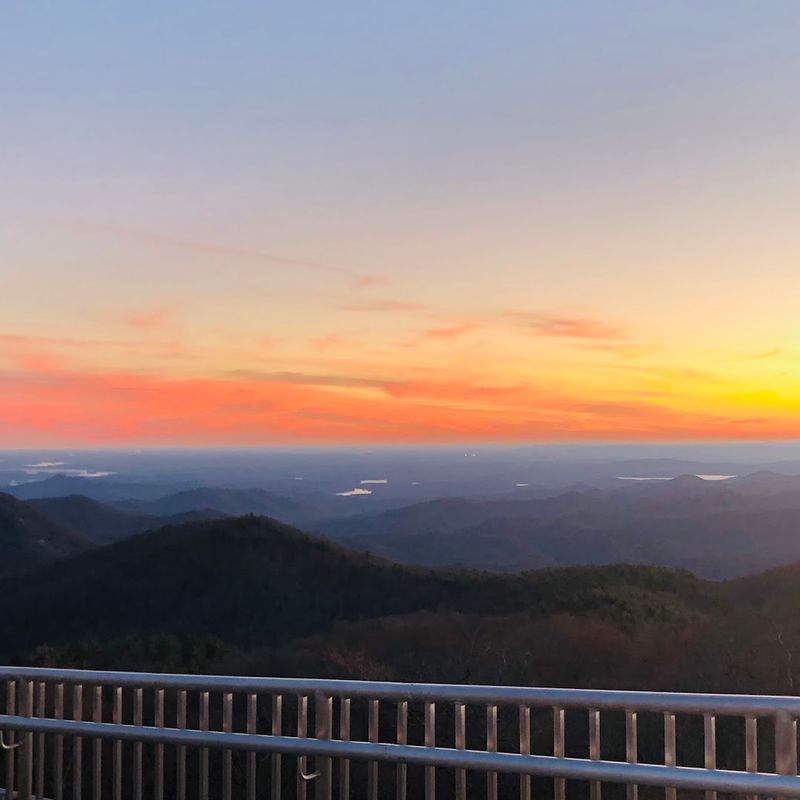
Reaching 3,554 feet above sea level, Sassafras Mountain claims the title of South Carolina’s highest point, and the newly built observation tower makes the view even more spectacular.
The tower sits just off Highway 178 near the town of Sunset, a name that feels almost too perfect given the sunsets you can witness from up there.
I climbed the wooden stairs one clear October morning and found myself staring out at layer after layer of blue-ridged mountains stretching into North Carolina, Tennessee, and Georgia.
The air up there is different, thinner and sharper, carrying the scent of pine and the faint rustle of wind through the leaves.
On clear days, the views reach up to 50 miles in every direction, offering a perspective on the Upstate that most people never experience.
The site also features a pavilion and interpretive signs that explain the geology and history of the area, though honestly, the view does most of the talking.
Whether you visit at dawn, midday, or during the golden hour, Sassafras Mountain reminds you that South Carolina has far more elevation and drama than its coastal reputation suggests.
4. Lee State Park’s Wild Horses, Bishopville
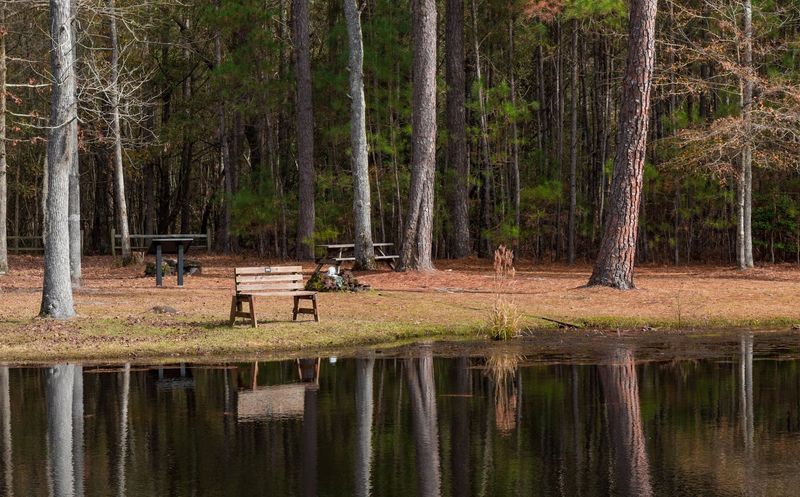
Most people do not expect to find wild horses roaming freely in South Carolina, but Lee State Park near Bishopville has a small herd that has been living on the land for decades.
These horses are descendants of animals that once worked on local farms and logging operations, and they now wander the park’s 2,839 acres as if they own the place.
I spotted them on a quiet weekday afternoon, grazing near the edge of the Lynches River swamp, their coats catching the dappled sunlight filtering through the trees.
The park itself is a mix of river bottomland and upland forest, with trails that meander through ecosystems you rarely see in the Midlands.
Watching the horses move through the landscape feels almost surreal, like stumbling onto a scene from another century.
They are not always easy to find, so patience and a willingness to explore the trails are essential.
The park also offers camping, fishing, and paddling opportunities, but the horses remain the hidden treasure that keeps me coming back, hoping for another glimpse of their quiet, untamed presence.
5. Forty Acre Rock Heritage Preserve, Kershaw
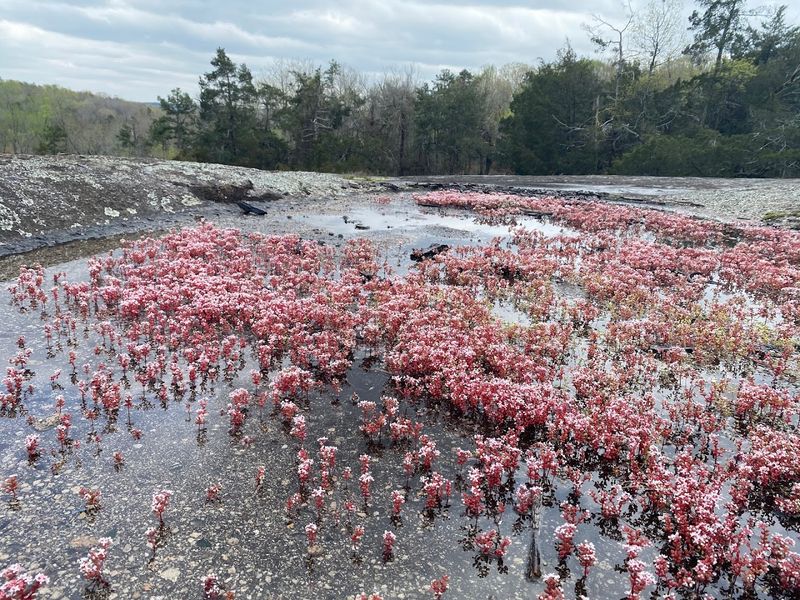
Forty Acre Rock sounds like the kind of place that should be famous, but somehow it has managed to stay under the radar despite being one of the most geologically unique spots in the state.
This massive granite outcrop near Kershaw covers about 40 acres and rises gently from the surrounding forest, its surface dotted with shallow pools that fill with rainwater.
These pools, called solution pits, support rare plants and tiny creatures that have adapted to survive in conditions that would kill most other life forms.
I visited in early spring and found the rock covered in delicate wildflowers and mosses, the pools reflecting the sky like dozens of small mirrors.
The preserve is managed by the South Carolina Department of Natural Resources, and the trail to the rock is easy enough for most hikers to handle.
Standing on top of the outcrop, you get a wide-open view of the surrounding forest, and the silence is so complete that you can hear your own heartbeat.
It is the kind of place that makes you wonder how something this special can exist so quietly, just waiting for someone to notice.
6. Station Cove Falls, Mountain Rest
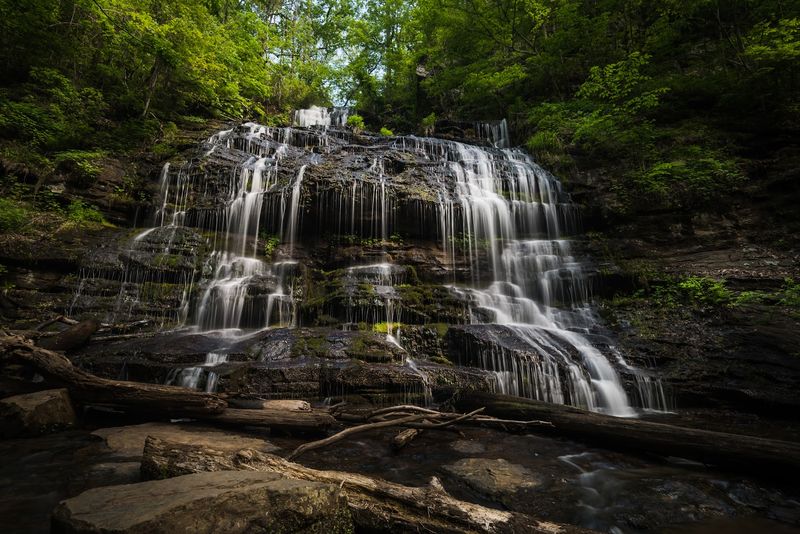
Tucked into the Sumter National Forest near Mountain Rest, Station Cove Falls is a two-tiered waterfall that rewards hikers with one of the most peaceful scenes in the Upstate.
The trail is only about three-quarters of a mile each way, but it winds through a forest so lush and green that you feel like you have left South Carolina entirely.
I hiked it on a humid summer afternoon, and the sound of the water reached me long before I could see the falls themselves.
When I finally arrived, the upper tier was pouring over a rock ledge into a pool before spilling down again, creating a double cascade that felt almost too perfect to be real.
The area around the falls is cool and shaded, with ferns and moss covering every surface, and the mist from the water hangs in the air like a natural air conditioner.
Few people seem to know about this spot, which means you can often have it to yourself, even on weekends.
Bring a camera, pack a snack, and plan to linger, because Station Cove Falls is the kind of place that makes you forget about everything else for a while.
7. Aiken State Park Canoe Trail, Windsor
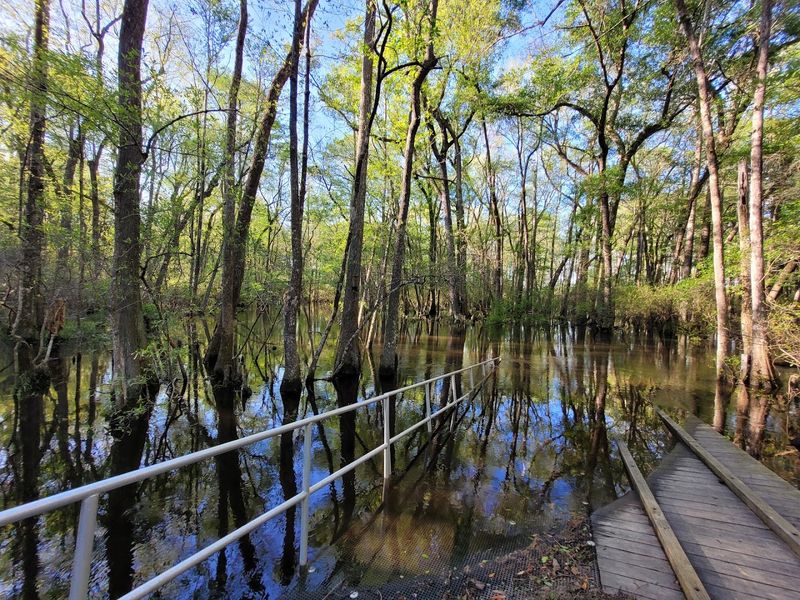
Paddling the South Edisto River through Aiken State Park near Windsor is like gliding through a nature documentary, with blackwater swamps, towering cypress trees, and wildlife that barely seems to notice your presence.
The park offers a designated canoe trail that takes you deep into the swamp, where the water is dark as tea and the silence is broken only by the occasional splash of a turtle or the cry of a bird overhead.
I rented a canoe on a cool spring morning and spent hours drifting through narrow channels, the trees closing in overhead to form a green tunnel that blocked out the sky.
The blackwater gets its color from tannins in the decaying leaves, and it reflects the trees so perfectly that it is hard to tell where the water ends and the forest begins.
Alligators live here, along with otters, herons, and a dozen other species that thrive in the swamp’s quiet rhythms.
The park also has campsites and hiking trails, but the canoe trail is the real highlight, offering a perspective on the Lowcountry that you simply cannot get from land.
If you have never paddled a blackwater river, this is the place to start.
8. Bulls Island, Cape Romain National Wildlife Refuge, Awendaw
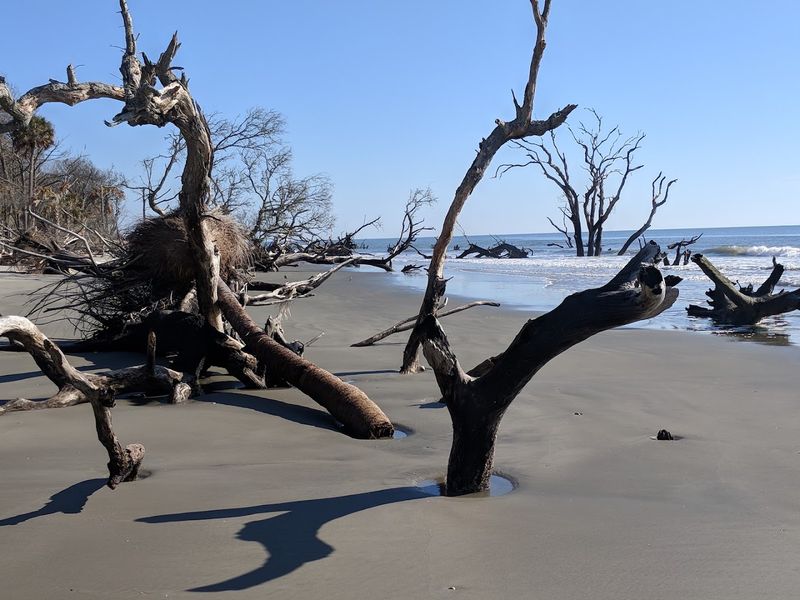
Bulls Island is one of those places that feels like it exists in a different century, a barrier island accessible only by ferry and kept almost entirely wild by the Cape Romain National Wildlife Refuge.
The island sits just off the coast near Awendaw, and getting there requires a 20-minute boat ride that leaves from Garris Landing.
I took the ferry on a misty morning and spent the day exploring 16 miles of trails that wind through maritime forest, salt marsh, and some of the most unspoiled beach I have ever seen.
The beach, called Boneyard Beach, is littered with driftwood and bleached tree trunks that create an otherworldly landscape perfect for photography.
Alligators sun themselves along the freshwater ponds, loggerhead turtles nest on the sand in summer, and the birding is exceptional year-round.
The island has no facilities, no restaurants, and no crowds, just miles of untouched nature that reminds you what the coast looked like before development took over.
Pack plenty of water, wear sunscreen, and plan to stay all day, because Bulls Island is worth every minute of the journey.
9. Landsford Canal State Park Spider Lily Bloom, Catawba
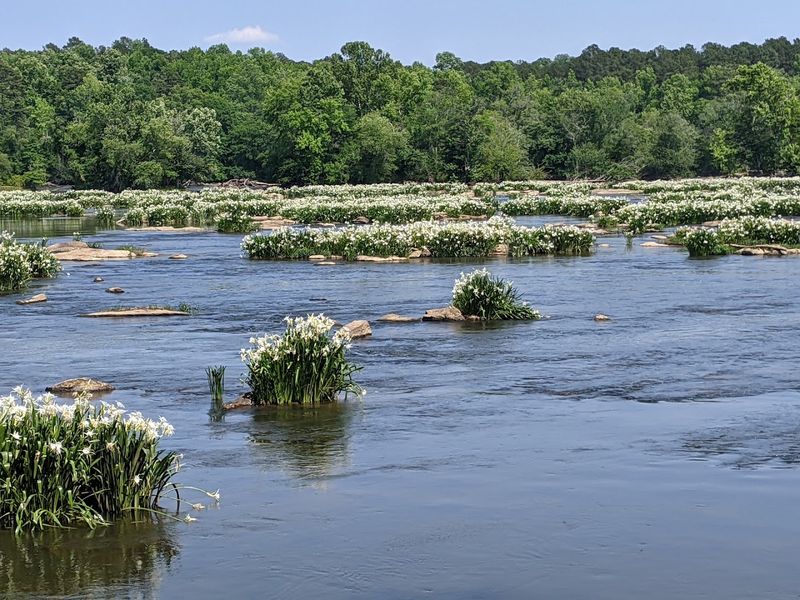
For two or three weeks every May and June, Landsford Canal State Park near Catawba transforms into something magical when the spider lilies bloom along the rocky shoals of the Catawba River.
These delicate white flowers blanket the rocks in such thick clusters that the riverbank looks like it has been dusted with snow, and the sight draws photographers and nature lovers who time their visits down to the day.
I arrived during peak bloom on a sunny Saturday and found the boardwalk trail packed with people, all of us mesmerized by the sheer number of flowers swaying in the current.
The lilies only grow in a few places in the world, and this is one of the largest colonies in existence, making it a truly rare experience.
Beyond the blooms, the park preserves the ruins of an old canal system built in the 1820s to help boats navigate the rocky river, and the history adds another layer of interest to the visit.
If you miss the bloom, the park is still worth exploring for its trails, river views, and peaceful atmosphere.
But if you can time it right, the spider lilies are something you will remember for the rest of your life.
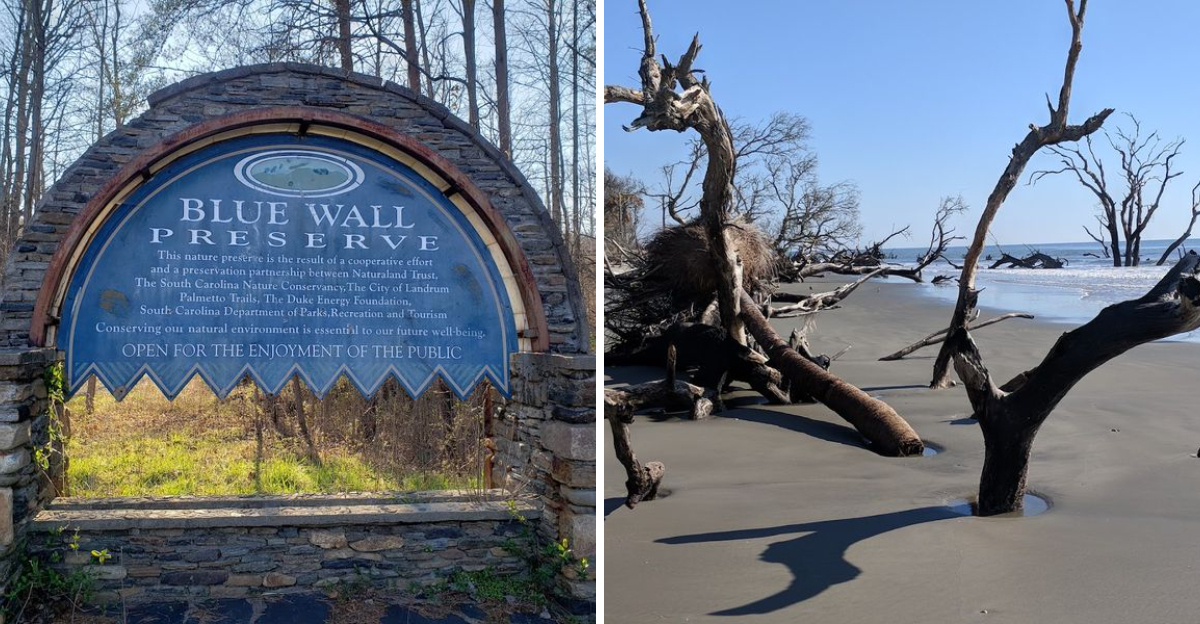
10. Blue Wall Preserve, Landrum
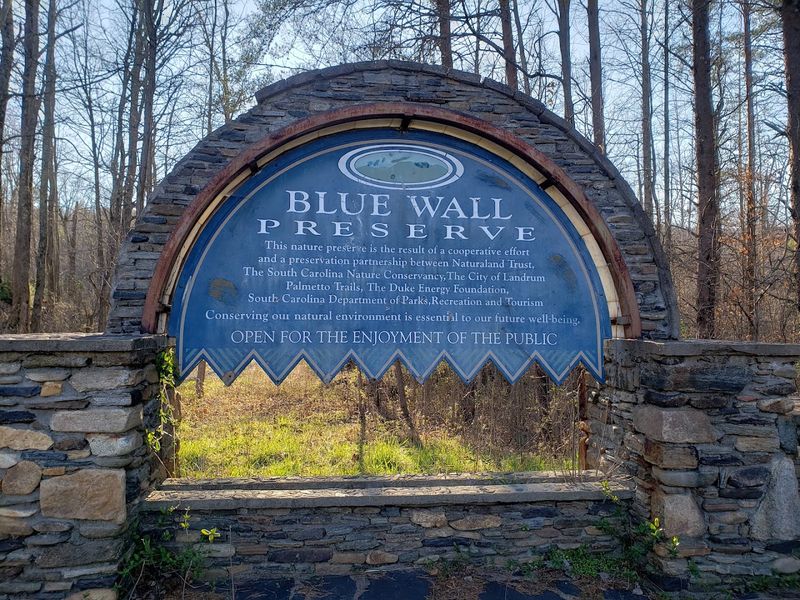
Blue Wall Preserve near Landrum is named for the massive, near-vertical rock face that rises from the forest floor like something out of a fantasy novel.
The wall is actually a large granite outcrop, and its blue-gray color comes from the minerals in the rock and the way the light hits it at different times of day.
I hiked the short trail to the base of the wall on a crisp autumn afternoon and stood there staring up at the sheer face, feeling small and a little awed by the scale of it.
The preserve is managed by the Foothills Land Conservancy, and the trail is only about half a mile, making it accessible to just about anyone.
The area around the wall is home to rare plants and unique ecosystems that thrive in the microclimate created by the rock, and the quiet is so complete that you can hear the wind rustling through the canopy overhead.
Climbers sometimes come here to practice, but most of the time the preserve is empty, offering a rare chance to experience something dramatic and beautiful without any crowds.
It is the kind of place that makes you wonder what other secrets are hiding in South Carolina’s forests.
11. Poinsett Bridge, Landrum
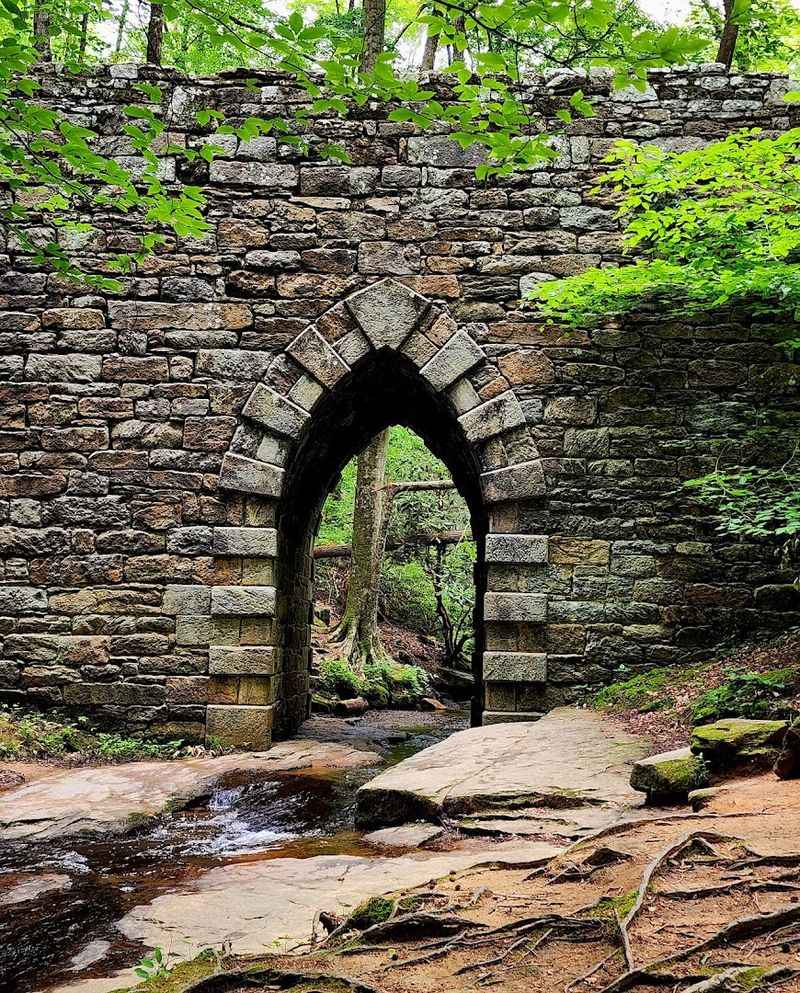
Built in 1820, Poinsett Bridge is the oldest surviving bridge in South Carolina, and its Gothic Revival design gives it an almost fairy-tale quality that feels out of place in the middle of the woods.
The bridge sits along an old section of the State Road near Landrum, and it was part of a route that once connected Charleston to the mountains of North Carolina.
I visited on a foggy morning, and the mist hanging around the stone arches made the whole scene feel like something from another era.
The bridge is only 14 feet wide and 130 feet long, but its graceful arch and hand-cut stone construction are testaments to the skill of the builders who worked on it more than 200 years ago.
A short trail leads down to the creek below, where you can see the bridge from a different angle and appreciate the way it blends into the landscape.
The site is peaceful and lightly visited, making it a perfect spot for a quiet walk or a bit of amateur photography.
Standing on that old stone, you can almost hear the hoofbeats and wagon wheels that once crossed it, heading toward the mountains.
12. Boneyard Beach at Botany Bay, Edisto Island
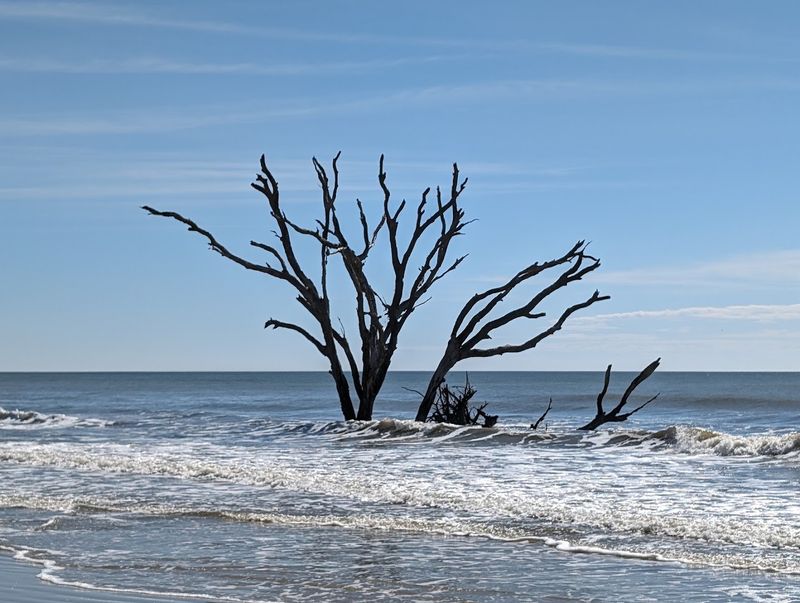
Boneyard Beach at Botany Bay on Edisto Island is so striking that it deserves its own mention separate from the preserve itself, because the beach is where the real drama unfolds.
Erosion has slowly claimed the maritime forest over the years, leaving behind a graveyard of oak and pine trees that now stand half-buried in the sand, their branches twisted and bleached by the sun and salt.
I walked the beach at low tide, weaving between the fallen trunks and marveling at the way nature creates art without any human help.
Photographers flock here for sunrise and sunset, when the light turns the driftwood into silhouettes and the sky explodes with color.
The beach is also a prime spot for shell hunting, with whelks, sand dollars, and shark teeth scattered along the waterline.
Each visit reveals a slightly different landscape, as storms and tides rearrange the wood and reshape the shoreline.
It is a place that reminds you how powerful and relentless nature can be, and how beautiful that power looks when you step back and let it do its thing.
If you only visit one beach in South Carolina, make it this one.