
This Michigan Fort Walks You Straight Into The 1770s With Live Musket Fire And Archaeology
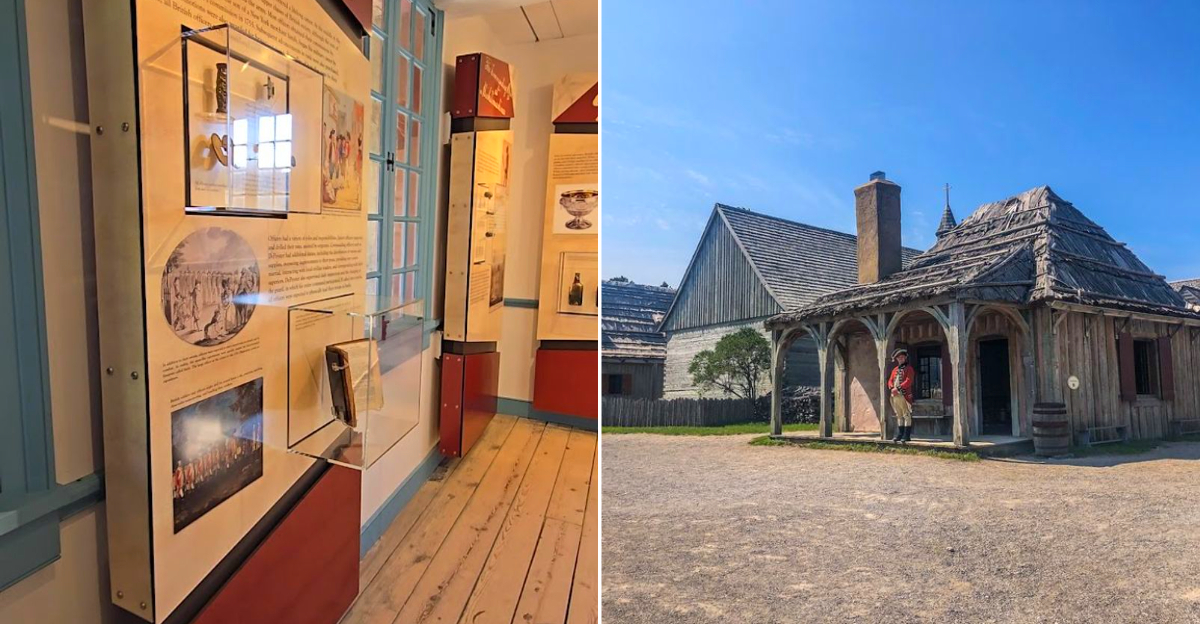
Walking through a wooden gate into a reconstructed fort where interpreters in period clothing are firing muskets changes the way you think about history.
The site sits at the Straits of Mackinac, occupying the same ground where French traders plus British soldiers lived over two centuries ago, with dig sites still producing artifacts that archaeologists brush clean in full view of visitors.
Musket demonstrations are loud enough to make you flinch, cannon fire echoes off the palisade walls, plus the interpreters answer questions about daily colonial life with detail that only years of study provide.
You can walk inside the rowhouses, see where traders stored their pelts, plus look out toward the bridge that now towers over a landscape that once saw only wooden ships.
Standing where soldiers stood plus hearing the same musket crack they heard makes the colonial era feel immediate rather than abstract.
Start With The Film Before The Fort
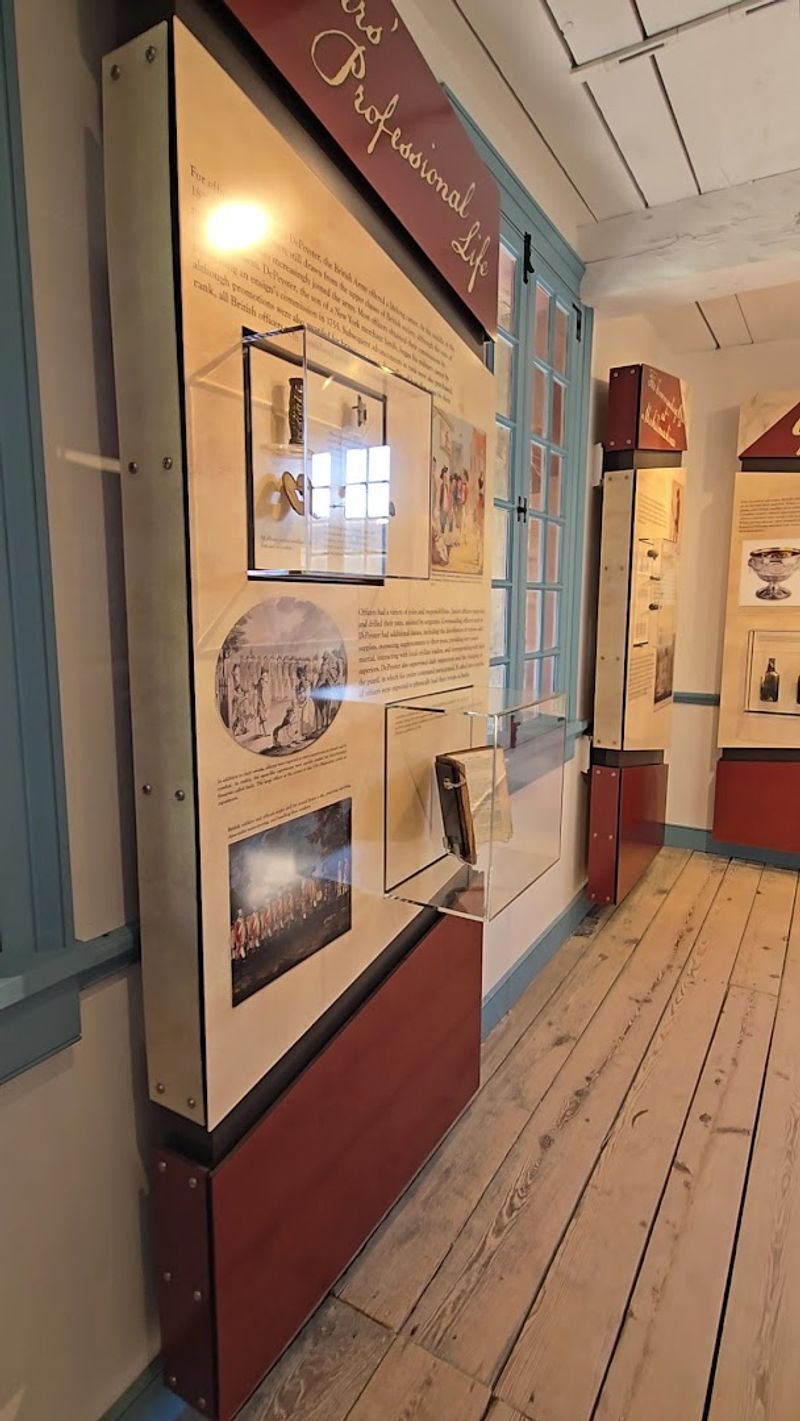
The smartest first move here is surprisingly indoors. Before the wooden walls and lake wind pull you forward, the introductory film in the King’s Storehouse lays out why this fort mattered so much at the meeting point of Lakes Michigan and Huron.
It gives names, timelines, and shifting control that make the site feel legible instead of merely scenic.
Once I stepped outside, every structure made more sense. The British occupation, the earlier French foundations, and the strategic geography stopped being abstract facts and became the logic behind the whole visit.
If you like understanding a place before wandering it, spend those opening minutes with the film and let the fort arrive with context instead of confusion.
Straits Avenue Slips Beneath The Mighty Mac
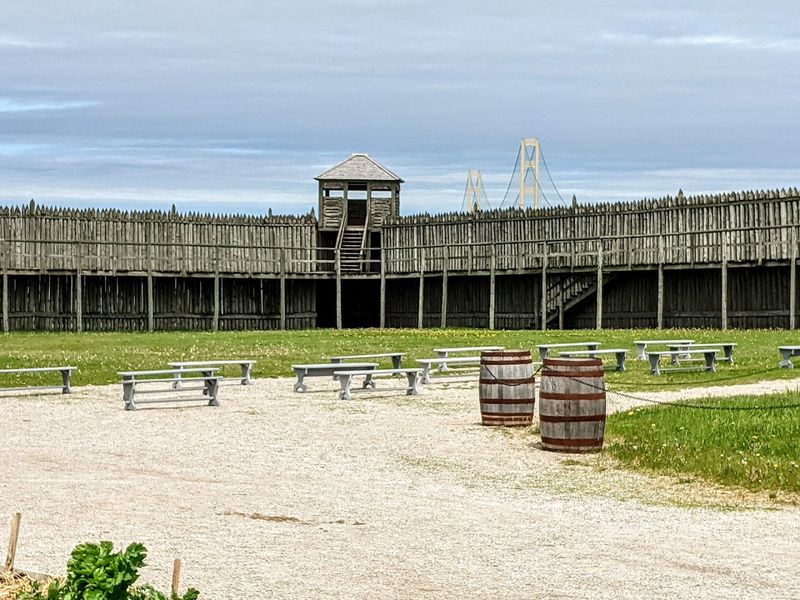
Colonial Michilimackinac is at 102 West Straits Avenue in Mackinaw City, Michigan, inside Michilimackinac State Park. From I-75, follow signs toward Mackinaw City and the Mackinac Bridge, then approach the waterfront along Straits Avenue.
The final stretch leads directly toward the bridge rather than across it. Continue along Straits Avenue until the enormous bridge structure fills the view; the Colonial Michilimackinac Visitor’s Center entrance is positioned beneath it.
Free parking is available in the main lot beside the Visitor’s Center, with additional street parking nearby. From the lot, walk to the Visitor’s Center entrance to enter the historic site.
Watch The Archaeology Like A Live Performance
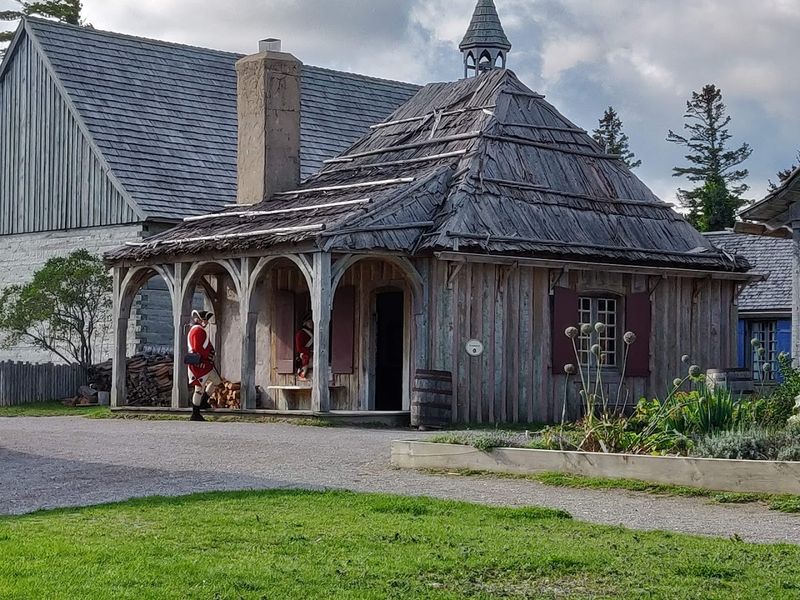
Many historic attractions tell you what was found. Colonial Michilimackinac lets you watch discovery happen in real time, which changes the whole mood of the place.
Summer archaeology has continued here since 1959, and seeing careful excavation beside reconstructed buildings gives the site an unusual honesty. The past is not finished here.
It is still being assembled from soil, fragments, and patient method. I found that strangely moving. Instead of pretending certainty, the fort shows its evidence, from open dig areas to the remains visible beneath some buildings.
That transparency makes every furnished room feel earned rather than theatrical. If archaeologists are working during your visit, linger a while, read the interpretation, and treat the excavation as one of the central exhibits, not a side note.
Look Closely At The Buildings, Not Just Through Them
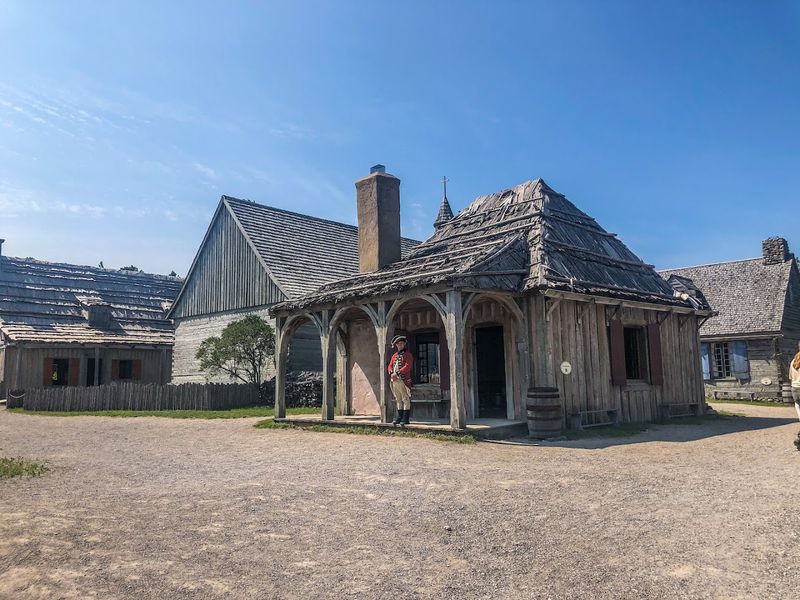
It is easy to move through the fort as if the buildings are containers for exhibits, but the buildings themselves carry much of the story.
The palisades, rough timber construction, and reconstructed interiors reflect decades of archaeological evidence, and in places you can see preserved remains below or beside later rebuilding.
That layered effect is one of the fort’s quiet strengths.
The Powder Magazine is especially worth a patient look, and the Commanding Officer’s House reveals how unequal daily life could be within one enclosed community. Architectural details here are not decorative background.
They help explain rank, labor, storage, defense, and domestic routine in a frontier outpost. Slow down at thresholds, corners, foundations, and floor levels, because the fort often explains itself through structure before labels.
Use Interpreters As Your Best Map
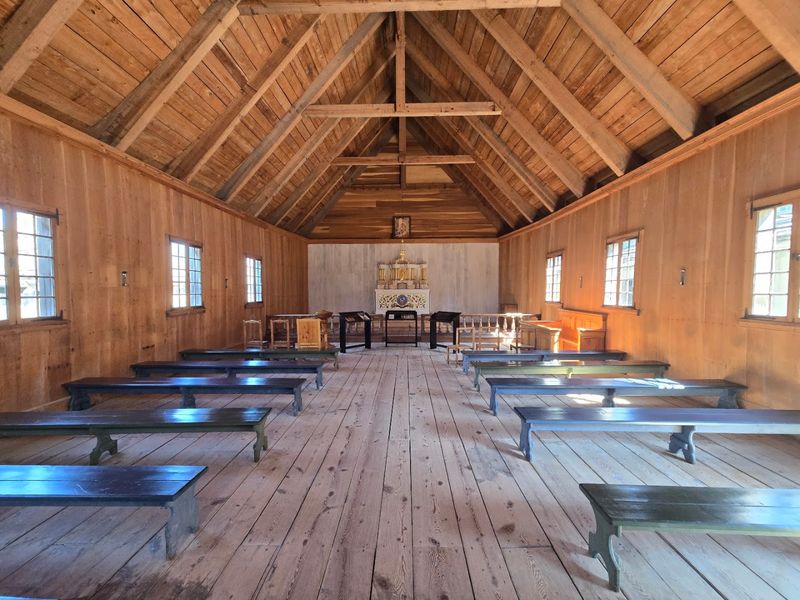
The most useful guide here is often a person standing near a hearth, a workshop, or a barracks room. Colonial Michilimackinac’s interpreters do much more than recite dates.
They explain tasks, answer detailed questions, and connect military routine, household labor, trade, and regional culture in ways that make the fort feel inhabited rather than staged.
A conversation can reroute your whole visit for the better. Ask what building to prioritize, what demonstration is easiest to miss, or what artifact changed understanding of the site, and you will usually get something richer than a generic summary.
Because the fort covers British, French, and Native histories within one compact area, these exchanges help you follow the threads. Curiosity pays off especially well here.
Give The Straits Equal Attention
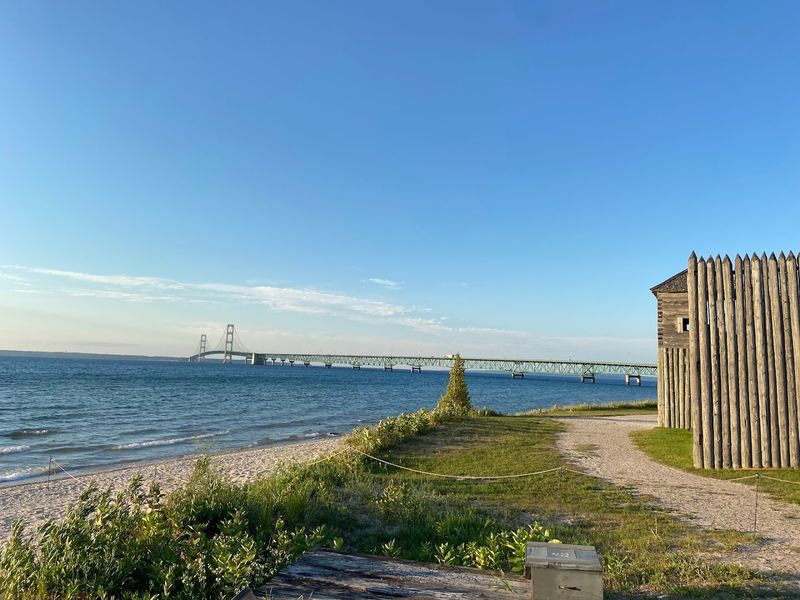
Some of the fort’s meaning lives outside the walls. Step onto the ramparts or pause along the shoreline and the geography suddenly explains the history better than any paragraph can.
This position at the Straits made Michilimackinac valuable for movement, trade, surveillance, and influence between Lake Michigan and Lake Huron. The water is not a backdrop. It is the reason.
The view also gives the site a lovely tension between beauty and strategy. You notice glittering water, wind, and the modern bridge, then remember that this location once shaped imperial ambitions and everyday livelihoods alike.
I liked taking a breather here after denser exhibit spaces. If the fort starts to feel information heavy, look outward for a few minutes and let the landscape reset your attention.
Notice The Domestic Life, Not Only The Military Story
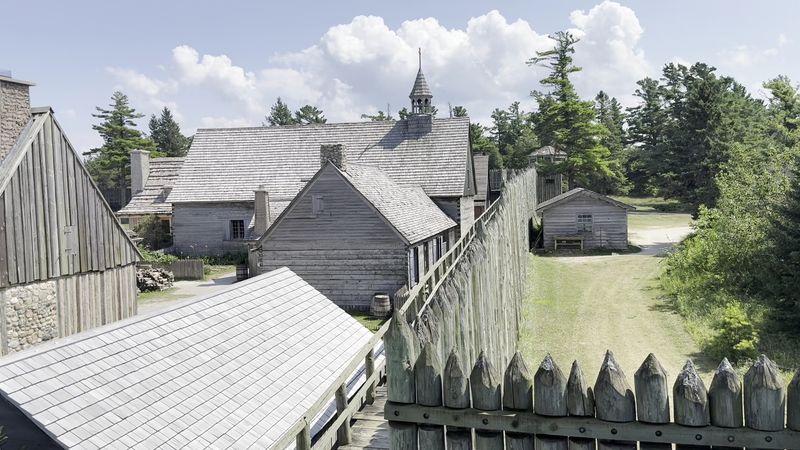
The muskets get the drama, but the domestic spaces are where the fort becomes fully human. Kitchens, gardens, merchant settings, and household routines reveal that Michilimackinac was not only a military post but a living community of workers, families, and traders shaped by daily necessity.
The smell of woodsmoke and food preparation helps pull that point from theory into sensation.
These rooms also balance the martial energy elsewhere on the grounds. You begin to picture labor divided by rank, season, and role, and the fort’s social complexity comes into focus.
Instead of racing from demonstration to demonstration, spend time in one domestic area and watch a task unfold. A few steady minutes near a hearth can teach as much about the 1770s as a weapons talk.
Plan For Weather, Wind, And Uneven Paths
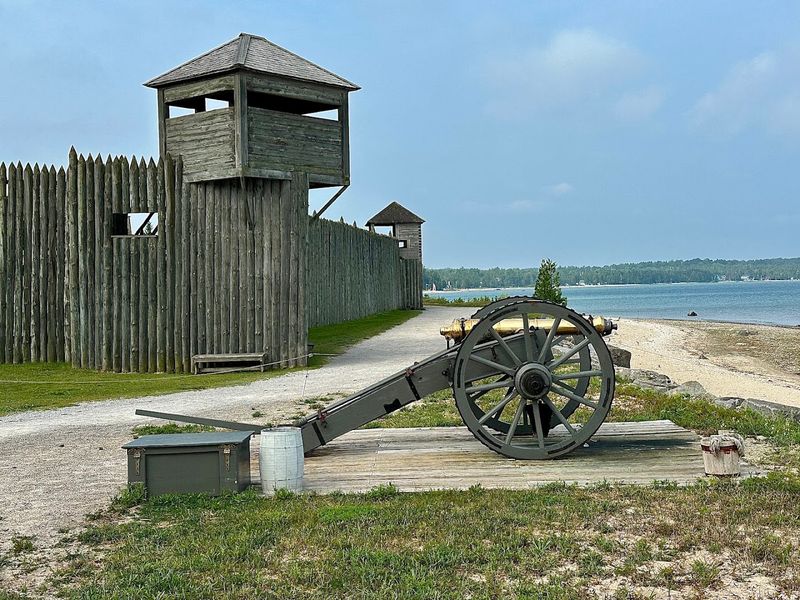
Northern Michigan weather has a habit of editing your plans, and this site is open enough that you really feel it. Wind off the Straits, changing temperatures, and dirt or gravel paths make Colonial Michilimackinac less polished than an indoor museum, though that roughness suits the place.
Comfortable shoes are not optional, and a layer you can add or remove is a wise idea.
The practical side matters because the fort rewards staying longer than expected. You may think you are dropping in for a quick look, then lose track of time between films, demonstrations, archaeology, and building interiors.
Free parking makes arrival simple, but movement onsite takes more effort than the compact map first suggests. Dress for walking and the experience becomes much more generous.
Use The Schedule, But Leave Room To Drift
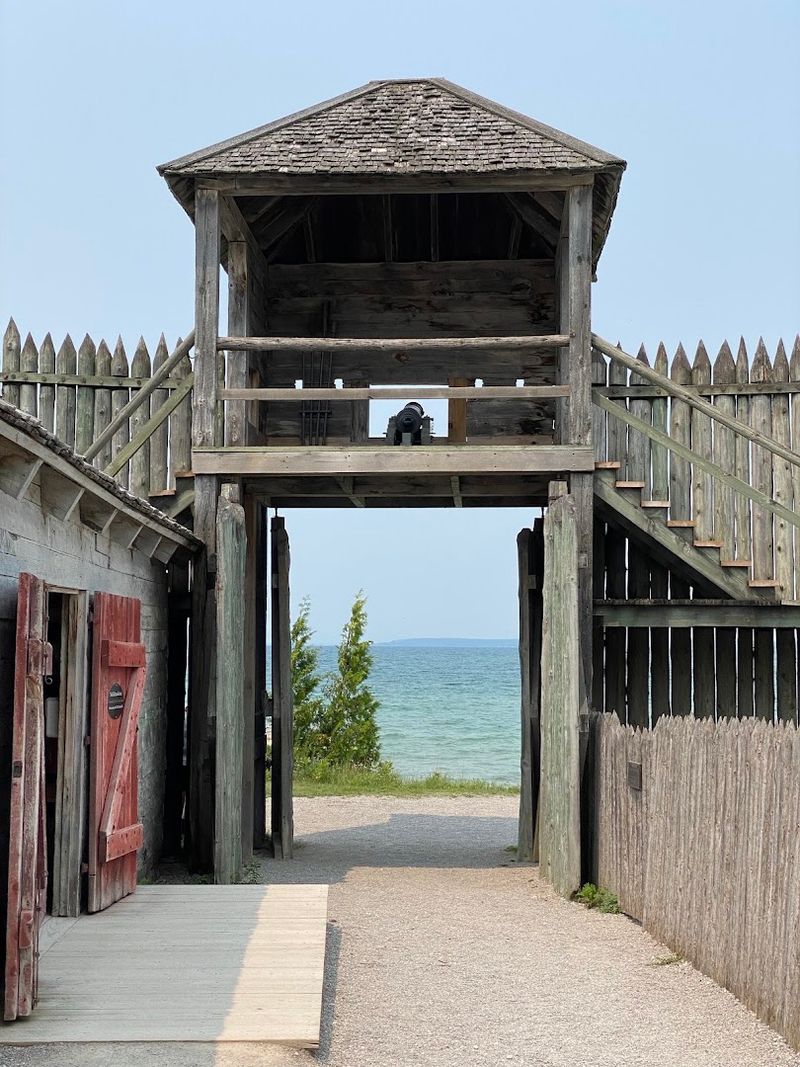
This is one of those places where structure helps, but overplanning can flatten the fun. The fort runs on a daily schedule of demonstrations and films, so checking times early is essential if you want the musket program or a specific presentation.
At the same time, some of the best moments arrive when you follow a half heard explanation into a room you did not intend to enter.
I would anchor the visit around one or two timed events, then allow the rest to unfold more loosely. That balance suits Colonial Michilimackinac because it functions as both museum and environment.
You need enough planning to catch the signature experiences, but enough openness to notice details like foundations, tools, small exhibits, and unexpectedly excellent conversations.
Pay Attention To The Layers Of Power And Culture
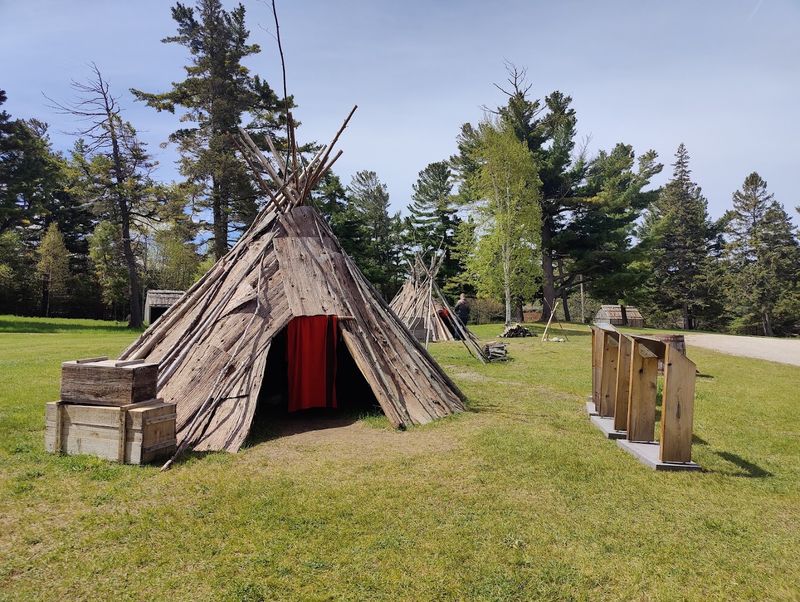
What gives this fort depth is not only reconstruction but the number of histories meeting inside it. French origins, British occupation, fur trade networks, military order, and Native American presence all shape the story, and the site does best when you resist simplifying it into one neat colonial narrative.
The interpretation invites a more layered reading if you are willing to slow down.
That complexity is visible in exhibits, films, and conversations across the grounds. A single room can point toward commerce, empire, family life, and conflict at once.
Colonial Michilimackinac feels strongest when approached as a crossroads rather than a costume piece. Let the place be complicated, and it becomes much more interesting than a straightforward fort visit with period demonstrations.
Give Yourself Three Hours, Minimum
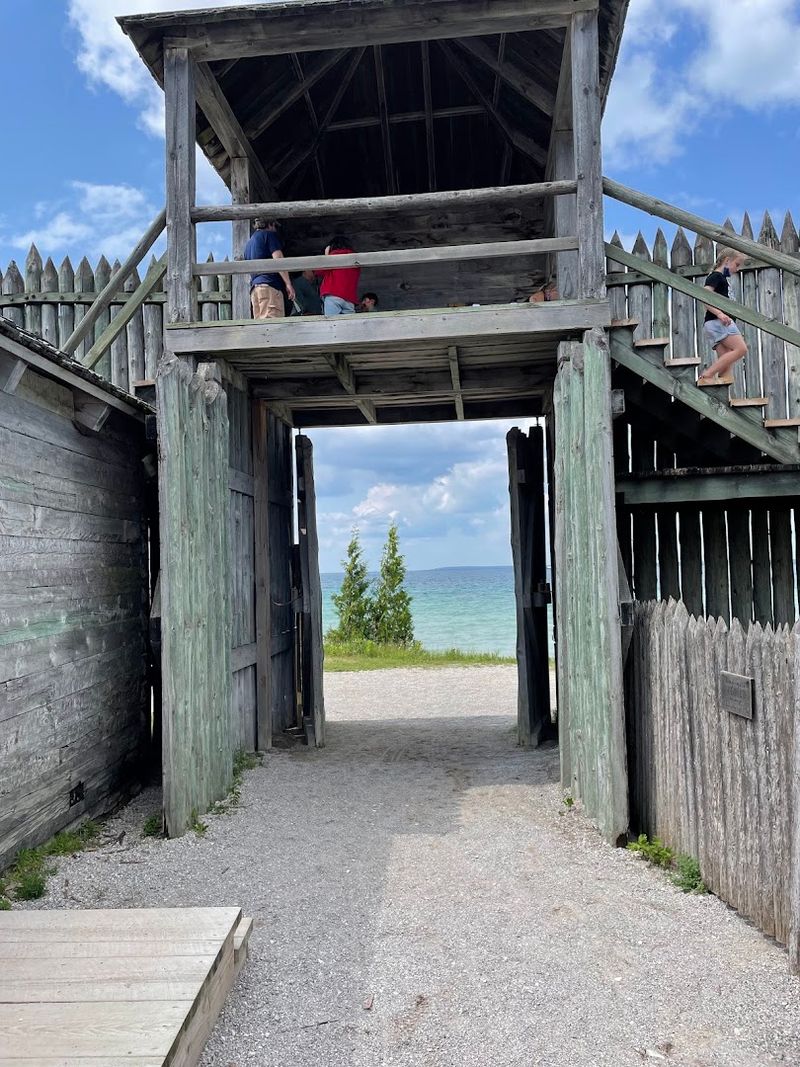
The easiest mistake here is underestimating how much there is to absorb. Colonial Michilimackinac looks manageable on a map, yet it expands once you start combining films, demonstrations, artifact displays, archaeological interpretation, building interiors, and time simply spent looking at the water.
Three hours is a sensible minimum if you want the visit to feel rounded instead of rushed.
More time also lets the fort work on you gradually. The first pass delivers spectacle, especially the live firing and striking setting, while the second reveals quieter rewards like construction details and evidence beneath reconstructions.
I left convinced that this is a place best experienced at a walking, wondering pace. Treat it like a substantial half day, and it will feel worth the effort.