
12 Under-The-Radar Things To Do In Florida That Even Locals Don’t Know About
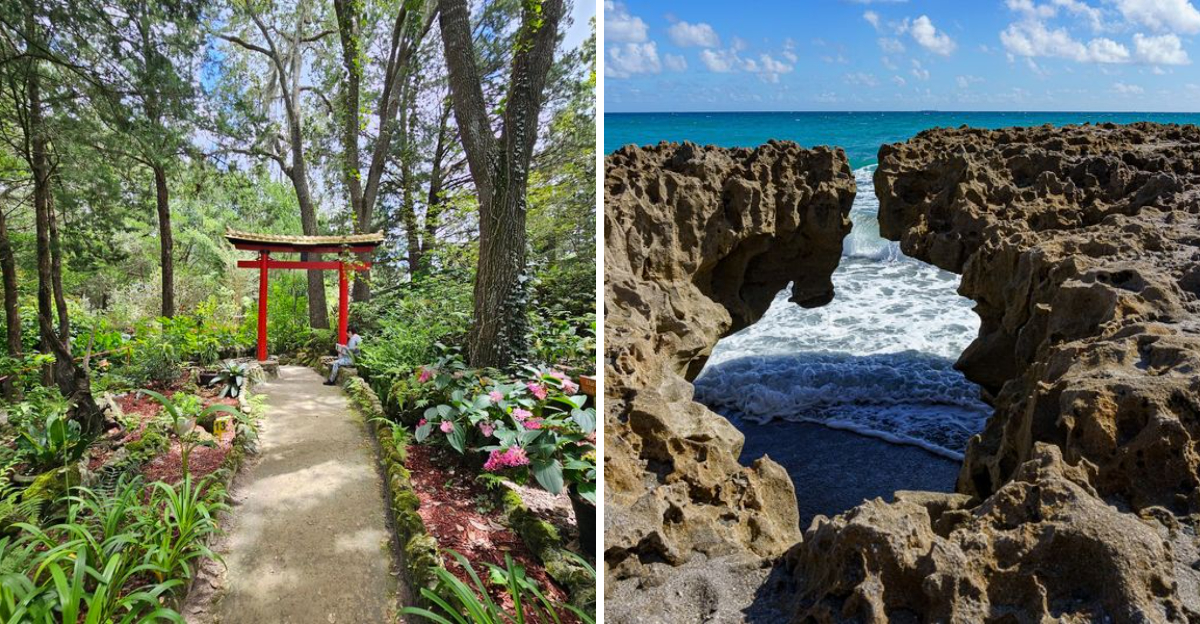
Everyone thinks they know Florida.
Very few people actually do.
The version most travelers see is filled with theme parks, crowded beaches, and familiar attractions. Leave the main highways behind, and an entirely different state begins to appear.
Crystal-clear springs emerge from the forest. Tiny towns guard stories that never make the guidebooks.
Hidden gardens, forgotten castles, and remarkable natural wonders quietly wait for anyone curious enough to look beyond the obvious.
That is the Florida worth chasing.
The Sunshine State has spent decades surprising me, not with its biggest attractions, but with the places almost nobody talks about. Every road trip uncovers another hidden gem.
Every detour leads somewhere unexpected. And every discovery makes the famous tourist stops feel just a little less exciting.
Forget the crowds.
Forget the postcards.
These Florida hidden gems prove that the state’s greatest adventures begin the moment you stop following everyone else’s itinerary.
1. Devil’s Den Prehistoric Spring, Williston
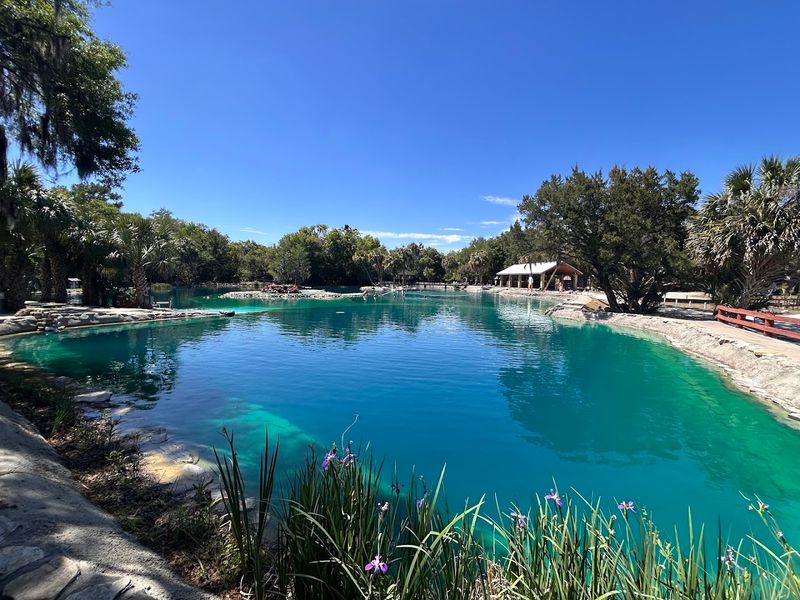
Somewhere beneath a nondescript field in Williston, Florida, the earth opens up to reveal one of the most jaw-dropping swimming holes you will ever encounter.
Devil’s Den is a dry cave karst spring, meaning the spring sits inside a cavern rather than out in the open, and the only natural light enters through a small hole in the ceiling above the water.
The water temperature stays at a steady 68 degrees Fahrenheit year-round, making it an ideal escape during Florida’s brutal summer months.
Fossils of prehistoric animals, including ancient horses and giant ground sloths, have been discovered here, giving the site serious scientific significance beyond just being a pretty swim spot.
Snorkeling and scuba diving are both allowed, and the visibility in the water is so clear that you can see every detail of the rocky bottom far below.
Reservations are required, so plan ahead, and arrive early to soak in the eerie, beautiful silence before other visitors arrive.
2. Cedar Lakes Woods & Gardens, Williston
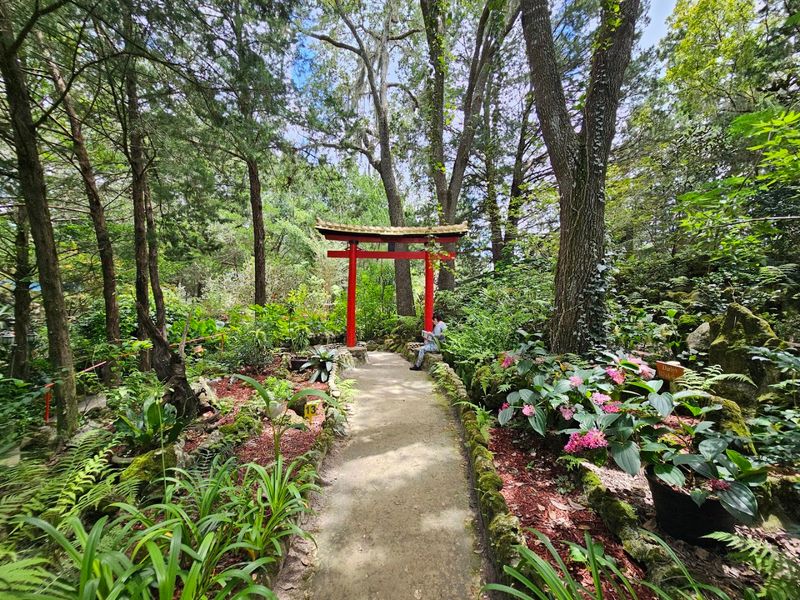
A retired limestone quarry might not sound like the setting for one of Florida’s most magical gardens, but Cedar Lakes Woods and Gardens in Williston proves that transformation is always possible.
The owners spent decades converting the old mining pits into a series of interconnected koi ponds, waterfalls, and walking paths lined with tropical plants, ferns, and flowering trees.
The garden sits on about 15 acres and features hand-carved stone sculptures tucked between the foliage, giving every corner a sense of discovery.
Koi fish in vivid shades of orange, white, and black glide through the ponds in groups so large and dense that the water almost seems to ripple with color.
Photography enthusiasts consistently rank this as one of Florida’s most underrated shooting locations, particularly in the early morning when mist hovers over the water.
Admission is modest, hours are limited, and the whole experience feels like wandering through someone’s incredibly ambitious backyard passion project, which is essentially exactly what it is.
3. Solomon’s Castle, Ona
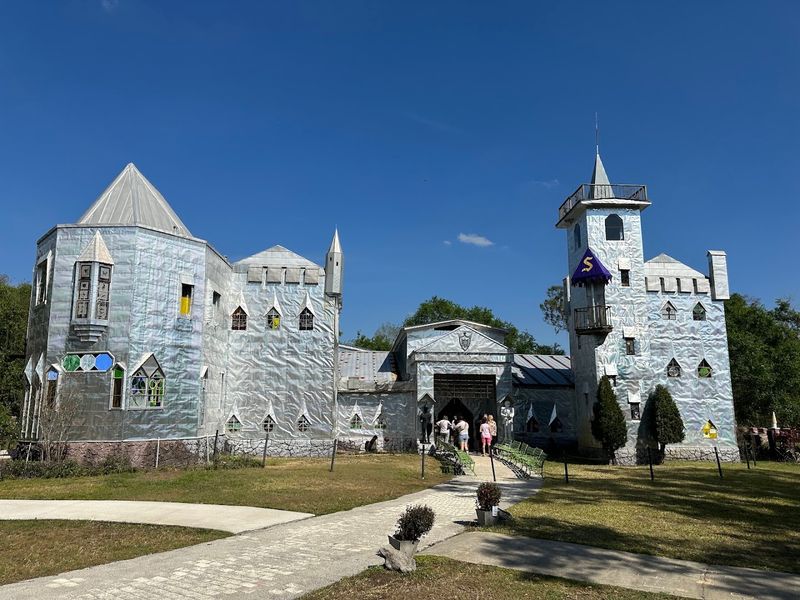
Deep in the swampy backroads of Ona, Florida, there stands a castle made almost entirely from recycled newspaper printing plates, and it is exactly as wonderfully strange as it sounds.
Artist Howard Solomon spent decades building Solomon’s Castle by hand, covering the exterior in thousands of aluminum offset printing plates that shimmer like silver scales in the Florida sun.
Inside, every room is packed with Howard’s sculptures, paintings, and found-object artwork, ranging from whimsical to genuinely impressive in scale and craftsmanship.
A full-scale replica of a Spanish galleon sits in the moat surrounding the castle, and it doubles as a restaurant where you can eat lunch while surrounded by Howard’s creations.
Howard passed away in 2016, but his family continues to operate the castle as a museum and tour destination, keeping his legacy alive in the most colorful way imaginable.
Tours run on select days, so check the schedule before making the drive out to this one-of-a-kind Florida landmark that rewards every mile of the trip.
4. Blowing Rocks Preserve, Jupiter Island
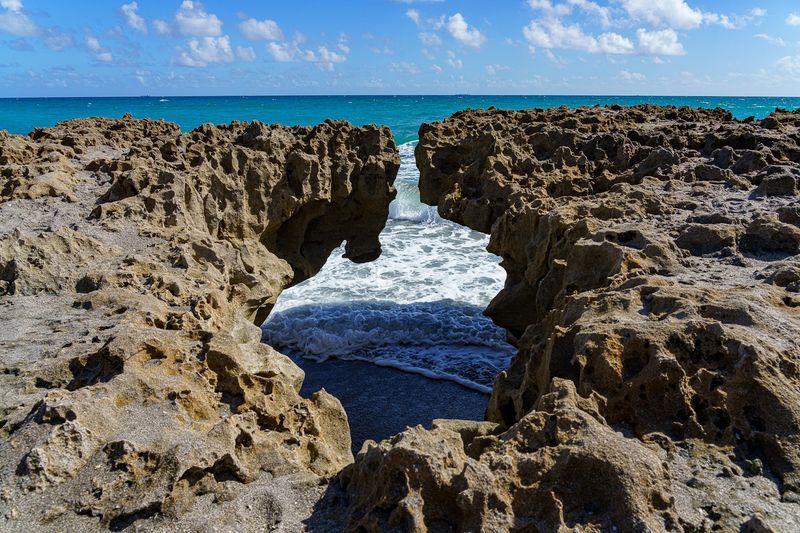
Most people visit Jupiter Island for its exclusive real estate listings, not realizing that one of Florida’s most dramatic natural spectacles is sitting right there along the shore.
Blowing Rocks Preserve on Jupiter Island protects the largest Anastasia limestone outcropping on the Atlantic coast, and when ocean swells hit the rocks at just the right angle, water shoots up through natural holes like a series of miniature geysers.
The Nature Conservancy manages the preserve, which also includes a stretch of protected sea turtle nesting beach and an interior lagoon trail lined with mangroves.
During sea turtle nesting season, which runs from May through October, the beach comes alive at night with loggerhead and leatherback turtles making their way ashore.
The best time to see the blowing rocks effect is during high tide on days with strong easterly swells, so timing your visit with a tide chart pays off.
Parking is limited and fills fast on weekends, so an early morning weekday visit gives you the rocks, the turtles, and the whole preserve practically to yourself.
5. Falling Waters State Park, Chipley
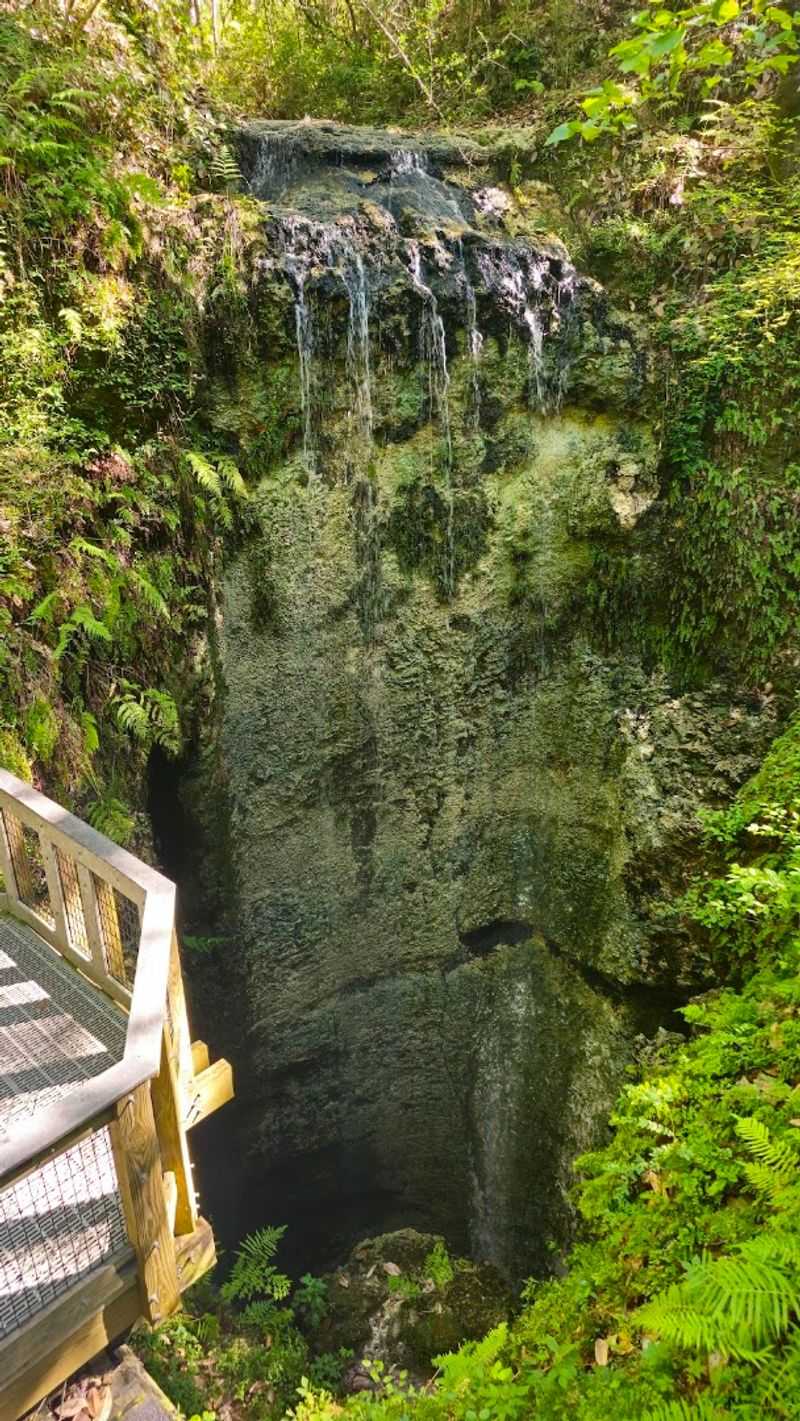
Florida is famously flat, which is exactly why the moment you peer over the edge of the sinkhole at Falling Waters State Park in Chipley, the view genuinely stops you in your tracks.
The park is home to Florida’s tallest waterfall, where a small stream drops 73 feet straight down into a cylindrical sinkhole, disappearing into the darkness below without ever reaching a visible bottom.
Scientists still debate exactly where the water goes after it falls into the pit, which adds a layer of geological mystery to what is already a visually stunning spot.
The park sits in the Florida Panhandle near Chipley, and the terrain here feels noticeably different from the rest of the state, with rolling hills and dense forest creating a landscape that surprises most first-time visitors.
Beyond the waterfall, the park offers camping, a swimming lake, and several hiking trails that wind through the surrounding woodland.
Spring is a particularly good time to visit, when the water flow is strongest and the surrounding forest is a deep, saturated green that makes the whole scene feel cinematic.
6. Ravine Gardens State Park, Palatka
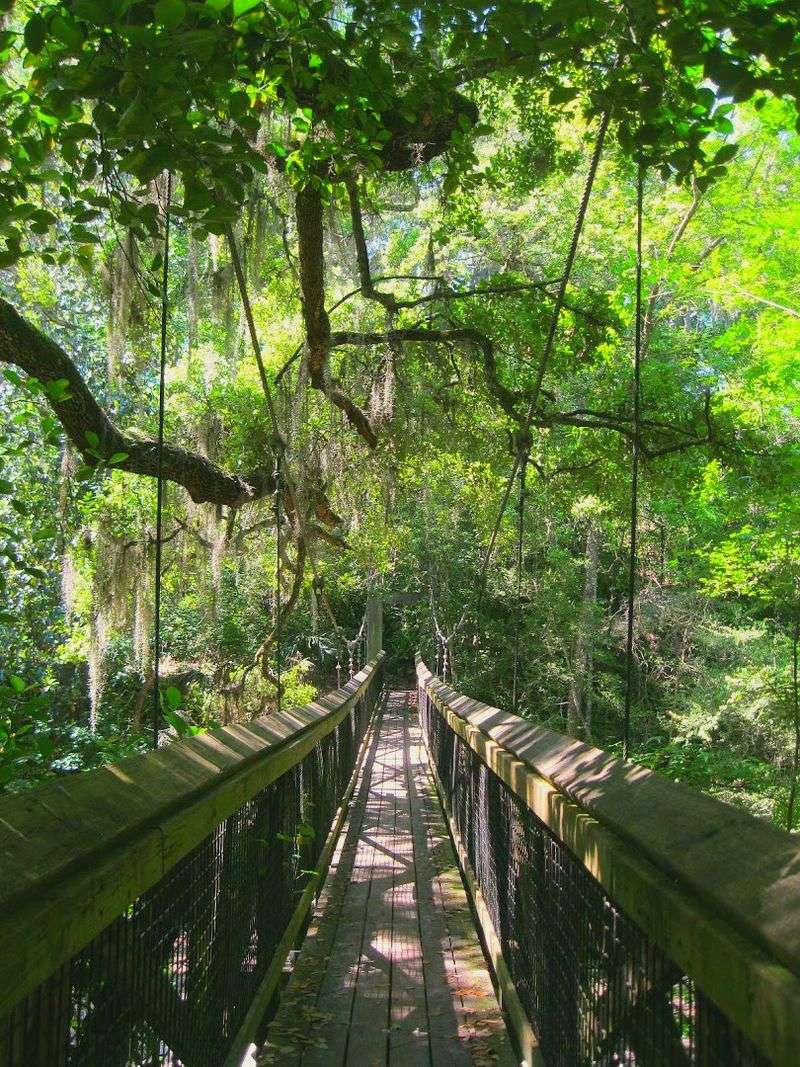
Ravine Gardens State Park in Palatka holds the kind of scenery that makes you stop mid-hike and genuinely wonder if you accidentally crossed state lines into the Appalachians.
The park was built by the Federal Works Progress Administration during the 1930s, and the elegant stonework, suspension bridges, and terraced paths they constructed have aged into something that feels both historic and enchanting.
Two steep natural ravines, carved by ancient spring-fed streams, drop dramatically from the surrounding flatlands and create a microclimate where ferns, mosses, and enormous live oaks thrive in the cool, shaded gullies below.
Every January and February, the park hosts its famous Azalea Festival, when thousands of azalea plants burst into pink, red, and white blooms along the ravine walls.
Outside of festival season, the park is remarkably uncrowded, and the loop trail around both ravines takes just about an hour at a relaxed pace.
Palatka is about an hour south of Jacksonville, making this a very doable day trip from Northeast Florida that most people from the area have somehow never made.
7. Dry Tortugas National Park, Garden Key
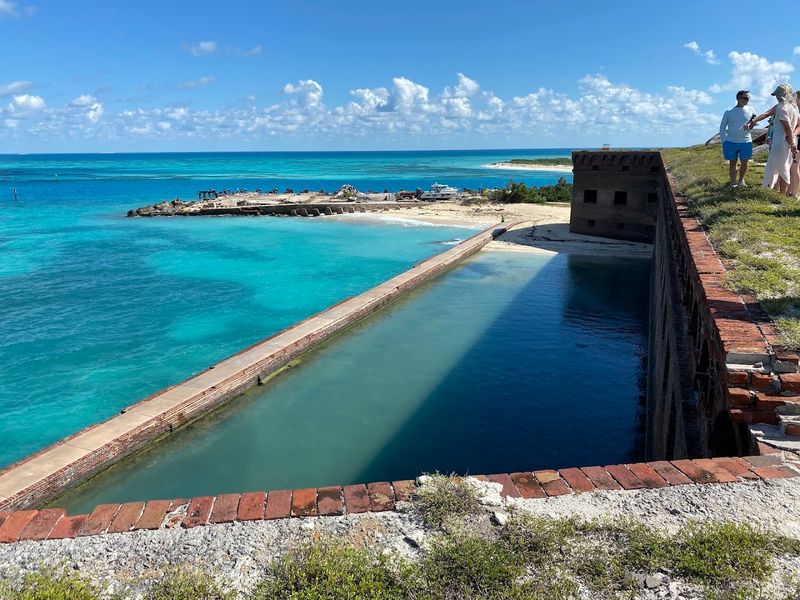
Getting to Dry Tortugas National Park requires either a two-and-a-half-hour ferry ride or a seaplane flight from Key West, and every single minute of that journey is worth it.
Garden Key, the island where the park’s centerpiece Fort Jefferson sits, is located about 70 miles west of Key West in the Gulf of Mexico, making it one of the most remote national parks in the continental United States.
Fort Jefferson is a massive 19th-century military fortification built from over 16 million bricks, yet it was never fully completed and never fired a shot in battle, giving it a haunting, unfinished grandeur.
The surrounding waters are a snorkeler’s paradise, with coral reefs, sea turtles, nurse sharks, and massive tarpon all visible just steps from the beach.
Camping overnight on the island is allowed with a permit, and sleeping under a sky free of light pollution, surrounded by nothing but ocean, is an experience that is genuinely hard to put into words.
Bird watchers make pilgrimages here every spring when hundreds of thousands of migratory birds use the islands as a rest stop during their journey north.
8. Washington Oaks Gardens State Park, Palm Coast
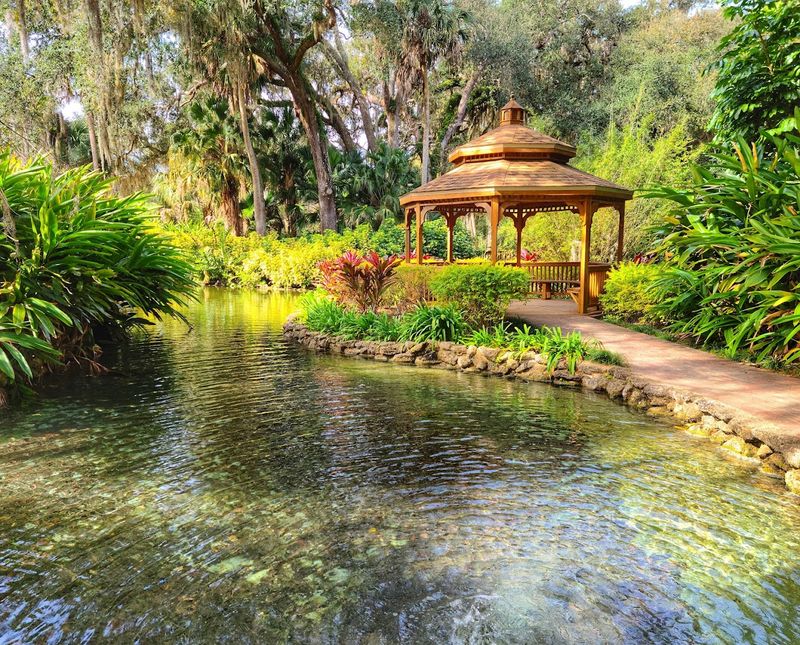
Washington Oaks Gardens State Park in Palm Coast quietly offers two completely different landscapes within the same property, and most Floridians have never visited either one.
On the Atlantic side of the park, a beach lined with dramatic coquina rock formations creates a scene that looks more like the coast of Ireland than anything you would expect from Central Florida.
The coquina outcroppings are made of ancient compressed shells and sand, and their irregular shapes and warm orange-brown tones glow beautifully during the golden hour before sunset.
Cross the road to the Intracoastal Waterway side of the park, and you enter a formal garden originally planted by Louise and Owen Young, who owned the estate in the mid-20th century.
Rose gardens, camellias, and native Florida plantings are arranged around reflecting pools and shaded walkways in a layout that feels quietly elegant rather than stuffy.
The park is located just south of Marineland off A1A, and combining it with a stop at the nearby Flagler Beach makes for a perfect unhurried day along the northeast Florida coast.
9. Riverbend Park, Jupiter
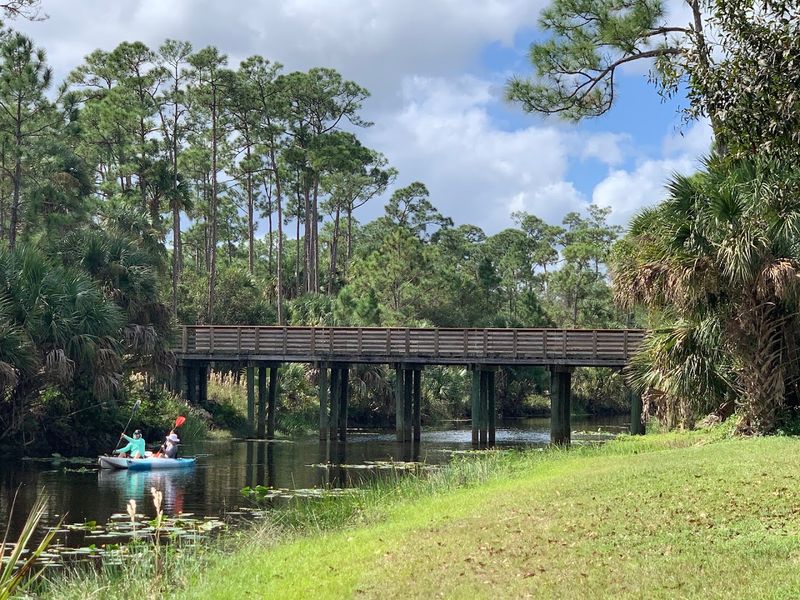
Tucked just a few miles inland from the busy coastal strip of Jupiter, Florida, Riverbend Park sits along the Loxahatchee River and delivers a paddling experience that feels completely removed from South Florida’s usual pace.
The Loxahatchee is Florida’s only federally designated Wild and Scenic River, and the stretch running through Riverbend Park winds through a canopy of ancient cypress trees draped in Spanish moss so thick it blocks out the sun in places.
Kayak and canoe rentals are available at the park, and the current is gentle enough that even beginners can handle the route without any prior paddling experience.
River otters, softshell turtles, limpkins, and the occasional Florida manatee make appearances along the waterway, especially during cooler months when manatees seek out warmer inland springs.
The park also has equestrian trails, mountain biking paths, and picnic areas, making it a strong option for groups where not everyone wants to get in a boat.
Jupiter is in Palm Beach County, and Riverbend Park sits on Indiantown Road, making it easy to find even if the experience inside feels like you have stumbled onto a secret.
10. Airboat Rides at Three Lakes Wildlife Management Area, St. Cloud
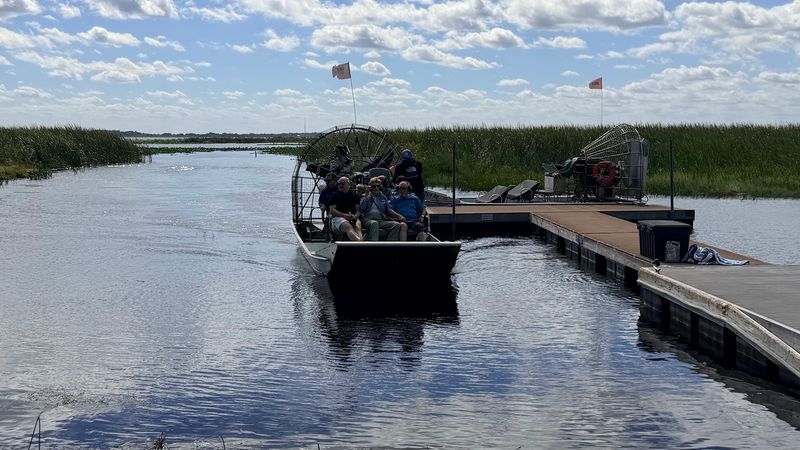
Airboat rides are synonymous with Florida tourism, but most visitors end up on overcrowded commercial routes rather than the real deal, which is why Three Lakes Wildlife Management Area near St. Cloud deserves far more attention than it gets.
Three Lakes WMA covers roughly 60,000 acres of open prairie, pine flatwoods, and interconnected lakes southeast of Orlando, and the airboat access here puts you in the middle of a landscape that feels genuinely wild.
Sandhill cranes, bald eagles, white-tailed deer, and Florida black bears all call this area home, and spotting them from a gliding airboat adds a level of excitement that no zoo or nature center can replicate.
The area is also one of the best places in Florida to see the Florida grasshopper sparrow, one of the rarest birds in North America, during the right season.
Guided airboat tours are available through local outfitters who know the waterways and wildlife patterns better than any GPS ever could.
St. Cloud is about 30 minutes south of Orlando, so this is an effortless detour from the theme park corridor that will make the rest of your trip feel more meaningful by comparison.
11. Florida Caverns State Park, Marianna
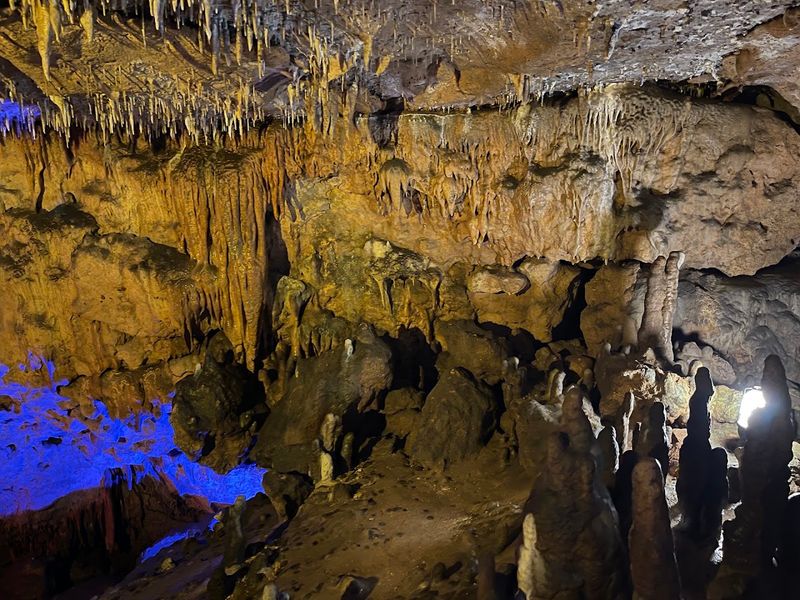
Florida and underground caves are not two things most people put together, but Florida Caverns State Park in Marianna is here to completely reframe that assumption.
Located in the Florida Panhandle near Marianna, the park contains the only publicly accessible air-filled caves in the entire state, making it a genuinely rare geological experience for a place as geologically flat as Florida.
Ranger-led tours take small groups through chambers filled with stalactites, stalagmites, flowstone, and cave bacon, which is a type of layered mineral formation that actually does look like strips of bacon when the light hits it right.
The caves maintain a constant temperature of about 65 degrees Fahrenheit, which feels refreshingly cool during Florida’s long hot season and surprisingly chilly during a winter visit.
Above ground, the park offers swimming in the Blue Hole spring, canoeing on the Chipola River, and hiking trails through upland forest and floodplain.
Marianna is about an hour west of Tallahassee, and the caverns tour alone is worth the drive, especially for anyone traveling with kids who will spend the entire ride home talking about the cave formations they saw.
12. Weeki Wachee River Kayaking, Weeki Wachee
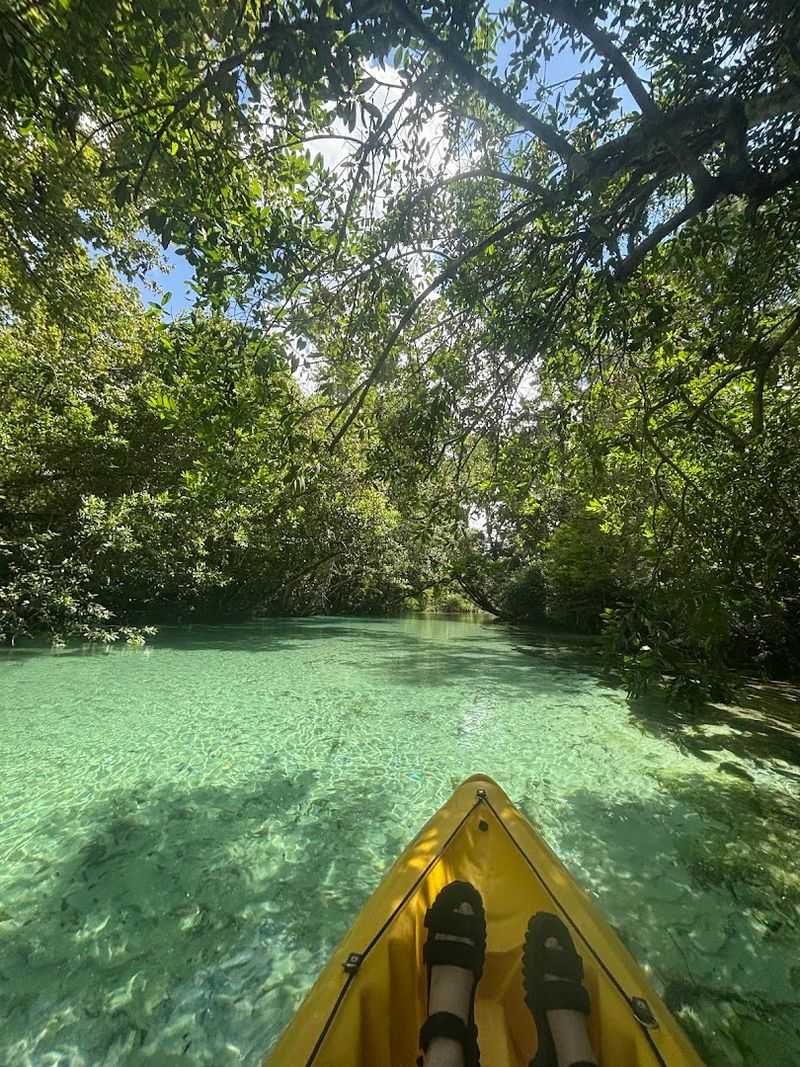
Most people know Weeki Wachee as the place with the famous mermaid shows, but the real star of the area has always been the river itself flowing out from the spring.
The Weeki Wachee River runs for about five miles from the spring head to the Gulf of Mexico, and the water is so clear and so cold that paddling through it feels less like kayaking and more like floating above an aquarium.
Manatees gather near the spring head throughout the year, drawn by the constant 74-degree water temperature, and it is entirely normal to have one surface next to your kayak close enough to touch, though you should always let them approach you rather than the other way around.
The riverbanks are lined with cypress trees, swamp lilies, and thick subtropical foliage that creates a tunnel of green overhead in the narrower sections of the river.
Rogers Park in Brooksville serves as the typical takeout point, and shuttle services are available from local outfitters so you do not have to paddle back upstream.
Weekday mornings in the cooler months offer the most serene experience, with the water at its clearest and the manatee activity at its highest along this quietly spectacular stretch of natural Florida.