
This Historic Illinois Cathedral Has Been Inspiring Chicago Visitors Since 1875
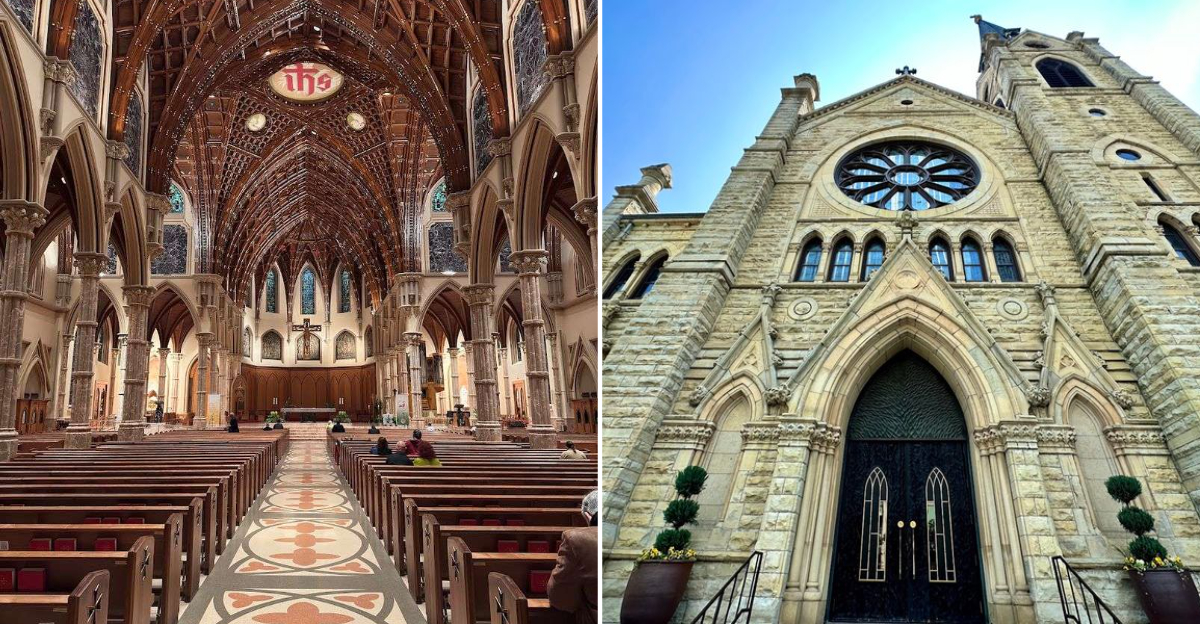
A quiet landmark on North State Street has watched Chicago reinvent itself for more than 150 years. Its walls survived the city’s rebuilding after the Great Chicago Fire, then stood through generations of growth as the skyline rose around it.
Inside, the noise of downtown suddenly feels distant. A soaring wooden ceiling draws the eye upward, stained glass softens the daylight, and centuries-old traditions add layers of meaning to every corner.
This Illinois cathedral holds far more than architectural beauty. Its story includes cardinals, historic ceremonies, and even a notorious gangland ambush that left its mark nearby.
Visitors may arrive expecting a brief stop, yet many linger longer than planned.
Built From The Ashes Of The Great Chicago Fire
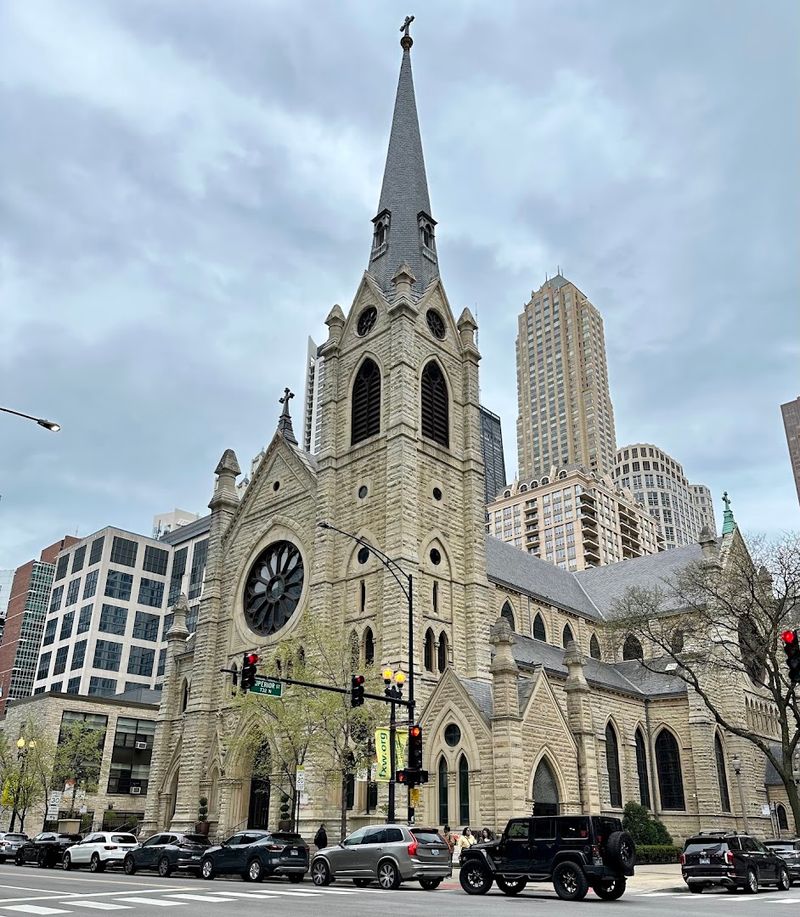
Few buildings carry a story as powerful as this one. Holy Name Cathedral was built as a direct response to the Great Chicago Fire of 1871, which destroyed much of the city including the original church that stood on the same site.
The cornerstone for the current structure was laid in 1874, and the cathedral officially opened its doors in 1875, making it one of the most enduring landmarks in Chicago history.
The decision to rebuild on the same ground was deliberate and meaningful. The Archdiocese of Chicago wanted to signal that faith and community would rise again alongside the city itself.
Architect Patrick Charles Keely designed the new structure in a Gothic Revival style, giving it a presence that felt both timeless and resilient.
Walking up to the building today, you can almost sense the weight of that history. The stone exterior stands firm against the buzz of modern Chicago, a quiet but powerful reminder that some things are built to last far beyond the circumstances that created them.
That kind of backstory makes your first visit feel less like sightseeing and more like stepping into a living chapter of American urban history.
The Mother Church Of The Archdiocese
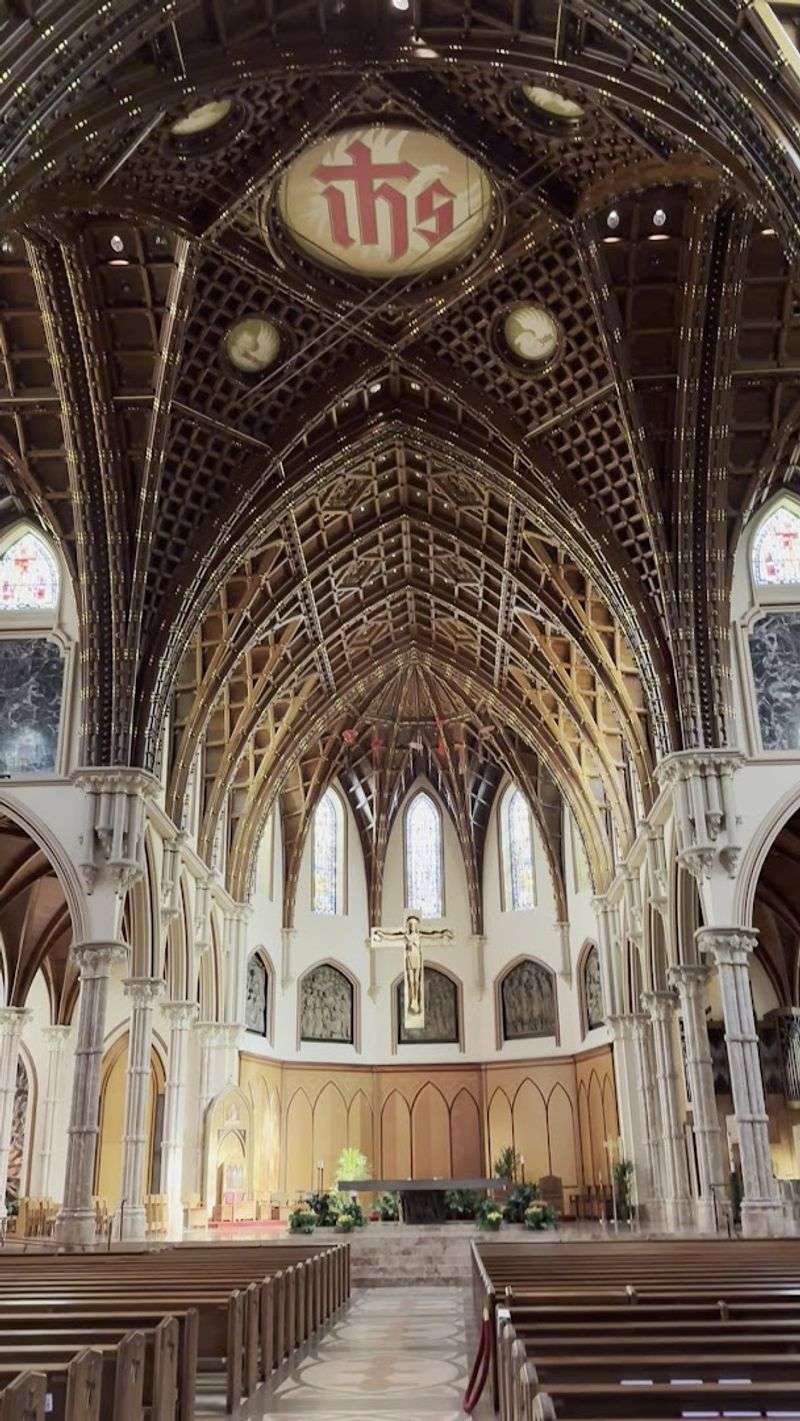
Not every church earns the title of mother church, but Holy Name Cathedral holds that distinction as the seat of the Archdiocese of Chicago.
That means it is the central parish for one of the largest Catholic archdioceses in the United States, overseeing hundreds of parishes spread across Cook and Lake counties in Illinois. That is a remarkable amount of spiritual reach anchored to one address at 735 N State St, Chicago, Illinois 60654.
As the archbishop’s home church, Holy Name Cathedral has hosted some of the most significant Catholic gatherings in the Midwest. Ordinations, major feast day celebrations, and archdiocesan events regularly take place within its walls.
The cathedral functions not just as a place of personal worship but as an institutional heart for an entire regional faith community.
What surprises many first-time visitors is how approachable the space feels despite its official importance. You do not need a special invitation or a formal occasion to walk in and experience a weekday Mass.
A Vaulted Wooden Ceiling
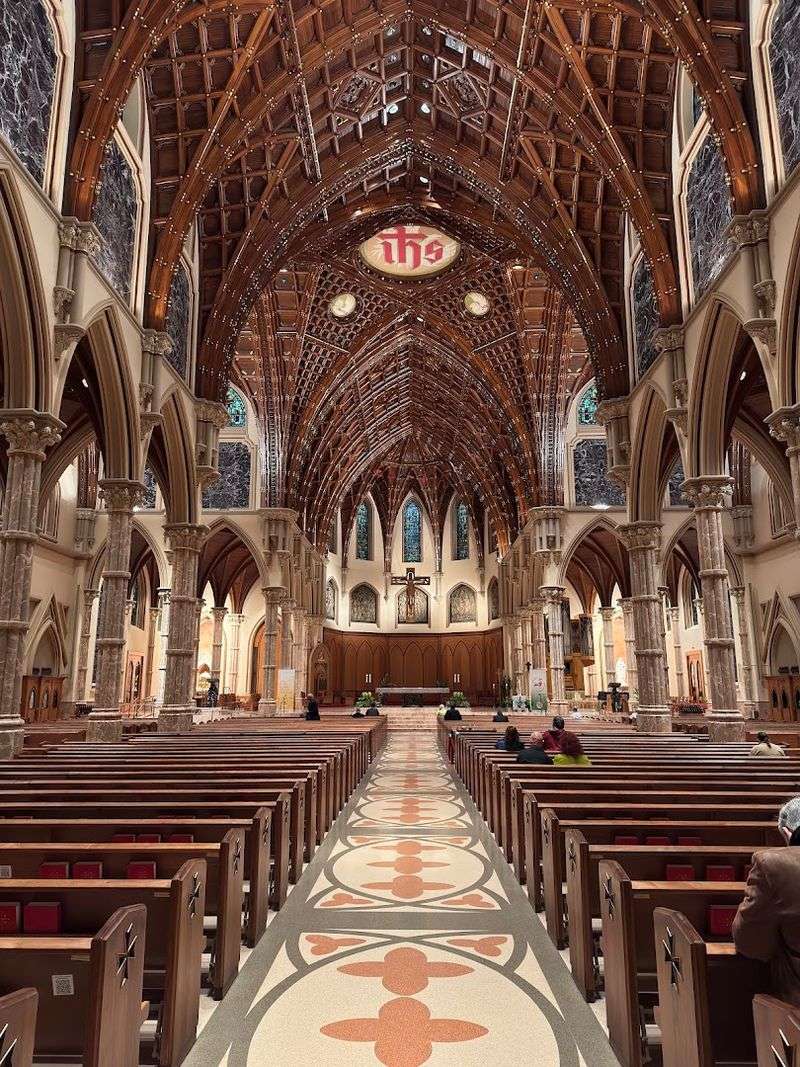
Most people walk into Holy Name Cathedral expecting to look forward at the altar, but the ceiling is what tends to stop them cold.
The vaulted wooden ceiling is an architectural achievement that feels almost impossible when you consider its age. Intricately carved ribs fan outward in patterns that draw your eye upward and hold it there, creating a sense of height and grandeur that photographs honestly cannot do justice.
The woodwork is not just decorative. It contributes to the acoustic character of the space, giving the cathedral a warm, resonant quality that makes organ music and choral performances feel like they are wrapping around you from every direction.
When the choir sings during a Sunday Mass, the ceiling seems to participate in the performance.
Craftsmen who built this ceiling in the 19th century were working without modern tools or computer-aided design, which makes the precision of the patterns even more astonishing. Each carved detail was shaped by hand, and the result has held up beautifully for over a century.
If you visit and find yourself craning your neck upward for several minutes straight, you are not alone. That reaction seems to be a universal part of the Holy Name Cathedral experience.
Sunlight Through Sacred Glass
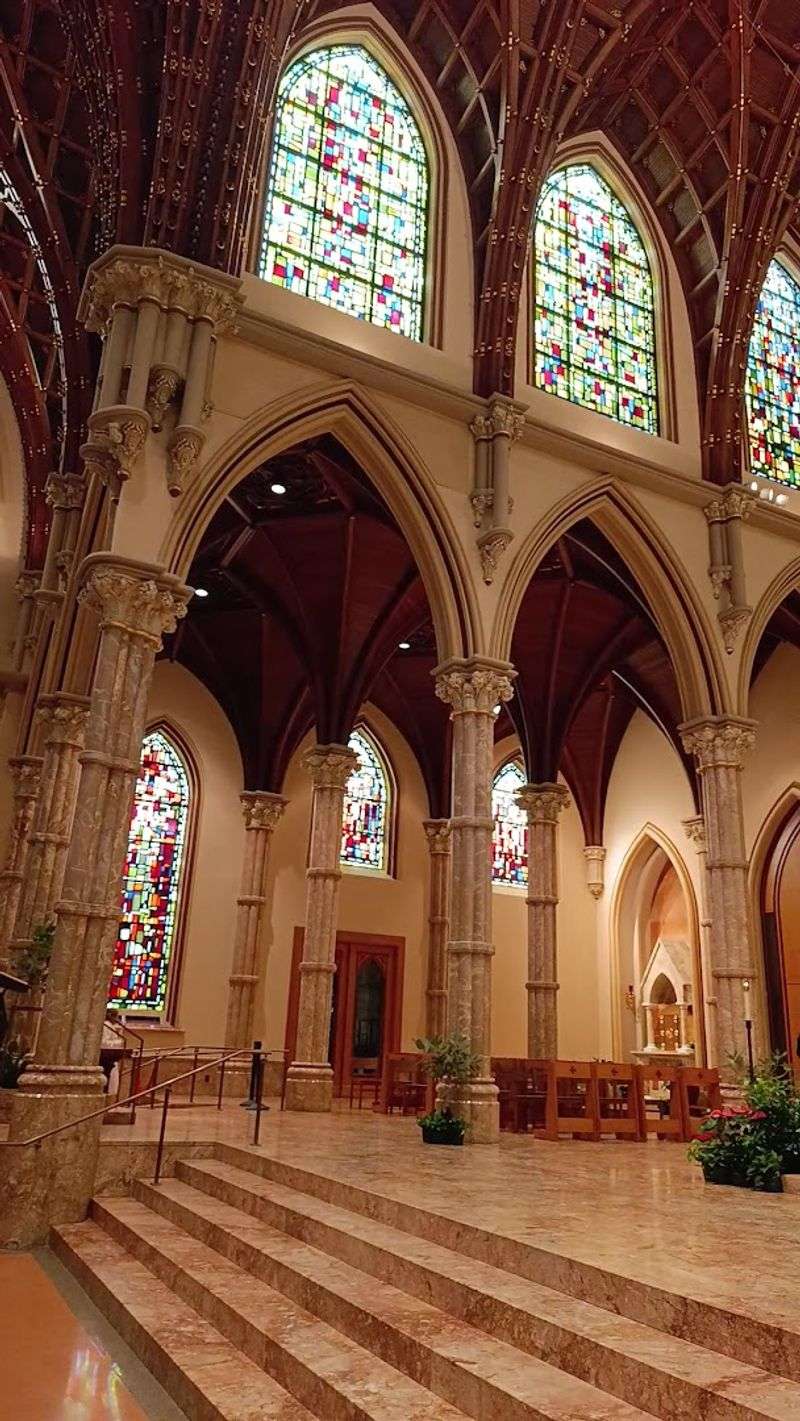
Light behaves differently inside Holy Name Cathedral, and the stained glass windows are the reason why.
Positioned along the nave and upper walls, the windows transform ordinary daylight into something altogether more dramatic, casting pools of red, gold, blue, and green across the stone floors and wooden pews.
The effect shifts throughout the day as the sun moves, meaning a morning visit and an afternoon visit can feel like two completely different experiences.
The windows feature geometric and abstract designs rather than traditional narrative scenes, which gives the interior a modern elegance that contrasts interestingly with the cathedral’s 19th-century bones.
Some visitors find this unexpected, while others appreciate how the contemporary glass design breathes fresh visual energy into the historic space.
Photographers tend to linger near the windows during midday when the light cuts through at its sharpest angles, creating layered color gradients across the interior.
Even if you have no interest in photography, standing beneath one of these windows on a clear Chicago afternoon is a sensory experience worth planning your visit around. The warmth of that colored light is the kind of detail you carry with you long after you have left the building and returned to the city streets outside.
The Galero Tradition Above The Altar
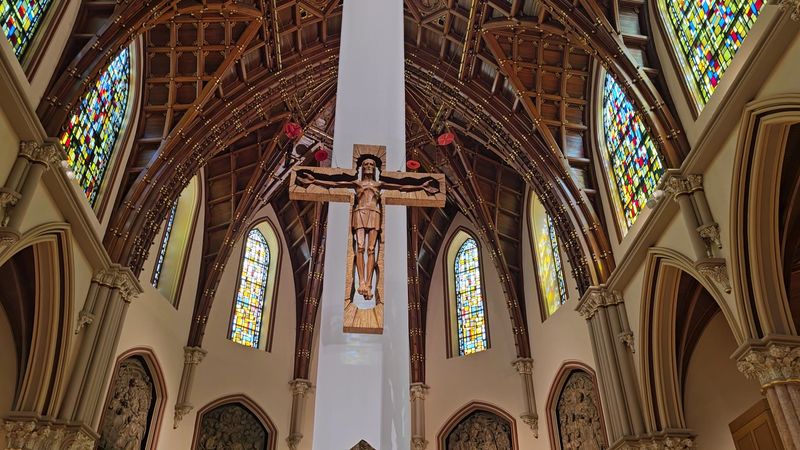
One of the most unusual and visually striking features inside Holy Name Cathedral has nothing to do with architecture. Look high above the cathedra in the cathedral’s apse and you will spot a collection of red hats suspended overhead.
These are galeros, the broad-brimmed ceremonial hats historically associated with Catholic cardinals, and they hang there as a tribute to the deceased cardinals of the Archdiocese of Chicago.
The tradition holds that a cardinal’s galero is hung in the cathedral upon his passing and remains there until it eventually deteriorates, serving as a physical reminder of humility and the passage of time.
It is a centuries-old Catholic custom that feels surprisingly moving when you understand what you are actually looking at.
The hats hang in the dim upper reaches of the cathedral, faded and still, like quiet presences watching over the space below.
For visitors who notice them without context, the galeros tend to spark immediate curiosity. For those who already know the tradition, spotting them feels like discovering a secret language written into the cathedral’s interior.
Either way, they add a layer of meaning to the visit that sets Holy Name Cathedral apart from a standard architectural tour and makes the experience genuinely thought-provoking.
A Piece Of Chicago’s Gangster History Next Door
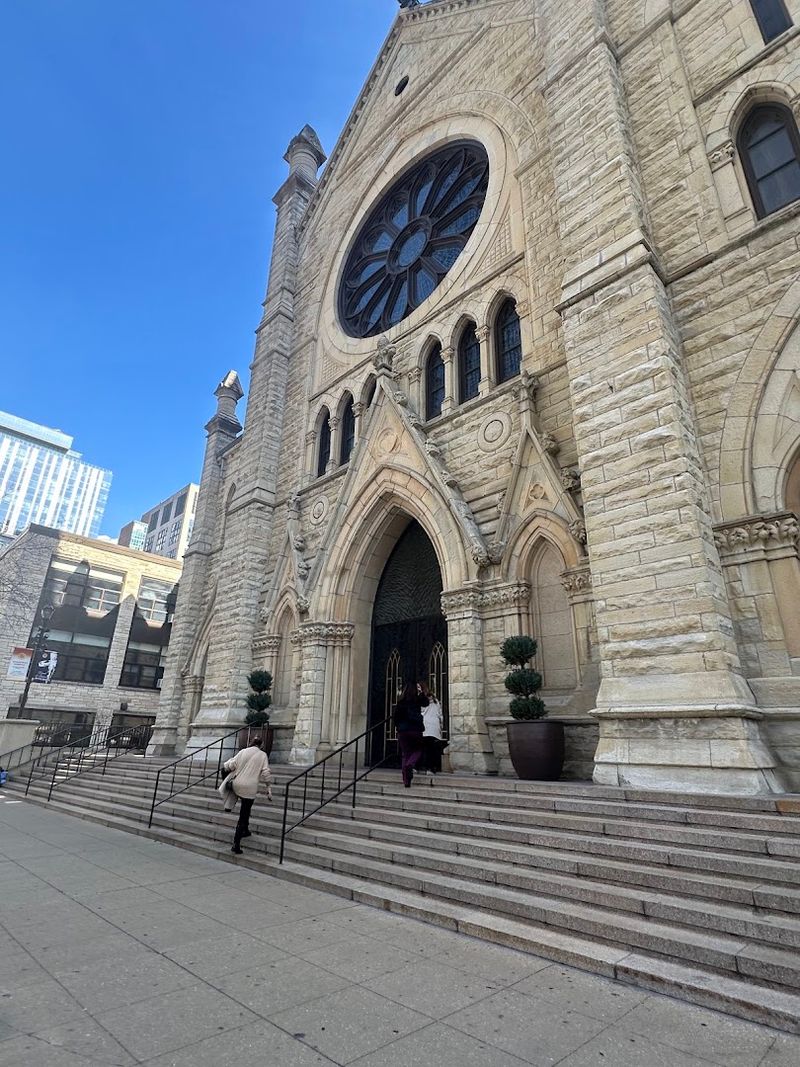
Holy Name Cathedral has a connection to one of Chicago’s most notorious chapters that most tourists never expect to find attached to a house of worship.
On October 11, 1926, Hymie Weiss, the leader of the North Side Gang and a rival of Al Capone, was shot in an ambush just steps from the cathedral on North State Street. The attack was one of the most brazen acts of gang violence during Chicago’s Prohibition era.
After the ambush, Father Bernard J. Sheil conditionally anointed Weiss and members of his group on the cathedral steps.
The cathedral’s stone exterior reportedly still bears bullet marks from the ambush, though identifying them today takes a careful eye and some knowledge of where to look.
This piece of history adds a genuinely unexpected dimension to a visit. The cathedral sits at the intersection of sacred architecture and the raw, turbulent story of 20th-century Chicago, and that combination is hard to find anywhere else in the city.
Standing on those front steps knowing what happened there gives the location a layered significance that goes well beyond religion or architecture, turning a simple visit into something far more memorable and historically rich.
Sound That Fills The Cathedral
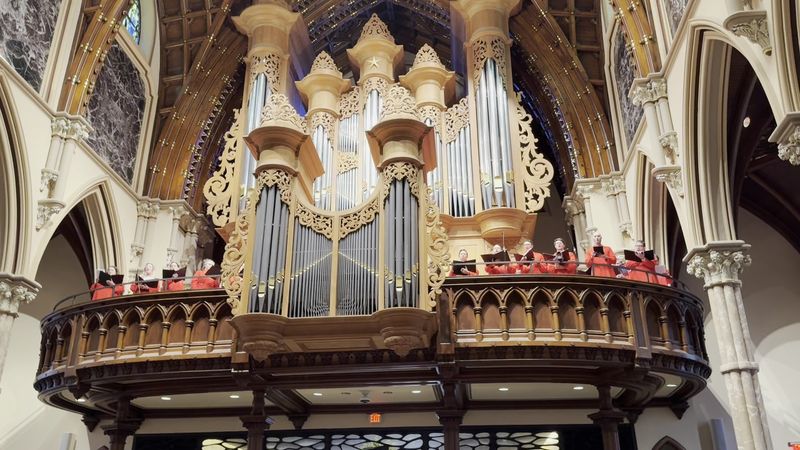
Any conversation about Holy Name Cathedral that skips over the music is leaving out one of its most defining qualities.
The cathedral’s choir and organ program are considered among the finest in Chicago, and attending a Mass here during a choral performance is a genuinely different experience from simply touring the space.
The acoustics of the vaulted ceiling and stone walls create a natural amplification that makes even modest vocal arrangements sound full and powerful.
The music director clearly approaches each liturgical service as a complete artistic event. The organ pieces that open and close Mass are carefully chosen, and the choral arrangements shift in tone and complexity depending on the occasion.
During major celebrations like Easter or Christmas, the musical program expands to match the grandeur of the space itself.
Even visitors who do not regularly attend church services often find themselves moved by the combination of the visual environment and the live music.
There is something about hearing a trained choir perform inside a 150-year-old cathedral that feels genuinely rare in a city full of concert halls and performance venues.
If your schedule allows for a Sunday morning visit, the 10:30 AM Mass is widely regarded as one of the most complete musical and spiritual experiences the cathedral offers throughout the week.
When To Visit The Cathedral
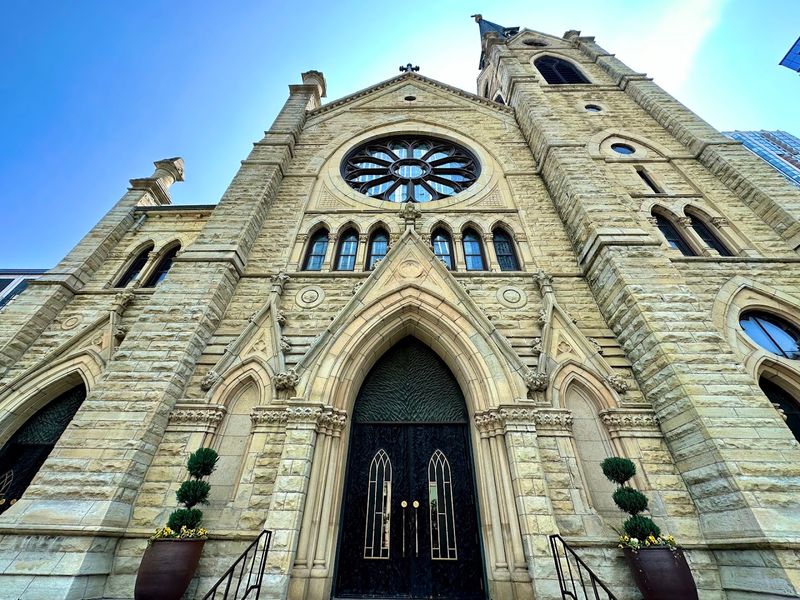
Getting the most out of a visit to Holy Name Cathedral starts with knowing when to go. The cathedral is open Monday through Friday from 6:30 AM to 5 PM, Saturday from 7:30 AM to 6:30 PM, and Sunday from 6:30 AM to 6:30 PM.
Weekday mornings tend to be quieter and ideal for personal reflection or a slower walk through the interior, while Sunday services bring the full experience of music, community, and liturgy together in one setting.
The cathedral is located in Chicago’s River North neighborhood, making it easily accessible by public transit.
The Red Line stops at Chicago Avenue just a short walk away, and several bus routes run along State Street. Street parking on Sundays can be competitive, so building in extra time before a morning Mass is a smart move.
Guided tours are available and worth booking if you want the full story behind the architecture, the galeros, and the cathedral’s place in Chicago history.
You can reach the cathedral directly at +1 312-787-8040 or visit the website for current Mass schedules and event listings. Dress modestly as a sign of respect for the active worship community that calls this remarkable building home every single day.