
These Michigan Lake Superior Rocks Glow Like Embers After Dark And Nobody Knew They Existed Until Recently
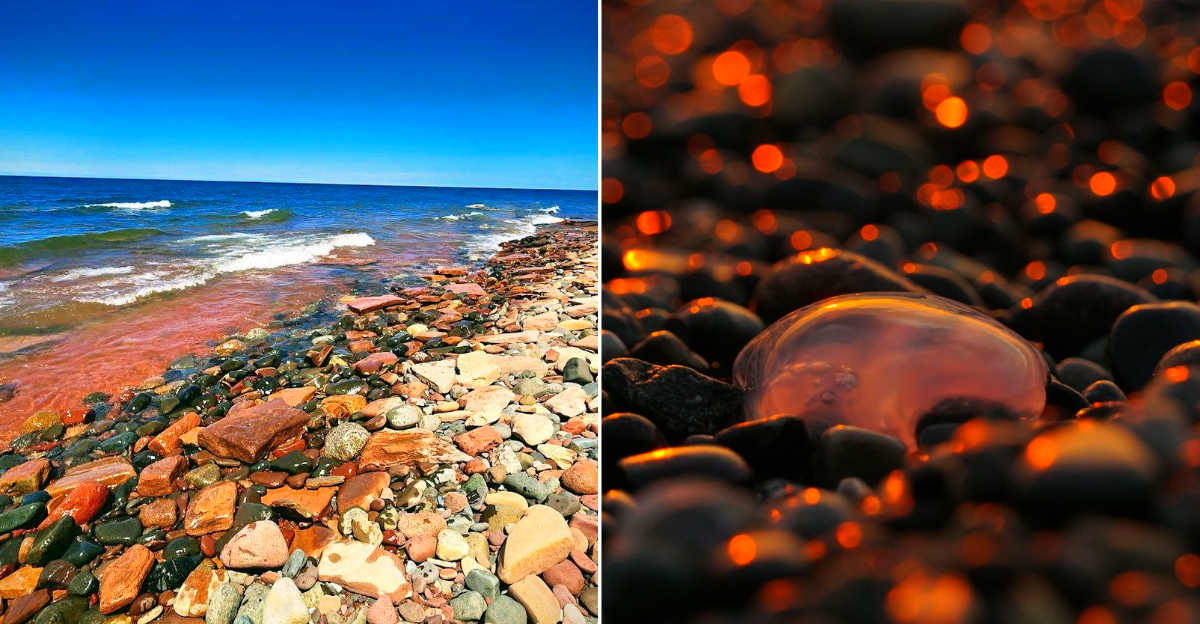
I almost did not bring the flashlight. A friend swore me to secrecy about what happens on the shoreline after sunset.
I figured it was just another fishing story. Then the UV beam hit the first rock, plus the beach lit up like a campfire spread across the sand.
These seemingly ordinary stones contain a mineral that glows vivid orange the second ultraviolet light touches them. Nobody in the world really knew they existed until a few years ago.
People drive for hours to walk the shoreline in the dark, scanning the rocks with handheld lights, collecting up to twenty-five pounds per year under state rules. It feels like uncovering a secret the lake has been keeping since long before anyone thought to look.
Ordinary rocks along the Lake Superior shoreline in Michigan glow like embers after dark once you know what to look for.
1. Grand Marais Lake Superior Shoreline

Fresh wave action can completely rearrange this shoreline overnight, which is why the beach near Lake Avenue rewards repeat visits. After strong wind or rough surf, stones that were buried the day before may appear in new drift lines, giving Yooperlite hunters a fresh area to scan.
Grand Marais also works well as a base for daytime exploring around Pictured Rocks National Lakeshore. Spend the afternoon following overlooks, waterfalls, or forest trails, then return toward the village before sunset and study the beach while there is still enough light to move safely.
Once darkness settles, switch to a 365-nanometer ultraviolet flashlight and sweep slowly rather than waving the beam too quickly. Fluorescent sodalite can flash vivid orange against otherwise gray, brown, or black stones, especially when the rocks are wet.
The open shoreline makes navigation easier than on cluttered beaches, but Lake Superior weather can change quickly. Wear stable shoes, carry a regular flashlight for walking, and stay well back from breaking waves.
Even on a quiet night, the search feels dramatic. Surf rolls through the dark while ordinary stones suddenly glow like scattered coals, turning a simple beach walk into something strangely unforgettable long after the final beam fades.
2. Whitefish Point

History gives this exposed point a gravity that goes far beyond rock hunting. The lighthouse, museum buildings, migratory birds, and constant sweep of Lake Superior create one of the Upper Peninsula’s most memorable coastal landscapes, especially when wind pushes waves across the pale shoreline.
Whitefish Point is also where restraint matters. Collecting rocks is prohibited, including fluorescent sodalite, because the area protects sensitive natural habitat and significant maritime resources.
Every stone should remain exactly where it was found, even when a UV beam reveals a bright specimen.
That rule changes the experience rather than diminishing it. Bring an ultraviolet flashlight for observation, scan carefully after dark where public access allows, and enjoy the surprise of discovering glowing material without treating each find as something that must come home.
During daylight, explore the Great Lakes Shipwreck Museum and consider the history behind the name Graveyard of the Great Lakes. After sunset, the same shoreline feels quiet and solemn.
Use a headlamp for safe movement, avoid restricted habitat, and respect posted closing times. The best souvenir here is not a pocketful of rocks.
It is the image of orange light appearing briefly among stones beside one of Lake Superior’s most storied shorelines.
3. Great Sand Bay
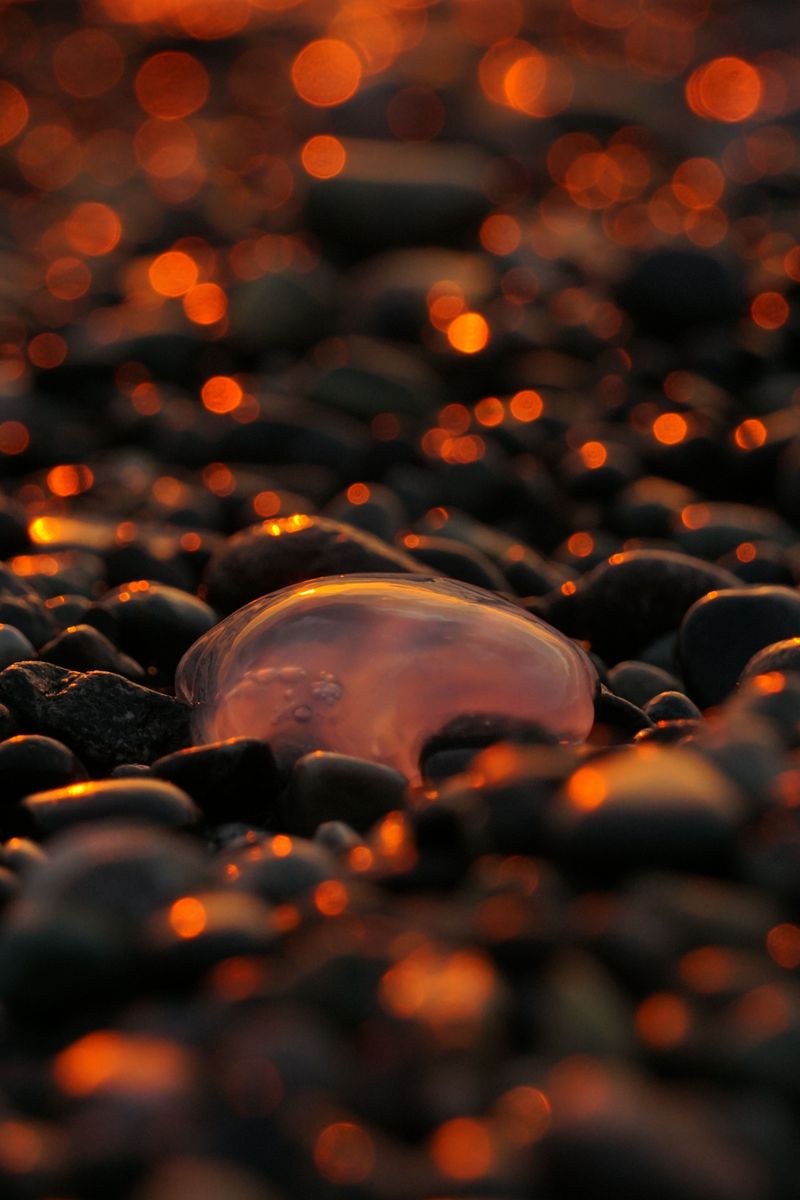
Despite its name, this Keweenaw cove includes enough stone-covered shoreline to keep a UV search interesting for hours. Located between Eagle River and Eagle Harbor, the bay curves around Lake Superior in a way that feels sheltered visually, although wind and waves can arrive with real force.
Daylight scouting makes the night visit easier. Notice where rocks collect below the stairs, around drift lines, and along sections recently washed by waves.
The climb back to the parking area can feel steeper after dark, so mark the access point and carry a regular headlamp in addition to the ultraviolet light.
The surrounding geology adds variety. Agates, quartz, basalt, and other Lake Superior stones compete for attention before fluorescent sodalite reveals itself with a sudden orange glow.
Wet surfaces often intensify both ordinary colors and fluorescence, making a recently washed beach rewarding.
Stable shoes are important because rounded stones can shift underfoot. Keep distance from rough water and avoid turning your entire attention toward the beam while walking.
Arrive before sunset if possible. The bay is beautiful in evening light, and watching it move from blue to black creates a natural transition into the search. Few places make geology feel this atmospheric.
4. Presque Isle Park
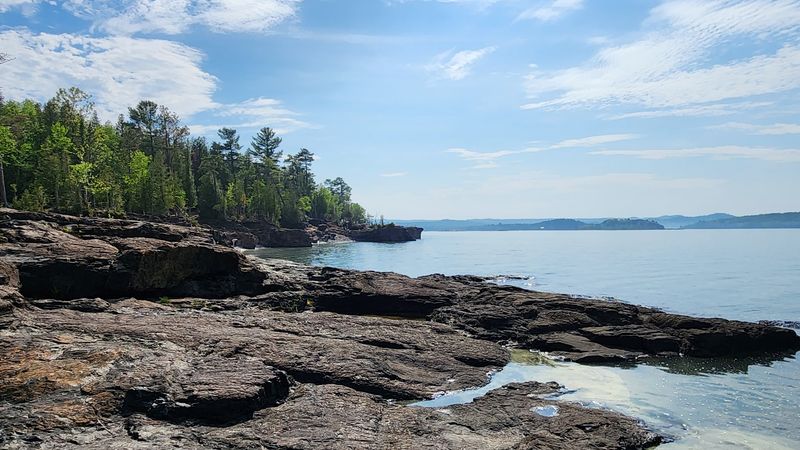
Ancient rock, dark water, and old-growth forest give this Marquette peninsula an atmosphere strong enough to justify a visit even without a single glowing find. Trails circle the park, cliffs rise above Lake Superior, and the famous Black Rocks create one of the city’s most recognizable shorelines.
Fluorescent sodalite has been reported around the area, but this is not usually considered a dependable Yooperlite beach. Treat the ultraviolet search as an extra layer of exploration rather than the only reason to come. That approach prevents a modest night from feeling like failure.
Spend daylight hours learning the paths, identifying safe shoreline access, and noting where loose stones collect. After dark, use both a UV flashlight and a normal headlamp, since exposed bedrock, roots, and uneven ground make careless walking risky.
Park rules and collection restrictions should be checked before removing anything. Some areas may be protected or unsuitable for rock gathering, and local regulations can change.
The strongest reward is the larger setting. Waves strike ancient stone, trees lean toward open water, and Marquette’s lights remain nearby without erasing the sense of wildness. If an orange rock appears, it feels like a bonus offered by an already truly remarkable place.
5. F.J. McLain State Park
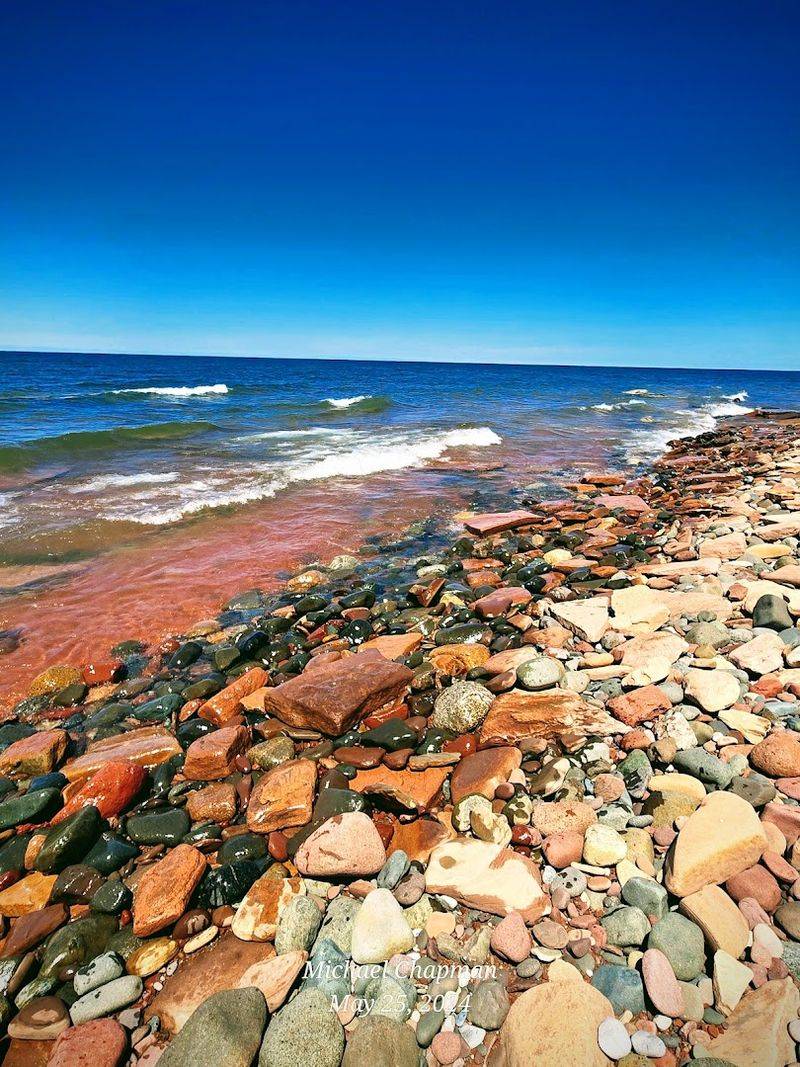
Accessibility makes this state park an introduction to nighttime rock hunting. Located along M-203 between Hancock and Calumet, the park offers a long Lake Superior shoreline with sand, gravel, and rockier sections that can be studied before darkness arrives.
Begin during daylight by walking the beach and marking areas where waves have concentrated small stones. Knowing the route beforehand reduces the temptation to stare only at the ultraviolet beam while navigating uneven ground later.
Sunset also brings wide views toward the Keweenaw Waterway and nearby lighthouse structures.
Once the sky is dark, move slowly with a 365-nanometer UV flashlight. Fluorescent sodalite stands out more clearly when ambient light has disappeared, and wet rocks may produce a stronger orange response.
A regular headlamp remains essential for locating steps, driftwood, and the return path.
A Michigan Recreation Passport is required for vehicle entry. Rock collection must follow state park limits and current Department of Natural Resources rules, so confirm regulations before filling a bag.
Families and first-time hunters often appreciate the combination of facilities, parking, and open shoreline. Experienced rockhounds benefit from room to explore.
Even when the search is quiet, waves, sunset, and dark Keweenaw skies make the outing feel whole.
6. Calumet Waterworks Park
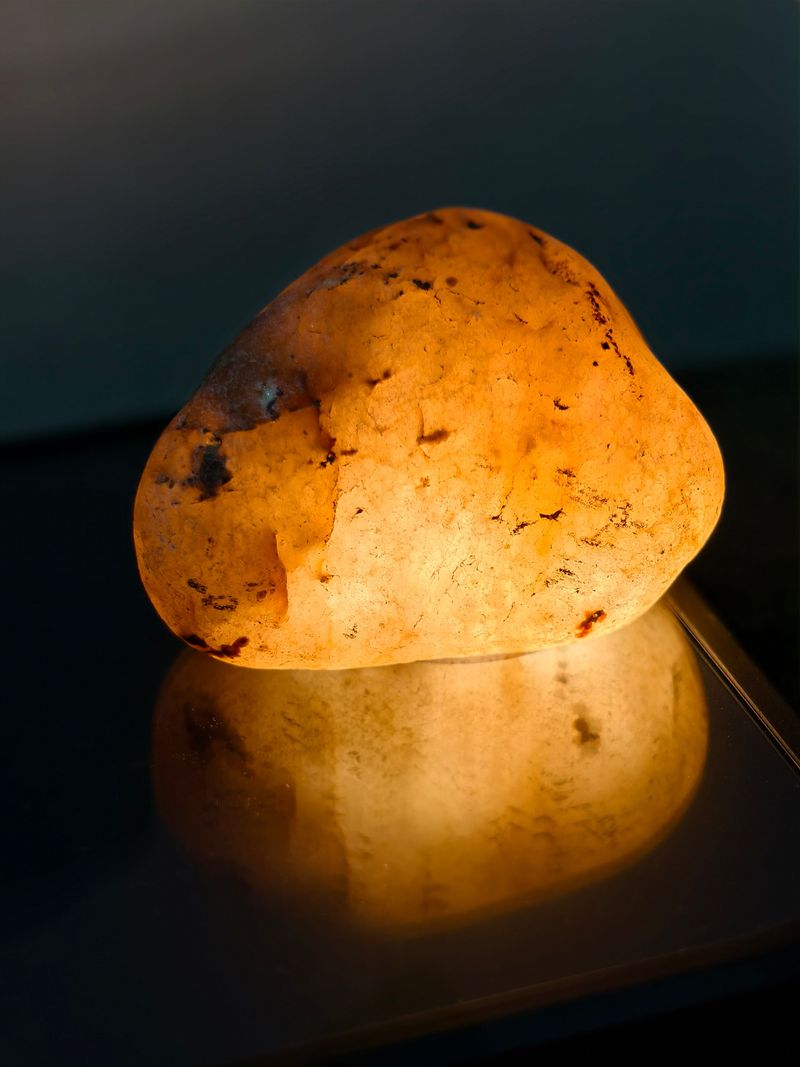
Local reputation draws rockhounds to this Keweenaw shoreline, where Lake Superior continually sorts and redistributes stones beneath open sky. Calumet Waterworks Park sits along Lakeshore Drive north of Calumet, combining a beach with enough amenities to support a longer evening outdoors.
Arrive before sunset and walk the shoreline without ultraviolet light first. Look for fresh drift lines, wet gravel, and sections recently disturbed by waves.
Spring and late fall can bring stronger surf and thinner crowds, although cold temperatures and fast-changing weather require more preparation.
Fire rings, picnic space, and other basic facilities make it possible to treat the visit as an evening gathering rather than a rushed search. Once darkness arrives, sweep the rocks methodically with a 365-nanometer UV flashlight.
Covering a narrow strip carefully often works better than racing across the entire beach.
Bring a normal headlamp, warm layers, water, and gloves during colder months. Collection must remain within Michigan’s legal limits, and visitors should confirm any local restrictions before removing stones.
Patience matters more than speed. A beach that looks ordinary under daylight can change instantly when one orange-speckled rock responds to the beam.
That moment of discovery feels especially satisfying after a quiet hour beside Superior.
7. Agate Beach Park
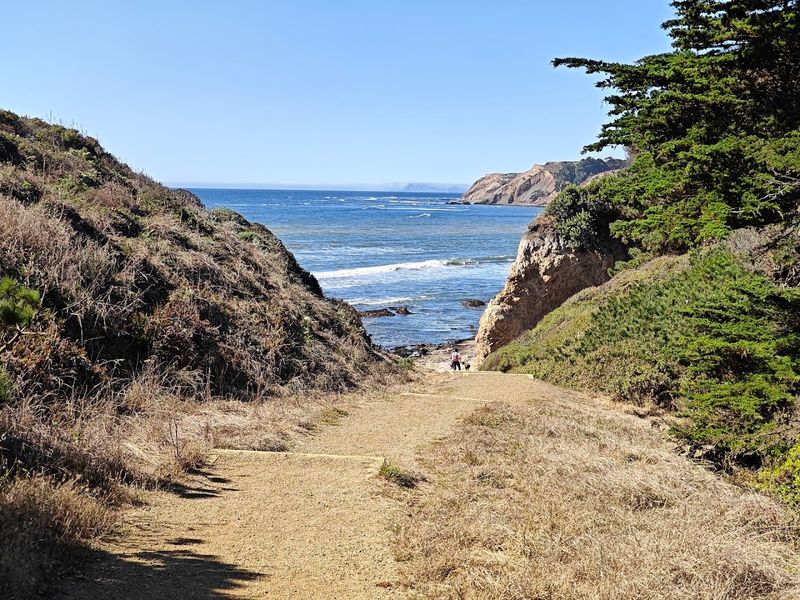
Remoteness shapes the experience at this rustic shoreline southwest of Houghton. Agate Beach Park feels removed from town almost immediately, with a primitive campground, broad Lake Superior views, and enough open space to let a nighttime search unfold without interruption.
An overnight stay offers a rhythm. Explore the beach during daylight, noting where small stones collect, where driftwood creates obstacles, and how to return safely to camp.
After sunset, wait until the sky is dark before switching on the ultraviolet light.
The shoreline is known for agates and other mineral finds, while fluorescent sodalite adds another possibility. A 365-nanometer flashlight provides the clearest orange response, particularly on wet stones.
Search slowly along recent wave lines rather than assuming the brightest specimens will sit near the obvious access point.
Primitive surroundings mean visitors should bring drinking water, warm clothing, food, spare batteries, and a reliable normal headlamp. Check campground access and current collection regulations before traveling, especially outside peak summer.
Quiet is a strong attraction. When the lake is calm, the search becomes almost meditative.
A sudden orange flash breaks the darkness, then disappears when the beam moves on, making each discovery feel private, temporary, and closely tied to the night.
8. Breakers Beach At North Canal Township Park
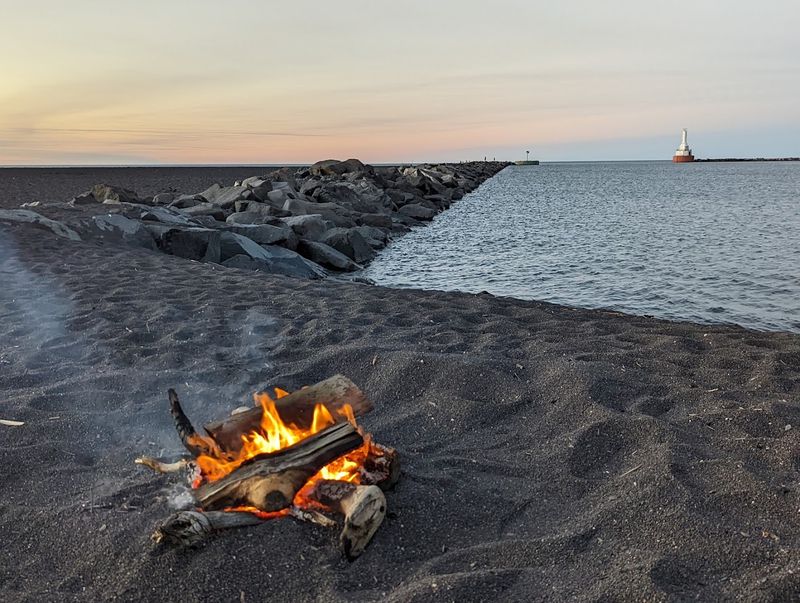
Wide views and open shoreline make this Houghton-area beach scannable once darkness settles. Known locally as the Breakers or the Breakies, North Canal Township Park sits near the entrance to the Keweenaw Waterway, where Lake Superior waves meet the long protective breakwater.
The beach looks unusual during daylight because sections of sand and gravel carry darker reddish tones. Scout before sunset, identify safe walking areas, and note where recent surf has deposited fresh stones.
The open terrain allows hunters to cover distance without constantly stepping around cliffs or dense vegetation.
Full darkness produces the clearest contrast. Use a 365-nanometer ultraviolet flashlight in one hand and keep a standard headlamp ready for walking.
Wet rocks often glow more vividly, while fresh wave action can expose material that was previously hidden.
Stay away from the breakwater during rough conditions, and never turn your back on strong Lake Superior surf. Wind can also make the temperature drop quickly, even after a warm afternoon.
Northern lights, dramatic sunsets, and passing weather systems give the park appeal beyond Yooperlites. Some nights produce few fluorescent stones, but the sense of scale remains impressive.
The dark lake and broad open horizon make every orange flash seem bright.