
Dark Sky Parks In Arizona Where August Nights Reveal The Full Milky Way
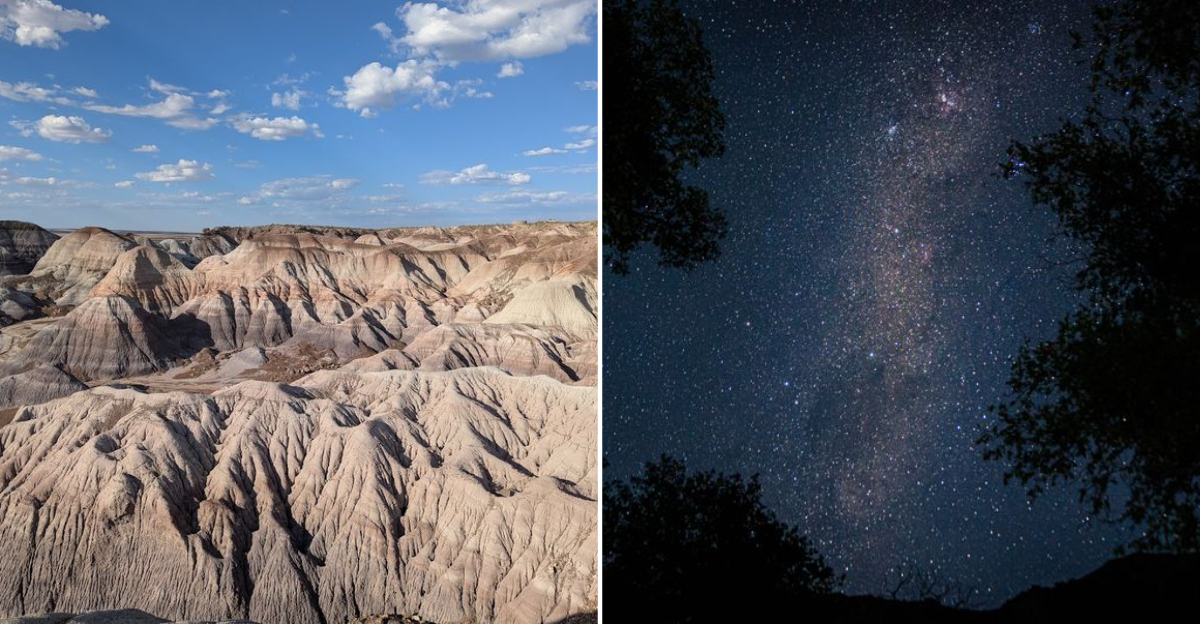
There I was, flat on my back in the middle of nowhere, convinced I was about to be abducted by aliens. Not because of any suspicious noises, but because the night sky in Arizona was so absurdly packed with stars it honestly felt like the universe was leaning in way too close.
August had rolled around, bringing that glorious desert heat that finally breaks into cool, crisp nights, and I had dragged my unwilling city-slicker self out to a designated Dark Sky Park.
I expected a few constellations; instead, I got a face-full of the Milky Way looking like someone spilled a giant glass of cosmic glitter right across the heavens. If you’ve ever wanted to feel delightfully insignificant while questioning every life choice you’ve ever made, grab a lawn chair and let’s go stargazing.
These spots will leave you breathless and already planning your return trip.
1. Grand Canyon National Park, Northern Arizona
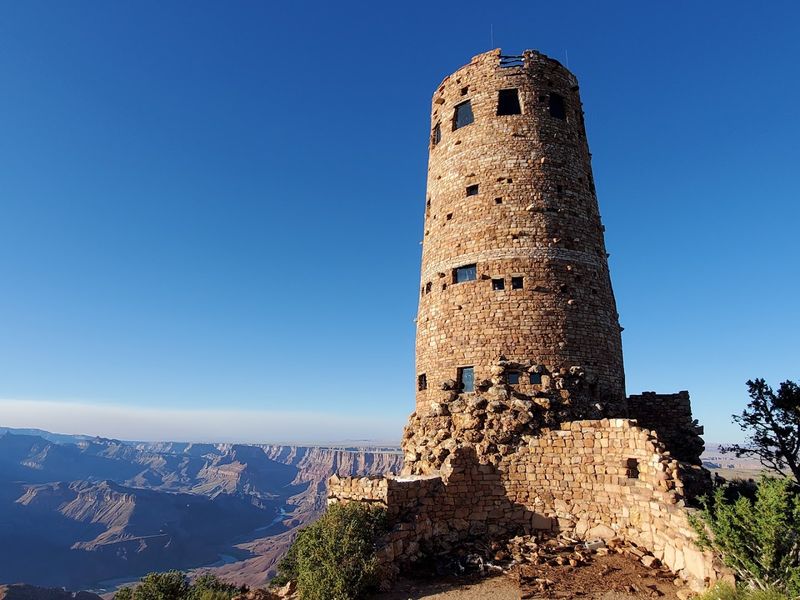
Standing at the edge of one of Earth’s most dramatic landscapes after dark is an experience that words struggle to capture. Grand Canyon National Park, located in northern Arizona, earned its International Dark Sky Park designation in 2019, and on August nights it absolutely earns that title.
The park’s high elevation, dry desert air, and distance from major city lights combine to create Milky Way views that feel almost unreal.
The South Rim is accessible year-round and offers superb darkness away from developed areas, while the North Rim provides an even more remote and shadowy experience through mid-October. Moran Point, Lipan Point, and Yavapai Point are popular favorites for both stargazers and astrophotographers.
August also brings the Perseids meteor shower, layering streaks of light across the galactic core. Even if afternoon monsoon storms roll through, skies here typically clear by midnight. Ranger-led Night Sky Talks add a wonderful educational touch to the whole cosmic adventure.
2. Grand Canyon-Parashant National Monument, Northwestern Arizona
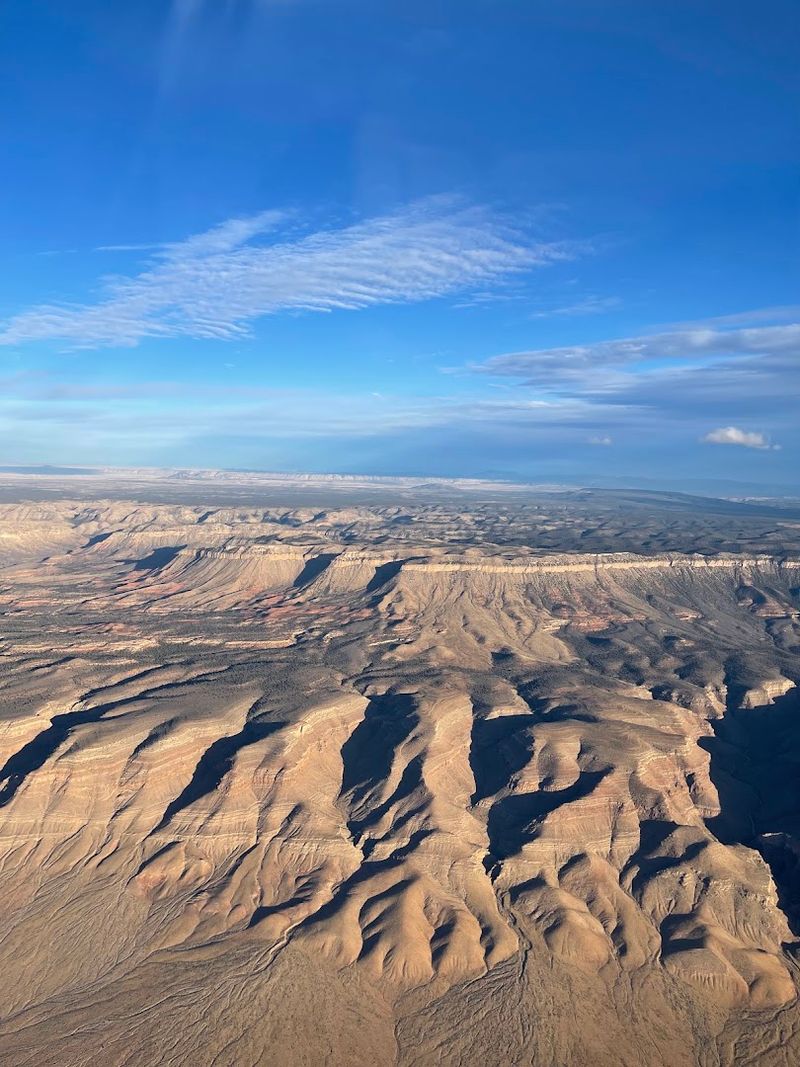
Few places on the continent feel as genuinely far from civilization as Grand Canyon-Parashant National Monument.
Tucked into Arizona’s remote northwestern corner, this sprawling monument is jointly managed by the National Park Service and the Bureau of Land Management, and it sits so far from major population centers that light pollution is practically a foreign concept here.
Deep canyons, ancient volcanic cones, and wide-open plateaus create a rugged, untamed setting where the night sky takes center stage with zero competition.
On moonless August nights, the Milky Way doesn’t just appear overhead, it dominates the entire sky with layers of dust lanes and star clusters visible to the naked eye. The silence out here is so complete it almost feels like part of the experience.
Getting here requires planning, a capable vehicle, and a spirit of adventure, but the reward is a stargazing experience that feels entirely your own, shared with almost no one.
3. Petrified Forest National Park, Northeastern Arizona
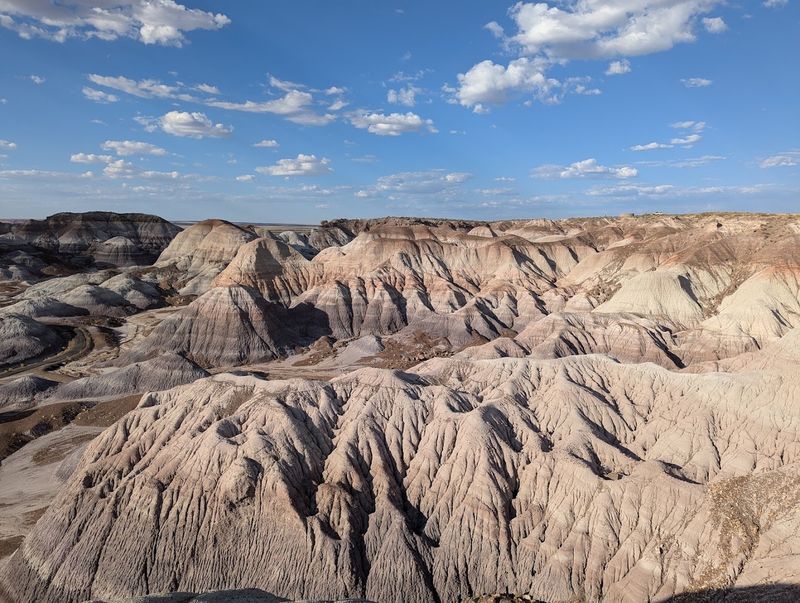
Somewhere between a geology museum and a science fiction film set, Petrified Forest National Park in northeastern Arizona offers one of the most visually striking backdrops for stargazing anywhere in the Southwest.
Ancient trees turned to crystal-studded stone over 225 million years ago now serve as otherworldly foregrounds for Milky Way photography that photographers travel thousands of miles to capture.
The park sits at over 5,000 feet in elevation, and its distance from major urban centers pushes conditions to an impressive Bortle 3 rating. That means the Milky Way isn’t merely visible, it’s spectacular, with structure and color that surprises first-time visitors.
Backpackers who secure overnight wilderness permits are rewarded with some of the clearest skies imaginable.
The park occasionally hosts evening programs that bring rangers and astronomy enthusiasts together under the stars. Pairing ancient fossils with a living, breathing galaxy overhead makes this park genuinely unlike anywhere else.
4. Oracle State Park, Southern Arizona
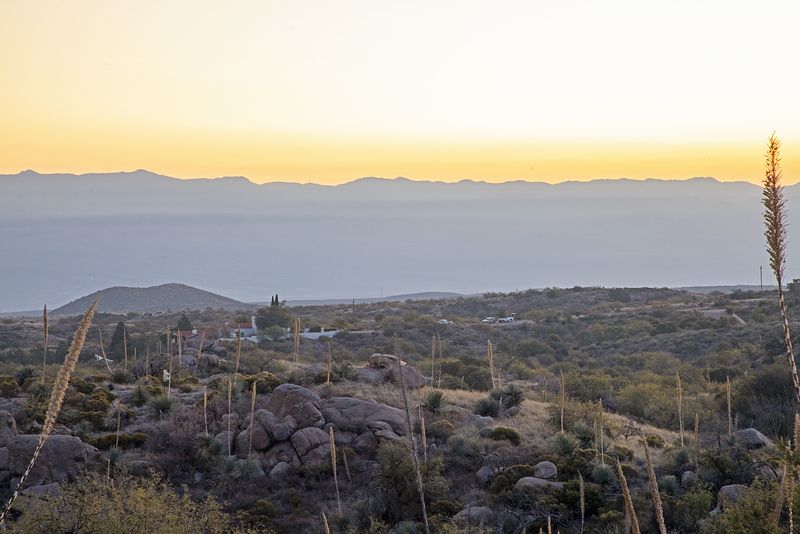
About an hour north of Tucson, Oracle State Park sits quietly in the northern foothills of the Catalina Mountains, covering roughly 4,000 acres of wildlife-rich terrain.
Designated an International Dark Sky Park back in 2014, it was one of Arizona’s earliest honorees, and the skies here make it easy to understand why that recognition came so quickly.
Here’s the clever trick nature pulled off: the Catalina Mountains act as a natural barrier, blocking much of the skyglow from nearby Tucson, even though the city isn’t far away.
The result is a surprisingly dark sky where the Milky Way appears to the naked eye with satisfying clarity. Telescopes and camera equipment reveal even more breathtaking detail in the galactic core during August.
Camping isn’t available, but visitors can arrange after-hours access by calling ahead for a gate code and reservation. It’s a low-key, unhurried spot that rewards those who take the time to plan ahead.
5. Kartchner Caverns State Park, Southeastern Arizona
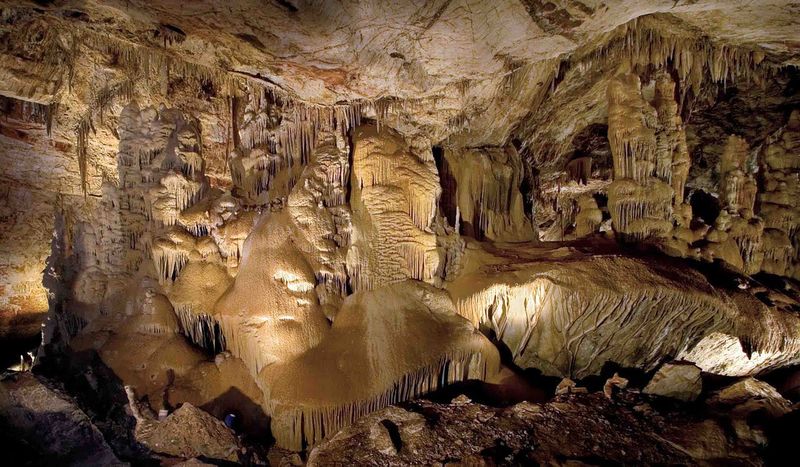
Most people arrive at Kartchner Caverns State Park, south of Benson in Cochise County, to explore the remarkable living limestone caverns hidden beneath the desert floor.
What surprises many visitors is that the sky above ground is just as extraordinary as the geology below it. The park earned a Silver-tier International Dark Sky Park designation in 2017, recognizing its outstanding commitment to preserving darkness.
Star clusters, distant galaxies, and the sweeping arc of the Milky Way are all visible from this park on clear August nights, and the Huachuca Astronomy Club regularly partners with the park to host public star parties.
Volunteer astronomers show up with impressive telescopes and genuine enthusiasm, turning a quiet evening into a tour of the cosmos that anyone can enjoy.
The park’s Lightscape Management Plan keeps artificial lighting to a minimum throughout the grounds. Between the underground wonders and the celestial show above, Kartchner Caverns offers a two-for-one natural experience that’s hard to top.
6. Chiricahua National Monument, Southeastern Arizona
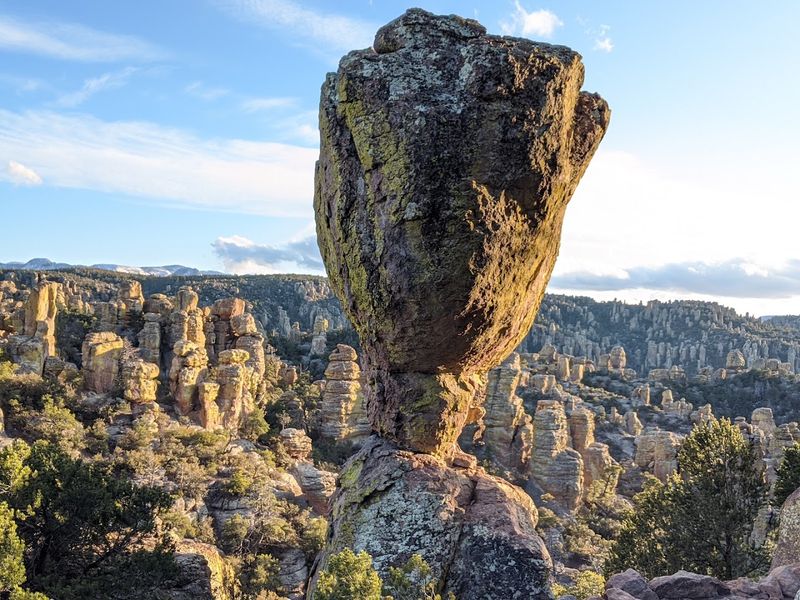
Rock spires that look like they were sculpted by a restless giant rise from the high desert floor at Chiricahua National Monument, near Willcox in Cochise County.
Known affectionately as the Wonderland of Rocks, this southeastern Arizona landmark became an International Dark Sky Park in 2021, adding a new layer of wonder to an already extraordinary place.
The monument regularly achieves Bortle 2 sky conditions, among the darkest possible ratings, meaning you can actually trace the Milky Way’s delicate dust lanes with nothing but your own eyes.
Those hoodoos and balanced rock formations become hauntingly beautiful silhouettes against a star-filled sky, making astrophotography here genuinely addictive. The Bonita Canyon Campground lets visitors stay overnight and soak in those August skies for hours.
With more than 17 miles of hiking trails, there are plenty of spots to spread out a blanket and settle in for a long night of sky watching. Clear nights in August regularly deliver Milky Way views that feel almost too good to be real.
7. Tumacacori National Historical Park, Southern Arizona
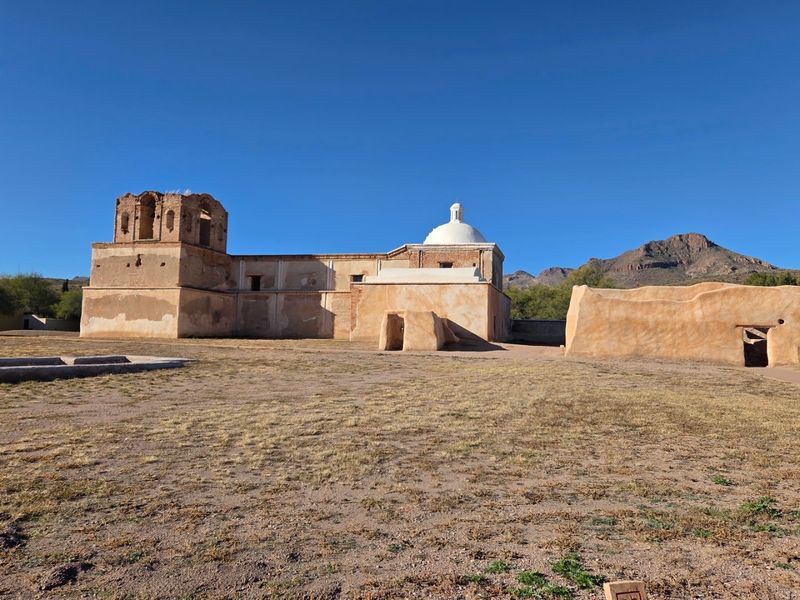
There’s something profoundly moving about watching the Milky Way rise above the crumbling walls of a centuries-old Spanish mission.
Tumacacori National Historical Park, located about 20 miles north of the Mexican border in southern Arizona’s mesquite highlands, offers exactly that kind of layered, unforgettable experience. The park received its International Dark Sky Park designation in 2018.
The ruins here preserve three early Spanish colonial missions and carry the cultural heritage of O’odham, Yaqui, Apache, and European communities that shaped this region.
Nighttime stargazing events, often organized in partnership with the Tucson Amateur Astronomy Association, bring telescopes, knowledgeable guides, and a shared sense of wonder to the park’s quiet grounds. Planets, nebulae, and galaxies all come into view through those lenses.
Night-sky-friendly lighting throughout the park keeps artificial glow to a bare minimum. Standing beneath the galactic core with ancient adobe walls in your foreground is the kind of moment that stays with you long after you’ve driven home.
8. Pipe Spring National Monument, Northern Arizona
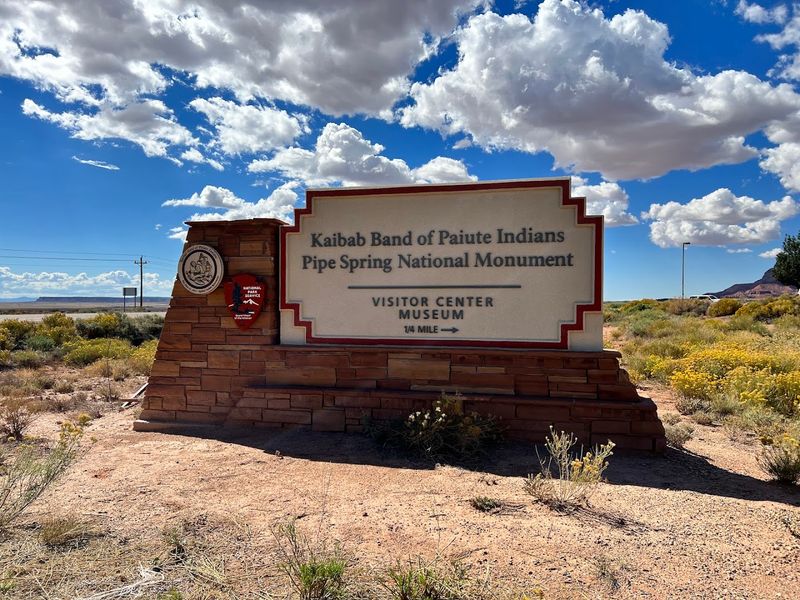
Near the small community of Fredonia in far northern Arizona, Pipe Spring National Monument sits within the Kaibab Paiute Reservation, a community that holds a remarkable distinction.
Since 2015, the Kaibab Paiute Tribe’s lands have been recognized as the world’s first International Dark-Sky Nation, meaning an entire community has committed itself to protecting clean air and natural darkness.
Pipe Spring itself became an International Dark Sky Park in 2021, and the monument regularly hosts Astronomy Night events featuring Ranger talks, guided sky tours, and public telescope viewing.
The night sky here ranks among the darkest in the contiguous United States, and in August, the Milky Way stretches overhead in full, glorious detail. Full Moon ranger-guided hikes and seasonal star parties add community and storytelling to the experience.
The monument also commemorates pioneer history and the cultural relationship native tribes have long held with the night sky. Visiting feels like stepping into both a history lesson and a private showing of the universe.
9. Organ Pipe Cactus National Monument, Southern Arizona
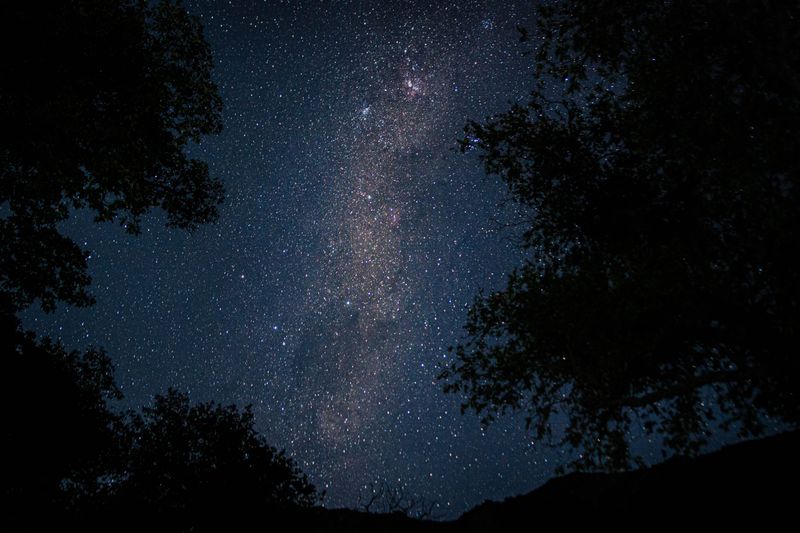
Only one place in the United States is home to wild-growing organ pipe cacti, and that place also happens to have some of the most pristine dark skies in the entire country.
Organ Pipe Cactus National Monument, near Ajo in southernmost Arizona, is a UNESCO International Biosphere Reserve where the Sonoran Desert stretches toward the Mexican border in spectacular fashion.
During August, monsoon season occasionally brings dramatic lightning displays, but those storms frequently clear by midnight, leaving behind crystal-clear skies packed with stars.
Prime viewing spots include Pinkley Peak Picnic Area, the Desert View Trail, and the scenic Ajo Mountain Drive. A dedicated astronomy park ranger hosts regular constellation tours and telescope sessions, particularly popular during cooler months but available in summer too.
The unique silhouettes of organ pipe cacti rising against the Milky Way create astrophotography compositions found nowhere else on Earth. Just remember to stay alert for desert wildlife that also enjoys the cool nighttime air, including scorpions and snakes.
10. Sunset Crater Volcano National Monument, Northern Arizona
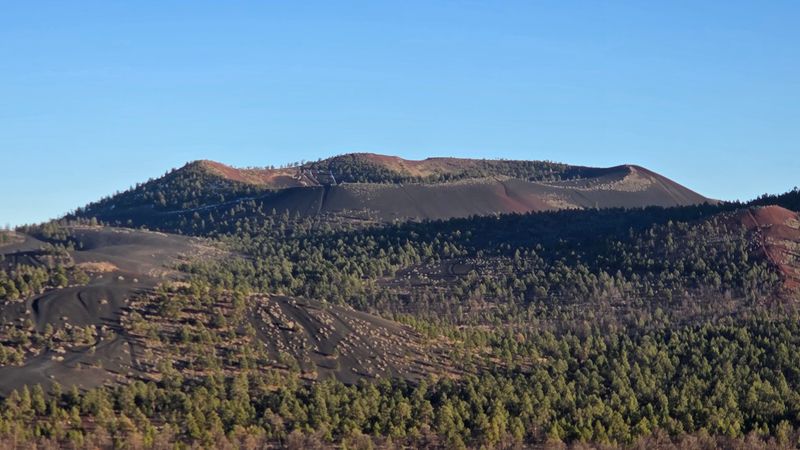
About 20 miles northeast of Flagstaff in Coconino County, a 1,000-foot volcanic cinder cone rises from a frozen lava field, looking very much like the landscape erupted just last week rather than around 1085 CE.
Sunset Crater Volcano National Monument shares an International Dark Sky Park designation with its neighboring monuments, Wupatki and Walnut Canyon, forming a remarkable trio of stargazing destinations in the Flagstaff area.
The contrast between the monument’s stark black volcanic rock and the blazing Milky Way overhead creates astrophotography compositions that feel genuinely alien, in the best possible way.
Distant ponderosa pines frame the edges of the lava field, softening the drama just enough to feel approachable. During summer months, volunteer astronomers and park rangers host night sky events where visitors can learn the constellations and peer through telescopes.
The monument’s remoteness keeps light pollution low, and August nights here deliver some of the most dramatic natural light shows you can find without booking a flight off the planet.
11. Walnut Canyon National Monument, Northern Arizona
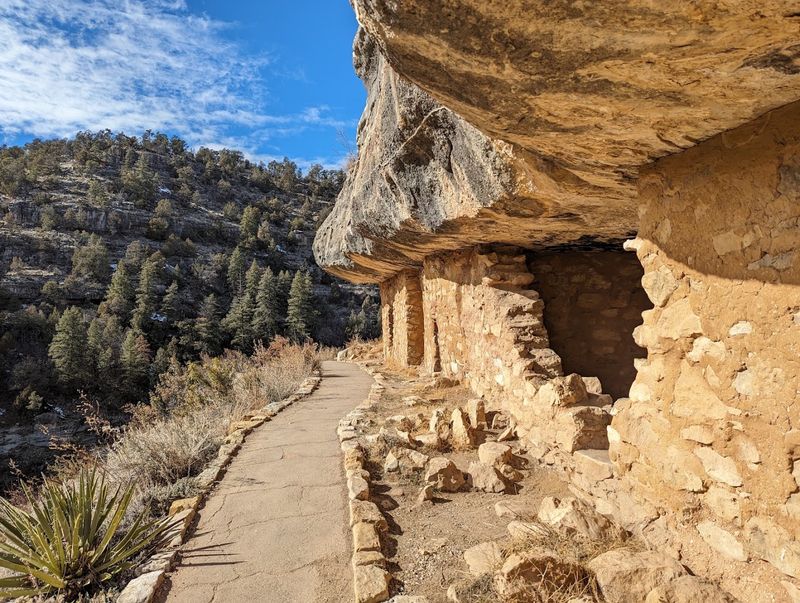
A short drive from Flagstaff in Coconino County, Walnut Canyon National Monument tucks ancient cliff dwellings into the curved limestone walls of a quiet canyon, offering a daytime experience that already feels like stepping back in time.
After dark, the canyon takes on a completely different kind of magic. Sharing its International Dark Sky Park status with Sunset Crater Volcano and Wupatki, Walnut Canyon benefits from regional efforts to keep the night sky genuinely dark.
The Sinagua people built their homes into these canyon walls centuries ago, and on clear August nights, those same stone structures stand as silent silhouettes beneath a sky that hasn’t changed much since those ancient residents looked up at it.
The Rim Trail offers accessible viewing areas where you can settle in comfortably after sunset and let your eyes adjust to the growing darkness.
As stars multiply overhead and the Milky Way fills in its full width, the sense of connection to both human history and cosmic scale becomes quietly overwhelming. Few places deliver that particular combination quite so effortlessly.
12. Wupatki National Monument, Northern Arizona
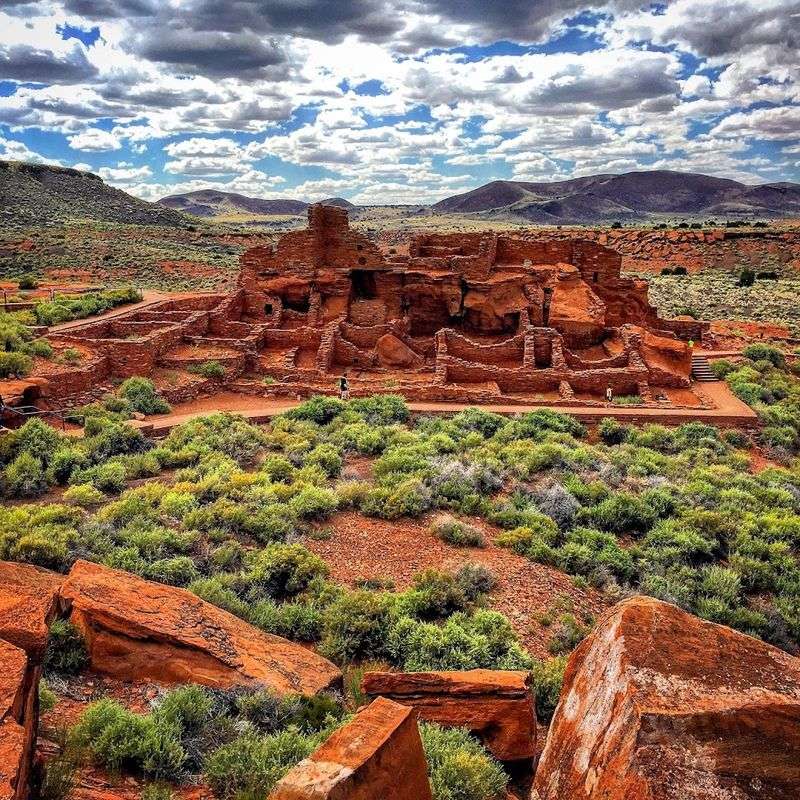
Closing out this celestial tour on a reflective note, Wupatki National Monument near Flagstaff in Coconino County brings together ancient human history and some of northern Arizona’s most expansive night sky views.
Ancient pueblos dot miles of open prairie here, remnants of a thriving community that flourished centuries ago. Sharing its International Dark Sky Park designation with Sunset Crater Volcano and Walnut Canyon, Wupatki benefits from coordinated regional efforts to protect natural darkness.
The wide, open prairie setting means almost nothing blocks your view of the horizon in any direction, giving the Milky Way room to stretch fully across the sky in August.
There’s a quiet, meditative quality to standing among these ancient stone structures and realizing that the same galaxy arching overhead tonight was the same one those ancient residents navigated their lives beneath.
As part of the Flagstaff Area National Monuments, Wupatki also supports the surrounding wildlife that depends on natural darkness to thrive. For a traveler seeking both cultural depth and cosmic grandeur in one spot, this northern Arizona treasure delivers both with quiet, unhurried confidence.