
Dark Sky Parks In Colorado Where August Nights Reveal The Full Milky Way
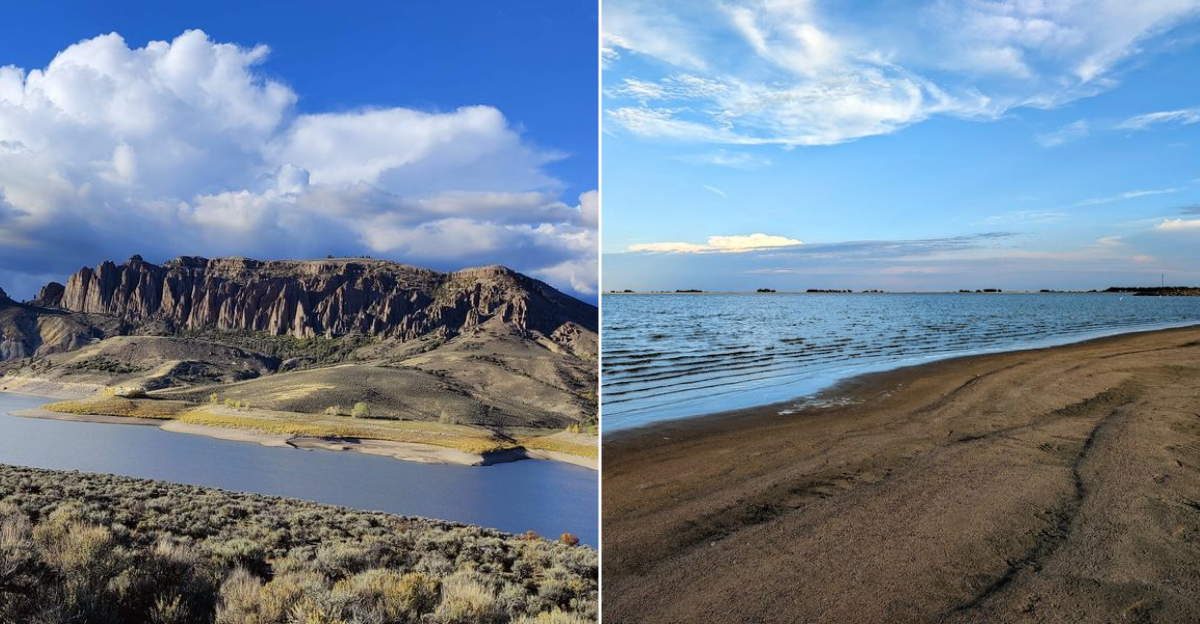
Darkness becomes the main attraction when the sky is clear enough to reveal what daylight hides. In August, the Milky Way burns brighter and lower, turning a simple evening outside into something that feels almost unreal.
Across the high country of Colorado, dry air and open horizons create some of the finest conditions for watching the galaxy sharpen above you. You do not need expert equipment or a complicated plan.
Bring a blanket, find a quiet stretch of ground, and give your eyes time to adjust. The longer you look, the more the night seems to expand, with stars appearing where you thought there was only blackness.
Crowds begin to thin this time of year, which makes the experience feel even more personal. By midnight, under Colorado’s enormous summer sky, your phone will seem pointless, your worries will feel smaller, and the universe will have quietly and completely stolen the show.
1. Lake Fork Earth and Sky Center
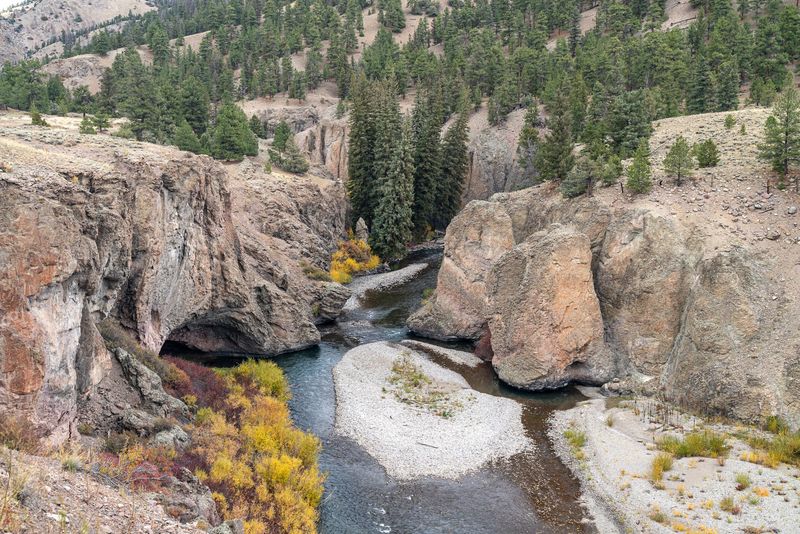
Few places in Colorado earn the word “remote” as honestly as the Lake Fork Earth and Sky Center near Lake City. Sitting at 2700 Highway 149 in Hinsdale County, one of the least populated counties in the entire United States, this site pulls you far enough from civilization that the Milky Way’s bright central core looks almost three-dimensional overhead.
The Slumgullion Earthflow, an ancient geological landslide still slowly moving today, adds a wild, prehistoric backdrop to the experience. Knowing the ground beneath your feet has been in slow motion for centuries gives stargazing here a certain extra weight.
The center runs free guided telescope programs during summer, which takes all the pressure off figuring out which smudge of light is actually a galaxy.
August nights here are reliably clear and cool, so bring more layers than you think you need. The drive up Highway 149 through the Silver Thread Scenic Byway is beautiful even in the dark.
Arrive before sunset to get your bearings, grab a spot near the telescope staging area, and let the staff do the pointing. This is one of those rare places where the sky does all the talking.
2. Top of the Pines Recreation Preserve
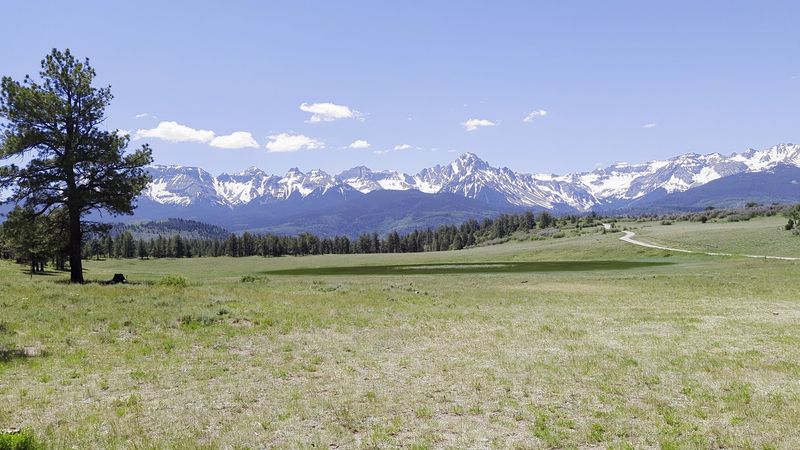
There is something deeply satisfying about falling asleep under ponderosa pines while the San Juan Mountains hold the sky in place around you. Top of the Pines, located at 1035 Highlands Drive in Ridgway, sits on 175 acres beneath the dramatic Sneffels Range, and its nine walk-in campsites are spaced far enough apart that you almost forget other humans exist.
Walk-in camping forces a small commitment, which is exactly why the people who end up here tend to be the right kind of company. No generators, no bright lanterns blazing from neighboring RVs.
Just the sound of wind through the pines and, once your eyes adjust, an absolutely absurd amount of stars. The Sneffels Range silhouette against the Milky Way is the kind of image that makes you wish you were a better photographer.
August is ideal because the nights are long enough to catch the galactic core before it dips below the western ridgeline. Plan to arrive before dark so you can find your site without fumbling with a headlamp.
Ridgway itself is a charming small town worth exploring before you head up the hill for the night. It rewards the effort every single time.
3. Gunnison Gorge National Conservation Area
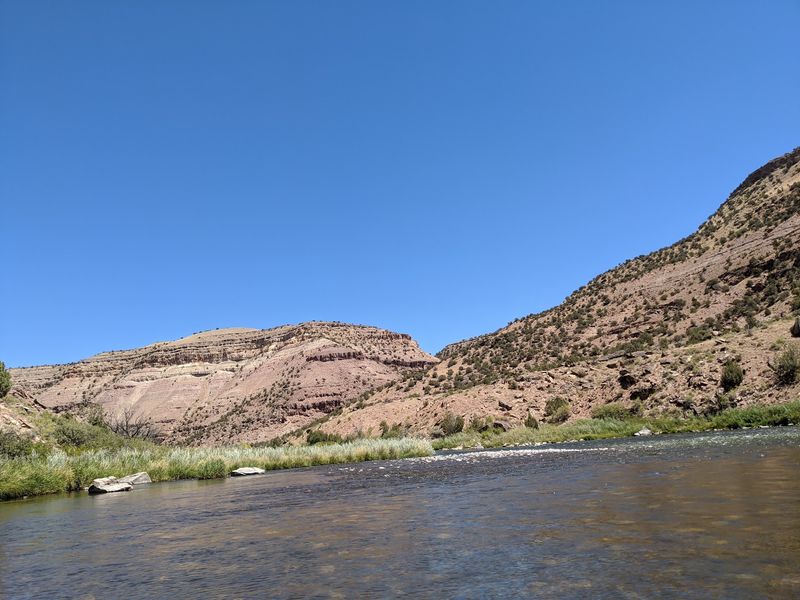
Most people driving through Montrose on their way somewhere else have no idea that one of Colorado’s darkest skies is hiding just east of Olathe. The Gunnison Gorge National Conservation Area, managed out of 2465 South Townsend Avenue in Montrose, offers dispersed camping in adobe badlands terrain that feels more like Utah than what most visitors expect from Colorado.
The key is knowing where to go. Skip the main trailhead and head to the Peach Valley OHV Staging Area off Falcon Road.
Out there, artificial light is nearly nonexistent, and the open desert landscape gives you a horizon that stretches in every direction. The Milky Way doesn’t just appear overhead here, it feels like it goes all the way to the ground.
The area’s peak operating season runs April through October, so August puts you right in the middle of prime conditions. Dispersed camping means you set up where it feels right, which is both freeing and a little humbling.
Bring plenty of water, a solid map, and a red-light headlamp so you don’t ruin your night vision. The badlands are quiet, the sky is enormous, and the whole experience costs almost nothing.
That combination is genuinely hard to beat.
4. Curecanti National Recreation Area
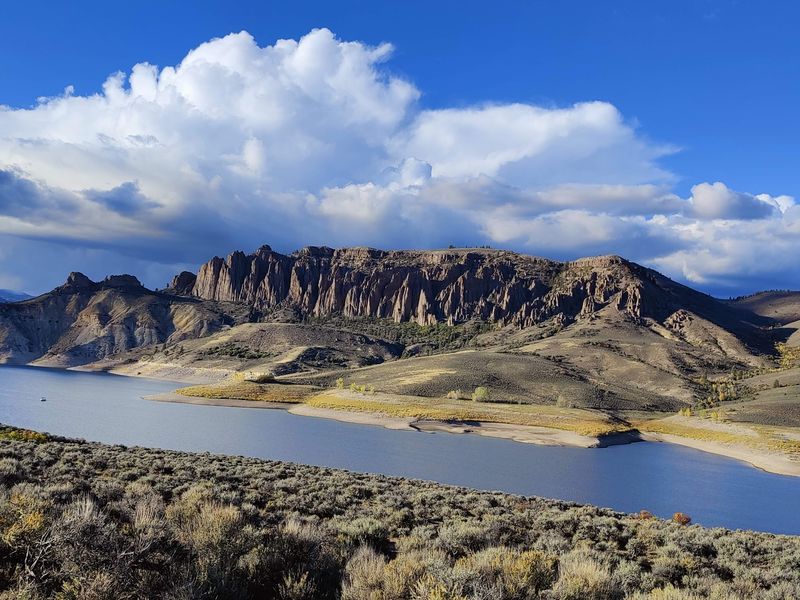
Blue Mesa Reservoir is Colorado’s largest body of water, and on a calm August night, it doubles the sky. Curecanti National Recreation Area, headquartered at 102 Elk Creek in Gunnison, wraps around this reservoir with broad, open horizons that make it one of the most practical dark sky destinations in the state.
No entrance fee, open 24 hours, and the Milky Way practically introduces itself.
The shoreline near Elk Creek and the areas west of Blue Mesa Dam are the strongest viewing spots, both offering unobstructed sightlines above the surrounding mesas. When the water is still, the reflection of the galactic core creates a visual that is almost disorienting in the best way possible.
Summertime astronomy programs add context and community to the experience without requiring any special equipment.
Curecanti is the kind of place that rewards a slow evening. Arrive for sunset over the reservoir, stay for the stars, and consider camping at one of the sites near the water so you can watch the sky shift from dusk to full darkness at your own pace.
The drive along US-50 through the Black Canyon corridor to get here is spectacular, and it sets the mood long before you ever look up.
5. Dinosaur National Monument Colorado Entrance
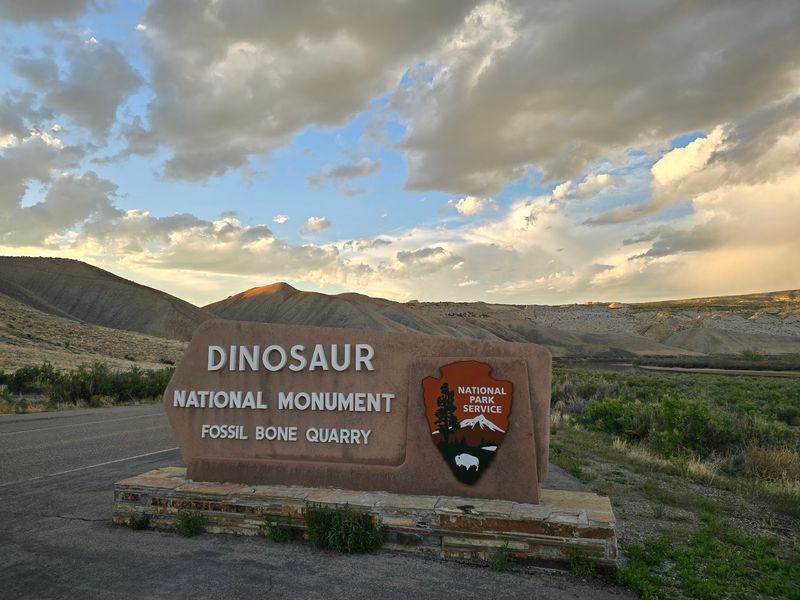
Dinosaur National Monument gets most of its fame from the fossil quarry on the Utah side, but the Colorado entrance tells a completely different story. Coming in off Highway 40 at 4545 Highway 40 in Dinosaur, Colorado, Harpers Corner Road leads you into a remote canyon landscape that feels genuinely untouched.
The sky out here is enormous, the kind that makes you understand why early astronomers thought the universe was trying to communicate something.
Echo Park Campground sits at the confluence of the Green and Yampa Rivers and provides one of the most dramatically situated campsites in the American West. The canyon walls frame the sky above in a way that focuses your attention upward, and the lack of any nearby town means light pollution simply is not a factor.
August nights here are warm enough to sit outside comfortably well past midnight.
The Colorado visitor center operates daily during summer, so stopping in before dark to grab a map and ask about current conditions is a smart move. The road to Echo Park is unpaved and requires a high-clearance vehicle, so plan accordingly.
If you only have time for Harpers Corner, the overlook at the end of the road still delivers a night sky that will rearrange your sense of scale.
6. Chimney Rock National Monument
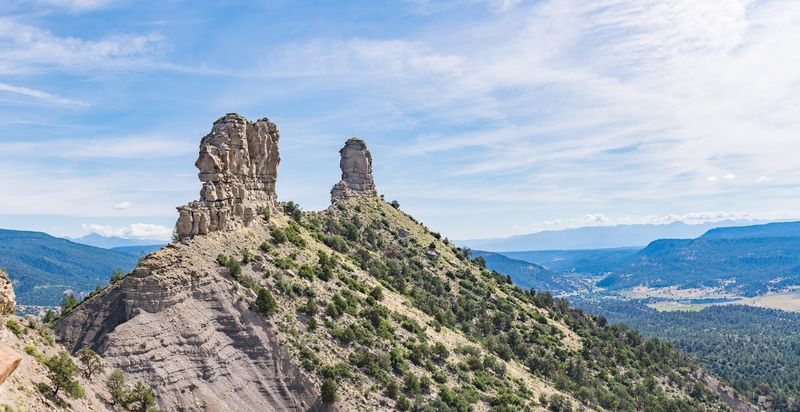
Chimney Rock National Monument earned its certified Dark Sky Park status in 2025, which is a recent enough honor that many Colorado stargazers haven’t added it to their list yet. Located at 30841 State Highway 151 near Pagosa Springs, the site is anchored by twin rock pinnacles that the ancestral Puebloan people used to track celestial events over a thousand years ago.
Standing beneath that same sky at night carries a weight that is hard to put into words.
Because regular daytime access ends before full darkness settles in, the best way to experience Chimney Rock after hours is through a scheduled evening program. A three-hour Night Sky Program is set for August 15, 2026, and that kind of structured access makes planning straightforward.
The guides know the site intimately and connect the stars to the archaeology in ways that genuinely change how you look at both.
The monument’s season runs May through October, so August is squarely in the window. Pagosa Springs is a lovely base camp, with hot springs, good food, and enough small-town charm to make the whole weekend feel effortless.
Book your evening program spot early because word about this newly certified site is spreading fast. The pinnacles at night are unforgettable.
7. Jackson Lake State Park
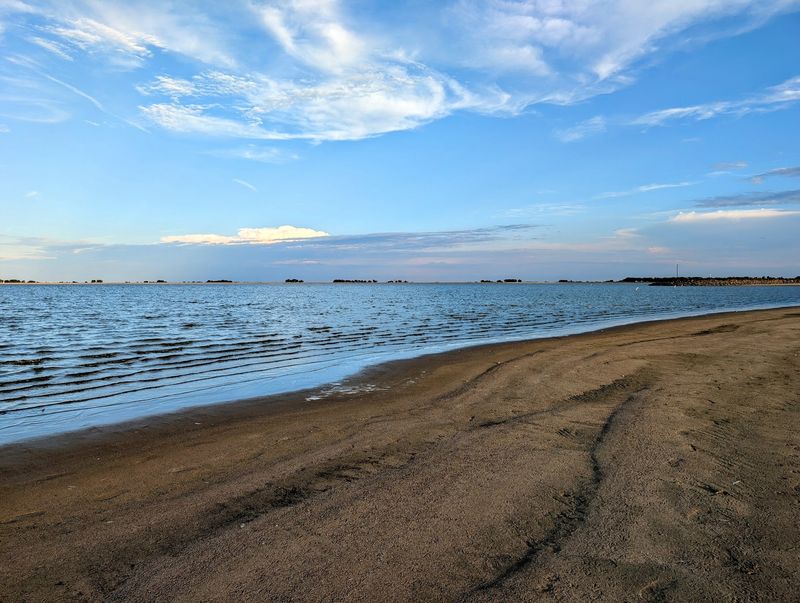
Colorado’s mountain parks get all the stargazing glory, but Jackson Lake State Park on the Eastern Plains quietly holds a credential none of them can claim: it was the first certified Dark Sky State Park in the entire state. Located at 26363 County Road 3 near Orchard, this park trades dramatic peaks for something equally compelling, a completely flat, wide-open horizon where the Milky Way rises without a single ridgeline interrupting the view.
The lake itself adds a reflective surface that doubles the spectacle on calm nights, and the absence of mountain terrain means the galactic core appears earlier in the evening and stays visible longer. For families or couples who want serious dark sky access without a high-altitude drive, Jackson Lake is the answer that most travel guides overlook entirely.
The Eastern Plains have a quiet, underestimated beauty that grows on you fast.
The park operates daily from 5 a.m. to 10 p.m., so camping is the move if you want to stay through the darkest hours. Reserving a campsite near the water gives you the best viewing angle and the pleasant sound of the lake to keep you company.
August evenings here cool down nicely after sunset, making it comfortable to sit outside and let the sky do its thing for hours.
8. Florissant Fossil Beds National Monument
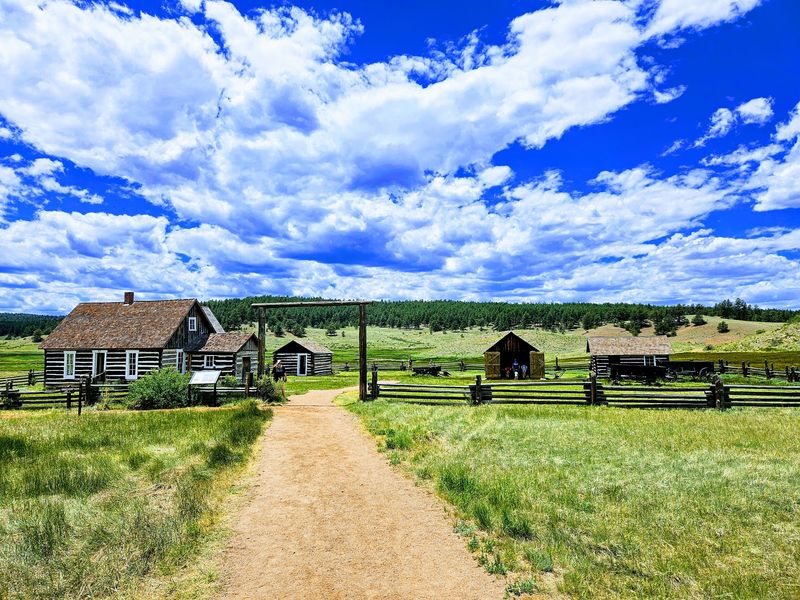
Florissant Fossil Beds National Monument is the kind of place that rewards people who do their homework. Located at 15807 Teller County Road 1 in Florissant, the monument preserves an ancient lake bed filled with remarkably detailed fossils, but the nighttime story is just as interesting.
The regular visitor center parking lot closes in the afternoon, yet the Hornbek Homestead parking area stays open 24 hours specifically as a designated dark sky viewing location.
That detail matters more than it might seem at first. Most national monuments require a campsite reservation to stay after hours, but Florissant lets independent stargazers show up, park, and look up without any advance planning beyond knowing where to go.
The historic homestead silhouette against the Milky Way adds a layer of atmosphere that purely open-field viewing simply cannot match.
Florissant sits at around 8,400 feet, which puts you well above the haze that softens the sky at lower elevations. August nights here can get genuinely cold after midnight, so pack accordingly even if the afternoon felt warm.
The drive from Colorado Springs takes less than an hour, making this one of the most accessible serious dark sky experiences along the Front Range corridor. Bring a reclining camp chair and plan to stay a while.
9. Browns Canyon National Monument at Ruby Mountain
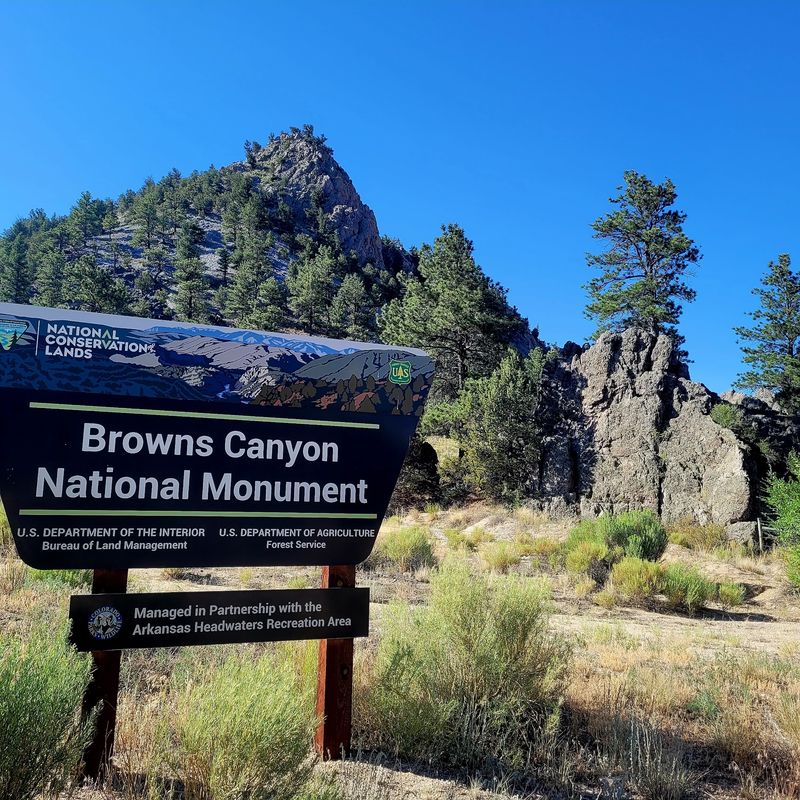
Ruby Mountain Campground earns its reputation quietly. Tucked along the Arkansas River within Browns Canyon National Monument, accessed via County Road 301 near Nathrop, it offers a combination of convenience and atmosphere that most riverside campgrounds can only dream about.
Restrooms, a small amphitheater, and direct river access make the logistics easy, while the surrounding monument keeps light pollution to an absolute minimum.
On a moonless August night, the Milky Way reflects off the Arkansas River in a way that official tourism guidance actually calls out by name. That is not a detail that gets added to a brochure without good reason.
The Sawatch Range rises to the west, providing a dramatic silhouette against the galactic core that gives every photograph a natural frame. The sound of the river running over rocks below you is the kind of ambient soundtrack that money cannot buy.
The Arkansas Headwaters Recreation Area surrounding the monument is open 24 hours year-round, so there is no scramble to be somewhere by a certain time. Nathrop and Buena Vista are close enough for supplies and a meal before you settle in for the night.
Browns Canyon rewards the campers who stay up late and the early risers who catch the pre-dawn sky before the sun washes everything out.
10. Black Canyon of the Gunnison North Rim
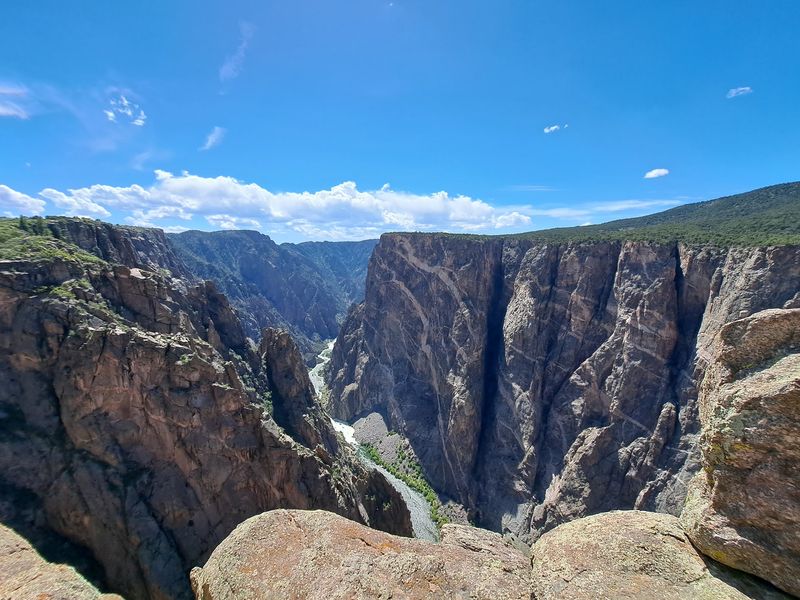
The South Rim of Black Canyon of the Gunnison gets the crowds and the gift shop, but the North Rim at 7295 Black Canyon Road in Crawford keeps things considerably more honest. Fewer visitors, a quieter road, and official stargazing locations at Chasm View Nature Trail and Kneeling Camel Overlook make this one of the most rewarding dark sky experiences in Colorado without requiring any special permits or advance reservations.
The canyon itself is one of the darkest natural features in the American West, a 2,000-foot-deep slot of rock that absorbs light rather than reflecting it. Standing at the rim and looking up while that void stretches below you creates a sensation that is equal parts thrilling and grounding.
The park permits night-sky viewing at all hours, so the only limit is how long you can stay awake.
North Rim Road and trails were confirmed open for the 2026 summer season, and August puts you in the heart of the clearest stretch of the year. The North Rim Campground is small and fills up, so booking early is a genuine recommendation rather than a polite suggestion.
Crawford is a tiny town with limited services, so arrive with everything you need. The payoff is a sky and a canyon that together feel like they belong to a different, better planet.