
How Does A 48-Foot Michigan Weathervane Still Point Into The Wind?
I have driven past Montague a dozen times without stopping, and every single time I regretted it. My curiosity finally won last summer when I pulled off the highway to follow the signs toward the waterfront.
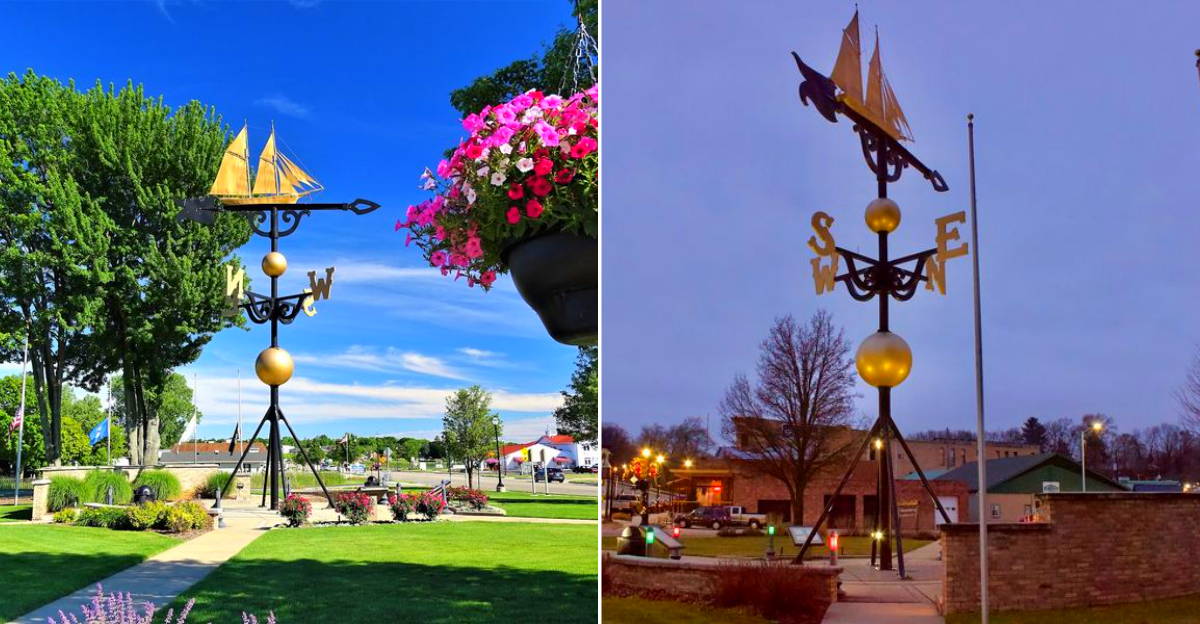
There it stood on the shore of White Lake, a towering aluminum arrow crowned with a replica lumber schooner. Forty-eight feet tall, fourteen feet long, over four thousand pounds of hand-formed metal that actually rotates with the wind.
I stood underneath and watched the whole structure pivot on a calm afternoon breeze. A weather station sits inside the base.
The schooner on top honors the Ella Ellinwood, a real ship that wrecked on Lake Michigan in 1901.
The whole thing felt impossible and practical at once, a working instrument dressed as roadside spectacle. I walked around it three times. On Michigan’s western shore, a giant still reads the sky.
Notice The Balanced Shape
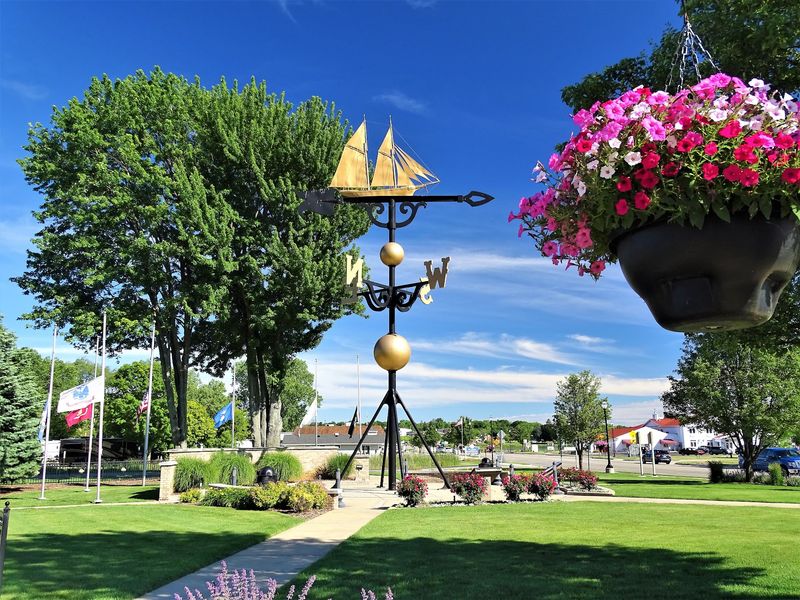
A weathervane behaves like a simple lesson in balance, only here the classroom is enormous. The pointed front is lighter, while the tail section is heavier, so the wind pushes the broader rear area and swings the arrow until the nose faces the incoming air.
That basic rule works whether the vane is tiny on a barn or towering above Montague.
Kids grasp the idea fast when they spread their arms and pretend to turn with the breeze. Standing below the schooner, you can picture the wind pressing harder on one side than the other.
For a better look, walk around the base and study the arrow shape before checking which way nearby flags are blowing that same afternoon too.
Business 31 Delivers You To The Giant Arrow
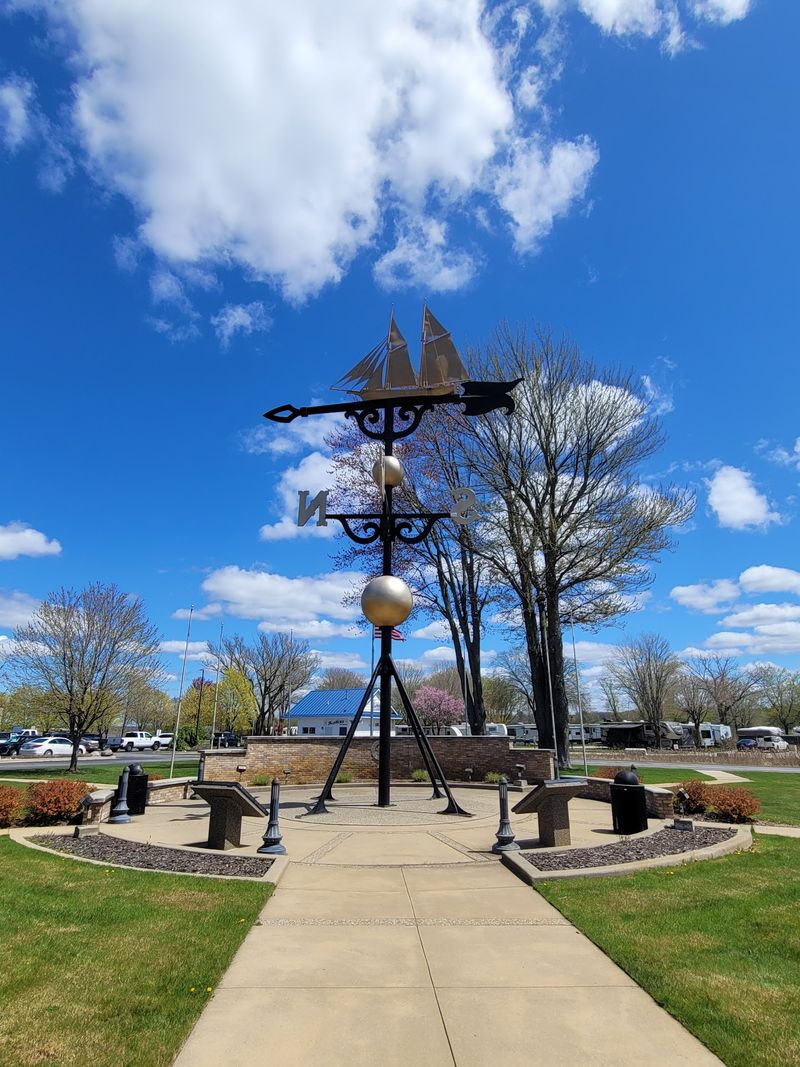
The World’s Largest Weathervane stands in Ellenwood Park at the corner of Dowling Street and Water Street in downtown Montague, Michigan. Business 31 is the key approach, running along Water Street north of the intersection and across the causeway toward Whitehall to the south.
Coming from Whitehall, stay on Business 31 across the causeway and into Montague, where the route meets Dowling Street beside Ellenwood Park.
From the north, Business 31 follows Water Street straight toward the same corner, with the towering schooner-topped weathervane visible well before you reach it.
Find a legal parking space nearby in downtown Montague and finish the short trip on foot. The weathervane stands directly inside Ellenwood Park at the intersection, with pedestrian access from the surrounding streets.
Respect The Metalwork
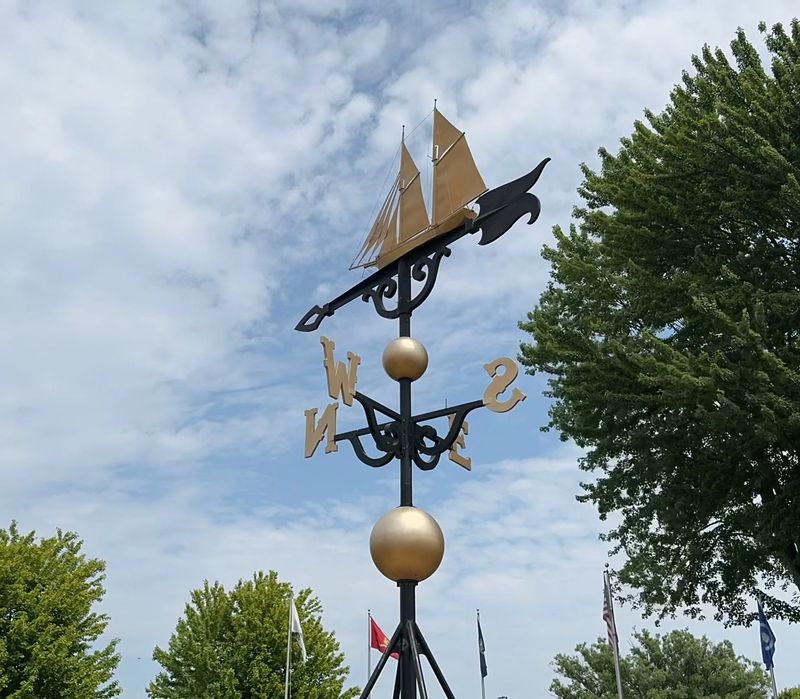
Steel and aluminum give the weathervane its quiet superpower. Those metals are strong enough to handle years of outdoor exposure, yet the mix helps keep parts from being needlessly heavy at the front.
At about 4,300 pounds total, the structure is massive, but smart material choices help that mass stay workable instead of stubborn.
Big objects do not move well unless their weight is managed with care. Here, strength and balance work together, letting the vane hold its shape while still responding to wind.
I like looking up at the schooner and remembering it is not a flimsy prop. It is a serious piece of metalwork designed to survive weather and keep functioning in public view for many seasons ahead.
Use The Height
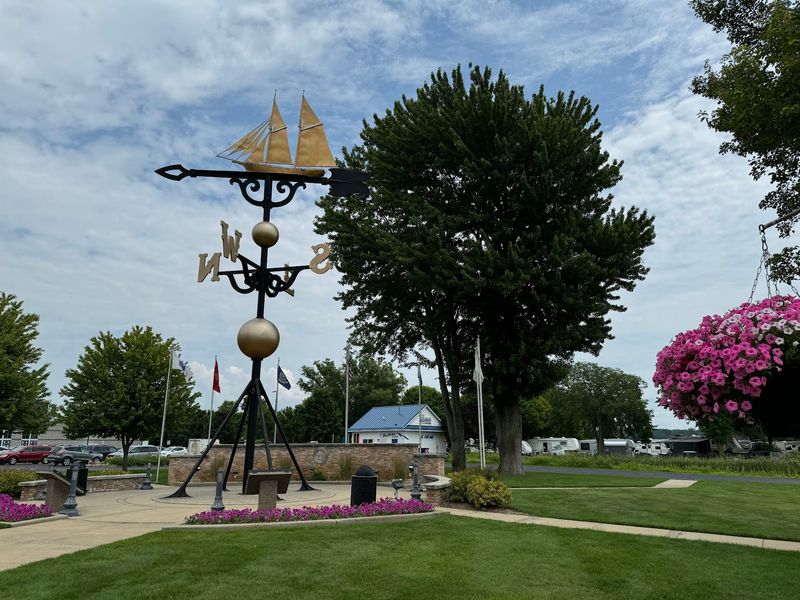
Height does more than impress passing drivers. By reaching 48 feet into the air, the weathervane sits above many ground-level obstacles that can break up airflow, such as nearby cars, small buildings, and street activity.
Cleaner wind means the arrow gets a truer signal and is less likely to twitch from every little swirl.
That tall profile also makes the movement easier for visitors to read from a distance. On my first stop, I found myself stepping back just to take in the full outline against the sky.
Try viewing it from different spots around Ellenwood Park. A clear angle helps you see both the direction letters and the way the schooner-topped arrow lines up with the breeze that day.
Study The Schooner Silhouette
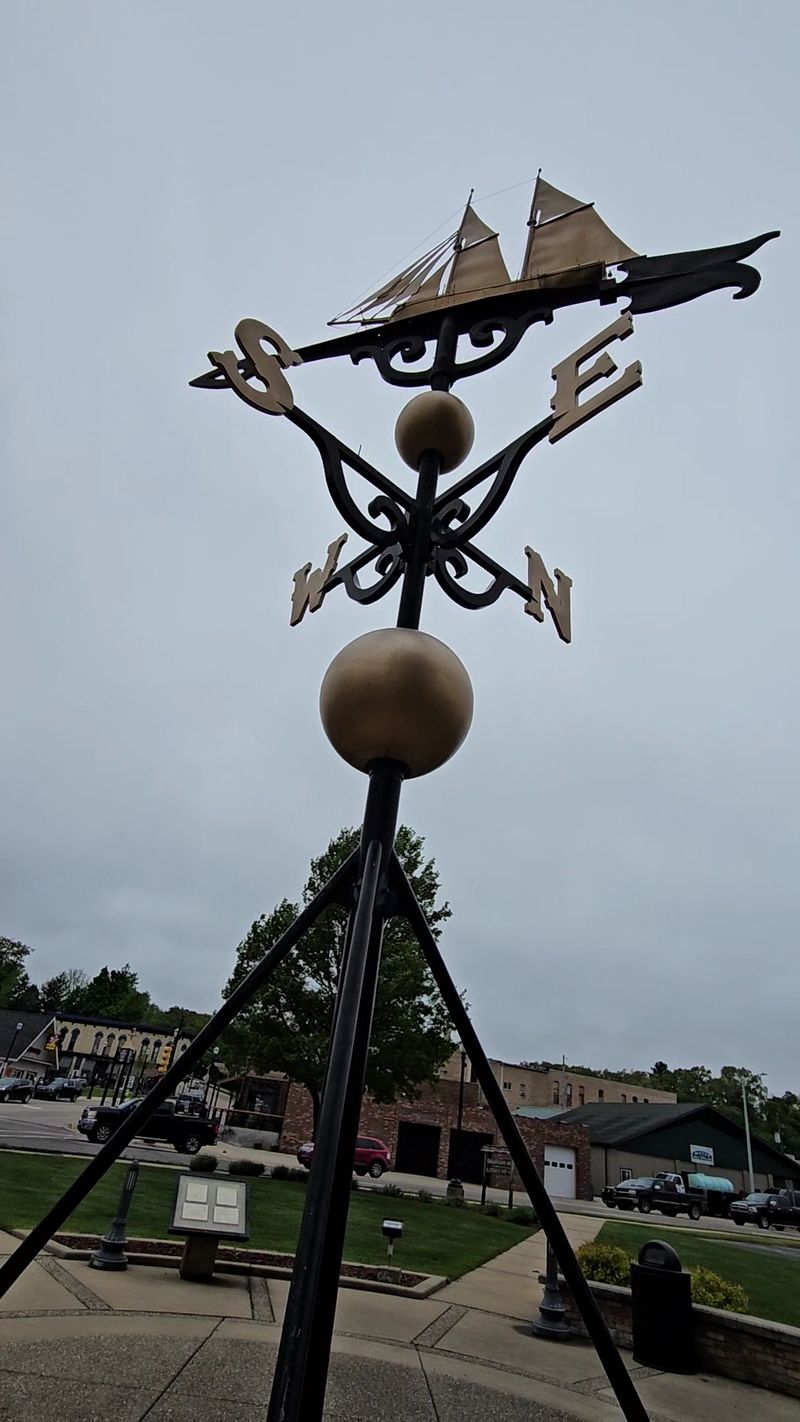
The ship on top is not just decoration, and that makes the whole mechanism easier to understand. A replica of the lumber schooner Ella Ellenwood sits on the arrow, giving the vane a larger, carefully shaped form for the wind to act on while tying the monument to Montague’s maritime past.
Function and storytelling meet in one clever silhouette. Looking up, you notice the schooner first, then the idea clicks. A weathervane needs a shape the air can push, and this historic vessel provides it beautifully.
The original Ella Ellenwood had real connections to White Lake, so the design feels rooted rather than random. Read the plaques nearby if you want the science and the memory in the same stop.
Check The Base Too
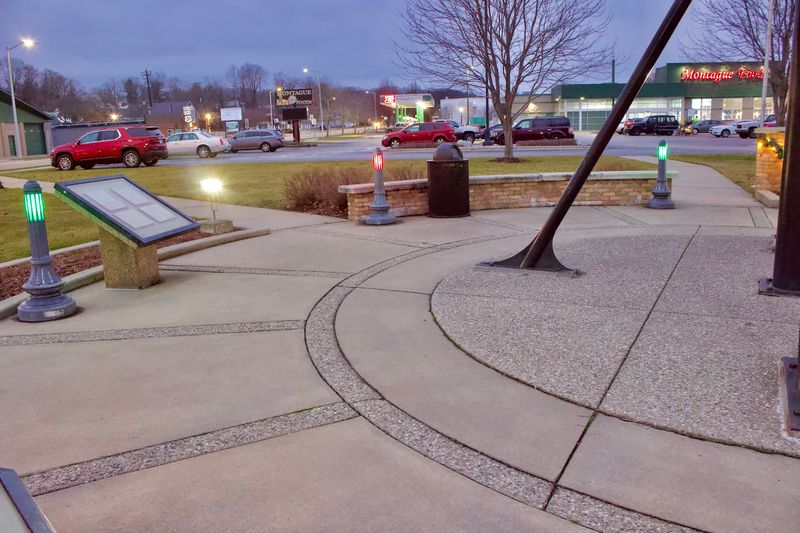
One of the sneakiest details sits below eye level. The base houses a working weather station, which turns the landmark into more than a giant pointer and gives visitors a direct link between the moving arrow above and measurable local conditions below.
It is a neat reminder that weather is not abstract when you are standing in the middle of it.
Because of that setup, the stop feels educational without feeling stiff. You can watch the vane, notice the breeze on your face, and connect both to instruments in the base.
Families seem to linger longer when there is something to compare and discuss. Bring a kid, or just your curiosity, and the corner starts acting like a science room.
Read The Wind Like A Local
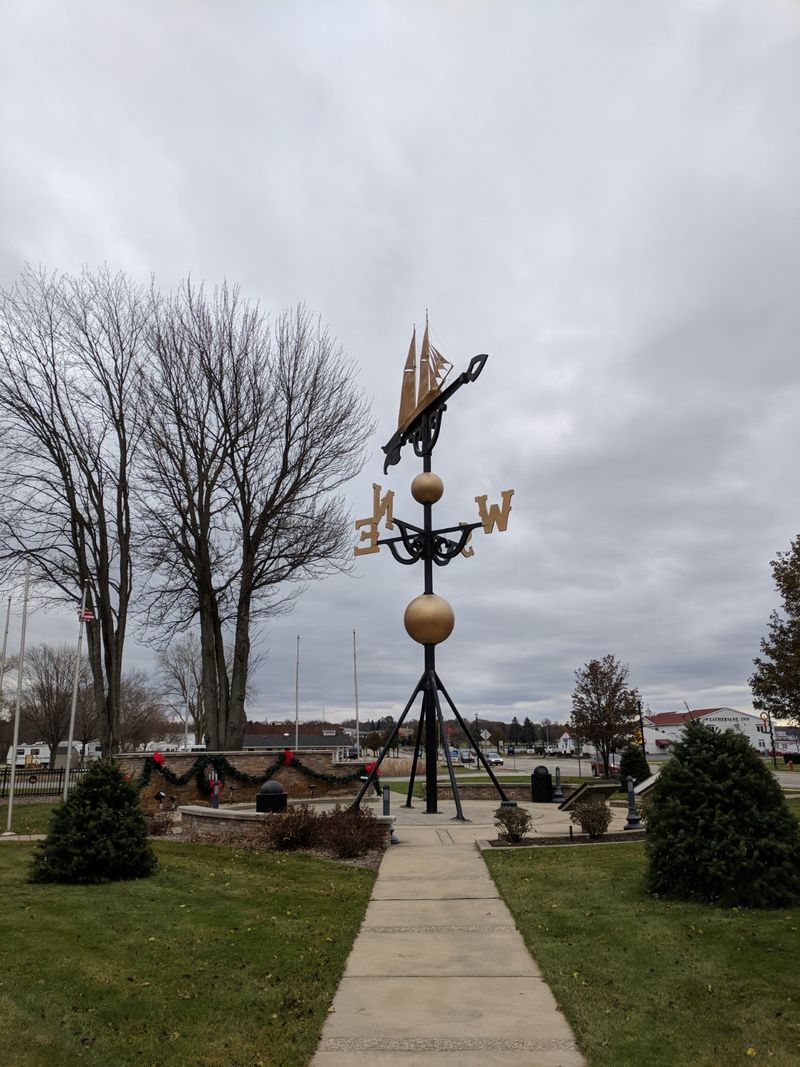
Wind reading becomes more interesting when the tool is larger than many trees. In Montague, the arrow still performs its original job, pointing into the incoming wind so you can tell direction at a glance instead of guessing from moving leaves alone.
That simple clue can sharpen your sense of weather very quickly.
Local lore says easterly winds often hint at stormier conditions here, while westerly winds can bring calmer weather. Even if you are not a forecast expert, watching the vane gives you a practical way to notice patterns.
Stand for a moment, check the arrow, then compare it with clouds, temperature, and the feel of the air. The lesson sticks better outdoors than on a phone screen today.
Give Yourself Room To Observe
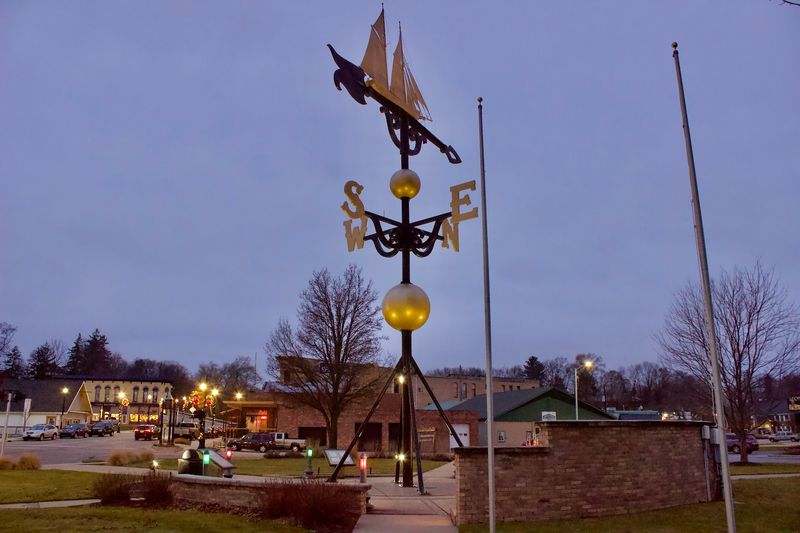
A roadside landmark works best when people can actually stop and study it. Ellenwood Park makes that easy, with benches, an ADA accessible cement path, and free nearby parking, so visitors can spend minutes watching the vane instead of just craning their necks from traffic.
Good access matters because movement is easier to understand when you are not rushed.
The setting also gives the giant arrow breathing room. You can circle a bit, read plaques, and see how the structure relates to the town around it.
I appreciated that the stop felt simple rather than staged. Park nearby, walk up slowly, and let your eyes adjust from storefront scale to sky scale.
The engineering makes sense once you settle in.
Remember The Town Behind It
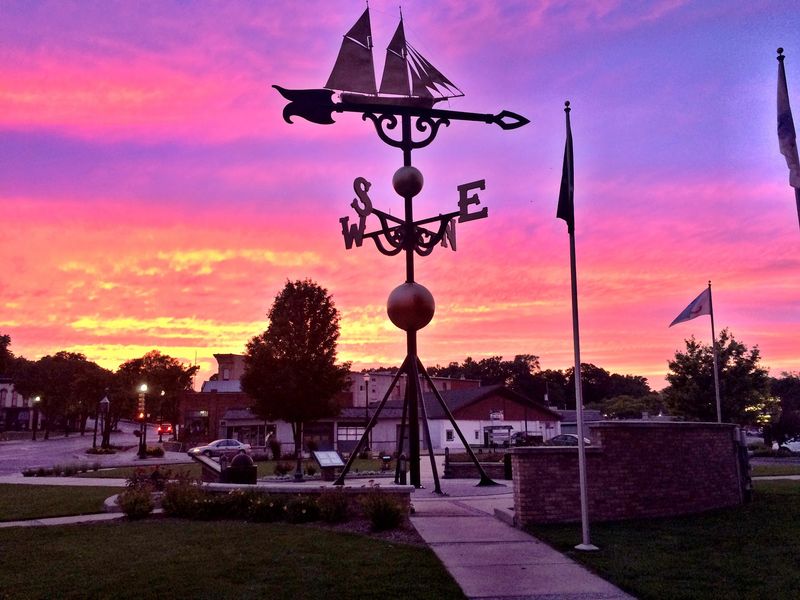
Community pride helps keep unusual landmarks alive, and you can feel that here. The weathervane was built in 1984 by Whitehall Metal Studios, Inc. and donated to the city, which explains why it feels less like novelty and more like a project with staying power.
People do not usually care for decades about objects that have no story behind them.
That local investment matters because maintenance and attention are part of long-term function. A giant vane that turns correctly needs more than a start.
It needs a place in the town’s identity. Standing there, I got the sense that Montague treats it as landmark and lesson.
When a community values a structure, accuracy becomes part of pride, not just luck.
Compare It With Nearby Clues
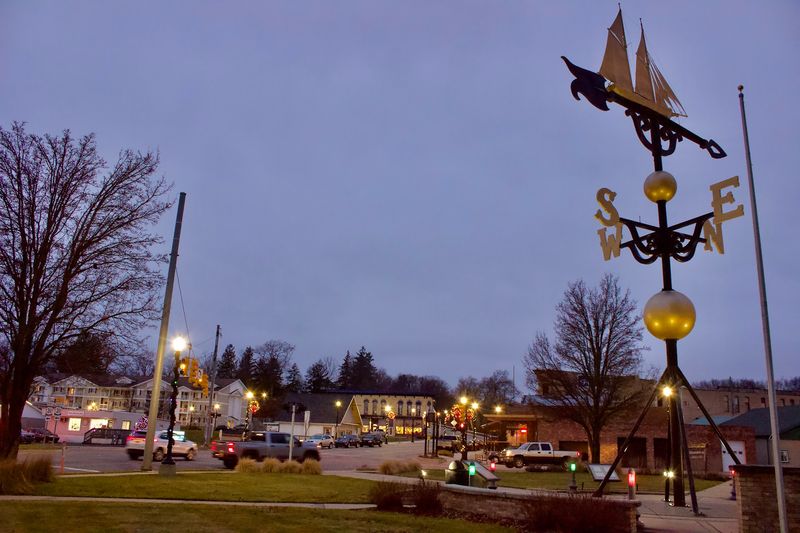
Sometimes the best way to trust a huge weathervane is to test it against smaller clues. Look at tree branches, a flag, drifting clouds, or the feel of air on your cheek, then glance up at the arrow and see if they agree.
Because the vane is high and balanced, it often gives a cleaner answer than objects closer to the ground.
That comparison game makes the stop more fun. Instead of taking photo and leaving, you become part observer and part weather student.
I found that the arrow’s alignment made nearby fluttering signs seem nervous by comparison. If conditions are shifting, wait a minute or two. Watching the vane settle tells you as much as watching it move.
Visit In Different Seasons
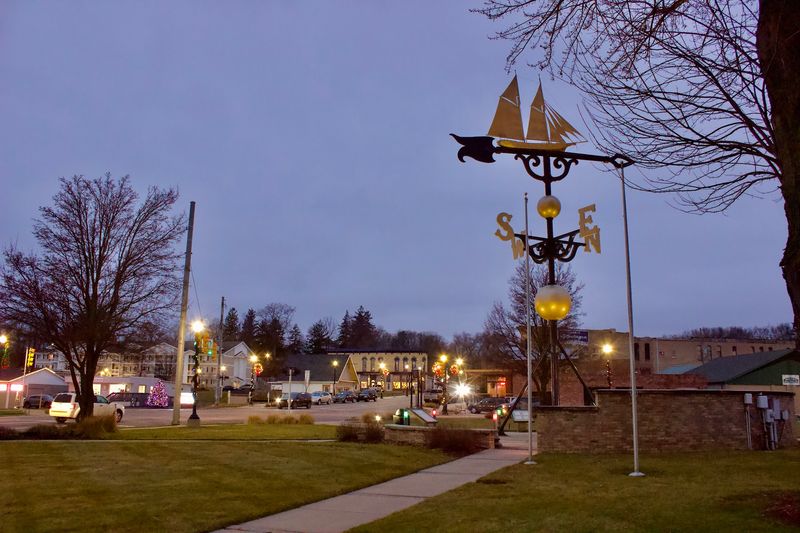
Season changes give the weathervane a different personality without changing its job. On a winter day, the metal silhouette can look crisp and severe against a pale sky, while summer greenery around Ellenwood Park softens the scene.
Either way, the same engineering keeps working, turning wind into something you can see instead of merely feel.
Because the landmark stands near the southern end of the Hart-Montague Rail Trail and close to downtown, it fits easily into a walk. That makes it useful as both destination and reset point.
Start here, watch the arrow for a minute, then explore the town on foot. Returning later can be satisfying if the wind has shifted and the schooner is facing a new direction.