
This Illinois Nature Boardwalk Winds Through A Wetland Most Drivers Speed Right Past
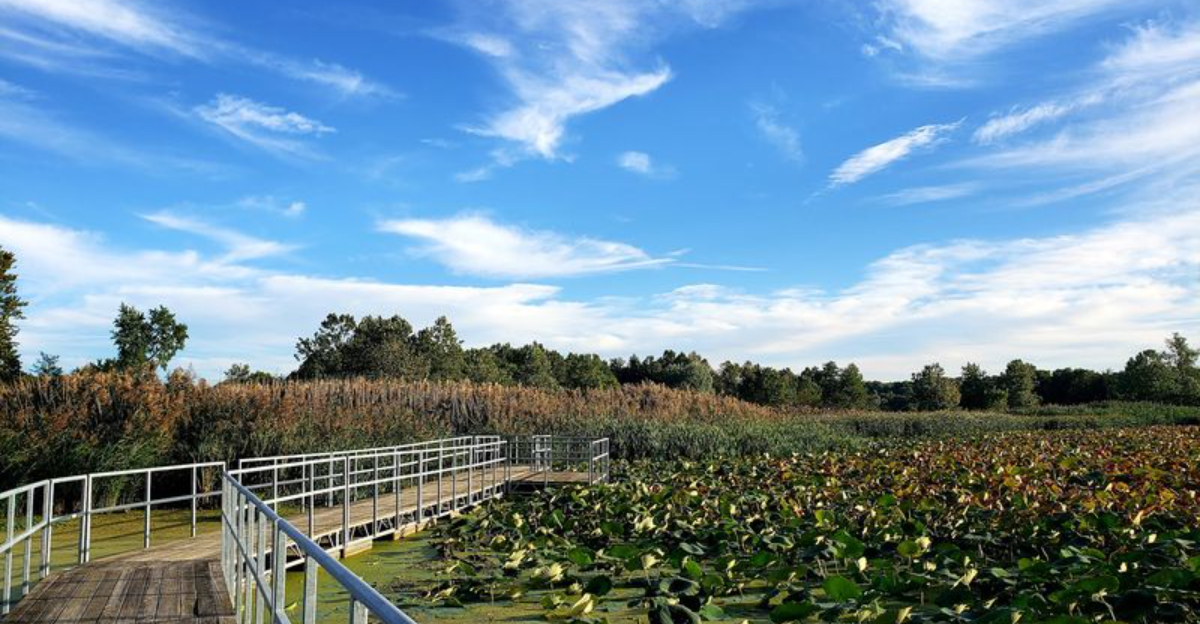
Tucked near the north end of Lake Vermilion in Danville, Illinois, Heron County Park offers a 950-foot floating boardwalk that crosses a genuine wetland habitat. The park is home to a large great blue heron rookery, along with turtles, waterfowl, and dozens of other species that show up depending on the season.
Getting out there requires no special gear and no tolerance for mud, since the boardwalk keeps your feet above the marsh. Whether you have an hour or a full afternoon, the wetland rewards visitors who slow down and pay attention.
Heron County Park offers a documented wetland stop near Danville
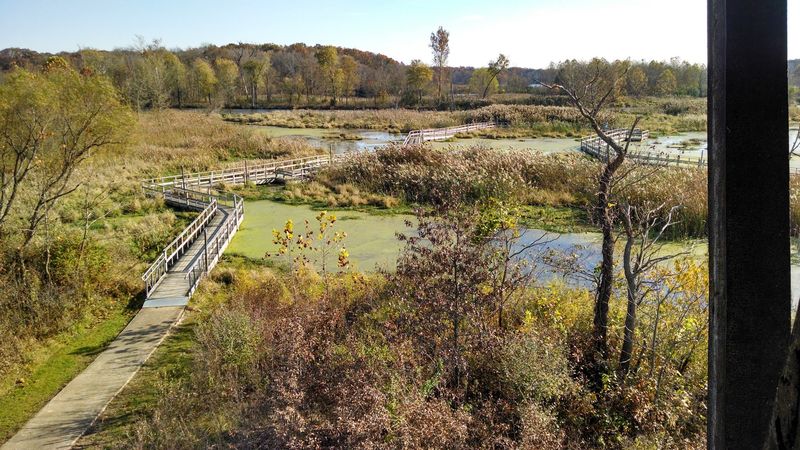
Heron County Park sits near the north end of Lake Vermilion in Danville, Illinois, and is reached from West Newell Road. The park is managed by the Vermilion County Conservation District, which promotes it as a wetland wildlife destination built around a floating boardwalk and a timber-framed observation tower.
The district’s Heron County Park page describes the site as open from early morning to dusk daily and notes that the wetland was formed after Lake Vermilion’s water level was raised in 1992.
Before that change, the low-lying area near the lake’s north end was different in character. The rise in water level created the shallow wetland habitat that now supports cattails, open water, and the mix of birds and mammals the park is known for.
The conservation district did not necessarily engineer the wetland itself, but it manages the park that surrounds it.
Visitors planning to drive out should know that public listings use slightly different street-number formats for the park’s address. The Danville Area Convention and Visitors Bureau lists the address as 16000 Old West Newell Road, while the district’s own materials reference West Newell Road and a contact number of 217-442-1691.
Confirming the precise GPS address before you leave home is a reasonable precaution, since the formats differ enough to cause confusion with some navigation apps.
The park is a documented destination with real wildlife infrastructure, not simply a scenic pullover. The boardwalk, observation areas, and tower give visitors structured places to stand, sit, and watch, making it a worthwhile stop for families, casual birders, and anyone curious about Illinois wetland habitat.
The floating boardwalk crosses wetland habitat on an easier route
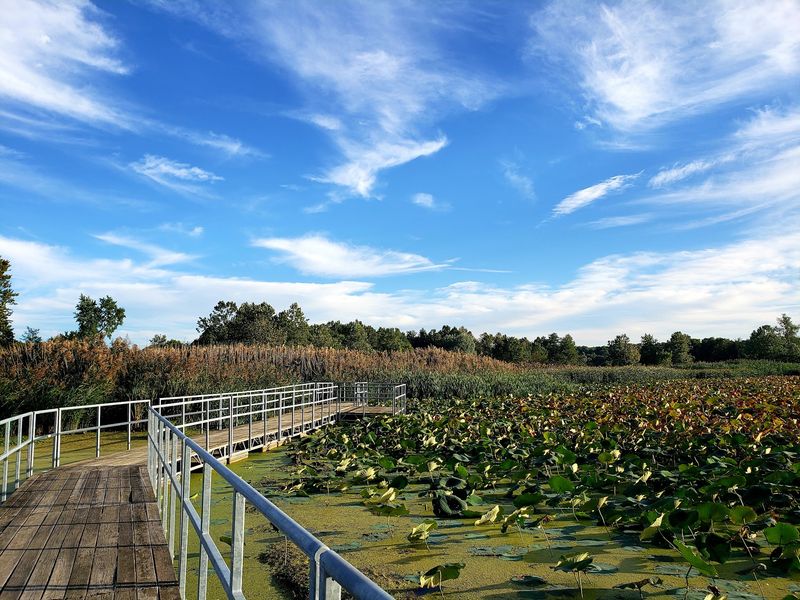
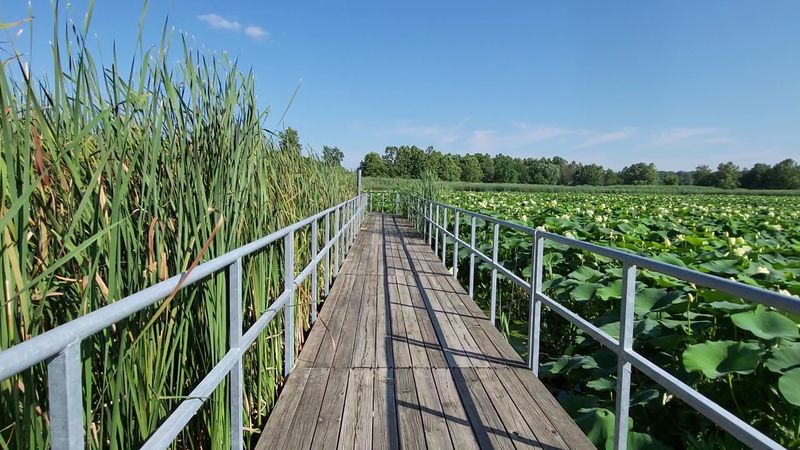
The centerpiece of Heron County Park is a 950-foot floating boardwalk that crosses wetland habitat near the north end of Lake Vermilion. Because the structure floats on the water’s surface rather than rising high above it on fixed pilings, visitors get a close, ground-level perspective on the marsh without ever stepping into soft or saturated soil.
The district’s park page describes three observation areas along the route, each with benches where visitors can stop, sit, and scan the water and vegetation at a relaxed pace.
The floating design does keep feet dry and avoids the need to navigate muddy ground within the wetland itself. That said, conditions on the approach path and on the separate adjoining nature trail can be different after rain.
Those surfaces sit on land near an oxbow and open-field boundary, and they do not carry the same protection against wet or soft footing that the boardwalk provides. Closed-toe shoes with some grip are a practical choice, particularly if rain has fallen recently.
The district’s recreational opportunities listing describes the boardwalk as handicapped accessible, and the Vermilion County Parks brochure calls it ADA and universally accessible. The visitor bureau similarly notes handicapped accessibility.
Taken together, these descriptions are encouraging for visitors with mobility considerations, though none of the available sources provides current detailed specifications for railing dimensions, surface grades, turning areas, or restroom access. Anyone with specific accessibility requirements should contact the district at 217-442-1691 before visiting to get current, accurate information.
The boardwalk is designed to be walked at a comfortable pace, but rushing through it misses the point. The observation areas are where most wildlife encounters happen, and the benches make it easy to linger without wearing yourself out.
The wetland creates chances to see herons, turtles, and other wildlife
The species list associated with Heron County Park is one of its strongest selling points. The district’s recreational opportunities page names Canada geese, mallards, wood ducks, kingfishers, green herons, great blue herons, egrets, bald eagles, songbirds, and seasonal migrants as possibilities, along with mammals including beavers, muskrats, rabbits, groundhogs, river otters, and turtles.
Each of those species has been reported in the park’s wetland habitat, which means visitors may encounter them, not that any particular animal will be present on a given day.
The park contains a large great blue heron rookery, described by the district as one of three large rookeries in Vermilion County. A rookery is a nesting colony where herons return year after year, and its presence near the boardwalk is a genuine draw for anyone who wants to observe these birds at close range during the nesting season.
The best window for rookery activity is generally late winter through early summer, when the birds are actively building nests, incubating eggs, and raising chicks. Outside that window, herons may still be present, but rookery activity will be reduced or absent.
Sightings depend on a combination of factors that visitors cannot control, including season, water levels, time of day, weather, and the animals’ own behavior. Early morning visits tend to produce more bird activity than midday stops, and spending time quietly at the observation areas gives wildlife a chance to return after any disturbance from foot traffic.
Visitors should stay on the boardwalk and observe animals from a comfortable distance. Walking toward the rookery, attempting to photograph nesting birds from below, or leaving the designated route can cause real harm to nesting birds and is not appropriate behavior at any time of year.
The wetland is most rewarding when treated as a place to watch, not to approach.
A patient visit makes the observation areas more useful
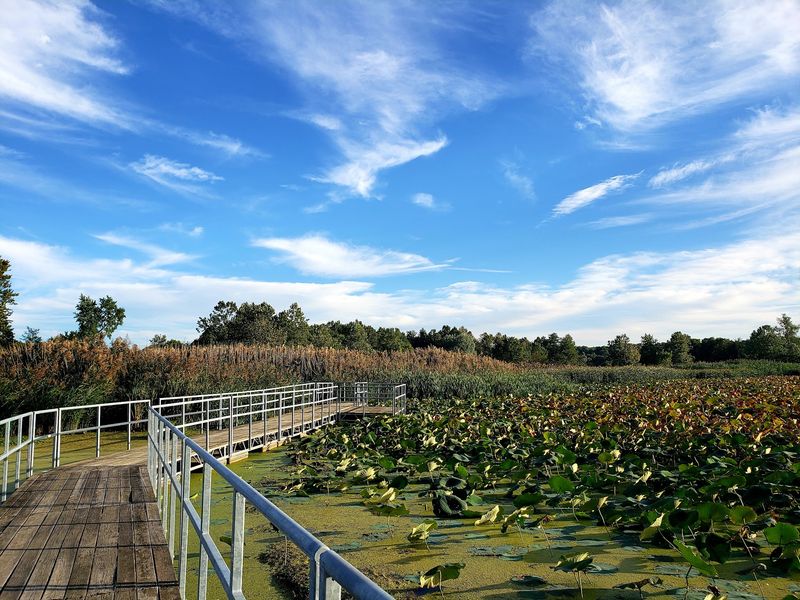
Moving slowly and stopping often produces better results at Heron County Park than treating the boardwalk as a quick loop to check off a list. Wildlife tends to retreat when people move quickly or speak loudly, and the observation areas with benches are specifically designed to give visitors a place to settle in and wait.
Binoculars make a noticeable difference, especially for birds perched in vegetation or moving across open water at a distance.
Daylight visits are the practical standard here. The park is open from early morning to dusk, and morning hours generally offer more bird activity, calmer water surfaces, and better light for viewing.
Midday visits are still worthwhile, particularly for turtles basking on logs or muskrats moving through the shallows, but the frantic pace that works in a city park does not translate well to a wetland setting.
Beyond the boardwalk, the park includes a separate self-guided nature trail that follows the wetland oxbow and open-field boundary. The district’s recreational materials describe it as approximately one-half mile, while the Vermilion County Conservation Foundation’s page refers to the Heron Nature Trail as one mile.
Those descriptions conflict, and neither source has been updated to resolve the difference. Treat it as a short walk with variable length depending on which route you follow, and plan your time accordingly rather than counting on a specific distance.
Families with younger children tend to find the boardwalk well-suited to the visit. The flat surface, the benches, and the visible water make it easy to keep kids engaged without requiring a long hike.
Bringing a field guide or a bird identification app adds a layer of purpose that helps children focus on what they are actually seeing rather than rushing ahead.
The observation tower provides a lower-level viewpoint
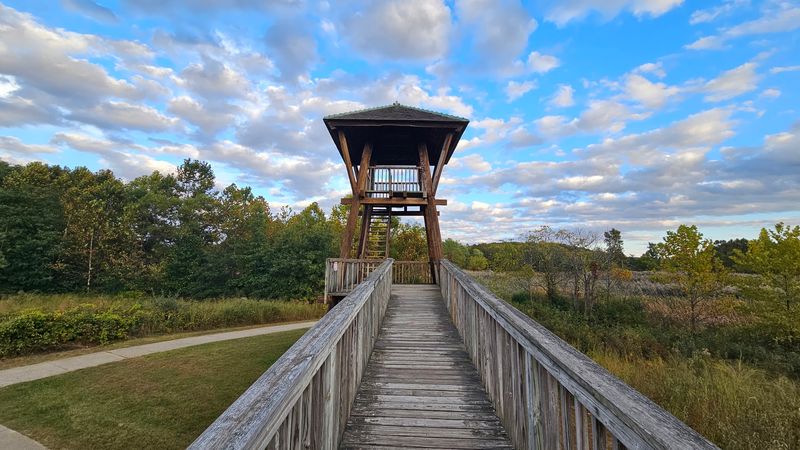
The park also features a timber-framed observation tower positioned to provide elevated views over the wetland. The district’s recreational opportunities listing notes that the tower includes an ADA-accessible ramp to its lower viewing level, making that level reachable for visitors who cannot use stairs.
The lower level offers a broader sightline across the water and vegetation than the boardwalk surface alone provides, which can be useful for spotting birds in flight or scanning a wider area of the marsh.
The upper level of the tower is a different matter. The district currently describes it as closed to the general public, with access available only during special events when park personnel are present.
Visitors should not expect to reach the top deck on a standard day trip. Planning around the lower level as the accessible viewpoint is the accurate expectation, and that level still delivers a useful vantage point for wildlife watching.
The park’s posted hours run from early morning to dusk daily, according to the district’s Heron County Park page. Those hours apply to the boardwalk and tower as well as the rest of the park, so arriving well before dusk leaves enough time to walk the boardwalk, use the observation areas, and visit the tower without feeling rushed.
One practical consideration worth flagging: the district announced in its Summer 2025 newsletter that boardwalk decking replacement was planned in stages, with roughly one-quarter of the work expected to be completed that year. The boardwalk may still be promoted as open, but active repair sections or temporary closures are possible.
Calling ahead or checking the district’s current website before your visit is the most reliable way to confirm that the full route is accessible on the day you plan to go.
Seasonal closures and wetland conditions require attention
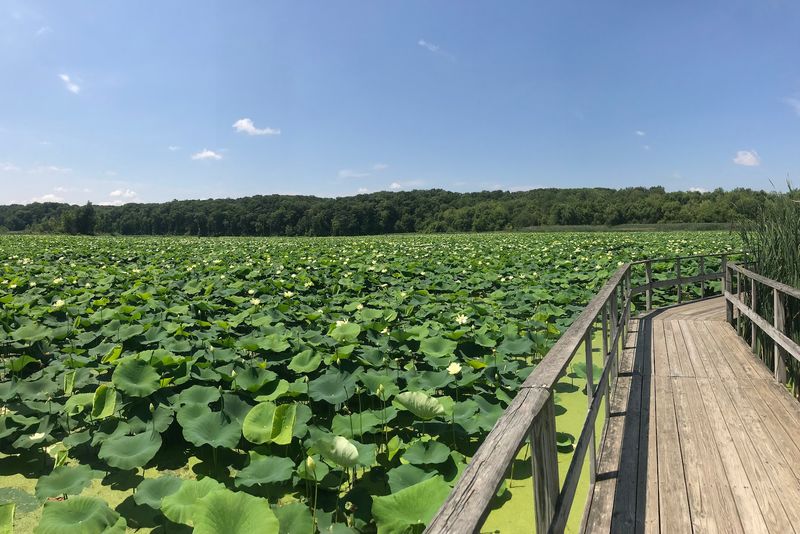
Waterfowl hunting is permitted in designated areas of Heron County Park during hunting season. When hunting is active, the district posts signs, and the separate north-side hiking trail may close to non-hunters.
The district’s recreational materials distinguish the boardwalk from that north-side trail, so the floating boardwalk and the hiking trail are not the same route. Visitors planning to use the nature trail during fall should check with the district before arriving to find out whether it is currently open, since hunting-season closures can be posted on short notice.
Wetland settings bring insects and ticks in addition to wildlife. Mosquitoes are common near open water and tall vegetation, and ticks are active in the grass and brush adjacent to the boardwalk and nature trail.
Illinois Department of Public Health guidance recommends using EPA-registered insect repellent, wearing long sleeves and pants, staying near the center of trails rather than brushing against vegetation at the edges, and checking yourself, your clothing, your gear, and any pets thoroughly for ticks after leaving the park. Tick checks should happen before you get back into the car, not hours later at home.
Wildlife conduct matters as much as personal safety at a site like this. Illinois Department of Natural Resources wildlife safety guidelines advise keeping a safe distance from all wild animals, never feeding or attempting to handle them, and moving away slowly and calmly if an animal approaches or behaves aggressively.
Turtles on logs, herons at the water’s edge, and muskrats in the shallows all benefit from being watched from where you stand rather than approached for a closer look or a photograph.
Remaining on designated routes protects both you and the habitat. Stepping off the boardwalk into wetland vegetation disturbs nesting areas, damages plant structure, and can expose you to unstable footing that the boardwalk was specifically designed to avoid.
Following posted signs and staying on marked paths is the single most effective way to protect the site for future visitors while also keeping yourself safe.
Check current conditions before treating the park as a quick day trip
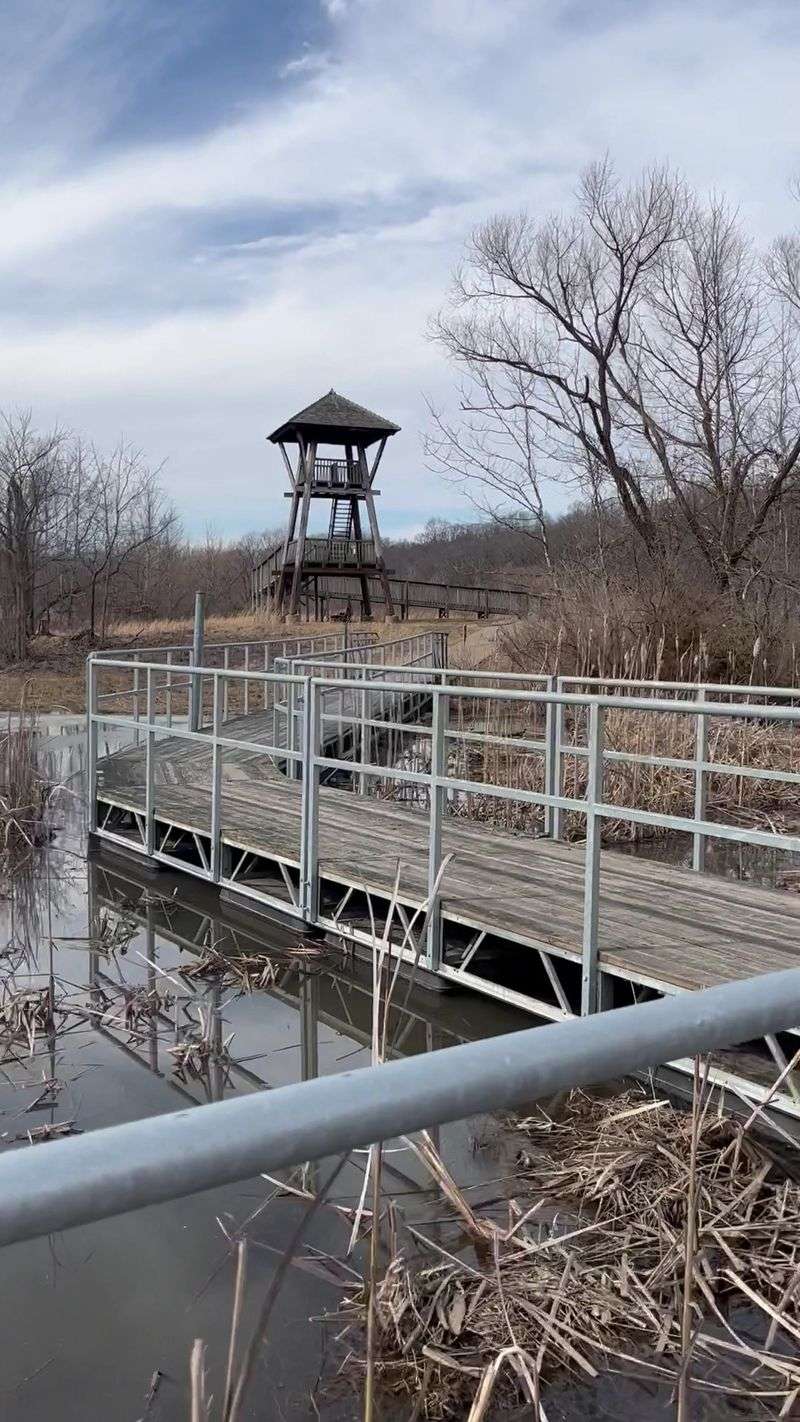
Heron County Park provides a documented, relatively straightforward route into wetland habitat with genuine opportunities to observe great blue herons, turtles, waterfowl, and other wildlife. The district’s park page and recreational listings back up the core appeal: a 950-foot floating boardwalk, three observation areas, a heron rookery, and a timber-framed tower with accessible lower-level viewing.
The appeal is real, but so are the variables. Sightings depend on season and conditions.
A 2023 district report recorded 23,450 visitors to the boardwalk and tower, which means the park draws a meaningful number of people and should not be assumed to be empty or overlooked. Staged decking replacement announced in the district’s Summer 2025 newsletter means portions of the boardwalk may be under repair.
Verifying current access with the district before you go is the most reliable preparation you can do.
Follow posted signs, stay on designated routes, and give the wetland and its animals the space they need to behave naturally. A boardwalk that floats at water level, surrounded by herons and cattails, does its best work when the people on it move quietly and watch carefully.