
This Michigan Restaurant Serves An Iraqi Breakfast That Most Americans Have Never Tasted
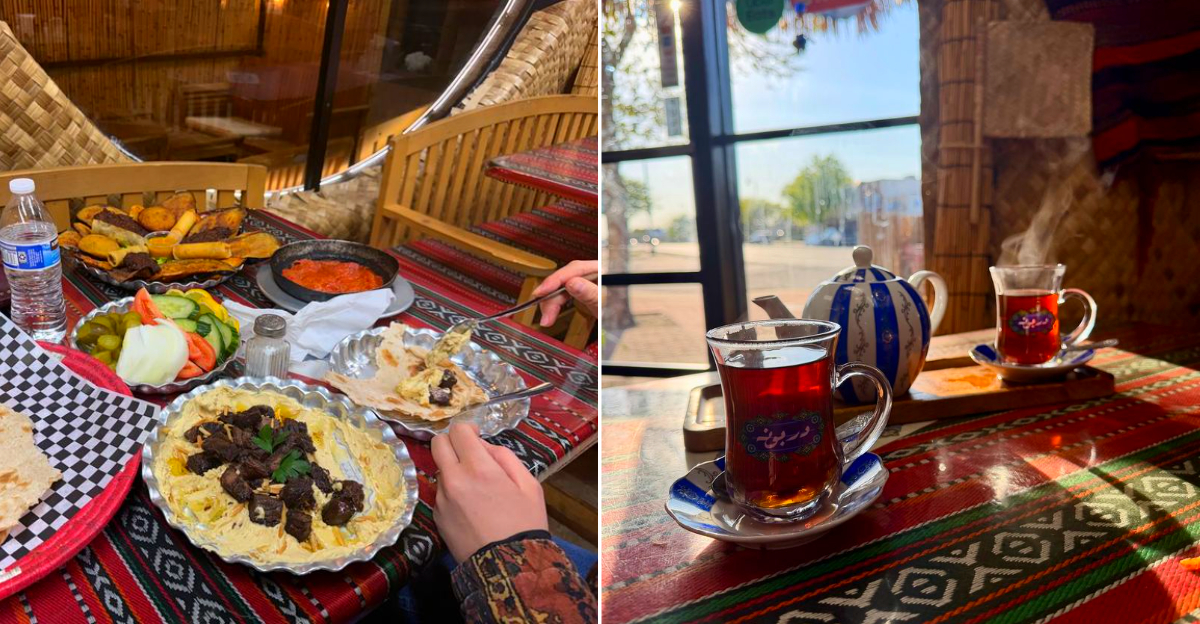
Nobody talks about Iraqi breakfast, and that is a shame. Thick clotted cream pooled with dark date syrup, torn samoon bread still warm, and spiced scrambled eggs hit differently at nine in the morning.
My first bite of kaymak made me wonder why this is not on every brunch menu in the country. The cream is impossibly rich.
The date syrup adds caramel depth that maple cannot touch.
Then there is amba, a mango pickle sauce with a sour funk that wakes your palate in ways hot sauce never will. I went back the next weekend.
The restaurant sits in one of the most Arab-American cities in the country, and the crowd reflects that.
Families share plates. Regulars greet the staff by name.
The name means doorbell in Iraqi Arabic, and the food makes you want to walk right in. Breakfast this good should not be a secret in Michigan.
Listen For Bagilla Bil Dihin
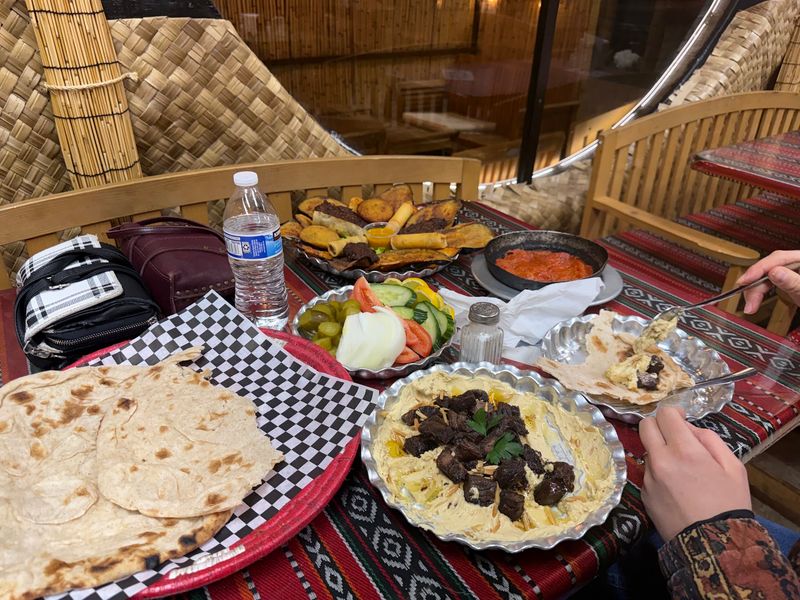
The memorable part may arrive before the first bite: hot oil or ghee can meet the beans with an energetic sizzle. Bagilla bil dihin layers Iraqi bread soaked in broad-bean broth with tender fava beans and fried eggs.
Onions and dried wild mint, called butnuge, bring lift to the hearty base.
Use bread to gather several layers at once rather than sampling every part separately. The soaked bread carries the broth, while firmer pieces offer contrast.
Break an egg yolk across the beans if you enjoy a richer, silkier spoonful.
Because the dish is filling, consider sharing it alongside lighter plates instead of ordering one for each person. Ask the staff to explain the preparation if any ingredient is unfamiliar.
Darbunah is known for helpful menu guidance, and a short explanation makes this deeply comforting Iraqi breakfast easier to understand, portion, and enjoy at an unhurried pace.
Warren Avenue Brings You Straight To Darbunah
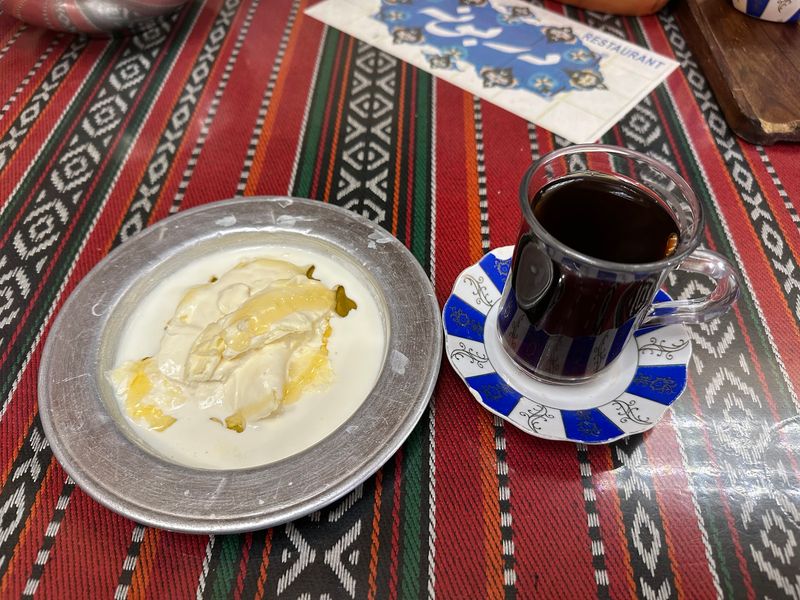
Darbunah Restaurant is located at 12745 West Warren Avenue in Dearborn, Michigan, along the busy Warren Avenue corridor on the city’s east side. West Warren provides the direct approach from either direction, with the restaurant facing the main road.
Stay on West Warren Avenue as you reach the 12700 block. The storefront comes up directly along the commercial strip, so the final approach requires no turn onto smaller neighborhood streets.
Pull in at the restaurant property and finish the short approach on foot to the entrance at 12745 West Warren Avenue.
Approach Pacha With Curiosity
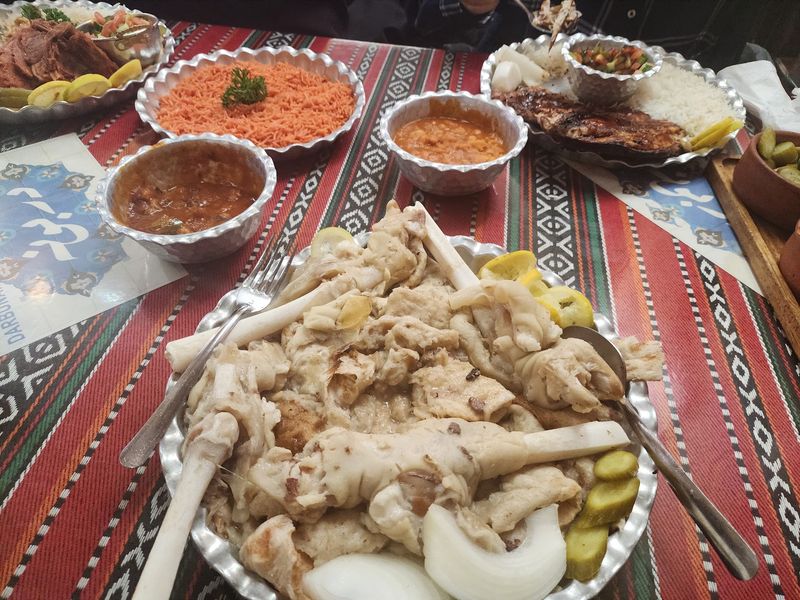
Pacha does not tiptoe onto the table. The traditional Iraqi stew can include sheep’s head, trotters, stuffed intestines, and stomach, all cooked slowly until tender.
Bread absorbs the strong, rich broth, while cheeks and tongue are often prized for their soft texture.
Newcomers should ask what the serving includes before ordering, since preparation and presentation can feel challenging without context. Try a modest shared portion first, especially if several breakfast dishes are planned.
Focus on texture and seasoning rather than letting the unfamiliar cuts decide your reaction beforehand.
In Iraq, pacha is linked with festive mornings, winter gatherings, and Friday meals, so it carries meaning beyond novelty. Eating it communally makes sense because the dish encourages discussion and comparison.
At Darbunah, treat pacha as a cultural breakfast experience, not a stunt. Curiosity, patience, warm bread, and a cup of tea are the right tools for meeting it respectfully.
Choose Makhlama For A Hearty Start
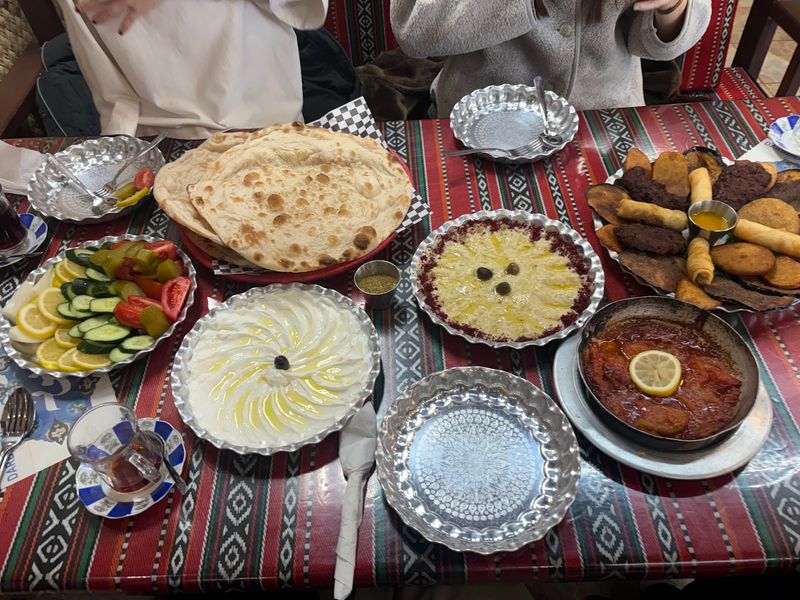
Tomatoes, eggs, and seasoned meat tumble together in makhlama, creating a breakfast that feels familiar until its bold Iraqi character comes forward. The classic preparation commonly combines ground beef with fresh tomatoes and eggs.
Darbunah also lists a liver variation, offering a stronger flavor for diners who enjoy organ meat.
Scoop makhlama with warm tanoor bread so each piece catches egg, tomato, and meat. Eating only the top layer misses the savory juices underneath.
A tangy side such as labneh can brighten the plate when the richness starts building.
Makhlama suits anyone seeking substantial morning food without beginning with pacha. Portions at Darbunah are often generous, so check the table’s total order before adding extra entrées.
I would place it near the center and let everyone tear bread, scoop, and compare bites. That shared approach keeps breakfast lively while leaving room for sweet kahi and restorative tea afterward.
Add Kabob Aroog And Eggs
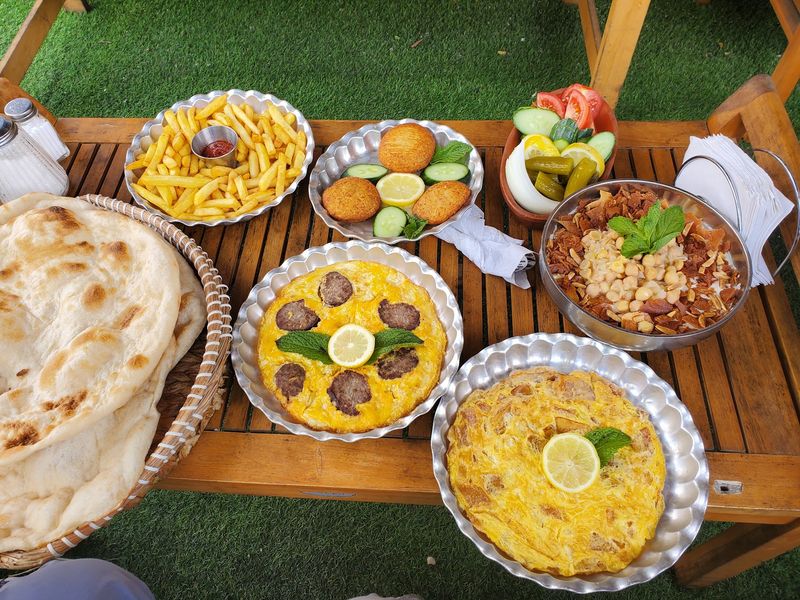
Golden edges give kabob aroog a little swagger beside softly scrambled eggs. The seasoned fried kabobs are commonly made with ground meat, providing a firm, savory counterpoint to the eggs.
Together they form one of the easiest bridges between a familiar American breakfast and Darbunah’s Iraqi menu.
Take alternating bites before folding both components into fresh bread. If a sandwich preparation is available, it may include cucumbers, tomatoes, pickles, and tangy pomegranate syrup, which introduces crunch, freshness, and a fruity sharpness.
Confirm the current options with the staff rather than assuming every preparation is served all day.
This combination is substantial, so balance it with msabaha or labneh instead of another meat-heavy plate. It also travels around a shared table neatly because the kabobs are easy to divide.
Order it for cautious diners, but do not call it plain. Careful seasoning and crisp surfaces give the dish its own confident identity.
Use Msabaha As A Reset
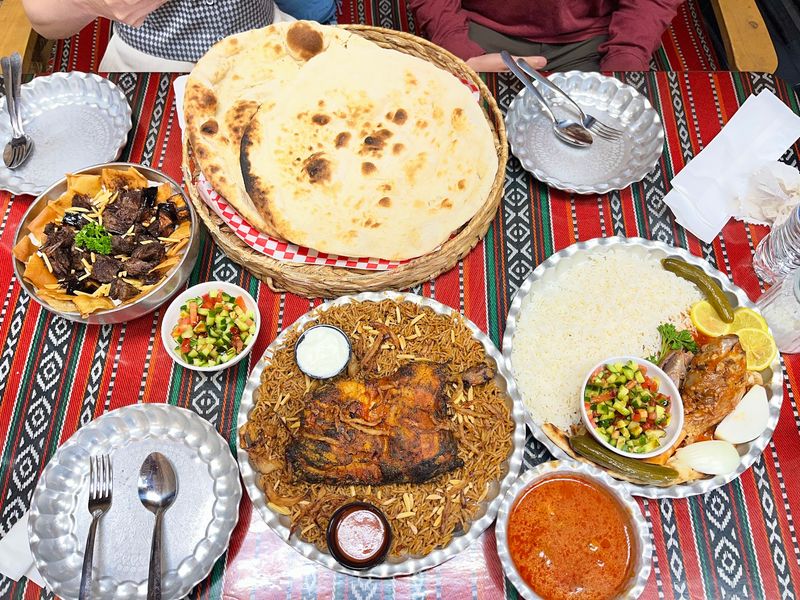
Between rich eggs and slow-cooked meat, a creamy spoonful of msabaha acts like a useful pause. This chickpea preparation often includes tahini, creating a smooth, nutty dish made for scooping with bread.
Its quiet flavor supports stronger plates without competing for attention.
Tear off a manageable piece of tanoor bread, fold it slightly, and collect the msabaha from the edge of the bowl. Small scoops help the bread stay intact and leave space for tasting other foods.
Keeping the dish near the middle encourages sharing and prevents one diner from accidentally guarding it.
Msabaha is particularly helpful when building a varied breakfast for first-time visitors. It offers recognizable chickpeas while showing how texture matters across an Iraqi spread.
Darbunah serves generous meals, so a shared order can go farther than expected. Use msabaha between bolder bites, with fresh bread replacing the fork whenever practical, and breakfast gains a calmer rhythm.
Protect Room For Tanoor Bread
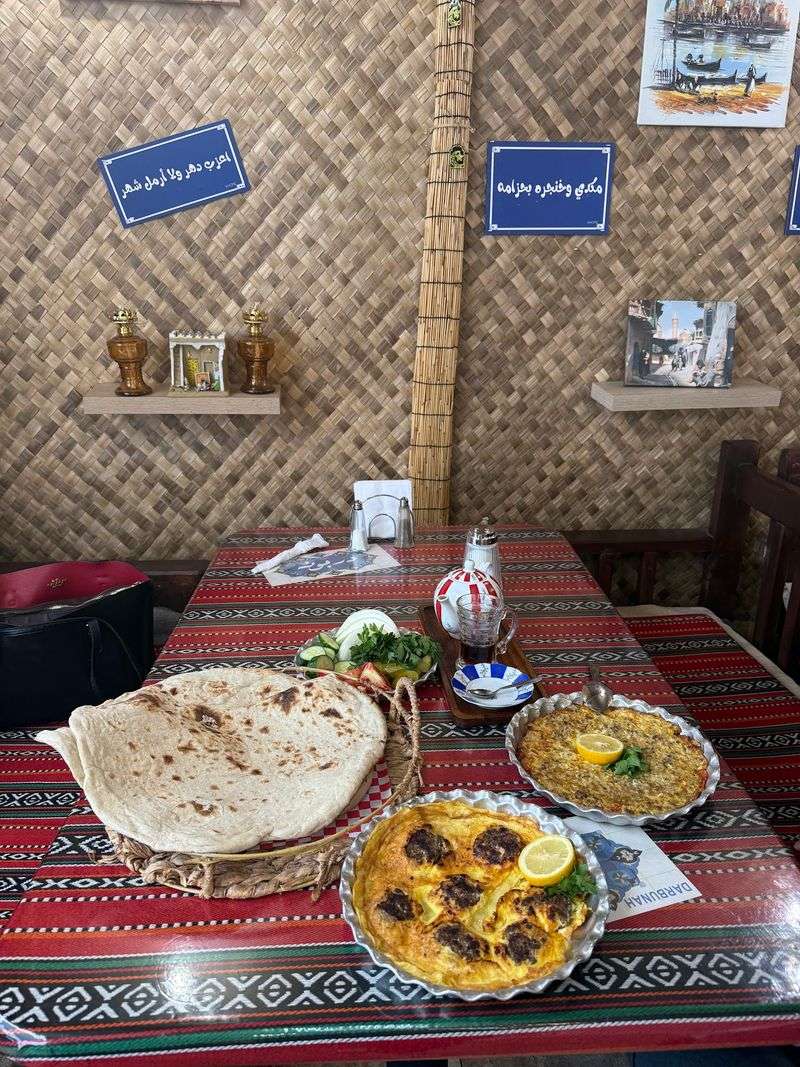
Fresh bread can disappear with comic speed once it lands on a crowded table. Darbunah’s Iraqi bread is baked in a tanoor, producing soft, pliable sections with toasted spots and a light smoky character.
It is not background decoration; it is the main tool for handling breakfast.
Use one piece for broad beans, another for makhlama, and a sturdier fold for labneh or msabaha. Bread also belongs in rich broth, especially with bagilla bil dihin or pacha.
Tear small portions as needed so unused pieces remain warm and do not crowd your plate.
Resist filling up on the first basket before the main dishes appear, tempting though that may be. The bread becomes more interesting once it carries sauce, egg, cream, or beans.
If additional bread is needed, ask while the table still has food to scoop. Few things look sadder than a beautiful bowl with no warm corner left to collect it.
Let Iraqi Tea Set The Pace
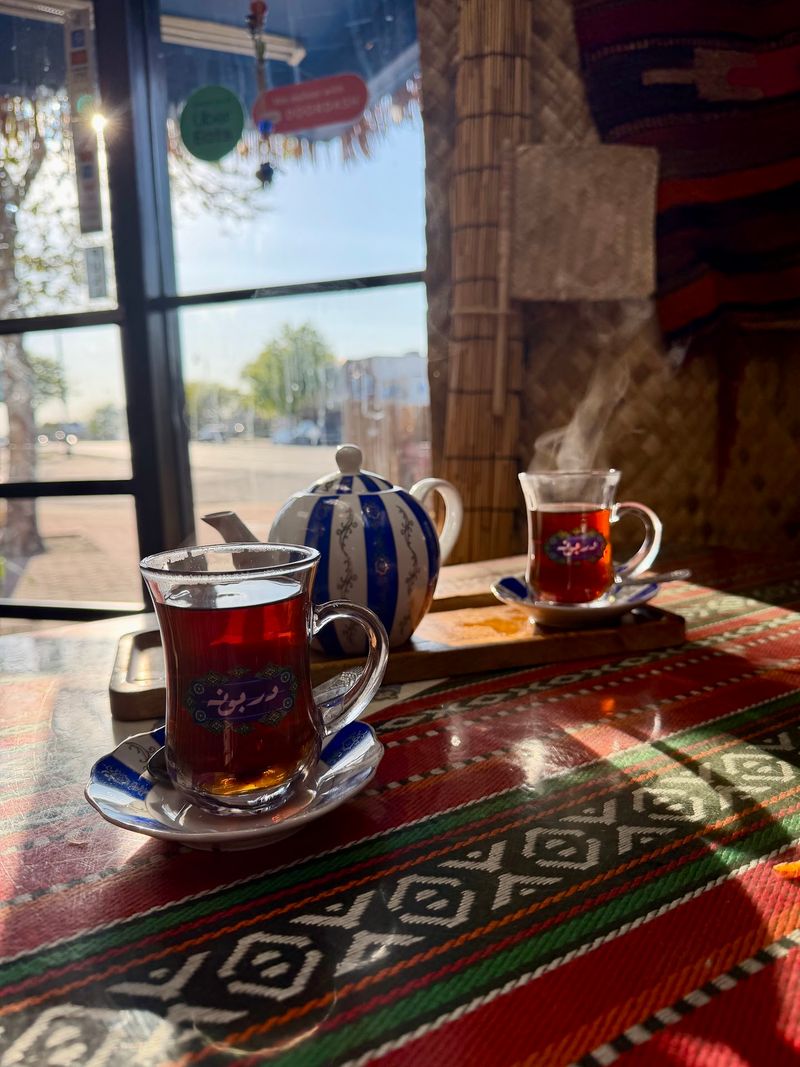
A steaming glass of Iraqi tea quietly organizes the whole meal. Its warmth works beside sweet kahi, rich qaymar, eggs, beans, and the deeper broth of pacha.
Rather than treating tea as a final drink, order it with breakfast and return to it between contrasting dishes.
Take a sip after date syrup or a fatty bite to refresh your mouth before moving onward. The pause also slows a table that might otherwise race through unfamiliar food.
Iraqi breakfast rewards attention, especially when several shared plates arrive close together.
Tea fits Darbunah’s cozy, gathering-place atmosphere and gives everyone a reason to linger. Cultural decor and occasional music can make the room feel more like a social visit than a rushed stop.
Keep the cup within reach but away from crowded serving plates. A small practical move prevents spills when bread, spoons, and enthusiastic hands begin crossing the table from every possible direction.
Brighten The Table With Labneh
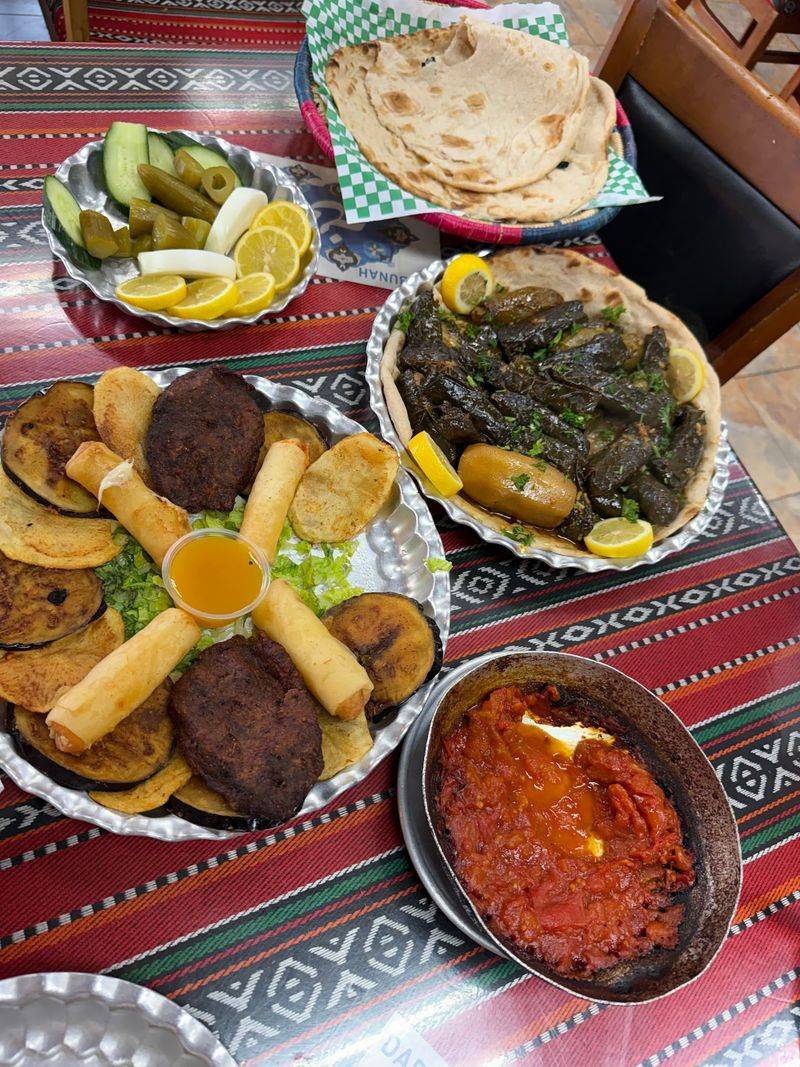
Cool labneh arrives with the useful sharpness of strained yogurt, cutting neatly through a rich breakfast. Za’atar adds earthy herbs, sumac, and sesame notes, although blends can vary.
At Darbunah, the combination makes a lively partner for warm bread and heavier egg or meat dishes.
Drag bread through the creamy center and seasoned surface together. Taking only plain labneh misses the aromatic topping, while gathering too much za’atar can overwhelm its clean tang.
A balanced swipe provides the best picture of why the pairing endures.
Place this dish near makhlama, kabob aroog, or sausage and eggs, where its cool acidity has real work to do. It can also help cautious guests settle into the meal before trying pacha or liver.
Do not mistake its simple appearance for a minor role. On a crowded Iraqi breakfast table, labneh behaves like a bright window opened in a warm, spice-filled kitchen.
Compare Foul With Bagilla Bil Dihin
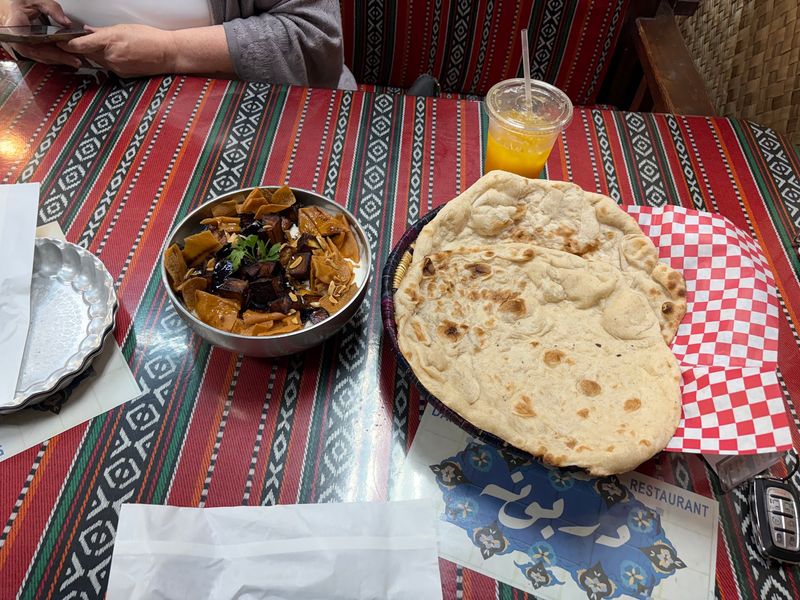
Two bean dishes on one menu need not be twins. Foul centers on tender broad beans enriched with olive oil, giving it a simpler structure than layered bagilla bil dihin with broth-soaked bread and eggs.
Ordering both for a group reveals how one ingredient can lead breakfast in different directions.
Taste the foul first, while your palate is fresh enough to notice the fruity richness of the oil. Then move toward the layered dish and compare its broth, egg, bread, and seasoning.
Fresh tanoor bread is ideal for scooping either preparation without leaving the flavorful liquid behind.
For a smaller table, choose foul when you want a wholesome side that leaves room for other plates. Select bagilla bil dihin when beans should anchor the meal.
Asking staff about portion size helps prevent excess, since Darbunah is associated with generous servings. Beans are humble, but here they deserve deliberate attention rather than automatic side-dish status.
Plan Ahead For Eggs And Sausage
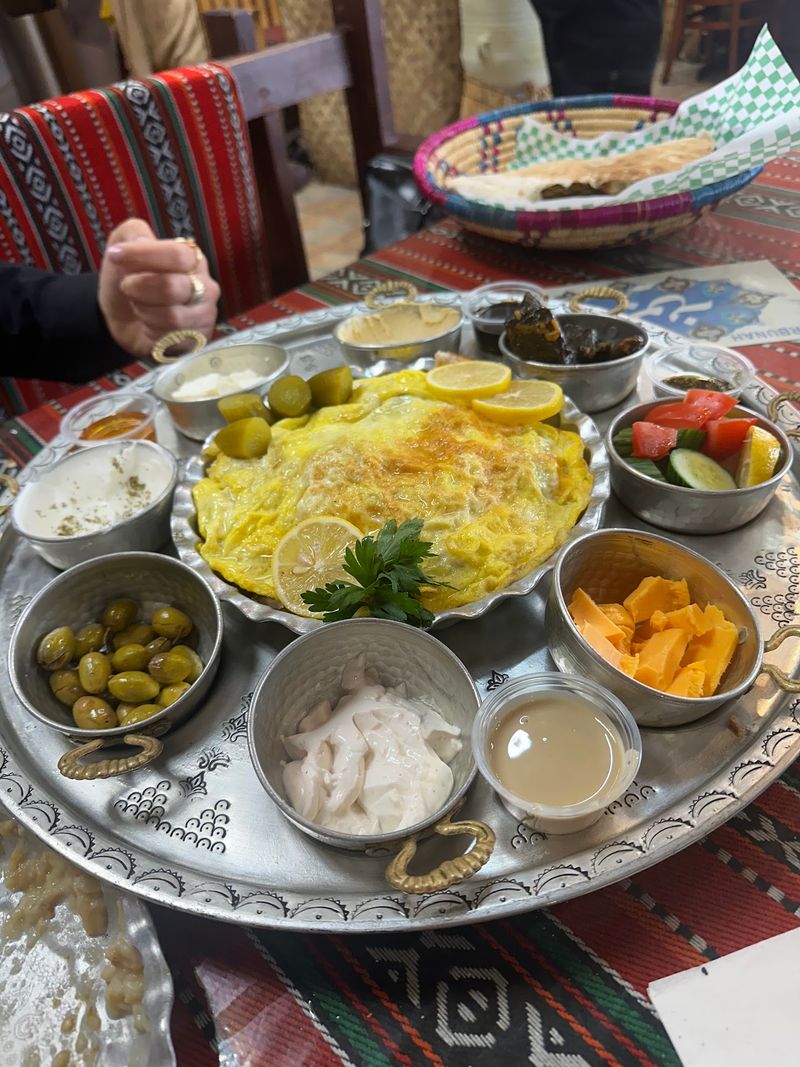
Familiar-looking eggs and sausage can be the sensible anchor when a table includes adventurous and cautious eaters. Darbunah’s version pairs scrambled eggs with savory sausage for a hearty, protein-rich breakfast.
The format feels recognizable, yet it still belongs naturally beside Iraqi bread, labneh, beans, and tea.
Share it instead of allowing the safest diner to claim the entire plate. A bite tucked into tanoor bread can be followed by za’atar-topped labneh or a spoonful of foul, gradually opening the door to less familiar combinations.
That method turns comfort food into a starting point, not a retreat.
Plan the visit carefully as well. Current map information lists Darbunah at 12745 W Warren Avenue and daily hours beginning at 9 AM, but hours can change, so check before leaving.
Weekend reservations are wise, and nearby parking may fill quickly during busy events. Arriving early creates a calmer breakfast and a less crowded table.