
9 Dark Sky Parks In Michigan Where Late-Summer Nights Reveal The Full Milky Way
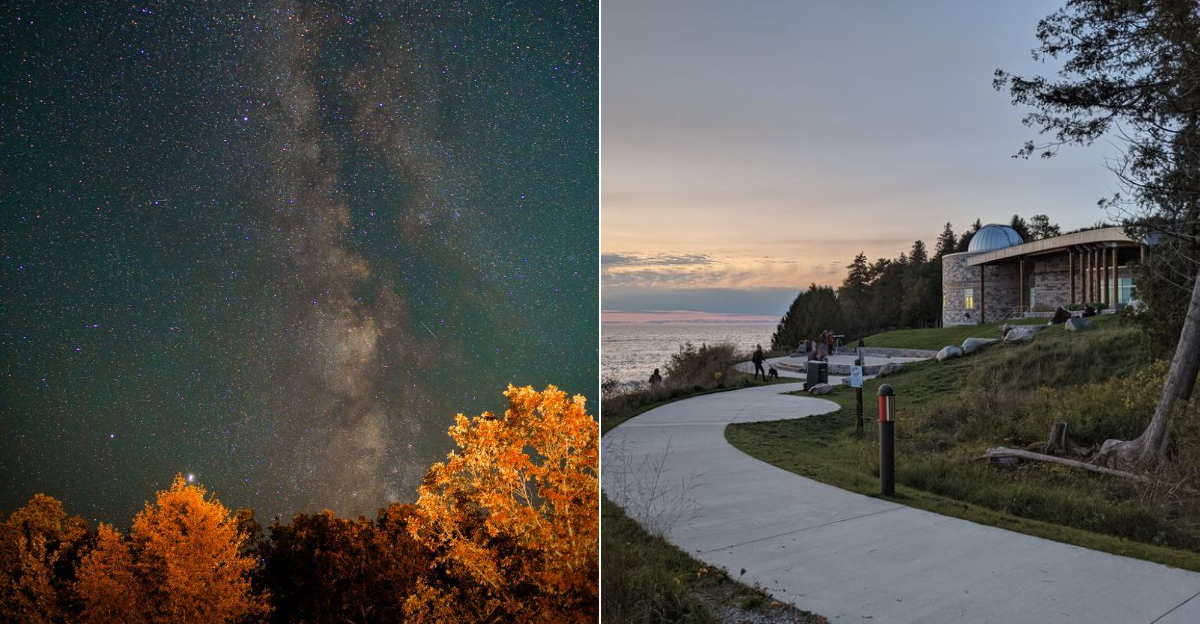
Michigan gets dramatically better after dark. Once the beach crowds thin and the last campfire conversations fade, familiar lakeshores and forests turn into silhouettes beneath skies that suddenly seem much larger than they did an hour earlier.
Late summer is especially rewarding, with warm evenings, quieter campgrounds, and enough darkness to reveal everything from bright planets to meteor showers and the pale sweep of the Milky Way.
Michigan dark sky parks offer some of the best stargazing in the Midwest, with clear views of the Milky Way, northern lights, and summer meteor showers.
What makes these places memorable is how different each night can feel. One evening might mean stars reflected across Lake Michigan, another could unfold beside an old quarry, deep forest, or empty stretch of shoreline.
Sometimes the aurora appears and completely ruins everyone’s ability to act normal. Even without it, the simple experience of standing beneath thousands of visible stars makes the drive worthwhile.
9. Headlands International Dark Sky Park
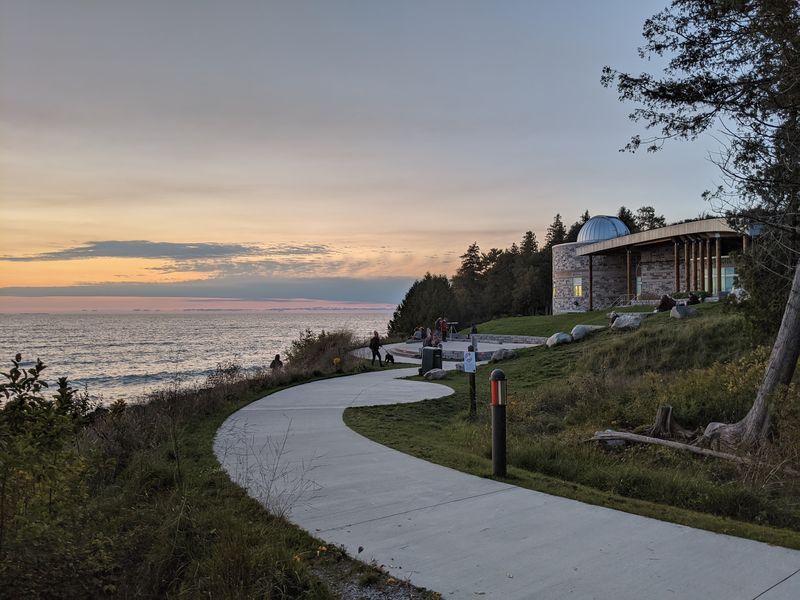
Lake Michigan provides almost half the scenery here, even after you can no longer see much of it. The open shoreline creates a broad western horizon, while the forest behind you blocks much of the surrounding artificial glow and makes the transition from sunset to full darkness feel surprisingly dramatic.
Headlands earned International Dark Sky Park designation in 2011, and it remains one of Michigan’s easiest places to plan a serious night of stargazing without camping. The park is open 24 hours a day, admission is free, and visitors are welcome to stay through the night even though overnight camping itself is prohibited.
Set your GPS for 15675 Headlands Road in Mackinaw City and arrive before sunset if possible. Parking becomes considerably less entertaining when everyone shows up for the same meteor shower at once.
Once darkness settles, keep white light to a minimum. A red flashlight preserves night vision and saves you from becoming the stranger who temporarily blinds an entire group of astronomers with a phone screen.
You do not need elaborate equipment either. A reclining chair, blanket, and binoculars can provide an excellent first night.
Bring layers as well. Lake Michigan has a remarkable talent for reminding August visitors that summer is a temporary arrangement.
8. Keweenaw Dark Sky Park
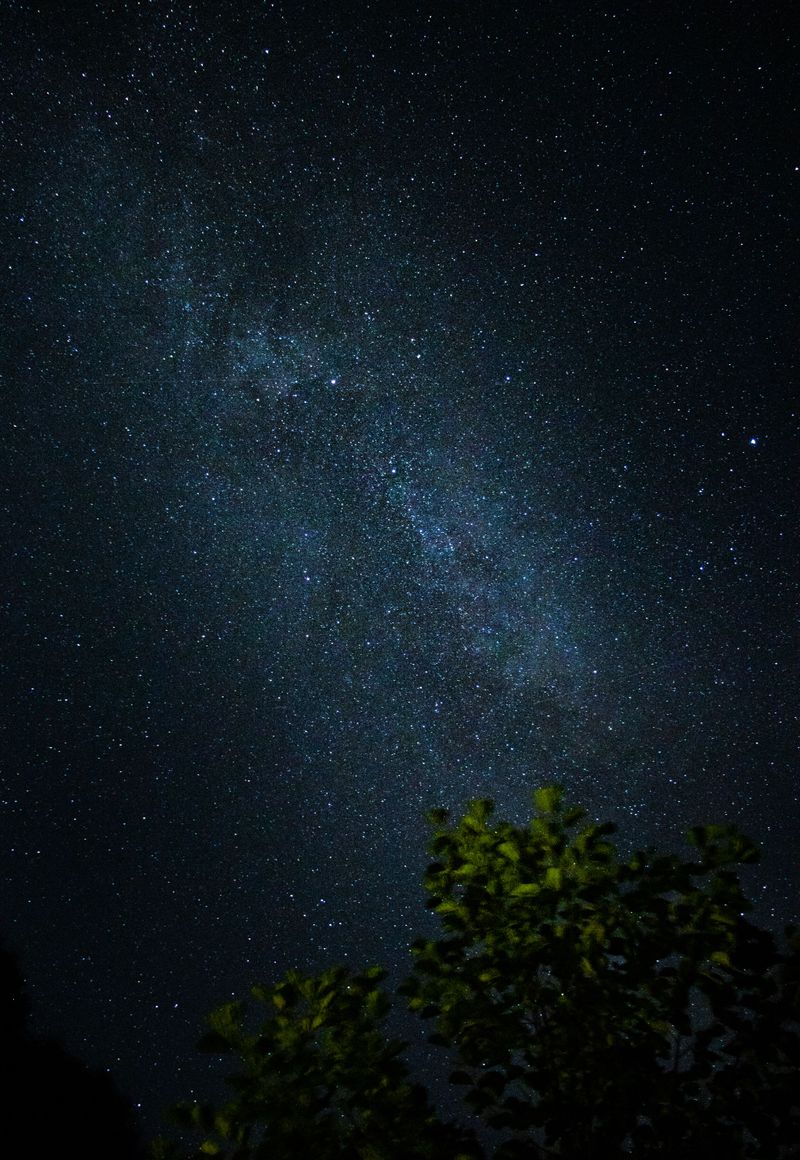
Farther north, darkness feels less like something preserved and more like the natural default. The top of the Keweenaw Peninsula has relatively little development, while Lake Superior surrounds much of the landscape and removes large sources of artificial light from the horizon.
The International Dark Sky Park is centered on the historic Keweenaw Mountain Lodge at 14252 US Highway 41 in Copper Harbor. Its outdoor grounds are open to the public from 7 p.m. until 7 a.m., giving night owls plenty of time to watch the sky change.
Camping on the dark sky park grounds is not permitted, although visitors can remain outside through the night for stargazing.
Walk the property before total darkness if this is your first visit. Viewing areas extend across the lodge grounds, including portions of the golf course, and knowing the terrain beforehand makes moving around much easier once your eyes adjust.
Late summer is particularly appealing because the Milky Way remains prominent while longer nights improve the odds of catching something unexpected to the north. For 2026, the September new moon falls on September 10, creating an especially dark window for early-fall viewing.
Pack a red flashlight, bug spray, and considerably more clothing than Copper Harbor afternoon temperatures suggest.
7. Dr. T.K. Lawless International Dark Sky Park
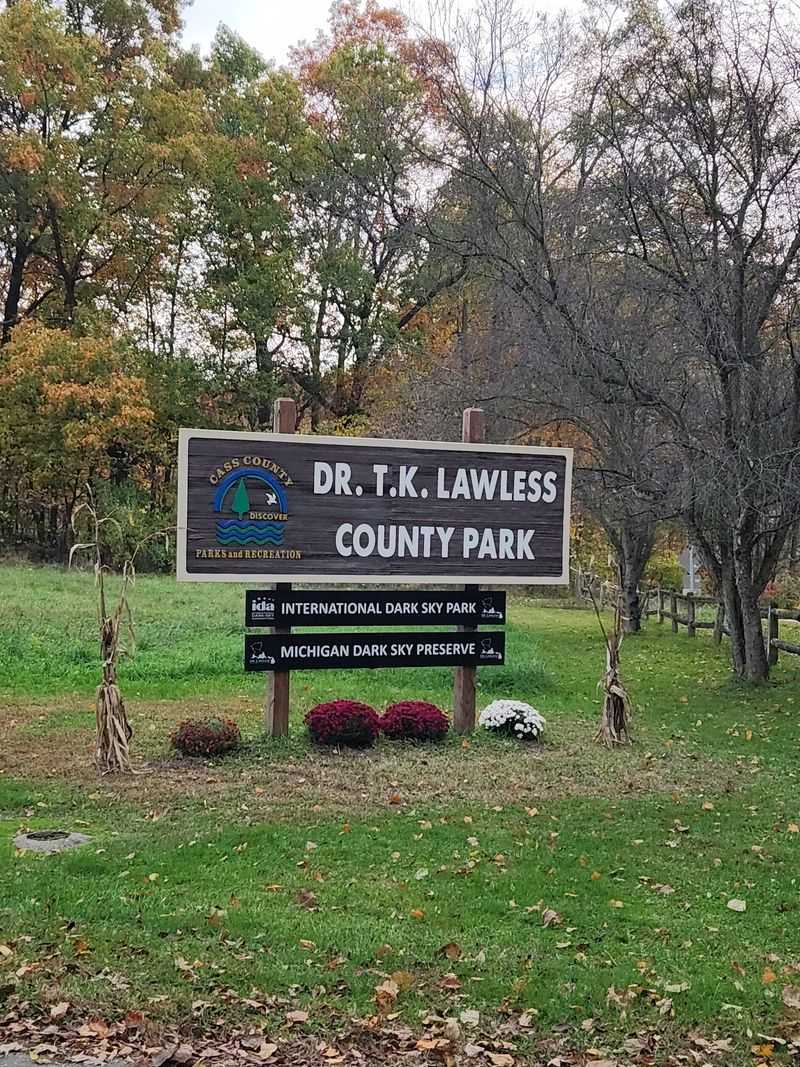
Southern Michigan does not usually get first billing in conversations about truly dark skies, which makes this Cass County preserve such a satisfying surprise.
Forest surrounds much of the park, and careful lighting management helped it earn International Dark Sky Park status. That protection is especially valuable here, where larger population centers and brighter development sit much closer than they do around the Upper Peninsula’s darkest locations.
The park is located at 15122 Monkey Run Street in Vandalia, about nine miles east of Cassopolis. Unlike Michigan’s state-designated preserves, extended nighttime access here is generally connected to scheduled dark-sky programs, so checking the calendar before a special trip matters.
Late summer 2026 includes some particularly good opportunities. The park stayed open throughout the night for its August Star Party and Perseid viewing, while September 11 and 12 bring dedicated dark-sky nights with access until 2 a.m.
Beginners should not feel intimidated by the serious telescopes that sometimes appear. Public viewing nights are precisely when asking what somebody is looking at becomes part of the fun.
Bring a portable chair, binoculars, a blanket, and a red light. Then give your eyes twenty or thirty minutes to adapt.
6. Lake Hudson Recreation Area
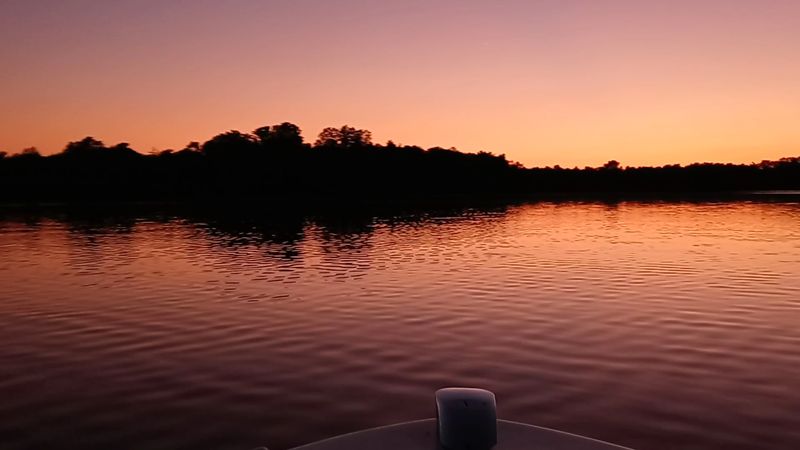
Still water changes the mood of stargazing. Once boat activity fades on this no-wake lake near the Ohio border, the surface can become dark enough to reflect brighter stars while the surrounding woods erase much of the horizon.
Lake Hudson became Michigan’s first state-designated Dark Sky Preserve in 1993, making it the historical starting point for the state park system’s protected night skies.
The recreation area sits at 5505 Morey Highway in Clayton, and its designated preserve near the picnic shelter is open 24 hours a day, year-round. That makes it one of the most practical options for southern Michigan residents who want serious darkness without spending half the day driving north.
Come early and use the remaining daylight for paddling, fishing, or the short trail before settling into the viewing area. The lake is known for muskie, although after dark the more interesting hunting happens overhead.
Camping makes it easy to extend the visit. The semimodern campground has electrical hookups, but amenities remain relatively simple, so bring drinking water and whatever nighttime comforts you need.
A Recreation Passport is required for vehicle entry.
I would also pack bug spray and a chair that reclines farther than seems necessary.
5. Negwegon State Park
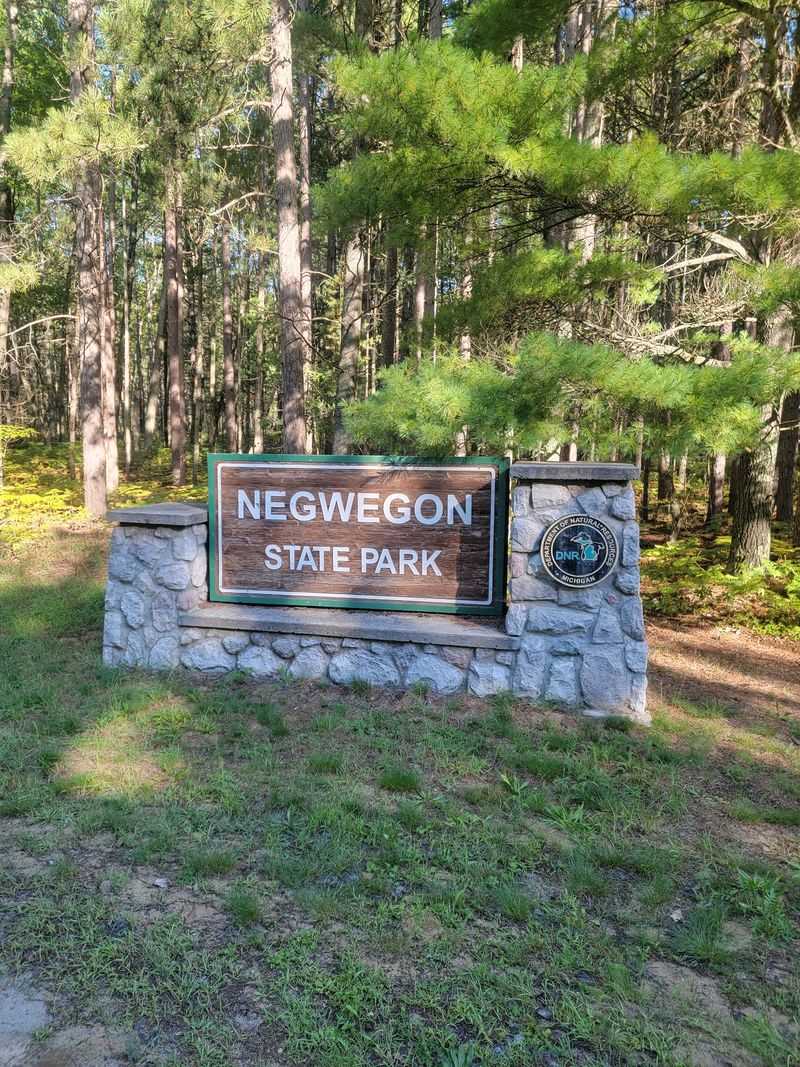
The difficult approach is almost part of the admission price here. Roads become rougher, houses disappear, cell service gets less dependable, and eventually you begin wondering whether a state park should really require this much faith.
Then Lake Huron appears.
Negwegon protects roughly 4,000 acres of forest, wetlands, open meadows, and miles of largely undeveloped shoreline. Artificial light is scarce enough for the park to earn state Dark Sky Preserve status, and its designated stargazing area can be accessed around the clock.
There is no conventional street address worth trusting for the final approach. Michigan DNR directs visitors to coordinates 44.857953, -83.328668, reached from the Black River area and Sand Hill Road.
Download the route before losing service, and check current road conditions. A high-clearance or four-wheel-drive vehicle can be useful when sand becomes deep or weather has damaged the access roads.
Four primitive campsites lie between roughly one and two miles from the main parking area and require reservations. Staying overnight transforms the trip, but everything needed for the evening has to come with you.
Once the moon is gone, the undeveloped shoreline becomes wonderfully black.
4. Port Crescent State Park
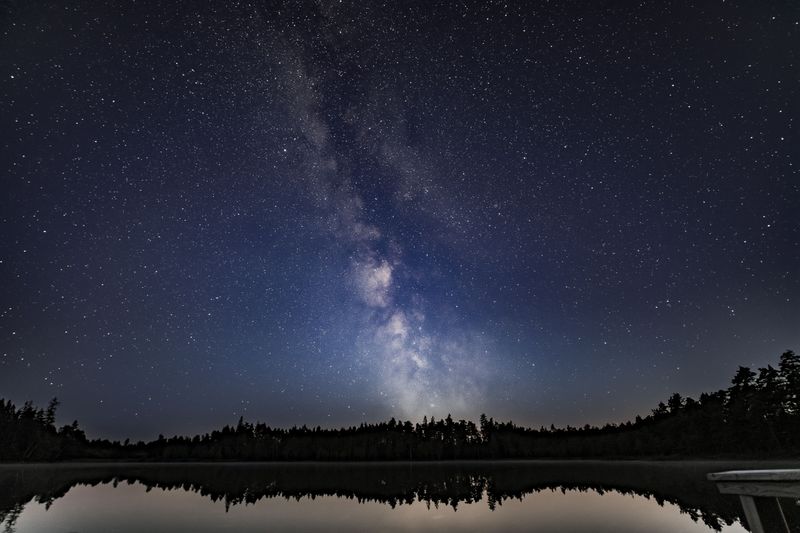
Saginaw Bay handles the opening act beautifully. Sunset spreads across the water first, the shoreline slowly loses its color, and then the sky above Michigan’s Thumb begins revealing considerably more than it showed during daylight.
This park combines easy access with genuinely good darkness, which makes it one of the friendliest choices for people who want stargazing without turning the evening into a wilderness expedition. Its Dark Sky Preserve has been protected since 2012, and the designated area remains available for night-sky viewing around the clock.
The park’s main address is 1775 Port Austin Road in Port Austin, but remember that the campground and day-use area have separate entrances roughly two miles apart. For stars, head toward Parking Lot D, where an elevated viewing platform gives you an uncomplicated place to settle in.
Come early enough for the shoreline first. Three miles of Lake Huron frontage make sunset worth treating as part of the evening rather than merely waiting around for darkness.
If you want to stay, modern campsites, cabins, cottages, and geodesic domes remove some of the logistical hardship found at Michigan’s more primitive preserves.
A Recreation Passport is required for vehicle entry.
Bring a blanket and something that blocks the wind.
3. Rockport State Recreation Area
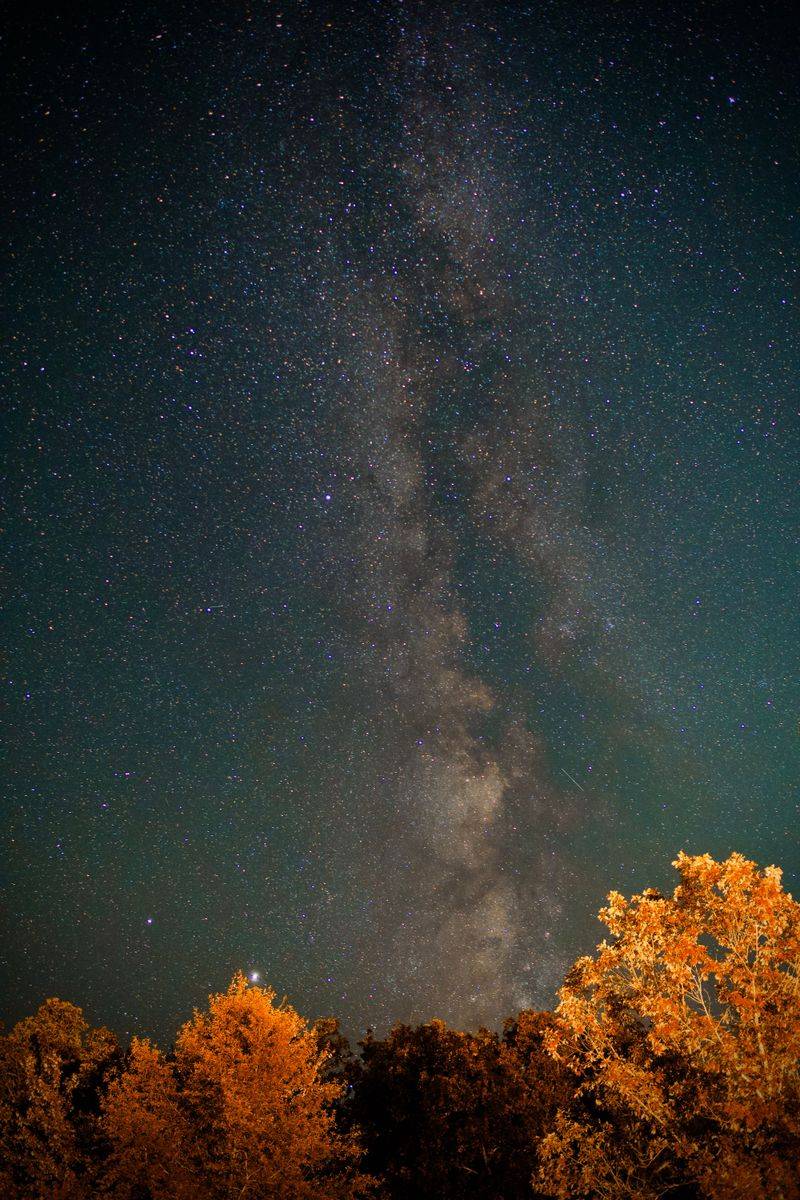
An abandoned limestone quarry already feels slightly extraterrestrial in daylight. Wait until the sun disappears.
Pale rock, huge open spaces, forest, sinkholes, and Lake Huron shoreline give this recreation area north of Alpena one of the strangest settings on the list. Once stars begin filling the darkness above the former quarry, the landscape can look like somebody constructed a very convincing low-budget moon base.
The park covers more than 4,200 acres and includes a 300-acre former quarry, trails, natural sinkholes, a deep-water harbor, and nearly six miles of Lake Huron shoreline. It is also one of Michigan’s six state-designated Dark Sky Preserves.
For navigation, follow Rockport Road to its end north of Alpena, MI 49707. Unlike ordinary state park day-use areas, the signed dark sky preserve is legally accessible 24 hours a day for stargazing, so you do not need to wait for a special astronomy event to stay after 10 p.m.
2. Thompson’s Harbor State Park
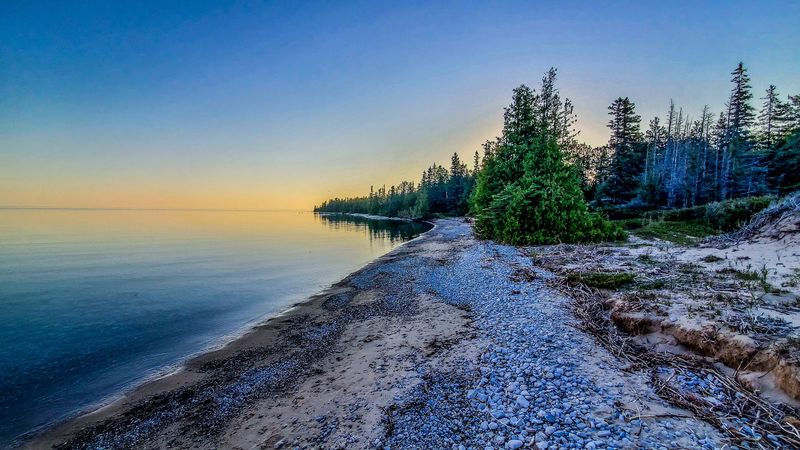
Very little has been added to this shoreline, and that is precisely its strength.
More than 5,000 acres of forest, dunes, marshes, and rocky Lake Huron coast remain largely undeveloped between Alpena and Rogers City. Once darkness arrives, there are few nearby lights competing with the sky, leaving the Milky Way surprisingly sharp when the moon and clouds cooperate.
The park’s designated Dark Sky Preserve is open 24 hours for stargazing. There is no tidy urban-style street address; the main trailhead is reached from U.S. 23 roughly 13 miles southeast of Rogers City, with the DNR placing the park near 45.335509, -83.603956.
Download a park map before arriving rather than expecting phone service to negotiate the final details for you.
Facilities are deliberately sparse. Two rustic cabins provide the main overnight option, while six miles of trails cross terrain that becomes considerably less obvious beneath starlight.
Late summer also means the forest is still very much alive. Bring insect repellent, ample water, sturdy footwear, and a red flashlight.
This is also habitat for the eastern massasauga rattlesnake, so wandering blindly away from marked routes at night is an unnecessary experiment.
1. Wilderness State Park
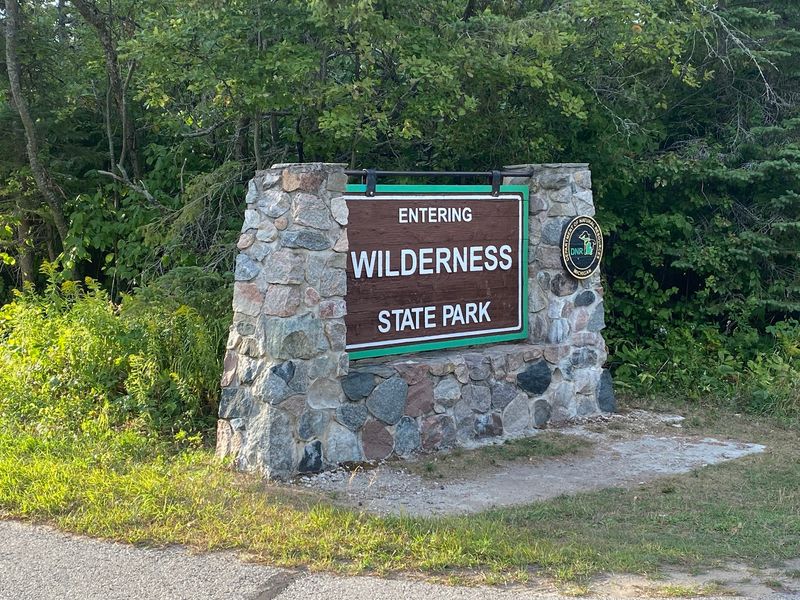
Sometimes the easiest way to find a private piece of night sky is simply to have an absurd amount of shoreline available.
Wilderness State Park stretches across thousands of acres west of Mackinaw City, with 26 miles of Lake Michigan frontage, forests, wetlands, meadows, ponds, and more than 20 miles of trails. Its size makes it possible to escape both highway glow and the feeling that everybody else had the same stargazing idea.
The park is at 903 Wilderness Park Drive in Carp Lake, about 11 miles west of Mackinaw City. It is one of Michigan’s six state-designated Dark Sky Preserves, so the marked stargazing area remains accessible 24 hours a day.
I would make this an overnight trip rather than a late-night drive home. Modern campsites, rustic sites, cabins, and bunkhouses create far more sleeping options than most parks on this list, and staying lets daylight exploration flow naturally into sunset and stars.
Depending on where you settle along the shore, Waugoshance Lighthouse may appear offshore while the sky darkens above it.
Choose a night close to the new moon for the strongest Milky Way view, switch off unnecessary campsite lighting, and carry a red headlamp when moving around.