
This Small Arizona Town Has A Living Mesquite That Once Served As Its Only Jail
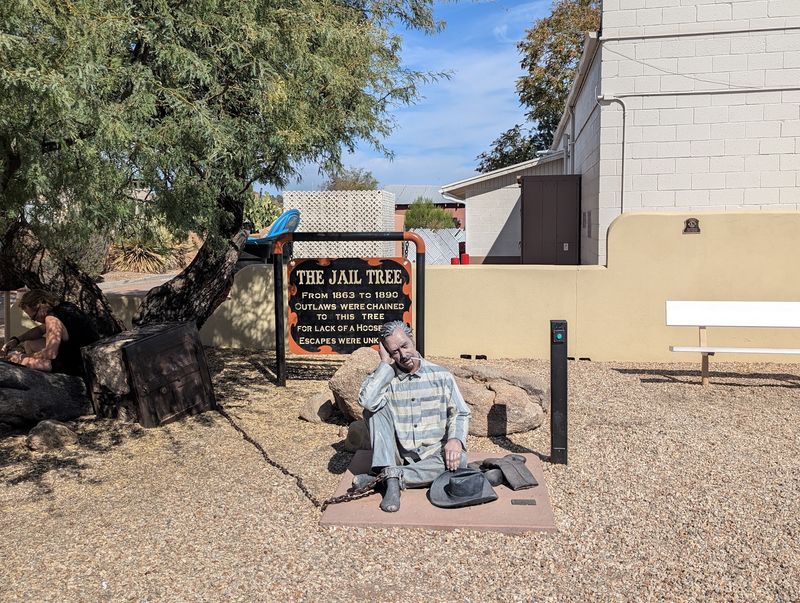
Picture being chained to a tree in the open desert while waiting for a sheriff to ride in from Phoenix. That was real life for lawbreakers in one Arizona mining town back in the 1800s, when a sturdy mesquite did the job a jailhouse never got built to do.
Amazingly, that same tree is still alive and rooted downtown, complete with a plaque and a life-sized statue. It’s free to visit, quick to see, and one of the strangest little history stops in the whole state.
A Living Landmark in Downtown Wickenburg
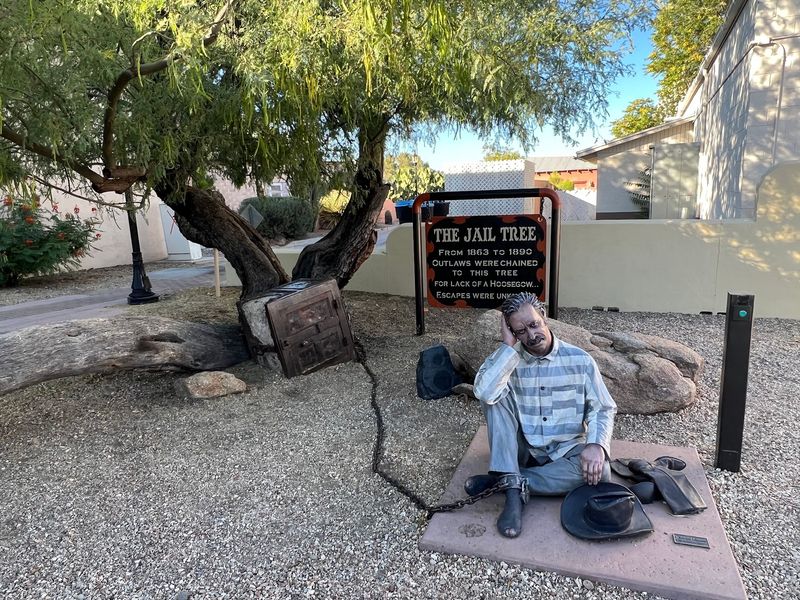
Right in the middle of Wickenburg, at the corner of Tegner Street and Wickenburg Way, an old mesquite spreads its gnarled branches like it has all the time in the world. And honestly, it does.
This tree has been growing here for more than two centuries.
What makes it worth a stop isn’t the size or the shade, though both are impressive. It’s the job this plant once held.
Long before Arizona became a state, this mesquite worked as the town’s only lockup.
You’ll find it tucked behind a Circle K gas station, which sounds unglamorous, but that ordinary setting is part of its charm. One minute you’re grabbing a cold drink, the next you’re standing in front of a piece of frontier history that’s still very much alive.
Visitors describe it as a quick but memorable pull-over, the kind of odd roadside find that makes a road trip stick in your memory. It sits at an easy elevation in Arizona’s high desert, roughly an hour northwest of the Phoenix area, making it a simple detour on a bigger day out.
The Tree That Doubled as a Frontier Lockup
Between 1863 and 1890, Wickenburg was a booming mining town with a big problem: no jail. Building one costs money and takes time, and a growing settlement full of restless characters couldn’t always wait.
The solution was refreshingly simple, if a little rough by today’s standards. When someone broke the rules, they were chained to the mesquite and left to wait it out.
The tree became the town’s official “hoosegow,” an old slang word for a jail.
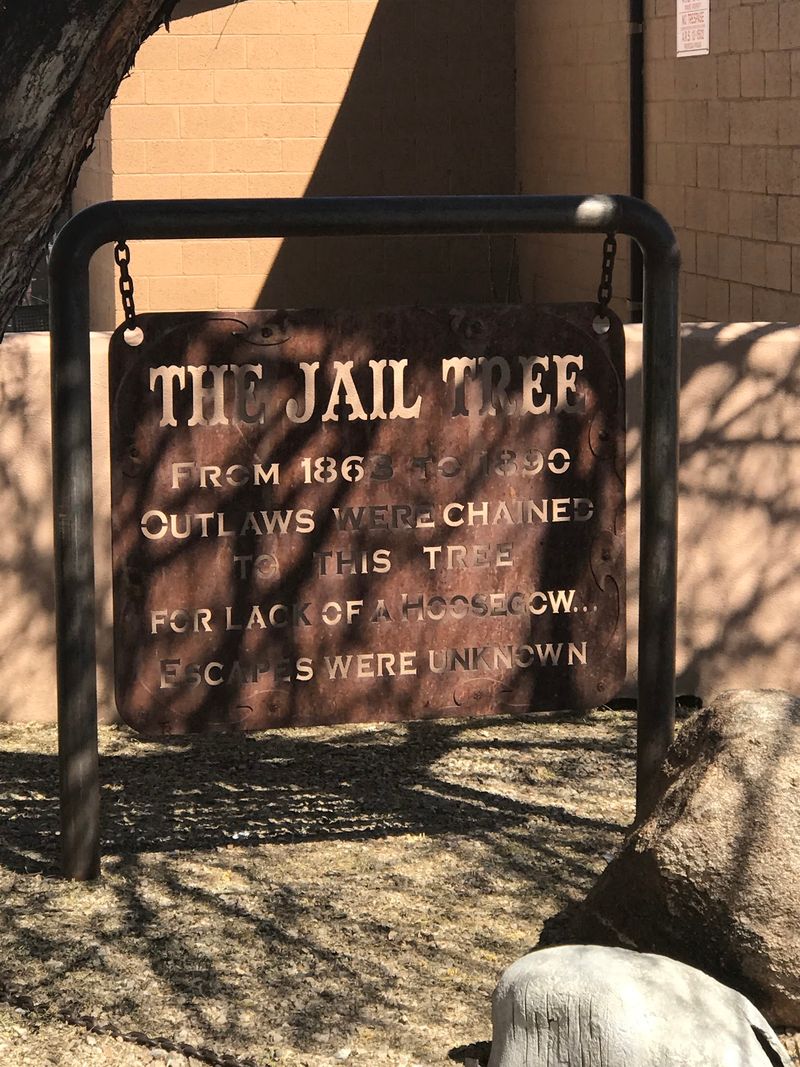
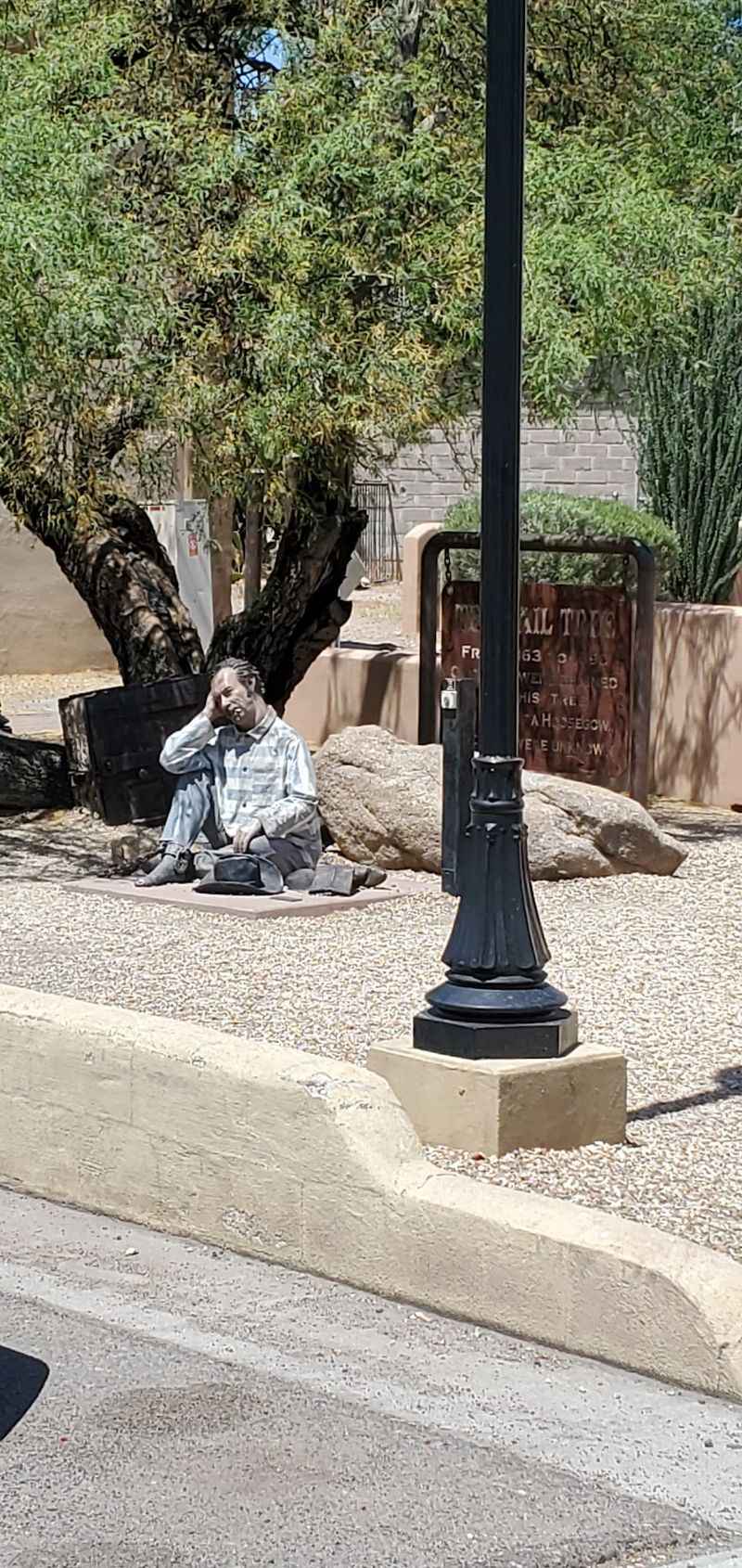
A weathered sign at the site sums it up neatly, noting that outlaws were secured here for lack of a proper lockup. There were no bars, no cells, and no roof over anyone’s head.
Prisoners simply sat beneath the branches until someone with authority showed up. It’s a vivid reminder of how creative early Arizonans had to be when the nearest formal jail was a long, dusty ride away.
Standing there today, it’s easy to imagine the town gathered around, the desert stretching out in every direction, and this single tree carrying a responsibility no plant was ever meant to hold.
Chains, Sheriffs, and a Perfect Escape Record
Here’s the detail that gets everyone talking: local lore proudly claims that nobody ever escaped from the Jail Tree. Not one person, in nearly thirty years of use.
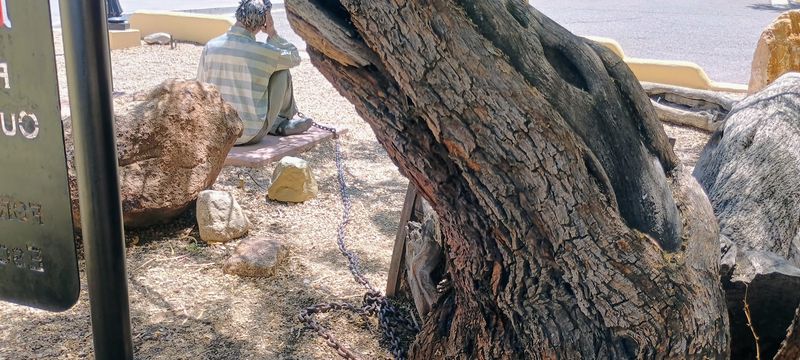
The setup left little room for slipping away. Lawbreakers were secured with heavy chains and left tethered to the trunk, sometimes for as long as five days, exposed to blazing summer heat or chilly desert nights depending on the season.
Wickenburg didn’t have its own lawman ready to haul folks off, so a sheriff had to travel in from a larger town like Phoenix or Prescott. That journey took time, which is exactly why the waits stretched on for days.
The plaque on site captures the whole idea in a single memorable line about escapes being unknown. Whether every claim holds up perfectly, historians can’t fully say.
Some suggest the story mixes real history with local legend, possibly a tale parents once told children to encourage good behavior. Either way, the image of someone counting the days chained to a tree makes this one of the most unforgettable footnotes in Arizona’s frontier past.
The Life-Sized Statue That Steals the Show
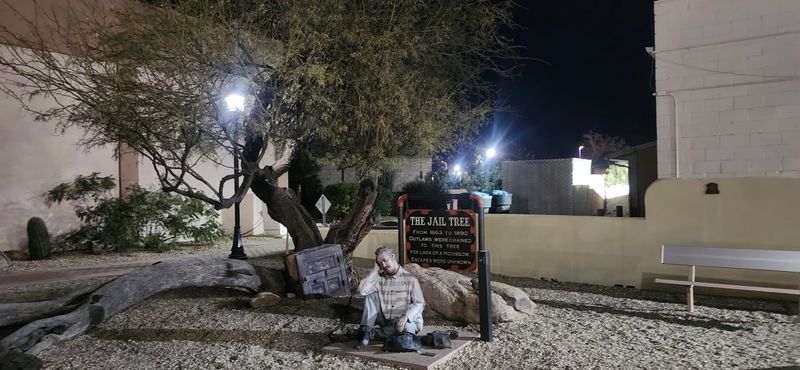
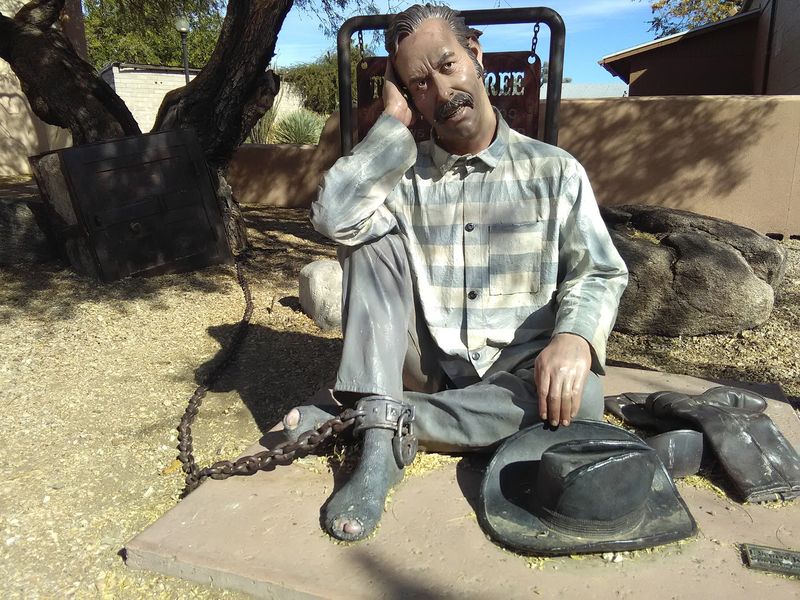
Walk up to the tree and you’re not alone. A remarkably detailed, life-sized figure sits at the base, dressed in striped prison clothing and chained to the trunk, forever waiting for a ride that already came and went.
Visitors love how lifelike the sculpture is. The craftsmanship draws plenty of double-takes, and more than a few people admit they didn’t notice it until they were standing right beside it.
It’s also become the star of countless road-trip photos. The statue practically invites you to pose beside it, whether you want a goofy shot pretending to keep the prisoner company or a straight portrait of Old West history.
One traveler joked about feeling bashful whenever passersby start asking for autographs, which tells you just how much fun folks have here. Families in particular seem to get a kick out of it.
The figure turns an abstract history lesson into something you can see and stand next to. Instead of imagining a nameless captive from long ago, you’re looking at a face, a posture, and a story frozen in bronze right in front of you.
Press the Button for the Whole Story
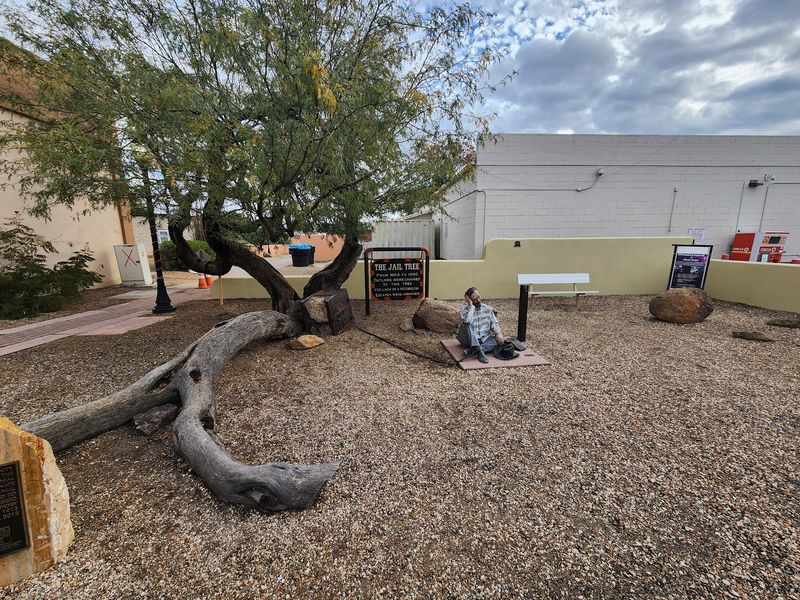
Don’t leave without finding the small green button tucked beside the display. Give it a push and an audio narration crackles to life, telling the full tale of the tree and a few colorful characters from its lockup days.
It’s the little touch that turns a quick glance into a genuine mini-tour. Regulars mention that pressing the button is the best part, and several remind first-timers not to skip it.
The recording covers the origins of the makeshift jail and paints a picture of what frontier justice actually looked like. In just a couple of minutes, you get context that a plaque alone can’t deliver.
Kids especially enjoy the interactive angle, and parents get a painless way to sneak in a history lesson. It’s the kind of feature that makes the stop feel thoughtfully put together rather than tossed on a corner.
A few visitors have noted the audio box occasionally shows its age and could use some upkeep, so patience helps if it’s having an off day. When it works, though, it’s the heart of the whole experience.
Statewide Honors for an Ordinary-Looking Tree
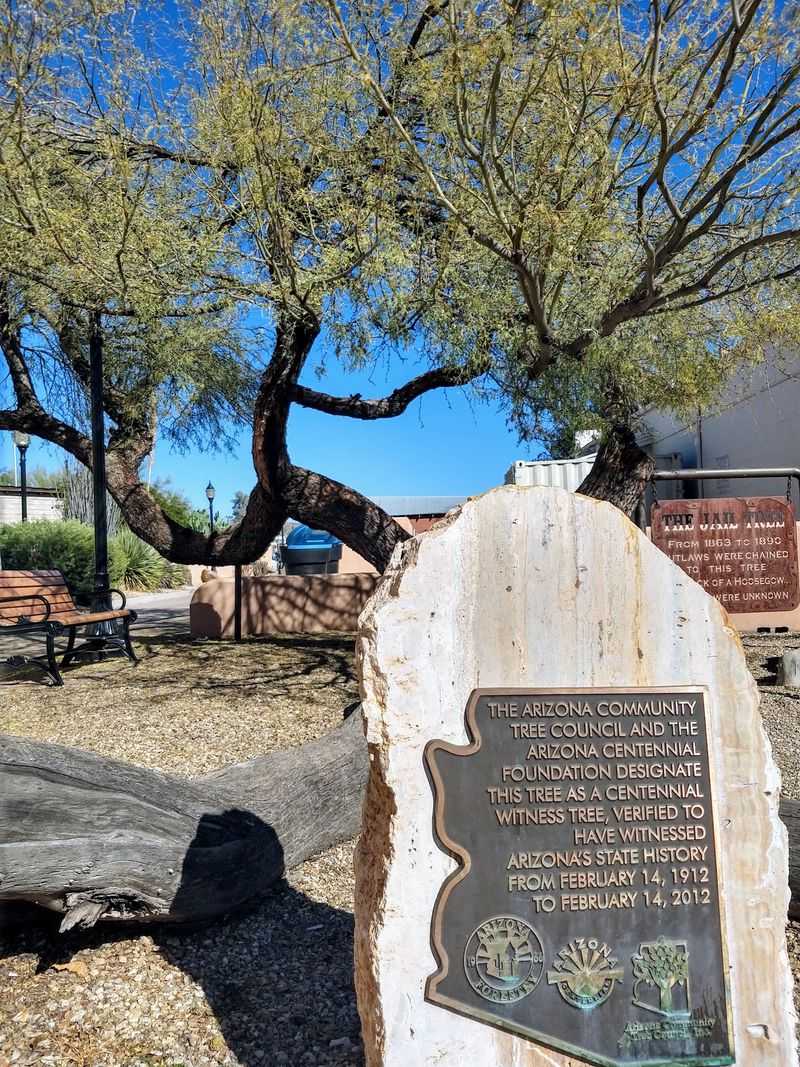
You might glance at this mesquite and think, well, it’s just a tree. Arizona officials disagree, and they’ve said so more than once.
In 2012, the Jail Tree was recognized as an official Centennial Witness Tree, a nod to the fact that it was already standing and quietly watching before Arizona ever became a state. Not many living things can claim that kind of front-row seat to history.
Then in 2016, it earned another honor, landing a spot among Arizona’s “Magnificent 7” Heritage Trees. That’s serious statewide recognition for a plant rooted behind a gas station.
These titles matter because they lift the tree above simple curiosity status. It isn’t just a quirky photo op; it’s a formally celebrated piece of the state’s living heritage.
The recognition also helps ensure the mesquite keeps getting the care and attention it deserves. Visitors often remark on how well kept the site looks, and that upkeep reflects the pride the community takes in it.
Knowing the tree carries official heritage status adds a little extra weight to your visit. You’re not just seeing an oddity, you’re standing before an honored survivor.
A Quirky Quick Stop with Big Personality
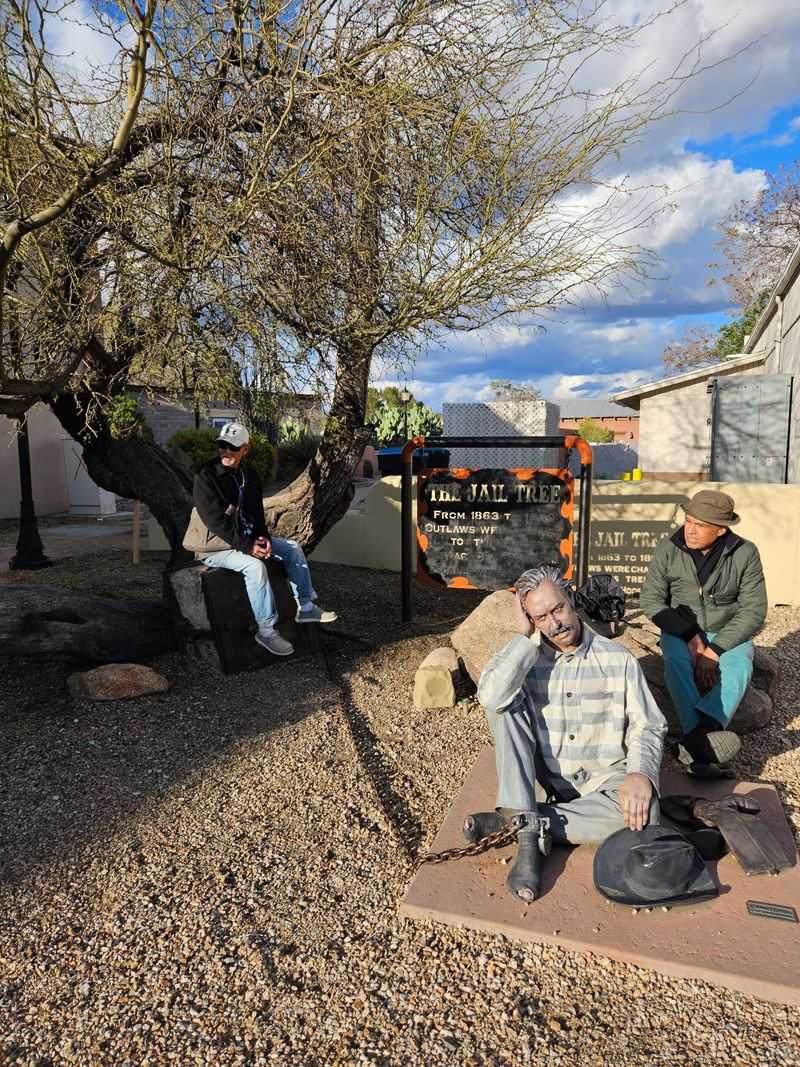
Set your expectations right and this place delivers pure delight. Nobody comes here for an all-day adventure, and that’s exactly the point.
Most visitors spend somewhere between two and ten minutes soaking it in, reading the plaque, snapping a photo, and hearing the audio. Short, sweet, and surprisingly satisfying.
It fits a certain kind of traveler perfectly: the road-tripper who lives for offbeat detours, the history buff who collects strange true stories, and families looking for a free, easy stretch-your-legs break. People who enjoy oddities and roadside curiosities tend to leave grinning.
Several folks describe stumbling onto it by accident and being thrilled they stopped, calling it the kind of small, unexpected find that makes a whole trip more memorable. One visitor even returned decades after first seeing it as a child.
The surrounding downtown adds to the appeal, with cute shops and a small-town charm that invites a little wandering. You can easily pair the tree with lunch or a stroll nearby.
If you like your history served in quirky, bite-sized portions, this corner of Wickenburg was practically made for you.
Free Admission and Around-the-Clock Access
Good news for budget-minded explorers: seeing the Jail Tree costs absolutely nothing. There’s no ticket booth, no fee, and no rush to leave.
The site is open around the clock, every single day of the week, so it bends easily around whatever your schedule looks like. Early morning, midday, or an evening walk all work.
Parking takes a little know-how, though. The corner sits on a small, busy roadway, and visitors strongly advise against stopping in the street itself.
Instead, there’s a parking lot behind the tree with a walkway leading right to it.
On especially busy days in town, spots can fill up, so a bit of patience helps. Since it shares space with a Circle K, you can grab a cold drink for the desert heat while you’re there.
The whole setup is refreshingly low-pressure. Stay as long as you like, take all the photos you want, and there’s no clock ticking down on you.
For anyone who loves discovering worthwhile, wallet-friendly stops around Arizona, a free landmark that’s always open is about as inviting as it gets.
Why This Old Mesquite Earns Its Detour
So, is a single tree behind a gas station really worth going out of your way for? For a certain kind of traveler, the answer is an easy yes.
The magic here isn’t in scale or spectacle. It’s in the strange, true, only-in-Arizona story of a living plant that once did a courthouse’s job, and somehow still stands to tell about it.
Pair it with the honors it carries, the lifelike statue, the push-button narration, and the fact that it won’t cost you a cent, and you’ve got a stop that punches well above its size. Many who’ve seen it call it a must-do when passing through the area.
It’s the perfect kind of detour for a cooler-season drive through Arizona’s high desert, when wandering downtown feels comfortable and unhurried. Tack it onto a bigger day trip and it becomes a fun surprise rather than the main event.
Bring your camera, bring a curious kid or a history-loving friend, and give yourself ten unhurried minutes. Sometimes the smallest, oddest landmarks are the ones you end up talking about long after the road trip ends.