
This Pennsylvania Mountain Overlook Has A Secret Snake Problem
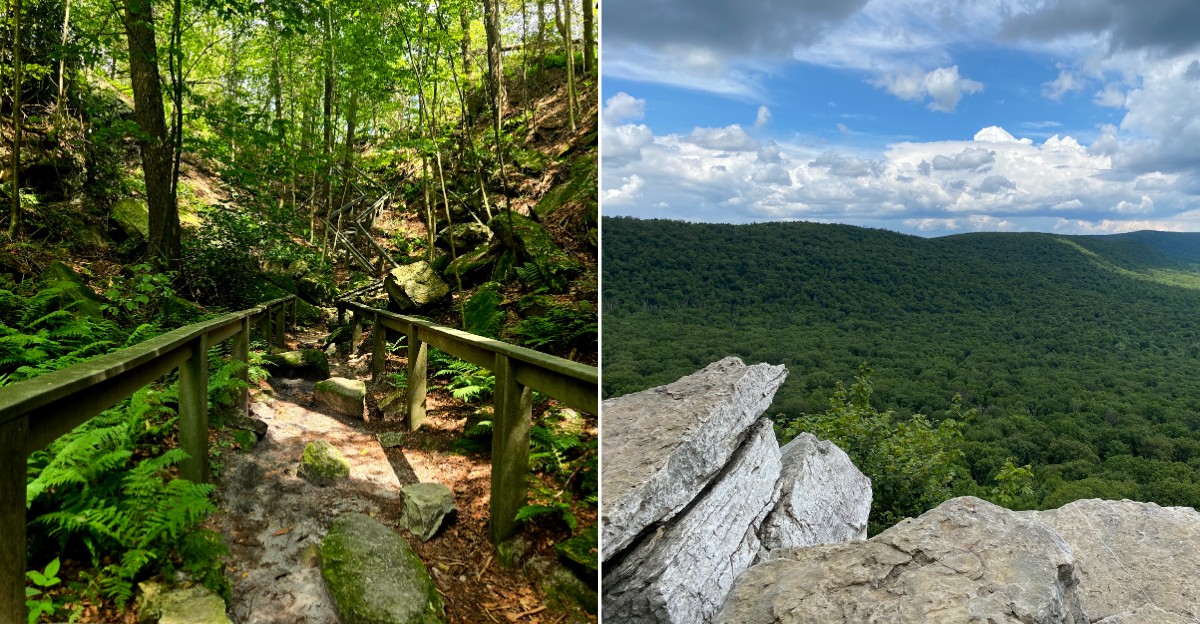
A rocky overlook can be beautiful enough to steal your attention, which is exactly why watching your footing matters.
High above the surrounding Pennsylvania landscape, this mountain viewpoint draws hikers for sweeping scenery and a rugged trail experience.
Warm rocks and sunny ledges can also attract snakes, especially during the warmer months, so visitors sometimes get more wildlife than they expected.
That does not mean every hike turns into an encounter. It simply makes a little awareness part of the outing, particularly near rocky edges and brush.
I had a similar moment on a mountain trail when someone ahead of me quietly said, “Watch your step.”
I froze, looked down, and spotted a snake stretched across a warm patch of rock several feet away.
We gave it space and kept moving, but I spent the rest of the hike paying much closer attention to the ground.
The view was still spectacular. I just admired it with one eye on the trail.
A Rocky Perch With A Famous Address
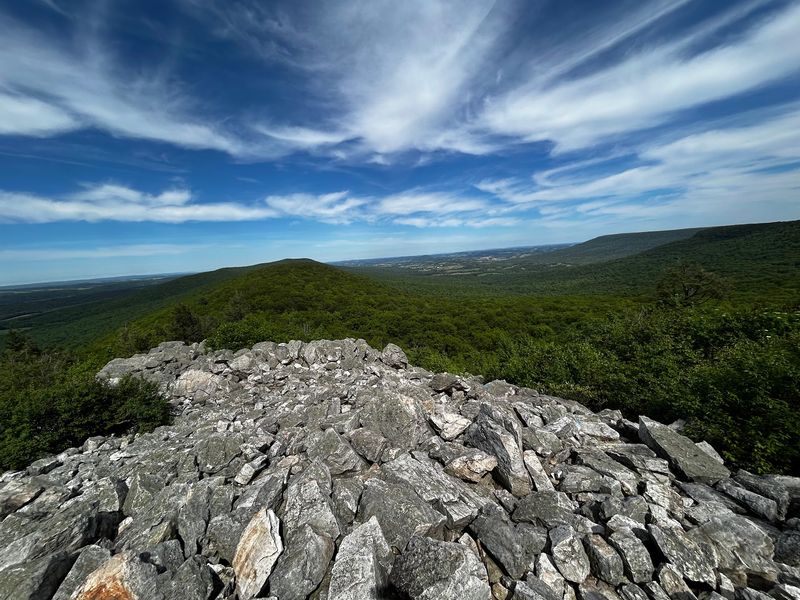
Perched high on the Kittatinny Ridge, the North Lookout sits roughly fifteen hundred feet up.
It is the top overlook at Hawk Mountain Sanctuary, found at 1700 Hawk Mountain Rd, Kempton, PA 19529, in the United States.
The sanctuary covers about twenty-six hundred acres of protected forest in eastern Pennsylvania.
When I reached the summit, the first thing I noticed was the size of the boulders. They are huge, flat-topped slabs of hard sandstone, and people spread out across them to watch the sky.
The view stretches for miles over farms, forests, and the rolling ridges of the Appalachians. On a clear day, I could see about seventy miles, which made my phone camera feel very small.
Those same warm, cracked rocks are part of the secret behind this story. The overlook is gorgeous, but it is also prime real estate for a few scaly neighbors.
Visitor center hours run from 9 AM to 5 PM daily, so I plan my climb early to grab a good seat.
The Scaly Locals Behind The Secret
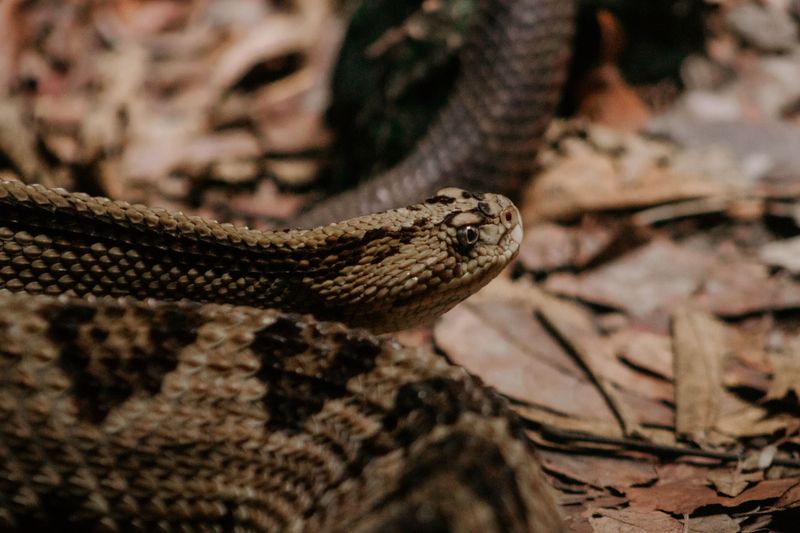
Timber rattlesnakes definitely live along the rocky slopes and trails around Hawk Mountain Sanctuary.
They are one of three venomous snake species found in Pennsylvania, and the sanctuary specifically warns visitors to stay alert around rocks, logs, brush, and sunny openings during the warm season.
Most hikers may never see one, because timber rattlesnakes are well camouflaged and generally avoid unnecessary contact with people.
The species can range from yellowish to nearly black, with dark bands crossing the body. Hawk Mountain staff describe them as docile animals that usually prefer warning and retreat over confrontation.
I learned that a rattlesnake nearby is a reason to slow down, not panic. Freeze, locate the animal, and give it space rather than trying to move it.
Harmless snakes also live across eastern Pennsylvania, so not every snake on the trail is venomous.
Fun fact: Pennsylvania requires a special venomous-snake permit to catch, take, harm, or possess a timber rattlesnake, so leave every snake exactly where you find it, from a distance.
Why Sunny Boulders Attract Snakes
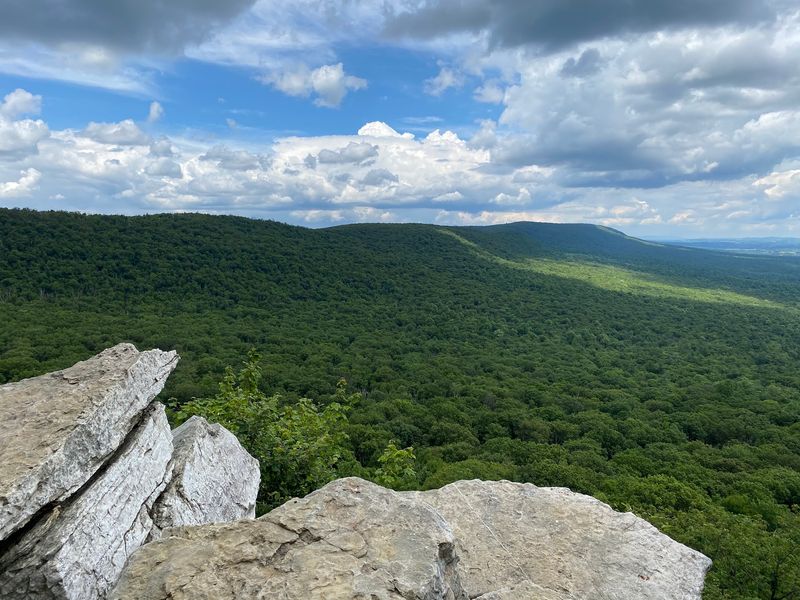
Timber rattlesnakes rely on outside heat to regulate their body temperature, so sunny rocks become useful basking spots during the warm season.
That simple fact helps explain why Hawk Mountain asks hikers to stay alert around rocky terrain.
The North Lookout itself is made of large exposed boulders that absorb plenty of sunlight.
Rattlesnakes spend roughly six months in brumation, then emerge in late April or early May and remain active until around mid-October.
They use the warmer months to bask, hunt, and move through the forest.
By late fall, they return toward den areas for winter. Some populations use the same denning areas repeatedly from year to year.
I find that rhythm fascinating because the snakes follow a seasonal schedule just as predictable as the migrating hawks overhead.
The sanctuary’s current guidance focuses specifically on timber rattlesnakes rather than copperheads around its trails.
So the next time you sit on a warm summit rock, look first, leave cracks alone, and remember that wildlife may already be using the same sunny space before you settle down there.
Smart Habits For Sharing The Trail
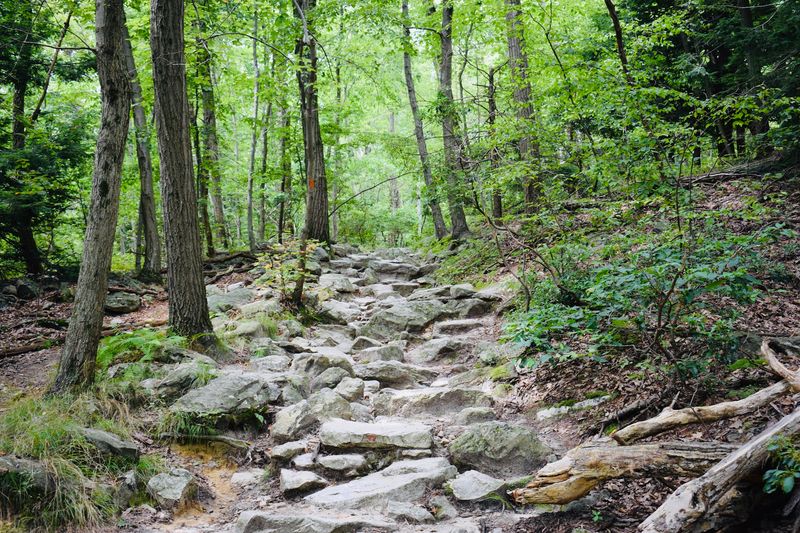
Staying safe around timber rattlesnakes on the rocky climb comes down to a few easy habits that Hawk Mountain itself recommends.
First, watch where you put your hands and feet. The trail to North Lookout includes rocky sections and large boulders, so look carefully before sitting down or reaching around logs or brush.
Second, never try to pick up a snake, even if it appears like it passed away. Cornering, touching, or threatening a rattlesnake increases the chance that it will strike.
Third, stay aware rather than wandering carelessly through rocky or brushy areas. If you do spot a rattlesnake, freeze, locate it, and slowly back away.
Hawk Mountain specifically recommends creating distance rather than trying to make the animal move and let the snake remain undisturbed nearby.
A warning rattle often gives hikers notice, but a snake may strike without rattling if it feels threatened.
Finally, wear sturdy hiking shoes for the rocky trail itself. Good footwear improves traction and stability, but awareness is the more important snake precaution.
If a bite occurs, seek medical attention quickly and do not use suction or a tourniquet.
From Target Practice To Protected Sky
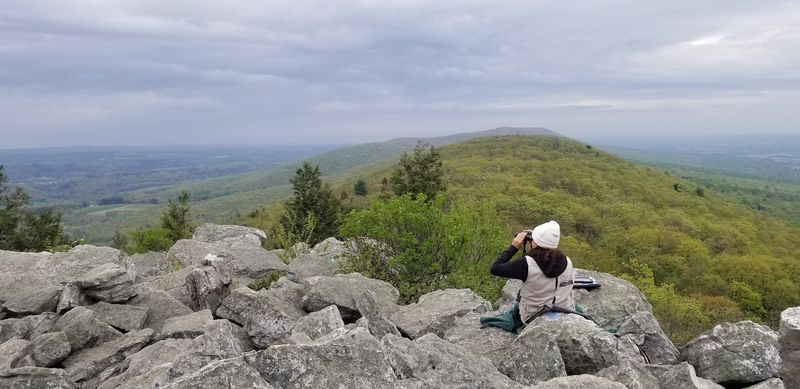
Believe it or not, hunters once gathered on these very summit rocks to aim at passing hawks.
Back in the early 1900s, many people thought hawks were pests.
Hunters lined the North Lookout every fall and took aim at birds as they glided by the ridge.
A conservationist from New York heard about it and decided to act. In 1934, she leased the land, and later it was bought and protected for good.
She hired a warden who stood guard and turned the hunters away. It took courage, because many locals were not happy at first.
Hawk Mountain Sanctuary became the first refuge in the world created to protect birds of prey. That is a big claim for a hilltop in rural Pennsylvania, and it is true.
Standing on the summit, I tried to picture the old scene. Today the only things aimed at the sky are binoculars and camera lenses.
The same warden started counting hawks that first fall. Those counts continue today, making this one of the longest running raptor migration records anywhere.
A Superhighway For Hawks Overhead
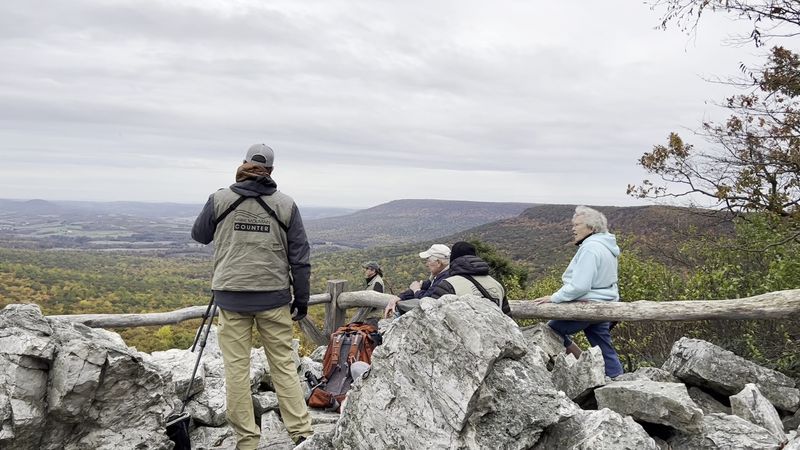
Every autumn, thousands of raptors ride the winds along this ridge on their trip south.
The Kittatinny Ridge works as a natural flight path. When wind hits the mountain, it bounces upward, and hawks glide on those rising currents without flapping much.
The North Lookout sits right in the path, so birds often pass at eye level. I once watched a red-tailed hawk drift by close enough to see its rusty tail feathers.
Official counters sit at the summit each fall and record every bird. On average, they tally around eighteen thousand raptors per season.
September brings huge swirling groups of broad-winged hawks called kettles. Some days, hundreds or even thousands pass in just a few hours.
October is great for sharp-shinned hawks and many other species. November is famous for golden eagles, which always make the crowd gasp.
Sixteen species of raptors are seen regularly, including bald eagles, ospreys, falcons, and vultures. Volunteers often call out birds as they appear, which helps beginners learn fast.
Fun twist: the hawks and snakes share a story. Many hawks eat snakes, so the ridge is one big, balanced neighborhood.
Picking The Right Season
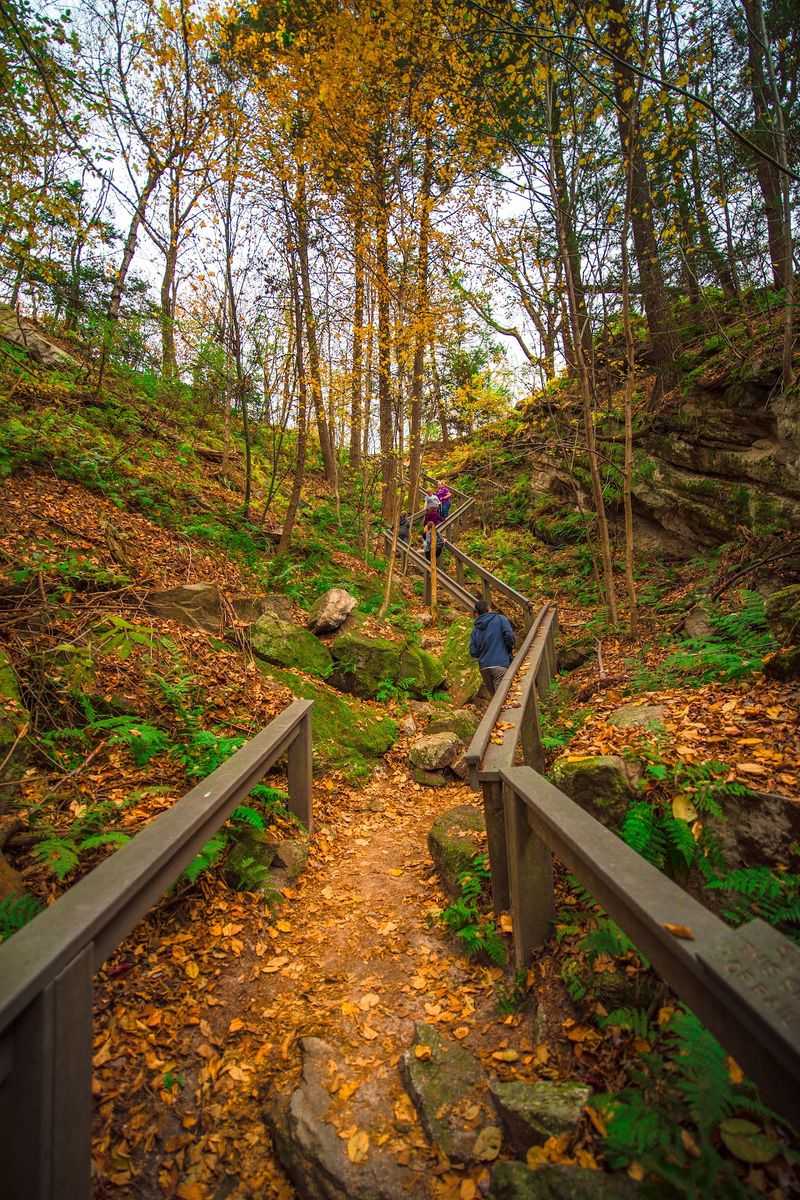
Timing a trip to the summit is a balancing act between hawk season and snake season, honestly.
Snakes in Pennsylvania are most active from late April through October. They love warm, sunny days, especially in late spring and early summer.
Hawk migration peaks from mid-August through mid-December, with September and October drawing the biggest crowds.
That means the busiest birding weeks overlap with snake season for a while.
My favorite choice is late October or early November. The air is crisp, the leaves glow orange and red, and most snakes have already headed back to their dens.
Cold mornings keep snakes sluggish and hidden, so an early fall hike feels extra relaxed. Warm afternoons change that.
Spring offers a smaller northbound migration and fewer people on the trail. It is lovely, but it is also when snakes first come out to bask.
Weekends in fall can get busy, so I aim for weekdays when I can. A cool, breezy day with a northwest wind often brings the best hawk flights.
The Climb Up The Lookout Trail
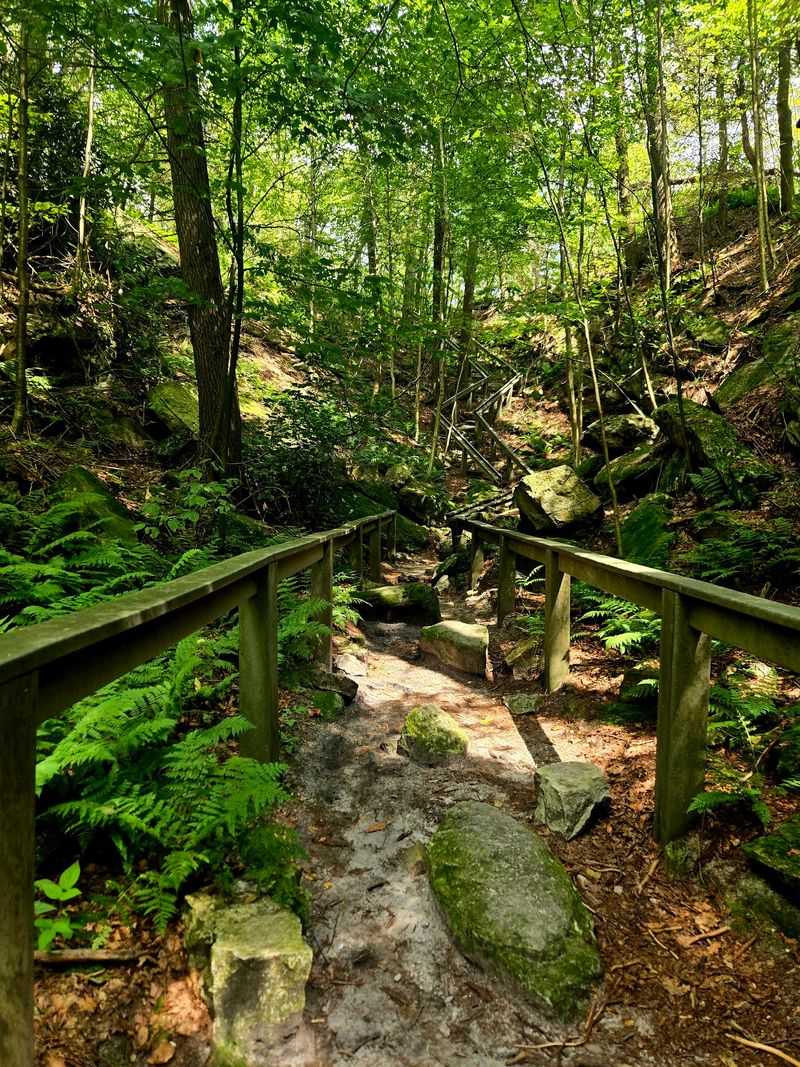
Getting to the North Lookout takes about a mile of walking, and every rocky step feels earned.
The adventure starts at the visitor center, where you pay a small trail fee. Right behind it, the path heads uphill into the woods.
The first stop is the South Lookout, which is easy and even has an accessible route for wheelchairs. It is a nice warmup with a pretty valley view.
After that, the trail turns rocky. I passed several smaller overlooks along the way, each one a good excuse to catch my breath.
Near the top, there is a steep stone stairway. Railings help in tricky spots, and a side trail lets you skip the steepest stairs if needed.
The round trip usually takes an hour or two at a relaxed pace. Kids can handle it with a little patience and plenty of snack breaks.
Since this is snake country, the stone steps deserve extra attention. I kept my eyes on the ground, looked up only when I stopped, and never tripped once.
At the summit, the boulders open up and the sky suddenly feels enormous.
A Sea Of Boulders In The Valley
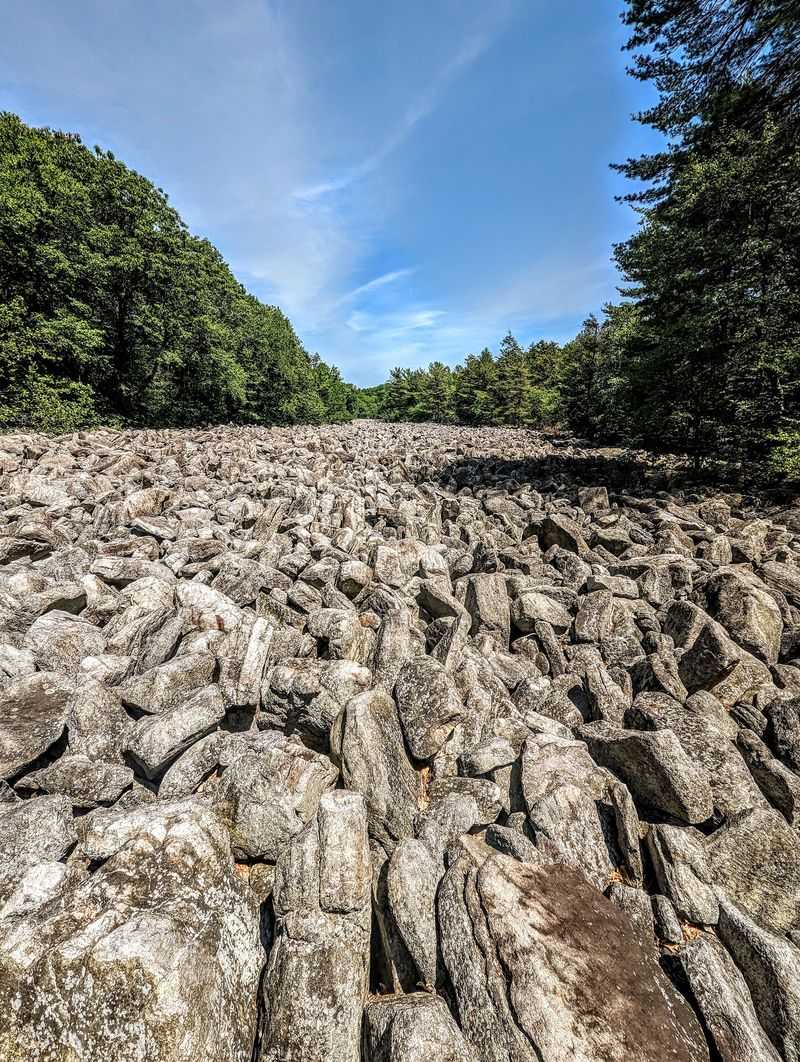
Look down from the summit and a strange gray stripe appears in the green forest below.
That stripe is the River of Rocks, an Ice Age boulder field stretching roughly two-thirds of a mile according to Hawk Mountain’s current reference material. A small stream runs beneath parts of the rocks.
The field formed during the last Ice Age, when repeated freezing and thawing fractured Tuscarora sandstone and boulders slowly moved downslope under cold periglacial conditions.
For experienced hikers, the River of Rocks Trail makes a difficult four-mile loop.
Hawk Mountain recommends allowing about four to five hours rather than treating it as a quick side trip before you commit to the descent.
I admired it from above, which suited my legs just fine. Honestly, the view is dramatic enough without the extra workout.
Rocky habitat can also attract timber rattlesnakes, so stay alert around sunny boulders and hidden gaps.
If you tackle that trail, follow the red blazes, carry food and water, stay on the marked route, and wear sturdy shoes with reliable grip.
Packing Smart For A Summit Picnic
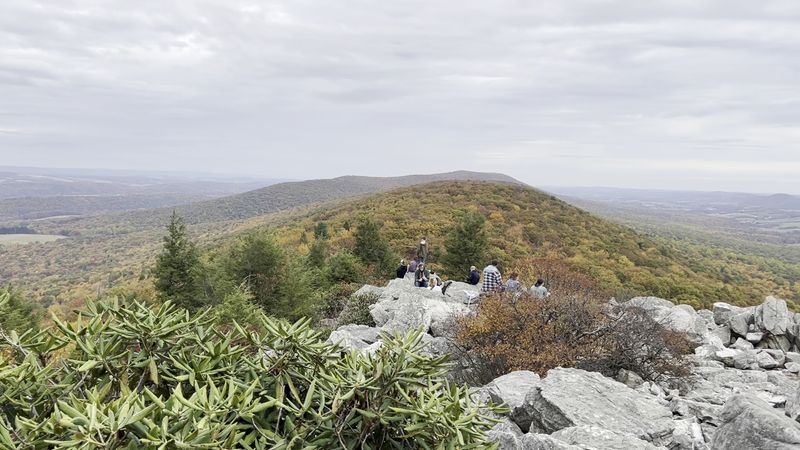
A good day at the top starts with a backpack that holds more than snacks and a phone.
Binoculars are the number one item. Hawks often fly far away, and a simple pair turns a tiny speck into a clear bird with real markings.
Sturdy hiking shoes come next. The rocks can be uneven and slippery, and good soles also keep your feet safer in snake territory.
I always bring water and a light lunch. Eating on the giant boulders while hawks drift by is one of my favorite ways to spend an afternoon in Pennsylvania.
Layers matter too, because the summit is often windy and cooler than the parking lot. A light jacket saved me on a breezy October day.
Leave your dog at home, since pets are not allowed on the sanctuary grounds. Service animals are the only exception.
Pack out every wrapper, and keep food sealed so you do not attract mice. Clean picnic spots help keep wild animals wild.
Hawk Mountain rewards a little planning with big views and a few wild surprises.