
New Jersey Has A Six-Story Elephant You Can Actually Walk Inside
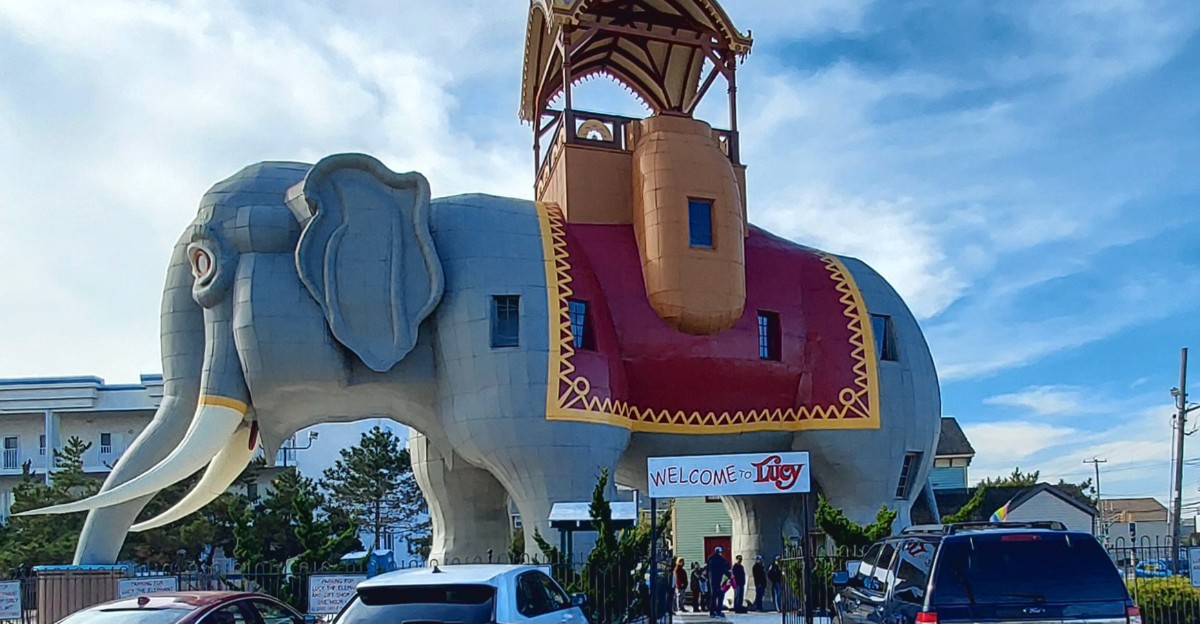
There are buildings you walk into. Then there are buildings you enter through an elephant’s back leg.
New Jersey really did not come here to be subtle.
This six-story roadside giant has been standing since 1881, which makes it older than both the Statue of Liberty and the Eiffel Tower. Visitors climb spiral stairs inside the hind legs, wander through the belly, peek out through the eyes, and can head up to the little riding platform on top.
At some point, you stop asking why somebody built a giant elephant and start appreciating that they actually committed to the bit.
New Jersey has plenty of odd roadside stops.
This one lets you literally walk through the punchline.
First, Take In The Full Six Stories
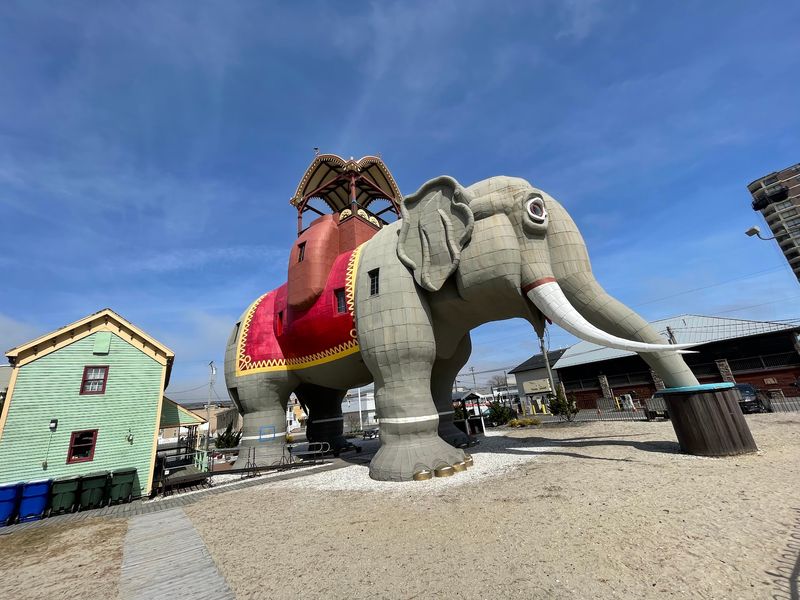
Okay, the elephant in the room is actually taller than the room. Lucy stands about 65 feet high, with a broad body, long trunk, and a carriage perched on her back.
Seeing the whole shape at once makes her size easier to grasp than any number can. Take a few steps back before choosing a photo angle.
From her toes to the top, Lucy resembles a storybook character turned into a building. She stretches about 60 feet long and measures roughly 18 feet across.
Her gray exterior has the look of elephant skin from a distance. Up close, you can spot the careful shapes that give her face and body their character.
For a photo that shows her height, keep the ground and the carriage in the frame. A closer shot can capture her trunk, eyes, or feet.
Give yourself time to walk around her, because each side tells a slightly different visual story. Even before you enter, you can see why an elephant-shaped building makes an ordinary shore stroll feel like an event.
Lucy is big enough to stop you in your tracks, yet detailed enough to reward a second look. That combination is her first bit of magic.
Next, Step Inside An Elephant
Here comes the part that turns a photo stop into a proper adventure. Find Lucy at 9200 Atlantic Ave, Margate, New Jersey 08402, then plan for a guided interior tour.
The way in leads through a spiral staircase inside one of her legs. Yes, walking into an elephant is an actual item you can add to your day.
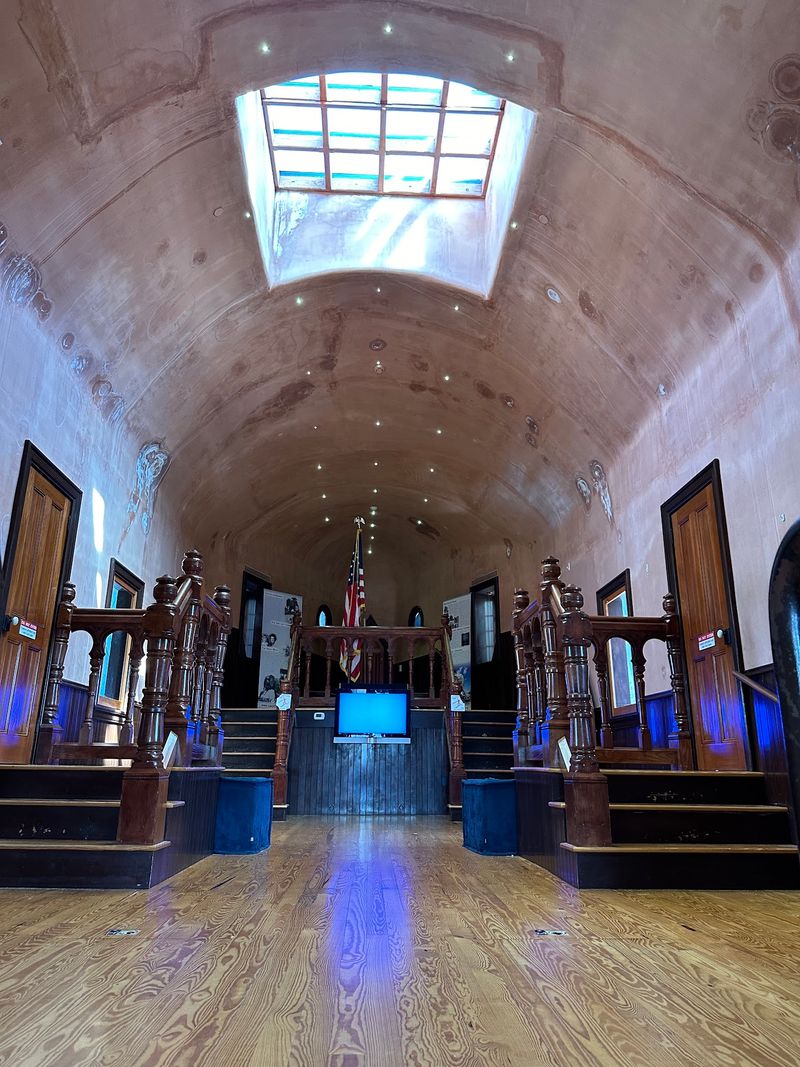
Inside, Lucy feels more like a small historic building than a giant sculpture. The climb is part of the experience, so comfortable shoes are a smart choice.
Move at an easy pace and keep a hand free for the railing. Checking current tour times on Lucy’s official website before leaving helps the visit go smoothly.
As you climb, remember that the walls around you have welcomed visitors for generations. Windows bring light into the structure, while the narrow path makes every turn feel surprising.
A tour also gives the inside a purpose beyond novelty: it connects the unusual design with Lucy’s long story.
Allow time to enjoy the full visit rather than treating the staircase like a race. Reaching the upper level feels sweeter when you have noticed the details along the way.
Lucy’s best trick is simple: she lets you see a famous landmark from the inside out.
Meet The Roadside Star Of 1881
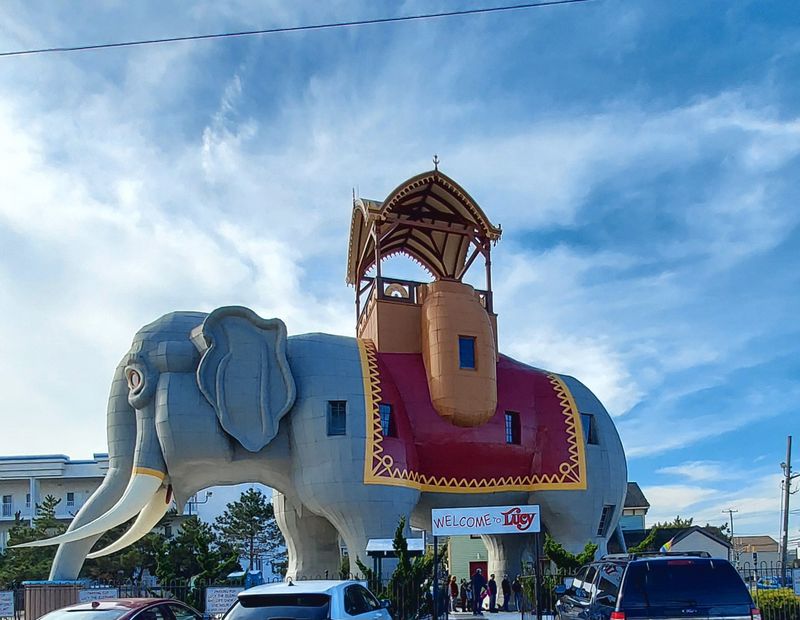
Talk about a grand entrance. Lucy was designed to make an entire area stand out.
Built in 1881, she originally went by Elephant Bazaar. Her elephant shape drew attention to the surrounding land when this part of the shore was still developing.
That clever idea turned a building into a memorable invitation to look around.
Lucy is an example of novelty architecture, which gives a building the shape of something familiar. Instead of a plain office, visitors saw an enormous elephant near the coast.
Picture discovering that silhouette long before phone maps and instant photos. One glance would have given the place a story worth sharing.
Her design also shows how creative a practical structure can be. Lucy offered indoor space while making the landscape playful.
She remains the only surviving example of three elephant-shaped buildings created from the same idea. That rarity makes a visit feel like finding a one-of-a-kind piece of American roadside history.
Pause outside and imagine the first visitors trying to describe her back home. The basic pitch still works beautifully: there is an elephant at the shore, and it is a building.
More than a century later, Lucy continues to prove that a bold idea can leave a lasting impression.
Look For The Clever Construction Details
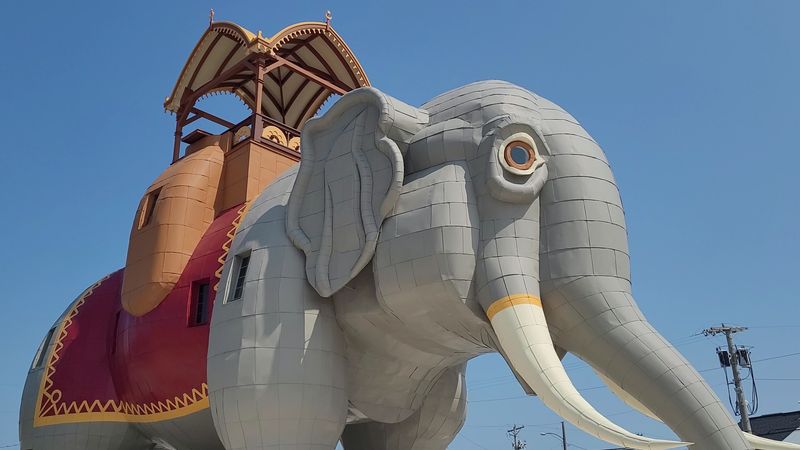
Wait until you notice that Lucy is a puzzle of shapes, materials, and clever choices. Wood forms much of her structure, while metal covers her elephant-shaped exterior.
Her builders used a huge amount of material to create something that looks surprisingly lively. The result is part building, part giant piece of shore art.
Look for windows tucked into the design rather than lined up like those on a typical house. Lucy has 22 windows, helping bring daylight inside her unusual form.
Her trunk, ears, legs, and back all help sell the illusion from the street. The carriage on top, called a howdah, makes the silhouette even more memorable.
Walk around the outside slowly and compare what you see from different angles. From one side, her broad body stands out.
From another, the trunk becomes the star of the picture. Those changing views are a reminder that Lucy was designed to be admired in three dimensions, not just on a postcard.
Her coastal setting also explains why careful upkeep matters. Sea air reaches every curve of that big gray exterior.
Preservation work helps keep the details clear and the structure welcoming. Next time you see a building with a plain front, Lucy may make you wonder what it could have been.
Follow Lucy’s Many Lives
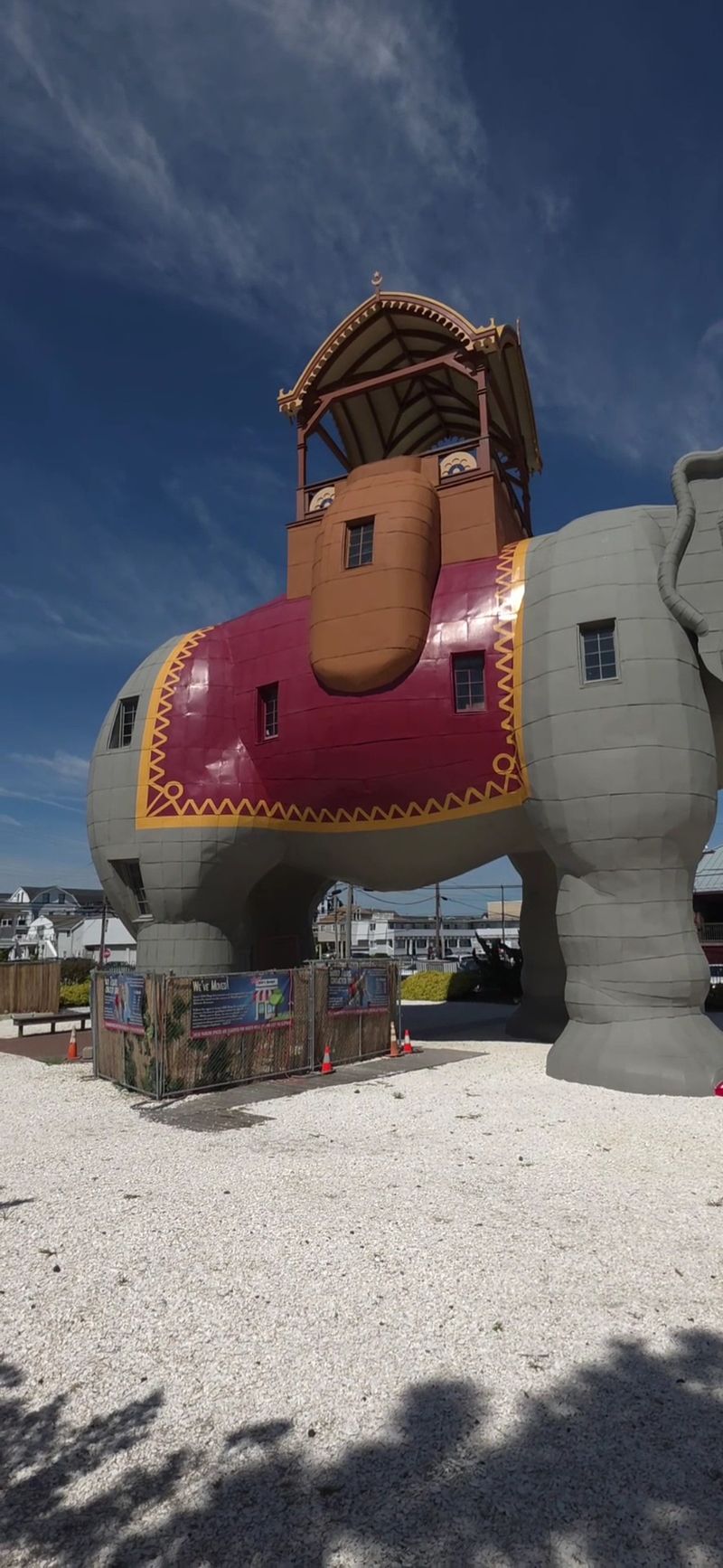
An elephant with a résumé sounds like a joke, but Lucy really has worn several hats. Her rooms have served different purposes as the shore changed around her.
She began as an eye-catching place connected with land promotion. Later uses included a restaurant and business space, adding fresh chapters to her long history.
For a time, Lucy even became a summer home. Her interior was arranged with bedrooms, a dining room, a kitchen, a bathroom, and a parlor.
Imagine setting a table inside an elephant while the coast waited outside. That image makes her more than an odd shape; she was once part of everyday life.
Today’s tour brings those earlier uses into focus through historic photographs and displays. Notice how flexible the rooms had to be.
A space made to attract attention found ways to stay useful across different eras. Seeing that timeline can make the interior feel surprisingly familiar, even with an elephant’s outline around it.
Ask yourself which version of Lucy you would most like to see for one afternoon. The land promotion era would have its surprises, while the summer home sounds wonderfully unusual.
Her changing roles give each visit an extra layer of imagination. Lucy has always offered more than a memorable face.
Picture The Day Lucy Changed Addresses
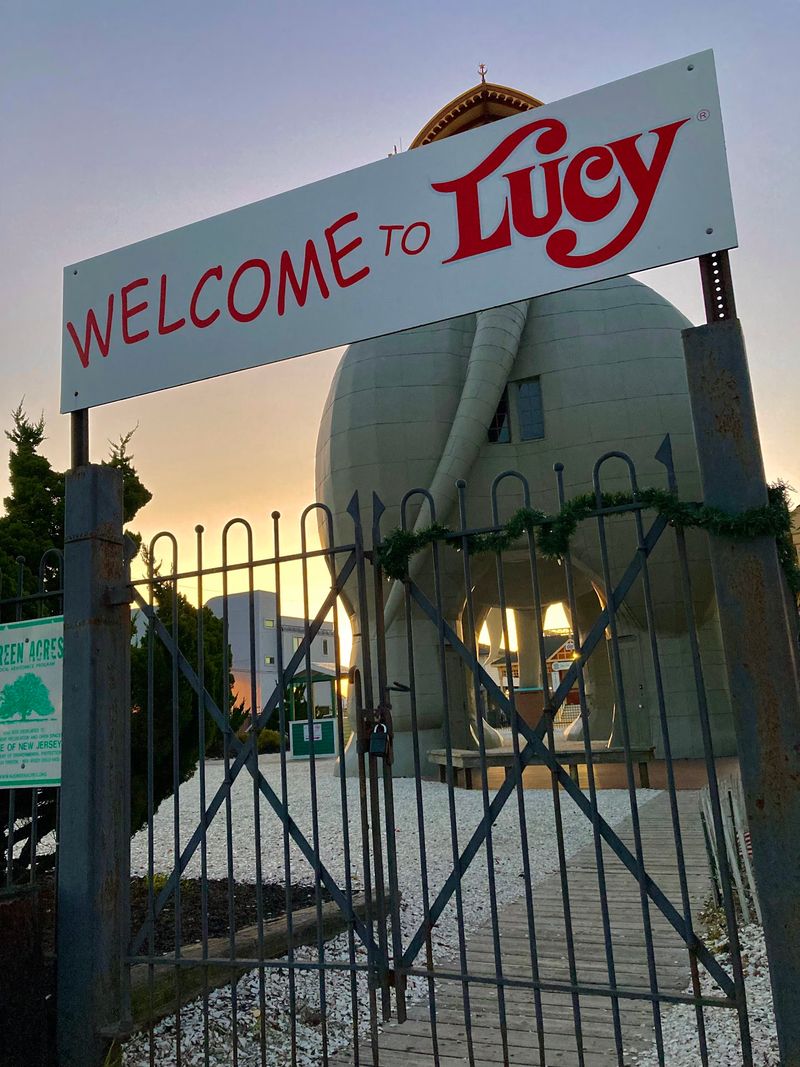
Now imagine arranging a move for a 90-ton elephant. Lucy’s relocation in 1970 was a remarkable chapter in her story.
Community supporters helped secure a new place for the landmark and raised money to make the move possible. On July 20, the trip from her original site took about seven hours.
That journey helps explain why Lucy stands where she does today. She was moved from Cedar Grove Avenue to property near the shore, where visitors could continue enjoying her.
Transporting a six-story building shaped like an elephant called for serious planning. It also gave Lucy a fresh setting for her next chapter.
After the move, restoration continued, and Lucy reopened to visitors in 1974. She received National Historic Landmark status in 1976.
Those dates turn an amusing roadside stop into a lesson about caring for places that make a town distinct. Every preserved detail represents time, effort, and a shared belief in her value.
When you stand beside Lucy, try to picture her traveling through Margate instead of standing still. It adds a sense of motion to a building that already feels full of personality.
Her new home became the place where future visitors could meet an old friend. That is quite a moving story, in every sense.
Climb Up For The Shore View
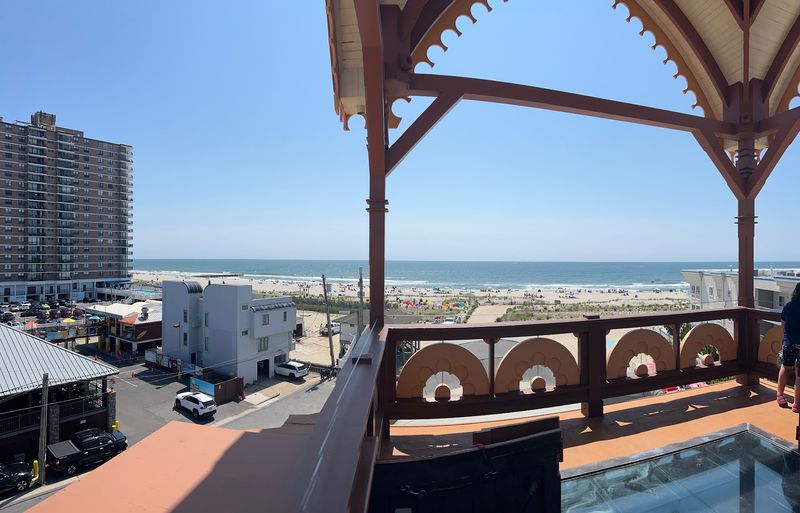
And then Lucy has one more surprise waiting above the stairs. The carriage on her back is called a howdah, and it works as an observation deck.
From up there, the shore opens around you. Look toward the Atlantic Ocean, the beach, Margate, and the distant Atlantic City skyline.
The view is a reward for taking your time on the way up. A clear day can reveal broad stretches of water and buildings along the coast.
Spend a moment finding the shoreline’s shape rather than immediately reaching for a camera. Lucy’s height gives a familiar beach scene a fresh perspective.
For photos, try one wide image that includes the ocean and another focused on a detail below. The light and sky can change the look of the scene throughout the day.
Check the forecast when planning your visit, and keep your camera ready once you reach the top. The scenery gives the elephant’s six stories a satisfying payoff.
Standing on an elephant’s back sounds like pure make-believe. Here, it is a real way to see the Jersey Shore.
The journey from a spiral staircase to open coastal views makes the tour feel like a tiny adventure with a giant finish.
Leave Room For Lucy’s Playful Side
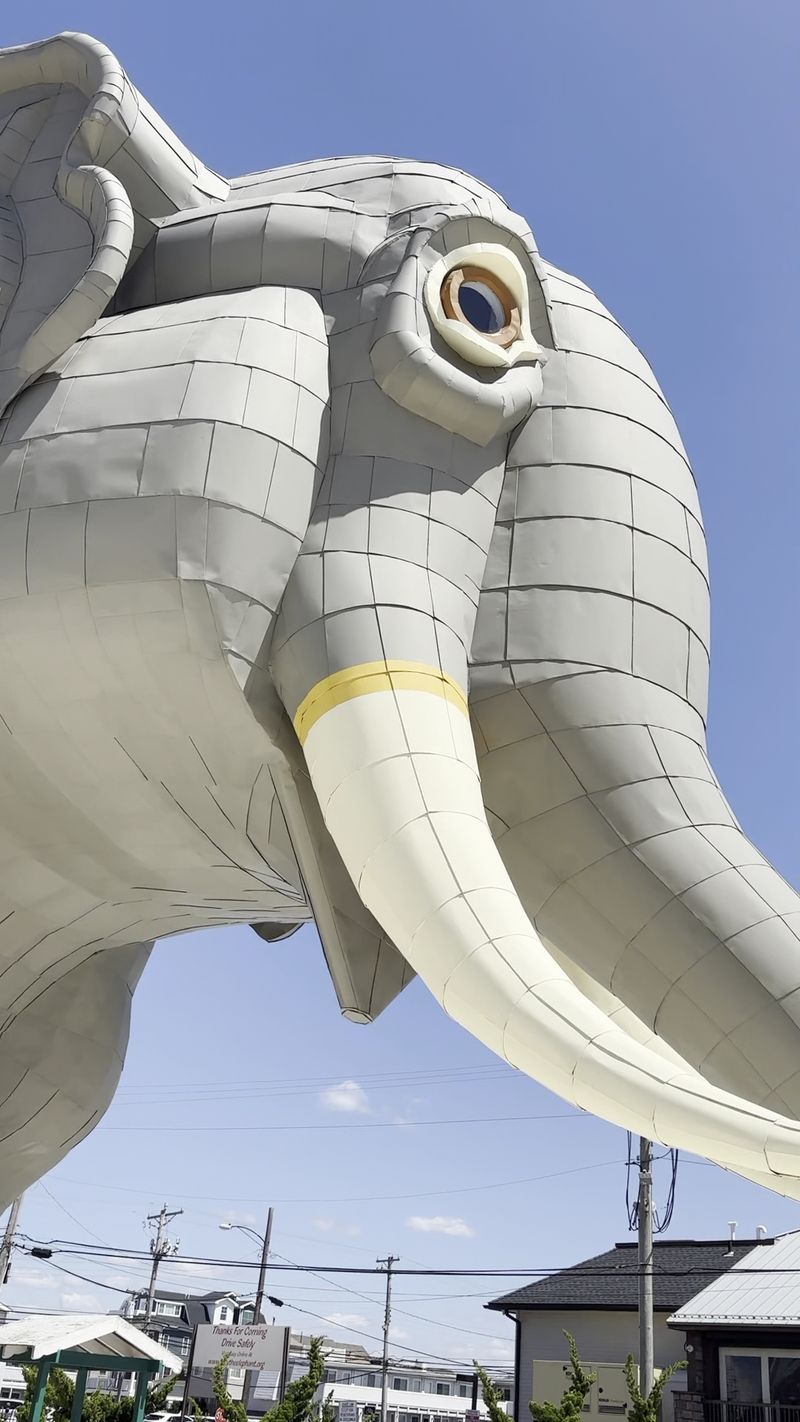
Before you go, give Lucy’s little details their own moment in the spotlight. Her face has a playful look, and a pink tongue adds an extra flash of color.
Around her July birthday, her toes have even received a festive touch. Those flourishes help explain why she feels like a character, not simply a building.
Lucy also represents a lasting piece of roadside travel culture. She is recognized as the oldest surviving roadside tourist attraction in the United States.
That title might sound formal for such a cheerful elephant, but it fits her story. Generations have found a reason to stop, look up, and explore.
A good visit leaves space for both sides of Lucy. Enjoy the silly delight of her giant shape, then think about the care that keeps her standing.
Recent exterior work has helped protect her metal covering in the coastal air. Her charm may look effortless, yet keeping a historic landmark bright takes steady attention.
Take one final look from the ground before heading on your way. You might notice a detail that escaped you earlier.
Lucy turns an ordinary shore day into a story with height, history, and a grin. How often can you say you walked inside an elephant?