
10 Best-Kept Secret Stores In Metro Detroit, Michigan For High-Quality Sewing Supplies
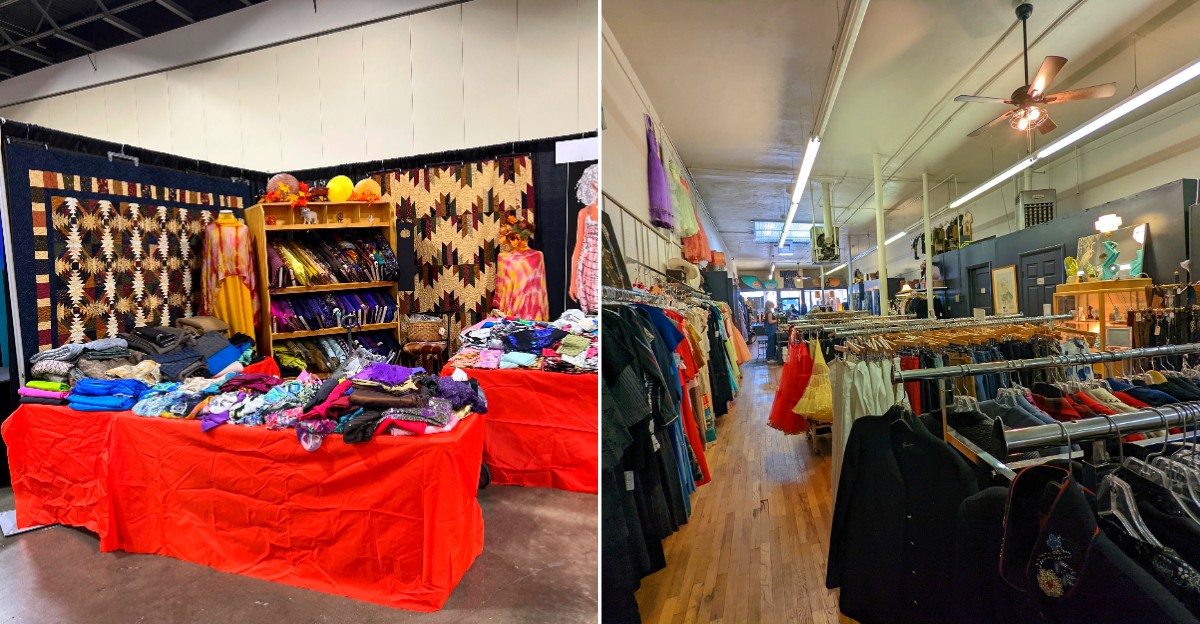
A creative afternoon can begin with something as small as a swatch, a skein, or the stubborn feeling that an unfinished project deserves another chance. Across Metro Detroit, independent fabric shops, sewing studios, quilting stores, and fiber arts spaces turn storefronts into little laboratories for making things by hand.
Each stop has its own rhythm. One may be stacked with bolts of fabric, another lined with yarn, patterns, or tools that suddenly make a complicated idea feel possible.
For makers exploring Michigan, these independent shops offer fabric, fiber, expert guidance, and the kind of local character big-box stores rarely match.
What makes the route fun is the variety. You might leave one shop planning a quilt and the next wondering whether you have secretly always wanted to knit.
Together, these places show how creativity survives through conversation, good materials, and the pleasure of finding exactly the right thing by accident.
10. Knit Sew Fabulous
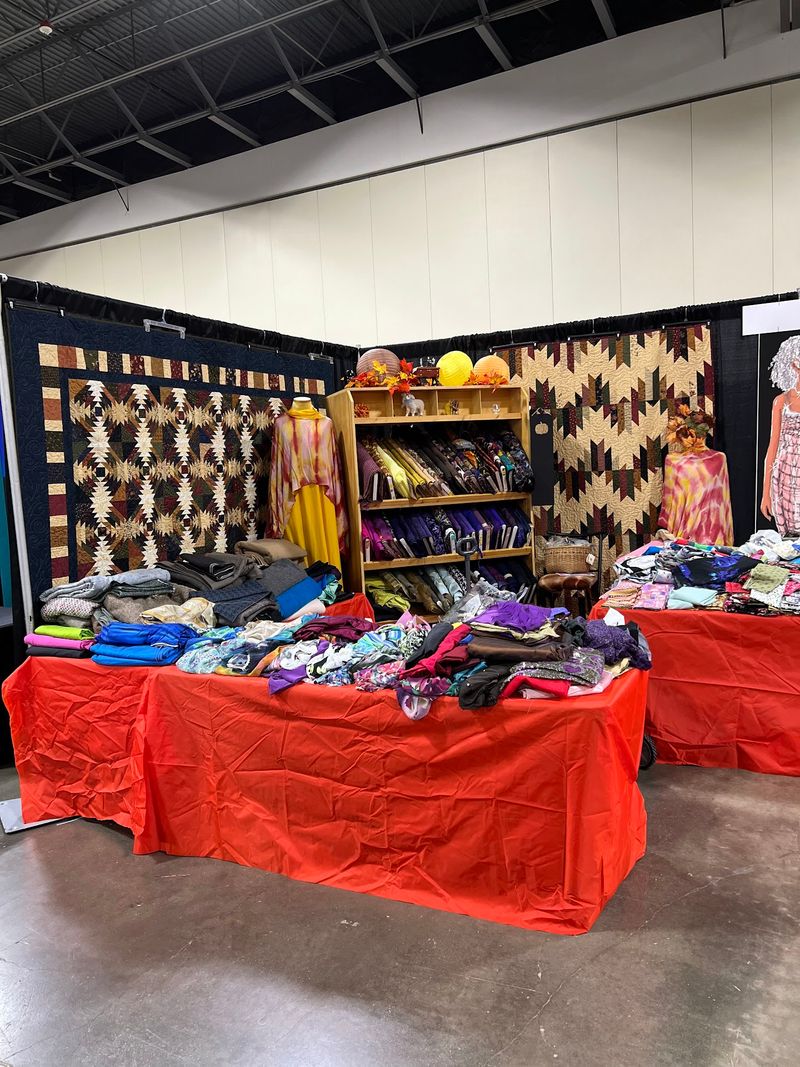
Vintage fabric can turn even a simple pattern into something nobody else will be wearing. At Knit Sew Fabulous, the Green Lennie initiative gives older textiles from estate sales and private collections another life instead of leaving them folded in storage for another decade.
The Detroit studio at 5555 Conner Street, Suite 3036, also focuses on custom sewing, alterations, garment construction, and fit. That makes this less like a traditional fabric warehouse and more like a place where material and technique are considered together.
Anyone working with vintage cloth should inspect it more carefully than a new bolt from a mill. Check for fading along folds, small holes, weakened fibers, uneven dye, and enough continuous yardage to complete the pattern without heroic improvisation halfway through.
Bringing the actual pattern helps considerably. Fabric requirements, grain direction, width, and repeat can determine whether a beautiful remnant is useful or simply something attractive to admire.
Appointments and available inventory can vary, so contact the studio before making a special trip. If alterations are the goal, bring the garment and the shoes or underlayers you expect to wear with it.
9. New York Designer Upholstery & Trim
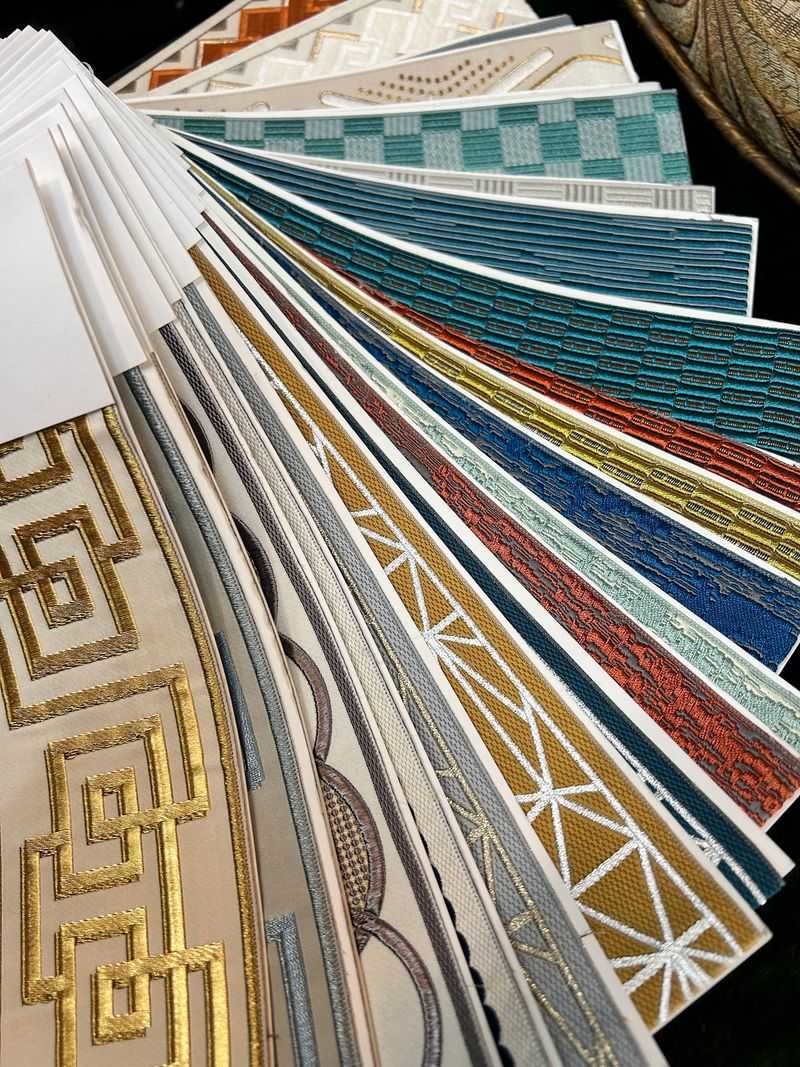
A worn chair can look completely different once the right fabric replaces whatever survived the last twenty years of family life. New York Designer Upholstery & Trim at 8530 West McNichols Road in Detroit specializes in furniture restoration and upholstery rather than ordinary garment sewing.
The family-owned business works with residential and commercial pieces, guiding customers through fabric choices before stripping, rebuilding, and reupholstering furniture by hand. Its material options include linen, wool, silk, embroidered textiles, and other upholstery-grade fabrics selected for both appearance and performance.
That durability question matters more than color alone. A pale silk may be beautiful on an occasional chair, while a family sofa needs something capable of surviving considerably more contact, cleaning, and daily use.
Photograph the furniture from several angles before visiting and measure the piece carefully. Ask about rub counts, stain resistance, cleaning requirements, pattern repeats, and whether the chosen textile needs extra yardage for matching.
The company also offers furniture collection and delivery, which is useful for pieces nobody wants to wrestle into a hatchback. Anyone interested only in buying fabric or trim should confirm current retail options before visiting.
8. Explore Haberman Fabrics
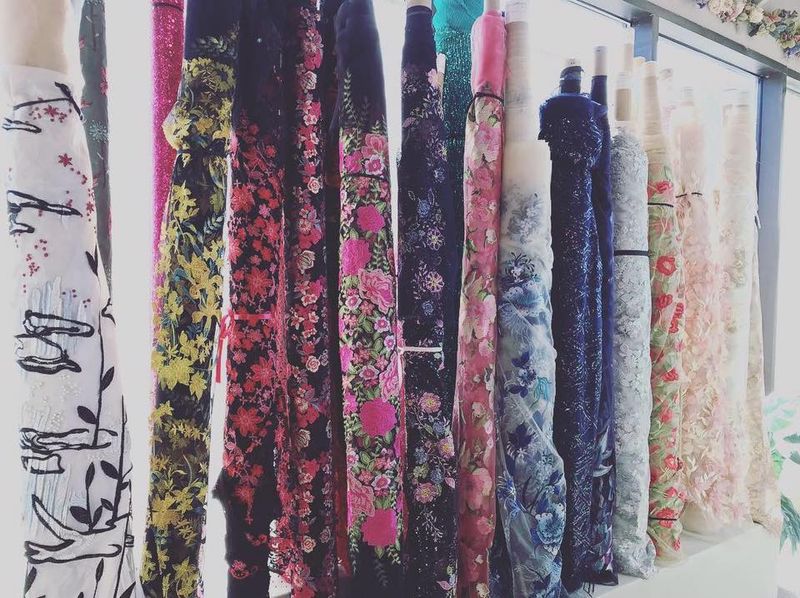
Rows of fabric become considerably more useful once you stop asking which one is prettiest and start asking which one will behave properly. Haberman Fabrics at 1060 West 14 Mile Road in Clawson has served Metro Detroit sewers since 1958 and remains one of the region’s best-known independent fabric specialists.
The selection goes well beyond basic quilting cotton. Apparel makers can browse wools, silks, linens, velvets, lace, specialty textiles, and other materials suited to everything from everyday garments to formalwear and costumes.
Patterns, notions, interfacing, lining, needles, and sewing tools help turn that fabric into an actual plan. Staff knowledge is especially useful when a material looks right but its weight, stretch, or drape might behave very differently from what the pattern expects.
Bring the pattern envelope rather than relying on memory. Suggested fabrics, width requirements, notions, and yardage are printed there for a reason, and velvet or directional prints may require additional material.
The shop is currently open seven days a week, making it one of the easier destinations here to fit into a fabric-focused afternoon. Swatches can also be discussed by phone if visiting in person is difficult.
7. Discount Fabric Outlet For Flexible Plans
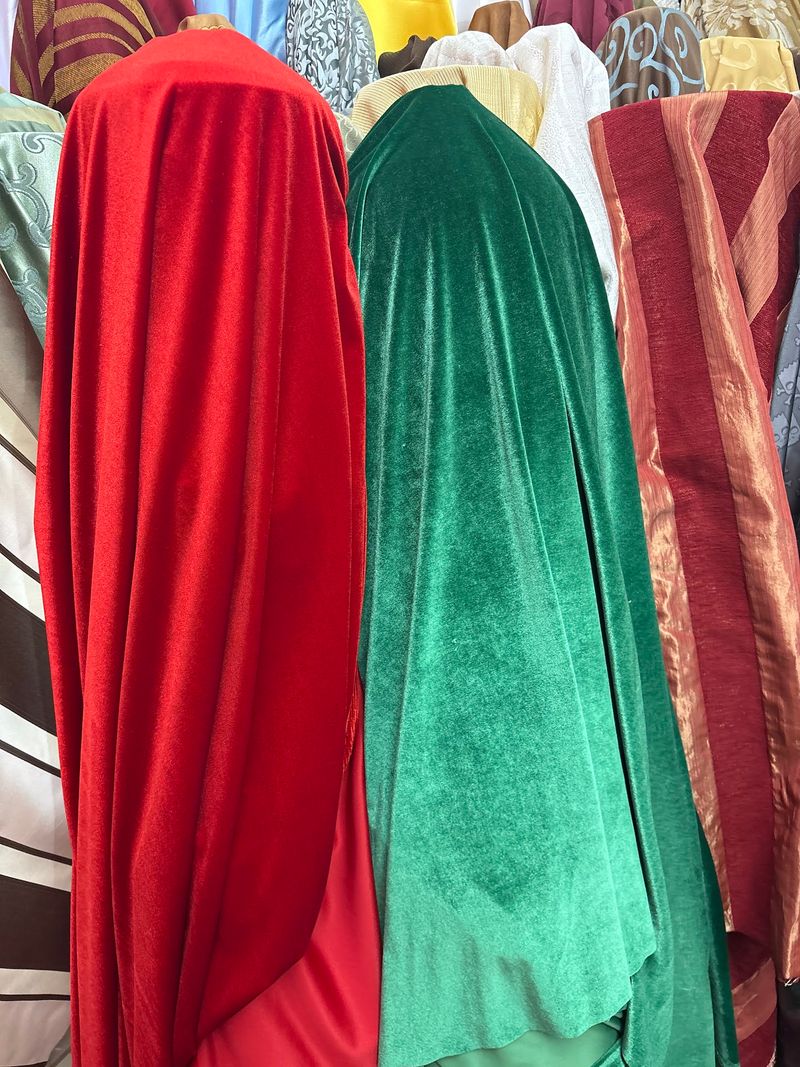
A bargain becomes much more useful when you know what you intend to make before the price tag starts making decisions for you. Discount Fabric Outlet at 303 West 14 Mile Road in Clawson carries a constantly changing mix of apparel, upholstery, drapery, and home décor fabrics.
The unpredictable inventory is part of the appeal. Instead of arriving determined to find one exact floral print, bring a few acceptable colors, textures, or fiber types and let the current stock shape the final choice.
Recent listings continue to show remarkably low per-yard pricing compared with many conventional fabric stores, particularly for apparel and home décor material. That makes it easier to experiment, buy enough for a larger project, or practice on something that does not feel financially terrifying to cut incorrectly.
Cheap fabric still needs inspection. Check fiber content, stretch, width, care instructions, opacity, and whether the material has flaws before calculating yardage.
Home projects deserve particular attention to pattern repeats. Curtains, cushions, and upholstered pieces can consume considerably more fabric once matching becomes necessary across seams.
Current hours generally run Tuesday through Saturday from 10 a.m. to 5 p.m., with Sunday and Monday closed. Haberman Fabrics sits nearby, making a two-store comparison easy.
6. Build Skills At Sew Modest
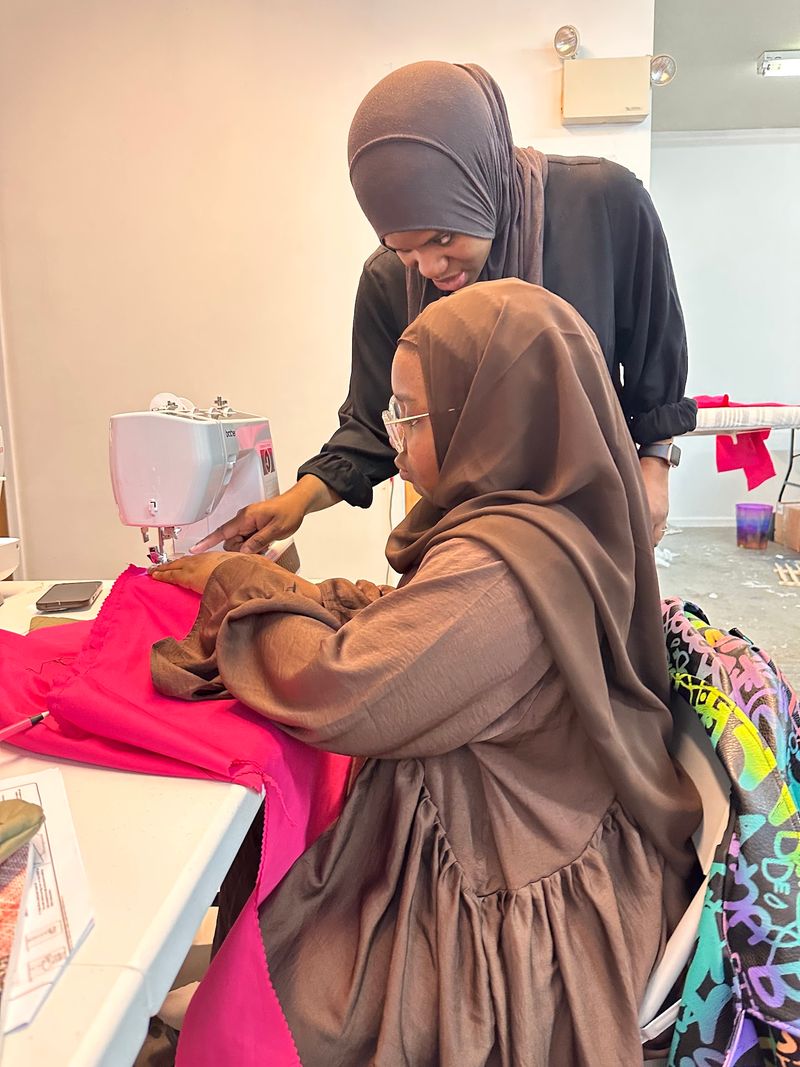
Sometimes the most expensive sewing supply is the pile of fabric bought before learning what to do with it. Sew Modest in Dearborn approaches the craft from the other direction, emphasizing garment construction, education, confidence, and community alongside the actual materials involved.
Founded by LaTerry Ya’seen in 2019, the studio has offered sewing instruction, upcycling projects, garment-making classes, and youth programming. Its focus on women and creative skill-building makes it especially useful for beginners who want guidance rather than another unexplained pattern envelope.
The listed studio address is 4917 Schaefer Road, Suite 200. Because this operates as a teaching space rather than a conventional all-day fabric store, checking the current class calendar and registration requirements before visiting is essential.
Ask exactly what each class provides. Some sessions may include equipment or basic supplies, while others may expect students to arrive with fabric, thread, notions, or a machine.
Beginners should resist the urge to choose difficult fabric simply because it looks impressive. Stable woven cotton is much more forgiving than slippery satin when you are still learning seam allowances and machine control.
5. The Fabric Boutique’s Garment Focus
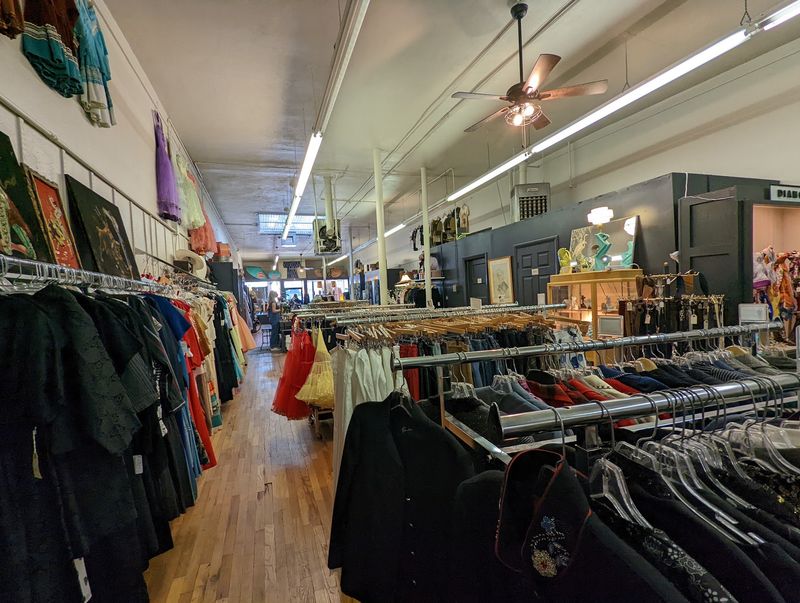
Sheer georgette, embroidery, and lightweight woven fabrics can make a garment look effortless while demanding considerably more patience from whoever has to sew it. The Fabric Boutique in Warren focuses on apparel textiles and sewing essentials suited to clothing projects that need movement, detail, or something less ordinary than basic cotton.
The shop is listed at 4190 East 14 Mile Road and carries fabrics, notions, and related supplies. Floral prints, embroidered materials, and lightweight textiles make it especially useful for dresses, blouses, occasion wear, and garments where drape matters as much as color.
Before choosing anything sheer, hold it against both light and dark backgrounds. That quickly reveals whether the final piece will need lining, underlining, or an entirely different plan for modesty and structure.
Fine fabrics also reward careful tool choices. A smaller needle, sharp scissors or rotary cutter, and a test seam on scrap fabric can prevent puckering, pulled threads, or several minutes of vocabulary unsuitable for a family sewing room.
Ask about washing requirements before cutting. Some fabrics should be prewashed, while others demand gentler care or professional cleaning.
4. Check Access At Sew What! A Quilt Shop
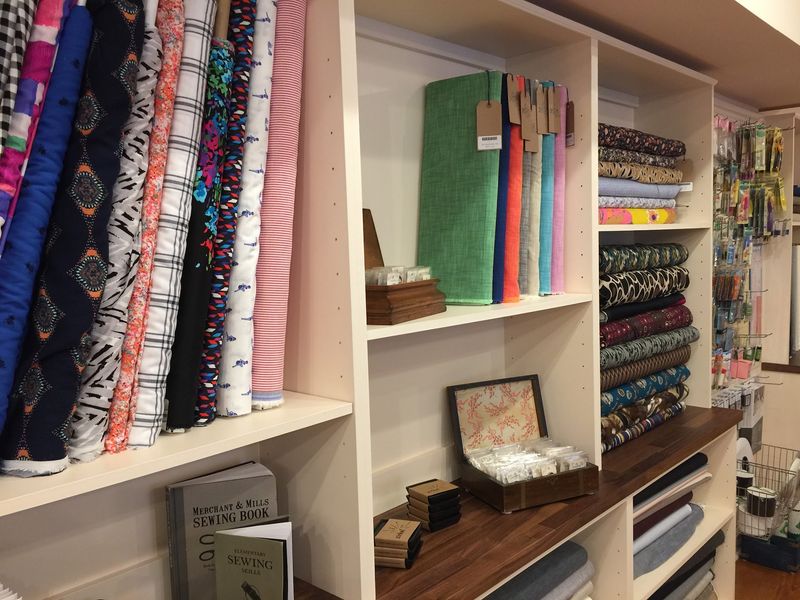
A quilting project becomes much harder to improvise once one coordinating fabric disappears halfway through the top. Sew What!
A Quilt Shop has long specialized in quilting cotton, patterns, notions, machines, and the careful planning that keeps that particular nightmare from happening.
The business is associated with 1128 Eureka Road in Wyandotte and was founded in 1997 by Judy and Bill. BERNINA machines, original patterns, quilting supplies, and coordinated fabric collections have all been part of its specialty.
Access has changed during a building transition, so do not rely on an old map listing and assume the front door is operating normally. Online ordering and curbside pickup have been used during the transition, making direct confirmation important before driving over.
Quilters should prepare yardage requirements before ordering, including backing and binding rather than focusing only on the decorative top. Directional prints, fussy cutting, and shrinkage can all increase the amount actually needed.
If purchasing a machine or specialized notion, ask about current demonstrations, servicing, and pickup procedures. Those services can matter as much as the initial purchase once equipment needs adjustment.
A coordinated quilt often contains dozens of small decisions that become difficult to reverse later.
3. The Wool & The Floss For Needlepoint
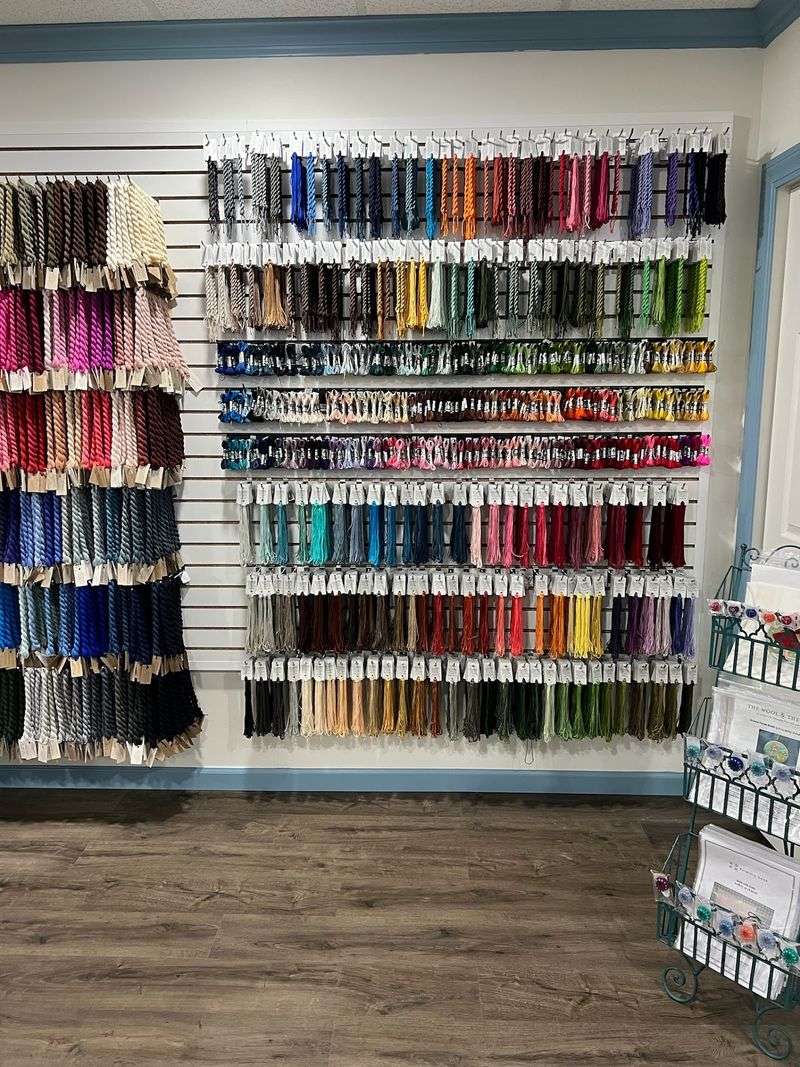
A painted canvas and several tiny bundles of fiber open a completely different branch of the needlework world. The Wool & The Floss at 19803 Mack Avenue in Grosse Pointe Woods is a full-service needlepoint shop rather than a conventional sewing store, specializing in canvases, fibers, tools, instruction, and finishing inspiration.
Owner Melissa MacLeod learned to stitch at the shop as a child before eventually purchasing the business in 2017. That history helps explain why beginner guidance sits comfortably beside specialty products intended for experienced stitchers.
Bring the canvas itself when choosing fibers whenever possible. Color accuracy on a phone screen can be unreliable, while thread weight, sheen, texture, and coverage may completely change how one painted section looks once stitched.
The store currently opens for in-person shopping Tuesday, Wednesday, Friday, and Saturday from 10 a.m. to 3 p.m. Some other days are reserved for phone service or special programming, making a schedule check useful before leaving home.
Online tutorials, project discussions, stitching retreats, and regular community programming extend the shop beyond its shelves. Beginners can ask staff to recommend a manageable first canvas rather than accidentally starting with something enormous enough to become a family heirloom through sheer unfinished longevity.
2. Michigan Fine Yarns’ Family Thread
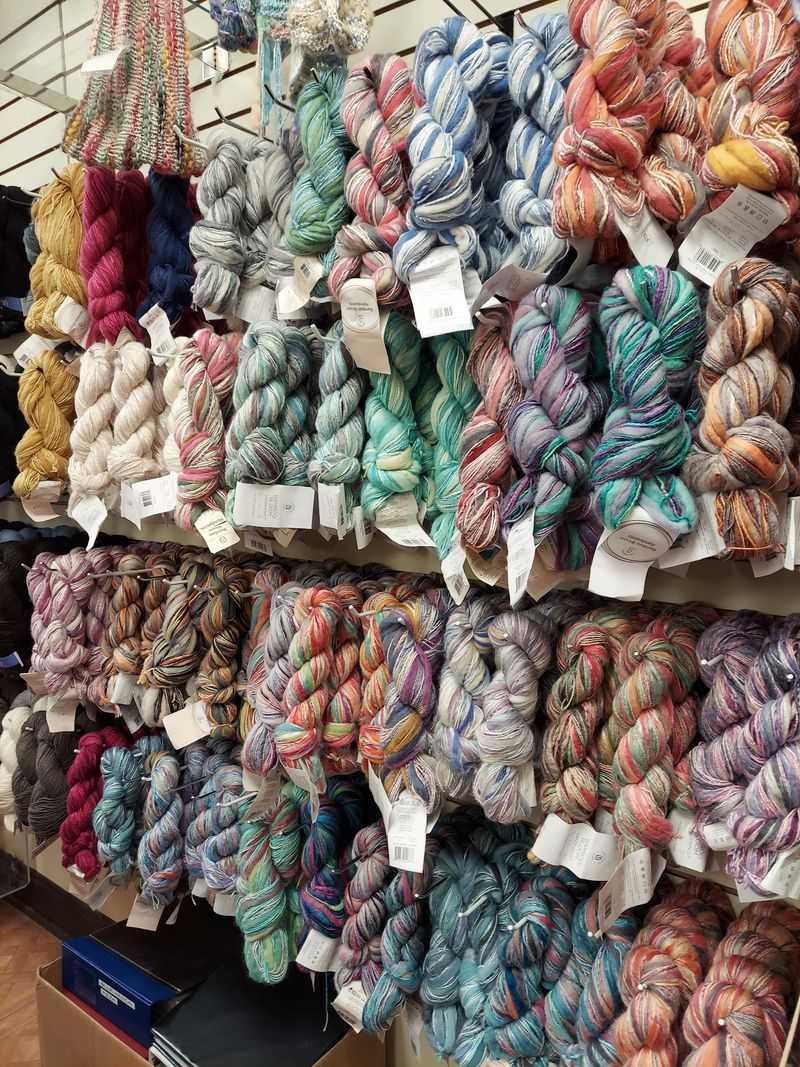
Walls of color make it very easy to forget that a sweater eventually has to fit somebody. Michigan Fine Yarns at 37519 Ann Arbor Road in Livonia has served local knitters and crocheters since 2008, combining a large yarn selection with tools, classes, project support, and a strong emphasis on fiber arts community.
The family-run, women-led business carries brands including Malabrigo, Cascade, Plymouth, Jamieson’s of Shetland, and its own curated products. Bibi Yarn carries an especially personal connection, honoring owner Swaran Dhaliwal’s mother and the family fiber traditions that helped shape the store.
Bring the pattern with you rather than estimating from a photograph. Yarn weight, gauge, fiber content, and total yardage matter more than whether two skeins happen to look similar on the shelf.
Hand-dyed yarn deserves another level of planning because skeins from the same colorway can still vary. Buy enough for the entire project and alternate skeins when appropriate to avoid abrupt color shifts.
Current store hours are Tuesday from 11 a.m. to 8 p.m. and Wednesday through Saturday from 11 a.m. to 4 p.m., with Monday and Sunday closed.
1. Find Project Help At Ewe-Nique Knits
A half-finished scarf does not always need to spend the next three years living in a basket. Sometimes one patient explanation is enough to rescue a project that went wrong several rows earlier.
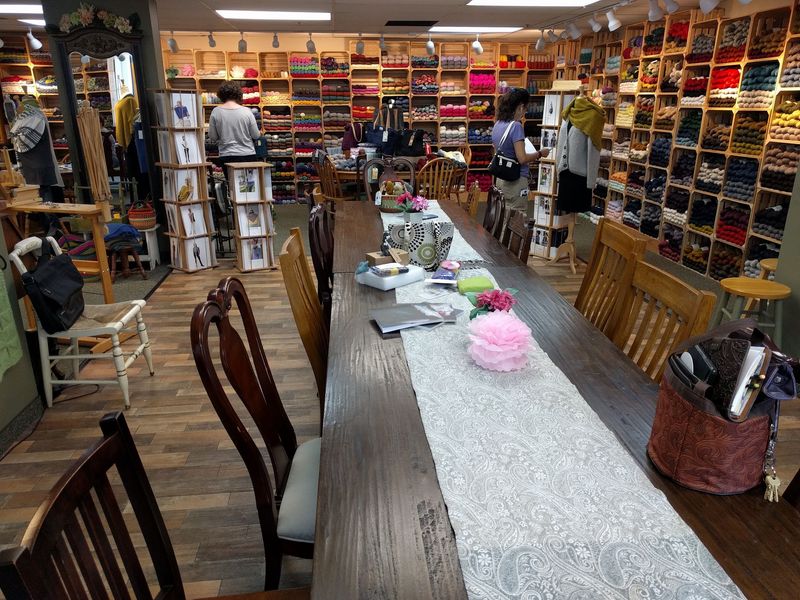
Ewe-Nique Knits in Royal Oak has been serving fiber artists since 1996 and offers yarn, patterns, tools, classes, and project assistance for knitting, crochet, spinning, and weaving. The shop is listed at 515 South Lafayette Avenue, making it a useful stop for anyone who wants both supplies and human help deciphering what happened.
Mother-and-daughter team Marilyn Grazioli and Amy Goller acquired the business in 2005, continuing its focus on teaching and community alongside retail. That combination matters when a pattern abbreviation feels as though it was written by someone actively trying to prevent success.
Bring the actual project, its pattern, yarn label, and any needles or hooks being used if you need troubleshooting. Those details help staff determine whether the problem involves gauge, tension, sizing, a missed stitch, or instructions being interpreted differently than intended.
Check current class schedules and assistance policies before visiting, particularly if you need extended one-on-one help rather than a quick question at the counter.
Like Michigan Fine Yarns, this is primarily a fiber-arts destination rather than a fabric store.