
Most Road-Trippers Have No Idea Illinois Hides 9 Covered Bridges Still Standing On Country Roads
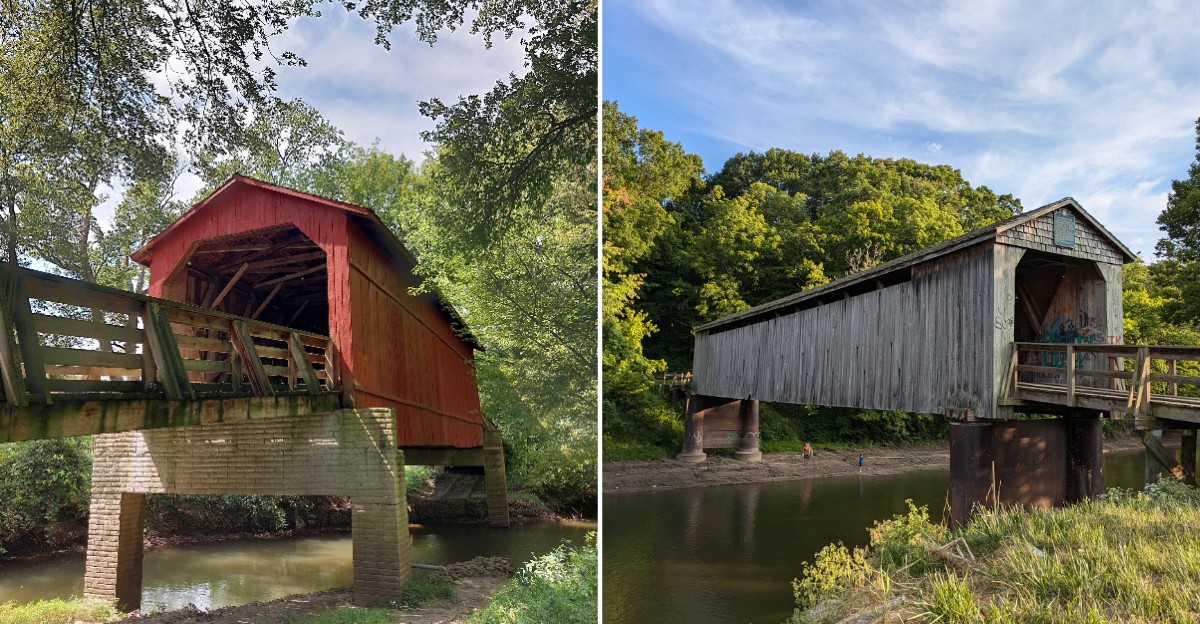
Wooden bridges with roofs still sit over Illinois creeks, and most drivers zoom past without knowing they exist. These old crossings were built when wagons and horses ruled the roads, and a few have been standing for more than 150 years.
Visiting them costs nothing, needs no ticket, and makes for a calm family drive through farm country. Grab some snacks, load up the kids, and get ready to walk where travelers crossed long ago.
1. Captain Swift Covered Bridge, Princeton
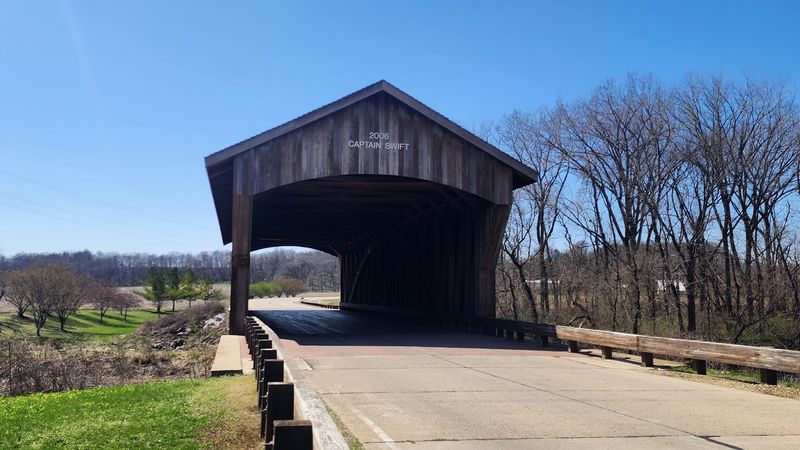
Brand new by bridge standards, this Bureau County beauty opened in 2006 and still managed to earn an award. The reason is simple and kind of amazing: it is built entirely of wood, with no steel holding it together.
Builders followed 19th-century ideas, including a classic Burr arch, so the bridge looks like it could have greeted horse-drawn wagons. Sitting about a mile west of Princeton, it crosses Big Bureau Creek in the middle of rolling farm fields.
The view around it is wide, open, and very peaceful.
What really sets it apart is size. It is the only two-lane covered bridge in Illinois, with a roadway at least 28 feet wide and a span of 128 feet.
Cars can pass each other inside, which feels a little like magic the first time.
A small free parking lot sits close by, giving families a safe spot to stop, stretch, and snap photos. Kids enjoy spotting the wooden beams and counting the arches overhead.
Just plan ahead, since there are no restrooms or places to eat on site.
Pair it with the older red bridge north of town for a two-bridge Princeton day that costs nothing but gas.
2. Mary’s River Covered Bridge, Chester
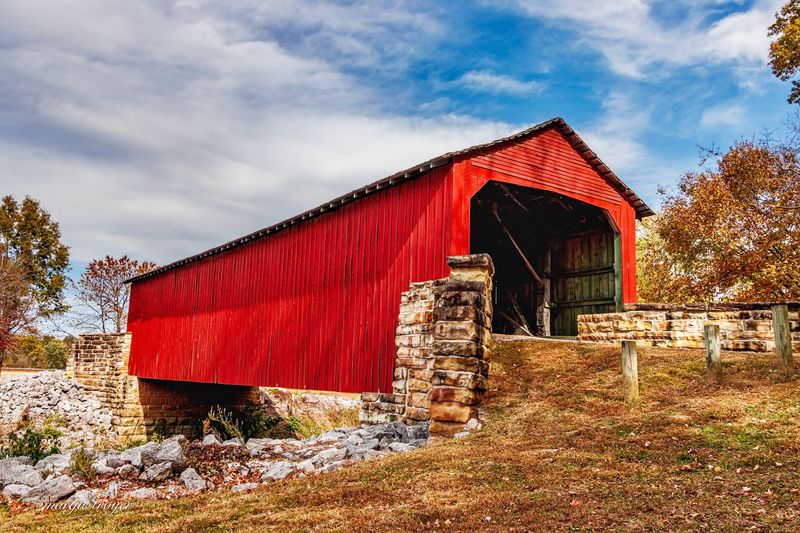
Back in 1854, farmers hauled crops across this bridge on a plank toll road between Chester and Bremen. That makes it the oldest covered bridge in all of Illinois, and it still stands proudly in Randolph County.
You will find it about four miles northeast of Chester, right off the road. Its bright red sides pop against the green hills of southern Illinois.
It is also the only covered bridge left in this corner of the state, so it feels like a true local treasure.
Cars stopped crossing in 1930, and the State of Illinois bought it in 1936 to keep it safe. Workers repaired it in 2004 and 2005, but much of the original 1854 timber is still there.
Walking its 86 feet means stepping on real pioneer history.
Families will appreciate the free parking, picnic area, and helpful signs that explain the story. Peek over the side for rock formations and the stream below, which make great photo backdrops.
The site is open around the clock. For a quieter visit, try a Sunday morning or a Monday, then pack a lunch and let the kids explore.
3. Historic Sugar Creek Covered Bridge, Glenarm
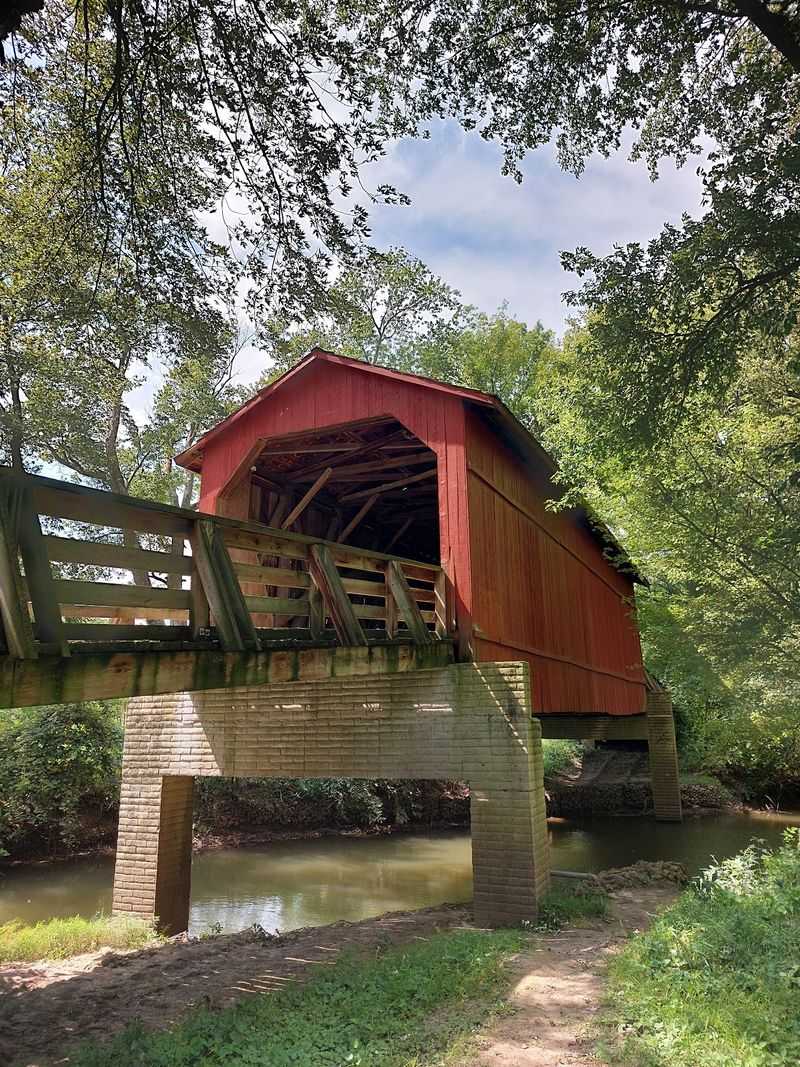
Route 66 travelers, take note. Just a short hop from the Mother Road and Interstate 55, a brilliant red bridge waits quietly in Pioneer Park near Glenarm.
Historians do not agree on its birthday. Some sources say 1827, others say 1880, but a bridge has crossed Sugar Creek at this spot for close to 200 years.
Either way, it is one of the most beloved landmarks in Sangamon County.
The Burr truss structure stretches 110 feet. Cars quit using it in 1984, so now it belongs to walkers, which makes it a relaxed place for little legs to wander.
Caretakers added cameras, sprinklers, and fire alarms to protect it for future generations.
Around the bridge, the park offers a small pavilion and picnic tables. In warm months, a chorus of cicadas fills the air and gives the whole place an old-time summer feel.
Photographers love it, and it is easy to see why.
Parking is free in the lot or along the street. Bring sandwiches from home, take a slow stroll across, and you have a sweet half-day outing southeast of Chatham that barely dents the family budget.
4. Historic Thompson Mill Covered Bridge, Cowden
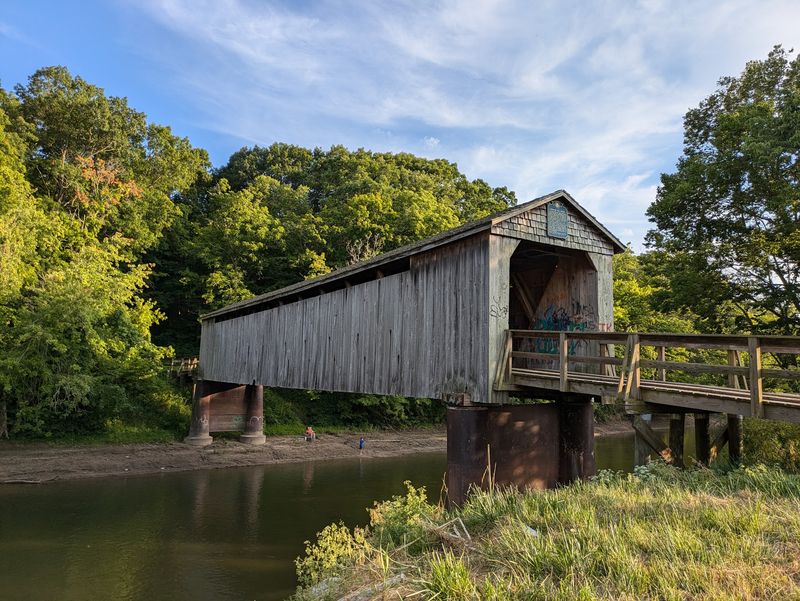
Slim is the word here. At just 10 feet 7 inches wide, the Thompson Mill bridge is the narrowest covered bridge in Illinois, and walking through it feels cozy in the best way.
Its journey started far from Shelby County. Built in 1868, the Howe truss pieces were made in Michigan, shipped to Shelbyville, and then hauled by horse-drawn wagons to the Kaskaskia River.
Imagine moving a whole bridge without a single truck!
Once upon a time, this crossing linked Springfield, Taylorville, and Effingham travelers, and it led locals to the nearby Thompson Mill. The total length runs 160 feet, with a 105-foot truss and an 11-foot-4-inch clearance.
Unlike the painted red bridges on this list, Thompson Mill wears natural gray, weathered wood. That faded look tells its age better than any sign could.
Today it welcomes only people on foot, keeping the scene calm.
Yes, it sits a few miles northeast of Cowden on a quiet rural road, so it takes some effort to reach. Honestly, though, how far is too far for a bridge like this?
A free parking lot waits at the end, and kids will remember the narrow walk.
5. Historic Wolf Covered Bridge & Iron Pony Truss
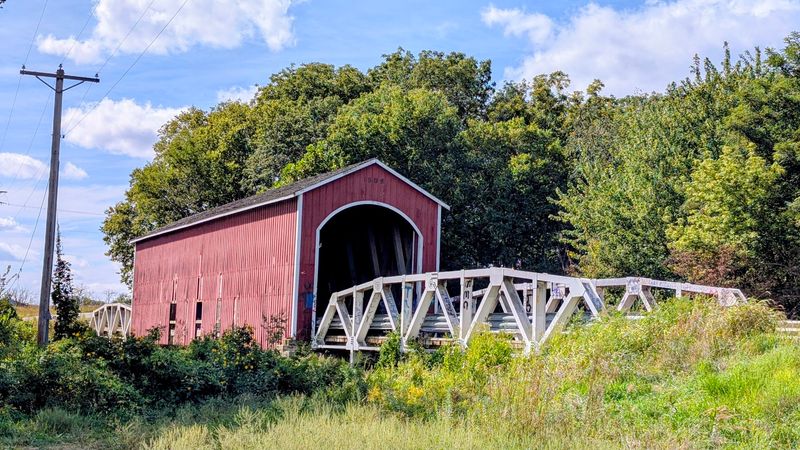
Floaters on the Spoon River know this one well. Paddlers drifting through Knox County often pull over near Maquon just to admire the Wolf Covered Bridge from the water.
What makes it special is pairing. The wooden covered section links up with an iron pony truss, so you get two styles of old bridge building in one place.
It is a neat lesson in history for curious kids who like to compare how things are made.
Even better, the bridge is still in daily use and in excellent shape. Many covered bridges have retired to walking duty, but this one keeps working for local drivers.
That makes it feel less like a museum piece and more like a living part of the community.
The surrounding scenery is pure western Illinois charm, with trees hugging the Spoon River and quiet farm roads leading in. It is a great stop for anyone who enjoys a slow country drive.
Plan a summer river float and finish with photos at the bridge, or simply cruise out for an afternoon look. Either way, the cost stays low and the memories stay big.
6. Henderson County Covered Bridge Park
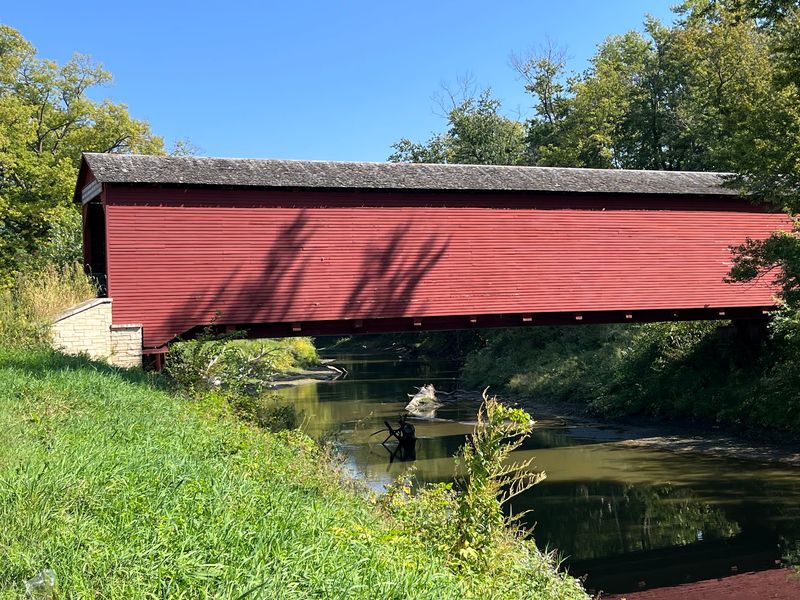
Floods could not keep this bridge down. In 1982, rushing water swept it off its spot and carried it downstream, yet locals rebuilt it in 1984 using many of the saved original timbers.
The first version was built in 1866 by Jacob Allaman, using a sturdy Burr truss design. It spans Henderson Creek about three miles south of Oquawka, and drivers can see its red sides from Illinois Route 164.
The bridge is also listed on the National Register of Historic Places.
After carrying traffic until the mid-1930s, it became a walking bridge and the heart of a roadside park in 1936. That park is still a lovely, quiet stop with plenty of room to roam.
Families with pets will be happy here, since dogs are welcome and there are picnic tables ready for lunch. The park is open around the clock, so sunrise or sunset photos are possible.
Visitors from across the river will like that it sits only about 30 minutes from Burlington, Iowa. For Illinois families, it pairs nicely with a drive along the Mississippi and costs nothing to enjoy.
7. Historic Cumberland County Covered Bridge, Toledo
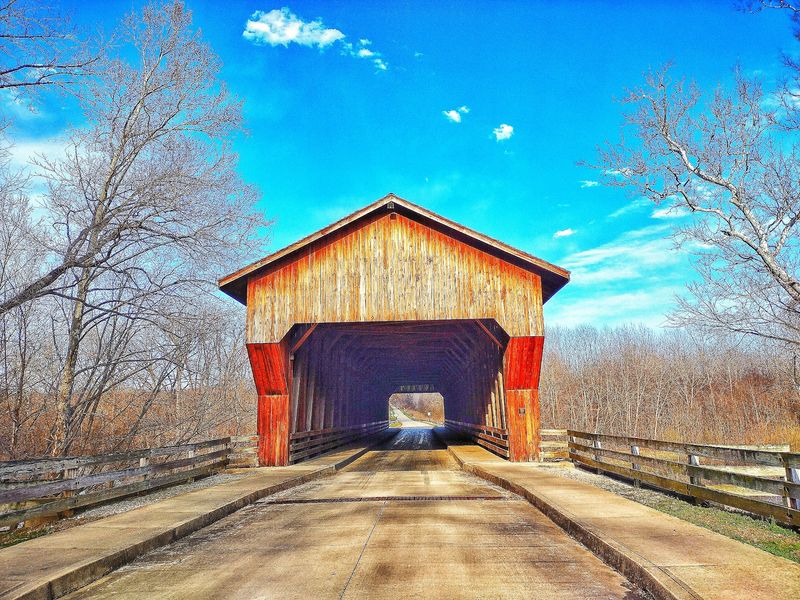
Two hundred feet. That is how long this bridge stretches, making it the longest covered bridge in Illinois by a wide margin.
Here is a fun twist: it only looks ancient. The current bridge was built in 2000 as a careful copy of the 1832 Jackson Covered Bridge, which floods washed away more than once over the years.
Builders matched the old style so well that many travelers assume it is the original.
Sitting along the Historic National Road, also known as Old Highway 40, the bridge crosses the Embarras River near Greenup. Unlike most on this list, you can actually drive through it.
Rolling across those wooden walls in the family car is a thrill kids will chat about later.
Prefer to stay on foot? A small parking area connects to a pretty trail that shows off the bridge up close and from a distance.
Shady spots nearby, including the Dugout Rock area, make it easy to sit and relax.
The site is open all day and night, and parking is free. Add a picnic, and you have a full countryside outing in eastern Illinois for practically nothing.
8. Lake of the Woods Covered Bridge, Mahomet
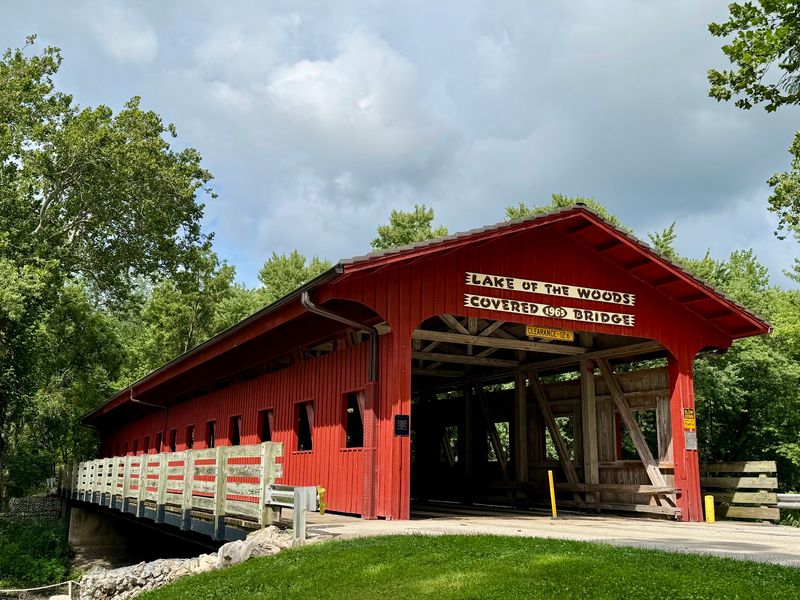
Picture a wooden covered bridge stretching over a peaceful river, with autumn leaves gathering along the banks. That lovely scene awaits inside Lake of the Woods Forest Preserve in Mahomet.
Built in 1965, the bridge connects two sections of the preserve over the Sangamon River, creating one of the area’s most recognizable landmarks.
Its design was inspired by a historic covered bridge near Boston, giving this relatively modern structure an appearance reminiscent of much older crossings.
Visitors can admire its wooden exterior and enjoy the surrounding scenery, while a separate walkway accommodates pedestrians and cyclists.
The bridge is also open to vehicle traffic, making it an especially interesting stop for anyone who enjoys driving through covered bridges.
Beyond the crossing, Lake of the Woods offers enough attractions to fill an entire afternoon.
Families can explore the preserve’s botanical garden or visit the Museum of the Grand Prairie to learn about local history.
Another memorable attraction is the Hi-Tower, a tall structure featuring a carillon that plays music throughout the grounds.
October is a wonderful time to visit, when the surrounding trees begin showing their autumn colors.
Pack a picnic, bring comfortable walking shoes, and allow plenty of time to enjoy the scenery.
9. Historic Robert Parker Coffin Covered Bridge, Long Grove
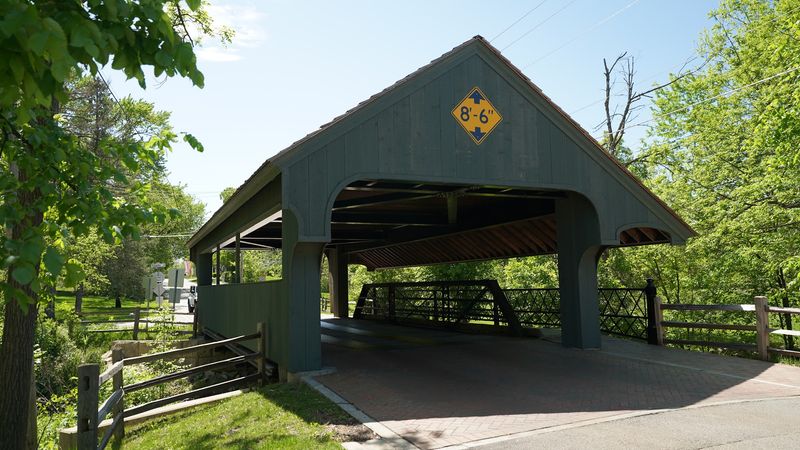
Ever seen a covered bridge become a town celebrity? Long Grove’s Historic Robert Parker Coffin Covered Bridge has earned that distinction, thanks to its remarkable history and the community’s determination to preserve it.
The original iron bridge was constructed in 1906 over Buffalo Creek, long before its familiar wooden covering appeared.
That distinctive roof was added in 1972, creating the old-fashioned appearance visitors recognize today.
Over the years, the bridge became an important symbol of Long Grove’s historic downtown, but its survival was not always guaranteed.
Structural concerns and repeated vehicle collisions threatened its future, prompting residents and preservation groups to rally behind restoration efforts.
Following a particularly damaging truck accident in 2018, the bridge underwent extensive repairs and reopened in August 2020.
Today, its narrow roadway and low clearance still require drivers to pay close attention to posted restrictions.
The surrounding village adds plenty of reasons to linger after seeing the bridge.
Historic downtown Long Grove offers independent shops and tempting sweet treats, making it easy to turn a quick photo stop into an afternoon outing.
Seasonal festivals bring additional activity to the village, including the annual Strawberry Fest during summer.
For travelers who appreciate small-town history with a side of nostalgia, this landmark offers a memorable experience.
Few Illinois bridges have inspired quite so much local affection.