
In His Seventies, A North Carolina Farmer Started Building A Stone Village That Grew To 27 Tiny Buildings
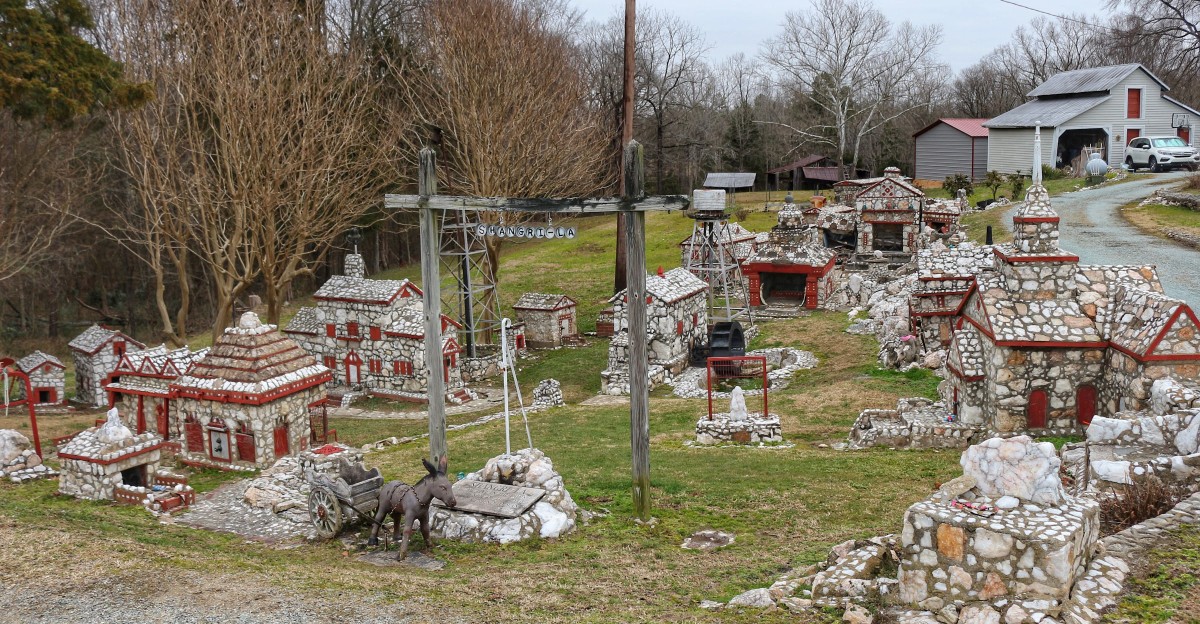
A retired tobacco-country farmer looked at a pile of rocks and decided they needed a hotel. And a church.
And a theater, too.
What kind of retirement hobby ends with an entire town? This one did.
He kept stacking stones and mortar until his side yard held a tiny village of 27 buildings.
I love that none of it was planned by architects or funded by grants. It came from one man, his hands, and a whole lot of local quartz.
I can’t imagine hauling that much rock at an age when most folks are perfecting their recliner game.
The best part? This little North Carolina village still stands, free to visit, right beside a two-lane road.
So who gets to live in a town where every building fits under your elbow?
A Retirement Project That Went Wildly Off Script
Most people retire and take up fishing. Henry L.
Warren took up city planning, one small rock at a time.
Warren began building Shangri-La Stone Village in 1968.
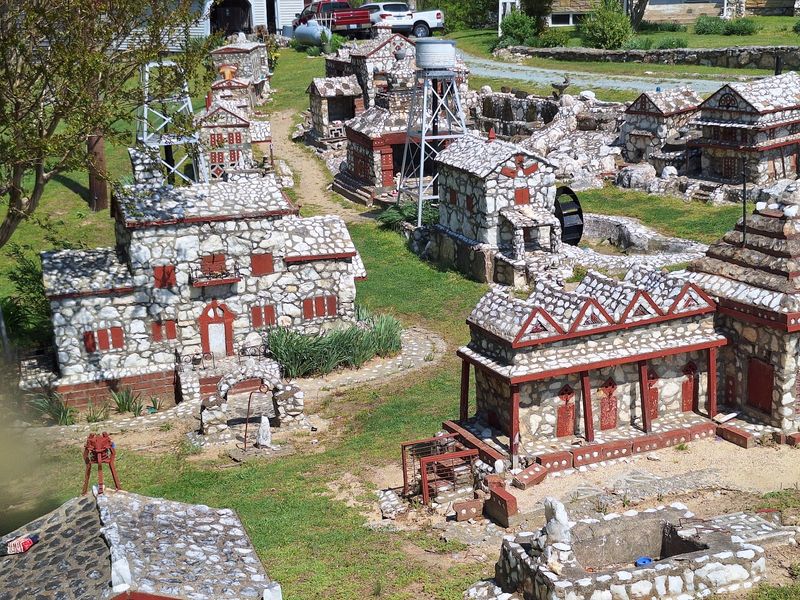
By the end, his little settlement had grown to 27 buildings. That’s more structures than some real crossroads communities can claim, and he built them without a construction crew.
Warren used stone and mortar, plus plenty of quartz gathered from the area. The result looks charming and slightly unbelievable, like a storybook town that decided to stay put.
I believe that’s what makes the place hit so hard. It wasn’t built for tourists or money.
It was built because one man had an idea and refused to call it silly.
Keep that history in mind as you walk the rows of tiny rooftops. Every wall was set by hand, by someone who had already lived a full life before starting.
Not a bad reminder that big projects don’t come with an age limit.
Every Tiny Building Has A Job To Do
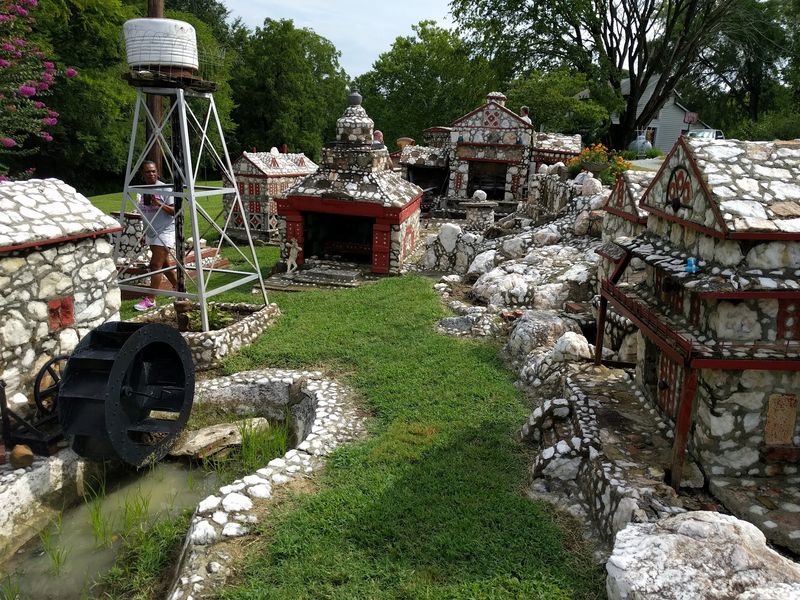
A town needs more than houses, and Warren clearly knew it. His village includes the kinds of places that kept a real community running.
You’ll spot a tiny church among the buildings, along with little shops and homes. Accounts of the village also list spots like a hotel, a theater, and a mill.
None of the structures stand much taller than about five feet. That size puts them right at eye level for kids and at peek-in level for grown-ups.
Bend down and look closely at the doors and windows. Small surprises sometimes wait inside, adding a bit of treasure-hunt fun to the stroll.
The buildings sit close together, so you can move from one to the next easily. Give each one a few seconds, because the details reward patience.
It’s also fun to guess which building would be your favorite to run. Mayor of the mill, anyone?
That sense of a complete little world is what separates Shangri-La from a simple rock garden. It feels organized, like a town that’s just waiting for its residents to wake up.
So Much Quartz You’ll Squint In The Sunshine
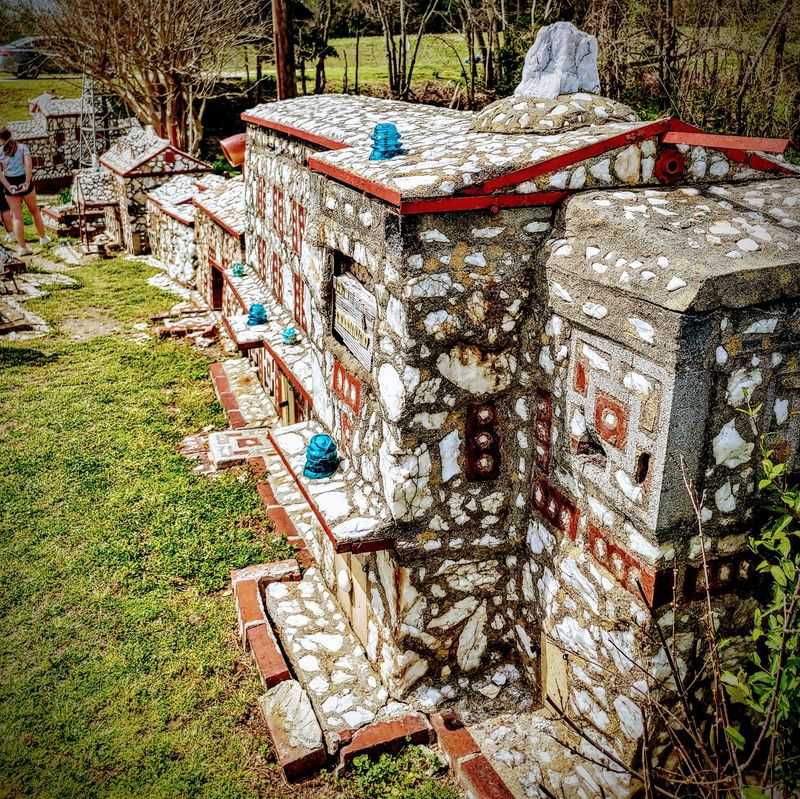
White quartz glitters across nearly every corner of this place. On a sunny day, the rooftops practically show off.
Warren relied on local stone, and quartz plays the starring role. Look up at the roofs, where crystal pieces and chunks of rose quartz add a soft sparkle.
Then look again, because the reused bits are just as clever. Old glass phone insulators, in that classic aqua shade, top several buildings like little decorative domes.
Warren worked recycled odds and ends into his designs too. It’s a smart reminder that folk artists often build with whatever the world hands them.
Photographers, this is your moment. The mix of rough rock, mortar lines, and shiny crystal gives you texture for days.
Try shooting low to the ground for a real street-level view. Suddenly that tiny lane looks like Main Street in a fantasy movie.
Morning or late afternoon light can make the quartz glow beautifully. Bring a steady hand and a little patience, and the stones will do the rest.
Your Wallet Gets The Day Off

Good news for road-trip budgets everywhere. Shangri-La Stone Village costs nothing to see.
There’s no ticket booth and no gate attendant. Friendly signs simply welcome you to look around and enjoy the village.
That open-door approach matches the spirit of the whole place. It feels like a gift from a neighbor who wanted to share something he loved.
Of course, free comes with a little responsibility. The village sits on private property, so treat it like you’re visiting someone’s front yard.
Stay on the paths, keep hands gentle, and leave the stones where they belong. These buildings have stood for decades, and they deserve to stand for decades more.
Little ones will want to touch everything, which is completely understandable. A quick chat before you get out of the car helps everyone enjoy it safely.
Quick tip: keep small talk about respect fun rather than strict. Calling it a visit to a tiny town with tiny residents usually works wonders.
Honestly, few attractions offer this much charm at absolutely zero cost. Your snack fund just got a nice boost.
Sign The Book And Join The Village Story
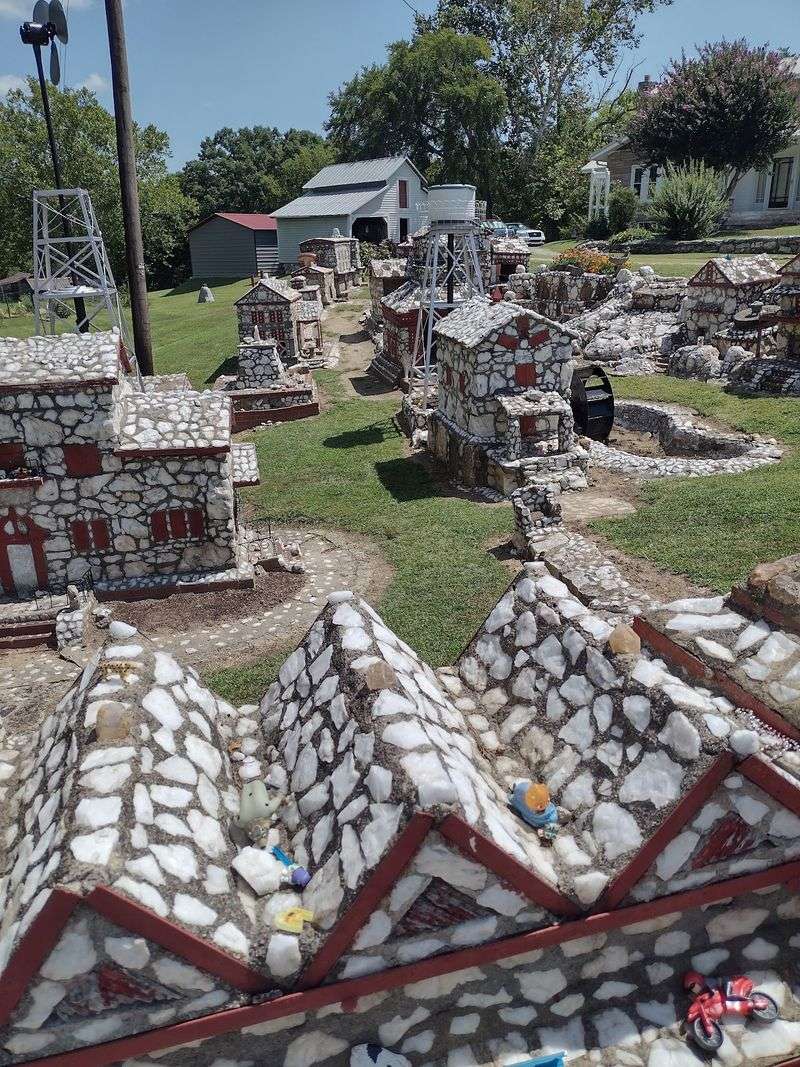
Leaving your mark here doesn’t involve a spray can. Instead, there’s a visitor journal waiting in a box on site.
Add your name, the date, and where you traveled from. It’s a sweet way to become part of the village’s ongoing story.
Flipping through earlier pages can be just as fun as writing in it. You might find notes from nearby towns or far-off states.
The box has also held an article about how Shangri-La came together. Take a minute to read it if it’s there, since it adds helpful background.
Visitors have started another tradition, too. Small toys, painted rocks, and trinkets now pop up around the buildings like tiny townsfolk.
Kids especially love spotting these little residents. Some families even bring a painted rock to add their own touch.
If you join in, choose something small and weather-friendly. The goal is to add a smile, not clutter the streets of a historic folk-art town.
It’s a small act, but it feels meaningful. You’re not just seeing the village, you’re quietly helping it stay loved.
Plan For Five Minutes, Then Stay For Thirty
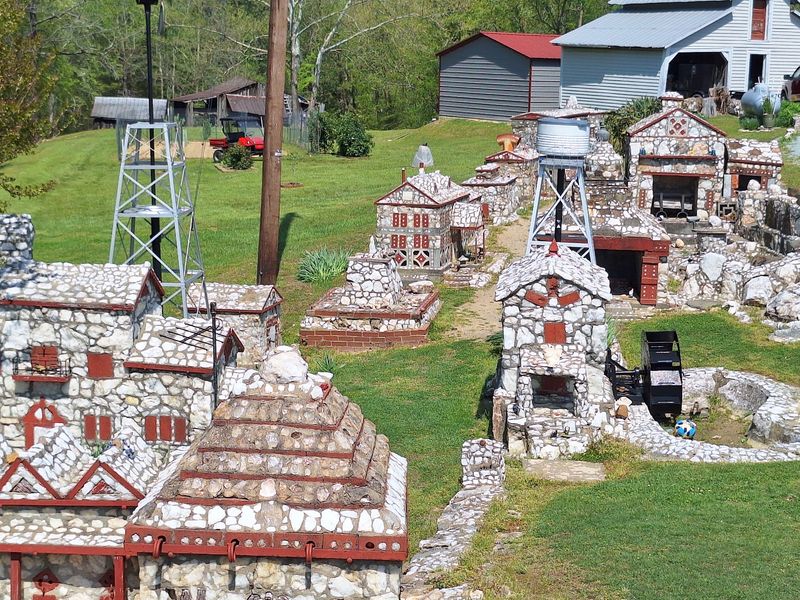
Size check time. This is a small attraction, so don’t expect a full afternoon of exploring.
A speedy walk-through can take about five minutes. That makes it perfect for stretching your legs during a long drive.
Slow down, though, and the village starts to open up. Plenty of folks spend 20 to 30 minutes taking photos and studying the stonework.
The trick is setting expectations before you arrive. Tell the kids it’s a tiny town, not a theme park, and everyone stays happy.
Pair it with other stops for a fuller day. Prospect Hill sits in the rolling countryside of Caswell County, a pretty area for a scenic drive.
Bird lovers may enjoy the quiet setting, too. Bring binoculars and you might add a few feathered friends to your list.
Dogs on leashes and curious grandparents both fit right in. The pace here is relaxed, and nobody rushes you along.
Think of it as the appetizer of road-trip stops. Small portion, big flavor, and a story you’ll keep telling later.
Finding It Is Easier Than Building It
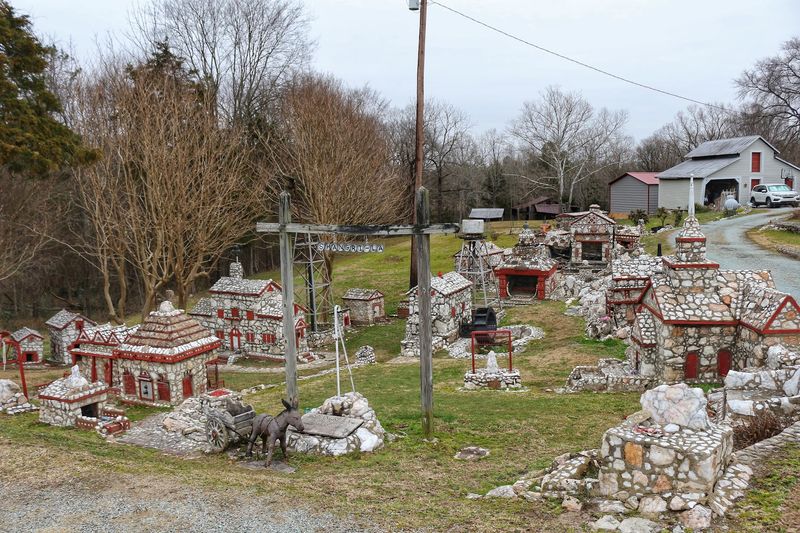
Directions here are refreshingly simple. Shangri-La Stone Village sits right along NC Highway 86 in rural North Carolina.
The full address is 11535 NC Highway 86, Prospect Hill, NC 27314. Plug that in, and your GPS should lead you straight to the tiny town.
The village sits beside the Prospect Hill Volunteer Fire Department. That makes it a handy landmark if you’re scanning the roadside.
Parking isn’t a big formal lot, so use good judgment. Never block the fire department’s garage doors, since those crews may need to roll out fast.
The location works nicely for travelers moving through the Piedmont. It’s a short detour for people heading between the Triangle and southern Virginia.
Keep an eye on traffic when you get out of the car. It’s a country highway, so watch little ones near the road.
Once you’re parked, everything sits within a few steps. No hiking boots required, just comfy shoes and a camera.
Honestly, Warren made the hard part look easy. All you have to do is show up.
Folk Art Fans Will Feel Right At Home
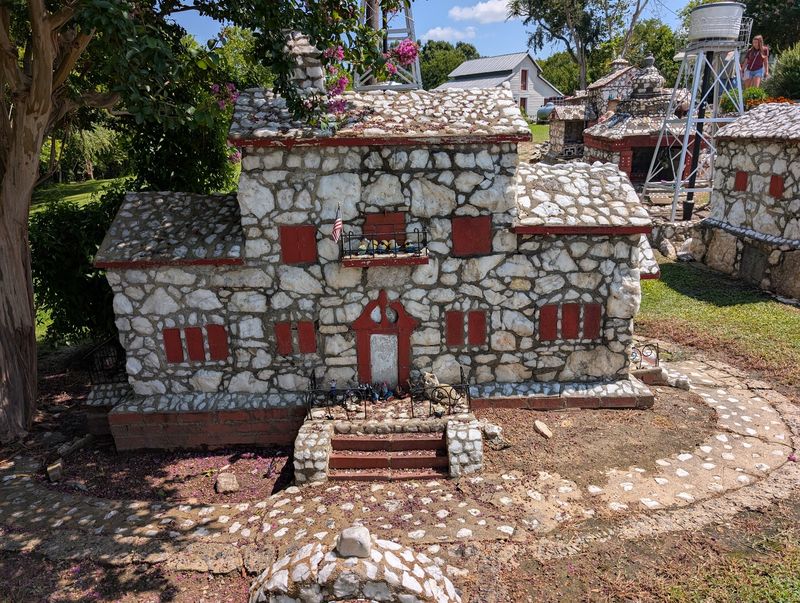
Outsider art has a special magic. It comes from regular people with no formal training and a big creative itch.
Shangri-La Stone Village fits right into that tradition. Warren wasn’t building for galleries, yet his work now draws curious travelers from all over.
The village has earned a listing on Atlas Obscura, which celebrates unusual places around the world. That’s pretty good company for a backyard project.
What stands out most is the handmade feel. Walls lean a little, stones vary in size, and that imperfection gives it personality.
Compare it to a model train set and you’ll notice the difference fast. Nothing here came from a kit or a store shelf.
Art teachers could easily use this place as a field-trip lesson. It shows how creativity can grow from simple materials and steady effort.
Budding builders might leave inspired to try something small at home. A few stones and some imagination can go a long way.
Just maybe start with one building. Twenty-seven is a lot to promise yourself on day one.
Why This Little Town Deserves A Big Spot On Your List

Some roadside stops fade from memory by dinnertime. This one tends to stick around a lot longer.
Part of the reason is the story. A farmer in his seventies decided his best work was still ahead, and then he proved it.
The village has survived for more than five decades since Warren laid the first stones. That staying power says a lot about his craftsmanship.
It also says something about the community around it. People keep visiting, signing the journal, and leaving tiny gifts behind.
For North Carolina road-trippers, it’s an easy win. You get history, art, and a fun photo stop without spending a dime.
Families get a chance to talk about patience and creativity. Grown-ups get a gentle nudge that new dreams can start at any age.
So next time your route passes through Caswell County, make the detour. The tiny church, the little mill, and all that sparkling quartz will be waiting.
Just remember to wave at the residents. They’re small, but they’ve been holding down this town for a very long time.