
Most Visitors Hurry Past The Misty Rainforest And Real Ocean Sealed Inside This Arizona Glass World
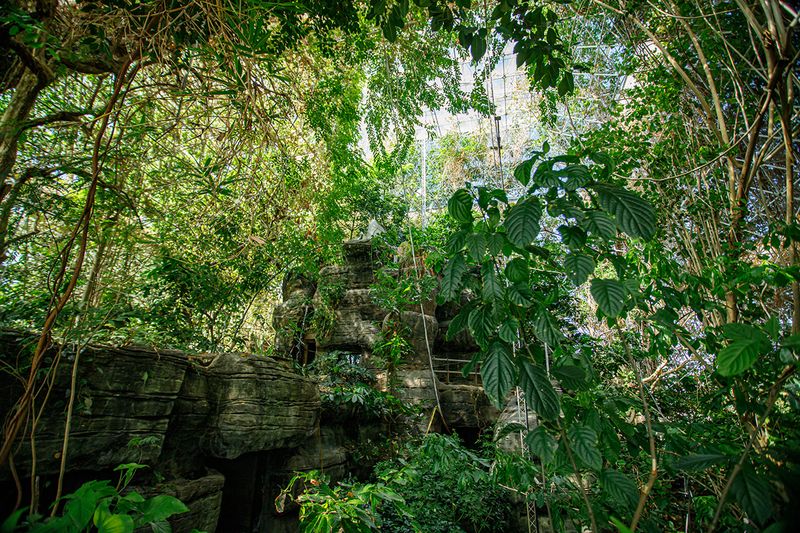
A full tropical rainforest is growing under glass in the Arizona desert, mist and all. It sits inside a sealed structure covering more than three acres, with about 7.2 million cubic feet of enclosed space.
Coffee plants grow in there. So do dozens of tropical species, soaking up humidity that feels like a steam room while cactus country bakes outside.
I like how the whole place started as a bold experiment in self-sustaining living, with real people sealed inside in the early 1990s. Today it’s a working science center, and you can walk right through it.
The catch is surprisingly common. Plenty of first-time visitors get so wrapped up in the big concept that they hurry past the jungle.
I can’t imagine driving all that way and skimming the greenest, wettest corner of the trip, can you?
A Glass Planet Rising Out Of The Sonoran Desert
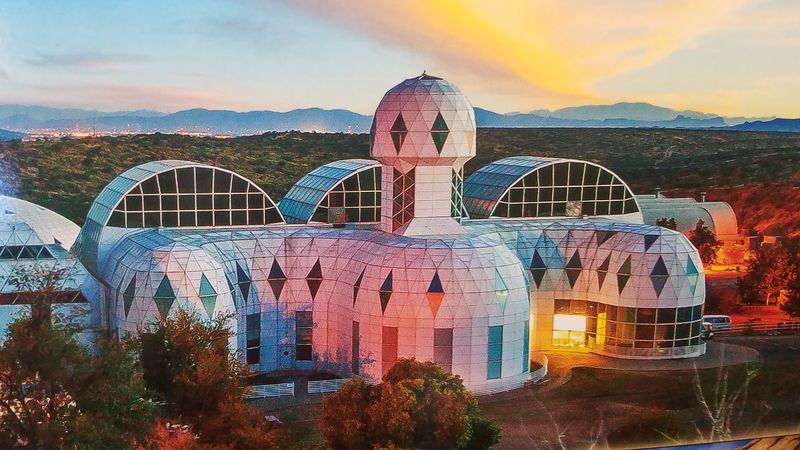
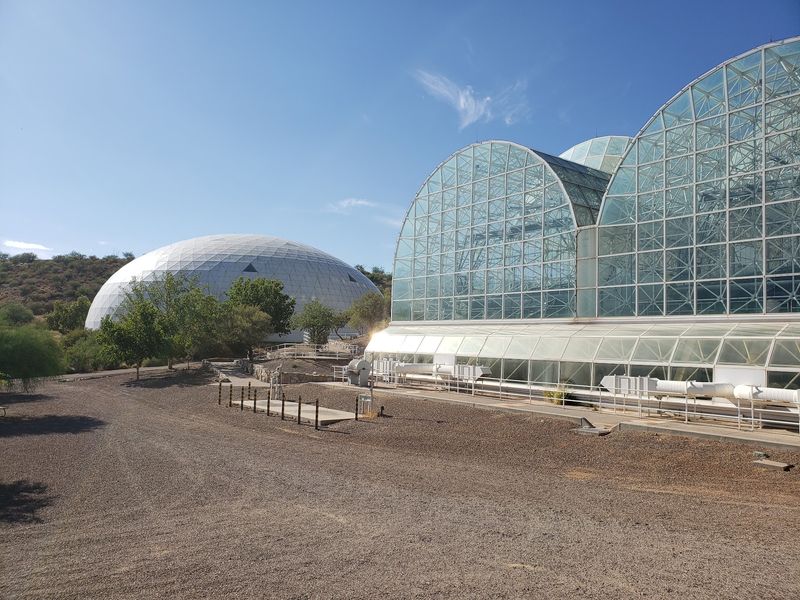
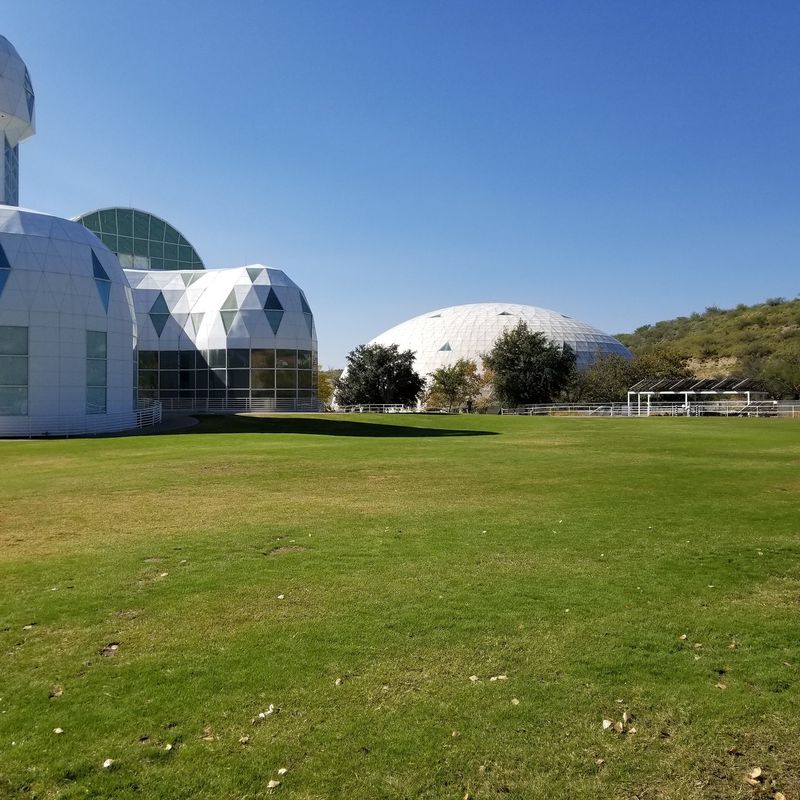
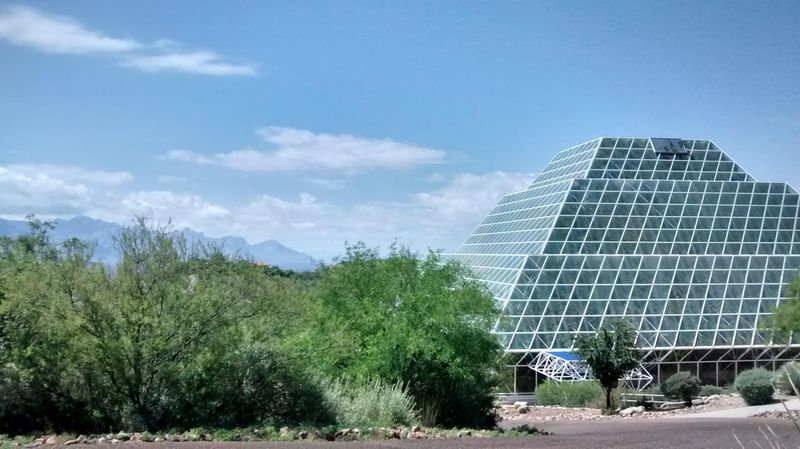
Out in the high desert north of Tucson, a gleaming cluster of glass pyramids and domes looks like a moon base that took a wrong turn. That shimmering complex is Biosphere 2, and it’s one of the strangest, most fascinating stops in Arizona.
The University of Arizona runs the site today as a center for Earth system science. Researchers study climate, water, and ecosystems here, and the public gets to wander through a big slice of it.
The main structure covers about 3.14 acres. Under that glass and metal shell sits roughly 7.2 million cubic feet of enclosed space.
Inside, you’ll find a rainforest, an ocean, a fog desert, a savanna, and a mangrove wetland. It’s basically a highlight reel of the planet, packed under one very large roof.
The name has a fun twist, too. Biosphere 1 is Earth itself, and this place was built as a smaller, controlled version of our home.
Some folks treat it like a quick science-museum stop. That mindset is where the classic first-timer mistake begins, so slow down and let the place surprise you.
The Space-Age Dream That Built It
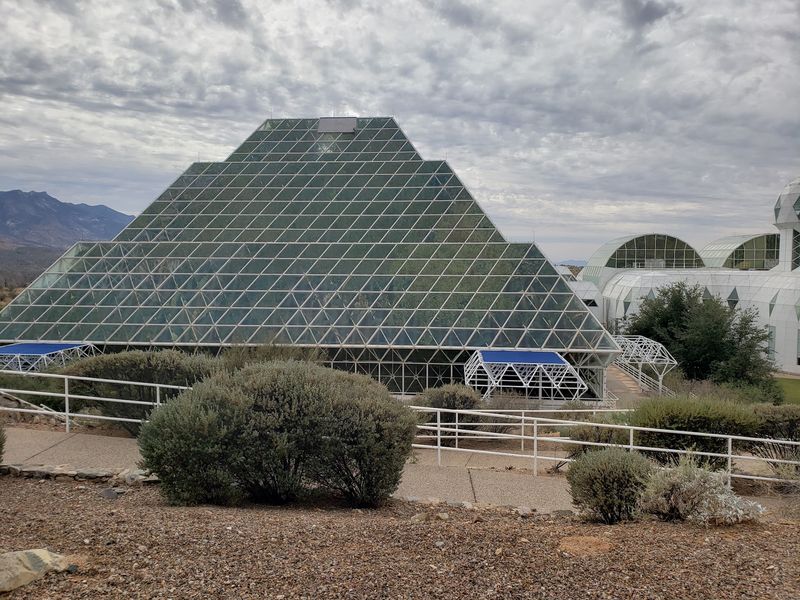
Construction ran from 1987 to 1991, and the goal was wildly ambitious. Builders wanted to test whether people could live in a sealed, self-sustaining world, the kind that might someday work in space.
Two closed missions followed in the early 1990s. Crews known as Biospherians stayed sealed inside for long stretches, trying to grow their own food and manage their own air.
Things didn’t always go smoothly. Low oxygen and food production became real challenges, and those struggles turned into lessons scientists still talk about.
That history gives every hallway a little extra electricity. You’re not just looking at plants, you’re standing where people once tried to run a miniature planet by hand.
Over the years, the mission shifted from survival experiment to serious research. Now the University of Arizona uses the spaces to explore how ecosystems respond to a changing climate.
Knowing the backstory makes the whole visit richer. A short movie and app segments walk you through the timeline, so even history skeptics can follow along without homework.
Why So Many Visitors Rush Right Past The Jungle
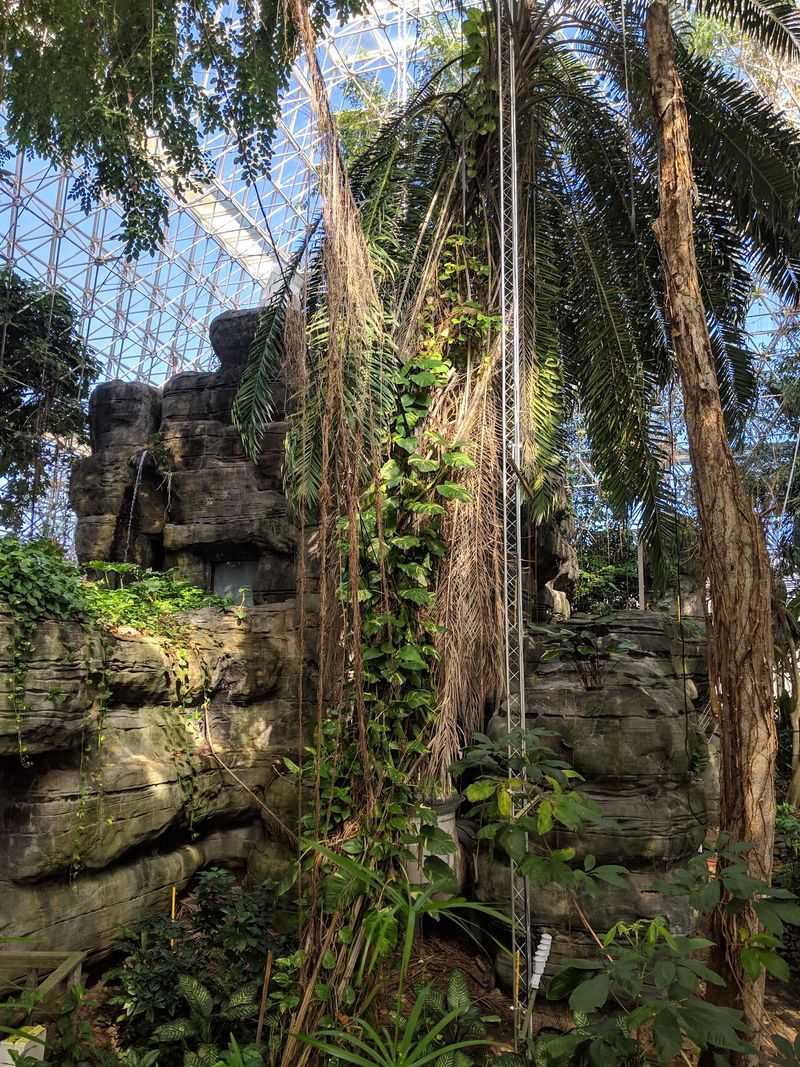
Here’s the trap. First-timers often get so focused on the big idea of Biosphere 2 that they treat the rainforest like a hallway between exhibits.
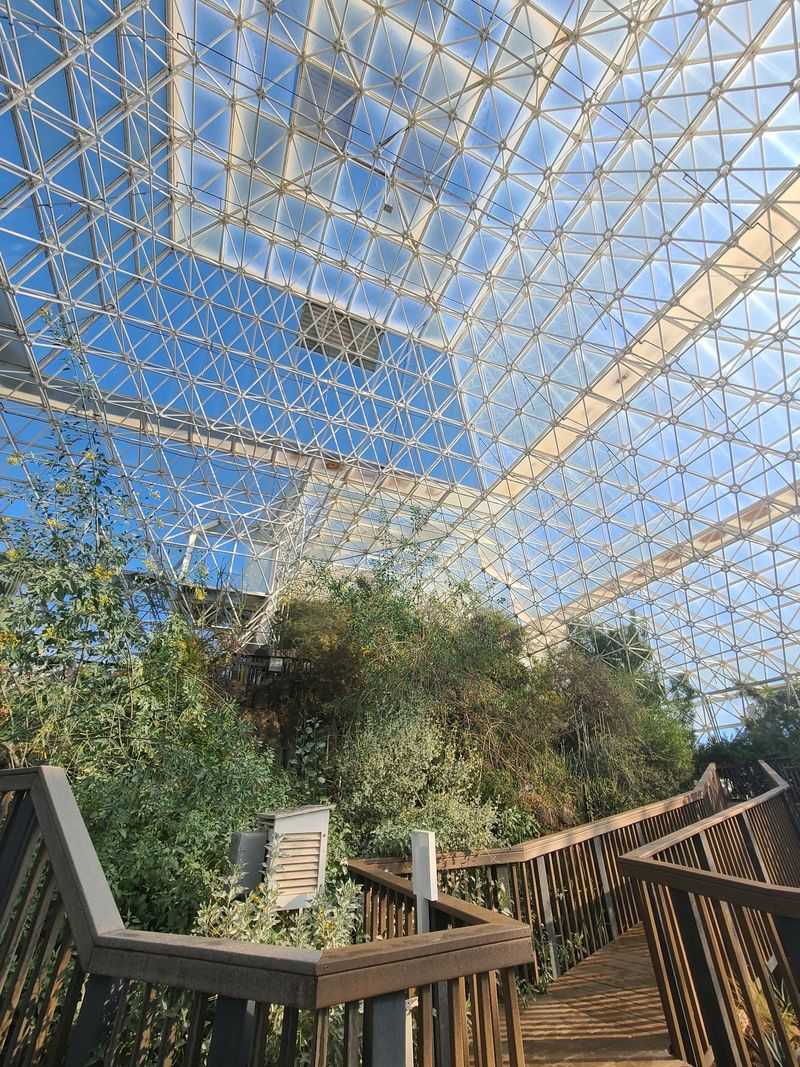
That’s a shame, because it may be the most jaw-dropping room in the building. A dense, humid tropical forest is thriving in the middle of Arizona, and it deserves more than a quick glance.
The heat and moisture hit fast. Humidity can climb past 80 percent, which explains why people instinctively speed up when their glasses fog.
Resist that urge if you can. Pause on the path, look up into the canopy, and let your eyes adjust to all those layers of green.
Coffee shrubs grow in here, and their beans can sprout tiny seedlings around them. Spotting details like that is half the fun, and you’ll miss them at a jog.
A water bottle helps you stay put longer. So does a light shirt, since you can peel off layers before stepping into the steam.
Give this room real time. It’s the moment the whole glass world stops being a concept and starts feeling alive.
A Rainforest With A Research Job
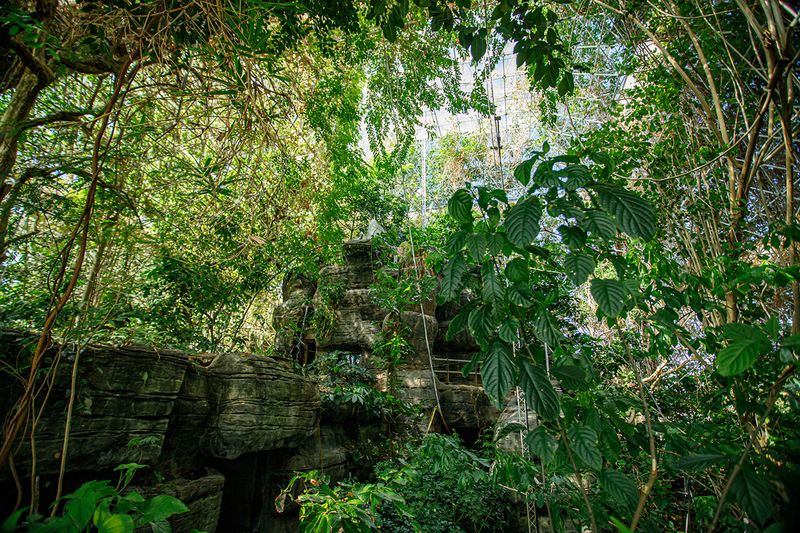
Lush scenery is only part of the story. The rainforest at Biosphere 2 is a carefully controlled system used for scientific study.
Researchers look at how tropical plants respond to climate change and shifting carbon dioxide levels. That makes this jungle more like a giant outdoor lab that happens to live indoors.
Around 90 plant species grow in the space. It’s a tidy number for a forest, yet the tangle of trunks and leaves still feels gloriously wild.
So what does that mean for you on the path? Every leaf you pass could be part of data that helps scientists understand forests far beyond Arizona.
I believe that changes how the room feels. Sweating through the humidity suddenly seems like a small price for standing inside working science.
The app shares stories and short videos at stops along the way. Watching them in the rainforest adds context without pulling you away from the green all around you.
Take a slow breath before moving on. The air is thick, earthy, and completely unlike anything waiting outside those glass walls.
An Actual Ocean, Beach Included, In Cactus Country
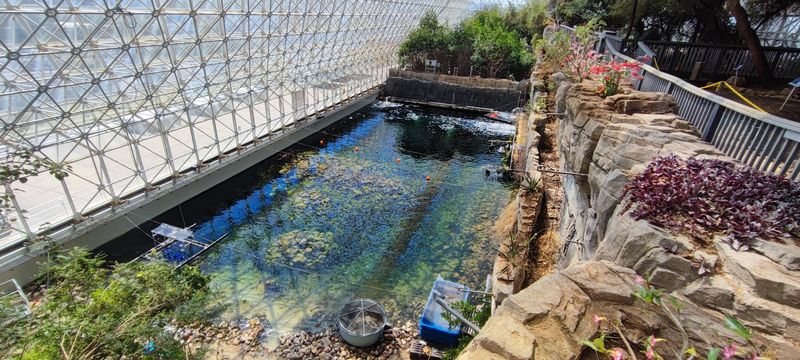
Yes, there’s a beach in the desert. Biosphere 2 holds a vast ocean of roughly 700,000 gallons, complete with a carefully recreated shoreline.
Seeing saltwater under glass in Arizona feels a little surreal. The ocean is also a research space, with studies tied to coral reef restoration.
Not everyone expects a sea this size indoors. Your brain may need a minute to accept the view, especially after the drive through dry hills.
The ocean sits beside the rainforest in the overall layout. Moving from steamy jungle to open water gives the tour a satisfying change of scenery.
Expectations matter here, though. It’s a working research ocean, not a splashy aquarium, so think science lab rather than shark tunnel.
That framing makes it more interesting, honestly. You’re looking at a system scientists use to understand how marine life copes with changing conditions.
Linger near the viewing points and watch the light on the water. A beach this far from any coastline is a sight most desert dwellers won’t forget quickly.
Fog Deserts, Grasslands, And Mangroves Worth Lingering Over
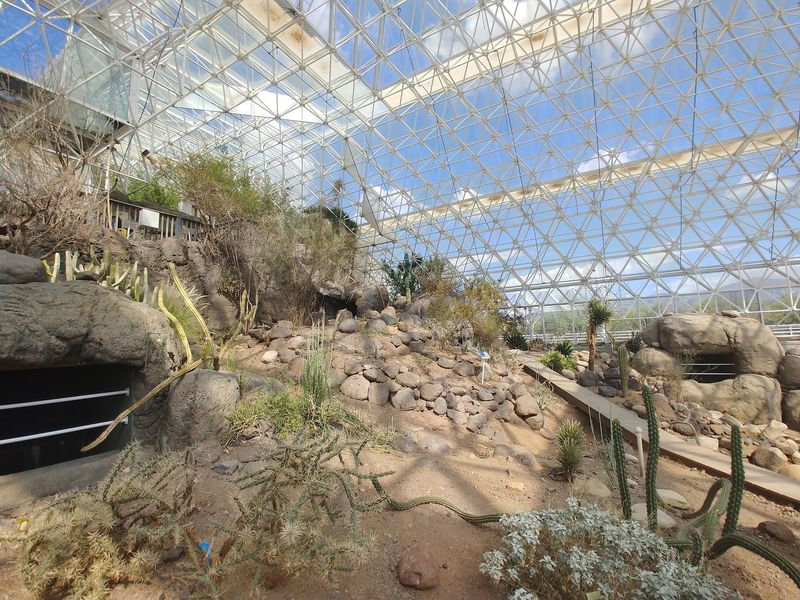
A desert inside a desert sounds like a joke. The coastal fog desert at Biosphere 2 is real, though, and it feels noticeably more humid than the Sonoran landscape outside.
It’s modeled on places like Baja California, where ocean fog feeds tough little plants. The contrast with the jungle next door is striking and fun to notice.
Then comes the savanna grassland. Open, airy, and golden in spots, it gives your eyes a break after all that dense rainforest green.
The mangrove wetland adds another twist. Coastal trees tangled with water feel worlds away from the saguaros you passed on the drive in.
Each biome tells its own scientific story. Together, they form a crash course in how wildly different environments can be, even when they share one roof.
Photographers tend to love this stretch. The plants, textures, and changing light make for great shots without needing fancy gear.
Move slowly and compare the air from room to room. Temperature and moisture shift enough that you can practically feel the planet changing beneath your sneakers.
Peeking Into The Biospherians’ Old Living Quarters
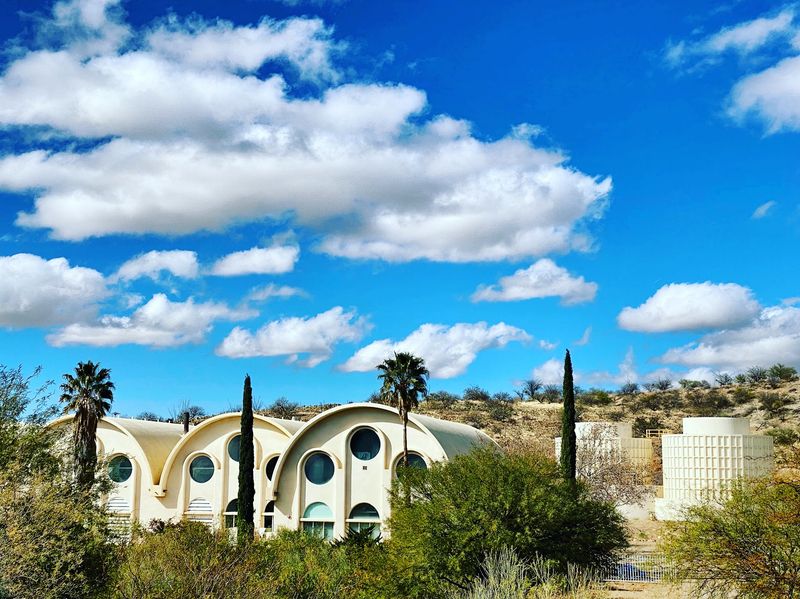
Ever wonder where you’d cook breakfast inside a sealed planet? The human habitat at Biosphere 2 answers that question in a very personal way.
The tour passes through spaces where crews lived, worked, and ate during the closed missions. Kitchen and theater areas help you picture daily life under glass.
These rooms add a human heartbeat to all the science. Suddenly the experiment isn’t abstract anymore, it’s about real people sharing small spaces for a very long time.
The app fills in stories along the route. Historical photos and videos show how the Biospherians handled farming, meals, and the constant monitoring of their world.
History fans may wish this section ran longer. The current tour leans more toward today’s research, so the crew story arrives in compact, focused doses.
Still, standing in that kitchen is memorable. It’s easy to imagine the clatter of pots and the pressure of growing every bite yourself.
Staff are often stationed along the way to answer questions. If the habitat sparks curiosity, ask away, since the backstory gets even better with details.
The Giant Lung That Keeps The Building Breathing
Buildings don’t usually breathe. This one sort of does, thanks to massive structures nicknamed the lungs.
Temperature swings between day and night make air inside the sealed glass expand and contract. The lungs absorb those pressure changes, keeping the enclosure from being damaged by the shifts.
It’s a clever fix for a very big problem. Without them, all that glass would face serious stress every single day.
Standing in front of a lung makes the engineering click. You can feel the scale and understand how delicate the whole system really is.
Getting deeper access usually means adding the separate Lung Tour. It’s an extra-cost option, and many science fans consider it well worth the add-on.
The underground Technosphere is part of this behind-the-scenes world. Pipes, machinery, and infrastructure hum below the biomes, quietly keeping everything running.
The air in this area often feels cooler too. After the rainforest steam, that breeze can feel like a small gift from the engineers.
If you love seeing how things work, this is your moment. The lung turns a pretty greenhouse into a true engineering marvel.
Your Phone Becomes The Tour Guide
Download first, drive second. The Biosphere 2 Experience app runs the self-guided tour, and it works best when it’s fully loaded before you arrive.
The app offers a self-paced audio walk with science stories, interviews, and historical photos and videos. Some stops show visuals, so you’ll want to glance at your screen now and then.
The full download can take a while. Opening the app at home and letting it update saves you from staring at a progress bar in the parking lot.
On-site Wi-Fi helps in a pinch. Still, bringing your own headphones makes the experience smoother and keeps your audio from blending with nearby groups.
Arrows on the ground guide the route. That makes it simple to follow along without worrying about wandering into the wrong area.
Bright sun can wash out phone screens on outdoor stretches. Shading the screen with a hat brim or stepping into shade helps a lot.
The self-paced format is a quiet perk. You can rush the dull parts and finally give that rainforest the time it deserves.
Comfy Shoes, Layers, And A Little Sweat Prep
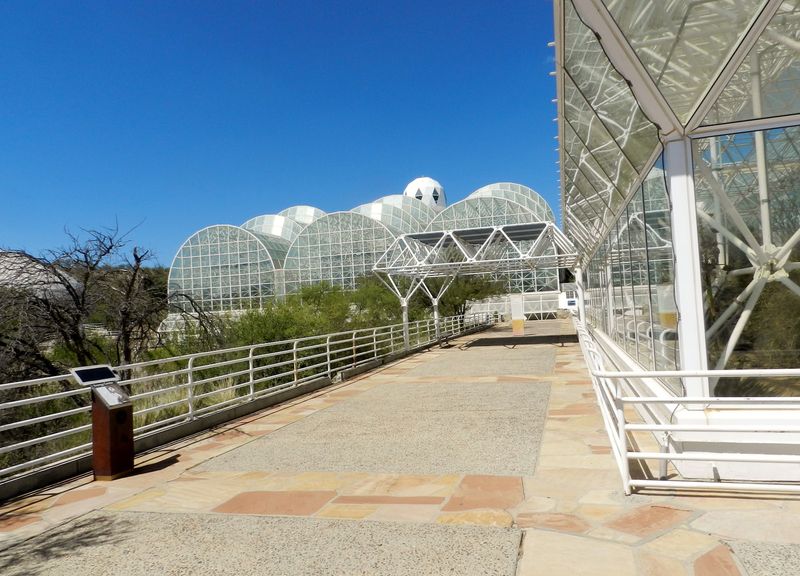
Plan on about a mile of walking. The main self-guided tour usually takes 75 minutes to 1.5 hours, moving between indoor biomes and outdoor paths.
Roughly 100 stairs are part of the route, both up and down. Comfortable, sturdy shoes make a bigger difference than you’d expect.
Dress in layers, since you’ll swing between climates. Dry desert heat, steamy jungle, and cooler engineering spaces can all show up in one visit.
Some biomes, especially the rainforest, can reach the high 90s. A breathable shirt and a removable top layer keep things manageable.
Water is essential in Arizona, even under glass. Refill stations are available, so bring a bottle and top it off before heading out.
Sun protection matters on outdoor stretches. A hat and sunscreen help when you’re walking between structures in full desert light.
Accessibility is better than many people assume. Wheelchair users can reach most areas, and staff can point out routes that avoid many of the stairs.
Cooler months tend to feel friendlier for the outdoor segments. Summer visits work too, as long as you’re ready for some honest sweat.
Mountain Views With Lunch And Souvenirs On The Side
All that biome-hopping builds an appetite. The Cañada Del Oro Restaurant on site serves complete meals, so nobody has to leave hungry.
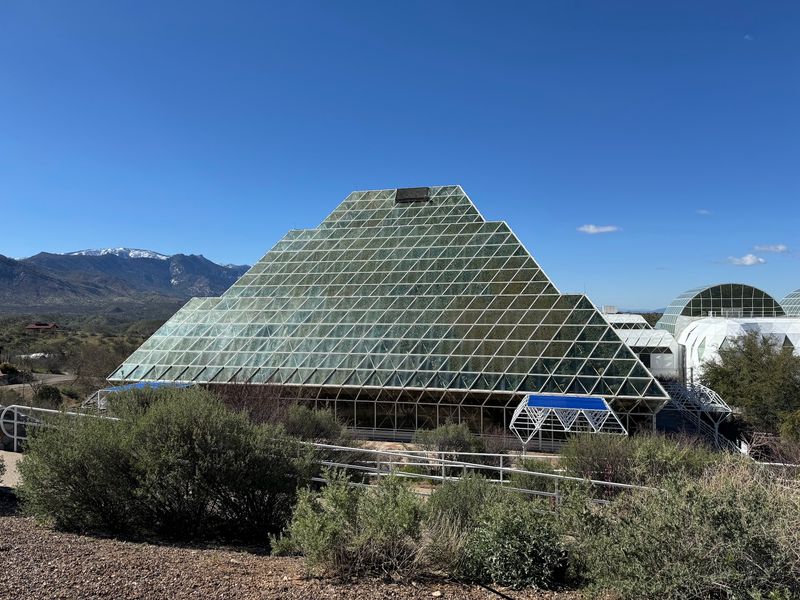
The views might steal the show. Diners look out toward the Santa Catalina Mountains, a gorgeous backdrop after hours spent under glass.
It’s a good spot to slow down and compare notes. Which biome won?
Was the lung cooler than expected? Lunch is the perfect debate stage.
Shopping comes next for many families. Biosphere 2 has several gift shops, including Desert Digs, Rainforest, and Coral Reef shops.
Expect educational materials, apparel, and souvenirs. Science-minded kids may find something that keeps the curiosity rolling on the ride home.
A few practical perks make the day easier. Parking is free, and the lot is roomy enough that finding a space isn’t a headache.
Free Wi-Fi is available too, which helps with that app download if you forgot. Water fountains near the start let you fill bottles before setting off.
Small comforts like these turn a long drive into a relaxed outing. Nobody enjoys a jungle on an empty stomach.
Overnight Casitas And Programs For Curious Minds
One visit not enough? Biosphere 2 offers on-site lodging at the Casita Village.
Room styles vary quite a bit. Options include upgraded bedrooms with private bathrooms, standard rooms with shared facilities, and dormitory-style setups.
Each accommodation comes with handy basics. Microwaves, refrigerators, individual temperature controls, internet access, and telephones are part of the package.
The casitas often support the facility’s busy learning calendar. Biosphere 2 hosts symposia, research opportunities, and other science programs throughout the year.
Undergraduate researchers can find opportunities here. There are also summer science academies for middle and high school students who want more than a quick walk-through.
That mix gives the place a lively, campus-like energy. Science isn’t frozen behind glass, it’s happening right now in labs and biomes nearby.
For families with budding scientists, this is worth knowing. A day trip could spark an interest that grows into a summer program later on.
Staying close also makes an early start easy. You can be first through the doors when the biomes are calm and the jungle feels wonderfully quiet.
Plan Smart, Then Give The Jungle Its Due
Getting there is half the adventure. You’ll find Biosphere 2 at 32540 S Biosphere Rd, Oracle, AZ 85623, north of Tucson and within reach of the Phoenix area.
The drive feels pleasantly remote. Open desert stretches out around you, which makes that first glimpse of glass even more dramatic.
Hours run from 9 a.m. to 4 p.m. daily. The facility closes on Thanksgiving and Christmas, so plan holiday trips around those dates.
Arriving early leaves room for lingering. Many visitors spend two hours or more, especially when adding the Lung Tour or extra stops.
Is it worth the trip? For anyone curious about science, history, or simply seeing something truly unusual in Arizona, the answer leans strongly toward yes.
Younger kids may drift during video segments. Older kids and teens who enjoy science often find the place fascinating from start to finish.
Just promise yourself one thing before you go. When the glass doors open onto that steamy green rainforest, stop, breathe, and stay a while.
The rest of the tour can wait a few extra minutes.