
Colorado’s 10 Best Places To Hunt For Fossils And Other Natural Treasures
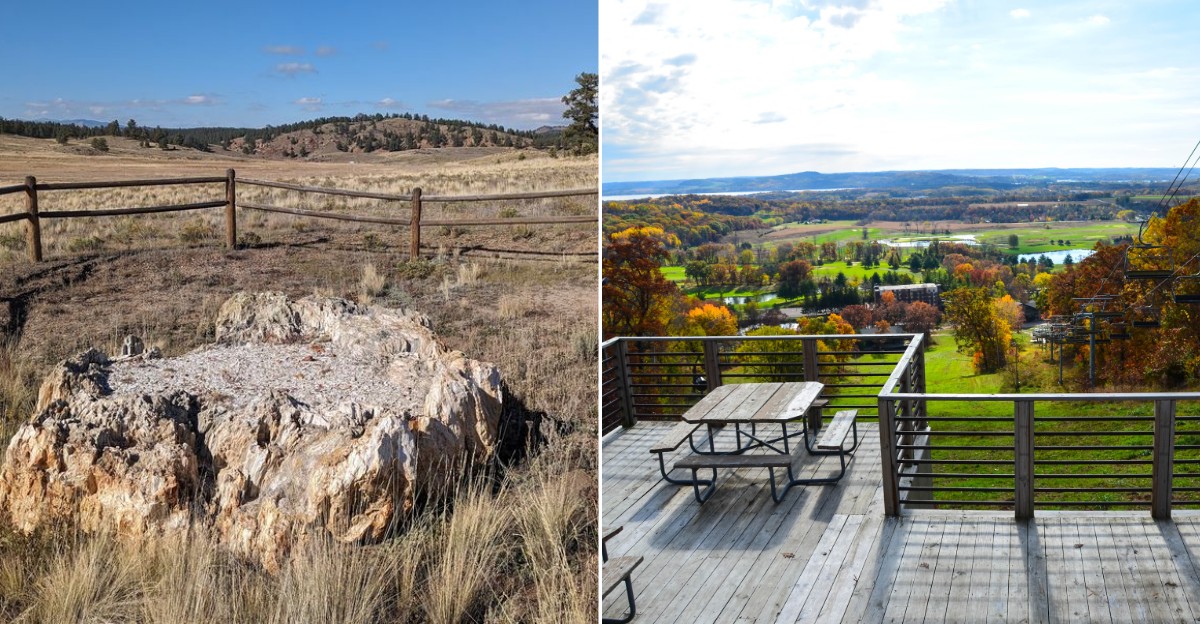
Colorado’s state gemstone hides in rocky pockets near the top of a mountain taller than 14,000 feet. Collectors scramble above the tree line just to look for it.
I love that the hunt starts with a gasp for air.
The ground here tells older stories too. One river canyon holds more than 1,900 dinosaur footprints.
Another valley shows off petrified redwood stumps up to 14 feet wide. Redwoods!
In the Rockies!
A few of these spots let you take home a rock or two. At the rest, you look, snap photos, and leave fossils right where they sit.
I honestly like both, because you’re standing where ancient life actually happened.
So grab your boots, sunscreen, and a healthy respect for the rules. Pack plenty of water, too, since several sit far from any store.
Which would you rather find first: a blue crystal or a dinosaur’s footprint?
1. Rabbit Valley Trail Through Time
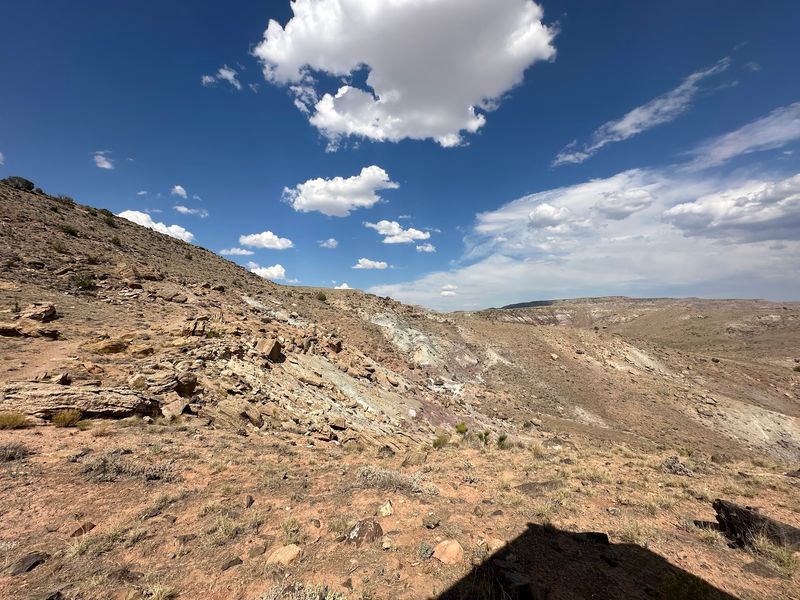
Dinosaur bones usually live behind museum glass. On this trail near the Utah line, some are still stuck in the rock beside the path.
The Trail Through Time is a loop of about a mile and a half in western Colorado. It sits in Rabbit Valley, right off Interstate 70 at Exit 2.
The rocks belong to the Morrison Formation, the same Jurassic layer that produced famous giants. Signs along the way point out bones you can spot without digging.
Look for darker, textured patches in the lighter stone. That’s often fossil bone, sitting where it settled roughly 150 million years ago.
Nearby, scientists have worked a site called the Mygatt-Moore Quarry. It’s a reminder that this desert still gives up new finds to trained crews.
Here’s the rule to remember: look, but leave the bones alone. Vertebrate fossils on public land belong to everyone, and taking them is against the law.
Summer afternoons out here can get seriously hot. Start early, bring a hat, and carry more water than seems reasonable.
The trail climbs over rocky ground, so sturdy shoes beat sandals. Kids who love dinosaurs will likely treat each sign like a treasure map.
Bring a camera and a little patience. The best moments come when you finally recognize a bone in the stone yourself.
Address: Rabbit Valley, I-70 Exit 2, Mack, CO 81525
2. Dinosaur Ridge
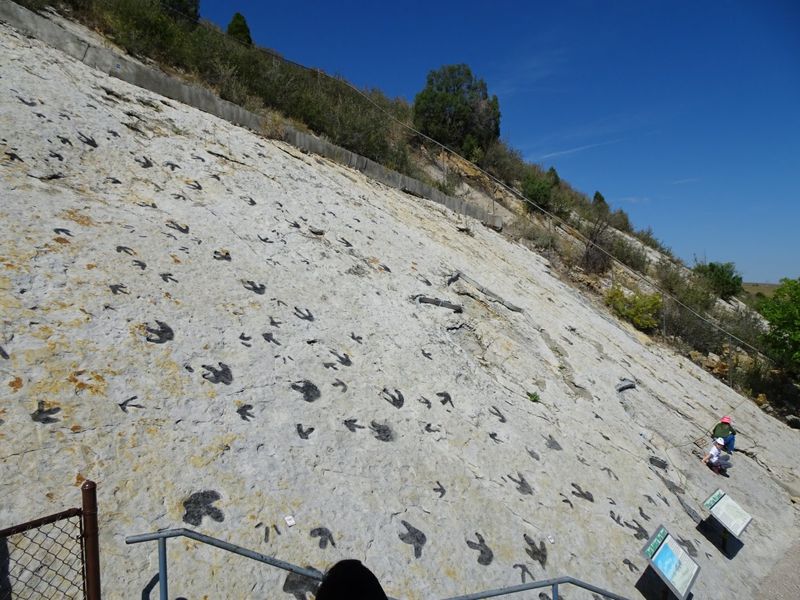
Road crews building a highway in 1937 got a surprise. Their work exposed dinosaur tracks pressed into the sandstone.
Today Dinosaur Ridge calls itself the top dinosaur tracksite in America. It’s also a National Natural Landmark, named back in 1973.
More than 250 Cretaceous tracks line the ridge. You’ll see prints linked to Iguanodon, plus ripple marks left by ancient water.
The bone side of the story is older. Arthur Lakes and Othniel Marsh started finding fossils here in 1877.
Those early digs turned up Stegosaurus, and this ridge holds the first Stegosaurus fossil ever found. Apatosaurus, Diplodocus, and Allosaurus came out of these rocks too.
Over 15 fossil and geology stops sit along a paved trail. Walk it, bike it, or hop on a guided bus tour.
The Main Visitor Center has an Exhibit Hall with replicas and real bones. You can also dig for souvenir fossils or try sluice mining.
Down the road, the Martin G. Lockley Discovery Center hosts the Deep Time Detour.
It focuses on prehistoric wildlife and makes a smart second stop.
Bringing your dog? Pups can join you on the outdoor trails but must skip the buildings and buses.
Hours shift by season, so check before you go. In snowy weather, calling ahead is a wise move.
Address: 16831 W. Alameda Parkway, Morrison, CO 80465
3. Florissant Fossil Beds National Monument
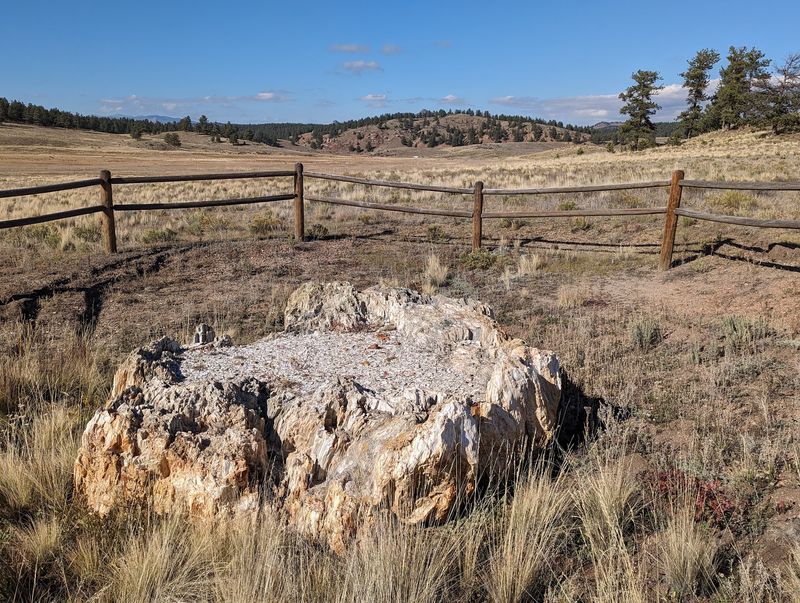
Redwood stumps up to 14 feet wide stand in a mountain meadow. They turned to stone after volcanic eruptions buried them about 34 million years ago.
That ancient disaster preserved far more than trees. This national monument protects one of the richest fossil deposits on Earth.
Head inside the visitor center to see the small stars of the show. Delicate insects, leaves, and fish are pressed into thin layers of shale.
Seeing a fly with visible wing detail is wild. These creatures lived during the Eocene, long before people showed up.
Outside, more than 14 miles of trails roll across 6,000-plus acres. The Petrified Forest Loop brings you right to the giant stumps.
Want a history detour? The Hornbek Homestead preserves a ranch house from 1878.
Families can try the Junior Ranger program or join a ranger-led talk. Night sky events add a starry twist on certain evenings.
Collecting is strictly off-limits here, even a tiny chip. Bring your camera and leave the fossils for the next visitor.
Winter hours run on a reduced schedule, with the center closed Mondays and Tuesdays. The parking lot gate locks at 4:30 p.m., so don’t linger too late.
Pets can visit the parking areas and a pet exercise spot. They aren’t allowed on the trails or inside.
Address: 15807 Teller County Road 1, Florissant, CO 80816
4. Garden Park Fossil Area
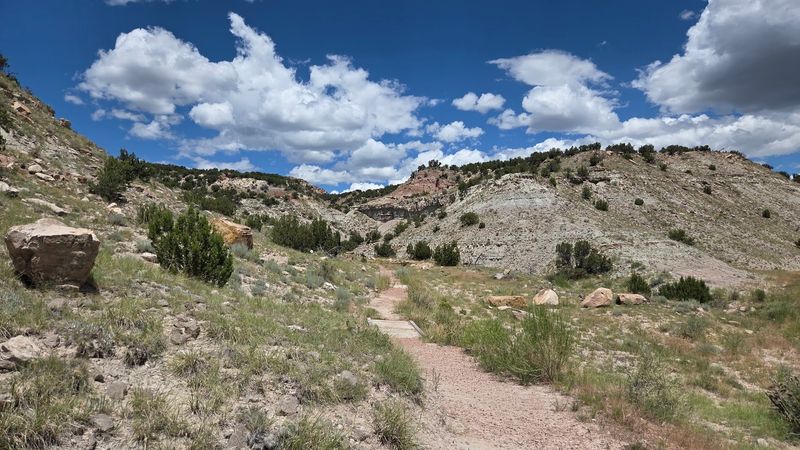
Two scientists once fought a bitter race for dinosaur bones. A chunk of that famous Bone Wars rivalry played out right here.
Edward Drinker Cope and Othniel Marsh both sent crews to these hills starting in 1877. Their feud pushed fossil discoveries forward at a frantic pace.
The results are huge, literally. The first complete Allosaurus skeleton came from Garden Park.
Some of the most complete Stegosaurus skeletons were found here too. So were the first known remains of Camarasaurus, Ceratosaurus, and Diplodocus.
Not into giant lizards? Diggers also found Jurassic mammals, turtles, crocodiles, eggs, and tracks.
You’ve probably seen this place without knowing it. Fossils from Garden Park sit in the Denver Museum of Nature and Science and the Smithsonian.
The Bureau of Land Management runs the area. It’s about six miles north of Cañon City along Shelf Road.
Interpretive signs and short hikes tell the story on the ground. Scenic drives make it easy to soak in the canyon views.
Botany fans, keep your eyes low. Two rare plants, Brandegee wild buckwheat and inch milkweed, grow in the area.
Collecting fossils or minerals is prohibited here. Your souvenirs should be photos and bragging rights.
Address: 3501-3767 Garden Park Rd, Cañon City, CO 81212
5. Triceratops Trail
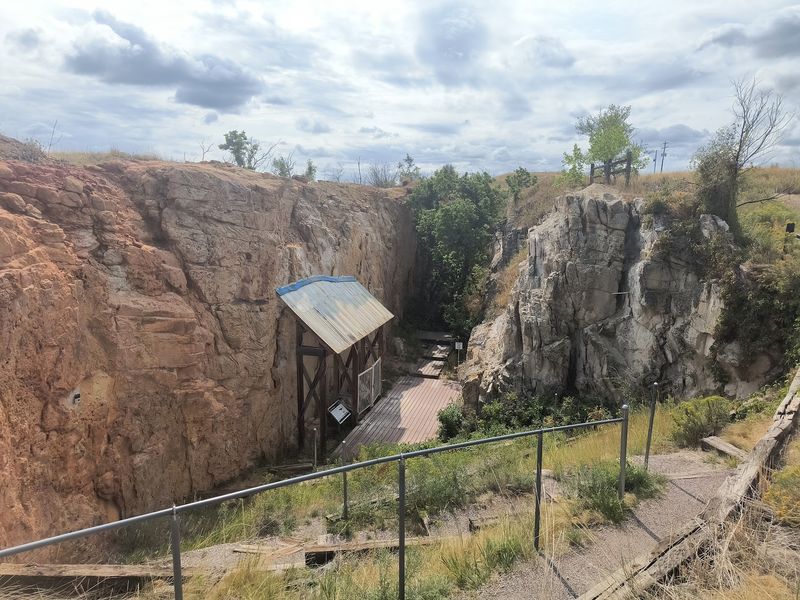
Clay miners in Golden dug for bricks and pottery material. Along the way, they uncovered walls covered in dinosaur tracks.
Those old pits now hold the Triceratops Trail, a gravel path about 1.5 miles long. Tall sandstone slabs tower over you as you walk.
Scan the rock for a big three-toed track left by a tyrannosaur. Nearby, several four-toed prints belong to Triceratops.
The list keeps going with bird, mammal, and insect traces. Palm fronds and other leaves left their shapes in the stone too.
Palms in Colorado sound like a joke. Around 68 million years ago, though, this spot was wet and swampy, like a delta.
Golden has quite the fossil résumé. The first T. rex tooth found in North America turned up here in 1874.
The trail became a National Natural Landmark in 2011. The Friends of Dinosaur Ridge take care of it.
Admission is free, and the trail stays open year-round. You can visit from an hour before sunrise until an hour after sunset.
Don’t expect restrooms or a visitor center on site. Grab a trail guide at Dinosaur Ridge, or try a Walk with a Geologist tour.
Parking in Jones Lot A costs money on weekdays. On weekends, it’s free.
Address: 1400 Jones Road, Golden, CO 80401
6. Picketwire Canyonlands
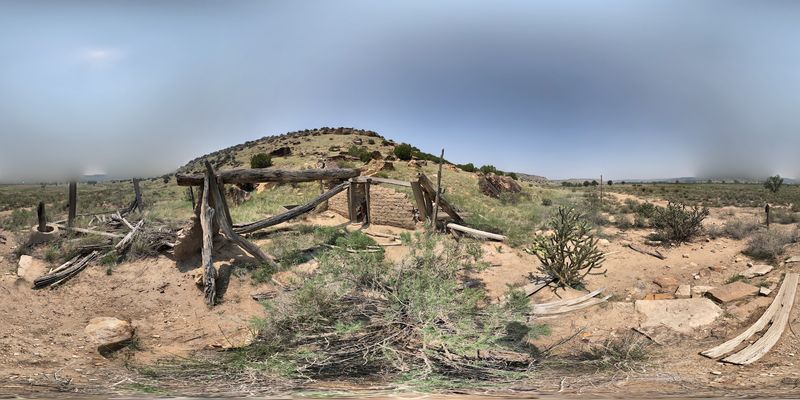
Picture a dinosaur parade frozen in stone, and you’re close. More than 1,900 prints stretch along the Purgatoire River for a quarter mile.
That makes this the largest dinosaur tracksite in North America. The prints form 130 separate trackways, pressed in about 150 million years ago.
Apatosaurus and Allosaurus both left their marks here. It’s easy to wonder who was following whom.
Getting there takes effort, and that’s half the fun. The round-trip hike from Withers Canyon Trailhead covers 11.2 miles.
Bring lots of water and solid fitness. The good news is that vault toilets wait at the trailhead and near the tracks.
Prefer wheels? Guided auto tours run on Saturdays in May, June, September, and October.
You’ll need a reservation and a high-clearance 4WD vehicle. Those tours are the only way to drive into the canyon.
History fans get bonus stops. The Dolores Mission dates to 1898, and Rourke Ranch was founded in 1871.
Native American rock art also appears around the canyon. Some of it may be up to 4,500 years old.
The canyon is open for daytime use only. Look closely, but leave fossils, rock art, and historic items untouched.
Address: Comanche National Grassland, south of La Junta, CO 81050
7. Devils Head
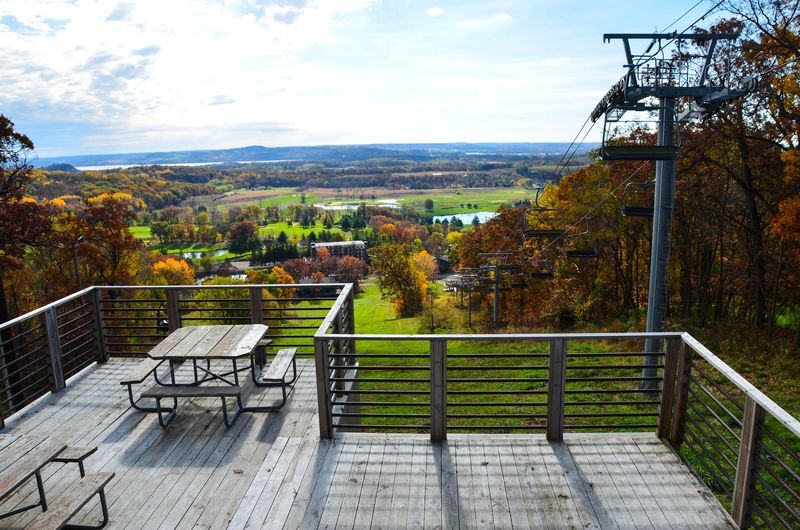
Prospectors in the 1800s thought the granite here looked like a face. They gave the spot a spooky name, and it stuck.
Up top sits the last continuously staffed fire lookout in Colorado. The first lookout station went up in 1912.
Helen Dowe worked here from 1919 to 1921. She was the first woman to serve as a fire lookout in the state.
The trail runs 1.4 miles one way and climbs close to 900 feet. Shade and benches help on the way up.
Then come roughly 143 steep stairs to the tower. Your legs will complain, and your eyes will thank them.
At nearly 9,750 feet, the 360-degree view takes in Pikes Peak and the Front Range. The tower usually welcomes visitors from late May through early September.
Now for the treasure part. The local granite is known for smoky quartz, topaz, amazonite, and fluorite.
A large topaz deposit was found in this area during the 1880s. Casual collecting with hand tools is generally allowed on open forest ground.
Active mining claims are a different story. Check before you dig, so you don’t end up on someone else’s ground.
Rampart Range Road closes from December 1 until at least April 1. Plan your trip for the warmer months.
Address: Devils Head Lookout Road, Pike National Forest, Sedalia, CO 80135
8. Mount Antero
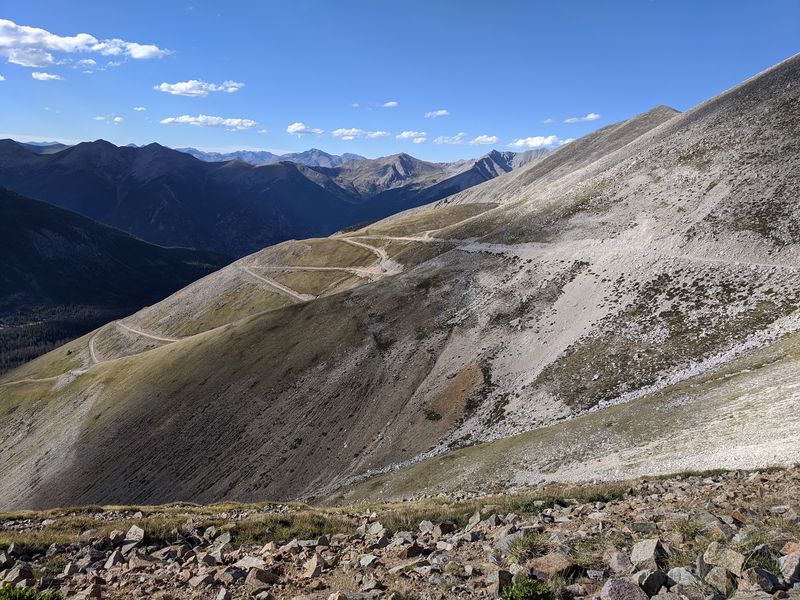
Few treasure hunts require you to breathe this hard. The highest gem field in the lower 48 states sits near the top of this peak.
Mount Antero rises above 14,200 feet, earning its spot as a Fourteener. Its collecting grounds sit well above the trees.
The big prize is aquamarine, a blue-green crystal. It became Colorado’s official state gemstone in 1971.
Collectors also hunt phenakite, topaz, smoky quartz, and fluorite. These crystals grow in pockets inside the mountain’s granite.
People have searched here since the 1880s. In 2004, a find called Diane’s Pocket made headlines among aquamarine fans.
Reaching the upper slopes usually means a rough road and a high-clearance 4WD. Snow keeps the season short, often late June through September.
Check road and snow conditions with the Salida Ranger District first. Stay on designated roads to protect the fragile tundra.
Casual collecting with hand tools is allowed on open forest land. The catch is that private mining claims cover large parts of the mountain.
Use BLM maps or apps to find open ground. Digging on a claim without permission is illegal.
No restrooms or drinking water wait up there. Pack layers too, because mountain weather changes quickly.
Address: Mount Antero, San Isabel National Forest, near Buena Vista, CO 81211
9. Crystal Hill
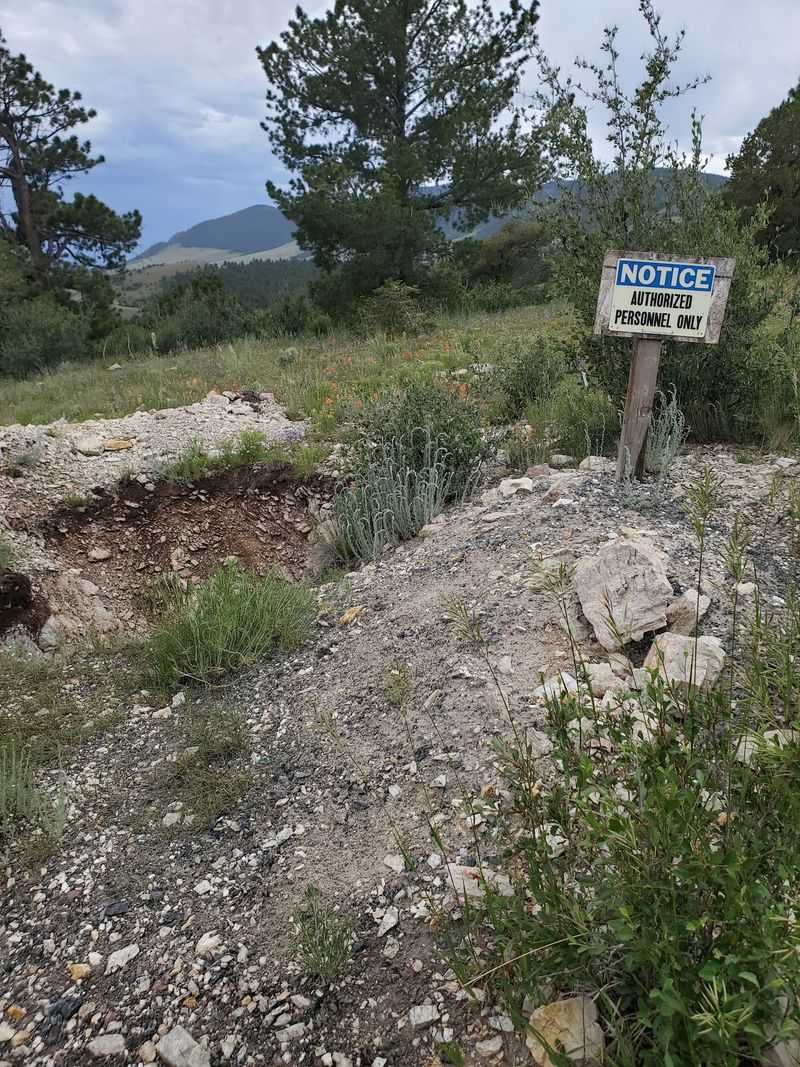
Gold miners once chased riches on this hill. Now rockhounds come for something purple.
Mark Biedell founded the Crystal Hill District in 1881. Miners pulled out gold and silver in the late 1800s.
Work picked back up in the 1940s. Later, a heap leach mine recovered about 30,000 ounces of gold in four years.
Around 2009, the BLM reclaimed old mine workings here. That cleaned-up ground is open for public collecting today.
So what can you find? Clear rock crystal and pale lavender amethyst top the list.
Smoky quartz shows up too, along with manganese oxides. The crystals tend to be small, slender, and neatly pointed.
Look for cavities and seams in the broken volcanic rock. That’s where quartz and amethyst like to grow.
Bring a rock hammer, a small pry bar, gloves, and safety glasses. Your fingers and eyes will appreciate the planning.
One warning matters a lot here. The original main pit sits on private, posted land, so stay out.
Visit between March and November for easier access. Snow can block the roads from late fall into spring.
Address: Crystal Hill area, near La Garita, Saguache County, CO
10. Del Norte Thunderegg Beds
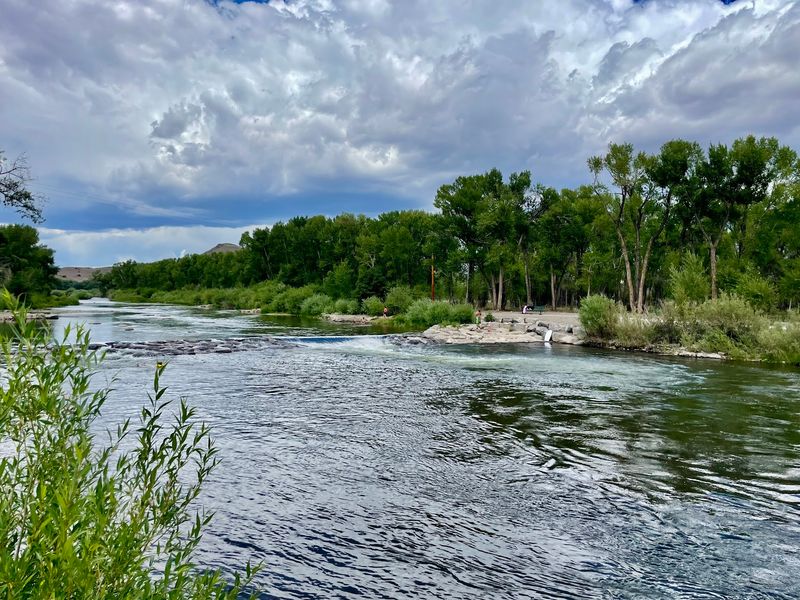
From the outside, a thunderegg looks like a dull, lumpy rock. Crack one open, and the surprise is half the fun.
Inside, you might find chalcedony, agate, or opal. Plume, moss, and fortification agate patterns all turn up here.
Geologists describe thundereggs as rounded mineral formations that develop within volcanic rocks, typically rhyolite, and often contain agate, chalcedony, or opal. They formed in volcanic rock that’s roughly 23 to 34 million years old.
Some sit locked in weathered rhyolite on the hillsides. Others wash loose and rest in drainage gullies as float.
Picks, shovels, and rock hammers do most of the work. Some collectors even bring metal detectors.
The area isn’t a one-trick pony. Geodes, amethyst, jasper, calcite, and common opal can show up too.
Most of this ground is public land managed by the BLM and Forest Service. Casual collecting for personal use is allowed without a permit.
The Bureau of Land Management generally allows reasonable quantities of rocks and minerals to be collected for personal, noncommercial use, although specific limits and restrictions may apply. That’s plenty to keep your rock saw busy.
Active mining claims and private land are off-limits. Check claim status before you start digging.
Winter snow and muddy roads can slow you down. Pick a dry day, and save your energy for the hunt.
Address: Rockhounding areas near Del Norte, Rio Grande County, CO 81132