
These 5 Washington Caves Let You Walk Underground Into Total Darkness
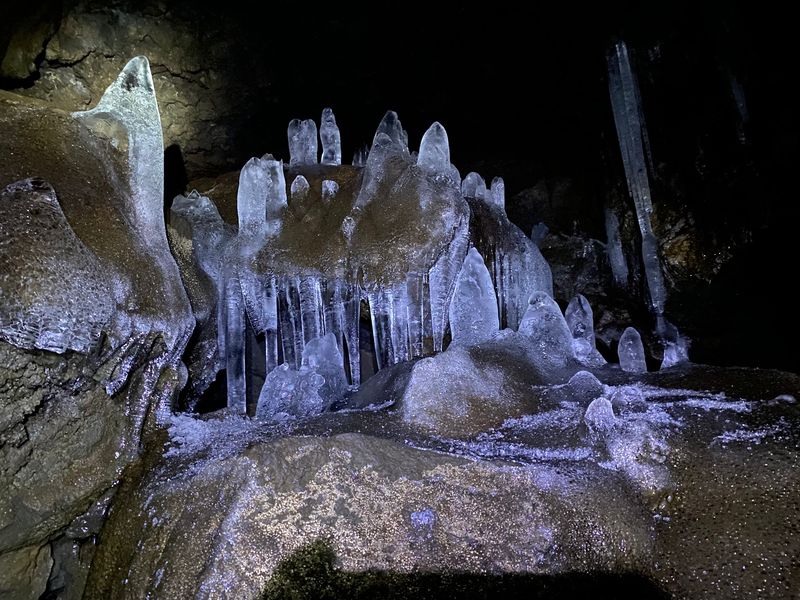
Ice can hang inside a Washington lava tube in the middle of summer, even when the air outside feels like a toaster. The rock acts like a heat trap, and the chambers stay near freezing year-round.
I love that a volcano basically built a refrigerator.
That chilly surprise is just one of the underground spots on this list. Some were carved by lava flowing beneath a hardened crust.
Another formed in limestone, and one was shaped by a creek squeezing under giant boulders.
Lights matter here, because several of these caves have none at all. Flip off your lamp and the dark feels almost solid.
I can’t think of a stranger way to spend an afternoon outdoors.
Most of these Washington caves open only during warmer months, so a little planning goes a long way. Ready to find out which one you’d brave first?
1. Ape Cave Interpretive Site
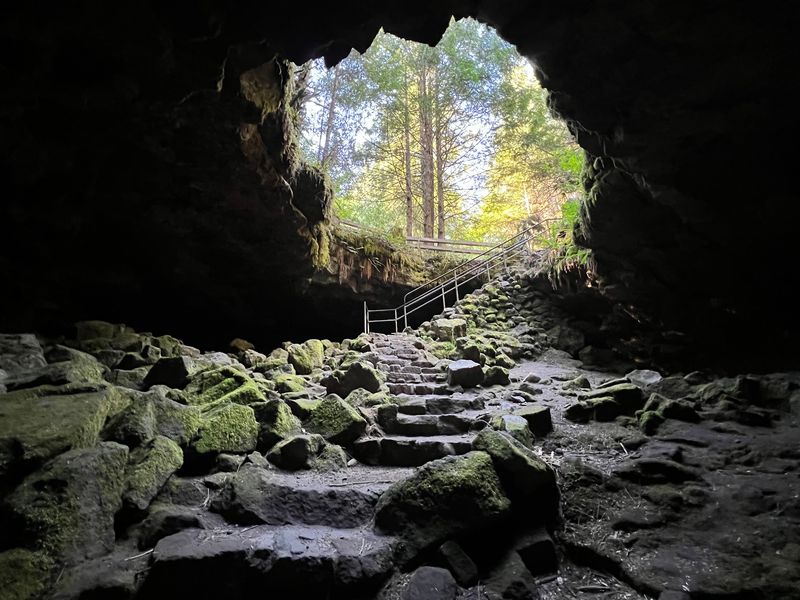
Mount St. Helens built this tunnel about 2,000 years ago, and it’s still one of the longest lava tubes in North America. You get roughly 2.5 miles of underground passage to explore on your own.
No lights are installed inside, so the darkness is the real deal. Bring at least two light sources and a warm layer, since the cave stays chilly year-round.
The lower cave is the easier pick for families. Its fairly level path runs about three-quarters of a mile one way, with sandy floors and a ceiling that soars in spots.
Watch for the famous ‘meatball,’ a chunk of hardened lava wedged high in the ceiling. It’s the kind of oddity kids will talk about the whole drive home.
The upper cave is a different animal. You’ll scramble over 27 boulder piles and climb an 8-foot lava wall, so sturdy shoes and steady legs help a lot.
Plan on a few hours for the full upper route. Many hikers return on the surface trail, which gives your eyes a welcome break from the dark.
Timing matters here in Washington. The cave opens seasonally, and the Forest Service has used timed reservations during busy months, so check before you go.
Weekday mornings tend to be the quietest window. Saturday and Sunday afternoons draw the biggest crowds.
Address: Cougar, WA 98616
2. Gardner Cave
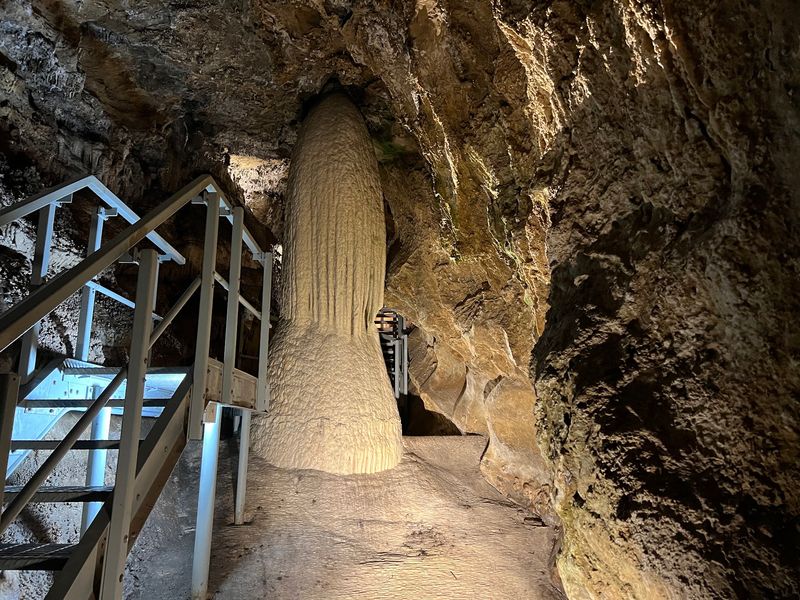
Way up near the Canadian border sits one of Washington’s longest limestone caves. Tucked inside Crawford State Park, it’s a whole different world from the lava tubes on this list.
Limestone means drips, and drips mean decoration. Guides point out stalactites, stalagmites, rimstone pools, and calcite formations along the route.
You can’t wander in alone, which is part of the charm. The cave is open only on guided tours, and reservations are required.
Better yet, the tours are free. That’s a rare treat for a ranger-led look at geology this old.
Guides cover how the cave formed, its history, and the science studied inside. Expect a short, informative visit rather than an all-day expedition.
The best moment might be when the lamps go out. During the tour, guides switch off the lights, and you get a taste of complete underground blackness.
Getting there takes a little effort. An uphill trail leads to the entrance, and metal stairs help you move through the chambers.
Tours run seasonally, so aim for the warmer months. The site is closed Tuesdays and Wednesdays during the season, so plan your road trip around that.
Restrooms are on site, but you won’t find a restaurant. Pack snacks for the drive through the remote northeast corner of the state.
Address: Boundary Rd, Metaline Falls, WA 99153
3. Guler Ice Caves
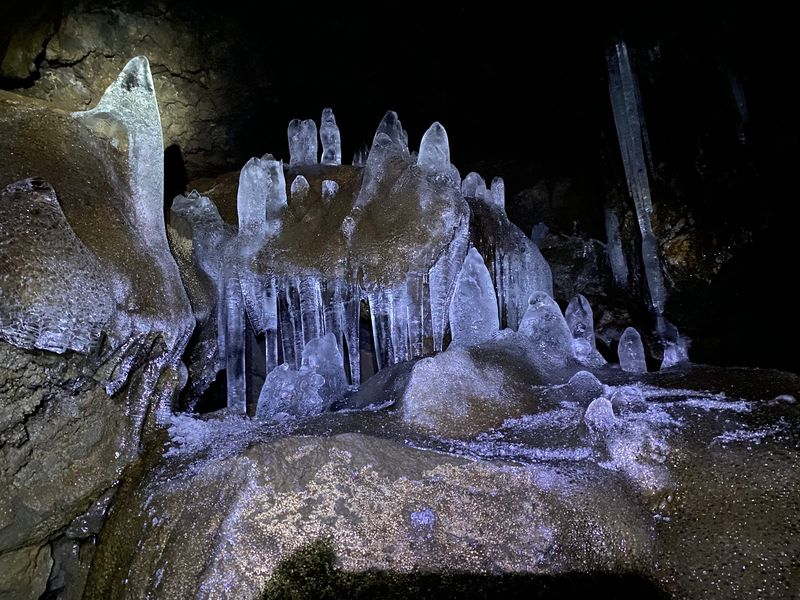
Freezer burn is a real possibility at this lava tube in the Gifford Pinchot National Forest. Ice forms inside even in summer, because the underground chambers trap cold air and stay near freezing.
The lava flows that shaped these caves date back somewhere between 12,000 and 20,000 years. Over time, the tubes became natural iceboxes.
People have put that chill to work for a long time. Native Americans stored huckleberries and water here, and early settlers later harvested the ice.
The caves carry the name of Christian Guler, who tried using them for commercial cold storage. Talk about a business plan with built-in air conditioning.
Inside, look for ice stalactites, stalagmites, columns, and other frozen shapes. Early spring is usually the best time to see them at their fullest.
The system runs roughly 650 feet, though it feels bigger than it first appears. Expect a rubble-filled entrance and a few small chambers.
Footing gets slick fast, so wear shoes with real grip. No lights are installed, which means a strong flashlight and spare batteries belong in your pack.
Unlike most caves on this list, the site is open year-round. Winter visits may require snowshoes if Forest Road 24 is closed by snow.
A night trip in winter is a memorable way to see the place. Just dress like you’re visiting a walk-in freezer, because you basically are.
Address: Trout Lake, WA 98650
4. Boulder Cave Trail
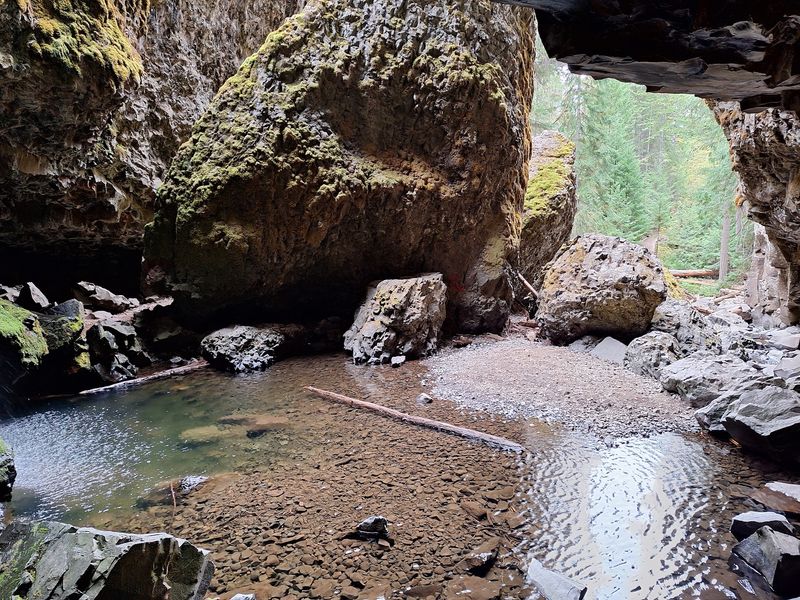
Water did the heavy lifting here instead of lava. Over thousands of years, Devil Creek carved a passage beneath a jumble of massive basalt boulders near Naches.
The trail to the cave is short but steep in places. It’s a manageable outing for families, and the route leads right through the dark passage itself.
Pack a flashlight before you leave the car. Daylight fades quickly once you head inside, and the creek keeps rushing beside you.
Look up, but quietly. The cave shelters Townsend’s big-eared bats, which is why the area closes for part of the year to protect them.
Those bats make this spot a little bit Gotham. Kids who’ve always wanted to visit a real batcave finally get their chance.
Outside, the scenery keeps going. You’ll find a waterfall, a picnic area, and the Naches River nearby, so a towel isn’t a bad idea.
Seasonal timing matters most here. The day-use area typically opens in late spring and closes in early fall, so summer is your sweet spot.
Hours are limited to the middle of the day during the season. Arrive early enough to enjoy the trail without rushing back to the lot.
A parking fee applies at the lot. It’s a small price for an underground stroll with eastern Washington sunshine waiting on the other side.
Address: 3210 Old River Rd, Naches, WA 98937
5. Natural Bridges
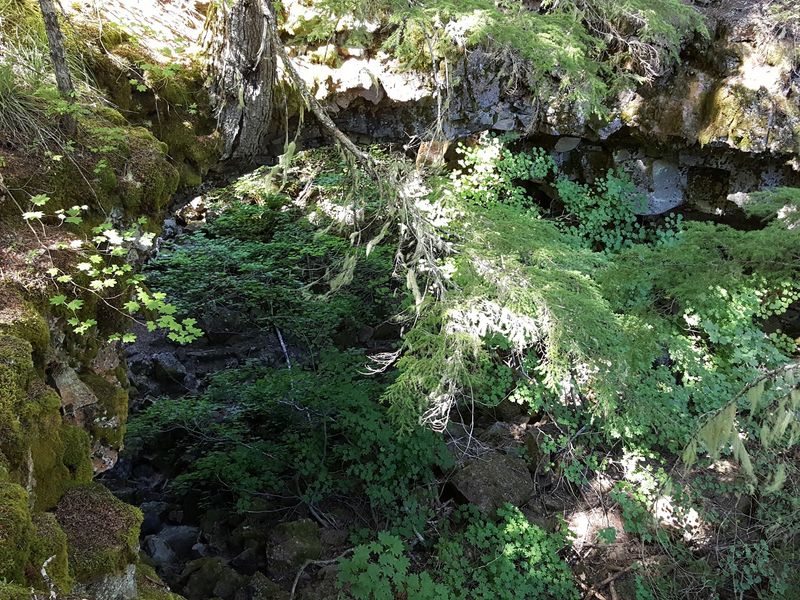
Collapse sounds like a bad thing, until you see what it created here. Sections of an ancient lava tube caved in, leaving a long trench with rock arches still spanning the gap.
Those arches are the natural bridges that give the site its name. The area sits in the Gifford Pinchot National Forest, not far from the Guler Ice Caves.
Getting started is easy. A short walk from the free parking lot puts you right at the edge of the trench.
An interpretive loop trail follows the rim. Signs along the way explain how flowing lava formed tubes beneath a cooled crust.
Curious explorers can peek into the tunnels where the tube remains intact. Bring a good light if you plan to poke into those darker sections.
The terrain is uneven in spots, so watch your step near the edges. Sturdy shoes make the trench and rocky bits much easier to handle.
Short, kid-friendly hikes make the site a solid family pick. It’s a fun way to show young explorers how Washington’s volcanic past shaped the land.
Pair it with a stop at the nearby ice caves for a full volcanic day. You’ll get frozen chambers and open-air arches in a single trip.
It’s also refreshingly low-key. Choose it when you want lava tube scenery with very little planning.
Address: Cook, WA 98605