
This Arizona Mission Orchard Still Grows the Quinces Spanish Families Boiled Into Sweet Paste
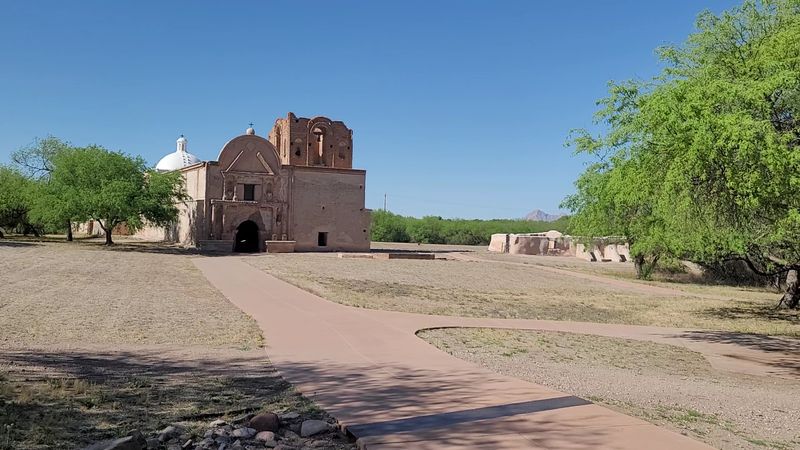
Quince trees, the fuzzy golden fruit Spanish families once boiled into sweet paste, still grow beside an adobe church in southern Arizona. Most folks zoom past on the interstate without a clue.
The orchard isn’t decoration. It’s a living echo of what mission farmers planted along a desert river centuries ago, with pomegranates and figs keeping the quinces company.
I love that a fruit most Americans have never tasted is quietly thriving here.
The setting makes it even better. An unfinished church stands nearby, weathered and honest, with shady trails leading down toward water you wouldn’t expect in this dry country.
I can’t imagine a gentler way to spend a slow afternoon. History, a garden, a riverside walk, and maybe a warm tortilla if your timing is lucky.
So why does almost nobody talk about it?
An Old Mission Park Sitting Quietly Off The Interstate
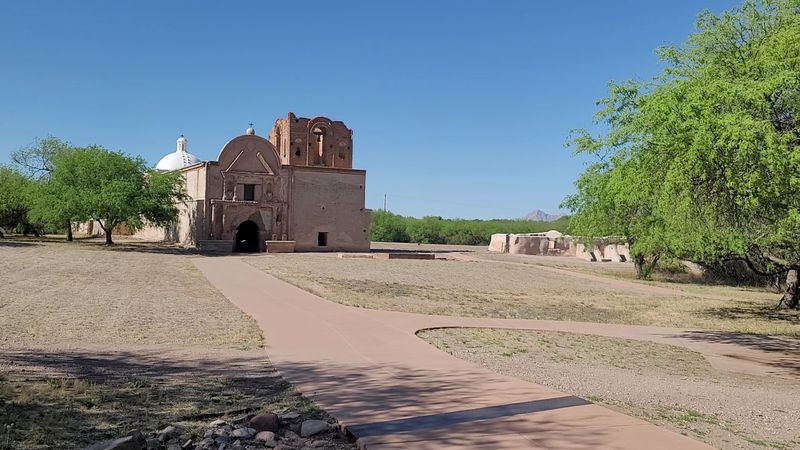
Tumacácori National Historical Park sits just off Interstate 19, south of Tucson and close to the border. It protects the remains of three Spanish mission communities, which is a lot of history for such a modest footprint.
The star is the old church at Tumacácori itself. The two other mission sites, Guevavi and Calabazas, are part of the park but are reached separately and less often.
Around the main church, you’ll find a museum, a visitor center, a small gift shop, and walking paths. Then there’s the orchard, which is the part that turns curious travelers into repeat visitors.
The park is small enough to enjoy in a morning. Yet it packs in architecture, gardens, river trails, and stories that stretch back hundreds of years.
It also stays relatively low-key compared to Arizona’s headline parks. That means elbow room, quiet paths, and rangers who actually have time to chat.
Southern Arizona has plenty of dramatic scenery. This spot trades grandeur for something softer, a calm corner where fruit trees and adobe walls share the same patch of desert sun.
Centuries Of Stories Layered Into One Patch Of Desert
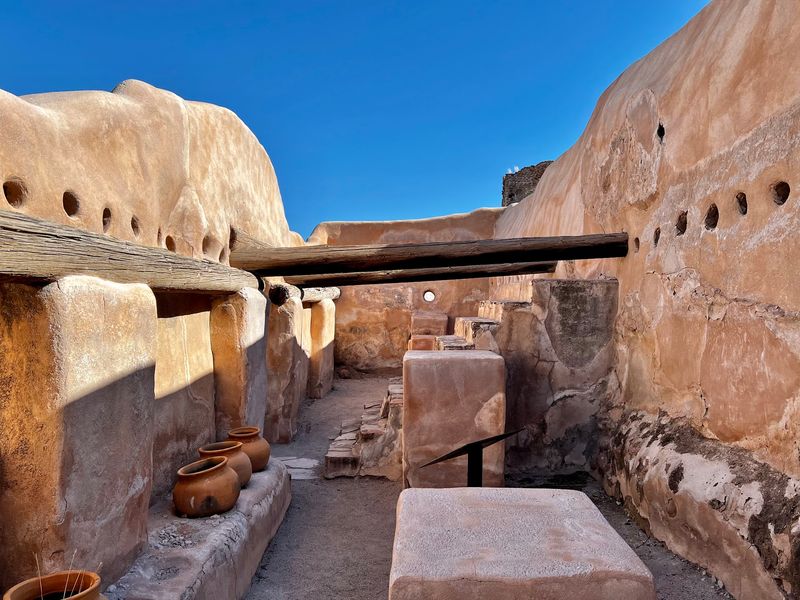
Long before any church went up, O’odham people farmed and lived along the Santa Cruz River here. Their villages and fields shaped this valley first, and the park makes that part of the story clear.
Jesuit missionary Father Eusebio Francisco Kino reached the area in 1691. Spanish missions followed, bringing new crops, livestock, and a very different way of life.
Later, Franciscans took over the mission work. Then Mexico gained independence, and eventually the land became part of the United States.
So you’re not visiting one chapter. You’re standing where O’odham, Spanish, Mexican, and American history all overlap, sometimes uncomfortably and often fascinatingly.
The exhibits don’t sand down those rough edges either. They explain shifting government policies, changing religious orders, and how Native communities lived through each transition.
That honesty gives the place weight. The orchard and garden aren’t just pretty, because every tree connects to people who planted, tended, and harvested here generations ago.
Keep that in mind as you wander. A simple quince branch suddenly feels like a thread tying today’s visitors to everyone who came before.
A Church That Never Quite Got Finished
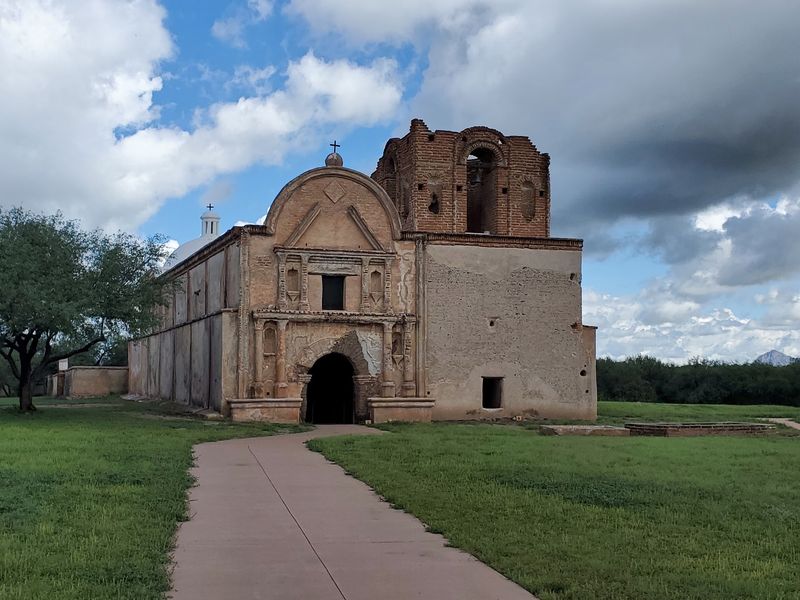
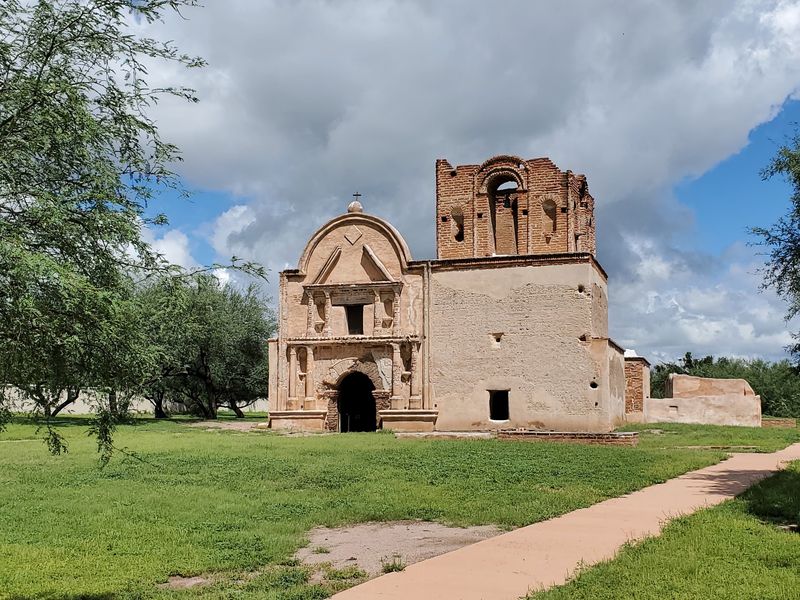
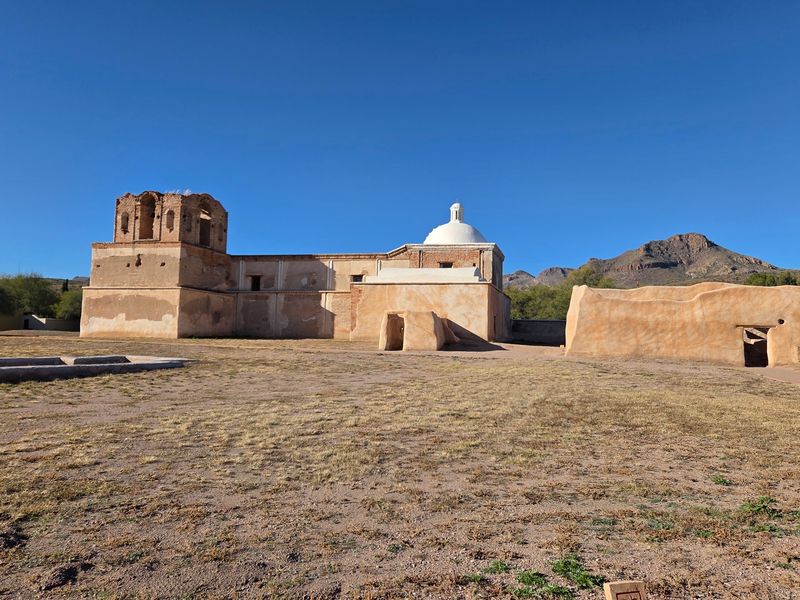
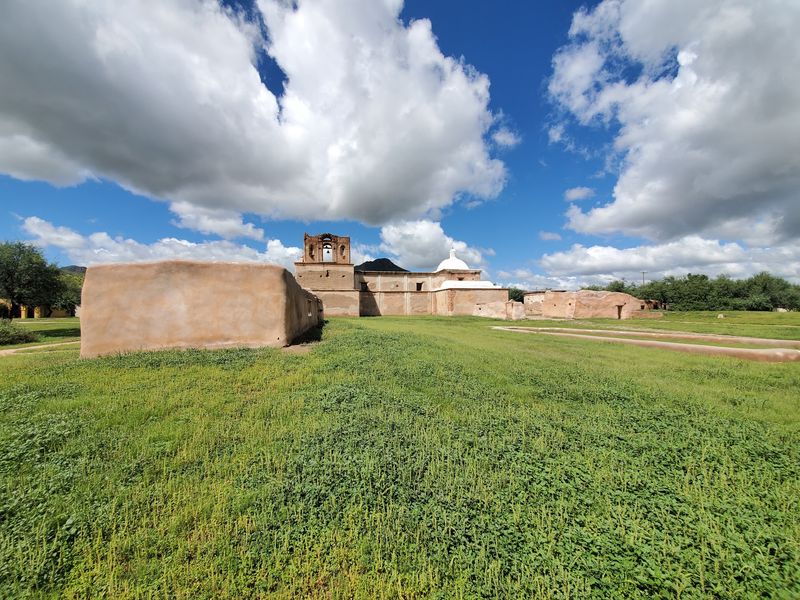
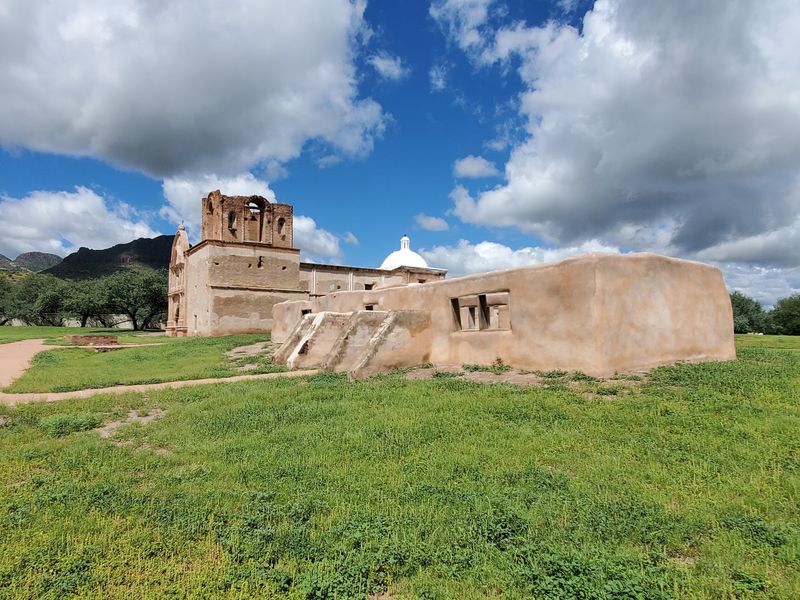
Builders never fully completed the church at Tumacácori, and somehow that makes it more striking. The bell tower and other details hint at plans that simply ran out of time and resources.
What remains is a tall adobe structure with a beautifully worn facade. Plaster has faded, edges have softened, and the walls show their age openly.
Many people say it feels like a corner of Spain or Italy. That comparison makes sense when the late light hits the arched entry and warm-toned walls.
The park hasn’t tried to make everything shiny and new. Staff stabilize the structure carefully, but the goal is preservation rather than a glossy rebuild.
Paved paths frame the approach so the church appears as you round a corner. It’s a lovely reveal and a favorite photo moment.
Step inside and look up. The open, quiet interior lets you study how adobe holds up over centuries, and how slowly it gives way.
Honestly, it’s refreshing. In a world of perfect replicas, an imperfect original standing in the Arizona sun feels genuine.
The Orchard Locals Quietly Love
Follow the walking trail past the church and you’ll reach the orchard. It’s planted with fruit trees representative of what mission communities grew here long ago.
Mission orchards mattered enormously. Fruit fed families, supplied trade, and made desert life a little sweeter, literally.
The park’s orchard works like a living museum exhibit. Instead of reading about old crops behind glass, you walk among the actual trees.
Seasons change the scene completely. Spring can bring blossoms and budding fruit, while later months show branches heavy and leaves turning.
That’s why the orchard earns so much love from return visitors. It never looks exactly the same twice, unlike the museum displays.
The trail itself is unpaved, so wear decent shoes. It’s an easy stroll, though, and pairs nicely with the shaded paths toward the river.
Bring a little patience too. Read the signs, notice which trees are flowering, and imagine mission farmers checking the same branches centuries ago.
For a park built around stone and adobe, this green pocket is the surprise. It’s where the history starts feeling alive and growing.
Fuzzy Golden Quinces With A Very Long Pedigree
Quince looks like a lumpy pear wearing a fuzzy sweater. Raw, it’s hard and tart, but cooked, it turns fragrant and rosy.
Spanish settlers loved it. Cooked down with sugar, quince became membrillo, a sweet paste still enjoyed across Spain and Latin America.
Missionaries and settlers carried fruit like this northward. Quince trees fit right into mission orchards beside other Old World favorites.
The heritage orchard at Tumacácori National Historical Park includes quince among its historic varieties. Few places in Arizona let you see the fruit in this setting.
Why should you care about an overlooked fruit? Because heirloom trees carry genetic history, preserving traits that modern commercial orchards often abandoned.
Spotting one is half the fun. Look for broad leaves and, depending on the season, pale blossoms or plump yellow fruit.
Please admire rather than pick. These trees are protected park resources, and their value comes from staying healthy for future visitors.
Still, just knowing they’re there feels like a secret. Tell a friend about the quince trees, and watch their face do that delightful confused-then-curious thing.
Pomegranates And Friends Share The Rows
Quinces get the bragging rights, but they don’t grow alone. Pomegranates also appear in the orchard, and their red blossoms and budding fruit are easy to love.
Pomegranates were a natural match for this climate. They handle heat well and have deep roots in Spanish food traditions.
Walking the rows feels a bit like browsing a historic pantry. Each tree represents a choice mission farmers made about what could thrive here.
Those choices depended on water. The Santa Cruz River and irrigation made orchards possible in a place that otherwise looks dry and stubborn.
That connection is what makes the orchard so satisfying. You can see how river, soil, and labor worked together to feed an entire community.
Photographers, take note. Fruit trees against adobe and blue sky make a lovely frame, especially when something is blooming.
Timing matters if you want blossoms or fruit. Spring brings fresh growth, while later in the year the branches show what they’ve produced.
Either way, the variety keeps things interesting. A quick walk becomes a little lesson in desert farming, without anyone handing you a quiz.
A Courtyard Garden Worth Lingering In
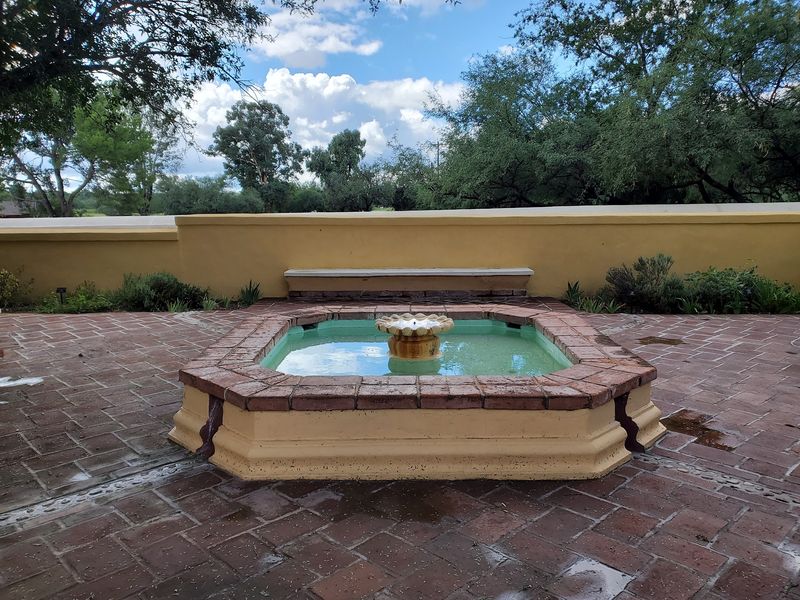
Birdsong might be the soundtrack you remember most. The courtyard garden near the visitor center is full of plants and feels wonderfully calm.
Many of its plants are edible or useful. They reflect both Native and Spanish traditions, showing how people here fed and cared for themselves.
It’s easy to rush past on the way to the church. Don’t, because this is one of the most relaxing corners of the whole park.
Benches and greenery invite you to sit. Some people could happily stay for hours, just listening and watching small birds move through the branches.
Look closely at the variety. Desert natives grow alongside introduced crops, a small reminder of how cultures blended over time.
The garden sits close to the restrooms too. That’s not glamorous, but it’s handy when you’re planning stops with kids or older relatives.
Flowers can bloom enthusiastically in the right season. Spring is often especially showy, with color popping against the earthy adobe tones.
Think of it as a warm-up for the orchard. You’ll start noticing plants, and that curiosity carries you happily down the trail toward the quinces.
Start With The Film, Then Hit The Museum
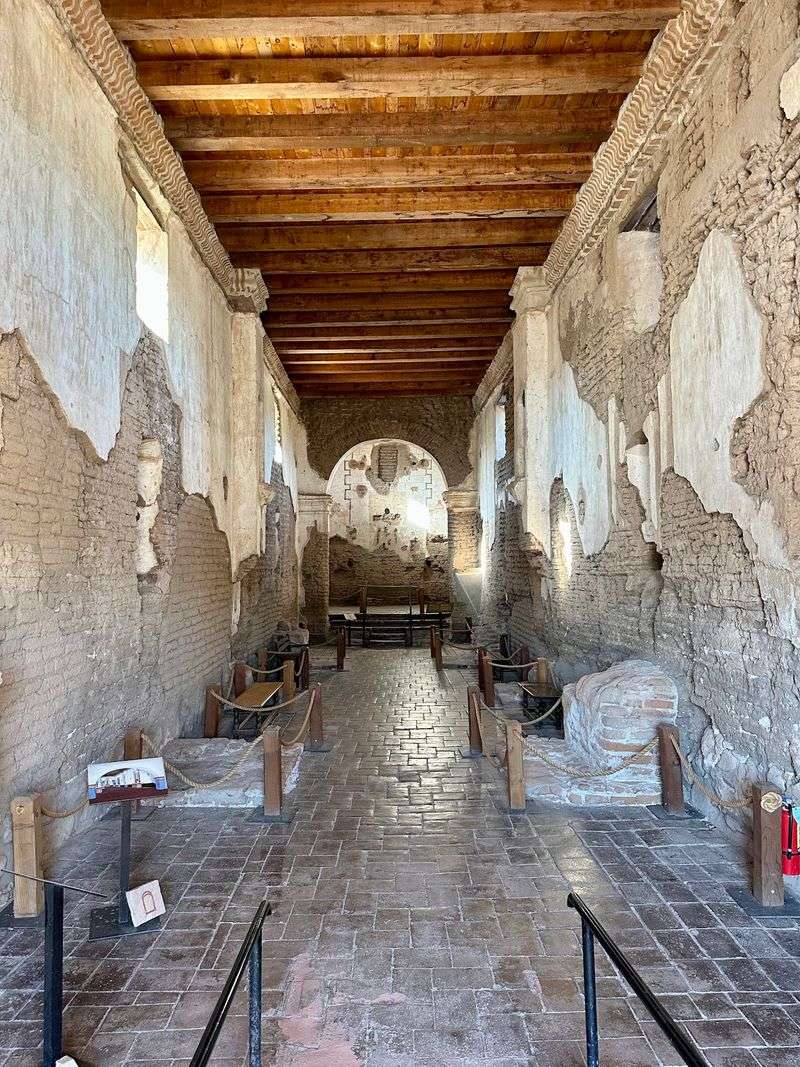
A short orientation film plays at the visitor center, and it’s worth those few minutes. It sets the stage so the ruins make more sense later.
The museum comes next. It holds artifacts, Native American displays, and exhibits covering mission life under Spain and later Mexico.
Everything feels thoughtfully put together. High-quality pieces and clear explanations help both history fans and casual visitors follow along.
Bilingual placards with illustrations appear around the grounds as well. They’re helpful for families and anyone who prefers pictures with their facts.
The park also offers a self-guided walking booklet and site map. Each stop gets a short description, so you can explore at your own speed.
That flexibility is a big plus. Spend twenty minutes or two hours, depending on your energy and the weather.
Don’t skip the little gift shop on the way out. It carries National Park items, and passport stamp collectors will want their stamp.
Arriving with some background changes everything. Once you understand the people behind the mission, even the orchard rows start telling a more complete story.
Shady Trails Lead To A River That Actually Flows
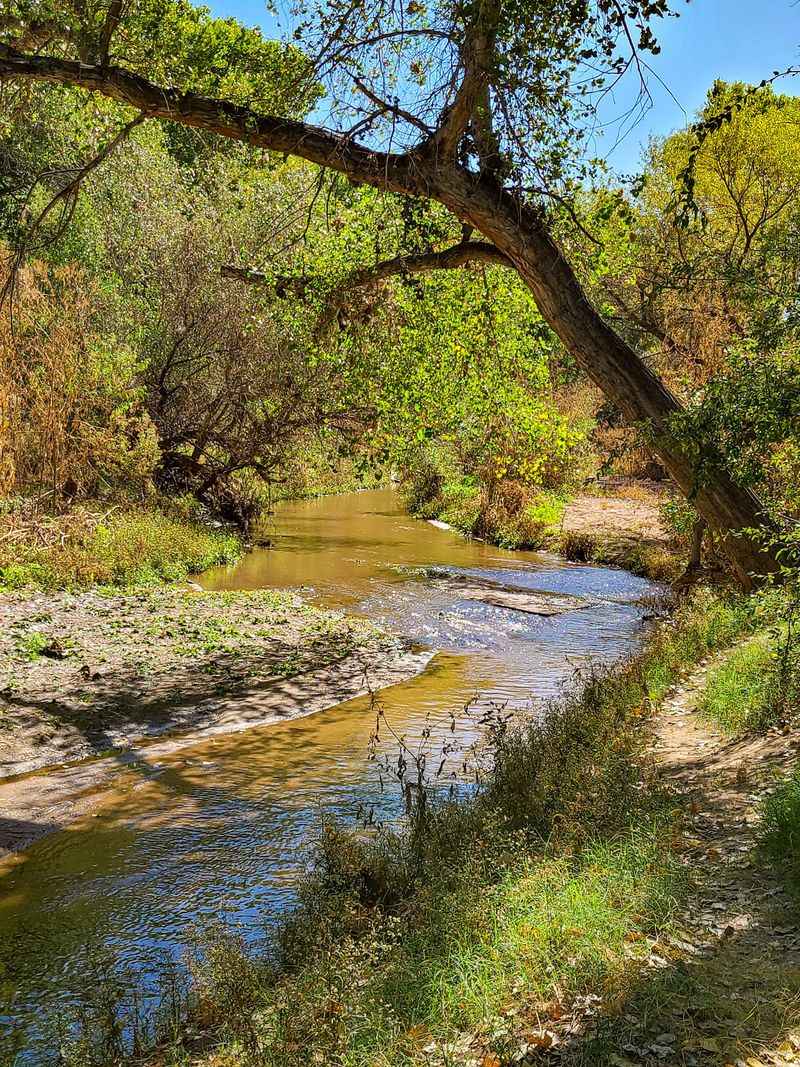
Water in the Santa Cruz River? Here, often yes, which surprises anyone used to seeing it dry up near Tucson.
Nature trails lead from the grounds toward the river. Overarching desert trees shade much of the route, keeping things quiet and pleasant.
From a corner of the park, you can also connect to the Juan Bautista de Anza National Historic Trail. Anza’s 1770s expedition passed this way toward California.
Walking a piece of that route adds another layer. You’re following footsteps of colonists who traveled all the way to what became San Francisco.
The riparian habitat draws plenty of birds. Bring binoculars if you enjoy spotting feathered locals among the branches.
The trails aren’t paved like the main paths. Sturdy shoes help, especially after rain when the ground can stay damp.
Shade is welcome, but sun protection still matters. Southern Arizona heat can sneak up fast, even on a short stroll.
It’s the perfect cooldown after the museum. Orchard, river, and trail together make Tumacácori National Historical Park feel bigger than its size.
Warm Tortillas, Ranger Talks, And Junior Rangers
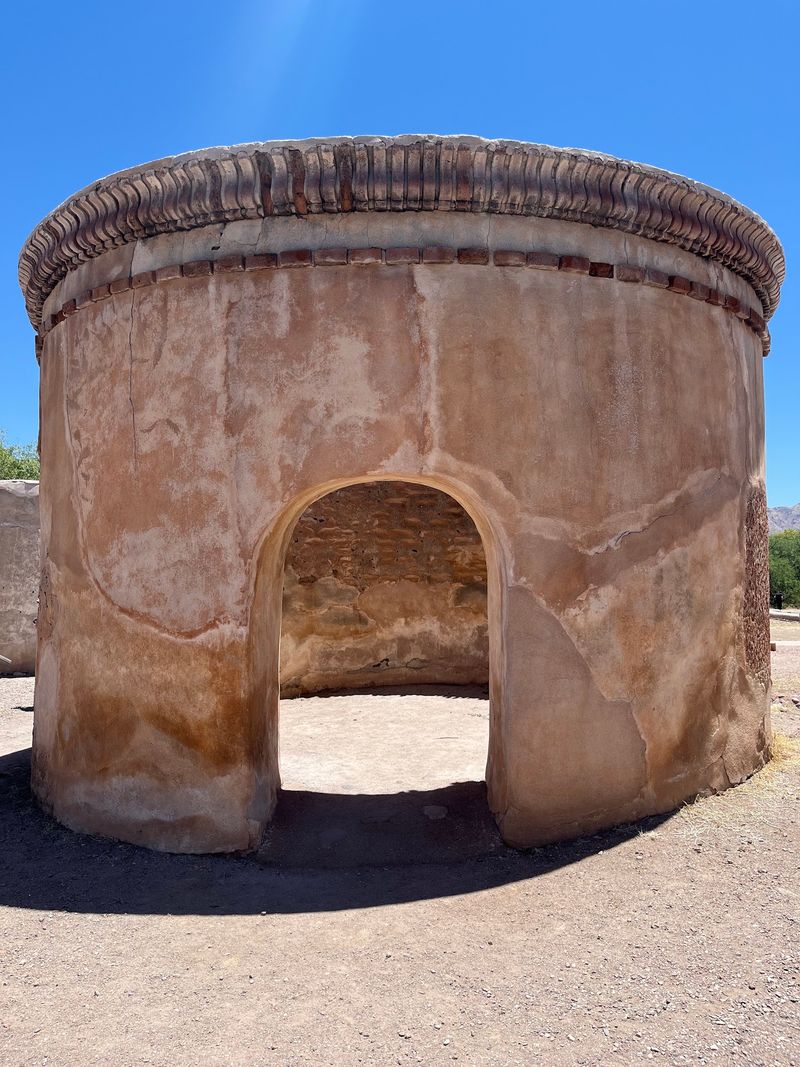
Fresh tortillas at a national park sounds almost too good. Yet tortilla-making demonstrations happen here on some days, sometimes with samples.
They aren’t guaranteed every visit, so treat them as a lucky bonus. Catching one turns an ordinary stop into a delicious memory.
Ranger and volunteer tours add plenty of depth. Several knowledgeable guides know the history and archaeology of the area remarkably well.
Asking questions pays off here. The staff tends to be friendly, welcoming, and happy to explain details you’d never catch alone.
Kids aren’t left out either. The Junior Ranger program gives them activities and a goal, which keeps little feet moving happily.
Families appreciate that the park is the right size. It’s educational without being exhausting, and crowds usually stay manageable.
Special events have also appeared over the years, including luminaria lighting. Schedules vary, so check with the park before planning around anything specific.
Programs bring the place to life. Combine a tour with the orchard walk, and the quince trees suddenly come with stories, names, and context attached.
Who Will Fall For This Peaceful Little Park
History buffs are obvious fans. Gardeners and fruit lovers might be the happiest surprise audience, thanks to the orchard and courtyard.
The mood is calm. Many describe it as peaceful, a place to wander slowly without feeling hurried.
Retirees often find it ideal. Paths linking the main areas are mostly paved, and benches and shade offer easy breaks.
Photographers get endless angles too. The church facade, adobe textures, garden blooms, and fruit trees all reward a patient eye.
Families with curious kids do well here. The museum, Junior Ranger program, and outdoor space balance learning with fresh air.
Birders should pack binoculars. The river habitat and garden attract plenty of activity, especially in quieter hours.
Readers and daydreamers fit right in as well. Sitting beneath shade trees and admiring old adobe walls is a perfectly valid itinerary.
Who might be less thrilled? Anyone craving thrill rides or big crowds, because this park is gentle on purpose.
That gentleness is its charm. It’s a slower Arizona experience, built for noticing small things like a quince blossom or a sparrow on a wall.
Hours, Passes, And Getting There Easily
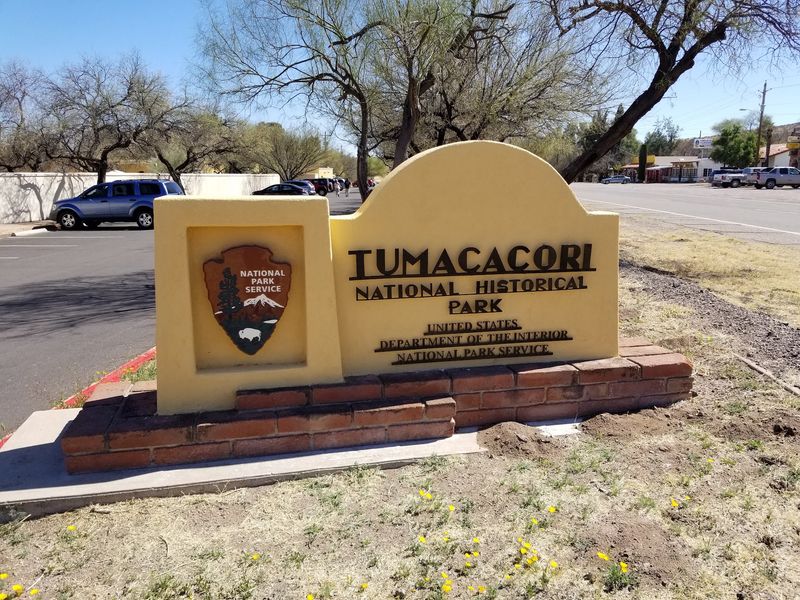
Planning is refreshingly simple. Tumacácori National Historical Park is open daily from 9 a.m. to 5 p.m.
You’ll find it at 1891 I-19 Frontage Rd, Tumacacori, AZ 85640. It’s an easy drive south from Tucson along Interstate 19.
There’s an entrance fee for adults, paid at the visitor center. America the Beautiful passes are accepted, which helps frequent park-goers stretch their budget.
Military visitors may qualify for a free lifetime pass. Check eligibility ahead of time so you know what to bring.
Free off-street parking sits right out front. Clean restrooms, picnic tables, and a gift shop round out the basics nicely.
Weather deserves real thought in southern Arizona. Cooler months make walking the orchard and river trails far more comfortable.
In summer, aim for opening time. Bring water, a hat, and sunscreen, because shade isn’t everywhere.
Quieter weekday mornings can be especially pleasant. You’ll have more space to linger in the garden and read every sign.
Fees and programs can change. Confirm current details with the park before you head out.
Why This Quiet Orchard Deserves A Spot On Your Weekend
Few Arizona day trips mix this much history with this much calm. Add an orchard of heirloom fruit, and the deal gets sweeter.
Tumacácori National Historical Park doesn’t shout for attention. It rewards people who slow down, read the signs, and wander the trails.
The value is excellent too. An affordable entry, or a pass you already own, unlocks a museum, film, garden, church, orchard, and river walk.
Pair it with nearby Tubac for a fuller outing. The art-loving town sits just up the road and makes a natural second stop.
Fans of Tucson often treat it as an easy escape. The drive is short, and the scenery shifts into something softer and greener.
Come for the adobe church if you must. Stay for the quince trees, the birds, and maybe a warm tortilla if luck is kind.
It’s the sort of place you’ll want to share. Tag the friend who loves gardens, history, or anything a little unexpected.
Then go see those quinces yourself. Southern Arizona keeps some delightful secrets, and this orchard is one worth knowing.