
A Colorado Sanctuary Lets You View Rescued Wolves And Big Cats From An Elevated Walkway
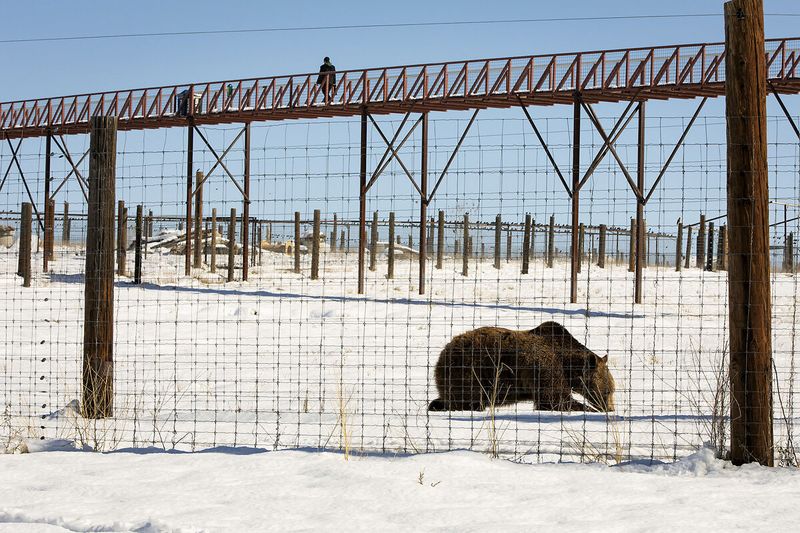
A claim circulating online describes an Illinois wildlife sanctuary where visitors can walk among rescued wolves and big cats, but the strongest available evidence points somewhere else entirely. The facility that matches the elevated-walkway and large-carnivore description is The Wild Animal Sanctuary in Keenesburg, Colorado, northeast of Denver.
Understanding what the sanctuary actually offers, and what it does not, matters before you plan a trip or share the story.
The strongest match is a Colorado sanctuary, not a verified Illinois attraction
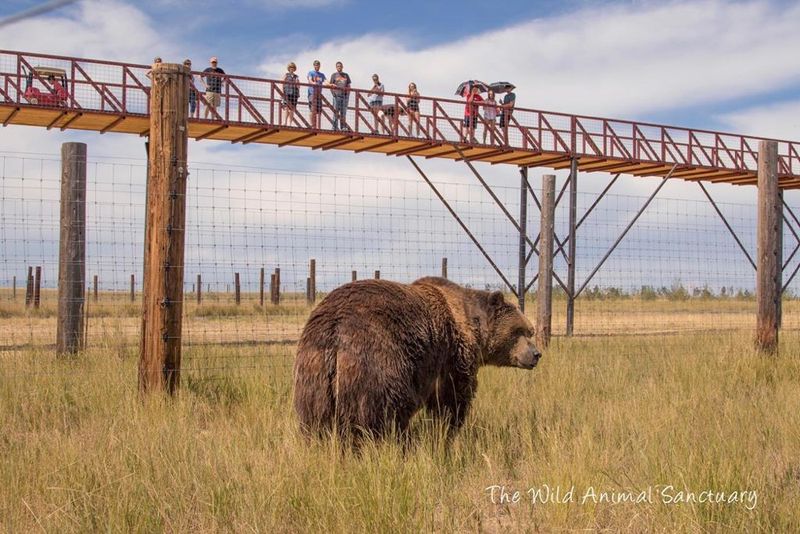
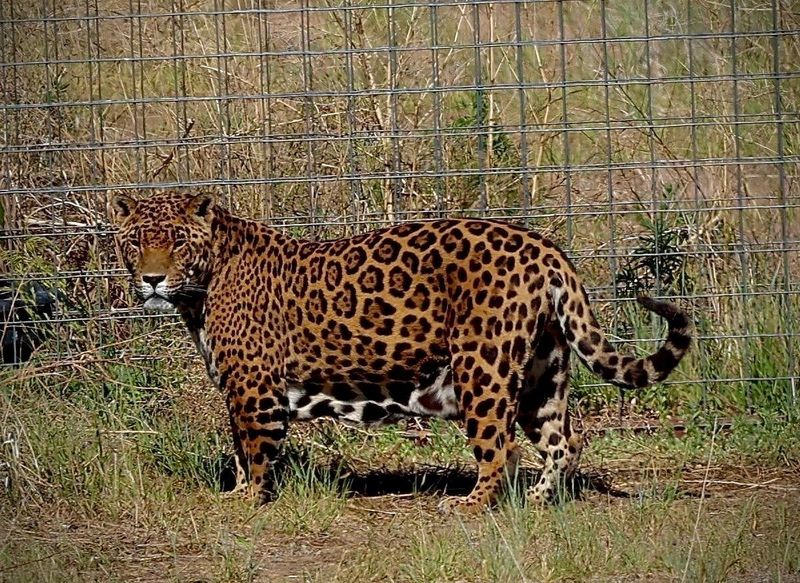
When you search for a place in Illinois where visitors can view rescued wolves and big cats from a boardwalk, the trail leads out of Illinois entirely. The Wild Animal Sanctuary’s official program pages describe a 1,450-acre property in Keenesburg, Colorado, northeast of Denver, housing more than 950 animals, including tigers, African lions, bears, mountain lions, leopards, wolves, and other species.
Those figures come from the sanctuary’s own materials and can change, so check the current numbers directly before publication or before you go.
No authoritative evidence currently establishes an Illinois facility as the source of the boardwalk-and-big-carnivore premise. If a reader or editor can identify a specific Illinois sanctuary with verified elevated-walkway infrastructure and rescued large carnivores, that information should be checked against official records.
Until then, Colorado is where the described experience is documented.
Illinois wildlife context is worth clarifying separately. The Illinois Department of Natural Resources notes that gray wolves are listed as endangered in the state, with no known breeding populations of gray wolves, black bears, or mountain lions established there.
That applies to wild populations, not to privately held captive animals, so it does not rule out every possible captive-wildlife facility in Illinois. The Wildlife Illinois large-carnivore sighting page similarly focuses on wild animals, not captive ones.
The practical takeaway is straightforward: the premise as originally stated has a location problem. Keenesburg, Colorado, is roughly a thousand miles from Illinois, and the sanctuary there is the strongest documented match for the described attraction.
Plan your visit accordingly.
Visitors use elevated platforms instead of walking among the animals
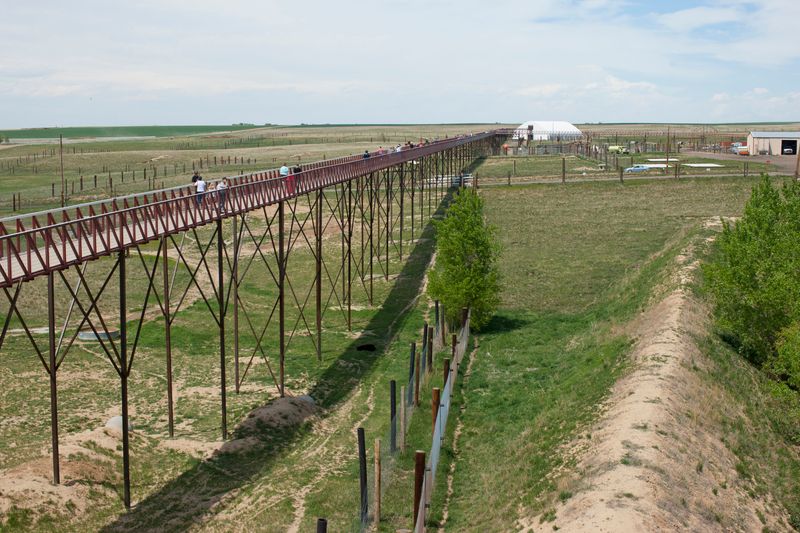
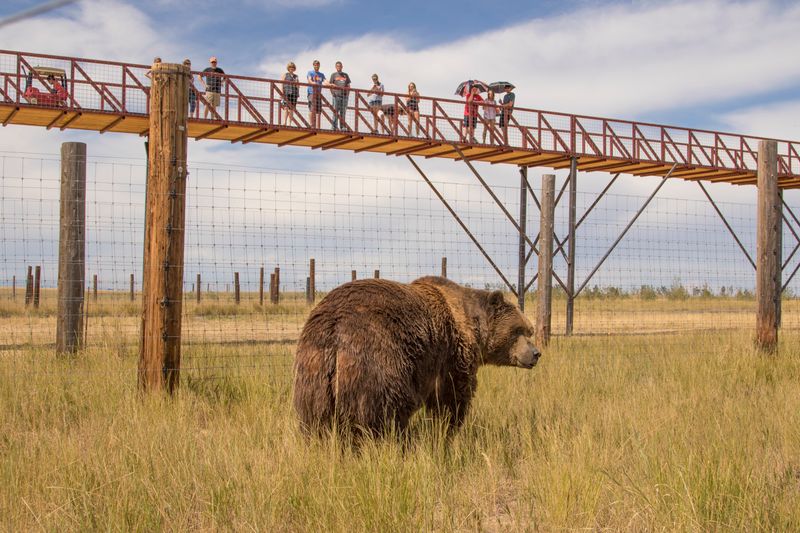
The phrase “walk among” is the part of the original premise that needs the most direct correction. At The Wild Animal Sanctuary, visitors move through the property on the Mile Into The Wild Walkway, an elevated system of ramps, walkways, observation platforms, and decks built above and alongside the animal habitats.
The sanctuary describes the walkway as a design that allows visitors to observe animals in their habitats while limiting human intrusion into the animals’ territory.
That separation is intentional and meaningful. Wolves, lions, tigers, bears, and other large carnivores live in those habitats.
Visitors never enter them, never touch the animals, and never feed them. The infrastructure keeps people above or beside the enclosures, not inside them.
Calling that experience “walking among” the animals misrepresents what actually happens on the ground.
The sanctuary’s visit guidance reinforces this separation throughout, describing the route as an elevated outdoor experience rather than a walk-through animal encounter. The design is closer to an observation bridge than a safari path where animals roam around you.
Broader standards support this approach. The Global Federation of Animal Sanctuaries defines sanctuary standards in part around prohibiting routine direct public contact with wildlife, treating that separation as a welfare and safety baseline rather than an optional feature.
Whether or not any specific facility holds current GFAS accreditation, the principle reflects why the elevated-platform model exists: it protects both the visitors and the animals.
The long route makes sightings spacious but unpredictable
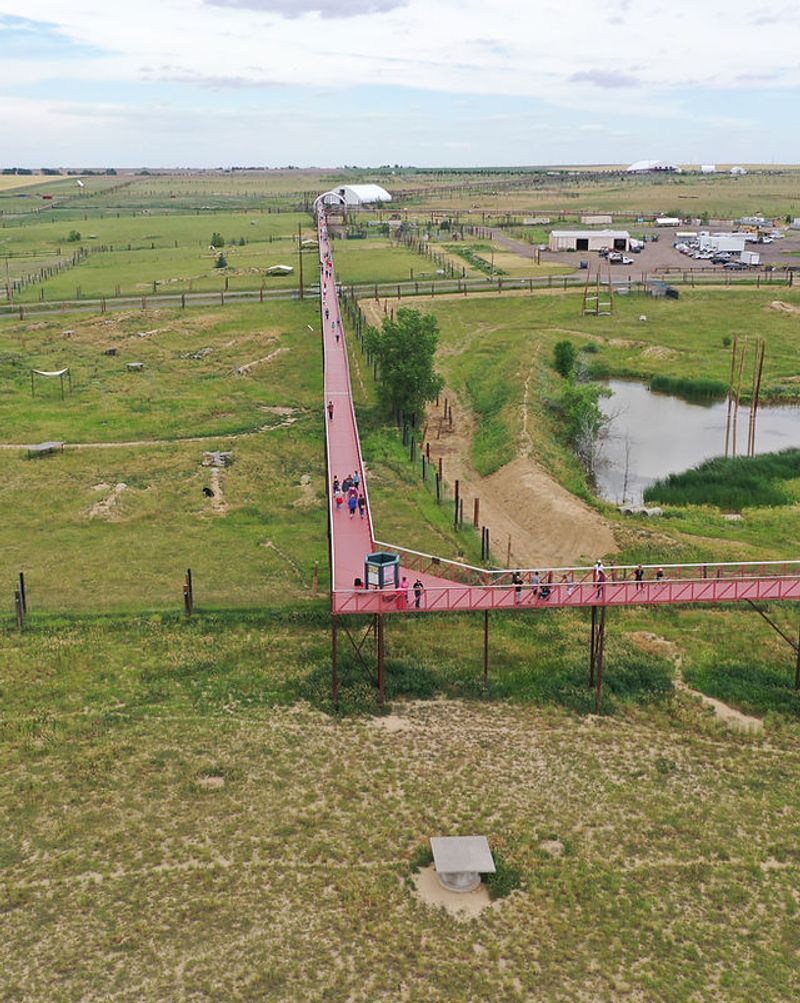
Covering more than 1.5 miles of elevated walkway, the route at The Wild Animal Sanctuary is not a quick loop past a row of enclosures. The sanctuary’s visit pages make clear that animals live in large-acreage habitats and are not required to stay near the path.
On any given day, a wolf pack might be resting in a far corner of its habitat, or a tiger might be near the walkway. There is no guaranteed display.
That variability is a feature of the sanctuary model, not a flaw. Giving animals the space to move freely within their habitats is a core part of the approach, and it means the experience depends partly on timing, weather, and the animals’ own rhythms.
Visitors who come expecting a compact zoo circuit with close-up sightings at every stop will need to reset those expectations before they arrive.
The sanctuary’s official visit information does not promise eye-level encounters or consistently close views. Viewing distance varies because the habitats are large and animal choice is prioritized over visitor convenience.
Binoculars are a practical addition to your kit, especially if you want a better look at animals resting farther from the walkway.
None of this means the animals are free, wild, or living as they would in a natural ecosystem. The sanctuary provides large, species-specific habitats for captive animals that cannot be released.
Variable sightings reflect the scale of those habitats and the sanctuary’s welfare priorities, not a rewilded population roaming open country. The program pages frame the mission around rescue and lifelong care, not wildlife restoration.
The rescue histories come from varied captive-wildlife situations
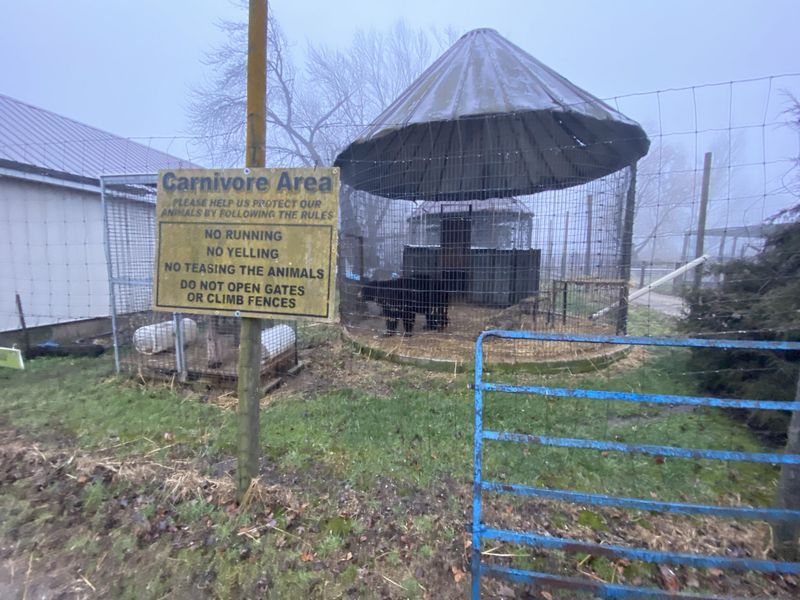
Saying every animal at the sanctuary was “saved from a roadside zoo” flattens a more complicated picture. The sanctuary’s rescue records document a range of situations: illegal private ownership, abusive facilities, animals surrendered when owners could no longer care for them, and enforcement actions by federal regulators.
Roadside attractions are one category among several.
A specific example from the sanctuary’s records involves four animals transferred after a USDA-enforced closure of a zoo in Wisconsin. Those animals had been kept in wire cages before arriving at the sanctuary’s much larger habitat areas.
Their story illustrates how federal enforcement can trigger rescues, but it is one documented case, not a template for every resident’s background.
Attributing a single origin story to more than 950 animals misrepresents both the sanctuary’s work and the scope of the captive-wildlife problem in the United States. The sanctuary’s program descriptions connect its rescue mission to a broader captive-wildlife crisis, one that involves privately held exotic animals, facilities operating outside regulatory oversight, and animals that outlive their owners or the businesses that kept them.
Specific rescue histories are worth reading individually on the sanctuary’s website rather than summarizing under one label. Each account typically identifies where the animal came from, what conditions it lived in before rescue, and how it arrived at the Colorado property.
Those details give a more honest sense of the variety of situations the sanctuary addresses than any single generalization can.
Permanent sanctuary care is different from rehabilitation or rewilding
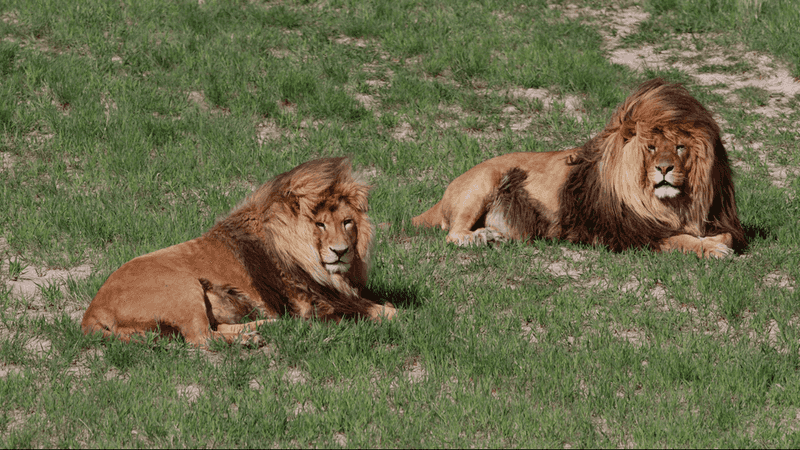
A common misread of large-habitat sanctuaries is that the animals are being prepared for release. At The Wild Animal Sanctuary, the documented mission centers on rescuing captive wild animals, providing them with lifelong homes, and educating the public about the captive-wildlife crisis.
Release into natural ecosystems is not part of that mission for lions, tigers, bears, or most of the wolves in residence.
Rehabilitation, in the wildlife-care sense, refers to nursing injured or orphaned wild animals back to health so they can return to their natural habitat. Rewilding describes broader landscape-scale efforts to restore species to ecosystems where they have disappeared.
Neither term fits what the Colorado sanctuary does. Its residents are captive animals that have lived in human-controlled settings and cannot survive independently in the wild.
Large, species-specific habitats are not the same as a natural ecosystem. They represent a significant welfare improvement over wire cages or concrete enclosures, and the sanctuary frames them as the most appropriate environment for animals that have no path back to the wild.
That is a meaningful distinction from what wildlife rehabilitation centers and rewilding programs do.
GFAS definitions of sanctuary standards emphasize non-exploitative care and the absence of breeding programs intended to supply animals for public contact or commercial use, which further separates accredited sanctuaries from facilities with different models. Understanding that distinction helps visitors appreciate what they are actually supporting when they visit: permanent care for animals that have no other option, not a step toward wildlife restoration.
Plan for a substantial outdoor visit
Arriving at The Wild Animal Sanctuary without knowing what to expect physically is the most common planning mistake. The sanctuary’s visit pages describe the experience as beginning with a welcome center and an orientation video before visitors head onto the elevated route.
Most visitors, according to the sanctuary’s own guidance, spend three to four hours on the property. That is a long outdoor excursion, not a short walk.
The ramps, walkways, and observation decks are reported by the sanctuary to be wheelchair- and stroller-accessible, which makes the route more inclusive than many outdoor wildlife experiences. Verify that detail directly with the sanctuary before your visit, because accessibility infrastructure can change and specific route segments may have different conditions depending on weather or maintenance schedules.
Additional visit guidance from the sanctuary underscores that the elevated walkway extends more than 1.5 miles. Colorado’s eastern plains can be hot, windy, and exposed, so sunscreen, water, and weather-appropriate layers are practical essentials rather than optional extras.
Animal visibility along the route depends on time of day and the animals’ own activity patterns, so there is no single best hour that guarantees close sightings.
Treat the visit like a serious outdoor excursion rather than a drive-through attraction. Comfortable footwear, a charged phone for photos from the walkway, and realistic expectations about viewing distances will make the experience more rewarding.
Ticket prices, hours, and seasonal availability should be confirmed on the sanctuary’s official site immediately before your trip, because operational details can shift without wide notice.
Keep the visitor-animal boundary intact
Clear rules exist at the sanctuary for good reason, and following them protects both you and the animals. Remain on designated paths and elevated walkways at all times.
Follow staff instructions and obey posted signs. Never attempt to feed or touch any animal, and avoid any behavior that could startle or provoke a resident.
Illinois DNR’s wildlife safety guidelines advise against provoking, cornering, feeding, or attempting selfies with wildlife, and those principles apply equally when visiting captive large carnivores from elevated infrastructure.
Children should be supervised continuously on the walkway. The elevated route is wide and designed for visitors, but the animals below are large predators, and maintaining a respectful distance matters even when a physical barrier exists.
Attempting to lean over railings for a better photo or tossing anything into a habitat creates risk for both the visitor and the animal.
When researching any sanctuary before a visit, accreditation from the Global Federation of Animal Sanctuaries is a useful starting point for due diligence. GFAS accreditation is voluntary and requires facilities to meet standards involving animal welfare, safety, operations, and ethical acquisition.
Whether or not a specific facility currently holds that status, checking a GFAS-defined standard gives you a framework for evaluating what a legitimate sanctuary should look like versus a facility that uses the word loosely. Verify the Colorado sanctuary’s current accreditation status through a facility-specific GFAS record before treating it as confirmed.
The corrected picture is this: the available evidence points to a Colorado facility offering elevated observation of rescued captive wildlife from a substantial outdoor walkway, not free-ranging access among animals. That experience is genuinely worth the trip on its own terms.