
This Washington Dark Sky Park Is Where August Nights Reveal The Milky Way
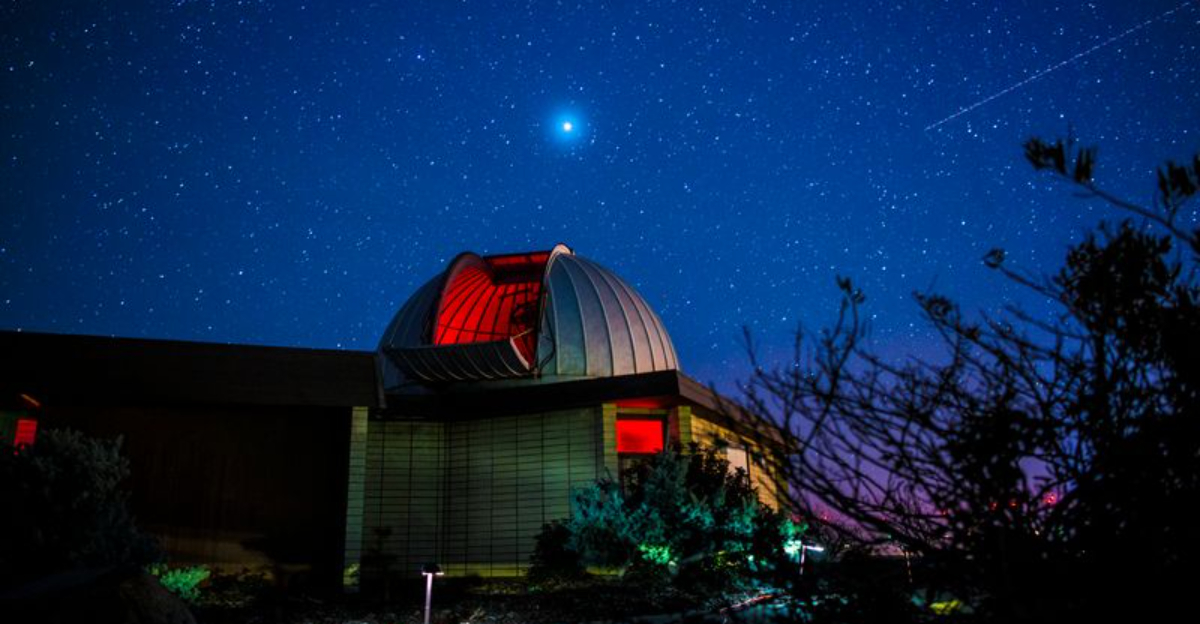
If your idea of stargazing usually involves squinting at three sad, blurry dots through suburban light pollution and calling it a constellation, we need to talk. Last August, I decided to pack up my car, ditch the city glow, and head deep into Washington to visit a legendary mountaintop observatory.
I figured I’d look through a giant telescope, nod wisely, and maybe buy a freeze-dried astronaut ice cream sandwich. But nothing could have prepared me for the sheer, jaw-dropping cosmic freak-out that happened when the sun finally went down.
Suddenly, the Milky Way didn’t just look like a hazy smudge; it looked like someone spilled an entire jar of glitter across black velvet. If your summer nights are lacking a little magic, grab your favorite jacket and come with me on a journey to the ultimate dark sky playground.
Four Backyard Astronomers
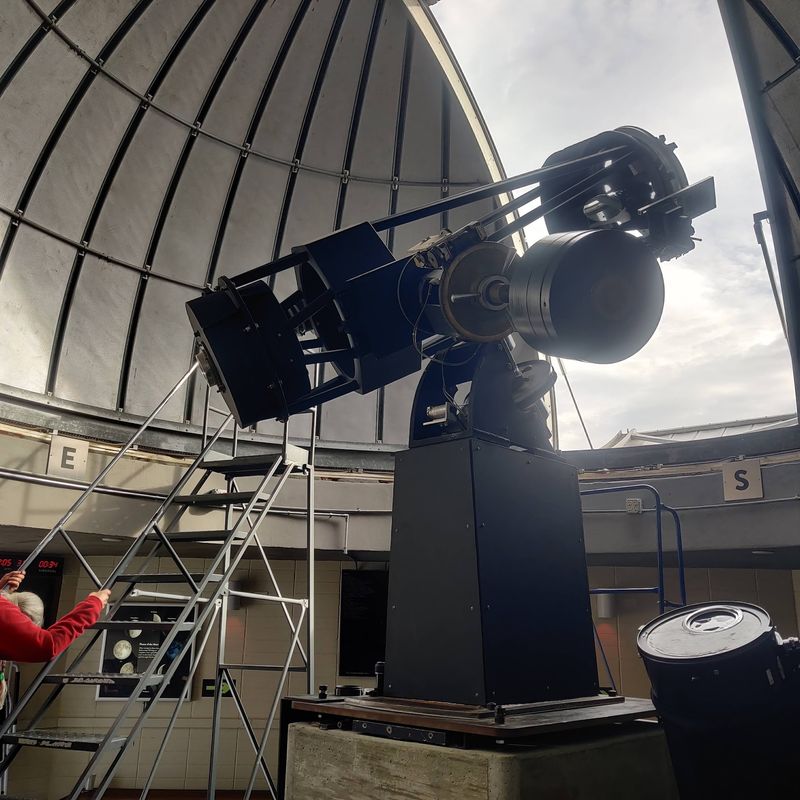
Picture four hobbyists in the 1960s deciding that store-bought telescopes simply would not do. M.W. McConnell, John Marshall, Don Conner, and O.W.
VanderVelden spent six patient years grinding, fitting, and assembling a 24.5-inch Cassegrain reflecting telescope by hand.
When they finished, it ranked among the largest amateur-built telescopes anywhere on the planet. The problem was that their home skies around Vancouver, Washington, glowed far too brightly for serious viewing.
So they went hunting for darkness and dry air, and Goldendale answered. The town welcomed the idea, agreed to help build a home for the instrument, and in 1973 the telescope moved permanently onto that breezy hilltop.
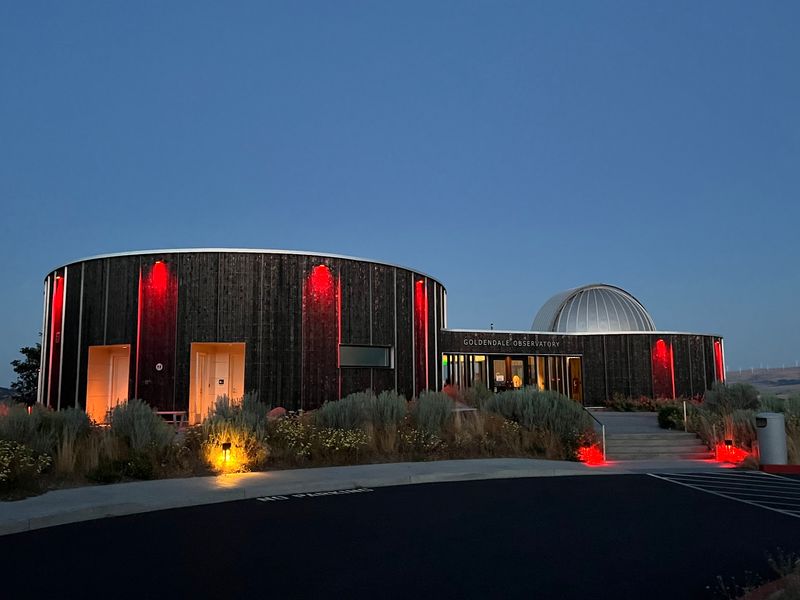
I love that Goldendale Observatory State Park started as a stubborn hobby rather than a government project. Washington State Parks took over in 1980, and the site earned Heritage Site status in 2014.
Standing beside that telescope, knowing four determined people shaped its mirror with their own hands, changed how I looked through the eyepiece that evening.
The 1979 Eclipse That Put Goldendale On tThe Map
Ask anyone in town about the observatory’s big moment and the year 1979 comes up fast. A total solar eclipse swept across the Pacific Northwest that February, and Goldendale happened to sit in a prime viewing position.
Thousands of people crowded the hill and the town below, cameras ready, hoping the clouds would cooperate. News crews arrived, scientists arrived, and suddenly a small Klickitat County community was on national television.
That single event turned a local curiosity into a recognized public astronomy education center, and the reputation stuck.
What I find charming is how the town leaned into its cosmic identity afterward. Street lamps here are full-cutoff and dimmable LEDs, chosen specifically to keep light from bleeding upward into the sky.
Not many places make municipal lighting decisions based on nebulae. Goldendale did, and the payoff shows up every clear night when the star fields overhead look absurdly crowded.
History here is not stored in a case. It is still hanging above your head.
A Six Million Dollar Glow-Up, Reopened In 2022
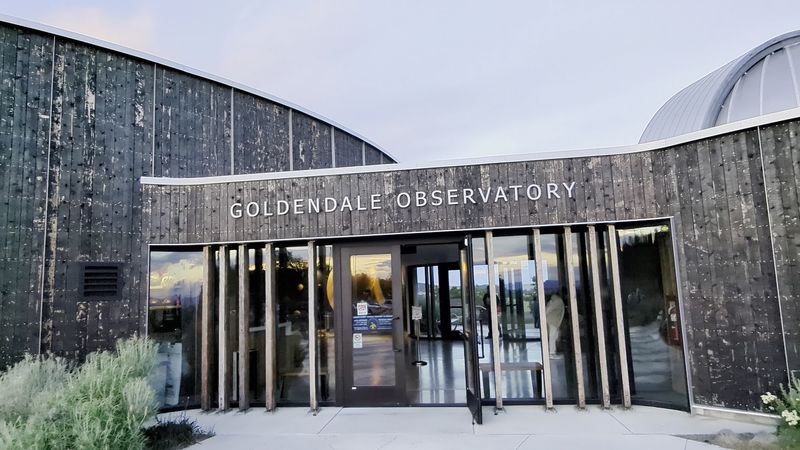
Renovation projects rarely excite me, but this one deserves applause. The observatory closed for a major overhaul and reopened in 2022 after roughly six million dollars of work.
The result is a facility with genuinely comfortable public spaces, upgraded equipment, and an interpretive center that treats visitors like curious humans rather than an afterthought.
Self-guided exhibits fill the center, explaining how light travels, how telescopes gather it, and why our position in the galaxy makes the Milky Way appear as a band instead of a blob.
I wandered through those displays before dusk and arrived at the eyepiece far better prepared for what I was seeing.
Alongside the historic 24.5-inch instrument, staff bring out portable Dobsonian telescopes and other modern gear, which spreads the crowd across several viewing options.
Fewer lines, more looking. If your previous observatory experiences involved shivering in a queue for ninety seconds of Saturn, this upgraded version will feel like a different sport entirely.
Daylight Views Across The Columbia River Gorge
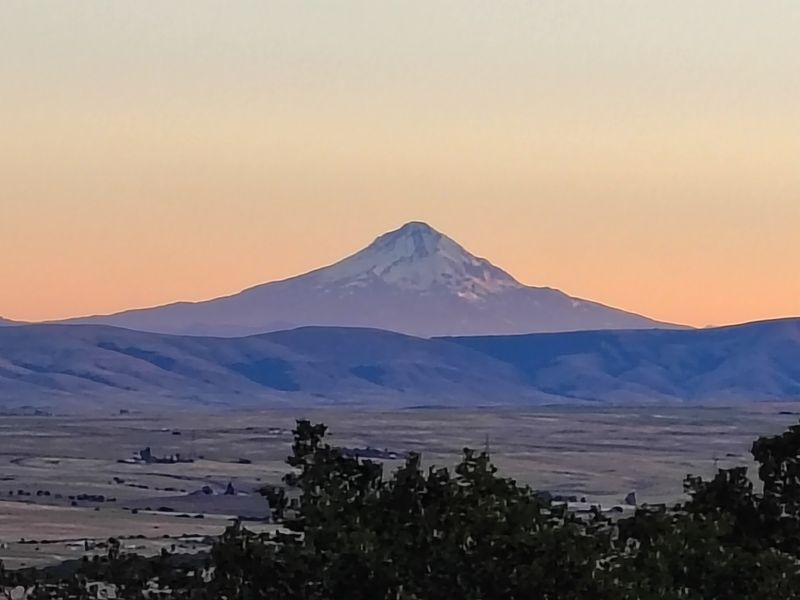
Arriving at dusk means missing half the reason to come. From 2,100 feet up, the grounds serve panoramic views of the Columbia River Gorge, the green sweep of the Klickitat Valley, and Cascade foothills fading into blue layers on the horizon.
Short, easy walking paths loop around the property, and none of them require athletic ambition.
High desert scenery has its own personality: dry grasses that rustle constantly, scattered oaks, hawks riding thermals, and air that smells faintly of warm dust and pine.
The campus opens for self-guided exploration daily from 6:30 AM until dusk, so an afternoon here costs you nothing but a parking pass.
I packed a sandwich, found a bench, and watched the light shift across the valley for a solid hour before anything astronomical began.
Consider it the opening act. By the time the horizon went pink, I already felt like the trip had paid for itself twice over.
Watching The Sun Safely Through Hydrogen-Alpha Filters
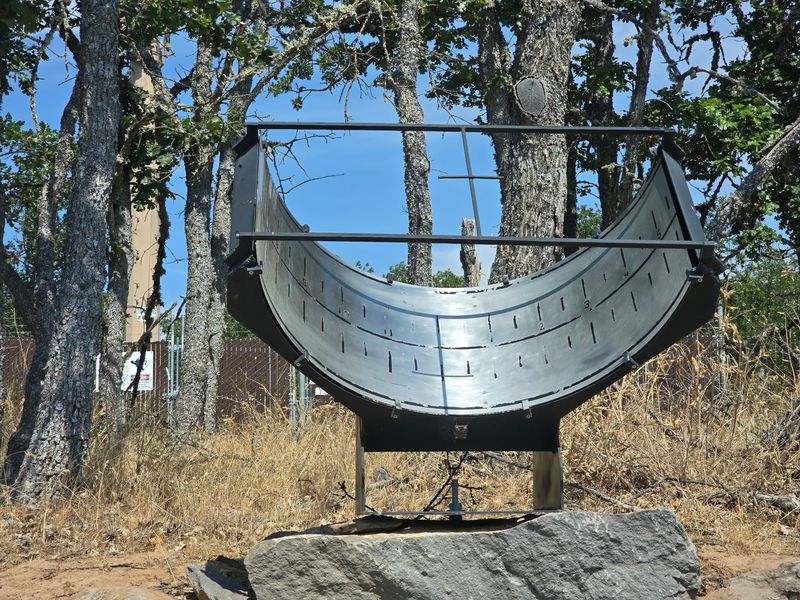
Our nearest star gets ignored by most stargazers, which seems unfair. The observatory’s solar programs fix that using telescopes fitted with hydrogen-alpha filters, gear designed to make sunlight safe and detailed rather than blinding.
Through the eyepiece the sun stops being a flat yellow circle. It becomes a churning, textured surface with prominences curling off the edge like flames caught mid-flicker.
Staff explained that those loops arch thousands of miles into space, held in place by magnetic fields, and I honestly stared longer than I expected to.
Afternoon timing depends on the season, typically 3 to 5 PM in the warmer months and 2 to 4 PM from October through March.
One important heads-up: as of August 2026, both solar and evening programs are temporarily canceled because of staffing shortages, so verify status before driving out.
Never improvise solar viewing on your own. Filtered equipment and trained guides exist for very good reasons.
August Nights When The Galaxy Shows Off
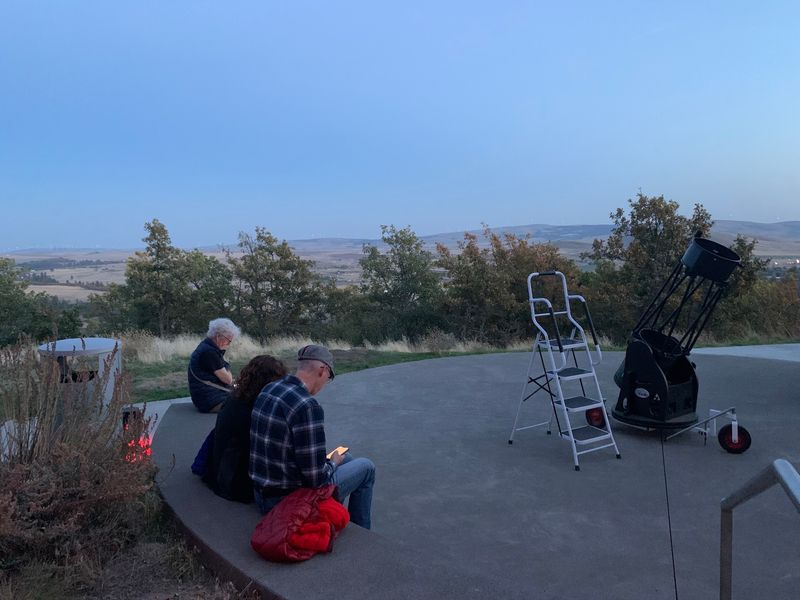
August is when I would tell any friend to go. Warm evenings, minimal haze, and the core of the Milky Way riding high in the southern sky make late summer the sweet spot here.
The dark, dry air above Klickitat County has been the site’s greatest asset since the 1960s, and it still delivers.
Evening programs, when running, generally stretch from 9 PM to midnight between April and September, shifting earlier to 7 to 10 PM in the colder half of the year.
Guides begin with an interpretive presentation, then aim the big telescope at planets, star clusters, nebulae, and galaxies whose light left home before humans existed.
Worth knowing: formal International Dark-Sky Park designation was rescinded in 2017 over policy disagreements, not because the skies dimmed in quality.
The darkness remains excellent. On my August night I counted three meteors before the program even started, which felt like the universe showing off for tips.
Reservations, Passes, And Gates That Close Early
Nothing spoils a cosmic evening faster than a locked gate. Reservations are required to enter the visitor center and join programs, so book ahead rather than hoping for walk-in luck.
Gates close right at showtime to keep headlights from ruining everyone’s night vision, which means arriving fashionably late simply means arriving never.
Parking requires a Washington State Parks Discover Pass, available on-site as either a daily or annual purchase. If you plan more than a couple of park visits this year, the annual option pays off quickly.
Schedules rotate seasonally, running Thursday through Sunday from April to September and Friday through Sunday from October through March.
Because staffing has interrupted programs recently, checking the official Washington State Parks page before you drive is genuinely essential, not just cautious.
I called ahead, confirmed my slot, arrived twenty minutes early, and had time to chat with the interpreter. That small buffer made the whole evening smoother.
Warm Layers, Red Flashlights, And Where To Sleep
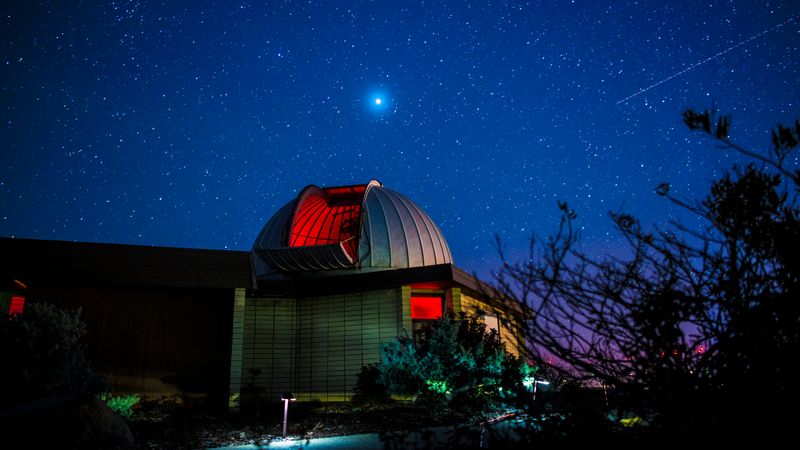
Summer at 2,100 feet plays tricks on people. The afternoon can hit shirtsleeve warmth and the same spot after 10 PM will have you regretting every packing decision you made.
Bring layers, a beanie, and thicker socks than seem reasonable. I saw more than one visitor retreat to their car shivering.
A red flashlight is the other must-have. White light wrecks your dark adaptation and everyone else’s, while red light lets you find your seat without becoming the villain of the evening.
Red cellophane taped over a small flashlight works fine if you do not own one.
Camping is not permitted since this is a day-use facility, so plan to sleep in Goldendale itself or in one of the small towns scattered through the Columbia River Gorge.
Booking a room nearby also means you can linger until the program truly ends instead of watching the clock and dreading a long drive.