
A Washington Beach Town Is Home To A Legendary Frying Pan Of Epic Proportions
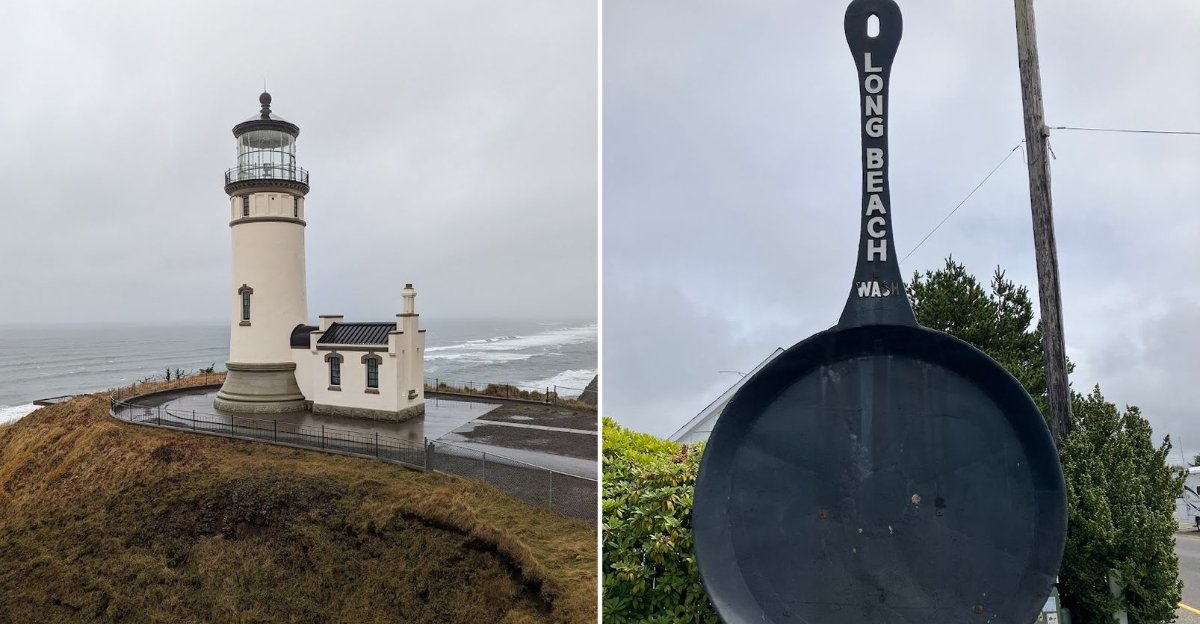
Road trips through Washington often lead to unexpected discoveries, but few are as delightfully bizarre as the giant frying pan anchoring this charming seaside community.
For years, locals have pointed toward this behemoth as a point of pride, a heavy-duty icon that seems ready to cook breakfast for an entire village.
It provides the perfect backdrop for a quintessential coastal afternoon, blending the salty scent of the ocean with the whimsical joy of discovering something truly one-of-a-kind.
Some might call it a stunt of engineering, but for those who wander through these dunes, it is simply a beloved local landmark that turns a standard walk to the beach into a memorable adventure. Pull up a chair and prepared to be impressed by this cast-iron marvel.
The World’s Oldest Largest Frying Pan
Back in 1941, the Long Beach Chamber of Commerce decided the best way to kick off their first annual Clam Festival was to build a frying pan so enormous it would stop traffic.
The original pan stood 20 feet tall, weighed over 1,300 pounds, and was actually used to cook a legendary clam fritter requiring 200 pounds of razor clams, 20 dozen eggs, 10 gallons of milk, and 13 gallons of oil.
One story even claims a woman greased the pan by skating across it on large slabs of butter, which is possibly the most delightful sentence ever written about cookware.
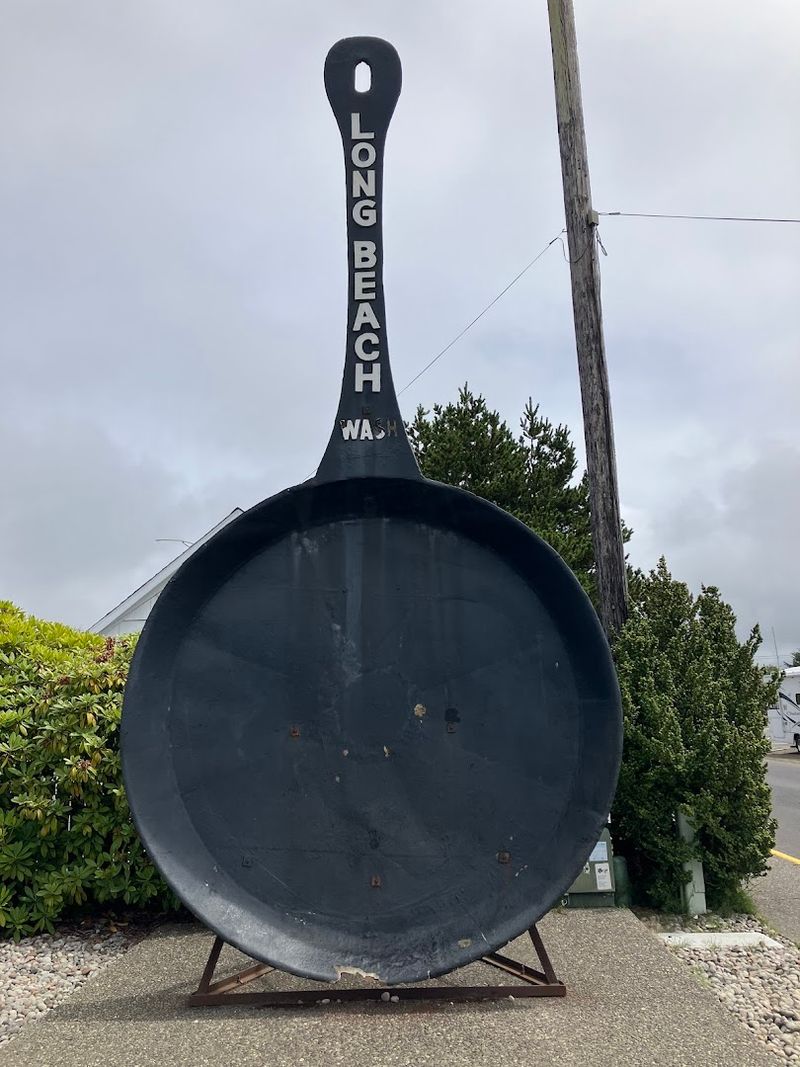
The original pan eventually rusted beyond saving, but a fiberglass replica now stands proudly in the middle of town near Marsh’s Free Museum. Only the original handle survived restoration.
The replica measures 14.6 feet from handle end to tip and 9.6 feet across the pan. No other giant frying pan in the world can claim it was ever actually cooked in, making this one truly one of a kind.
The First Long Beach Clam Festival
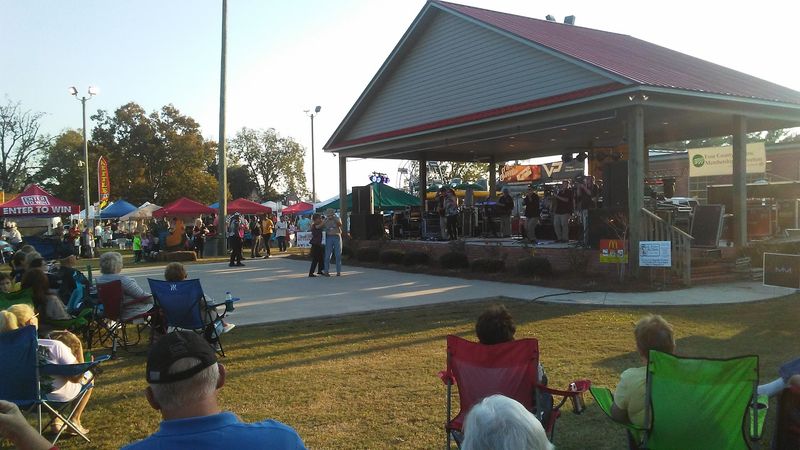
Not every food festival gets its start with a 1,300-pound frying pan, but Long Beach has never been a town that does things halfway.
The first annual Long Beach Clam Festival launched in 1941, and organizers wanted something big enough to put their little peninsula town on the map. A giant skillet seemed like the obvious answer.
The festival celebrated the razor clam, a shellfish that thrives in the sandy Pacific beaches of the Long Beach Peninsula.
These clams were a staple food source for local communities and had already made the region famous among serious clammers up and down the coast. Cooking a massive clam fritter in a pan the size of a small swimming pool was both a celebration and a very effective piece of marketing.
The festival drew crowds, generated buzz, and sent the original pan on a promotional tour up and down the West Coast. That single creative idea in 1941 planted the seed for a roadside legend that locals and visitors still talk about more than eighty years later.
Marsh’s Free Museum And The Frying Pan’s Neighborhood
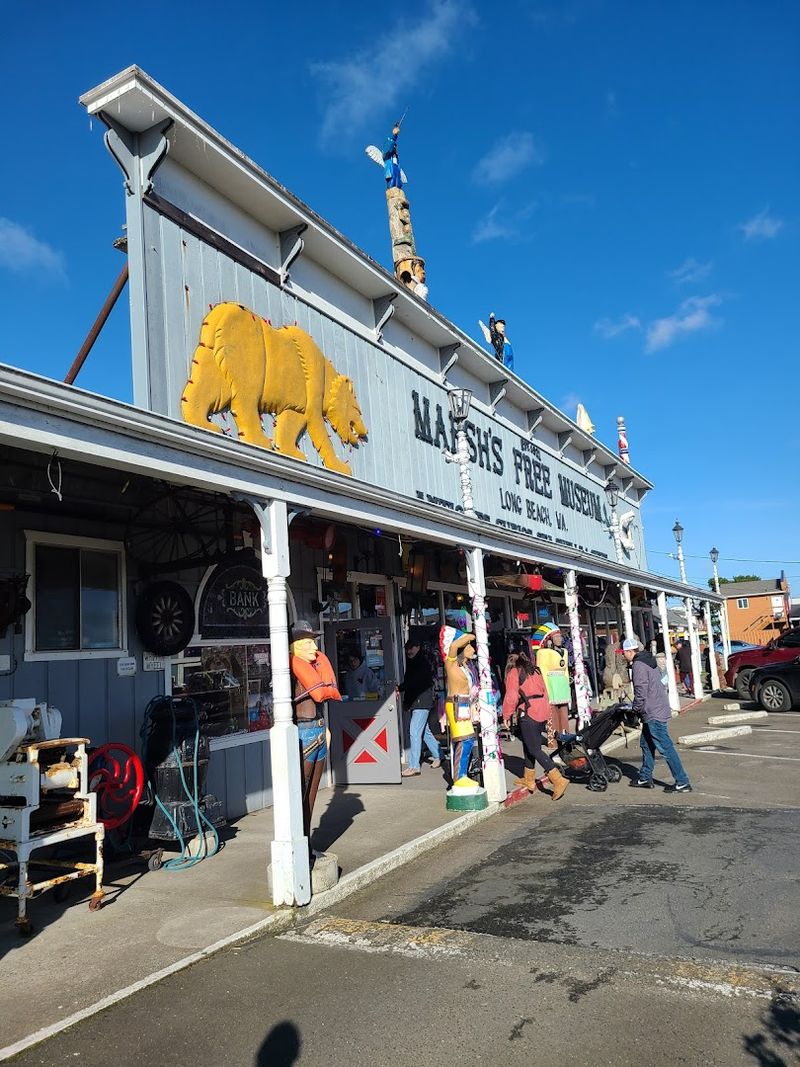
Right next to where the legendary frying pan stands is one of the strangest and most entertaining shops on the entire Washington coast.
Marsh’s Free Museum on Pacific Avenue in Long Beach has been delighting visitors since 1921, and true to its name, it costs absolutely nothing to walk through the door.
Inside you will find an overwhelming collection of oddities including two-headed animals, vintage arcade machines, old-fashioned peep shows, taxidermy curiosities, and Jake the Alligator Man, a half-human, half-alligator figure that has become something of a celebrity in his own right.
The original frying pan once hung outside this very building before rust won the battle.
Spending time at Marsh’s feels like stepping into a carnival sideshow from another era, and it pairs perfectly with a visit to the frying pan just steps away.
The two attractions together represent everything that makes Long Beach such a genuinely fun and weird destination, and I mean that as the highest possible compliment.
28 Miles Of Drivable Pacific Beach
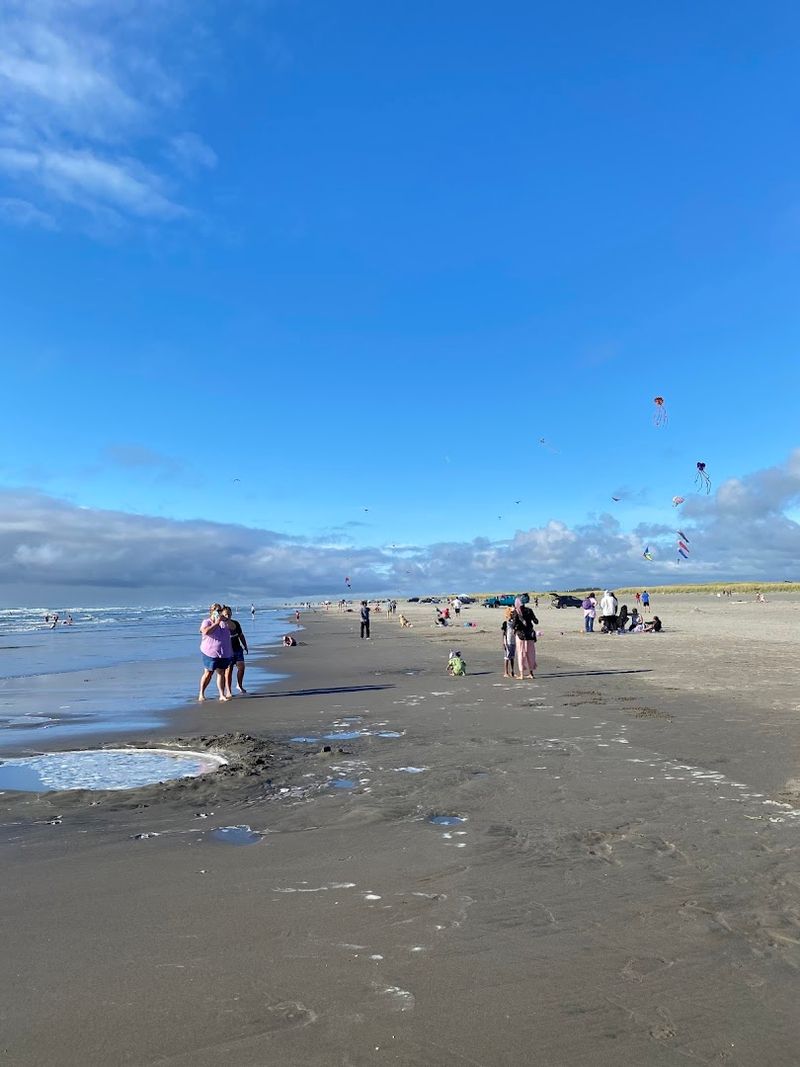
Most beaches ask you to leave your car in the parking lot. Long Beach hands you 28 miles of flat, sandy shoreline and essentially says go for it.
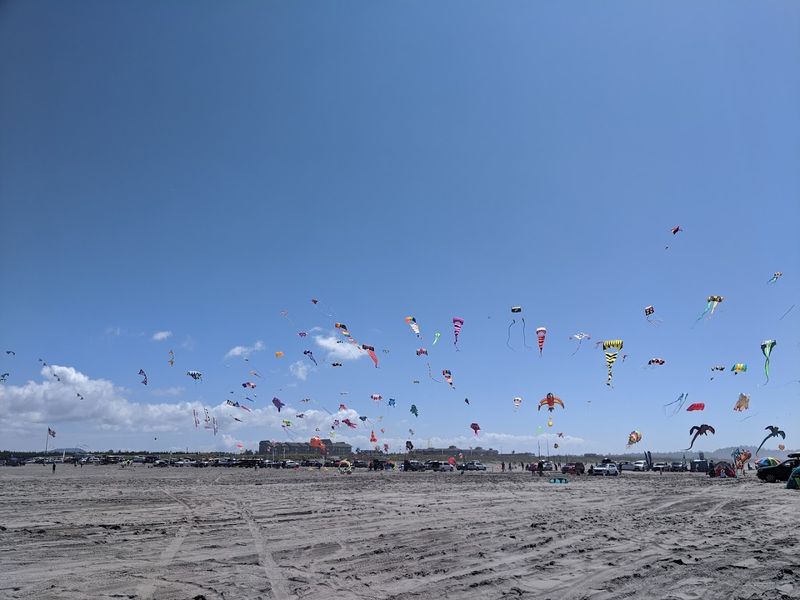
The Long Beach Peninsula sits along the Washington coast and features one of the longest drivable beaches in the United States, drawing road trippers, kite fliers, and sunset chasers from across the Pacific Northwest.
I drove along the shoreline with the windows down, watching shorebirds scatter and the surf crash in steady white lines to the west.
The sand is firm enough near the waterline to make driving comfortable, and the sense of space is genuinely hard to describe. You feel like you have the entire coast to yourself even when other cars are nearby.
Families set up folding chairs, couples walk their dogs at the water’s edge, and kids sprint toward the waves with the kind of energy that only cold Pacific air seems to produce. This beach is the kind of place that fills up a whole afternoon without you even noticing the time passing.
Razor Clamming On The Peninsula
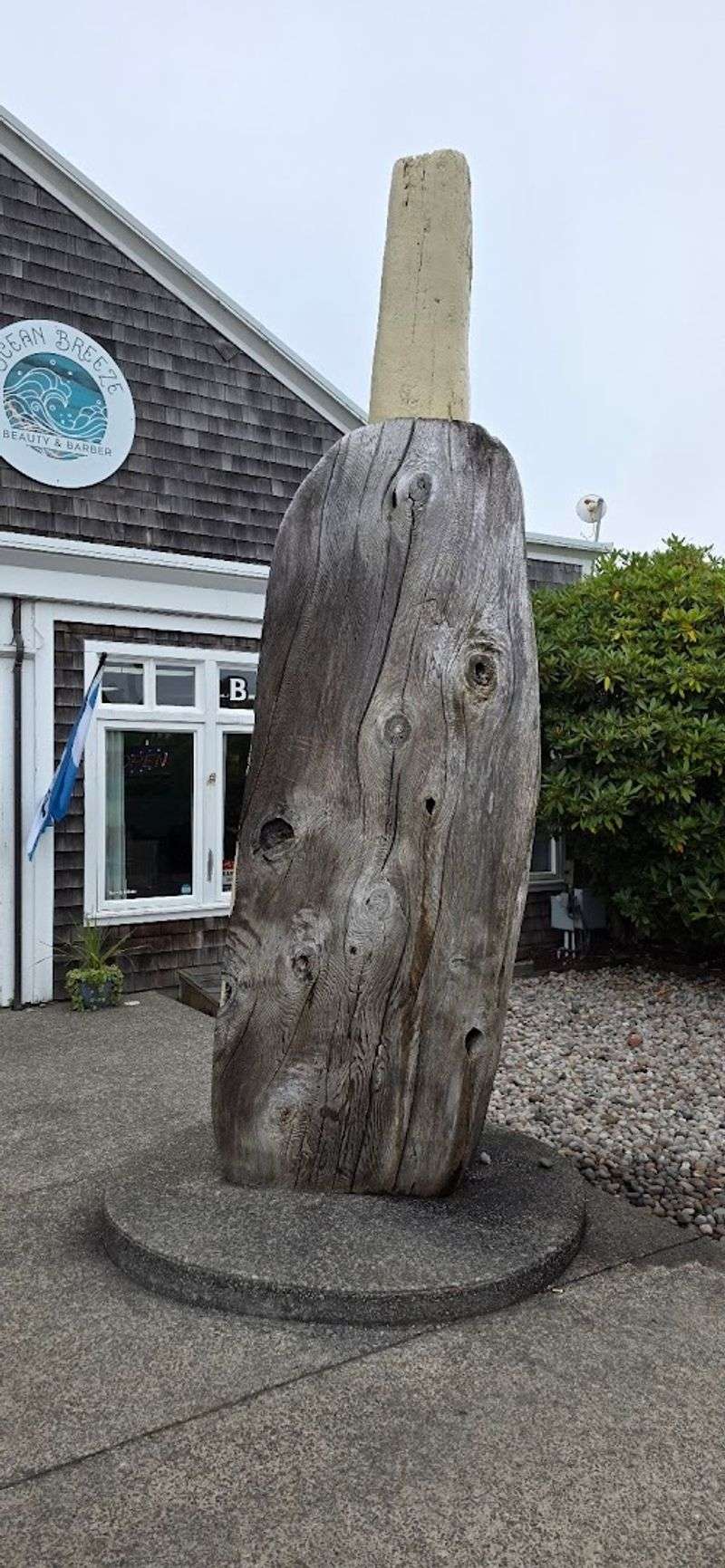
The whole reason a giant frying pan exists in Long Beach comes down to one shellfish: the razor clam. These long, narrow clams live just beneath the surface of the wet sand along the Pacific shoreline, and harvesting them is practically a sport on the Long Beach Peninsula.
I tried it for the first time on a gray morning with borrowed rubber boots and a rented clam gun, and I was hooked within the first twenty minutes.
The technique involves spotting a small dimple in the sand where a clam has retreated, pressing the clam gun over the spot, and pulling up a core of sand fast enough to catch the clam before it burrows deeper. It sounds simple but requires a satisfying combination of speed, timing, and luck.
Washington State regulates clamming seasons carefully to protect the population, so checking the Washington Department of Fish and Wildlife website before your visit is essential.
When the season is open, the beaches fill with enthusiastic clammers of all ages, all chasing the same prize that inspired a legendary pan.
Cape Disappointment State Park
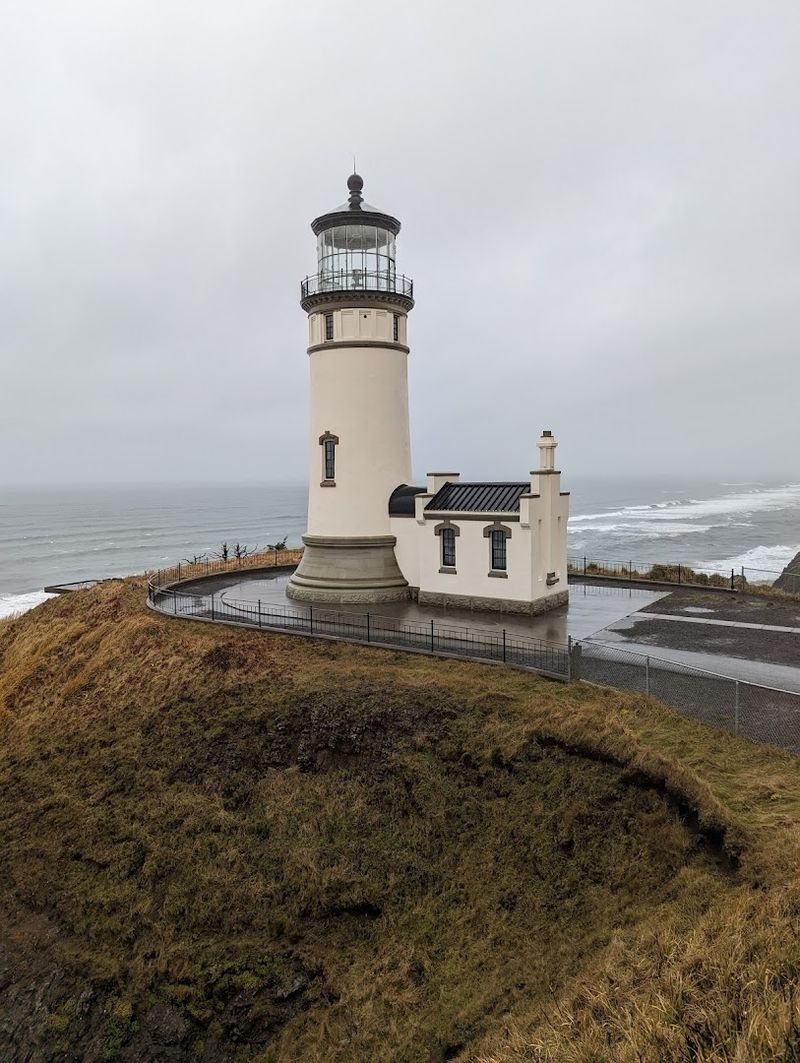
A name like Cape Disappointment sounds like a warning, but the park itself is anything but.
Located at the southern tip of the Long Beach Peninsula near Ilwaco, Washington, Cape Disappointment State Park covers over 1,800 acres of rugged coastal terrain where the mighty Columbia River meets the Pacific Ocean in a dramatic collision of currents.
The park is home to two historic lighthouses, including the Cape Disappointment Lighthouse built in 1856, making it the oldest operating lighthouse on the West Coast.
I hiked the North Head trail on a foggy afternoon and found myself standing at the edge of a cliff with wind-whipped trees on one side and a vast gray ocean on the other.
It felt cinematic in the best possible way.
The Lewis and Clark Interpretive Center inside the park tells the story of the Corps of Discovery’s arrival at the Pacific in 1805, adding a layer of history to a visit that is already packed with natural drama. Plan a full half-day here because there is genuinely too much to see in a quick stop.
The Discovery Trail Along The Peninsula
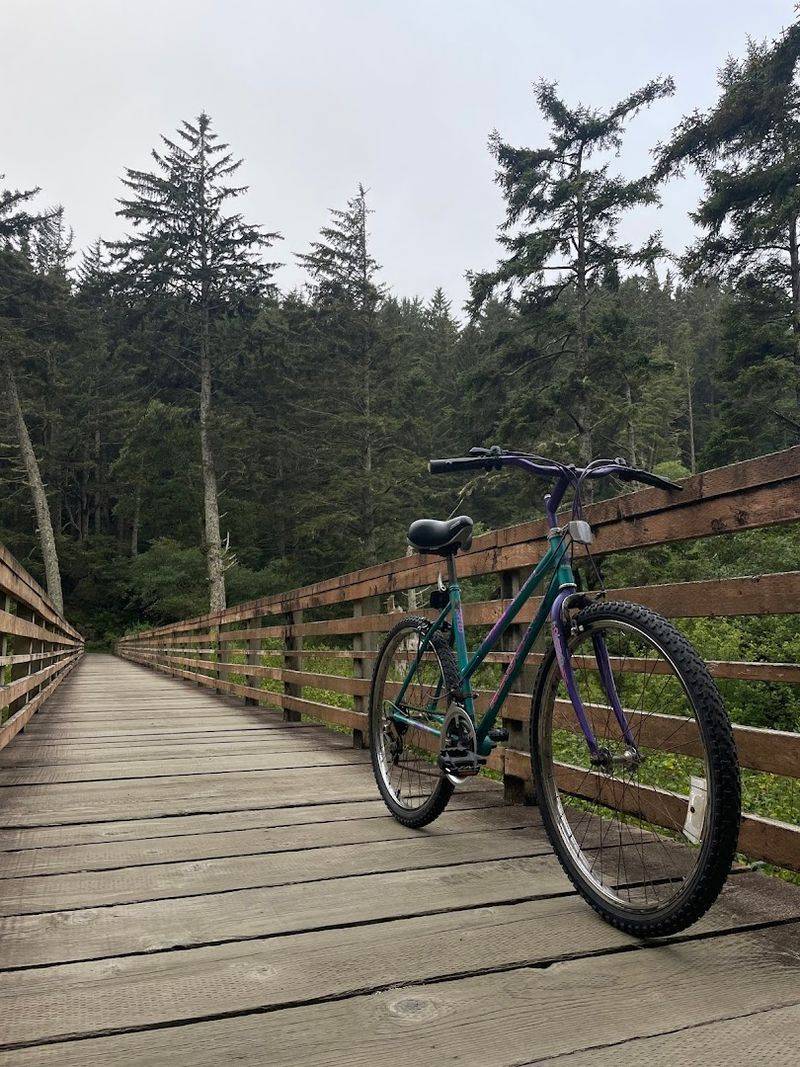
Connecting Long Beach to Ilwaco along the coastline, the Discovery Trail is an 8.5-mile paved path that traces the route Lewis and Clark traveled when they reached the Pacific Ocean in 1805.
I rented a bike in town and spent a relaxed morning pedaling through coastal dunes, beach grass, and pine forest with the sound of waves never far away.
The trail is dotted with life-size bronze sculptures depicting scenes from the Corps of Discovery’s expedition, including a stunning life-size whale sculpture near the northern end that commemorates a beached whale the expedition encountered.
Each sculpture adds a storytelling quality to what is already a beautiful ride through varied coastal landscapes.
The trail is accessible to walkers, cyclists, and inline skaters, and its flat profile makes it manageable for riders of all fitness levels. Families with younger kids will find the distance reasonable with a turnaround point anywhere along the route.
Starting from the center of Long Beach puts you within easy reach of the frying pan, Marsh’s Museum, and a good post-ride meal all in one afternoon.
Planning Your Visit To Long Beach, Washington
Long Beach sits at the northern end of the Long Beach Peninsula in Pacific County, Washington, roughly a three-hour drive from Portland, Oregon, and about three and a half hours from Seattle.
The town’s main drag, Pacific Avenue, runs through the heart of downtown and is lined with kite shops, seafood restaurants, and quirky gift stores that reward a slow afternoon of wandering.
Summer brings the largest crowds and the best weather, but fall visits have their own appeal with quieter beaches, dramatic storm watching, and the possibility of an open razor clam season.
Spring is a favorite among birdwatchers because the peninsula sits along the Pacific Flyway migration route, and the wetlands surrounding Willapa Bay attract thousands of shorebirds.
Accommodations range from beachside motels to vacation rental homes within walking distance of the ocean.
The World Kite Museum, located at 303 Sid Snyder Drive in Long Beach, is another worthwhile stop for families. Whether you come for the frying pan, the clams, or the open coast, Long Beach delivers a trip that is hard to forget and easy to repeat.