
Arkansas’ Only Wilderness Zipline Sends You Flying Through The Buffalo River Canopy
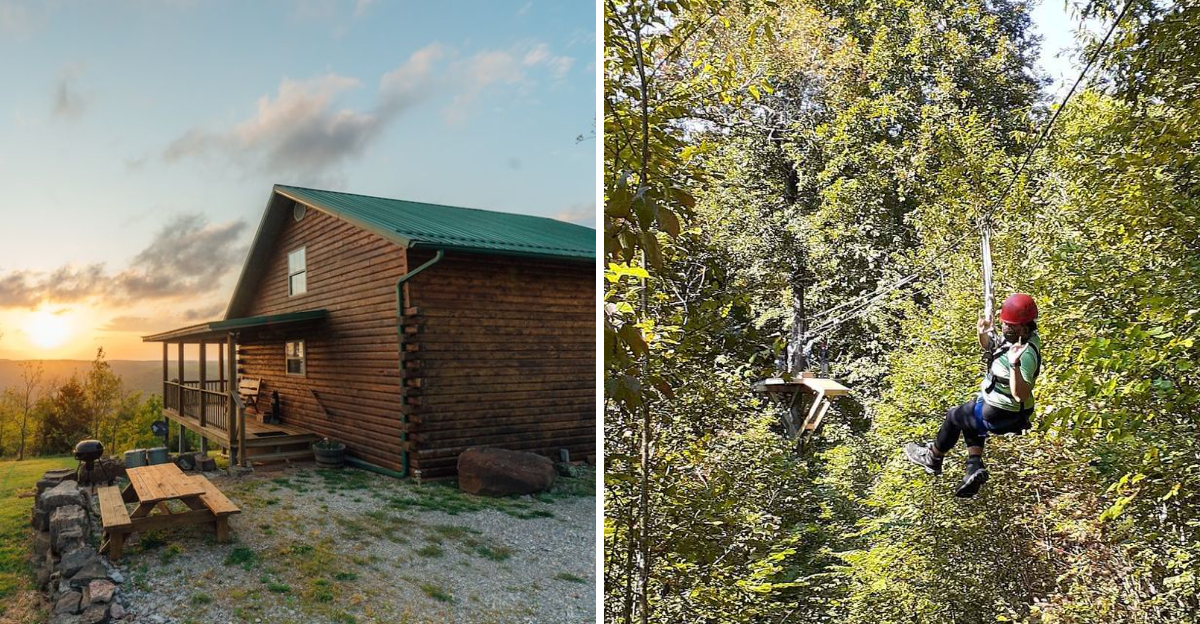
The first step off the platform changes everything. One second, you are standing among the trees.
The next, the Ozark canopy is sliding beneath your feet as the cable carries you deeper into the forest. This Arkansas experience is not built around a parking lot or a row of metal towers.
It unfolds through hardwood treetops, with wooden platforms serving as pauses between each rush of speed. Those quiet moments matter.
They let you hear the forest again before the next launch sends your pulse climbing. The guided tour takes roughly two to three hours, so the adventure has room to develop instead of ending just as you settle in.
Seasonal leaves change the whole mood, from bright spring green to the color of autumn. It is scenic with just enough nerves to make every landing feel earned.
By the end, walking on solid ground may seem surprisingly ordinary again.
High Above The Buffalo River Canopy
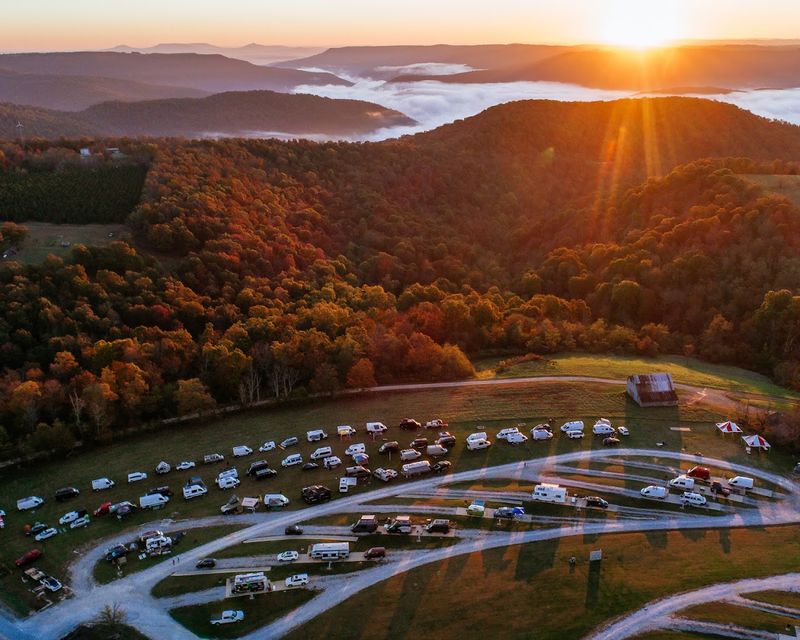
Few outdoor experiences place you among Ozark hardwood treetops quite like a guided wilderness zipline tour.
The canopy tour gives riders an elevated view of Buffalo River country that feels completely different from following a trail at ground level.
You are not just moving quickly through the air. You are experiencing the forest from a system of cables and wooden platforms built among living trees.
The hardwood canopy changes throughout the year, with fresh leaves appearing in spring before deeper summer greens and autumn color reshape the setting.
The platform-to-platform route carries participants through the treetops of the Ponca Wilderness, where the surrounding forest remains central to the experience.
The tour lasts approximately two to three hours, depending on the group size, weather conditions, and participants’ physical abilities.
That length gives riders time to enjoy the setting rather than treating the course as one brief run.
Seen from cable height, the Ozark canopy at Buffalo Outdoor Center at 4699 AR-43, Ponca, AR 72670, can leave a lasting impression long after everyone returns to solid ground.
Deep In The Ponca Wilderness
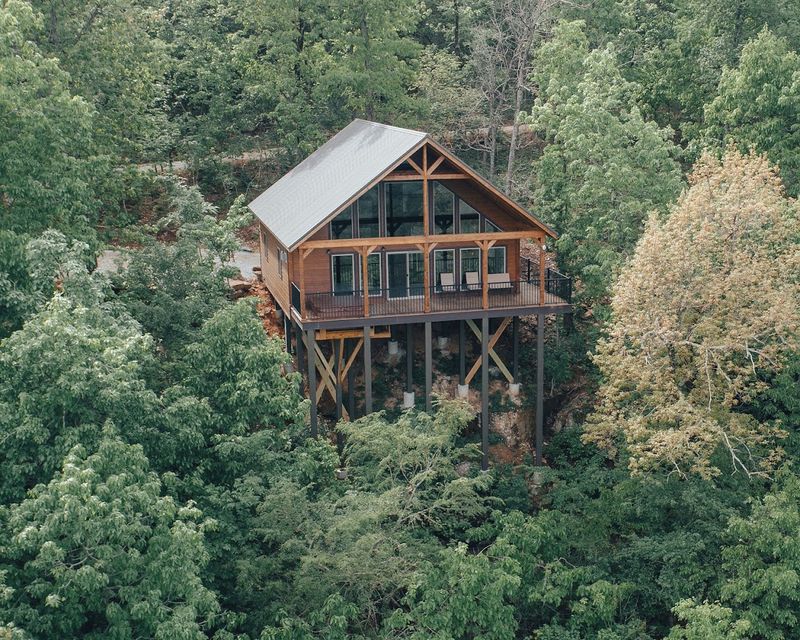
Ponca, Arkansas is a destination people usually reach intentionally, and the drive into the upper Buffalo River country is part of the experience.
The community sits along AR-43 near Buffalo National River, which became the country’s first designated national river in 1972.
This corner of Arkansas attracted paddlers and hikers long before zipline tours arrived, and its forested landscape continues to draw outdoor travelers.
The Ponca area is particularly well known for nearby elk-viewing opportunities and access to scenic hiking trails within the Buffalo National River region.
A zipline tour feels different here because the course runs through the hardwood treetops of the Ponca Wilderness rather than around a typical amusement area.
The surrounding wilderness is protected and managed as part of Buffalo National River, while the guided canopy course operates within that broader natural setting.
Founded in 1976, the outfitter has spent five decades helping visitors experience the upper Buffalo River region through guided recreation and outdoor services.
Where Forest Views Open Below
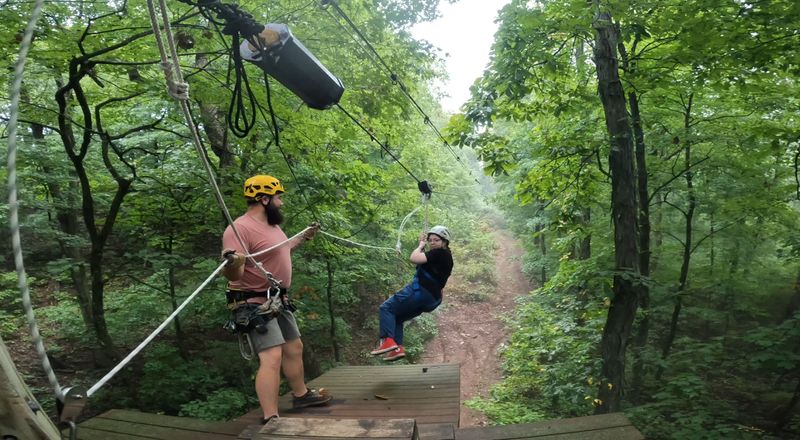
Standing on a treetop platform with nothing but open air and a vast forest floor dropping away beneath you is one of those moments that rewires how you think about scale.
The zipline course here is built to take advantage of natural elevation changes in the terrain, which means the views that open up during each run are not artificial or engineered for effect.
The Ozark topography does the heavy lifting, delivering dramatic drops in elevation that let the forest spread out below you in every direction.
From certain platforms, you can see the forest canopy rolling across ridge after ridge, fading into a soft blue haze at the horizon the way mountain landscapes do when the air is warm and still.
The Buffalo River Canopy Tour is designed as a nature excursion first and an adrenaline activity second, which means guides take time at each platform to point out what you are seeing below.
Tree species, bird activity, and seasonal changes all become part of the conversation when you have a clear aerial view of the ecosystem beneath you.
That combination of speed and stillness, fast zips followed by quiet observation platforms, gives the experience a rhythm that feels surprisingly meditative for something that also gets your heart pumping.
Platforms Hidden Among The Treetops
The platforms on this zipline course are built in living Ozark hardwood trees rather than arranged around a row of freestanding metal towers.
That design changes how the experience feels because each landing places riders directly among the branches of the forest canopy.
Large wooden platforms serve as landing bases as participants move from tree to tree while secured to the cable system by a harness.
Between runs, those platforms give riders a place to pause and take in the surrounding woodland before continuing along the course.
The facility was built according to recommended guidelines from the Association of Challenge Course Technology.
The focus remains on moving safely through the treetops while experiencing the bird life and plant life found in an Ozark Mountain hardwood forest.
Each platform becomes another stopping point within a guided journey through the canopy rather than merely a place to begin the next burst of speed.
A Different View Of Buffalo River Country
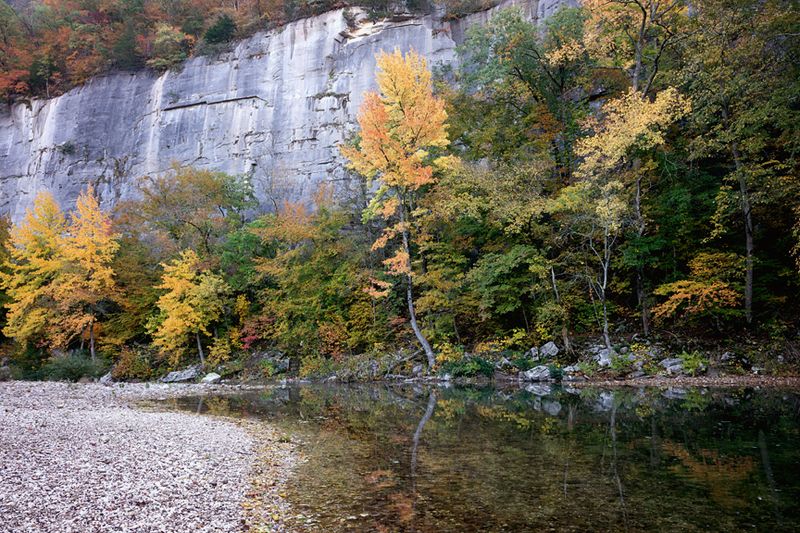
Many visitors experience Buffalo River country while paddling, hiking, or driving through the upper river region.
The zipline tour offers a different perspective by placing riders within the hardwood canopy rather than beside the river or on a ground-level trail.
That elevated position changes the sense of scale as participants move between wooden platforms built among living trees.
Buffalo National River protects 135 miles of the free-flowing Buffalo River and approximately 94,293 acres of surrounding land.
The protected corridor includes deep valleys, towering bluffs, waterfalls, and a wide range of other geological features across northern Arkansas.
The canopy tour does not replace a river trip, but it adds another way to experience the wooded landscape associated with the upper Buffalo River region.
Guides lead participants through the course and introduce them to aspects of the plant and animal life found within the Ozark Mountain hardwood canopy.
Suspended In The Ozark Forest
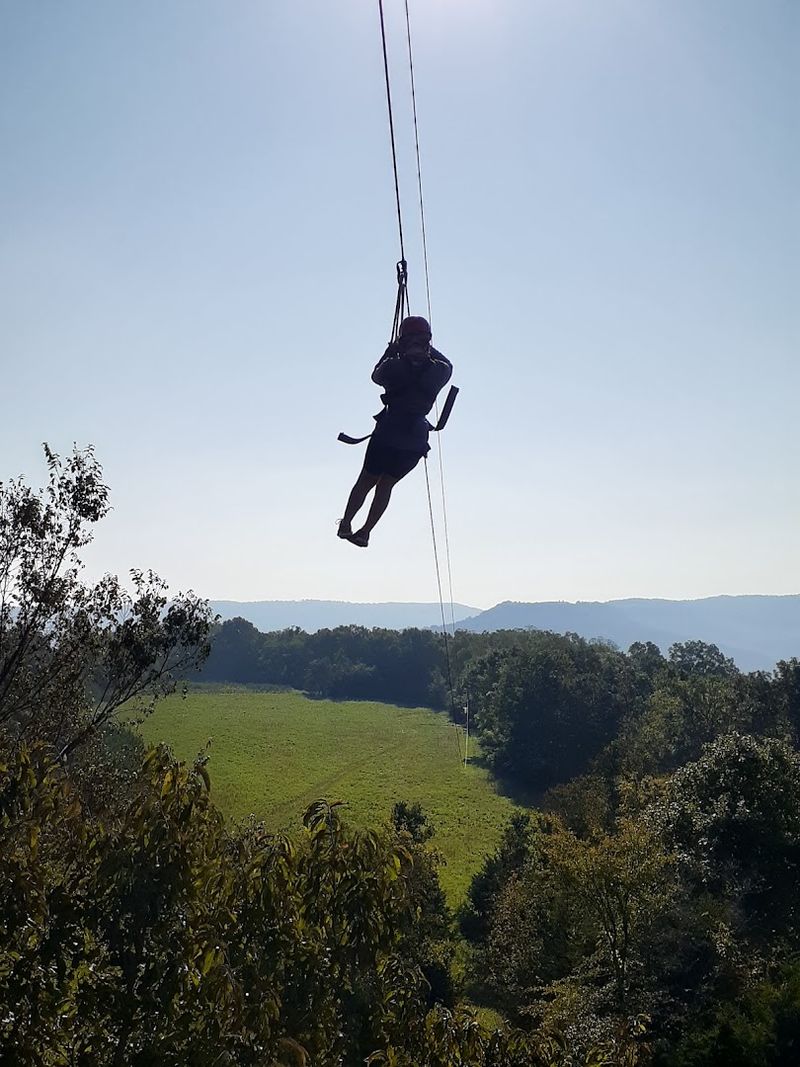
There is a particular kind of stillness that settles over you in the seconds between launching from a platform and picking up speed on the cable, when you are truly suspended and the forest holds its breath around you.
The Ozark Mountain hardwood forest has its own sound signature, a layered mix of wind through leaves, distant water, and birdsong that wraps around you completely when you are hanging in the middle of it.
The canopy tour is specifically designed to introduce participants to the plant, bird, and animal life that thrives in this forest ecosystem, making the suspended moments as educational as they are peaceful.
Deer move quietly through the understory below, and elk, which were successfully reintroduced to the Ponca area, occasionally appear in clearings visible from the platforms.
The guides are trained to point out wildlife and explain the ecology of the forest, so the experience carries genuine natural history content alongside the physical thrill.
Being suspended in this forest, even briefly, creates a kind of sensory recalibration that most people do not realize they needed until it happens.
The Ozark forest has a way of pulling your attention completely into the present moment, and the zipline course amplifies that effect by putting you right in the middle of the canopy rather than just walking beneath it.
Following The Canopy Through The Wilderness
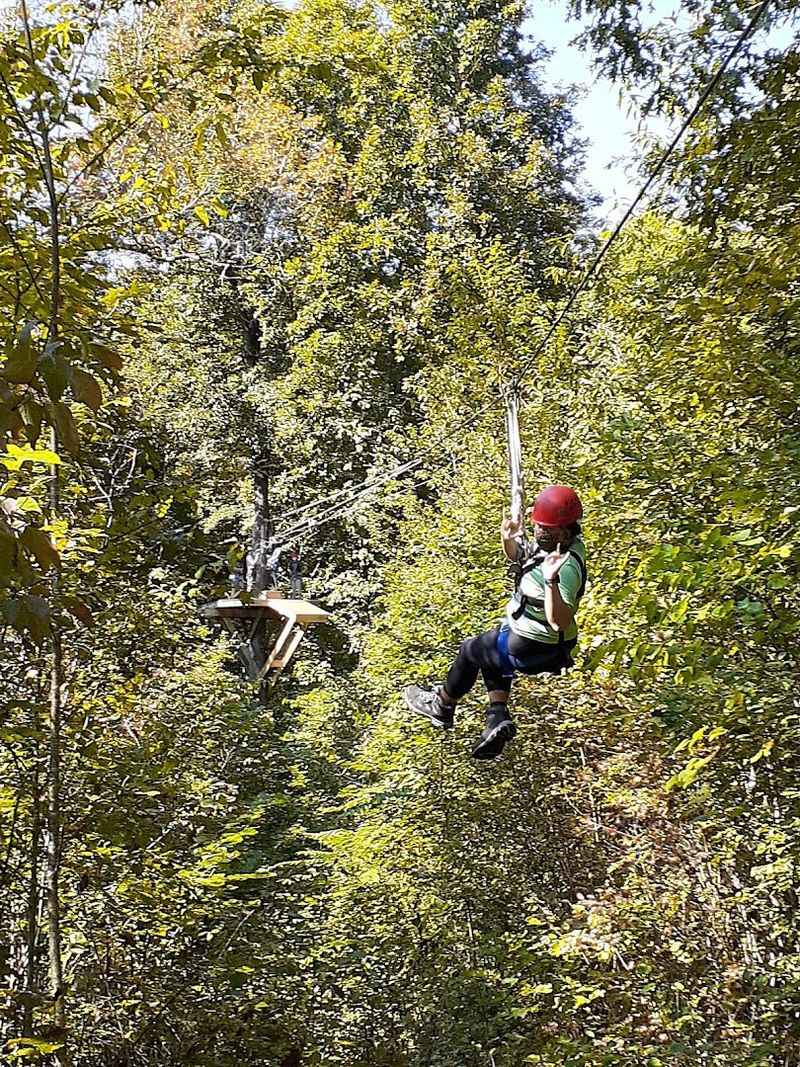
The course does not cut through the forest so much as it follows the forest, tracing a path that respects the natural contours of the ridges and draws rather than flattening them into a straight commercial run.
Each segment of the tour reveals a slightly different character of the woodland, moving from denser, shadier sections where the canopy closes overhead to more open stretches where light pours through and the views widen dramatically.
The two-to-three-hour duration of the tour is long enough to feel like a real journey rather than a quick activity, and the pace allows for genuine engagement with the environment at each stop.
Guides lead small groups through the course, which keeps the experience personal and allows for conversation, questions, and the kind of spontaneous wildlife observations that get lost in larger, faster-moving groups.
The wilderness setting means conditions change with the weather and the season, so no two tours feel exactly identical even on the same course.
A rainy morning might drape the canopy in low mist, turning the forest into something atmospheric and quietly dramatic, while a clear autumn afternoon might set the treetops on fire with color at every platform.
Following the canopy through this particular stretch of wilderness is one of the most immersive ways to experience the raw beauty of this corner of Arkansas.
The Quiet Beauty Between Each Zip
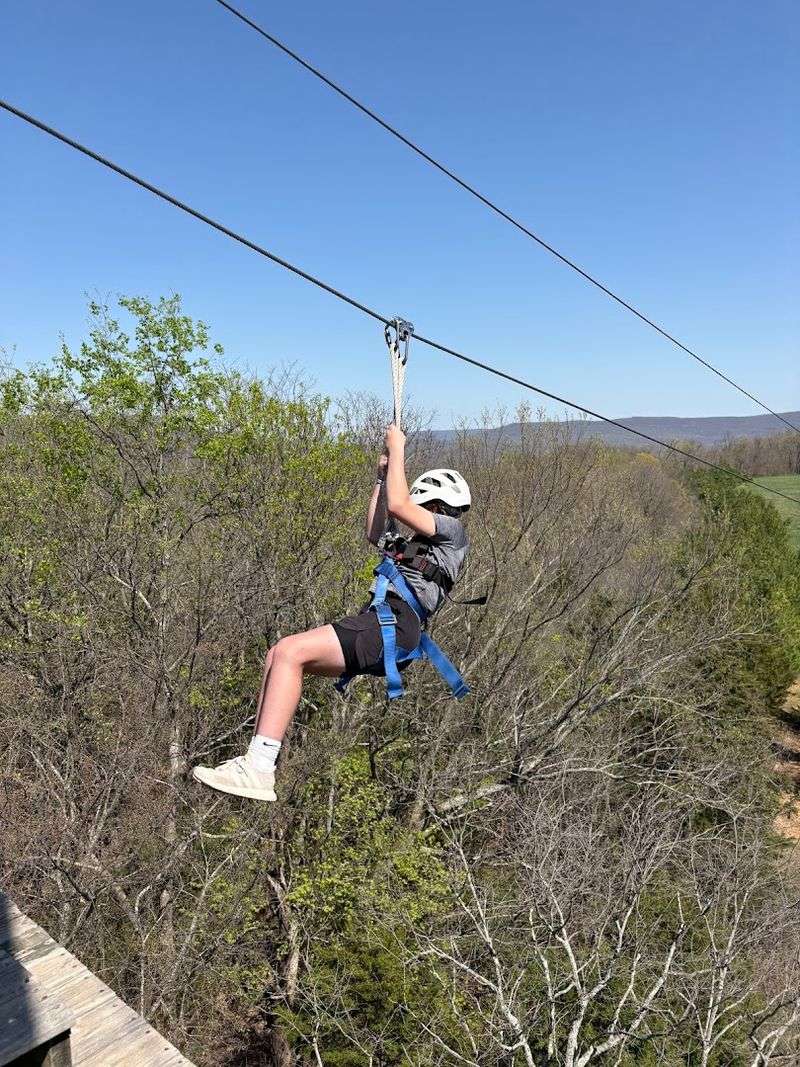
Speed is only part of the experience on this canopy tour. The pauses on the wooden platforms give riders time to notice the surrounding forest before the next run begins.
Between zips, participants can stand among the branches and take in the hardwood canopy from a viewpoint unavailable on an ordinary ground-level trail.
Those stops are part of the guided experience rather than simple waiting areas between cables.
The Ozark forest in this part of Arkansas changes noticeably through the seasons, giving the course a different appearance in spring and autumn.
The tour is designed to introduce participants to the bird life and plant life found within the hardwood canopy.
Guides manage the equipment and lead groups through the cable-and-platform system during a tour lasting approximately two to three hours.
Guests check in at Buffalo Outdoor Center before traveling to the separate canopy-tour location.
Long after the final zip, the quieter moments among the trees may remain just as memorable as the speed.