
10 California Towns That Played Completely Different Places In Movies And TV
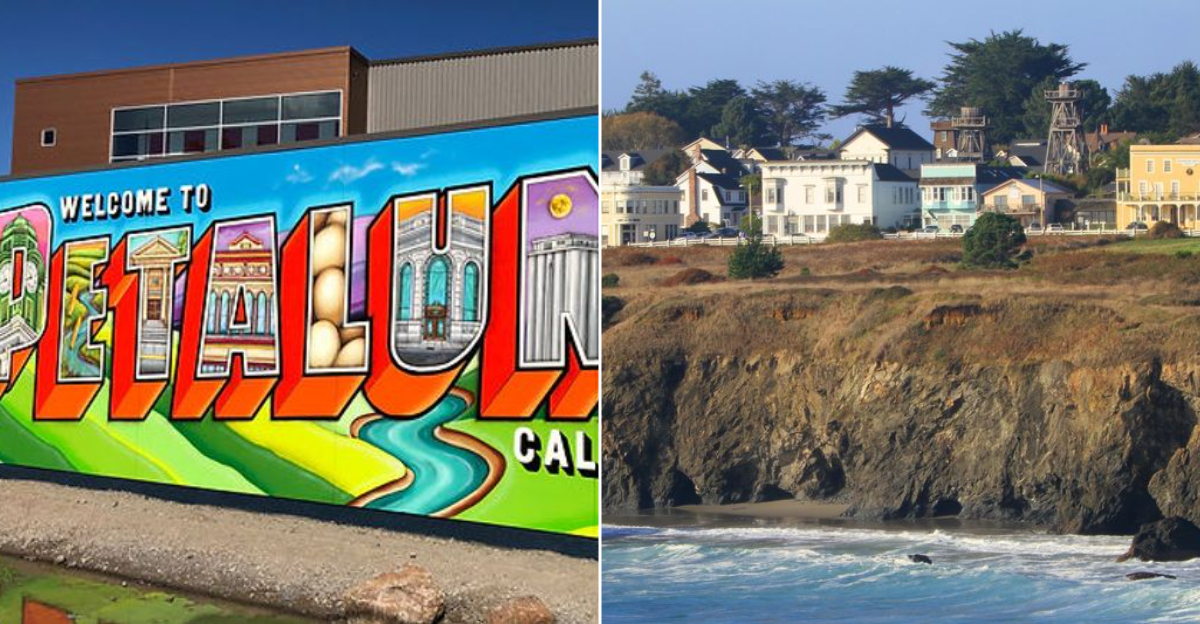
Have you ever watched a movie set in some far-off town and thought, “Wow, I’d love to visit there someday”, only to find out it was filmed in California the whole time?
Hollywood has been pulling this little magic trick for decades.
A sleepy California street becomes a New England town, a stretch of coastline gets promoted to somewhere thousands of miles away, and suddenly your favorite fictional place exists… sort of.
The fun part is spotting the disguise once you know where to look.
These towns have doubled as everything from small-town America to places that exist only in a screenwriter’s imagination, proving this state may have the most convincing case of cinematic identity theft in the country.
So grab some popcorn and get ready to recognize a few places you’ve definitely seen before.
You just didn’t know what they were called.
1. Fillmore, Ventura County
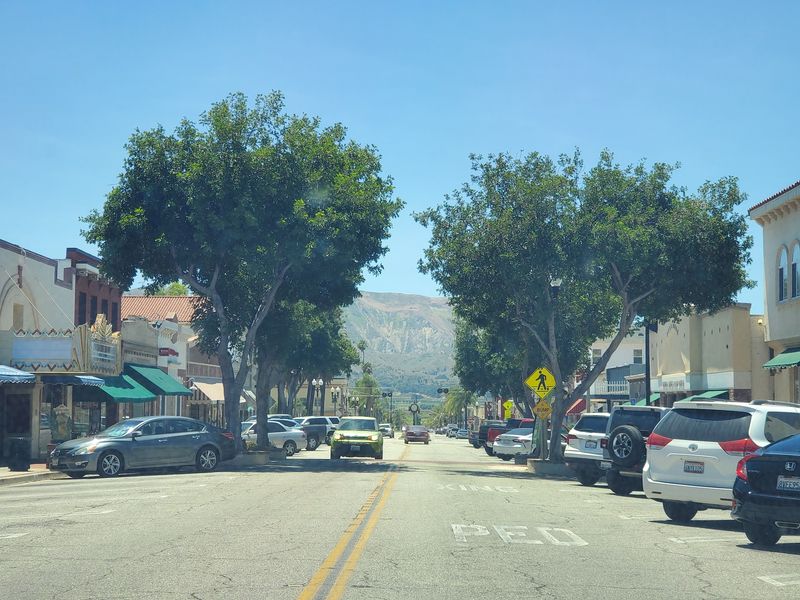
There is something almost magical about Fillmore. Walk down its main street and you get the feeling that time slowed down here on purpose.
That nostalgic quality is exactly why filmmakers have been using this Ventura County gem as a stand-in for everywhere from Mississippi to Arizona.
In 2003, the historic Fillmore Western Railway became the backbone of the racing drama “Seabiscuit,” recreating the gritty 1930s atmosphere with stunning accuracy.
The same railway hosted thrilling action sequences for “The Lone Ranger” in 2013. Before that, in 1987, the whole town was dressed up as 1940s Arizona for the film “In the Mood.”
What makes Fillmore so versatile is its collection of preserved architecture and wide, unhurried streets. Filmmakers love a location that does half the work for them.
Fillmore delivers that without breaking a sweat. The town has quietly racked up an impressive filmography that most visitors never even realize exists.
Next time you watch a period piece set in mid-century America, look closely at the storefronts.
There is a solid chance Fillmore is hiding in plain sight, wearing a different city’s name tag like a total pro.
2. Piru, Ventura County
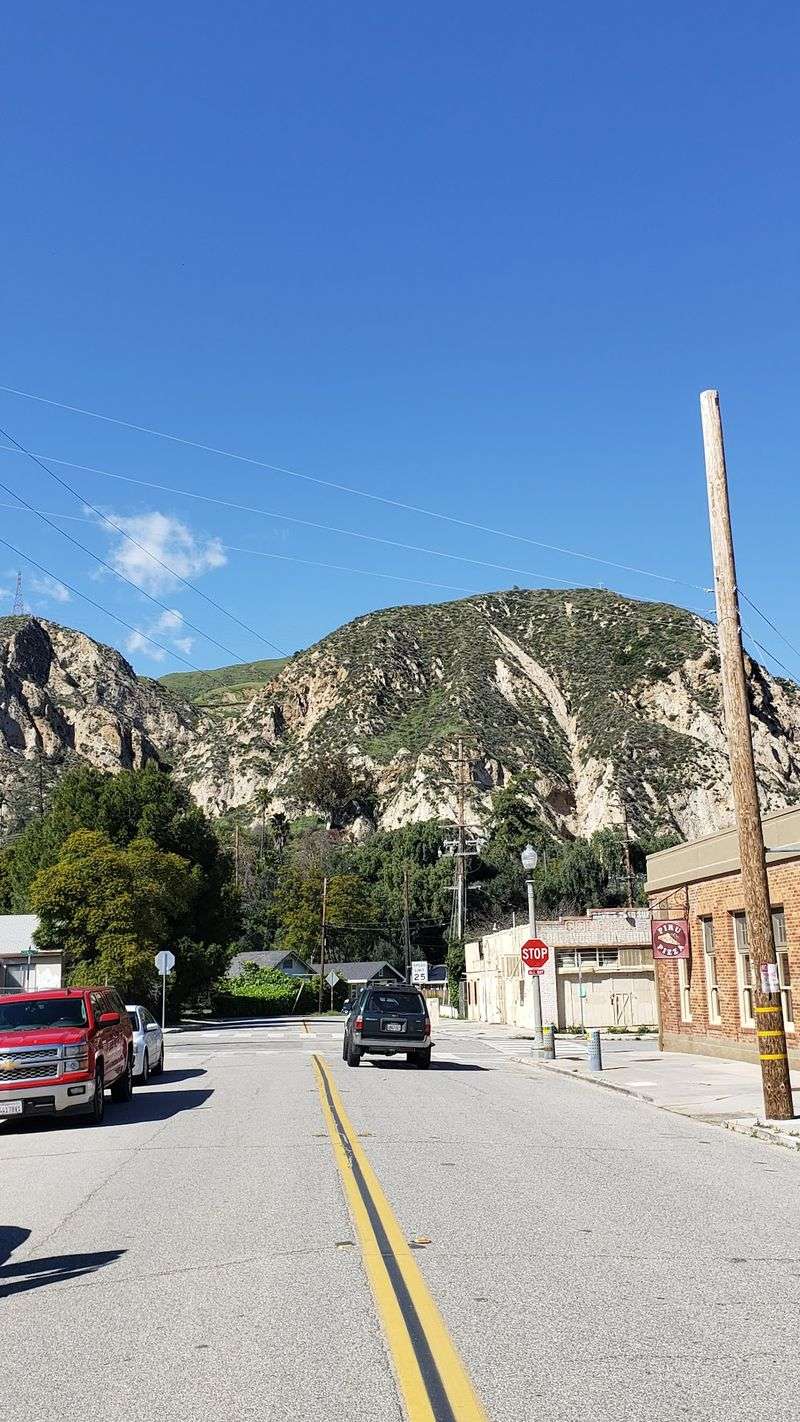
Piru is the kind of town that looks like it was built specifically for the movies. Blink and you might miss it on the map, but on screen, it has played everything from rural Nebraska to the fictional biker haven of Charming, California.
FX’s hit series “Sons of Anarchy” used Piru as its primary stand-in for the show’s fictional town of Charming for years. The streets, the storefronts, the general vibe, all of it screamed exactly what the show needed.
Beyond that, the 1999 film “Happy, Texas” was largely shot here despite being set entirely in the Lone Star State.
Piru also subbed in for Baker, Nevada, in the 2014 action film “Swelter,” and most recently transformed into rural Nebraska for the HBO Max series “Lanterns.” It is a small community doing enormous cinematic heavy lifting.
The town’s quiet, unhurried character gives it a chameleonic quality that bigger, flashier cities simply cannot replicate. Piru proves that sometimes the most powerful thing a place can do is stay exactly as it is, because that authenticity is what directors keep chasing.
3. Ferndale, Humboldt County
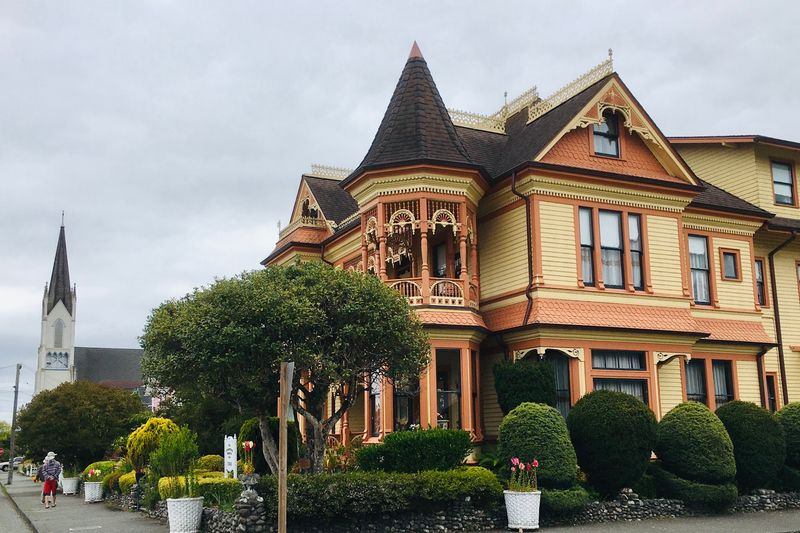
Ferndale feels like a snow globe someone forgot to shake. Its Victorian storefronts and gingerbread houses are so perfectly preserved that stepping onto Main Street feels like traveling back in time.
That quality has made it irresistible to filmmakers looking for a certain old-world American charm.
Perhaps its most famous role came in 1979, when Ferndale played the fictional town of Salem’s Lot, Maine, in the Stephen King miniseries adaptation.
The fog rolling in off the coast and the gothic Victorian architecture were an absolutely perfect match for King’s chilling story. Ferndale did not need much dressing up at all.
The 1995 outbreak thriller “Outbreak” also used Ferndale’s streets to portray a fictional American town under siege. Then in 2001, the Jim Carrey film “The Majestic” transformed it into a warm and idealistic 1950s community.
Every time, Ferndale slips into a new identity with remarkable ease. The town’s commitment to preserving its historic character is, without question, its greatest cinematic superpower.
Ferndale is living proof that authenticity never goes out of style, on screen or anywhere else.
4. Petaluma, Sonoma County
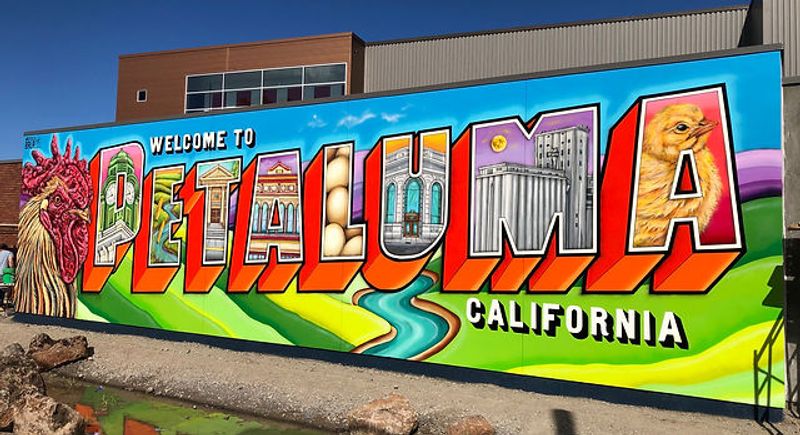
They call Petaluma “Hollywood North,” and honestly, that nickname is well earned. This Sonoma County city has a downtown so cinematically rich that George Lucas chose it to represent his own hometown of Modesto in the 1973 classic “American Graffiti.”
That is a pretty extraordinary compliment.
Francis Ford Coppola returned to Petaluma in 1986 for “Peggy Sue Got Married,” dressing the downtown in 1950s fashion to transport audiences back in time. Then in 1996, the Tom Hanks film “That Thing You Do!” used Petaluma streets to portray Erie, Pennsylvania.
The town also appeared in “Cheaper by the Dozen” in 2003 as the fictional Midland, Illinois.
What Petaluma has going for it is a rare combination of intact historic architecture and a flexible, photogenic streetscape.
It can be the Midwest, the South, or mid-century California with just a few well-placed props. Filmmakers have been exploiting that flexibility for decades, and Petaluma keeps delivering.
The city wears its film history like a badge of honor, and rightly so. Walking its downtown today still feels like walking through a movie set waiting for its next close-up.
5. Sonora, Tuolumne County
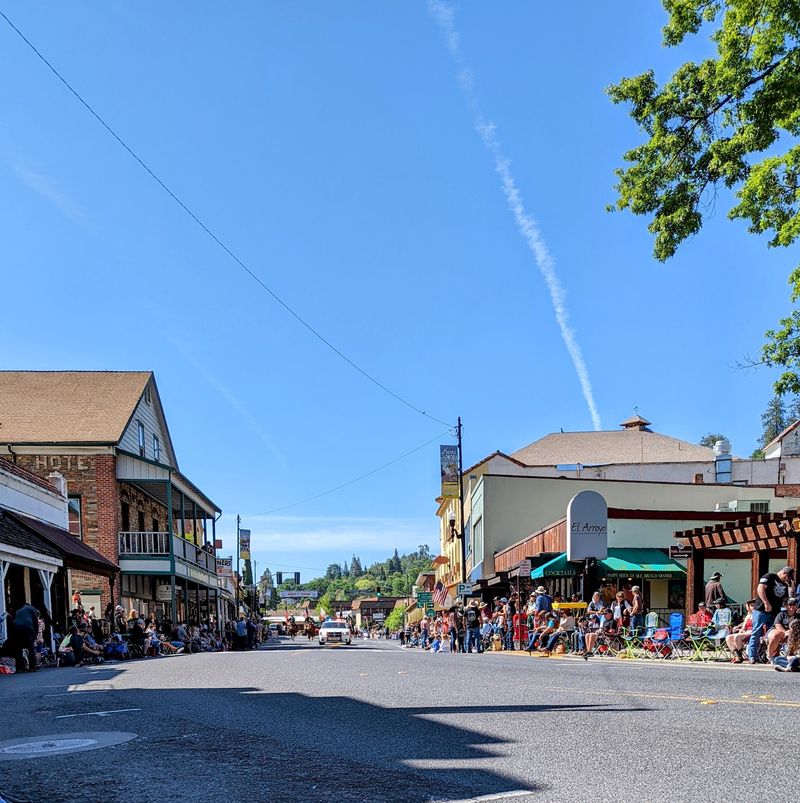
Sonora is a Gold Rush town that never really stopped being dramatic. Nestled in the Sierra Nevada foothills, it has a rugged, timeless quality that makes it perfect for Westerns, period pieces, and just about anything that needs wide skies and old wooden buildings.
The most famous cinematic moment connected to Sonora is the Red Hills Ranch area, which became the fictional 1885 Hill Valley for “Back to the Future Part III” in 1990. The same set was reused for the 1994 Western “Bad Girls.”
Nearby Columbia has also played an 1890s frontier town in multiple productions, including the 1955 film “Texas Lady,” where it convincingly portrayed an isolated Texas community.
The Tuolumne County Film Commission estimates that the broader Sonora region has hosted over 300 film and television productions.
That is a staggering number for a town most people associate with antique shops and weekend getaways. Sonora’s secret weapon is its geography.
The rolling hills, the pine trees, and the preserved Gold Rush architecture create a setting that feels genuinely untouched by modern life.
For filmmakers, that kind of canvas is worth more than any studio backlot.
6. South Pasadena, Los Angeles County
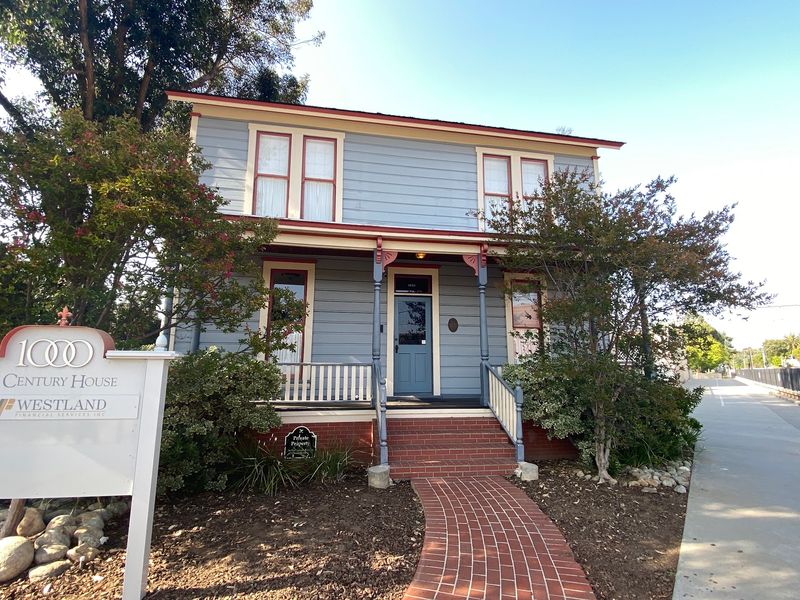
South Pasadena is the suburb that every filmmaker dreams about. Its tree-lined streets, classic craftsman homes, and unhurried atmosphere make it the textbook definition of “Anytown, USA.” That reputation has earned it a starring role in some truly iconic American films.
John Carpenter chose South Pasadena for his 1978 horror classic “Halloween,” using its residential streets to portray a small Midwestern suburb with eerie perfection.
The neighborhood felt so genuinely middle-American that audiences never questioned the setting for a second. In 2003, Bushnell Street was completely transformed into “Harrison University” for the comedy “Old School.”
South Pasadena has quietly doubled for suburbs across the country in dozens of productions over the years. The city’s dedication to preserving its historic residential character means filmmakers always find exactly what they need here.
There are no jarring modern storefronts or out-of-place architecture to ruin the illusion. South Pasadena is the cinematic equivalent of a perfectly pressed shirt: reliable, clean, and always appropriate for the occasion.
It is the kind of place that makes directors breathe a sigh of relief the moment they arrive on location.
7. Monrovia, Los Angeles County
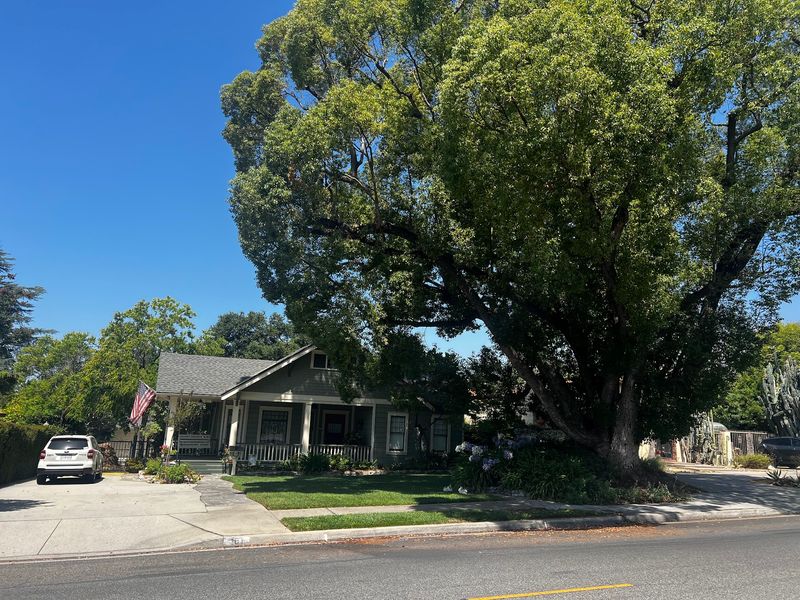
Monrovia has a cinematic history that stretches back to the very beginning of Hollywood itself. The Monrovia Feature Film Company set up shop here in 1916, building elaborate sets like Hangtown and Sutter’s Mill right within the city limits.
That makes Monrovia one of the original film towns in California.
Its historic downtown and older foothill buildings have made it a reliable stand-in for different times and places across many decades. “Back to the Future Part II” used Monrovia locations to portray its version of Hill Valley. “Legally Blonde” also found what it needed here, using the town’s classic streetscapes to fill out its world.
The old Monrovia Airport played a particularly creative role in 1940, when Columbia Pictures used it to represent a high mountain meadow in “The Great Plane Robbery.”
That kind of imaginative repurposing is exactly what makes Monrovia so fascinating. The town has a quiet confidence about its film legacy, never shouting about it but always delivering when the cameras arrive.
Monrovia reminds us that some of the best supporting actors in cinema history are not people at all. They are places.
8. Orange, Orange County
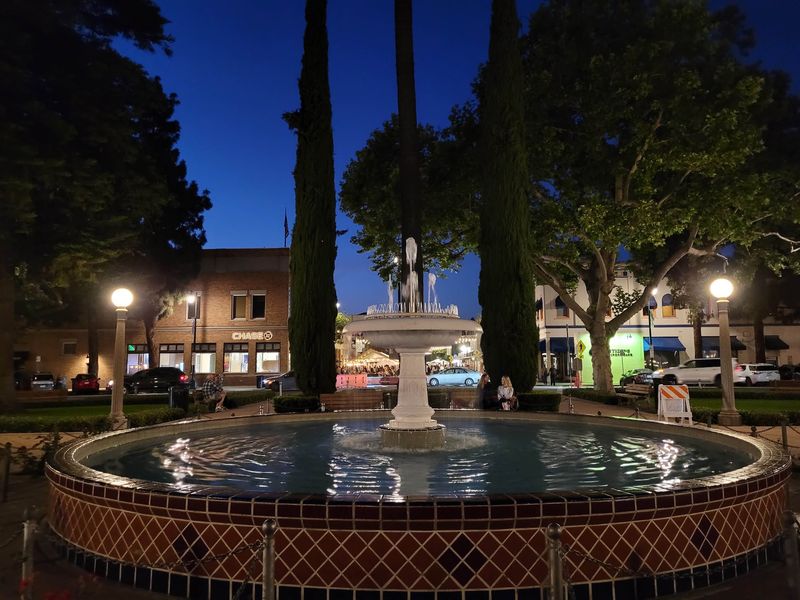
Old Towne Orange is Southern California’s best-kept cinematic secret. Built around a central traffic circle lined with antique shops and preserved historic storefronts, it has a timeless quality that sets it apart from nearly every other city in the region.
Filmmakers have noticed.
In Tom Hanks’ 1996 film “That Thing You Do!”, Old Towne Orange convincingly portrayed Erie, Pennsylvania, complete with period-appropriate dressing and a genuine small-town energy that felt completely authentic.
The Coen Brothers also tapped Orange for “The Man Who Wasn’t There” in 2000, transforming a local facade into an Italian restaurant for a key scene.
The city’s preserved historic character is not an accident. Orange has made a deliberate effort to maintain its architectural heritage, and that decision has paid off in cinematic dividends for decades.
The streets look like they belong to a different era, which is precisely why directors keep showing up with their cameras. Old Towne Orange is proof that preservation is not just good for history.
It is good for storytelling.
Every preserved storefront is essentially a set piece waiting for its moment in the spotlight.
9. Mendocino, Mendocino County
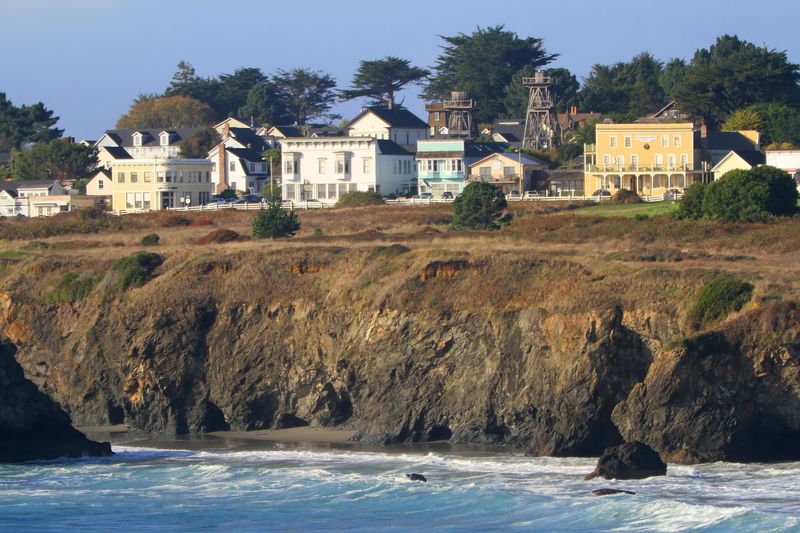
Mendocino sits on a dramatic bluff above the Pacific, looking for all the world like it was transplanted from the coast of New England. That resemblance is not just a quirk of geography.
It has made Mendocino one of the most consistently used film locations in all of California.
For twelve seasons, Mendocino portrayed the fictional Cabot Cove, Maine, in the beloved TV series “M, She Wrote,” airing from 1984 to 1996.
Audiences across America believed completely in the illusion. The coastal scenery, the Victorian architecture, and the foggy atmosphere all contributed to a setting that felt genuinely northeastern.
The 1966 comedy “The Russians Are Coming, The Russians Are Coming” also used Mendocino as its New England stand-in.
The 1998 cult favorite “Practical Magic” leaned into Mendocino’s magical coastal energy for its enchanting New England setting. That film’s visual identity is inseparable from the town’s moody, windswept beauty.
Mendocino has a rare gift for making audiences feel like they are somewhere completely different while being absolutely, unmistakably itself.
That paradox is what makes it extraordinary. Few places on earth can claim to be so genuinely themselves while convincing everyone else they are somewhere else entirely.
10. Lone Pine, Inyo County
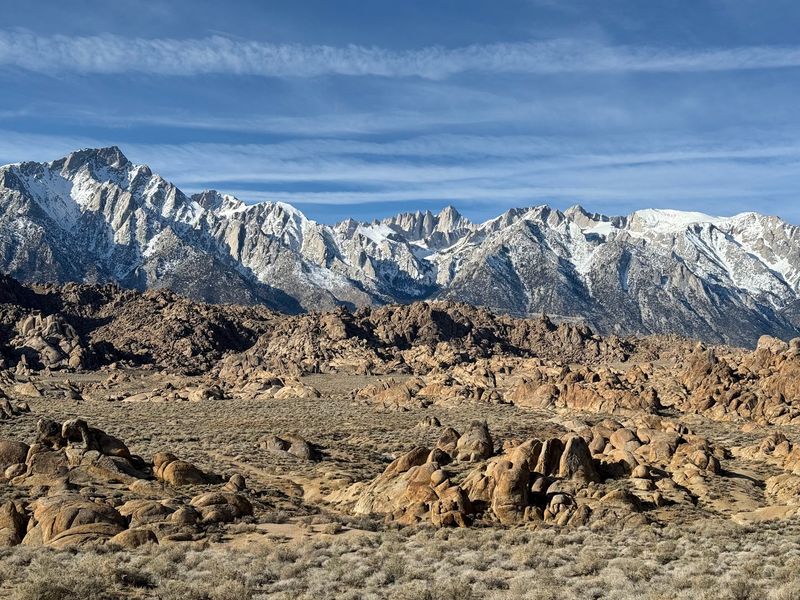
If there is one place in California that has played more roles than any actor alive, it might just be Lone Pine. Tucked beneath the towering Sierra Nevada with the wild Alabama Hills spread out in front, this small Inyo County town has one of the most jaw-dropping natural backdrops on the planet.
Over 400 films have been shot in the Lone Pine area. The Alabama Hills served as the frontier of India in the 1939 adventure classic “Gunga Din.”
Decades later, those same ancient rock formations became Afghanistan in the 2008 blockbuster “Iron Man,” giving Tony Stark’s origin story a landscape that felt genuinely alien and remote.
The region built its reputation on classic Westerns, with its distinctive boulders and wide-open skies becoming the default backdrop for countless frontier stories throughout the golden age of Hollywood. But Lone Pine never stopped evolving.
Science fiction productions, action films, and modern dramas have all found what they needed in these hills. The Alabama Hills Recreation Area is now a celebrated filming landmark, drawing movie fans from around the world.
Lone Pine is not just a filming location. It is a living monument to the art of cinematic imagination, and it shows no signs of slowing down.