
Every Spring, Grand Falls In Arizona Pours Giant Chocolate-Colored Waterfalls That Look Like Another Planet
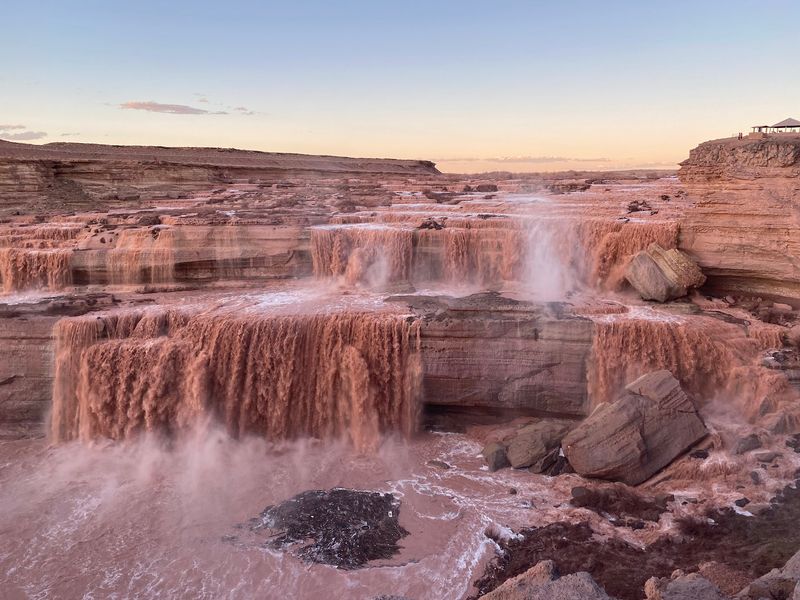
A waterfall taller than Niagara runs the color of chocolate milk in the Arizona desert. That is not a filter or a joke.
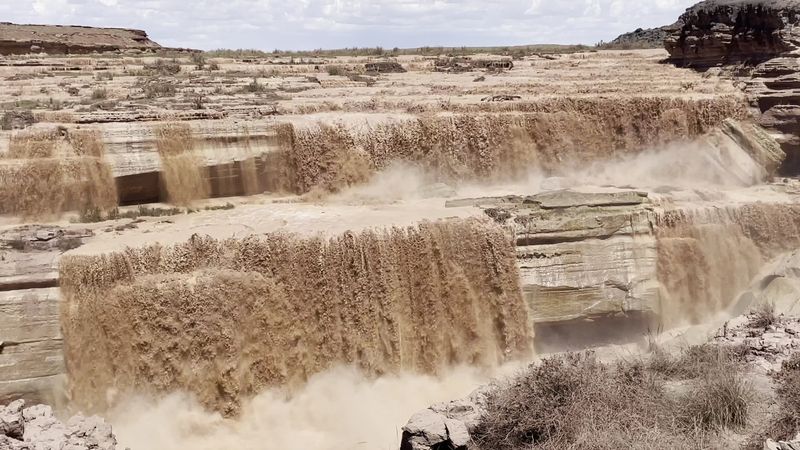
The water carries so much silt and clay that it pours brown over the rocks.
The show depends on melting snow from mountains far away. When spring flows arrive, the river roars over tiered ledges into a rocky gorge.
Strong spray can even toss rainbows into the air.
I like how this place flips every idea of a pretty waterfall. There are no ferns or blue pools here.
Just lava rock, red desert, and a muddy torrent that looks borrowed from Mars.
There is one big catch, though, and it matters. The land belongs to the Navajo Nation, and the site has been closed to visitors for a while now.
So what makes it so special?
A Muddy Giant On Navajo Land East Of Flagstaff
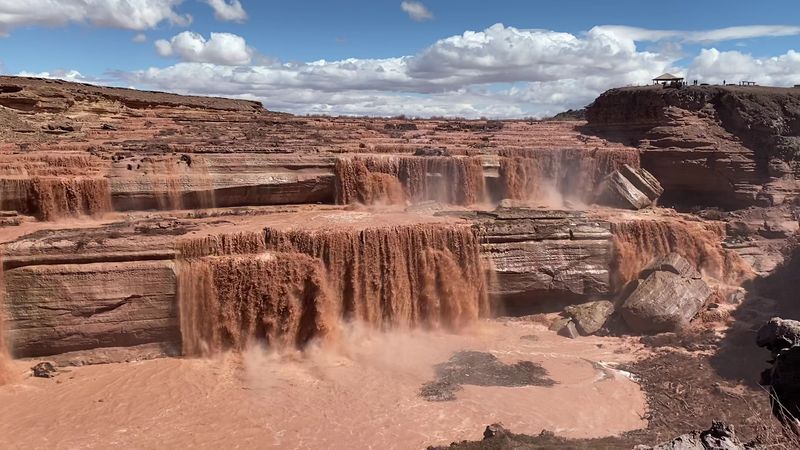
Grand Falls sits on Navajo Nation land in the Painted Desert of northern Arizona. It lies roughly 30 miles east-northeast of Flagstaff, near the small community of Leupp.
The Navajo name is Adah’iilíní. Most folks know it by a sweeter nickname, Chocolate Falls, and one look explains why.
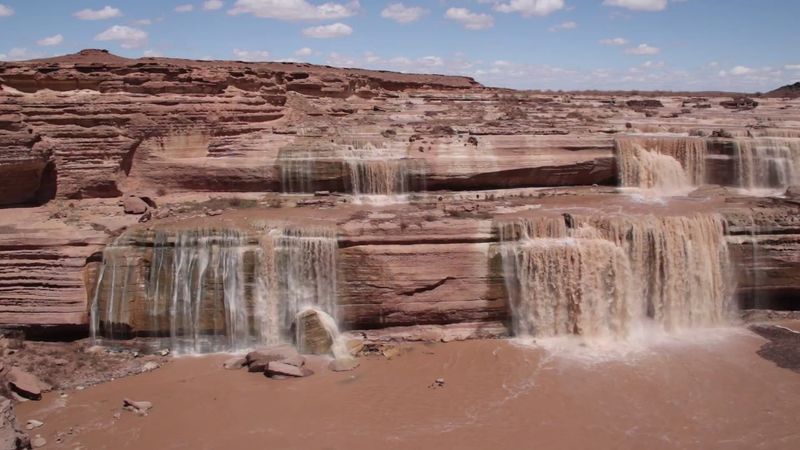
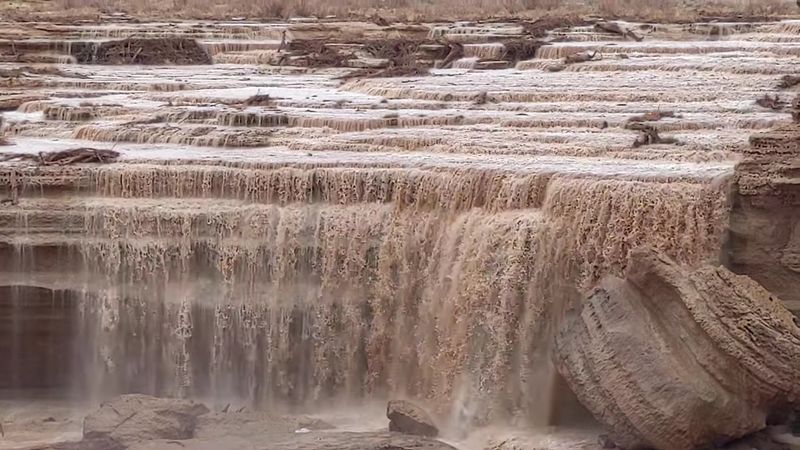
The falls belong to the Little Colorado River. When the river runs strong, it drops more than 180 feet over a staircase of ledges.
That makes it taller than Niagara Falls, which feels almost rude for a desert river.
There’s no tidy street address for this spot. Maps list it simply as Arizona 86035, out in wide-open ranch country.
Historically, people reached it on unpaved Indian Roads off Leupp Road.
Here’s the part that changes everything. Grand Falls has been closed to the public since March 2023, by decision of the Navajo Nation.
So this article works more like a field guide to a wonder than a trip planner. It’s still worth knowing about, though.
Few places in Arizona look this strange, this loud, or this delightfully brown.
How A Volcano Bossed A River Around
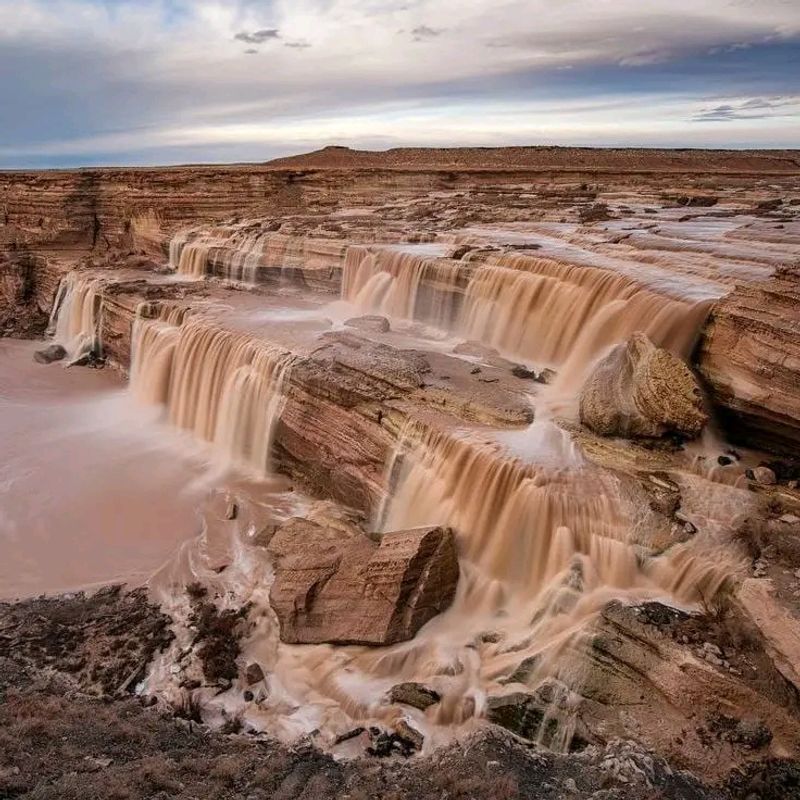
Blame a volcano for the whole thing. Around 100,000 years ago, during the late Pleistocene, lava poured from nearby Merriam Crater.
That crater sits in the San Francisco volcanic field, the same fiery zone behind the peaks near Flagstaff. The lava flowed into the Little Colorado River and blocked its path like a giant stone door.
The river didn’t give up, of course. Rivers rarely do.
It was forced to reroute around the new lava dam.
Eventually the water found its way back to its original channel. Where it spilled over the hardened lava and rejoined that old course, Grand Falls was born.
I love that the falls are basically a geology lesson you can hear. Every ledge tells part of a story about fire meeting water.
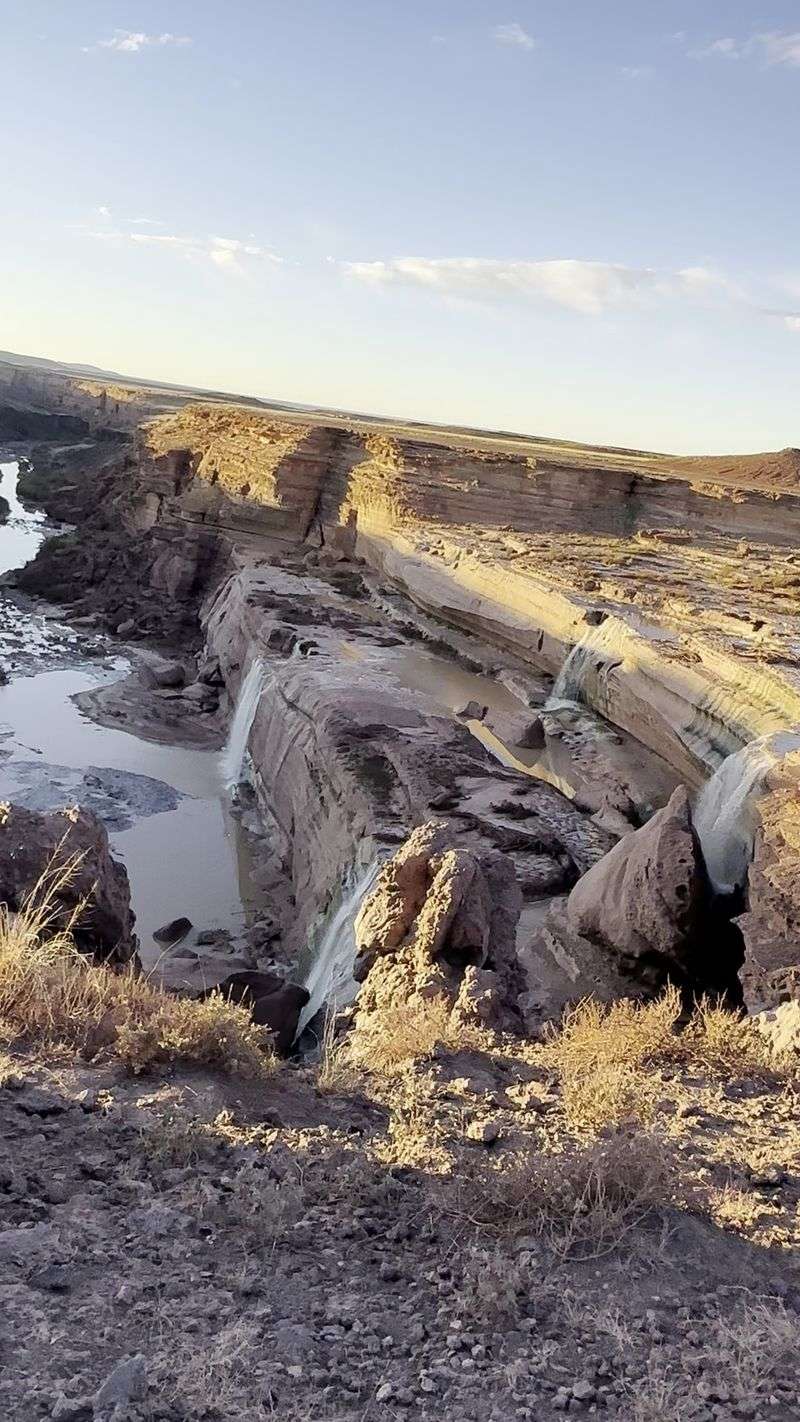
You can still see the evidence in the rock itself. Dark, sharp lava stone surrounds the falls and gives the area its rugged, otherworldly texture.
Signs at the old pavilion once explained this history to visitors. Now it lives on in photos, science articles, and the memories of folks who saw it running full.
Why The Water Looks Like Chocolate Milk
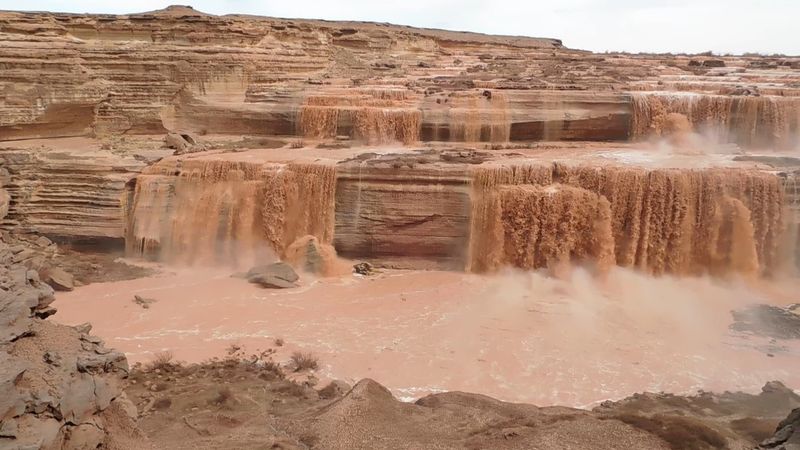
Brown water usually sounds like a problem. At Grand Falls, it’s the main attraction.
The Little Colorado River travels a long way through high desert before reaching the falls. Along the journey, it scoops up heavy loads of silt, sand, and clay.
By the time that water hits the ledges, it’s thick with sediment. The result is a rich, creamy brown that really does resemble chocolate milk.
Hence the nickname Chocolate Falls. Honestly, it might be the most accurate nickname in all of Arizona.
The color changes the whole feel of the scene. Instead of sparkling white cascades, you get rolling brown curtains that look heavy and powerful.
Against red rock and pale desert sky, the effect gets downright alien. That’s where the “another planet” comparison comes from, and it’s hard to argue with.
Lighting matters too. Midday to afternoon sun tends to show off the color best, since early morning angles can make photos tricky.
I can’t imagine a better example of nature ignoring the rules. Most waterfalls want to look pretty.
This one wants to look delicious.
Spring Snowmelt Sets The Stage
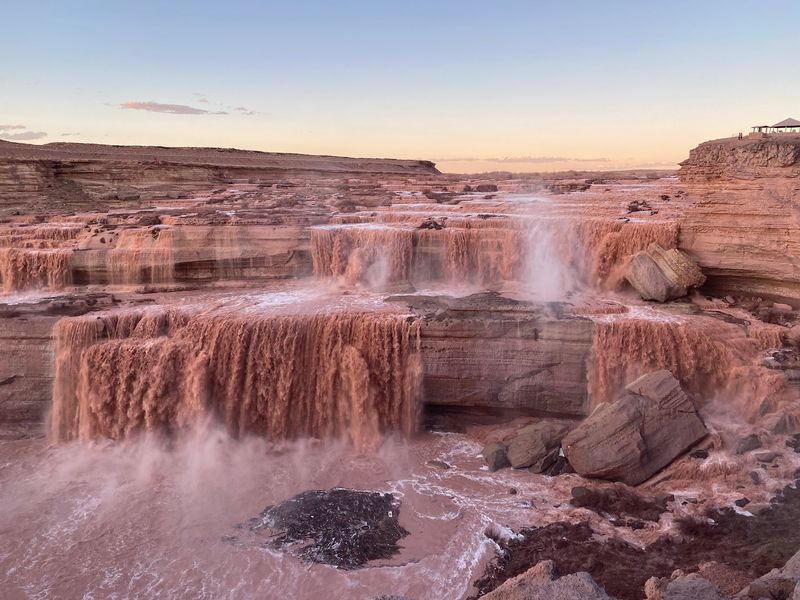
Timing is everything with this waterfall. Grand Falls runs on a seasonal schedule, and most of the year it can be a trickle or nearly dry.
The big show usually arrives in spring, especially March and April. That’s when snowmelt from the White Mountains, including Mount Baldy, feeds the Little Colorado River.
Think about how far that water travels. Snow melts in eastern Arizona and eventually thunders over lava ledges near Flagstaff.
Summer monsoon storms, roughly late June through September, can also bring sudden surges. Those flows are less reliable, though, and monsoon season brings its own road and weather headaches.
Fall visits could be underwhelming. One October trip in 2022 found low flow after weeks without rain, though the area still looked pretty.
Flow watchers historically checked USGS water data before heading out. Readings above 200 cubic feet per second suggested a decent flow.
When numbers jumped into the thousands, the next day or two promised the real spectacle. That’s when the river earned its roar.
So the falls reward patience and planning. Spring is when the chocolate fountain truly turns on.
Rainbows, Roar, And A Mini Grand Canyon
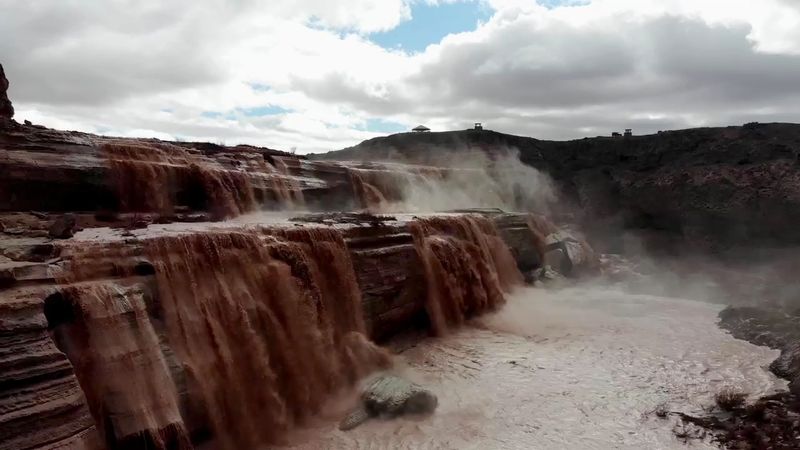
Sound arrives before the view. People approaching from the old parking area could hear the water thundering below before they ever saw it.
When the falls run hard, the impact throws up clouds of spray. On sunny days, that mist can bend light into bright rainbows.
A rainbow over muddy brown water is a funny combination. It’s like nature decorating a chocolate cake with sprinkles.
Below the falls, the Little Colorado River cuts through a rocky gorge. The landscape downstream has been compared to a small-scale Grand Canyon, with layered walls and rugged edges.
The river looks surprisingly big here, too. Loud and wide, it hardly seems like the same stream that can shrink to almost nothing later in the year.
From higher ground, views stretched toward the San Francisco Peaks and Humphreys Peak. Snowy mountains framing a brown desert waterfall made for one wild backdrop.
Different angles once offered very different looks at the falls. The north side overlooked the top, while the south side faced the cascades head-on.
Few spots in Arizona pack this much drama into one canyon.
Picnic Shelters And Simple Comforts Of The Past
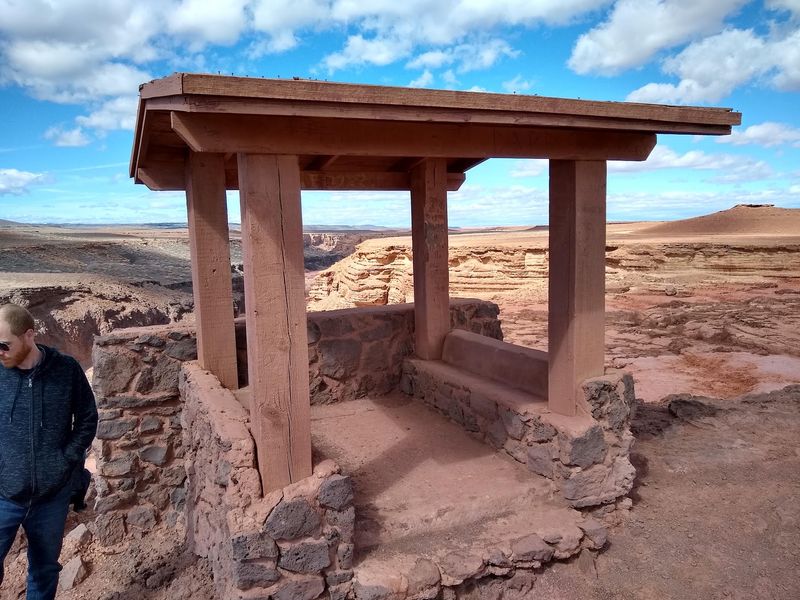
Nothing fancy ever happened here, and that was part of the charm. Before the closure, the area offered only basic facilities near the overlook.
Picnic benches and gazebo-style shelters gave people a place to sit and stare. A covered pavilion near the parking area held signs about the history of the falls.
Outhouses were once present near the main lot. They weren’t always open or well stocked, so smart visitors packed their own supplies.
Shade was scarce beyond those few shelters. Out on the rocks, the desert sun had full control.
Food and water were strictly bring-your-own. The nearest snacks were miles away, so a cooler counted as essential gear.
Cell service was spotty at best, and it likely still is. Plenty of travelers lost GPS on the way out, which made paper maps feel suddenly heroic.
I like how bare-bones it all was. The falls didn’t need a gift shop or snack bar to impress anyone.
That simplicity also left the area vulnerable. With little staffing and lots of visitors, problems started piling up.
Washboard Roads That Tested Every Car
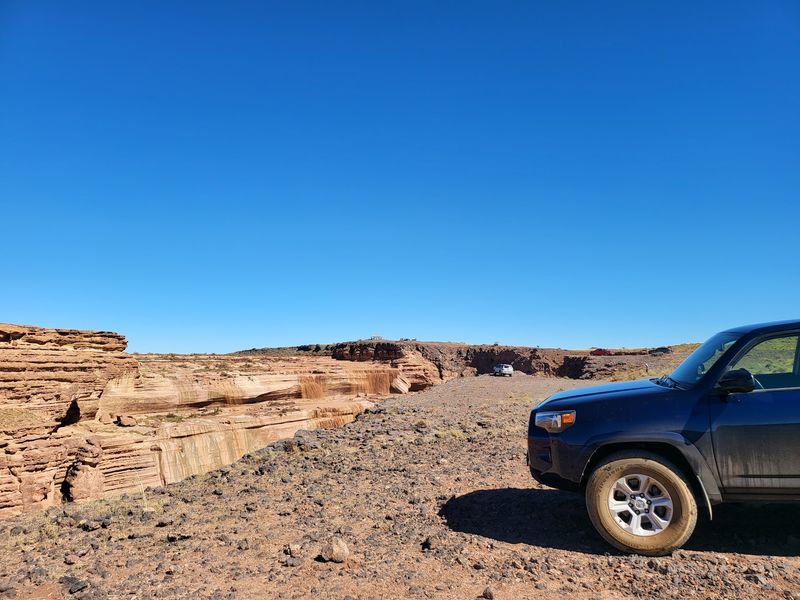
Getting there was always half the adventure. The final stretch meant roughly 8 to 10 miles of dirt road across open Navajo land.
Much of that road had a washboard surface, the bumpy ripples that rattle teeth and dashboards alike. Coming in from Interstate 40 on Road 70 could take around 40 minutes for just a few miles.
Conditions varied a lot. Some trips felt smooth enough for a small sedan, while others pushed travelers to wish for a truck.
A four-wheel drive wasn’t strictly required in dry weather. Still, an SUV or high-clearance vehicle made the ride far more comfortable.
Roads weren’t well marked either. GPS usually found the falls, but signals could drop on the return trip.
Rain changed everything. Wet clay roads in this part of Arizona can turn slick and messy fast, which is one reason monsoon season was considered risky.
Dust, bumps, and long empty miles defined the drive. That remoteness made reaching the falls feel earned.
It also meant the landscape needed extra care from everyone passing through.
Why The Gates Closed In 2023
Popularity can be a heavy load for a quiet place. In March 2023, the Navajo Nation closed Grand Falls to the public indefinitely.
The reasons were serious. Officials pointed to littering, environmental damage, off-road driving in restricted areas, and trespassing on private property.
Visitors were also reported chasing livestock. Out here, families live and ranch on this land, so that crossed a clear line.
Overflowing trash cans had been a problem for years. Garbage scattered around the picnic area spoiled views of the falls and the peaks beyond.
The Navajo Nation Parks and Recreation Department lists the closure on its rules page. It cites debris build-up in the area.
No reopening plans have been announced. The Leupp Chapter is the contact point for updates, but the closure appears indefinite.
Some travelers still show up without knowing. The right move is simple: respect the closure and turn around.
I believe the falls deserve that respect. This is home to people first, and a scenic stop second.
Respecting The Land And Its People
Land like this isn’t a theme park. It’s part of the Navajo Nation, the largest tribal land base in the country, and it carries deep meaning for the people who live there.
The falls sit among ranches, grazing livestock, and private homesites. Every careless detour off a road affects real neighbors.
That’s why the closure deserves support rather than workarounds. Sneaking in only adds to the damage that led to the shutdown.
Even longtime fans have expressed hope that issues get resolved the right way. The goal is a place that’s maintained, clean, and respectful of property rights.
Leave-no-trace habits matter everywhere in Arizona. Packing out trash and staying on roads seem small, yet they shape whether special places stay open.
Should access ever return, the rules will come from the Navajo Nation. Checking with official channels first would be the only smart start.
Until then, appreciation can happen from a distance. Photos, books, and geology lessons keep the story alive without boots on fragile ground.
Honestly, a wonder this unusual is worth protecting more than visiting.
Other Northern Arizona Wonders To Explore Instead
Missing the chocolate show stings a little. Luckily, the Flagstaff area is loaded with open, legal wonders tied to the same volcanic story.
Sunset Crater Volcano National Monument shows off the San Francisco volcanic field up close. Cinder cones and black lava flows give that same moody, otherworldly feel.
Wupatki National Monument sits nearby with ancient pueblo ruins against red desert. It pairs beautifully with Sunset Crater on one scenic loop road.
Meteor Crater lies east of Flagstaff along Interstate 40. It’s a giant impact bowl that leans hard into the “another planet” vibe.
The Painted Desert section of Petrified Forest National Park adds colorful badlands. Those pastel hills look like someone spilled a paint box across Arizona.
For moving water, Oak Creek near Sedona flows through lush red rock canyons. It’s a very different, much greener kind of beauty.
Check each site’s current hours and fees before heading out. They change seasonally.
Spring weather makes these northern Arizona drives especially pleasant. You’ll still get lava rock, wide skies, and plenty of wow.
A Wonder Best Admired From Afar For Now
Some marvels teach patience. Grand Falls is one of them.
Here’s a waterfall taller than Niagara, colored like chocolate milk, and carved by a volcano long ago. It roars to life only when snow melts in faraway mountains.
That’s a lot of magic for one remote corner of Arizona. No wonder it earned such a loyal following before the closure.
Right now, though, the answer for visitors is no. The Navajo Nation closed the site in March 2023, and no reopening has been announced.
So enjoy it through photos and stories. Learn the Navajo name, Adah’iilíní, and share the strange science behind the brown water.
Tag a friend who loves weird geology. Save the story for the day news changes, if it ever does.
Meanwhile, nearby craters and canyons can scratch that adventurous itch. Northern Arizona never runs short of surprises.
I can’t help admiring a place that protects itself this way. Sometimes the best thing a wonder can do is rest.
Chocolate Falls will keep pouring each spring either way. It just doesn’t need an audience to put on a good show.