
Few People Know This Stunning 19th-Century Moorish Castle In Florida Actually Exists
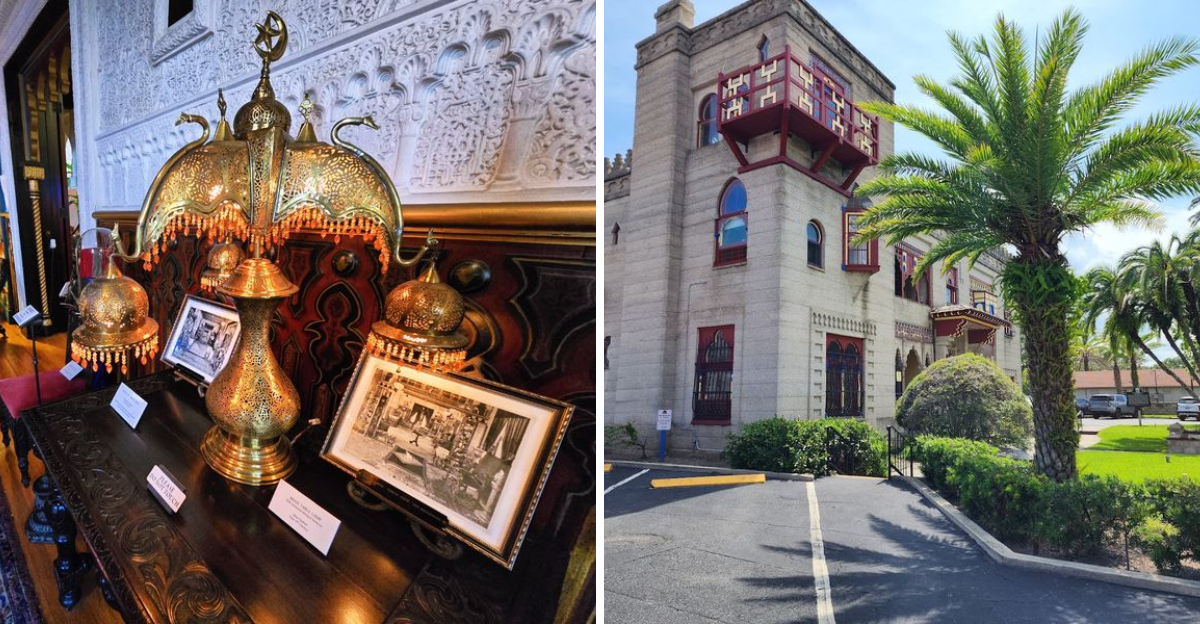
You’re walking through St. Augustine expecting historic charm, then something stops you mid-step.
It doesn’t look like anything else around it. Carved details, bold shapes, a building that feels transported rather than built here, like it belongs somewhere much farther away than Florida.
Nothing about this building feels like Florida, like it was taken straight out of Spain and placed where you wouldn’t expect it.
Step closer and it only gets more interesting. The design pulls you in, but it’s what’s inside that keeps your attention.
Rooms filled with pieces that feel collected over time, each one adding to a story most visitors never hear about.
People slow down here. They look longer, take it in, and try to figure out how something like this ended up in the middle of a Florida street.
You know that moment when a place doesn’t match your expectations at all?
That’s what this feels like.
And once you see it, it’s hard not to wonder how many others walk right past without realizing what they’re missing.
A Boston Merchant’s Obsession Brought Spain To Florida
Franklin W. Smith was not a man who did things halfway.
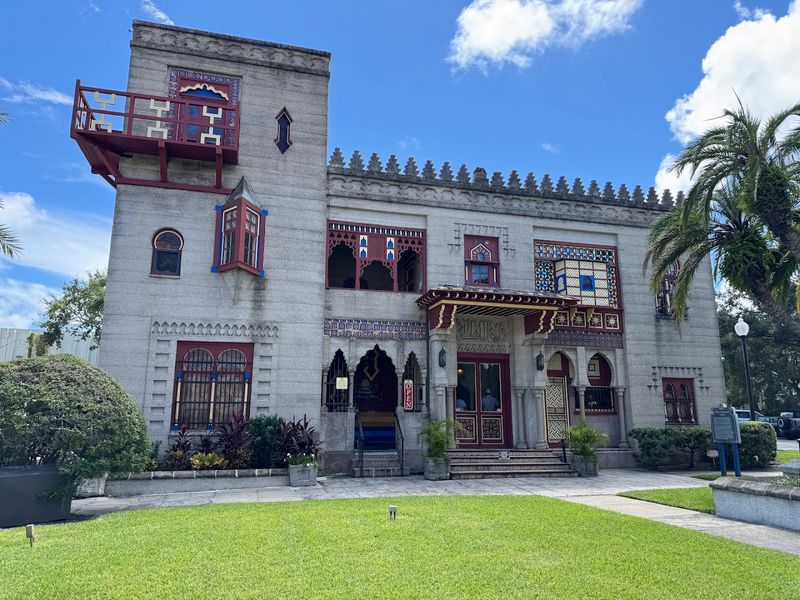
After visiting Granada, Spain, and seeing the magnificent Alhambra Palace up close, he came home to Boston with one very specific plan: he was going to build his own version of it in Florida.
Smith chose St. Augustine as his canvas and constructed Villa Zorayda in 1883 as his winter retreat. The building is designed as a one-tenth scale replica of a section of the legendary 12th-century Moorish palace, capturing its arched doorways, geometric patterns, and layered ornamentation with remarkable accuracy.
What makes this story so compelling is that Smith was not an architect by training. He was a merchant with a passion so strong that it literally shaped the architectural landscape of an entire city.
His daring use of Portland cement mixed with local coquina inspired other landmark builders in St. Augustine, including the famous Henry Flagler, making this castle a quiet but powerful force in Florida history.
The Architecture Is Unlike Anything Else In The United States
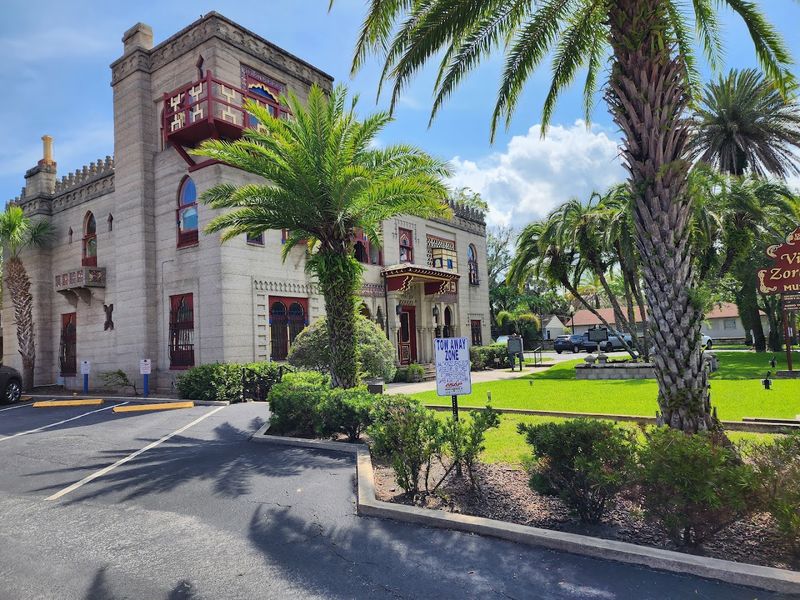
Standing in front of Villa Zorayda for the first time, I had to check twice that I was still in Florida. The facade is a riot of arched openings, carved ornamentation, and textured coquina stonework that belongs more in Andalusia than on King Street.
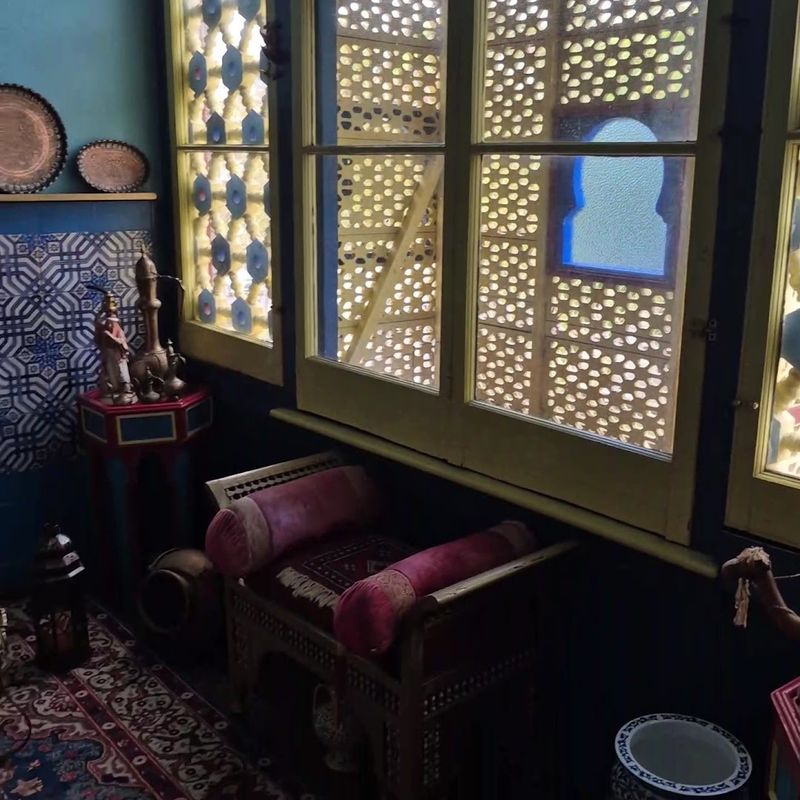
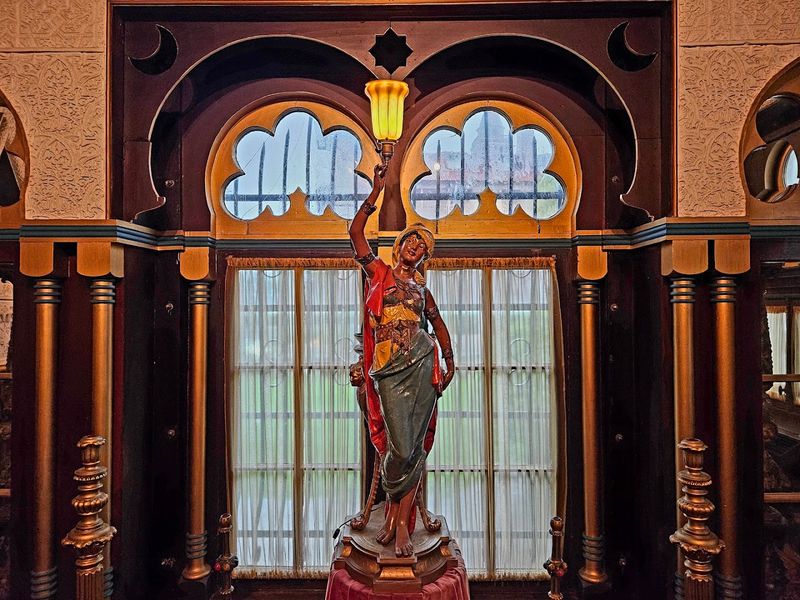
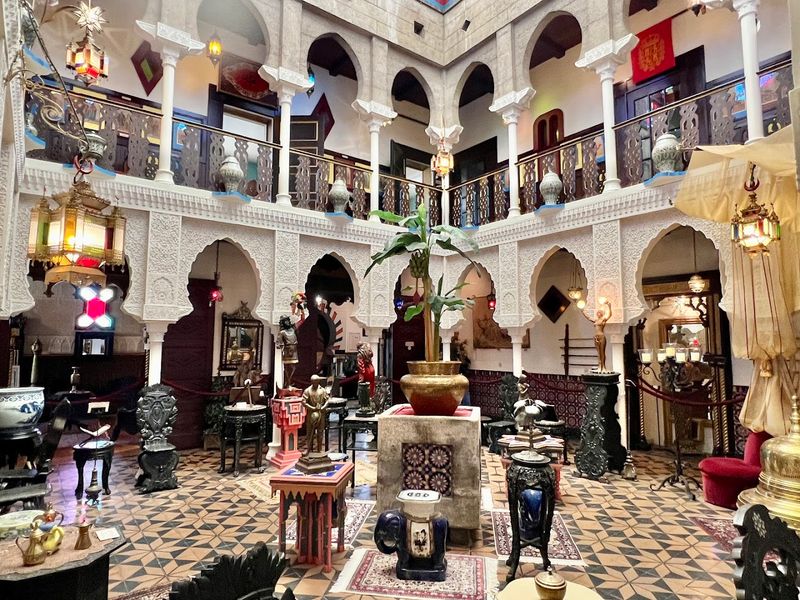
Inside, the detail only gets richer. Colorful tiles line the walls, carved woodwork frames every doorway, and the ceilings are layered with geometric patterns that seem to multiply the longer you look at them.
The craftsmanship is so precise that it genuinely feels like a miniature palace rather than a private home.
The Moorish Revival style was nearly unheard of in American residential buildings at that time, which makes Villa Zorayda a true architectural outlier. Visitors who have traveled to Spain often say the interior details hold up surprisingly well against the real Alhambra.
For anyone who loves architecture, walking through these rooms is a slow, deeply satisfying experience that rewards every extra minute you give it.
The Egyptian Cat Hair Rug Is Genuinely One Of A Kind
Nothing quite prepares you for the moment you learn what the most famous artifact in this museum is actually made of. Sitting in one carefully guarded room is a rug that is roughly 2,400 years old, woven entirely from the hair of ancient Egyptian cats.
According to the history tied to this object, the rug was originally created to wrap a mummified foot. The legend attached to it claims it was taken from a tomb, and that a curse follows anyone who removes it.
Whether you believe in curses or not, there is something undeniably eerie about standing near an object that old with a backstory that strange.
Photography is not permitted in that room, which only adds to the atmosphere. The staff at Villa Zorayda are happy to share the full story, and the audio tour covers it in satisfying detail.
It is the kind of artifact that you find yourself describing to everyone you know for weeks after the visit, and they never quite believe you.
Portland Cement And Coquina Stone Made History Here
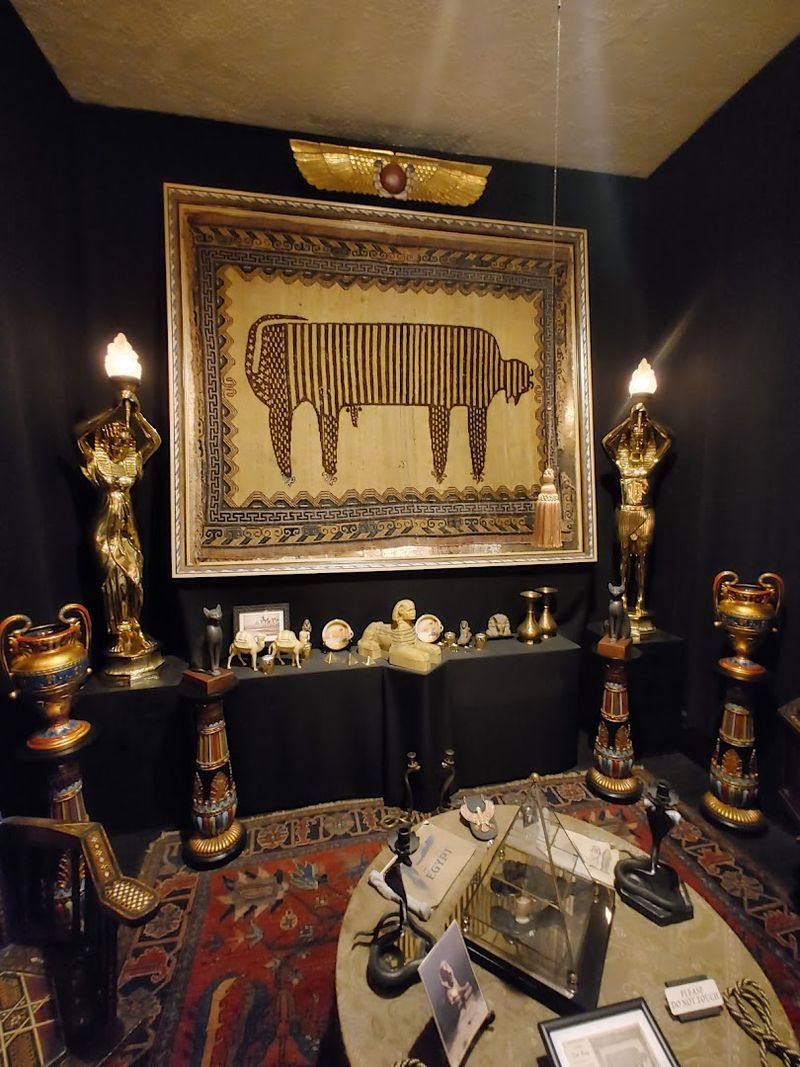
Most visitors come for the Moorish style and leave talking about the cat rug, but the building material itself is a genuinely fascinating chapter in American construction history. Villa Zorayda was one of the first structures in the United States to be built using poured Portland cement reinforced with local coquina, a sedimentary rock made from compressed shells and coral found along Florida’s coast.
Franklin Smith essentially ran an experiment in modern building techniques, and it worked so well that other developers took notice. Henry Flagler, who transformed St. Augustine into a resort destination for the wealthy, studied Smith’s methods and applied similar techniques to his own grand hotels nearby.
That ripple effect means Villa Zorayda quietly shaped the look and feel of an entire city. The building is not just a pretty facade.
It is a working demonstration of what was possible with new materials at a time when most builders were still relying on wood and brick. Touching those walls feels like touching a turning point.
The Self-Guided Audio Tour Brings Every Room To Life
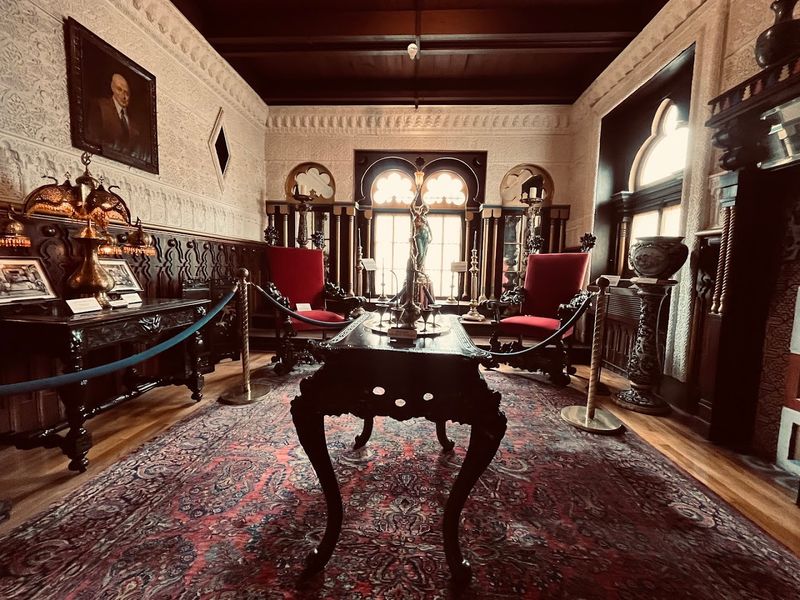
Wandering through a beautiful old building is one thing, but understanding what you are looking at is something else entirely. The self-guided audio tour at Villa Zorayda closes that gap in a really satisfying way, and it is included with the price of admission.
Each room has a display number that you enter into a small handheld device worn on a lanyard. The recordings cover the history of the room, the story behind specific artifacts, and details about the architectural choices that shaped each space.
Before you leave one room, the audio guide even tells you which direction to head next, so there is no confusion about the route.
I appreciated the pace this format allowed. There were no crowds pushing me forward and no guide rushing through the good parts.
I could stand in front of a carved doorway or a painted ceiling for as long as I wanted, replay a section of audio if I missed something, and move entirely on my own schedule. For a solo traveler or a curious couple, this is close to the ideal museum format.
A Gilded Age Collection That Spans The Entire World
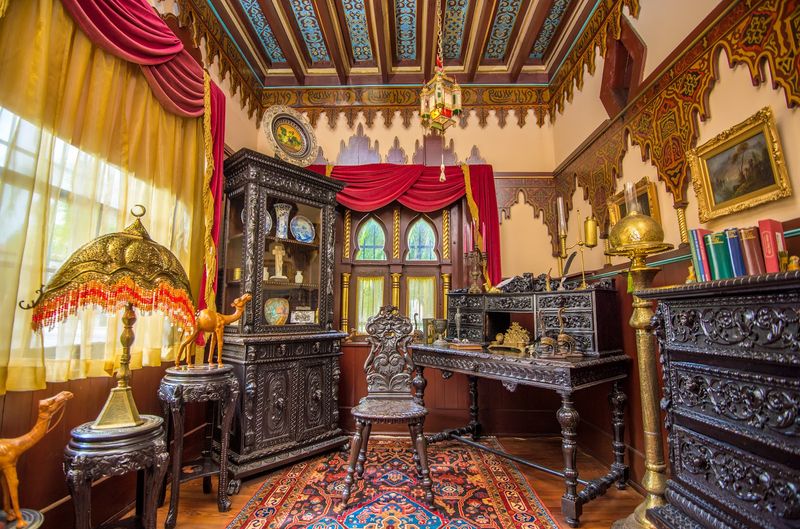
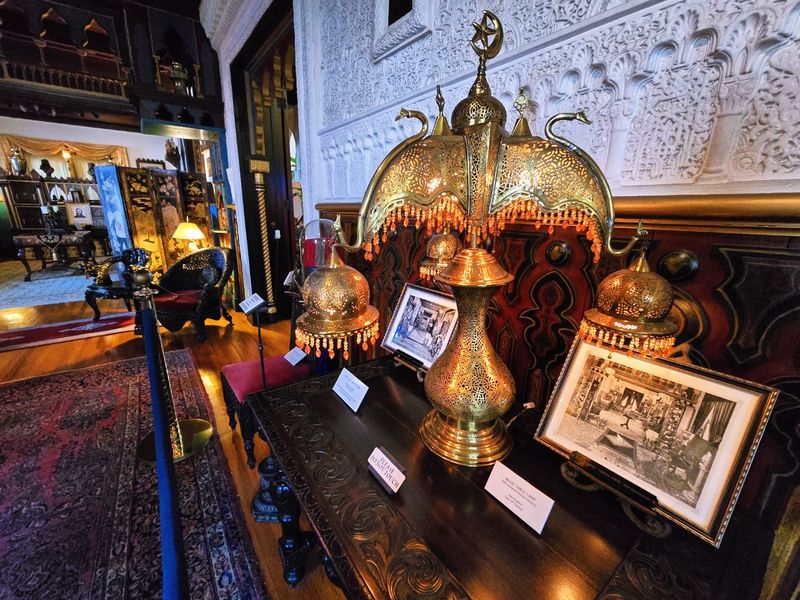
The objects filling the rooms of Villa Zorayda were not gathered from a single auction or a single country. They reflect decades of collecting by people who traveled widely and bought boldly, pulling together pieces from Egypt, Spain, the Middle East, and beyond into one compact but astonishing space.
Cigar cutters sit near stained glass light fixtures. A grand staircase that visitors nicknamed the princess staircase curves upward with quiet elegance.
Original furniture from the Gilded Age shares space with antiquities that predate the building by thousands of years. The effect is layered and occasionally surprising, like reading a very well-traveled person’s diary.
One reviewer described it as a display of what a wealthy collector might assemble to show just how far their curiosity could reach, and that framing actually makes the collection more interesting rather than less. Every object tells a story about who owned it, where it came from, and why someone thought it was worth keeping.
Walking through these rooms, I kept finding new things to look at long after I expected to be done.
The Building Has A Speakeasy Past That Few People Expect
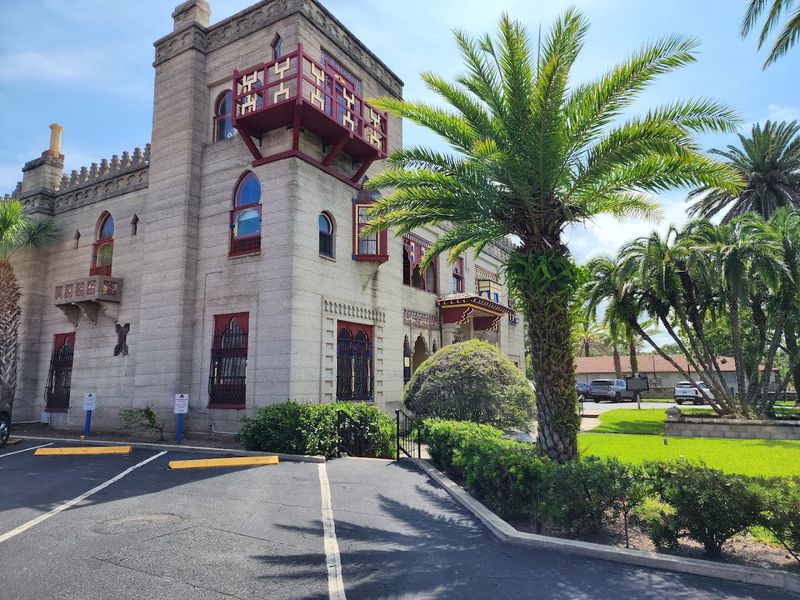
When you picture a Moorish castle inspired by a 12th-century Spanish palace, a Prohibition-era speakeasy is probably not the first thing that comes to mind. Yet that is exactly what Villa Zorayda became during the 1920s, and that layer of history adds a wonderfully unexpected twist to the whole visit.
The building changed hands after Franklin Smith’s era, and under later ownership it served as a social gathering space that operated quietly outside the rules of Prohibition. Knowing that adds a certain charge to the atmosphere, especially in the lower rooms where the ornate surroundings feel just theatrical enough to match that kind of secret history.
The audio tour touches on this period, and the staff are happy to share details if you ask. I found myself imagining the mix of characters who would have moved through these carved archways during that era, the contrast between the palace-like setting and the underground social scene giving the whole story a quality that feels almost fictional.
It is the kind of detail that makes a place feel genuinely layered rather than just old.
Its Influence On Henry Flagler And St. Augustine Is Enormous
Henry Flagler is the name most people associate with the transformation of St. Augustine into a world-class resort destination in the late 19th century. What fewer people realize is that Villa Zorayda quietly set the stage for much of what Flagler built.
Franklin Smith’s experiment with Portland cement and coquina showed that large, ambitious structures could be raised quickly and durably in Florida’s humid climate. Flagler took that lesson seriously and applied it to his own grand hotels, including the Ponce de Leon, which today houses Flagler College just blocks away from Villa Zorayda.
The architectural daring of Smith’s Moorish Revival design also pushed the visual conversation in St. Augustine toward something more exotic and theatrical than the typical American resort town of the time. Standing at the corner of King Street today, you can trace a direct line from Villa Zorayda’s coquina walls to the skyline that surrounds it.
The castle did not just sit in the city. In many ways, it helped invent it.
The Location Makes It Easy To Pair With A Full Day Out
Sitting right in the heart of downtown St. Augustine at 83 King St, Villa Zorayda is one of those rare museum stops that slots perfectly into a full day of exploring without requiring any special planning or long drives.
The building is within easy walking distance of Flagler College, the Lightner Museum, the Castillo de San Marcos, and the pedestrian shopping streets that line the old city. Parking is available on-site for museum visitors, which is a genuine relief in a downtown area that can get busy on weekends.
The museum is open Monday through Saturday from 10 AM to 5 PM and on Sundays from 11 AM to 4 PM, giving you solid flexibility no matter when your St. Augustine visit falls. A self-guided visit typically runs between 45 minutes and an hour and a half, depending on how deeply you engage with the audio tour.
That makes it a satisfying anchor for a morning or a relaxed afternoon without eating up your entire day.
The Museum Is Privately Owned And Still In The Founding Family
There is something genuinely moving about visiting a place that has stayed in private hands through generations rather than being absorbed into a larger institution. Villa Zorayda is owned and operated by descendants of Abraham Mussallem, the second owner of the property, who acquired most of the home’s furnishings and shaped the collection that visitors see today.
That family connection gives the museum a warmth that is hard to manufacture. The staff are knowledgeable, approachable, and clearly proud of what they are sharing.
Multiple reviewers have specifically mentioned the person at the front desk as a highlight of their visit, noting how helpful and personable the welcome felt.
Knowing that real people with a personal stake in this history are the ones keeping it alive makes every object on display feel more meaningful. This is not a corporate attraction running on autopilot.
It is a living family legacy tucked inside a one-of-a-kind building, and that combination is exactly why Villa Zorayda leaves such a lasting impression on nearly everyone who walks through its carved wooden doors.