
Hidden Beneath The Trees At Fort Christmas Historical Park, A Forgotten Florida Ghost Town Awaits Discovery
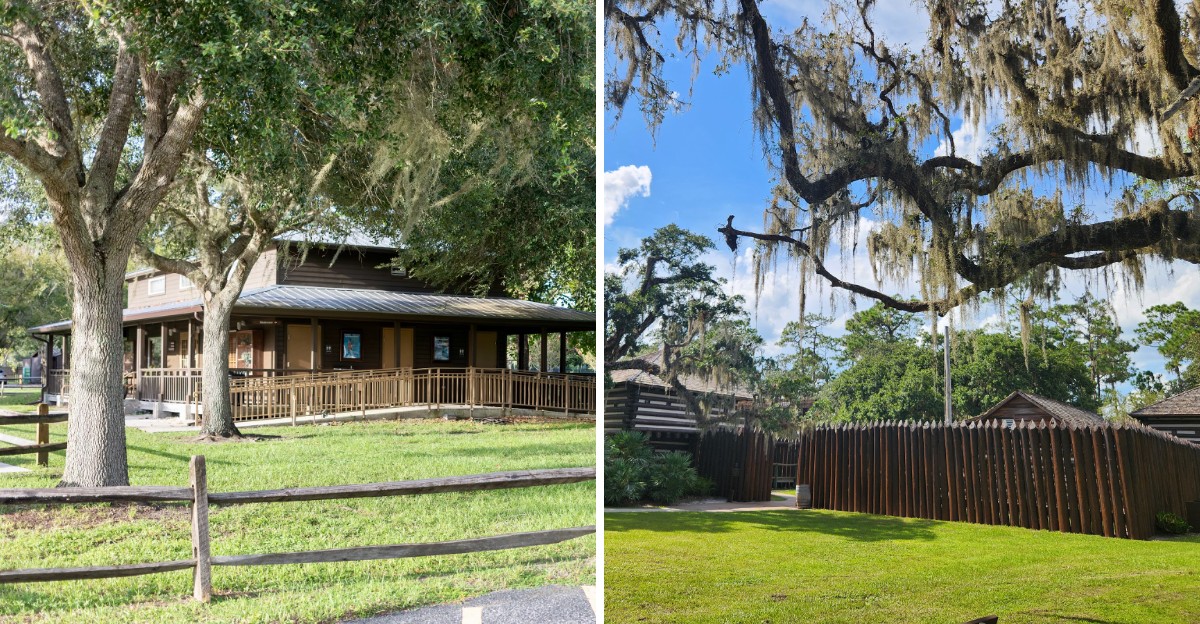
Florida might be famous for its roller coasters, crowded beaches, and tourists who somehow manage to get sunburned before lunchtime, but some of its most fascinating attractions have absolutely nothing to do with any of that. In fact, one of the most interesting places you can visit feels like someone pressed pause on the calendar nearly 200 years ago.
Picture towering oak trees, weathered wooden buildings, an old-fashioned schoolhouse, and a military fort that looks like it belongs in a history book. Except here, you don’t have to flip through dusty pages or pretend to enjoy a three-hour lecture to experience the past.
You can actually walk through it.
Every corner has a story, from the homes where pioneer families once lived to the everyday tools that made surviving without electricity, air conditioning, or grocery delivery quite an adventure. Suddenly, complaining about slow Wi-Fi seems a little dramatic.
And here’s the part that makes this hidden gem even better. Exploring it won’t cost you a dime.
So, if you’re ready to discover a side of the Sunshine State that existed long before theme parks took over, this charming trip back in time might just become your favorite free adventure.
A Fort Born On Christmas Day
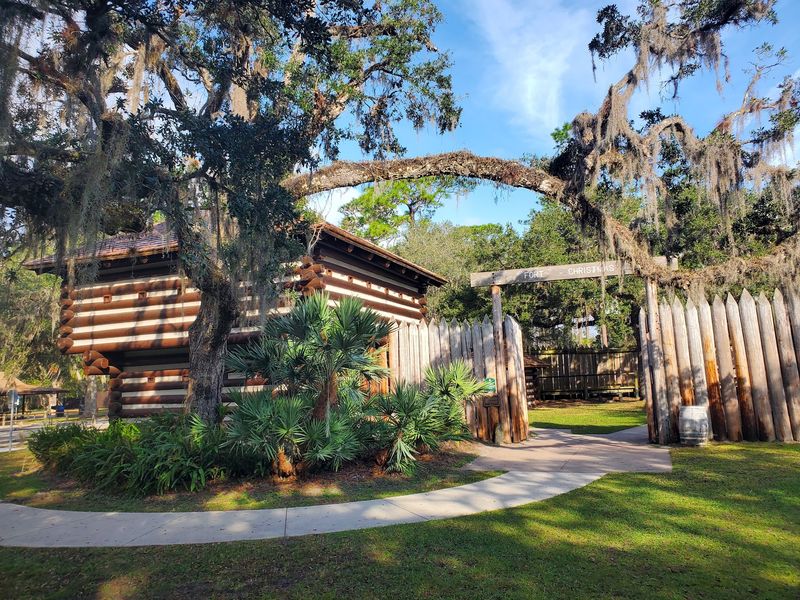
Picture a cold, muddy December in 1837. About 2,000 soldiers and volunteers marched into this patch of Florida wilderness during the Second Seminole War.
They started building a fort on December 25, so they named it Fort Christmas.
The name stuck, and so did the town that grew up later. Yes, the little community of Christmas, Florida, really does trace its name back to that holiday construction job.
The original fort did not last long, since the army used it for only a few months as a supply depot before moving on.
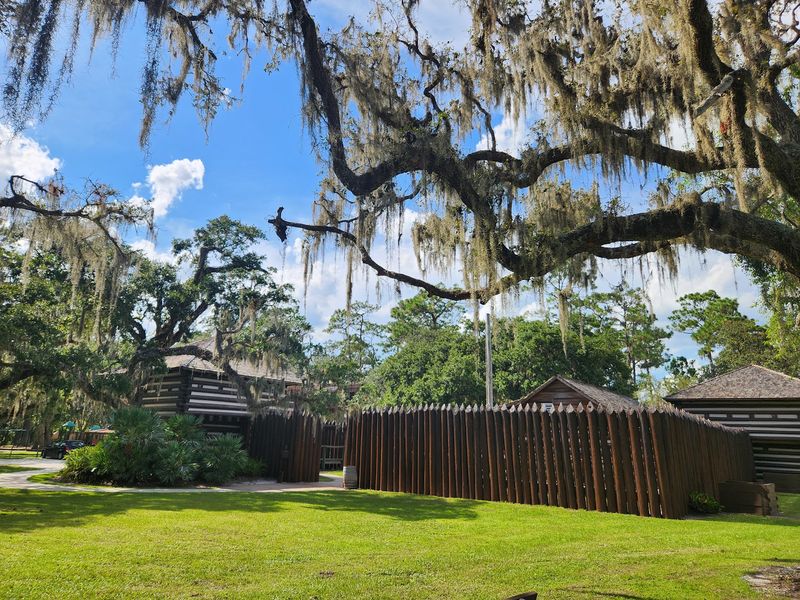
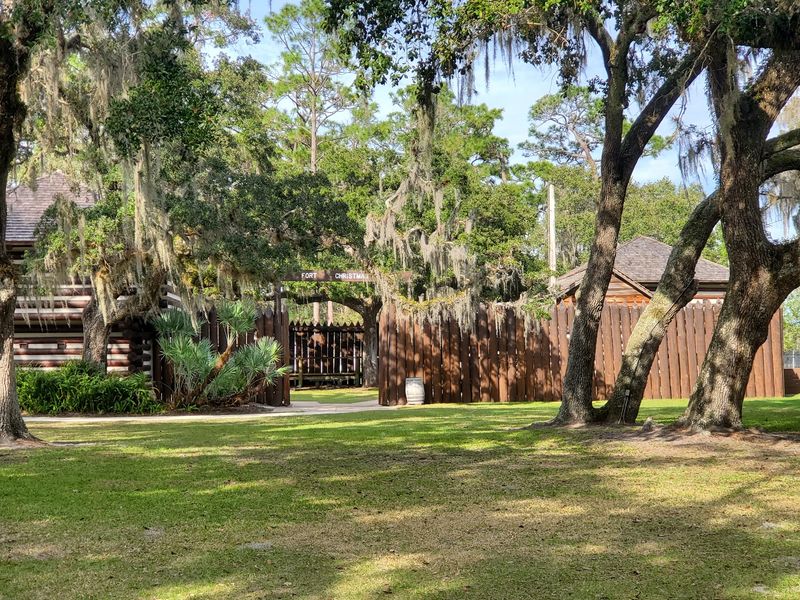
The fort you see today is a full-size replica, built in 1977 close to the original site. Tall pine logs with sharp points form the walls, and two square blockhouses guard opposite corners.
Walk through the gate and you can almost hear boots crunching on the sand.
Here is a fun bonus. The town post office gets flooded every holiday season with letters from people who want a Christmas postmark on their cards.
So when you visit, you are standing near the birthplace of one of the most cheerful town names in America. Not bad for a place built by tired soldiers far from home.
Cool Secrets Inside The Blockhouses
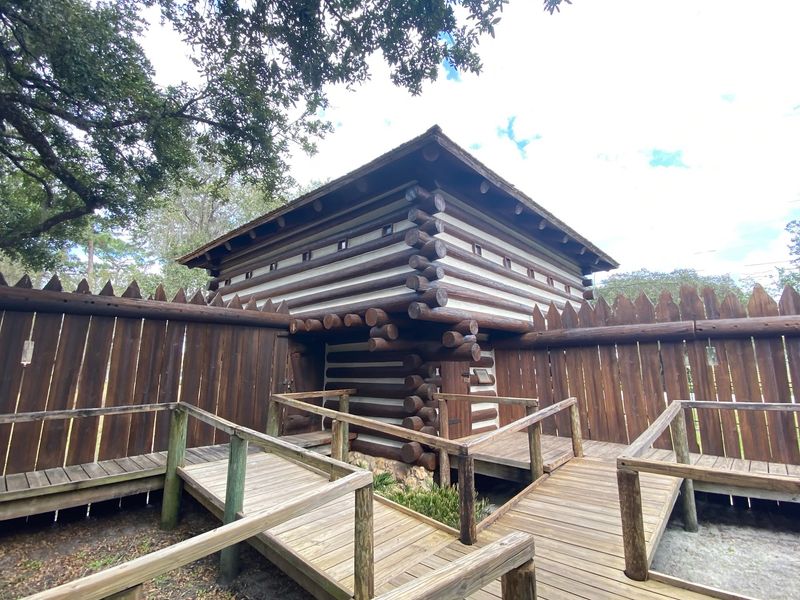
From the outside, the fort looks pretty plain. Then you step into a blockhouse, feel a rush of air conditioning, and suddenly the whole place makes sense.
On a sticky Florida afternoon, that cool air feels like a gift.
Inside, the blockhouses work as a small museum spread across several rooms. You will find displays about the Second Seminole War, life as a soldier in the 1830s, and the Seminole people who fought to keep their homeland.
Maps, weapons, uniforms, and everyday objects help you picture the long, hard months soldiers spent here.
Take your time reading the signs. Many visitors say the fort seems simple until they get inside, and then they lose track of time.
The exhibits explain why the war happened and how it changed Florida forever.
Some guests wish there was even more about Native American history, so if that topic interests you, ask staff for extra details. They are usually happy to chat.
A smart plan is to start your visit at the fort while you still have lots of energy, then stroll out to the homes. You will understand everything else better once you know the fort’s story.
Cracker Houses That Feel Lived In
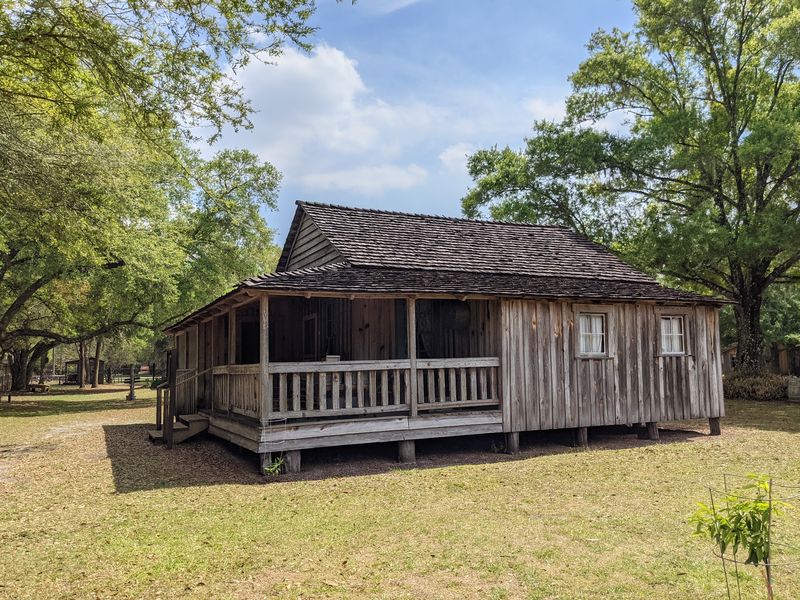
Ever walked into a stranger’s house and felt like they just stepped out for a minute? That is the eerie, wonderful feeling inside the pioneer homes here.
Beds are made, quilts are folded, and old stoves wait for a fire that never comes.
Many of these wooden houses were moved to the park from around the area, and some are original while others are careful replicas. They show the Florida cracker style, with raised floors, tin roofs, and wide porches.
Those clever details helped families stay cooler before anyone had electricity.
Peek at the ice boxes, iron sinks, and hand-crocheted afghans. Look at how small some rooms are, and imagine a big family squeezed inside during a summer thunderstorm.
You might also smell the dry, woody scent of old pine boards warming in the sun.
Most homes are open to walk through, which is rare for a historic site. A few have stairs, but they are short and easy.
Move slowly, read the signs in each building, and let your imagination fill in the voices. Kids especially love spotting gadgets that look nothing like the ones in their own kitchens.
Three Eras In One Shady Walk
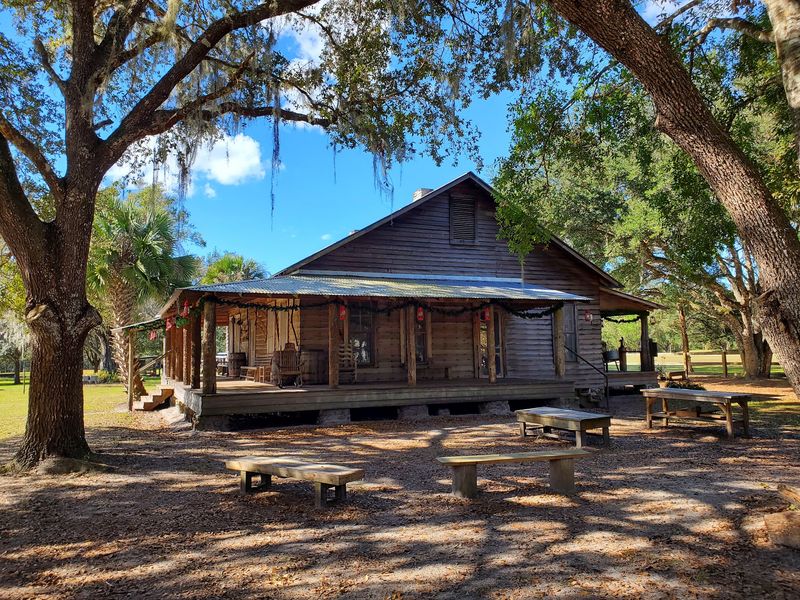
Here is something many first-timers miss. The park is not stuck in just one year.
It actually lets you hop between three different chapters of Florida life.
The fort represents 1837 and the Seminole War. The homestead buildings cover roughly 1890 to the 1920s, when settlers claimed land and tried to make a living from cattle, citrus, and stubborn sandy soil.
Other buildings show the early and middle 1900s, when life slowly got a little easier.
A handy tip from regular visitors is that the newer buildings sit closer to the front of the park, while the older ones are tucked toward the back. So as you walk deeper under the trees, you are basically traveling backward in time.
That is a pretty neat trick for a free afternoon.
Wear comfy shoes, because there is a fair amount of walking between buildings. Bring a water bottle too, since Florida heat can sneak up on you fast.
Most people spend about an hour and a half here, but history fans who read every sign can easily stay three hours or more. Pace yourself and enjoy the stroll.
School Bells And Dusty Readers
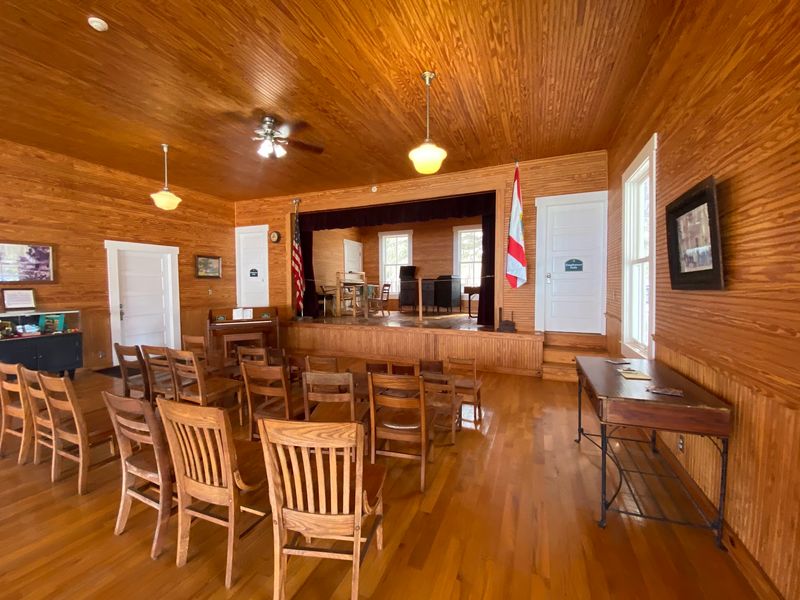
Ring, ring. Okay, the bell might not actually ring, but the old schoolhouse still sends a little shiver of nostalgia through grown-ups who wander inside.
Rows of wooden desks face a chalkboard, and shelves hold well-worn books.
Some visitors get a real surprise here. They spot schoolbooks they used themselves as kids and end up laughing and flipping through pages for ages.
Book lovers often say they want to come back just to explore those shelves again.
For younger visitors, the room is a funny reality check. No tablets, no air conditioning, and probably one teacher for many grades at once.
Ask your kids how they would feel walking to school down a sandy road and sitting on a hard bench all day.
Nearby, other community buildings help tell the story of how the town worked together. The site has also been working on a post office exhibit, which is fitting for a town famous for holiday postmarks.
Check with staff about what is open on your visit, since exhibits can change. Snap a picture at the desks, then imagine your great-great-grandparents learning their letters in a room just like this.
Old Tools And The Sweet Sugar Mill
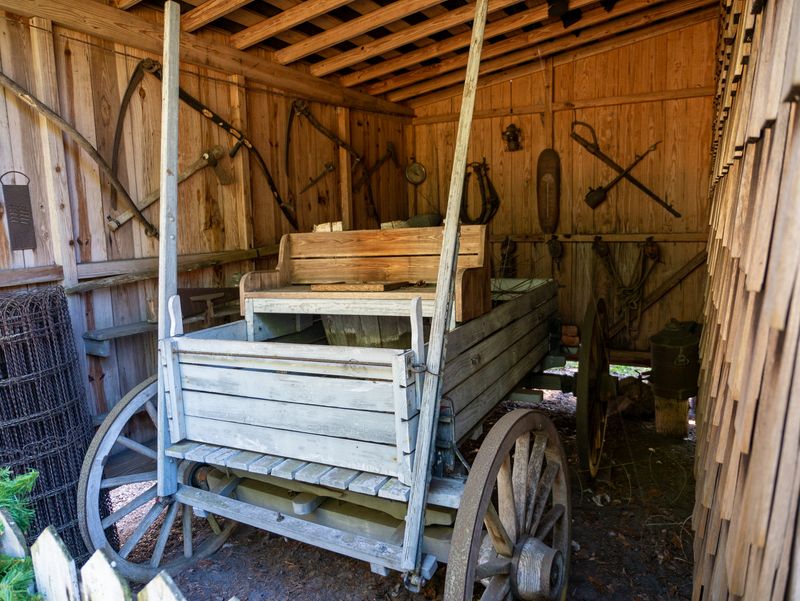
Laundry used to be a full day of hard work. One of the coolest displays at the park shows just how much, with washboards, tubs, and gadgets that make your washing machine look like magic.
Scattered around the grounds you will also find vintage wooden farm equipment and a cane sugar mill. Pioneer families grew sugarcane, crushed it, and boiled the juice down into syrup.
It was sticky, smoky, sweaty work, but that syrup was a real treat on biscuits.
Stand beside the mill and picture a mule walking in slow circles to turn the crushing rollers. Then look at the big iron kettle and imagine the sweet steam rising into the cool winter air.
These machines tell a quiet story about how clever and tough early Floridians had to be.
This is a great spot for a family guessing game. Point at an odd tool and have everyone guess what it did before reading the sign.
Grandparents often win, since they remember similar items from their own childhoods. It is a fun, easy way to swap stories and bring history right into the conversation.
Cracker Christmas Crowds And Special Events
If you think the park feels sleepy most days, come back in early December and watch it wake up. The famous Cracker Christmas event fills the grounds with crafts, music, food vendors, and people dressed in pioneer clothes.
It is one of the biggest days of the year for this tiny town. Families stroll past booths, kids watch old-time skills being shown, and the smell of kettle corn drifts between the cabins.
The event has become a beloved local tradition, so expect big crowds and plan to arrive early for parking.
Other special programs pop up throughout the year too. Dates and details change, so check the Orange County parks website or call the park at 407-254-9310 before you go.
That quick check can save you a long drive for nothing.
Prefer peace and quiet? Then skip the festival and visit on a regular weekday.
Many guests say they had whole buildings to themselves. Either way, you win.
One visit gives you a lively holiday party with a pioneer twist, and the other gives you a calm, thoughtful walk through history. Why not try both?
Playground, Pavilions, And Plenty Of Picnic Space
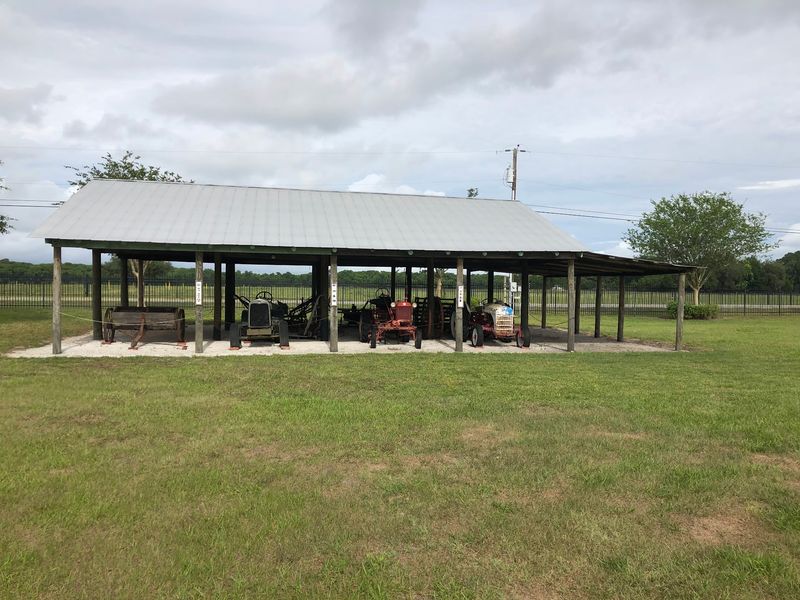
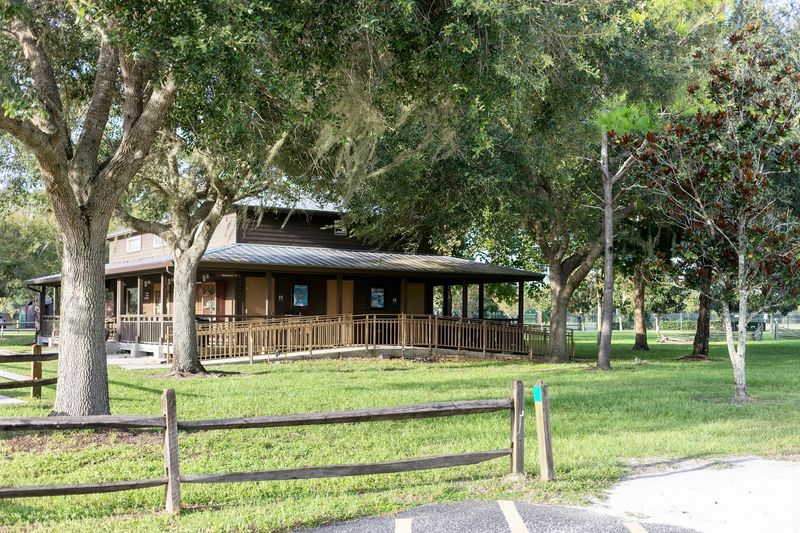
History is fun, but sometimes kids just need to run. Lucky for parents, Fort Christmas is also a full community park with a large playground tucked under shady trees.
Big covered pavilions and lots of picnic tables make it a favorite spot for birthday parties and family get-togethers. There is also a baseball field, plus basketball and tennis courts.
So one person can study pioneer kitchens while another shoots hoops nearby.
Here is the catch you need to know. There is no food stand on site, and the nearest restaurants are a short drive away.
Pack a cooler with sandwiches, fruit, and plenty of cold drinks. Eating lunch under a pavilion while breezes rustle the oaks is honestly half the charm.
The restrooms get lots of praise for being clean, which is always a relief on a family trip. Bring sunscreen and bug spray, especially in summer, because Florida mosquitoes love picnics too.
A good plan is to explore the historic buildings in the cooler morning, then settle in for lunch and playtime. By afternoon, everyone will be happy, full, and ready for a nap on the drive home.
Hawks, Goats, And A Quiet Lake
A photographer once came for the history and left buzzing about a hawk. A large one circled over the small lake on the property, and that unexpected moment became the highlight of the day.
The park sits in rural east Orange County, far from busy tourist strips. Pastures, pine trees, and wide skies surround it, giving the place a calm, country feeling.
Listen and you might hear birds calling, leaves rustling, and the occasional rooster crowing.
Some visitors have also spotted chickens, goats, and rabbits on the grounds, adding to the farm atmosphere. Animals may not always be present, so do not promise the kids a petting zoo.
Treat any sighting as a happy bonus.
One honest note is that the park sits right beside the road, so traffic noise can drift in near the front. Walk toward the back buildings for the quietest corners.
Bring binoculars or a zoom lens if you enjoy wildlife. Early mornings, right after the park opens, are usually best for bird activity and soft golden light.
Take a moment by the water, breathe in the green, earthy air, and enjoy a slower side of Florida.
Free Admission And Smart Visiting Tips
Free. That one word makes this park a total steal.
There is no entry fee for the grounds or the historic buildings, which feels almost unbelievable for such a big, well-kept site.
The park is about two miles north of State Road 50, at 1300 N Fort Christmas Rd in Christmas. Park grounds are listed as open 8 AM to 8 PM daily.
The museum and historic buildings keep shorter hours and have opened around 9 AM, and off-season schedules can shrink further. Always check the Orange County parks website or call ahead.
Parking is easy, with both paved and unpaved spaces. Most paths are flat and walkable, and many buildings can be entered at ground level.
A few homes have short staircases, so some upper rooms may be harder for wheelchairs. Ask staff about the best routes for your needs.
Plan for at least ninety minutes, or three hours if you love reading every sign. Visit on a cool weekday morning for fewer crowds, and pack lunch since there is no food stand.
A small gift shop is available for souvenirs. Most of all, slow down and enjoy every creaky floorboard.