
12 Hidden Gems In Florida You’ll Wish You Knew About Sooner
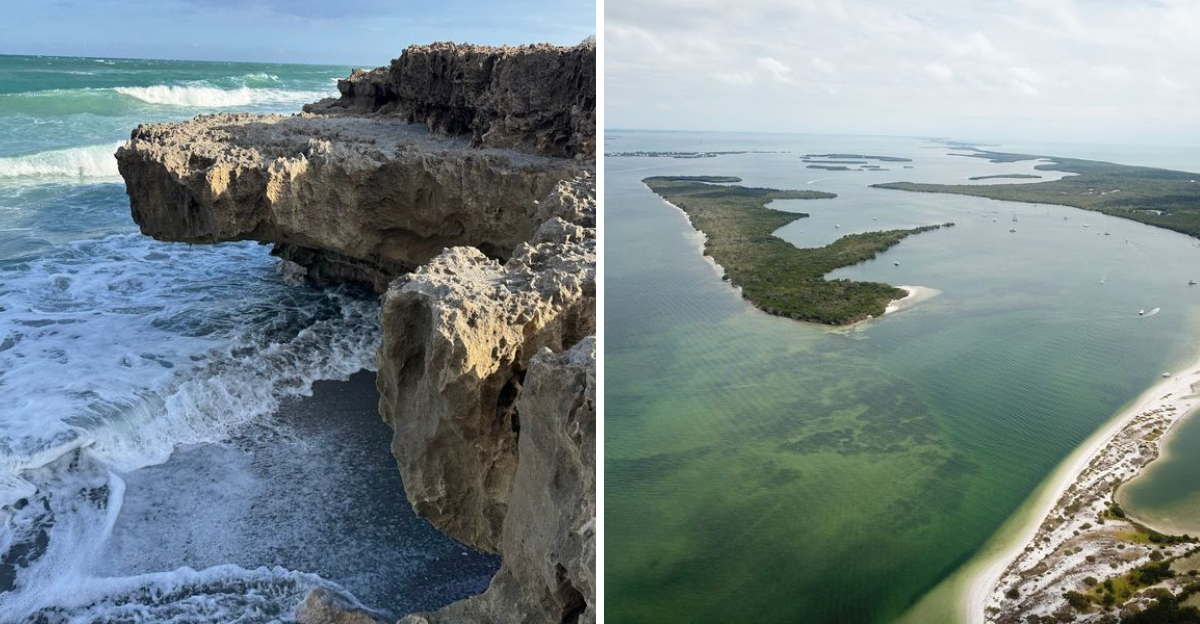
Florida has a reputation.
And it is not completely wrong.
Crowds. Noise.
The same places showing up over and over again. For a long time, that is all I saw too.
Then I started turning off the main roads.
And that is where everything changed.
Water so clear it feels unreal. Islands so quiet your footprints actually matter.
Gardens that look like they were never meant to be found.
Places that do not try to get your attention.
They just wait.
I have watched sunlight turn entire landscapes into something softer, almost unreal. Floated through spaces that felt hidden on purpose.
Walked through forests that made me forget where I was.
That is when it clicked.
Florida is not just what people show you.
It is what you find when you stop following them.
And once you do, the whole state starts to feel completely different.
1. Cedar Lakes Woods and Gardens, Williston
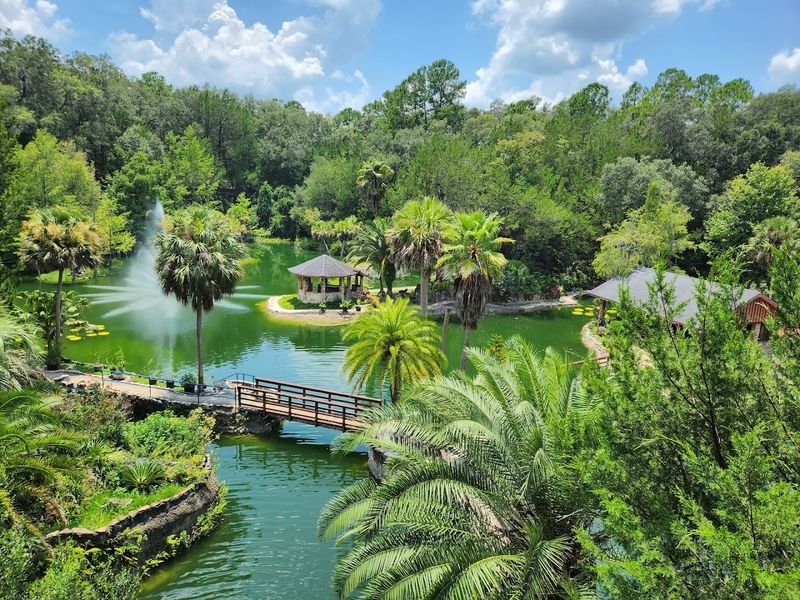
Wandering through 4990 NE 180th Ave in Williston feels like stepping into a landscape painting that someone forgot to finish.
Cedar Lakes Woods and Gardens sprawls across what used to be a private estate, now open to visitors who crave something quieter than the usual Florida attractions.
The property features multiple themed gardens connected by winding trails, each one offering a different mood and collection of plants that thrive in this part of central Florida.
I remember pausing beside one of the lakes, watching dragonflies skim the surface while turtles sunbathed on half-submerged logs.
The gardens change with the seasons, so spring brings different blooms than fall, and each visit reveals new corners I somehow missed before.
Benches appear at perfect intervals, inviting you to sit and let the birdsong replace whatever stress followed you in.
The whole place maintains a peaceful atmosphere that makes loud conversations feel out of place.
Every time I leave, I find myself mentally scheduling the next visit before I even reach the parking lot.
2. Devil’s Den Prehistoric Spring, Williston
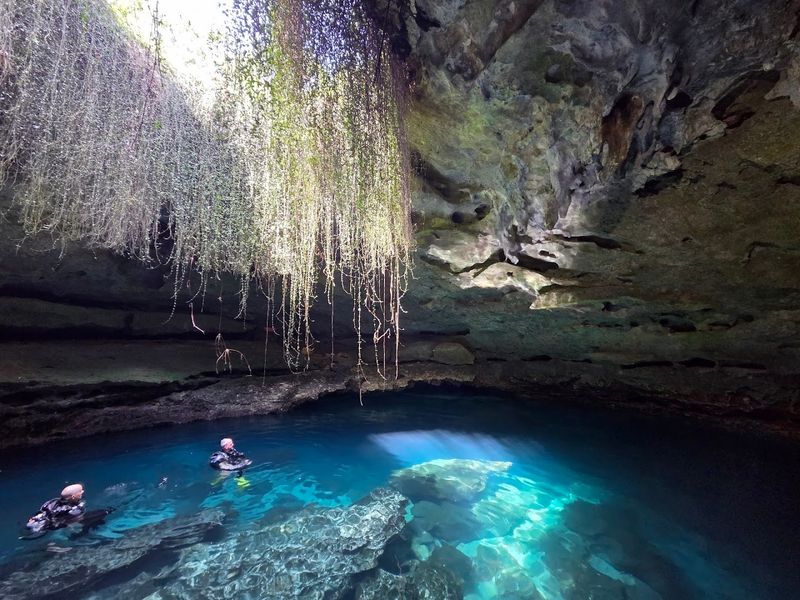
Just down the road at 5390 NE 180th Ave, a limestone cave hides a spring that prehistoric animals once visited for water.
Devil’s Den Prehistoric Spring earned its name from the steam that rises through the opening on cool mornings, creating an effect that spooked early settlers.
The spring maintains a constant 72-degree temperature year-round, making it comfortable for swimming even when winter chills the air outside.
Descending the wooden stairs into the cavern feels like entering another world, especially when sunlight streams through the opening and illuminates the impossibly clear water below.
Snorkeling here means gliding past ancient rock formations while small fish dart between the shadows and light.
Scuba divers love the spot too, since the spring offers a safe environment to practice skills or just enjoy the unique underwater landscape.
I once floated on my back, staring up at the sky framed by the cave opening, feeling completely disconnected from the modern world.
The whole experience reminds you that Florida’s best features often hide beneath the surface.
3. Bok Tower Gardens, Lake Wales
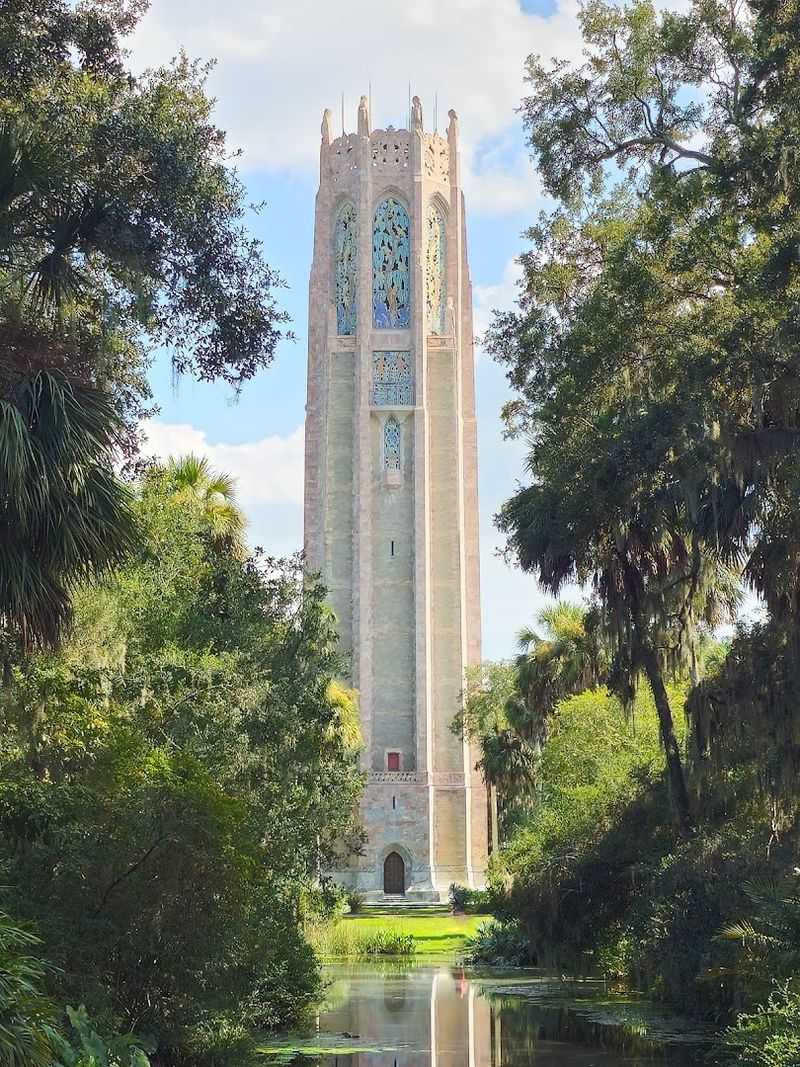
Driving up to 1151 Tower Blvd in Lake Wales, you notice the landscape rising in a state famous for being flat.
Bok Tower Gardens sits atop Iron Mountain, one of Florida’s highest points, where a 205-foot neo-Gothic and art deco tower dominates the skyline.
The carillon inside plays daily concerts, sending music across the gardens in a way that feels both grand and intimate at the same time.
Edward Bok created this sanctuary in the 1920s as a thank-you to his adopted country, designing it as a place for quiet reflection rather than entertainment.
Walking the paths between azaleas, camellias, and massive oaks, I always find myself slowing down without meaning to.
The reflecting pool near the tower creates mirror images that change throughout the day as light shifts and clouds drift past.
Birds treat the gardens like their personal paradise, so bring binoculars if you enjoy watching wildlife in between admiring the landscaping.
Something about this place makes hurrying feel impossible, like the gardens themselves insist you take your time.
4. Dry Tortugas National Park, Fort Jefferson
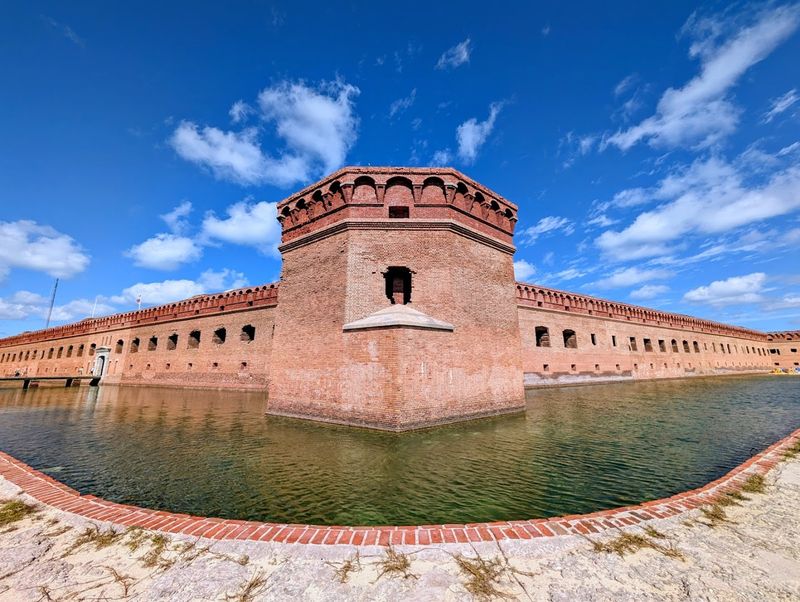
Reaching 40001 State Road 9336 in Homestead marks just the beginning, since you still need a seaplane or ferry to actually arrive at the park.
Dry Tortugas National Park floats seventy miles west of Key West, a collection of islands where Fort Jefferson rises from the sand like a mirage.
The fort itself represents one of the largest masonry structures in the Western Hemisphere, built with over sixteen million bricks that never saw completion.
Snorkeling the moat and surrounding waters reveals coral formations, tropical fish, and the occasional sea turtle gliding past like it owns the place.
I spent one afternoon exploring the fort’s dark corridors and climbing to the upper levels, where cannons still point toward horizons that never brought the expected attacks.
The isolation creates a silence you rarely find anymore, broken only by waves and the calls of seabirds that nest on nearby islands.
Camping overnight means watching stars appear in numbers that seem impossible after living near city lights.
Getting there takes effort, but that’s exactly why it feels like discovering your own private corner of paradise.
5. Falling Waters State Park, Chipley
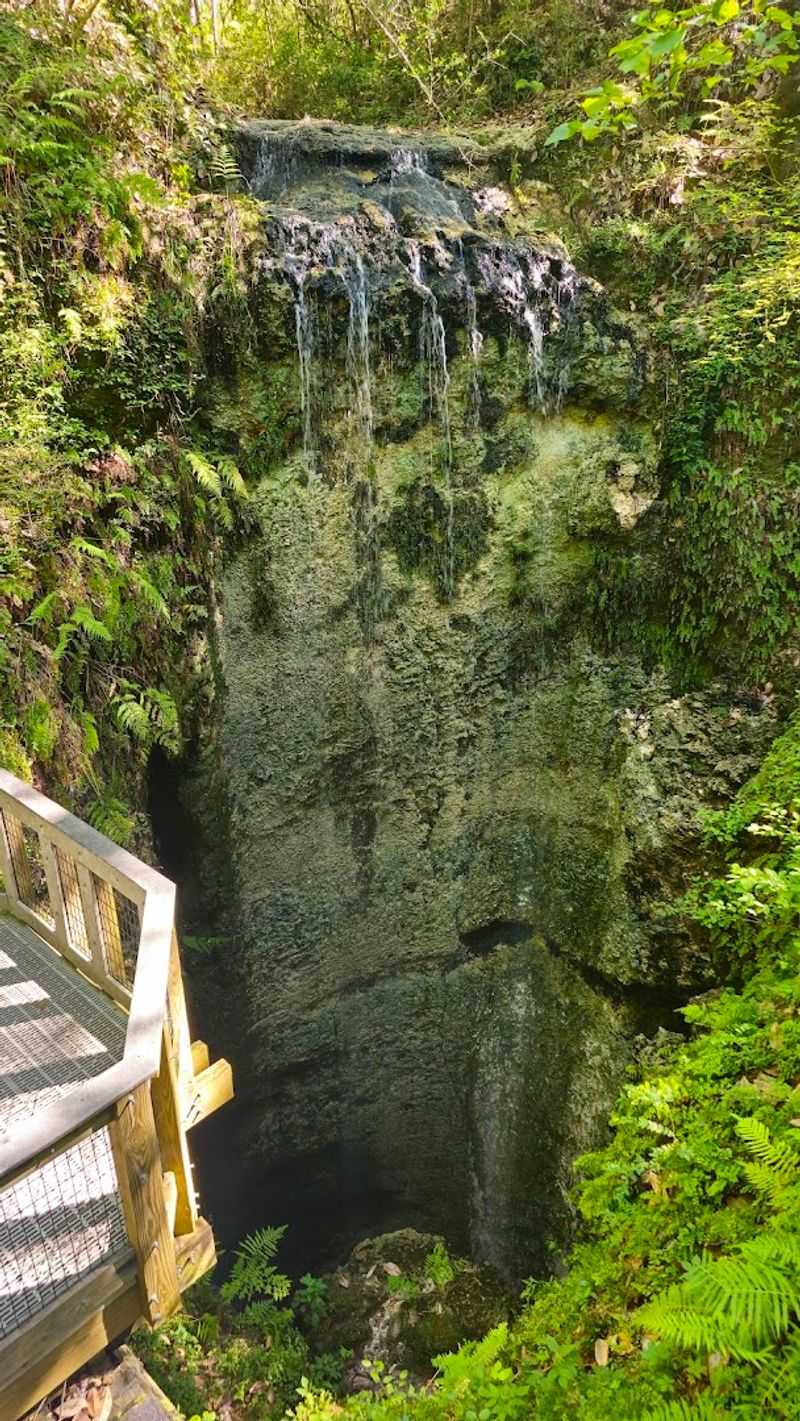
At 1130 State Park Rd in Chipley, Florida claims its only waterfall, and yes, I know that sounds impossible in such a flat state.
Falling Waters State Park features a 73-foot drop where a creek plunges into a cylindrical sinkhole that nobody has ever fully explored.
The water disappears into the earth, and despite various attempts to trace where it goes, the underground system remains mysterious.
Standing on the observation platform, I watched the water tumble down while butterflies fluttered past, completely indifferent to the geological oddity beneath them.
The park also offers hiking trails through longleaf pine and hardwood forests, where the terrain actually rolls in gentle hills.
During summer, the flow increases after afternoon thunderstorms, making the waterfall more impressive than during drier months.
A small lake provides swimming and fishing opportunities for visitors who want to extend their stay beyond waterfall watching.
The whole park occupies only 155 acres, but it packs enough uniqueness to make the drive to the Panhandle worthwhile.
I keep returning because seeing water fall into the earth never stops feeling slightly magical.
6. Blowing Rocks Preserve, Hobe Sound
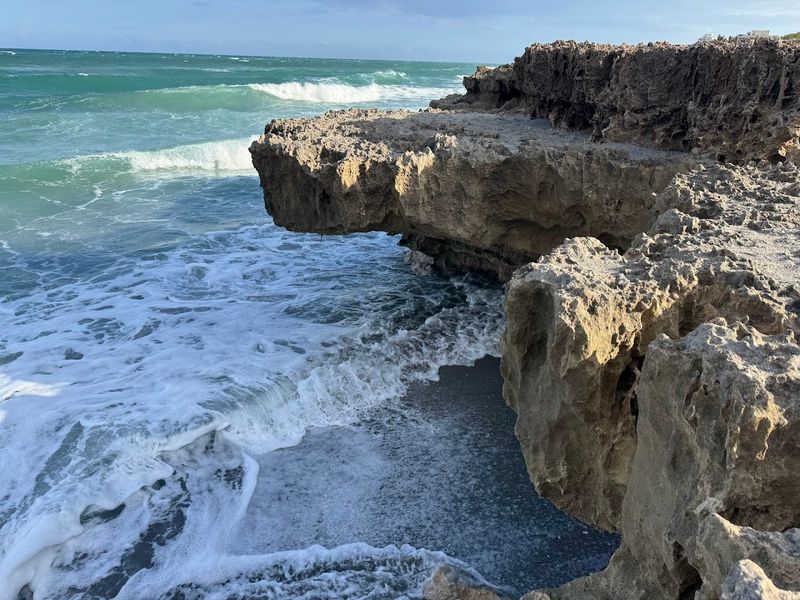
Pulling up to 574 S Beach Rd in Hobe Sound, you might wonder why anyone named a preserve after rocks that blow.
Blowing Rocks Preserve protects the largest Anastasia limestone outcropping on Florida’s east coast, a formation that creates natural geysers when waves hit just right.
During high tide and rough seas, water shoots through holes in the rock, sometimes reaching heights of fifty feet or more.
I timed a visit during a storm’s aftermath once, and the explosions of seawater left me soaked despite standing what I thought was a safe distance away.
The preserve also includes coastal dune habitat, mangrove wetlands, and a maritime hammock that provide homes for sea turtles, manatees, and countless bird species.
Walking the trails between the different ecosystems, you notice how each one supports different wildlife and plants adapted to specific conditions.
The beach here looks nothing like the typical Florida postcard, with rocks replacing the usual endless sand.
Every visit depends on timing and weather, since calm days produce gentle waves while storms create the dramatic shows that gave this place its name.
7. Cayo Costa State Park, Boca Grande
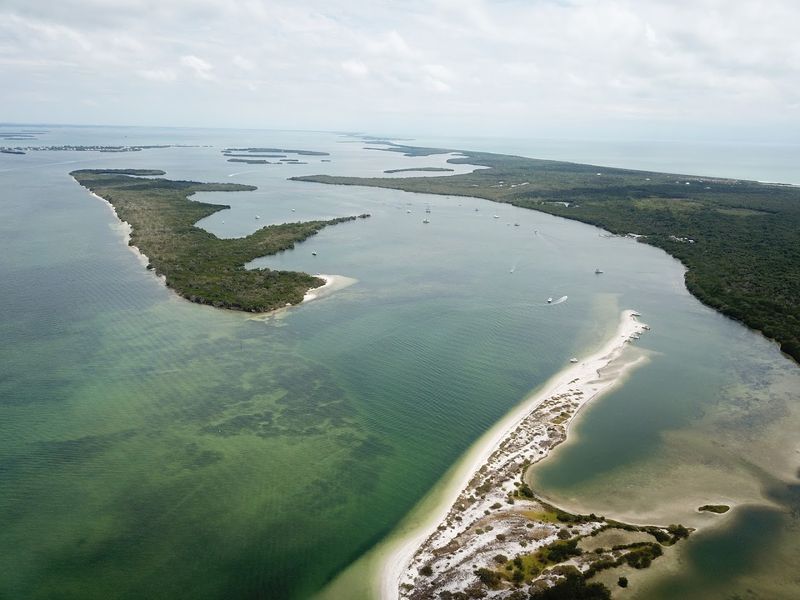
The address 880 Belcher Rd in Boca Grande serves as a departure point, since Cayo Costa State Park sits on an island accessible only by boat.
This barrier island stretches for nine miles along the Gulf Coast, offering beaches that rarely see footprints and forests that feel genuinely wild.
No bridges connect Cayo Costa to the mainland, which means no cars, no development, and no crowds even during peak season.
I remember stepping off the ferry and immediately noticing the silence, broken only by waves and the occasional osprey calling from overhead.
The island supports pine forests, oak palm hammocks, mangrove swamps, and grasslands, each habitat supporting different wildlife throughout the year.
Shelling here rivals any spot in Florida, with intact specimens washing up in numbers that make collectors giddy.
Primitive camping cabins offer overnight stays for visitors who want to experience sunset and sunrise without other tourists in the background.
Swimming, kayaking, and fishing fill the days, but honestly, just sitting on the beach watching dolphins pass by counts as a perfect afternoon.
Leaving always feels harder than arriving.
8. Ichetucknee Springs State Park, Fort White
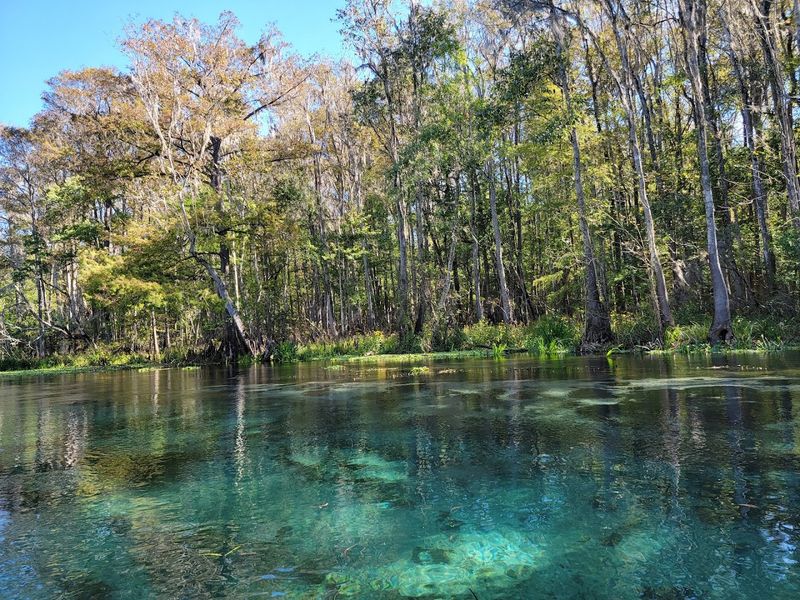
Arriving at 12087 SW US Hwy 27 in Fort White means preparing for one of Florida’s most relaxing river experiences.
Ichetucknee Springs State Park protects a river fed by multiple springs that pump out 233 million gallons of crystal-clear water daily.
Tubing the river has become a summer tradition for families who appreciate the gentle current and the cool 72-degree water temperature.
The three-hour float takes you past cypress trees, limestone banks, and aquatic plants swaying in the current like underwater gardens.
I once counted eleven different turtle species sunbathing on logs during a single trip, though I might have counted some of them twice.
The springs themselves offer excellent snorkeling, with water so clear you can see every detail of the sandy bottom and the fish investigating your presence.
The park limits daily visitors to protect the ecosystem, so arriving early, especially on weekends, prevents disappointment.
Renting tubes at the park or bringing your own both work, though the rental option saves you from figuring out transportation between launch and take-out points.
Few things beat floating lazily downstream without a single worry beyond whether you remembered enough sunscreen.
9. Rainbow Springs State Park, Dunnellon
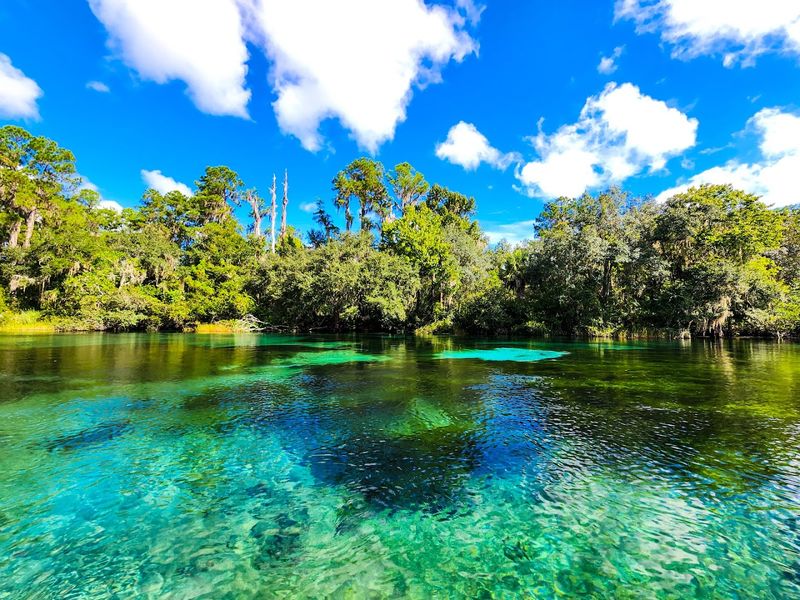
The springs at 19158 SW 81st Pl Rd in Dunnellon produce water in shades of blue and green that photographs never quite capture accurately.
Rainbow Springs State Park features one of Florida’s largest springs, discharging over 400 million gallons per day that form the headwaters of the Rainbow River.
The water maintains such clarity that you can spot individual fish from the riverbank, and the aquatic plants create gardens that sway with the current.
I spent one morning kayaking the river, gliding over springs boiling up from the limestone bottom while turtles watched from strategic sunbathing spots.
The park also includes gardens and waterfalls left over from a 1930s attraction, now maintained as historic features that add unexpected beauty to the natural landscape.
Swimming areas let you float in the spring water, though the 72-degree temperature feels shocking at first on hot summer days.
Hiking trails wind through hardwood forests where wildlife sightings happen often enough to make carrying a camera worthwhile.
The combination of springs, river, gardens, and trails means you could easily spend a full day here without running out of things to explore.
10. Weeki Wachee Springs State Park, Spring Hill
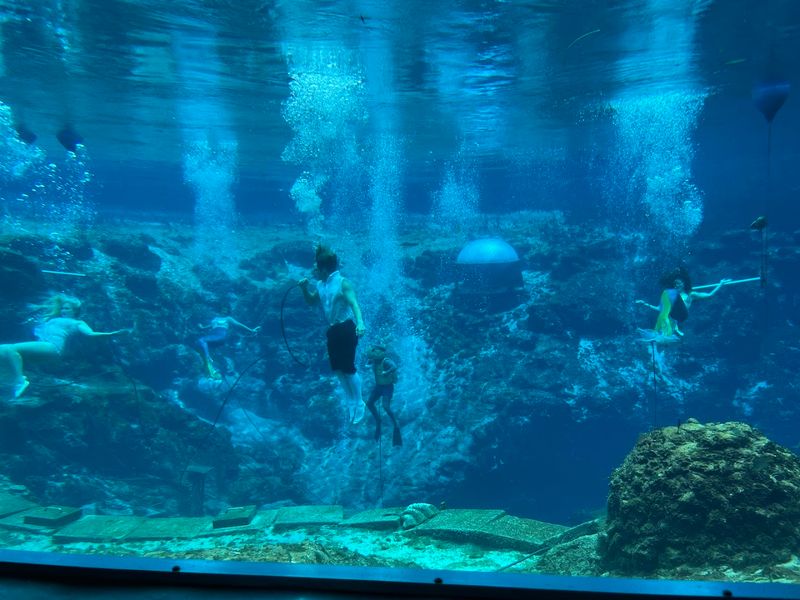
Only in Florida would you find real mermaids at a state park, and 6131 Commercial Way in Spring Hill delivers exactly that.
Weeki Wachee Springs State Park became famous for underwater mermaid shows that started in 1947 and somehow still feel magical today.
The mermaids perform in a natural spring, breathing from air hoses while executing choreographed routines that look effortless but require serious skill and lung capacity.
Watching from the underwater theater, I found myself forgetting about the mechanics and just enjoying the spectacle of women in tails gliding through impossibly clear water.
Beyond the shows, the park offers kayaking and paddleboarding on the Weeki Wachee River, where manatees sometimes make surprise appearances during cooler months.
Buccaneer Bay, the park’s water attraction, provides slides and swimming areas that appeal to families with kids who need more action than just watching performances.
The spring itself pumps out 117 million gallons daily, creating a river that maintains perfect clarity year-round.
The whole concept sounds touristy, and it is, but the shows preserve a unique piece of Old Florida that deserves appreciation.
11. Washington Oaks Gardens State Park, Palm Coast
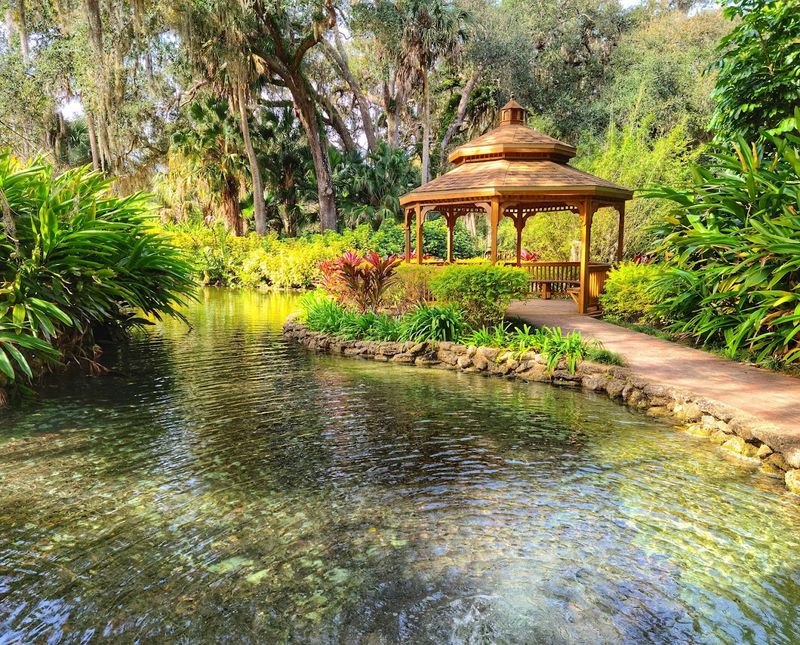
Pulling into 6400 N Oceanshore Blvd in Palm Coast, you immediately notice this park offers two completely different experiences.
Washington Oaks Gardens State Park combines formal gardens with a beach made entirely of coquina rock formations that create tide pools and unusual coastal scenery.
The gardens feature azaleas, camellias, and bird of paradise plants arranged in designs that reflect the property’s history as a private estate.
Walking the paths between blooming sections, I always spot something new, whether it’s a particular flower at peak color or a bird I hadn’t noticed before.
The beach side presents a stark contrast, with ancient coquina rocks creating a lunar landscape where waves crash and recede through countless channels and pools.
During low tide, exploring the formations reveals small fish, crabs, and other marine life trapped temporarily in the pools.
The park sits along the Matanzas River too, offering a third ecosystem with mangroves and salt marsh that attract different wildlife than either the gardens or beach.
I’ve never understood why this park stays relatively quiet even during tourist season, but I’m not complaining about having the place mostly to myself.
12. Koreshan State Park, Estero
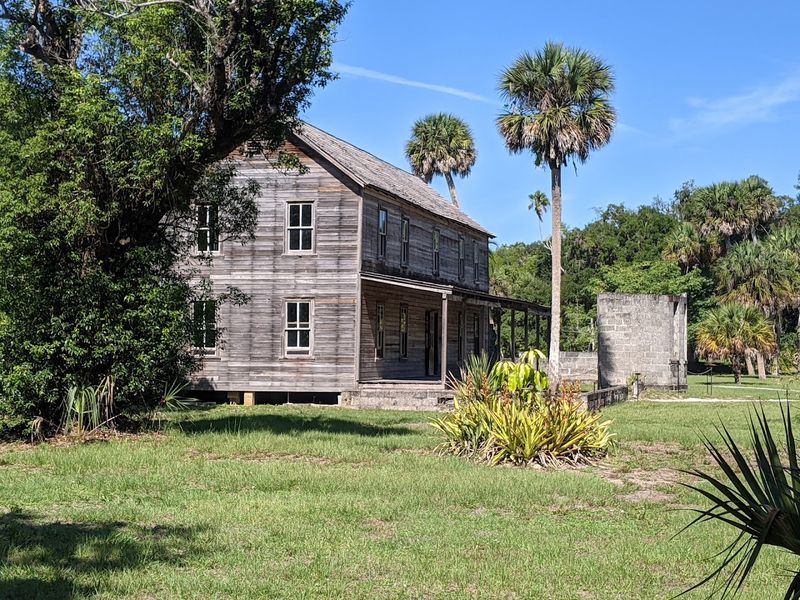
History took a strange turn at 3800 Corkscrew Rd in Estero, where a utopian community once believed the entire universe existed inside a hollow earth.
Koreshan State Park preserves the settlement founded by Cyrus Teed in the 1890s, including original buildings that housed followers of his unique cosmological theories.
The Koreshans practiced celibacy, shared everything communally, and conducted experiments trying to prove the earth was concave rather than convex.
Walking through the restored buildings, I found myself fascinated by how normal daily life must have been despite the extraordinary beliefs that brought these people together.
The park also features excellent kayaking on the Estero River, where mangrove tunnels create shaded passages and manatees occasionally surface beside your boat.
Camping here feels peaceful, with sites tucked among live oaks and tropical plants that the Koreshans themselves planted over a century ago.
Hiking trails wind through different habitats, from pine flatwoods to hardwood hammocks, each supporting wildlife that has reclaimed the land since the community dissolved.
The whole place serves as a reminder that Florida has always attracted people with big dreams and unusual ideas.