
12 Illinois Rockhounding Spots Where Agates And Cool Finds Wait
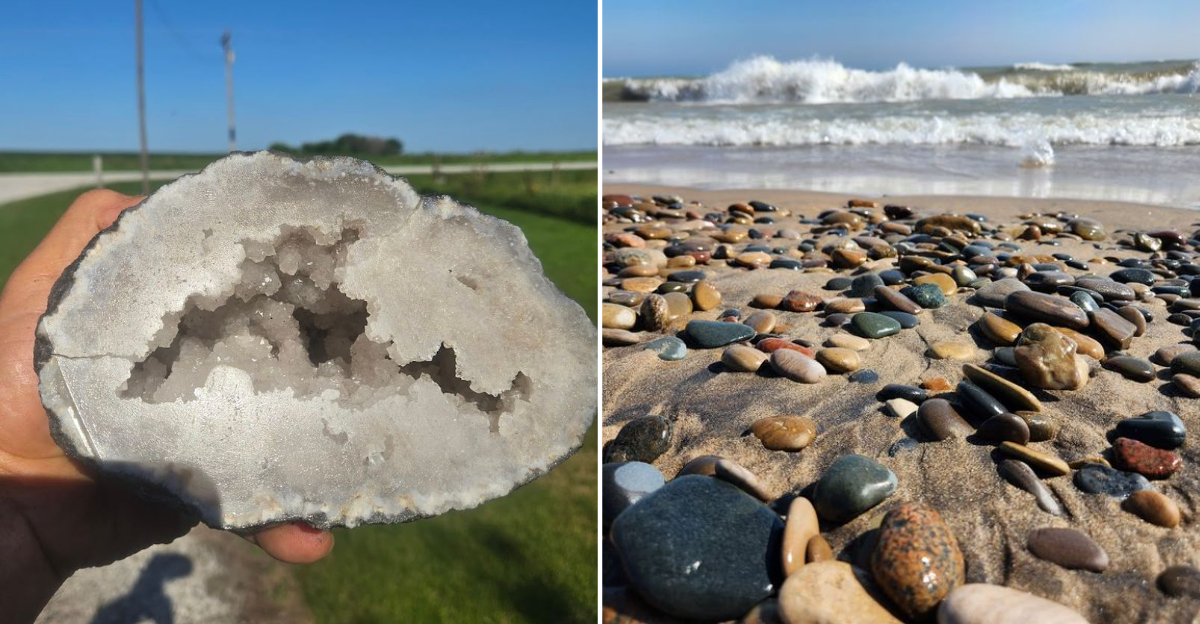
Illinois rockhounding is one of those things that sounds random until you try it. Then suddenly every creek bed, lakefront stretch, and old mining area starts looking a lot more interesting.
You might spot a banded agate, a glittering geode, or a sandstone wall that makes you stop mid-hike. The fun part is that every place on this list has its own personality.
Some are real collecting spots with permits or permission, and others are better for looking, photographing, and leaving everything right where it is.
So lace up your boots, check the rules before you go, and get ready for Illinois stops where ancient seas, glaciers, rivers, and crystal-filled pockets still leave little clues behind.
1. Mazonia-Braidwood State Fish And Wildlife Area, Braceville
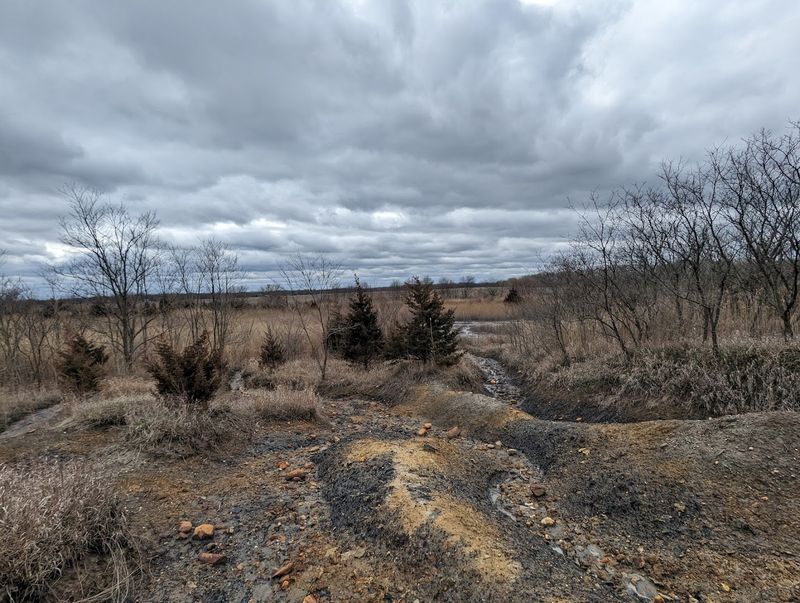
Few places in Illinois can match the fossil-hunting reputation of Mazonia-Braidwood State Fish and Wildlife Area near Braceville.
This site sits in Grundy County and is famous for something called Mazon Creek fossils, which are preserved in iron-rich concretions known as siderite nodules. Crack one open and you might find a perfectly preserved 300-million-year-old fern, insect, or fish.
The fossils here come from the Pennsylvanian period, making each find a genuine window into prehistoric life.
Collectors with a valid day permit may surface-search designated spoil areas during the approved season, but digging and commercial collecting are not allowed. The landscape is flat and marshy, which adds a unique atmosphere to your hunt.
Bring a rock hammer and chisel to split the nodules carefully. Arrive early, bring patience, and remember that surface nodules can be picked over quickly during busy collecting periods.
Permits and rules apply, so check with the Illinois Department of Natural Resources before your visit to avoid any surprises.
2. Vickers Geodes, Hamilton
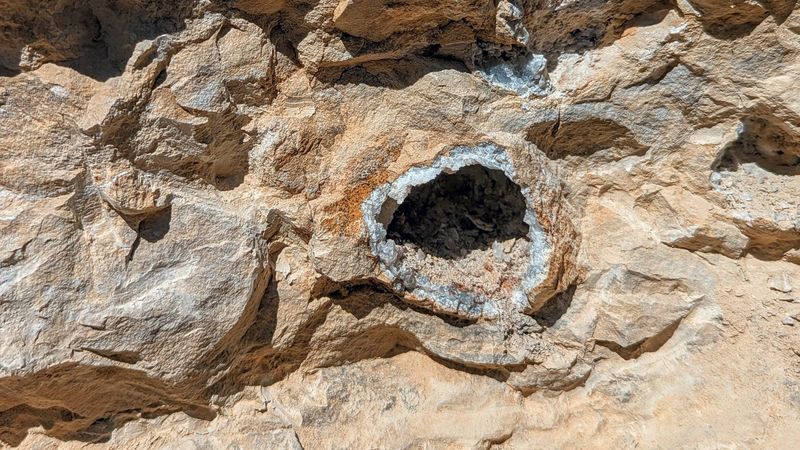
Right along the Mississippi River near Hamilton in Hancock County, Vickers Geodes is one of those spots that collectors talk about in hushed, excited tones.
Hamilton calls itself the Geode Capital of the World, and a visit here makes it easy to understand why. Hollow spheres lined with glittering quartz crystals, calcite, and occasionally barite wait just beneath the surface of the local clay beds.
Vickers is a Hamilton-area geode operation, but visitors should call ahead to confirm current access, fees, hours, and digging availability before making the trip. Kids absolutely love it because the reward is almost guaranteed, and cracking open your first geode never gets old no matter how many times you do it.
The geodes from this area can range from golf ball size to larger than a football. Bring sturdy gloves, a small spade, and a bucket for your finds.
The staff on site are knowledgeable and happy to point you toward the best digging areas of the day.
3. Adeline Jay Geo-Karis Illinois Beach State Park, Zion
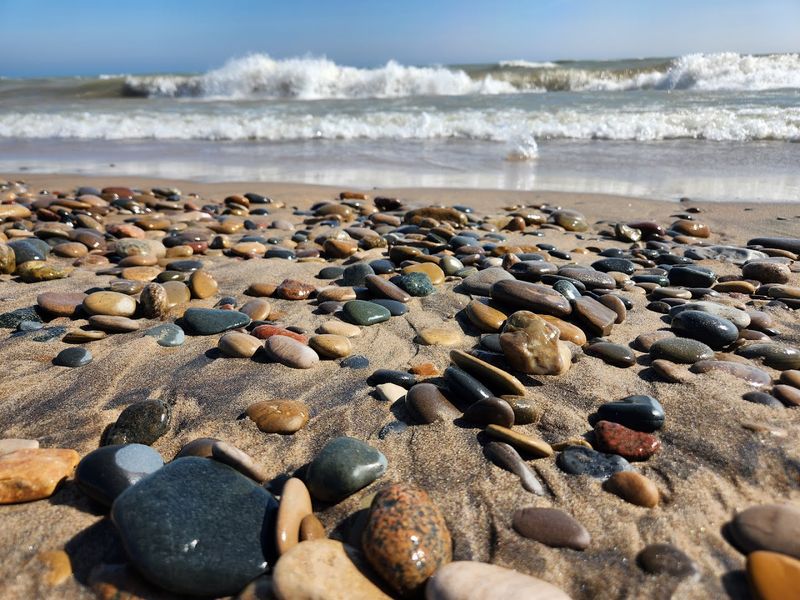
Standing on the shore of Lake Michigan at Adeline Jay Geo-Karis Illinois Beach State Park in Zion feels like standing at the edge of something vast and ancient.
This is Illinois’s only remaining natural beach on Lake Michigan, and it stretches for nearly seven miles of shoreline that rockhounds can explore freely. The waves constantly wash in new material from the lake bottom, making every visit a fresh opportunity.
Collectors come here searching for Lake Superior agates, which have traveled south through glacial action over thousands of years.
You might also notice a variety of smooth, colorful pebbles that make the shoreline interesting to study and photograph. The best hunting is after storms when wave action exposes new material along the waterline.
The park itself is beautiful year-round, with sand dunes, wetlands, and woodland trails to explore beyond the beach. Collecting is permitted for personal use in reasonable quantities.
Wear waterproof boots since the shoreline can be wet and the water is cold even in summer months.
4. Apple River Canyon State Park, Apple River
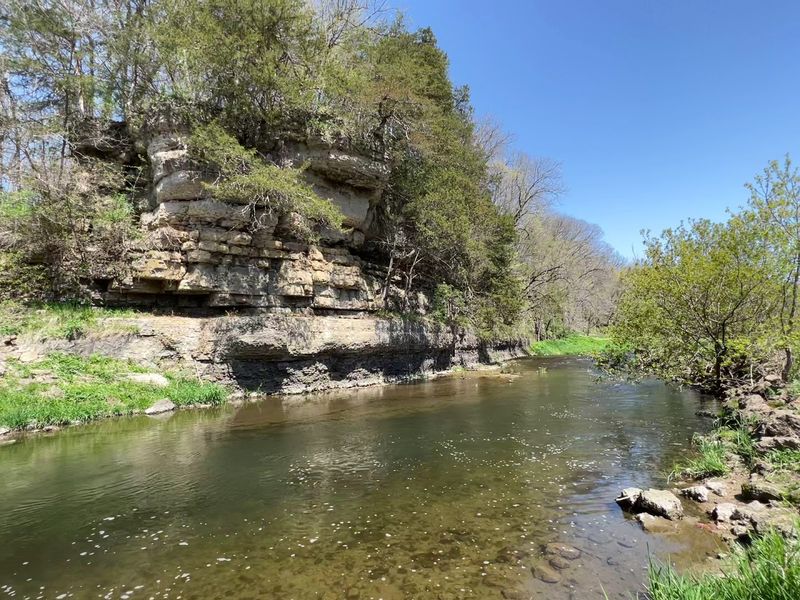
Up in the far northwestern corner of Illinois near the small town of Apple River, Apple River Canyon State Park offers a rockhounding experience wrapped inside one of the most scenic natural areas in the state.
The canyon was carved by the Apple River cutting through ancient dolomite and limestone bedrock, exposing layers of rock that date back hundreds of millions of years.
Rockhounds come here looking for fossils embedded in the limestone, including brachiopods, crinoids, and corals from ancient shallow seas.
The canyon walls themselves are worth studying closely, as the rock layers tell a fascinating geological story that stretches back to the Ordovician and Silurian periods. The setting is dramatically different from the flat farmland that covers most of Illinois.
Trails wind along the canyon rim and down to the river level, giving you multiple vantage points for spotting interesting rock formations and fossil-bearing material.
The park is uncrowded compared to many Illinois destinations, so you often feel like you have the whole canyon to yourself on a weekday morning.
5. Keokuk Geode Beds, Western Illinois
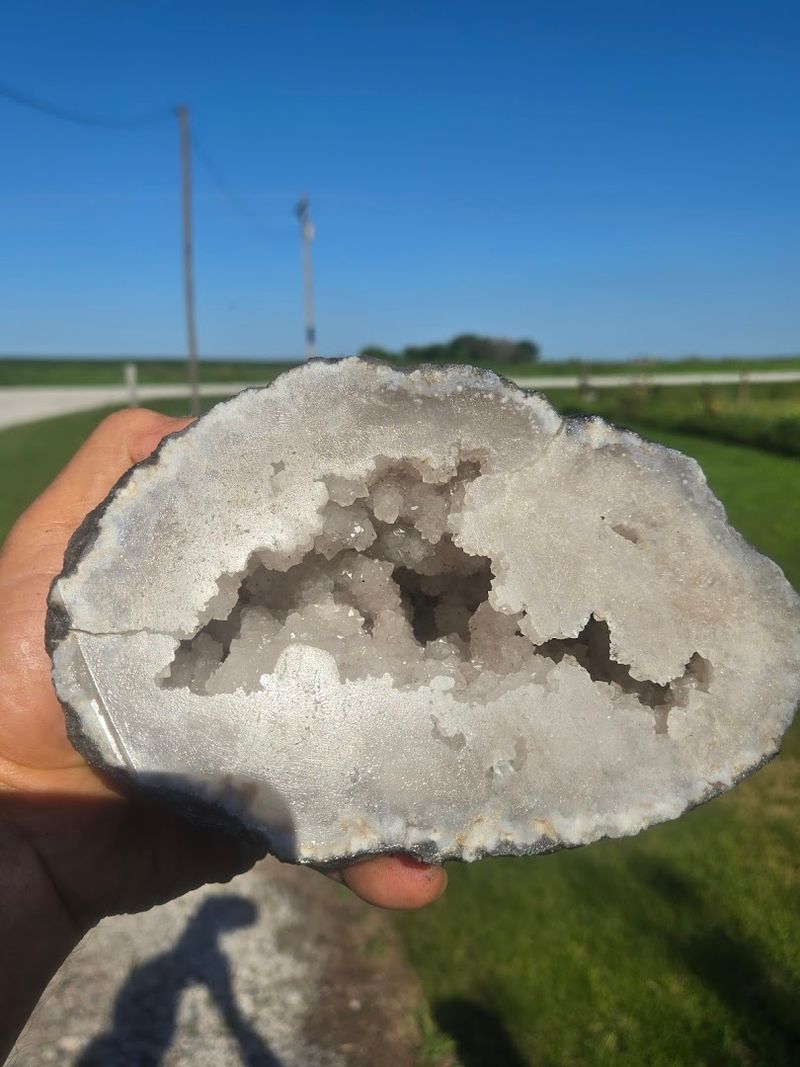
The Keokuk Geode Beds sit along the Mississippi River in western Illinois, straddling the border with Iowa and Missouri.
This region is geologically famous as one of the premier geode localities in North America. The geodes here formed in voids within Mississippian-age limestone roughly 340 million years ago, and they come in an astonishing variety of crystal types.
Beyond standard quartz, Keokuk geodes are known for containing rare minerals including millerite, pyrite, sphalerite, and even dolomite.
Each geode is essentially a surprise package, and the excitement of cracking one open never loses its appeal. The Mississippi riverbanks and creek beds in the area are the primary collection spots, and erosion continuously exposes new material.
Access to specific collecting sites varies, so research current land access and any permits needed before your trip. Some spots are on public land along the river while others require landowner permission.
Bringing a geological map of the region helps enormously when planning where to focus your time and energy along this productive stretch of river country.
6. Mississippi River Bars, Fayville And Thebes
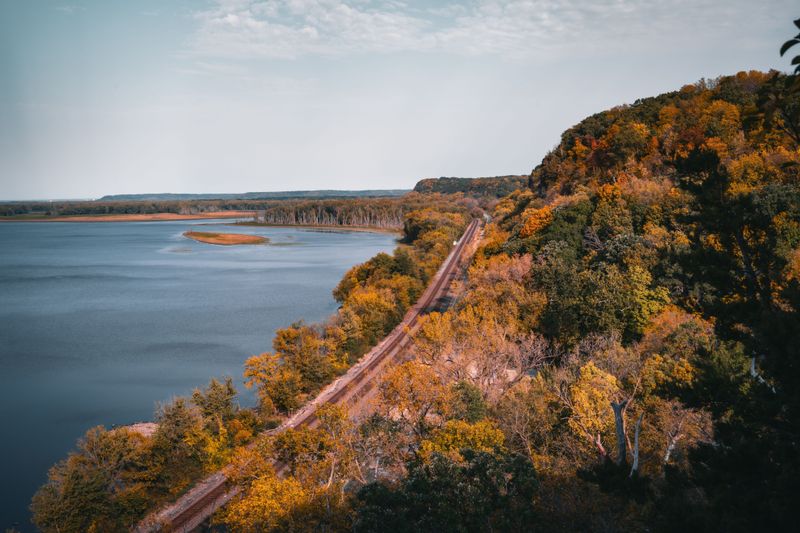
The gravel bars along the Mississippi River near Fayville and Thebes in Alexander County represent some of the most productive agate-hunting territory in Illinois.
River gravel bars shift and change with every flood cycle, constantly exposing new material washed down from upstream sources in Minnesota and Wisconsin where agates are abundant. Patience and a good eye are your best tools here.
Lake Superior agates are the most prized find at these locations, identifiable by their distinctive red, orange, and yellow banding caused by iron oxide.
You might also turn up chert nodules, jasper, petrified wood, and various other colorful stones that have made the long journey south. The Thebes area also has historical significance, as the town sits near an old river crossing used during the Civil War era.
Low water periods in late summer and early fall are the best times to access the widest gravel bars. Wear sturdy shoes with ankle support since river gravel is uneven and can be slippery near the waterline.
Always check river levels before heading out and never wade into fast-moving current.
7. Rock Creek At Kankakee River State Park, Bourbonnais
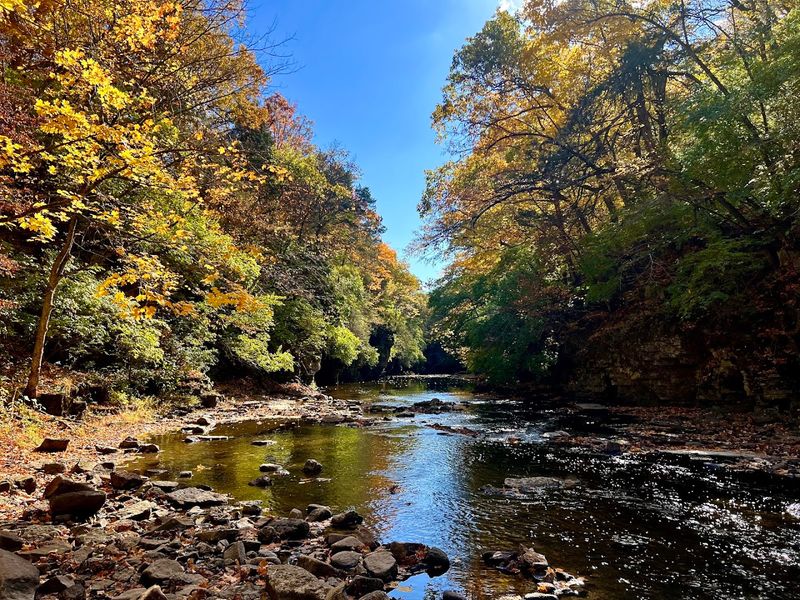
Rock Creek is the hidden gem inside Kankakee River State Park near Bourbonnais in Kankakee County, and it delivers a rockhounding experience that feels refreshingly off the beaten path.
The creek cuts through a small but impressive canyon with exposed limestone and chert-bearing bedrock that erodes constantly, releasing interesting material into the streambed below.
Chert nodules are the primary target here, and some of them display banding patterns that make them visually appealing even without polishing. Crinoid stem fossils are also commonly found in the limestone cobbles scattered along the creek.
The canyon setting adds a real sense of adventure to the hunt, especially since you can wade through shallow sections of the creek to access fresh exposures.
Kankakee River State Park is also a great multi-activity destination with hiking, fishing, and canoeing available alongside the rockhounding.
The park covers over 4,000 acres, so there is plenty to explore beyond Rock Creek. Early spring visits are particularly rewarding after snowmelt has flushed new material down from upstream sections of the creek.
8. Mazon River, Coal City Area
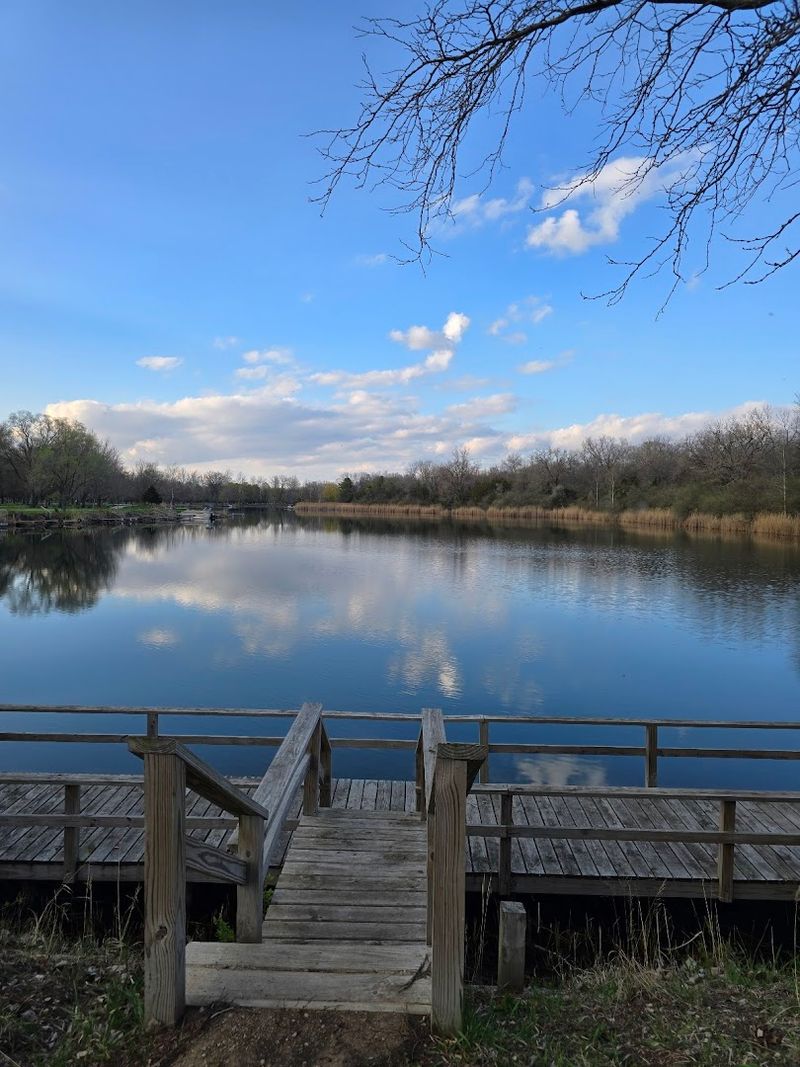
The Mazon River near Coal City in Grundy County is practically legendary among fossil collectors worldwide. The area’s claim to fame is the Mazon Creek fossil beds, one of the most significant Lagerstatte deposits on Earth.
Lagerstatte is a German term used by geologists to describe sites where fossils are preserved in exceptional detail, and Mazon Creek absolutely earns that designation.
Fossils from this area include soft-bodied organisms that almost never fossilize anywhere else, making finds here scientifically extraordinary.
The Tully monster, Illinois’s official state fossil, was discovered in this region and remains one of the most debated and fascinating prehistoric creatures ever found. Collectors search through old strip mine spoil piles looking for the characteristic siderite nodules that contain these treasures.
The experience of splitting open a nodule and seeing a 300-million-year-old creature preserved in perfect detail is genuinely hard to put into words.
Public access areas exist near Coal City, but always verify current access rules with local authorities before collecting. Joining a local fossil club can open doors to additional collecting sites and expert guidance in the field.
9. Giant City State Park, Makanda
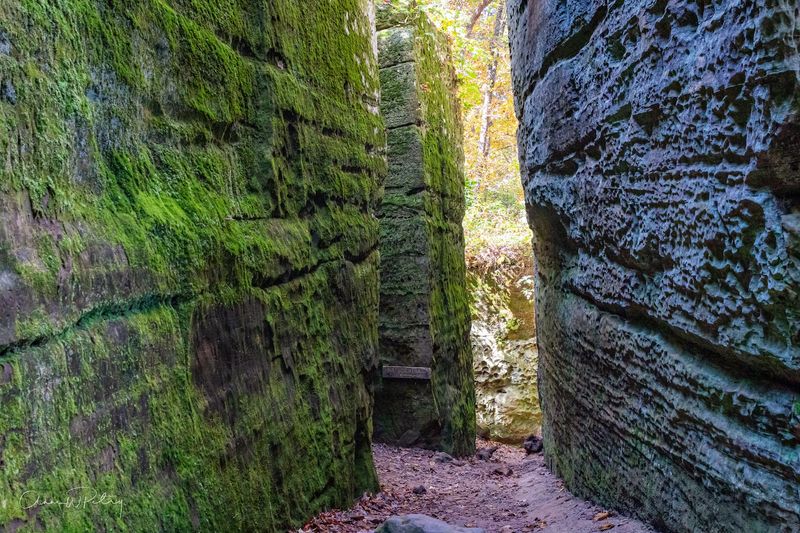
Giant City State Park near Makanda in Jackson County earns its name from the towering sandstone bluffs and massive rock formations that make the landscape look almost otherworldly.
The park sits in the heart of the Shawnee National Forest in southern Illinois, a region that geologically is completely different from the glaciated farmland of central and northern Illinois.
Rockhounds visiting Giant City come primarily to study and photograph the dramatic sandstone formations, which were shaped by millions of years of erosion. The narrow passageways between the giant stone blocks, called streets, are the park’s most iconic feature.
While the park does not permit collecting, the geological formations themselves are the attraction for anyone interested in Earth science and natural rock structures.
The sandstone here dates to the Pennsylvanian period and displays beautiful cross-bedding patterns that reveal ancient river and delta environments.
Combine your geology tour with hiking on the park’s well-maintained trail system, which winds through dense hardwood forest and past multiple impressive rock outcrops. The park is stunning in fall when the leaf colors frame the rust-toned sandstone perfectly.
10. Cave-In-Rock State Park, Cave-In-Rock
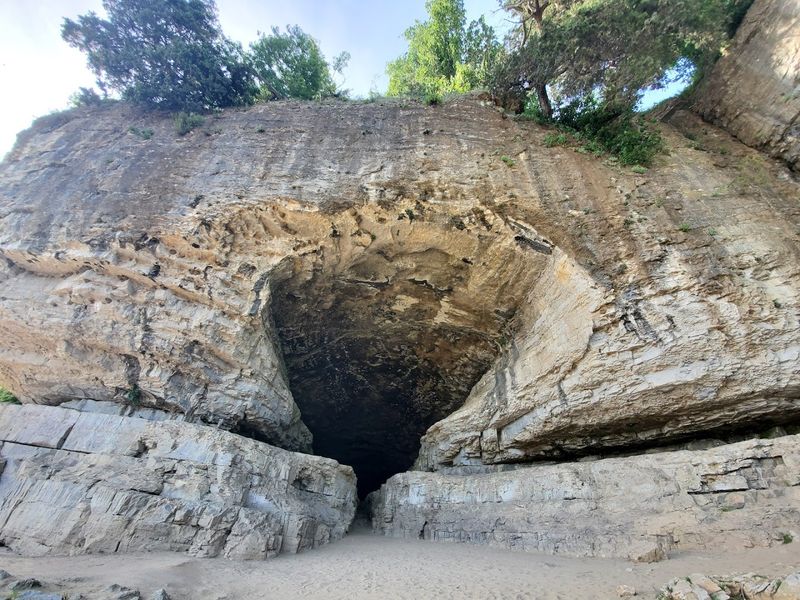
Cave-in-Rock State Park in the small town of Cave-in-Rock along the Ohio River in Hardin County is one of the most atmospheric rockhounding destinations in all of Illinois.
The park is anchored by a massive natural cave carved into limestone bluffs overlooking the Ohio River, and the surrounding geology is rich with fossils and interesting mineral specimens worth hunting for.
The limestone throughout this area of southern Illinois belongs to the Mississippian-age formations that are productive for brachiopods, bryozoans, and crinoid fossils. Chert nodules in various colors can also be found eroding out of the cliff faces and scattered along the riverbank below.
The cave itself has a colorful history as a hideout for river pirates in the 18th and early 19th centuries, adding a layer of human drama to the geological story.
A short ferry ride across the Ohio River connects Illinois to Kentucky, making this a great launch point for a multi-state rockhounding trip. The park has a campground, picnic areas, and river access.
Collecting rules apply, so check with park staff about what is permitted before you start filling your pockets with specimens.
11. Buffalo Rock State Park, Ottawa
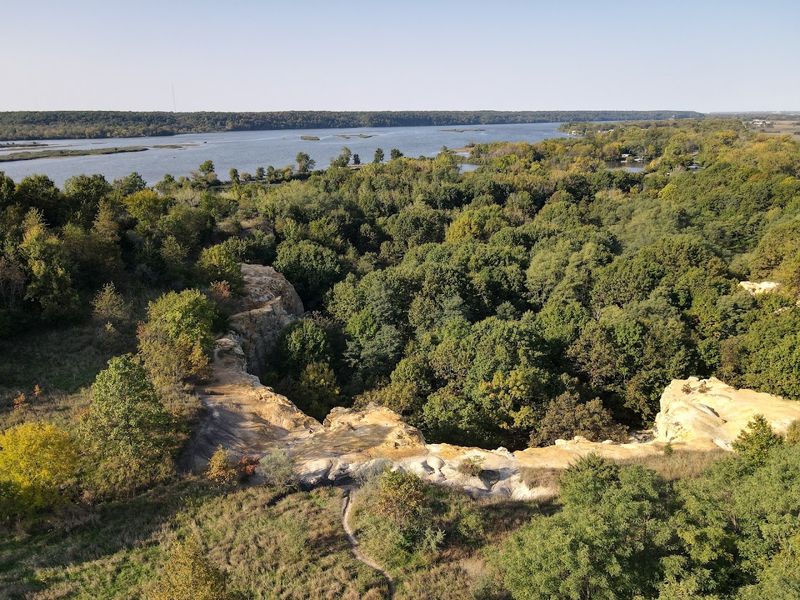
Buffalo Rock State Park sits high above the Illinois River near Ottawa in LaSalle County, offering a compact but geologically interesting destination for rockhounds passing through north-central Illinois.
The park occupies a former strip-mined plateau that has been reclaimed into a scenic natural area, and the rocky bluffs dropping down toward the river expose layers of sandstone and shale worth examining closely.
The park is perhaps best known for its massive earthwork animal sculptures created by artist Michael Heizer in 1985, which are a striking visual feature on the plateau surface.
But beneath the art installations, the exposed rock faces along the bluff edges tell a geological story dating back to the Pennsylvanian period. Fossil plant material including fern impressions can occasionally be spotted in the shale layers.
Buffalo Rock connects via trail to the Illinois and Michigan Canal State Trail, giving you the option to extend your adventure along the historic canal corridor.
The views of the Illinois River valley from the bluff top are genuinely impressive. Visiting in the morning when the light is low makes both the geological features and the river scenery look their absolute best.
12. Starved Rock State Park, Oglesby/Utica Area
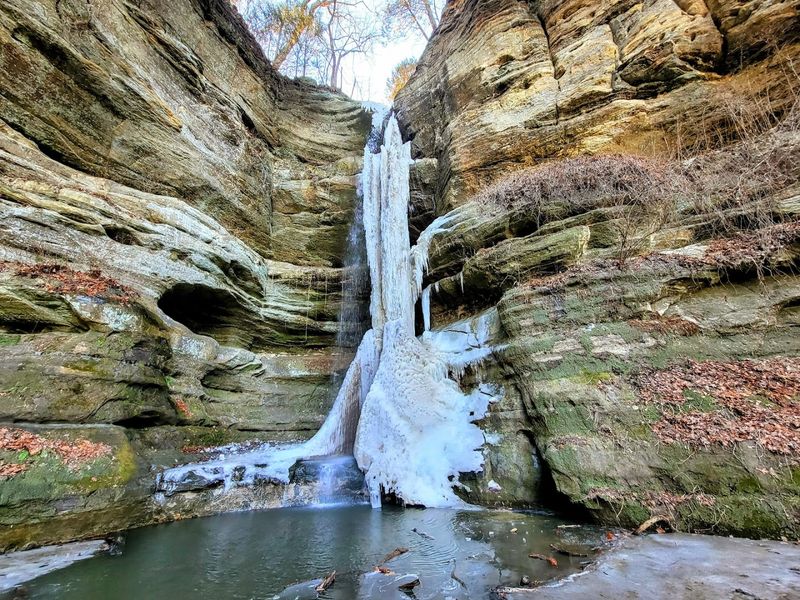
Starved Rock State Park near Oglesby and Utica in LaSalle County is one of Illinois’s most visited natural areas, and the geology here is the reason why. The park features 18 canyons carved into St. Peter Sandstone by glacial meltwater streams at the end of the last ice age.
The result is a series of dramatic gorges with waterfalls, towering canyon walls, and exposed rock faces that tell a story spanning hundreds of millions of years.
Rockhounds visiting Starved Rock are drawn to the St. Peter Sandstone itself, a remarkably pure quartz sandstone that was deposited in a vast ancient sea roughly 450 million years ago.
Chert can be found eroding out of the limestone layers above the sandstone in certain areas of the park. The canyons are most spectacular in winter when the waterfalls freeze into towering columns of ice.
The park sits along the Illinois River, and the river bluffs add even more exposed geology to explore. Collecting is not permitted inside the park boundaries, but studying the formations is a reward in itself.
Pair your visit with a stop at nearby Matthiessen State Park, which has its own set of impressive canyons just a few miles down the road.