
15 Incredible Small Towns In California That Feel Like Movie Sets
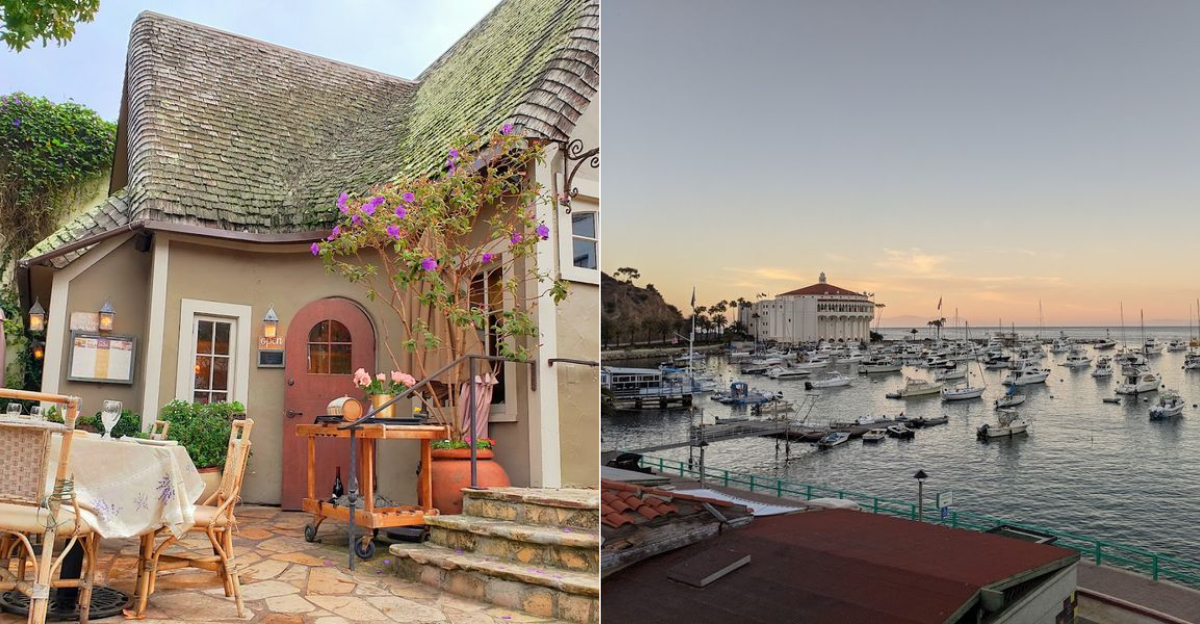
Ever feel like California was secretly built as a Hollywood backlot and no one told you? Because one minute you’re scrolling TikTok, the next you’re wondering why every street suddenly looks like a rom-com waiting for a meet-cute.
Across California, there are small towns that don’t just look pretty. They look scripted.
Like someone yelled “action” and forgot to yell “cut.” Ever wandered through Carmel-by-the-Sea and expected a fairy godmother cameo? Or strolled Solvang and felt like you accidentally teleported into a Danish Netflix series?
Then there’s the misty Victorian charm of Ferndale, the rugged coastal beauty of Cambria, and the gold-rush nostalgia of Nevada City plus the artsy seaside glow of Mendocino.
It’s giving main character energy everywhere you look. And honestly… why does it feel like you’re just one slow-motion montage away from your own indie film moment?
1. Solvang
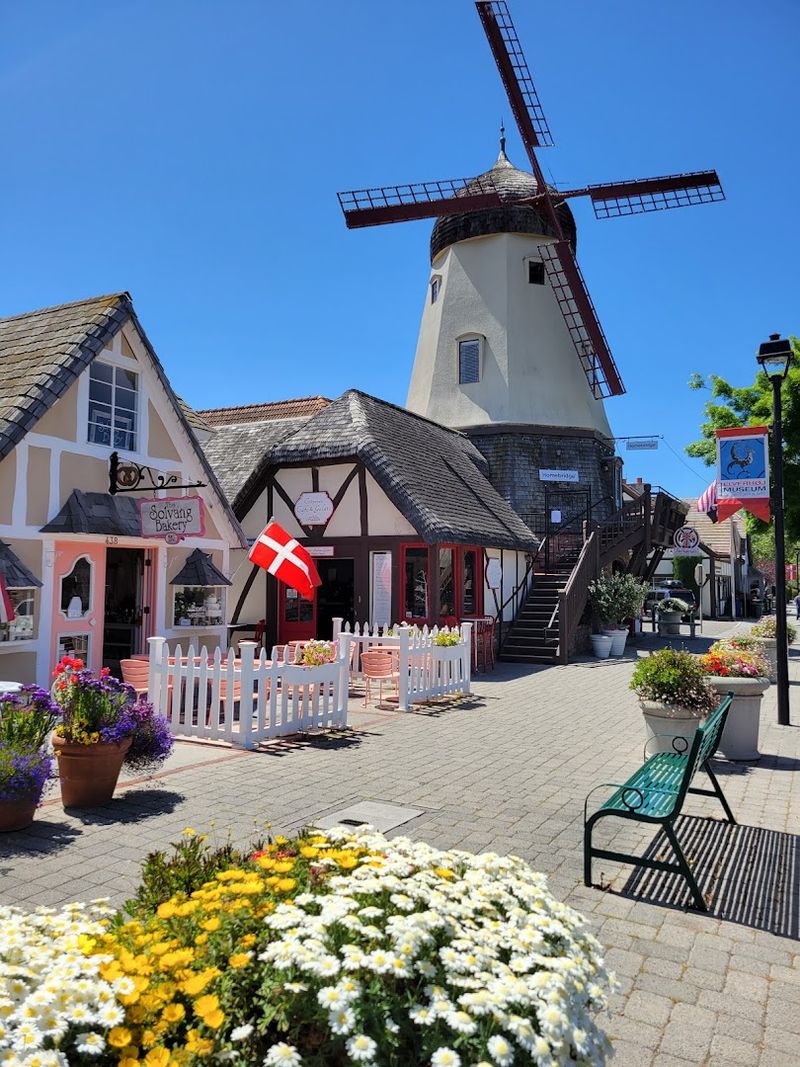
Somewhere between a fairy tale and a travel brochure, Solvang exists in the Santa Ynez Valley like a postcard that came to life.
Founded by Danish settlers in 1911, this town did not just borrow European charm. It committed fully, windmills and all.
Walking down Copenhagen Drive feels like teleporting to Denmark without the jet lag.
The half-timbered buildings, cobblestone plazas, and wooden stork sculptures perched on rooftops create a setting so theatrical it almost feels staged.
Bakeries serve fresh aebleskivers, round Danish pancake puffs dusted with powdered sugar, from storefronts that look straight out of a storybook. The smell alone is enough to stop you mid-stride.
Beyond the pastries, Solvang has boutique shops, museums, and the famous Old Mission Santa Ines just steps from the main drag.
The Hans Christian Andersen Museum pays tribute to the beloved Danish author. Solvang is the kind of town where every photo you take looks professionally edited without any filters needed.
2. Julian
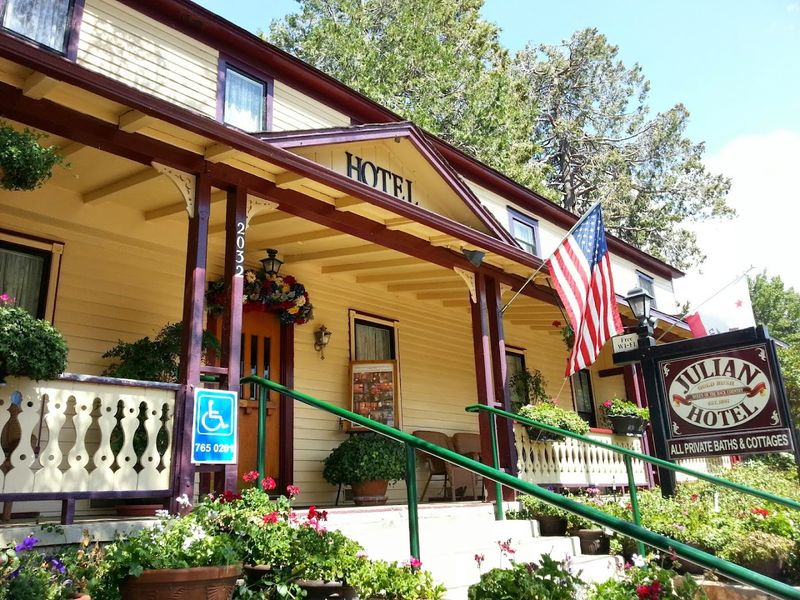
Julian has the energy of a town that knows exactly how charming it is and leans into it completely. Tucked into the Cuyamaca Mountains east of San Diego, this former Gold Rush settlement sits at about 4,200 feet elevation.
The mountain air hits differently up here, crisp and clean and faintly sweet.
Gold was discovered in Julian in 1869, and the town never really left that era behind. Main Street is lined with wooden storefronts, old-fashioned signage, and buildings that look like they belong in a Western film.
Apple orchards surround the town, and by fall, the whole place smells like fresh pie. Because it literally is fresh pie.
Julian apple pie is basically legendary in Southern California.
The Eagle and High Peak Mine offers underground tours that bring Gold Rush history to vivid life. Julian is one of those places that rewards slow exploration.
Grab a slice of pie, wander the historic streets, and let the mountain quiet settle over you.
3. Mendocino
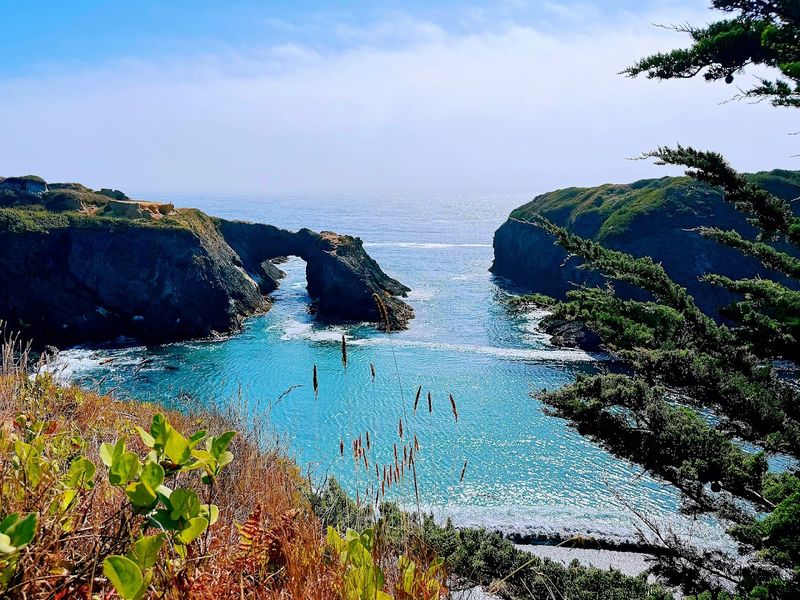
Perched on a dramatic headland above the Pacific, Mendocino looks like a New England fishing village got lost and ended up on the California coast. That is not an accident.
It was settled largely by New England transplants in the 1850s, and the architecture reflects that heritage beautifully. The weathered wood, white picket fences, and widow’s walks are iconic.
Mendocino is a National Historic Landmark District, meaning the whole town is essentially a protected piece of living history. Water towers dot the skyline.
Galleries, gardens, and boutique inns line the main streets. The ocean views from the headlands are the kind that make you forget what you were stressed about an hour ago.
Artists have flocked here for decades, drawn by the light, the fog, and the raw coastal beauty. The town has appeared in numerous films and TV shows, most famously as the fictional Cabot Cove.
Mendocino is moody, beautiful, and completely unforgettable.
4. Nevada City
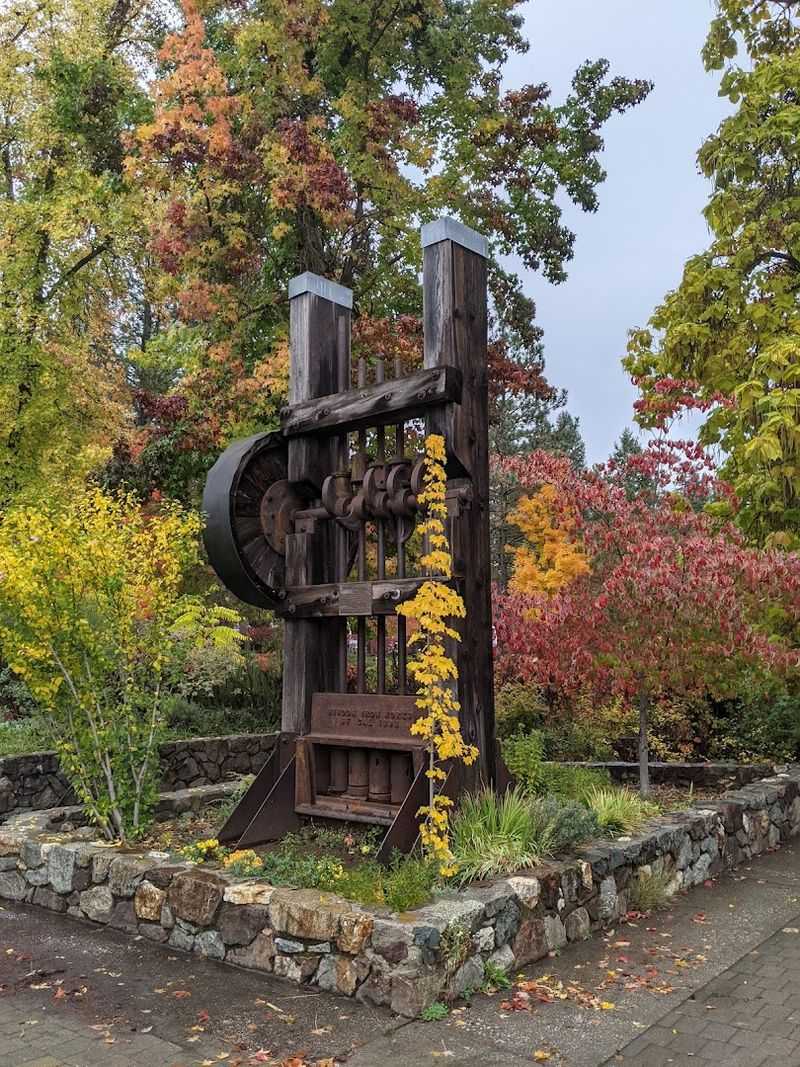
Nevada City is what happens when a Gold Rush town refuses to grow up and move on, and honestly, we are grateful for it. Nestled in the Sierra Nevada foothills, this town’s downtown looks so perfectly preserved that film set decorators would weep with envy.
Victorian buildings line the streets with almost suspicious perfection.
The old-fashioned gas lamps that illuminate the sidewalks at night give Nevada City a romantic, timeless glow. National Hotel, one of California’s oldest continuously operating hotels, anchors the historic district with serious old-world gravitas.
The surrounding hills add to the drama, especially when autumn turns the trees gold and copper.
Nevada City has a creative, eclectic energy that balances its historic bones beautifully. Independent bookshops, art galleries, and organic cafes nestle inside century-old storefronts.
The town also hosts a beloved Victorian Christmas celebration each December that draws visitors from all over Northern California. Nevada City proves that the Gold Rush left behind something far more valuable than gold.
5. Ferndale
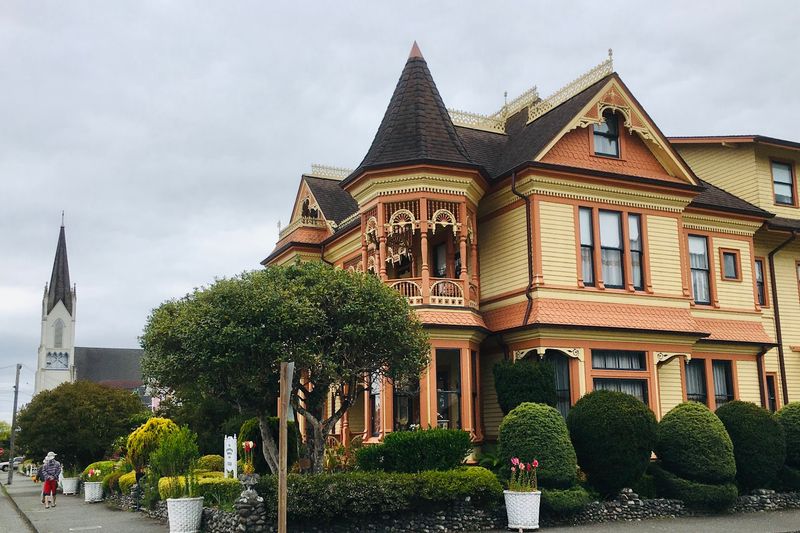
Ferndale is the kind of town that makes you slow your car down to a crawl just so you can stare properly. Located in Humboldt County in Northern California, this Victorian village is so remarkably intact that the entire main street is a California Historical Landmark.
That is not a small thing.
The famous “Butterfat Palaces” are the real showstoppers here.
These ornate Victorian mansions were built by wealthy dairy farmers in the late 1800s, decorated with gingerbread trim, candy-colored paint, and elaborate architectural details that look almost too beautiful to be functional homes. They are breathtaking in person.
Ferndale’s Main Street has boutiques, galleries, and a Victorian-era pharmacy that still operates with original fixtures.
The surrounding Eel River Valley farmland creates a lush, pastoral backdrop that makes the whole scene feel even more cinematic. Film crews have discovered Ferndale too, drawn by its extraordinary visual authenticity.
Walking through Ferndale feels like stepping into a living Victorian photograph.
6. Pioneertown
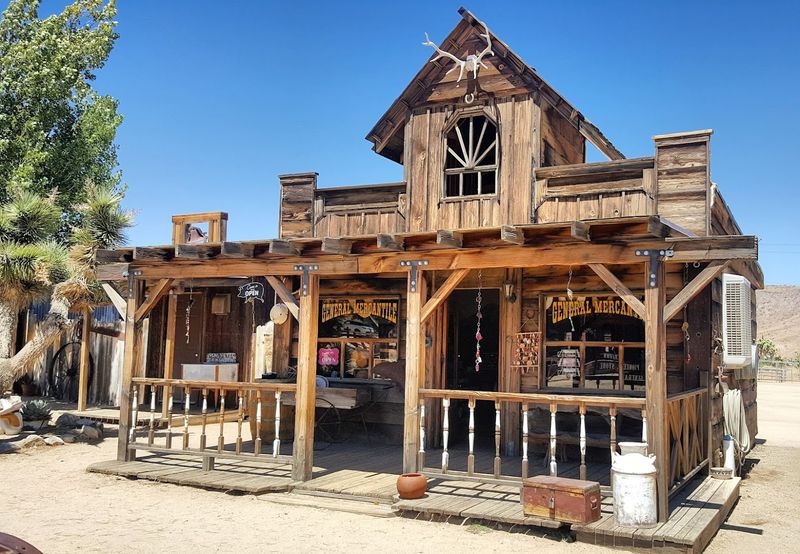
Here is a fun fact that sounds made up but absolutely is not: Pioneertown was literally built as a functioning movie set in 1946. Hollywood investors, including Roy Rogers, constructed an entire 1870s frontier town in the Mojave Desert specifically for filming Western movies.
Over 50 films were shot here in the 1940s and 1950s alone.
What makes Pioneertown extraordinary is that people actually lived and worked here while it doubled as a backdrop for Hollywood productions. The buildings were functional, not just facades.
Today, the wooden storefronts, stables, and jail remain standing in the same desert landscape where cowboys once rode for the cameras.
Pioneertown sits near Joshua Tree, surrounded by dramatic boulder formations and endless desert sky. The Mane Street strip still draws visitors who want to feel the authentic Wild West atmosphere that no theme park can replicate.
On weekends, mock gunfights are staged in the streets. Pioneertown is not just a movie set, it is a living piece of Hollywood history baking under the desert sun.
7. Columbia

Columbia is California’s most ambitious time machine. As a California State Historic Park, the entire town center has been preserved as a living Gold Rush museum from the 1850s.
There are no modern chain stores here, no neon signs, no parking lots in the middle of the action. Just history, standing exactly where it was left.
The brick buildings, wooden sidewalks, and period-accurate storefronts create an immersive experience that goes far beyond typical museum displays. Costumed interpreters walk the streets, stagecoaches roll through town, and you can actually pan for gold in the creek.
The authenticity is staggering for anyone who pays attention to details.
Columbia was once one of the richest towns in the California Gold Rush, producing millions of dollars in gold at its peak.
The town’s preservation means you are walking streets that real forty-niners walked, past buildings they entered. Columbia is the kind of place that makes history feel immediate, personal, and surprisingly thrilling.
8. San Juan Bautista
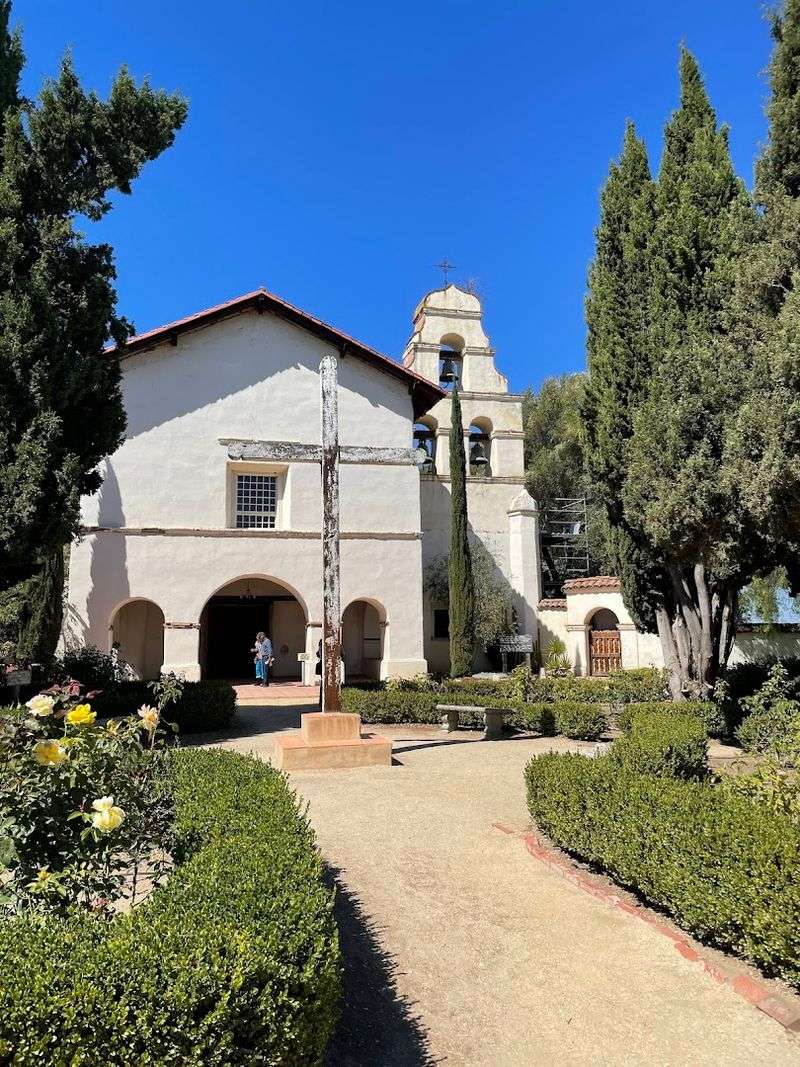
Alfred Hitchcock chose San Juan Bautista as the dramatic setting for the climax of Vertigo, and honestly, the choice makes complete sense.
This small town in San Benito County has a cinematic quality that feels effortless and deeply rooted in California history. The Spanish colonial atmosphere is extraordinary.
The centerpiece is the San Juan Bautista Mission, founded in 1797, which anchors a historic plaza surrounded by adobe buildings that date back to the Mexican and early American periods. El Camino Real passed right through here, making this one of California’s most historically significant crossroads.
Time genuinely seems to move slower in this plaza.
The town itself remains small, quiet, and wonderfully unpretentious. A handful of shops and restaurants line Third Street, and the historic state park buildings are open to explore.
On weekends, the plaza fills with visitors who come to absorb the atmosphere that Hollywood recognized decades ago. San Juan Bautista rewards those who wander slowly and look closely at every detail.
9. Cambria
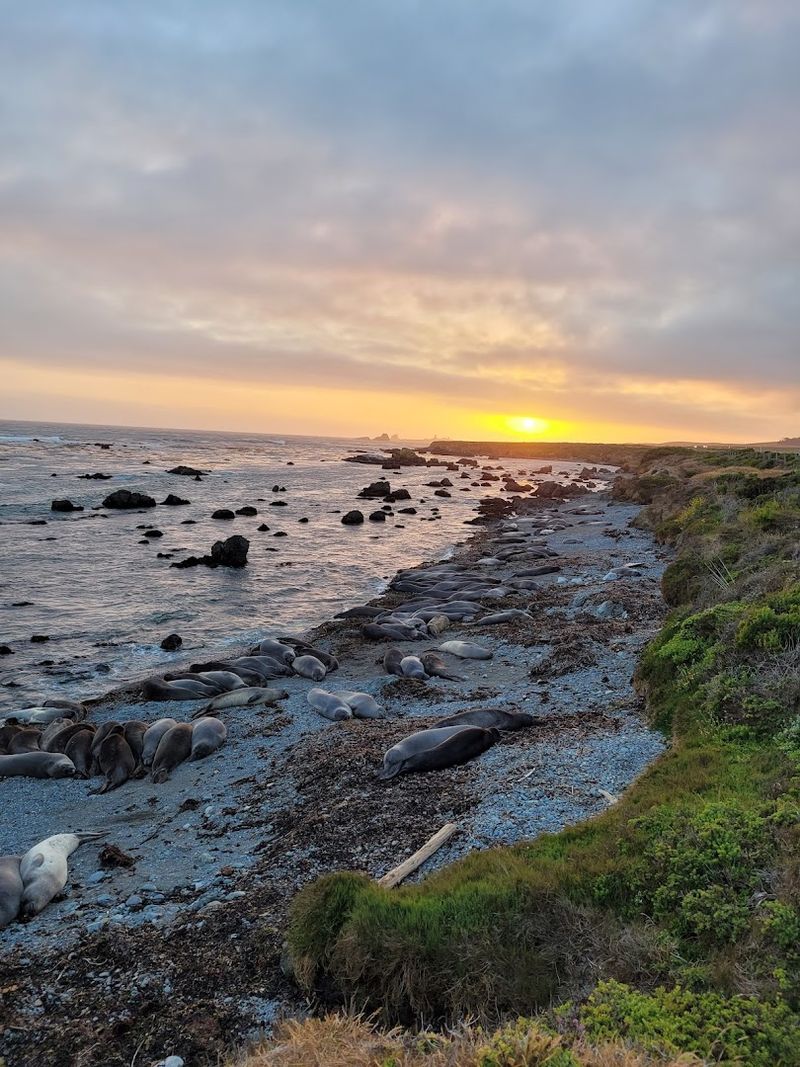
Cambria sits on the Central California coast like a secret that the rest of the world is slowly figuring out. Perched between San Simeon and San Luis Obispo, this pine-scented village has managed to stay small and independent through strict growth controls that keep chain development firmly at bay.
That policy is Cambria’s superpower.
The town splits into two distinct personalities: the East Village and the West Village. East Village leans historic and artsy, with galleries and antique shops tucked into weathered buildings.
West Village sits closer to the ocean, where Moonstone Beach offers miles of driftwood-strewn shoreline perfect for long, meditative walks at any time of year.
Moonstone Beach is named for the smooth, translucent moonstones that wash ashore, and finding one feels like a tiny treasure hunt.
The cypress trees bent by coastal winds add a dramatic, painterly quality to every view. Cambria is the kind of coastal town that makes you immediately start calculating how long you could afford to stay.
10. Avalon
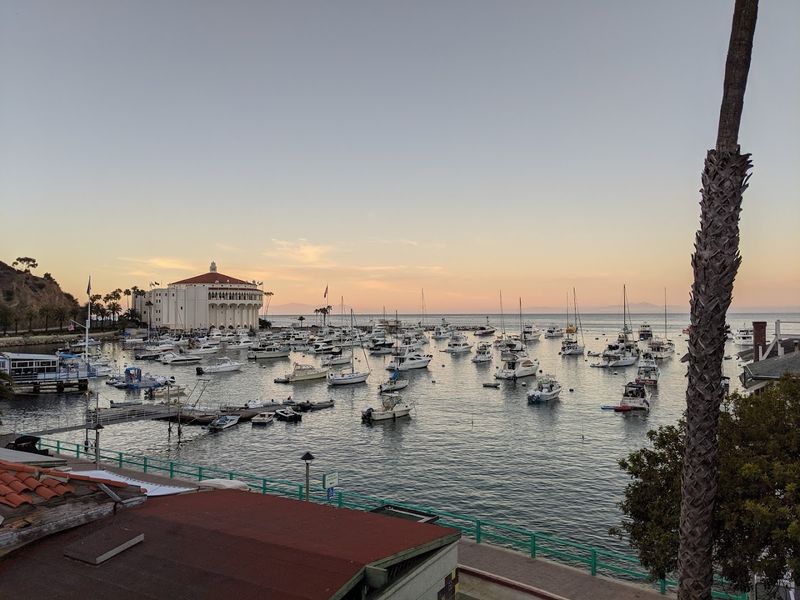
Getting to Avalon requires a ferry ride across the Pacific, and that journey alone sets the mood perfectly. Avalon is the only city on Santa Catalina Island, located 22 miles off the Southern California coast.
The moment the ferry rounds the point and the town comes into view, something shifts. It looks almost too perfect to be real.
Pastel buildings cascade down the hillside toward a crescent harbor filled with gleaming boats. The iconic Avalon , a 1929 Art Deco masterpiece that was never actually a hall, dominates the waterfront with circular grandeur.
It was a ballroom and movie theater, and it remains one of California’s most architecturally striking buildings.
Avalon has no traffic lights and very few cars, which gives the town a refreshingly peaceful energy. Golf carts are the preferred mode of transport.
The streets are lined with boutiques, seafood spots, and ice cream shops that cater to the steady stream of day-trippers and overnight visitors. Avalon feels like a Mediterranean village that somehow ended up off the California coast, and it is absolutely magnificent.
11. Carmel-By-The-Sea
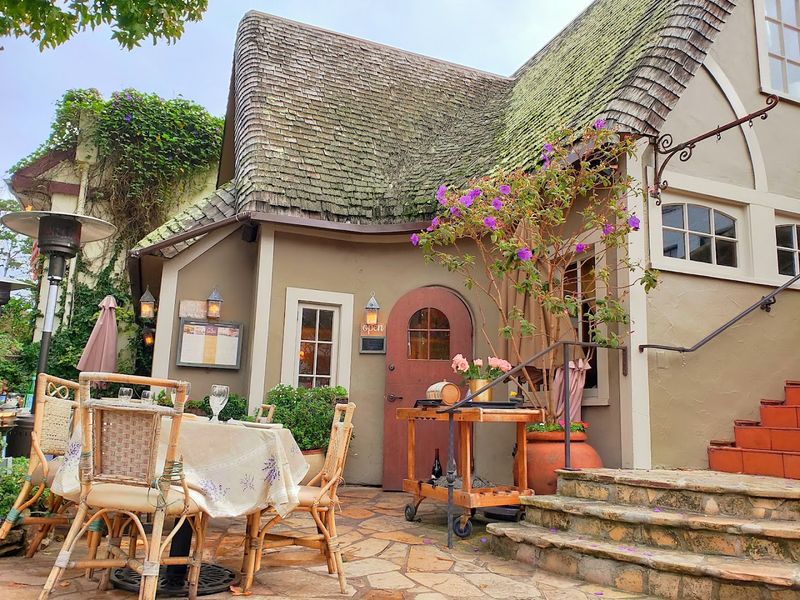
Carmel-by-the-Sea has a rule against stiletto heels on public sidewalks, and once you see the cobblestone streets, you completely understand why.
This oceanside village on the Monterey Peninsula operates by its own charming logic, where strict zoning has preserved a fairy-tale atmosphere for nearly a century. No chain stores, no billboards, no street addresses on homes.
The famous storybook cottages are the town’s crown jewels. Designed primarily in the 1920s and 1930s, these whimsical homes feature rolled eaves, hand-carved doors, stone chimneys, and deliberately crooked proportions that make them look like something from a Brothers Grimm illustration.
Hugh Comstock built many of them, and their influence shaped the entire aesthetic of the town.
Carmel Beach stretches at the foot of the village, a sweep of white sand and cypress-framed ocean views that belongs on a postcard.
The town is packed with galleries, high-end boutiques, and restaurants tucked into courtyard spaces. Carmel-by-the-Sea is not just beautiful.
It is aggressively, intentionally, lovingly beautiful in every single direction you look.
12. Capitola

Capitola calls itself California’s oldest beach resort town, and looking at those candy-colored buildings stacked along the waterfront, you believe every word of it.
This tiny coastal village near Santa Cruz has a palette so vivid and cheerful that it practically radiates happiness. The Venetian Court, a row of pastel Mediterranean-style apartments built in the 1920s, is the town’s most photographed landmark.
The Soquel Creek winds through town and empties into the ocean right at the village center, creating a natural amphitheater of activity around the beach.
Kayakers paddle through, surfers catch small waves, and visitors stroll the esplanade with ice cream in hand. The whole scene is relaxed and genuinely joyful in a way that feels organic rather than manufactured.
Capitola Village is compact enough to explore entirely on foot, which makes it ideal for leisurely wandering. Boutiques, galleries, and casual eateries fill the ground floors of those gorgeous painted buildings.
Capitola proves that a town does not need to be large to leave a lasting impression on everyone who visits.
13. Sutter Creek
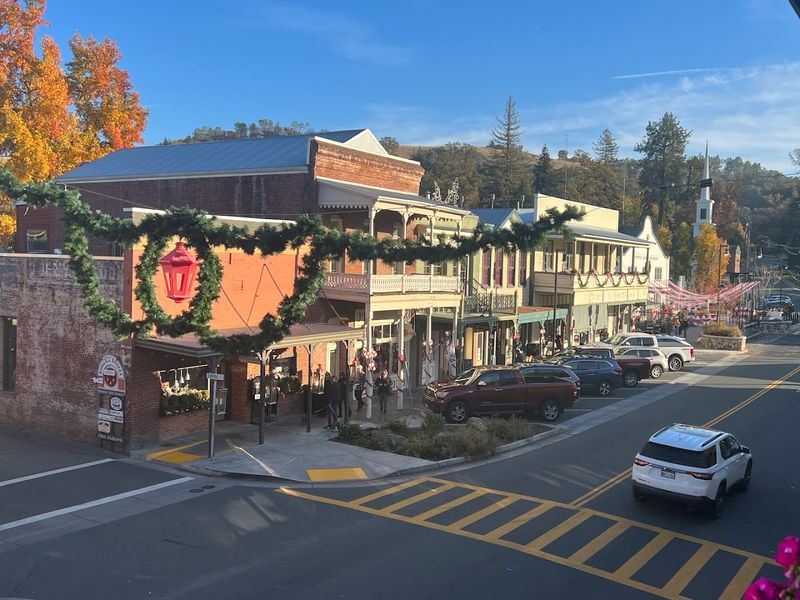
Sutter Creek is the Gold Country town that history enthusiasts dream about but sometimes forget to visit. Located about an hour southeast of Sacramento in Amador County, this quiet Main Street gem packs an extraordinary amount of authentic 1850s character into a very small footprint.
The wooden balconies hanging over the sidewalks are pure Gold Rush theater.
The Monteverde Store, now a museum, operated continuously from the Gold Rush era until the 1970s and still holds its original inventory frozen in time.
The Knight Foundry, a water-powered iron foundry built in 1873, is the last remaining water-powered foundry and machine shop in the United States. That is a genuinely remarkable piece of industrial history sitting right on a small-town street.
Sutter Creek’s main drag is lined with antique shops, art galleries, and historic inns that have been welcoming travelers for well over a century.
The surrounding Amador wine country adds another layer of appeal for those exploring the region. Sutter Creek rewards the curious traveler who takes the time to look beyond the surface charm.
14. Dunsmuir
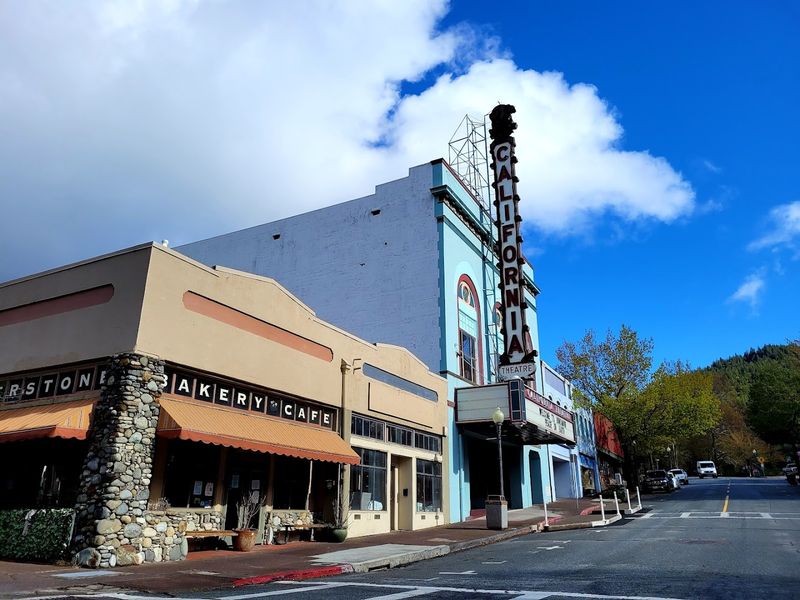
Dunsmuir is the kind of place that outdoor enthusiasts stumble upon and then never quite stop talking about.
Tucked into the Shasta Cascade region along the Upper Sacramento River, this small railroad town sits surrounded by ancient volcanic rock formations, old-growth forest, and some of the clearest river water in California. The scenery is genuinely otherworldly.
The town was built around the railroad in the 1880s, and that heritage is still visible in the historic downtown buildings and the vintage rail cars that have been repurposed as unique lodging options. Sleeping in a restored railroad car next to a rushing river is exactly as cool as it sounds.
Dunsmuir has leaned into its quirky identity beautifully.
Castle Crags State Park looms nearby, offering dramatic granite spires that rise thousands of feet above the valley floor.
The Sacramento River here is world-renowned for its exceptional fly fishing. Dunsmuir is the rare small town that offers both visual drama and genuine outdoor adventure, a combination that makes it impossible to forget once you have experienced it firsthand.
15. Idyllwild
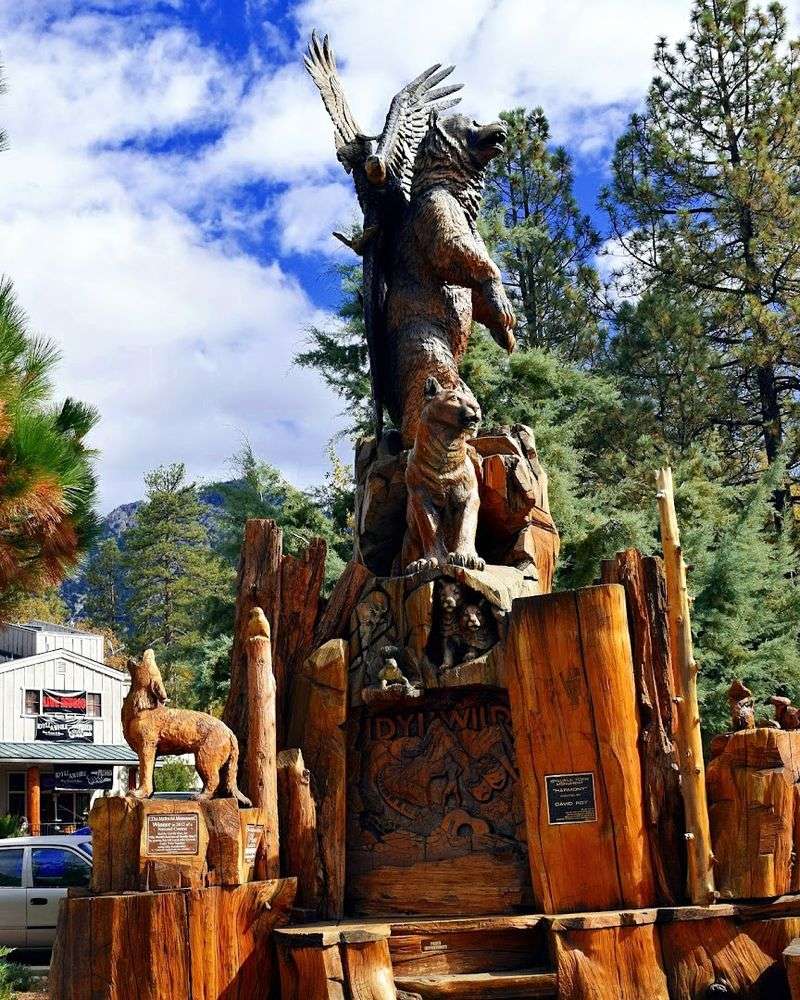
Idyllwild sits at 5,400 feet in the San Jacinto Mountains, and the moment you arrive, the pine-scented air and dramatic granite peaks make it clear that this place operates on a completely different frequency than the desert below.
Southern California has a mountain village, and it is extraordinarily beautiful. The town even elected a dog as honorary mayor, which tells you everything about its personality.
The main village is a compact collection of art galleries, bookshops, and cozy restaurants built from natural wood and stone that blend seamlessly into the surrounding forest. No chain stores have broken through here either.
The community actively protects Idyllwild’s independent character, and the result is a creative, warm, deeply individual atmosphere that feels rare anywhere in California.
Hiking trails fan out in every direction, with the challenging Tahquitz Peak trail offering panoramic views that stretch to the Pacific on clear days.
The Idyllwild Arts Academy adds a genuine creative pulse to the community. Idyllwild is not just a pretty mountain escape.
It is a full-blown artistic community that happens to have one of the most spectacular natural settings in all of Southern California.