
Most People In Montana Have Never Heard Of These 8 Incredible Hidden Places
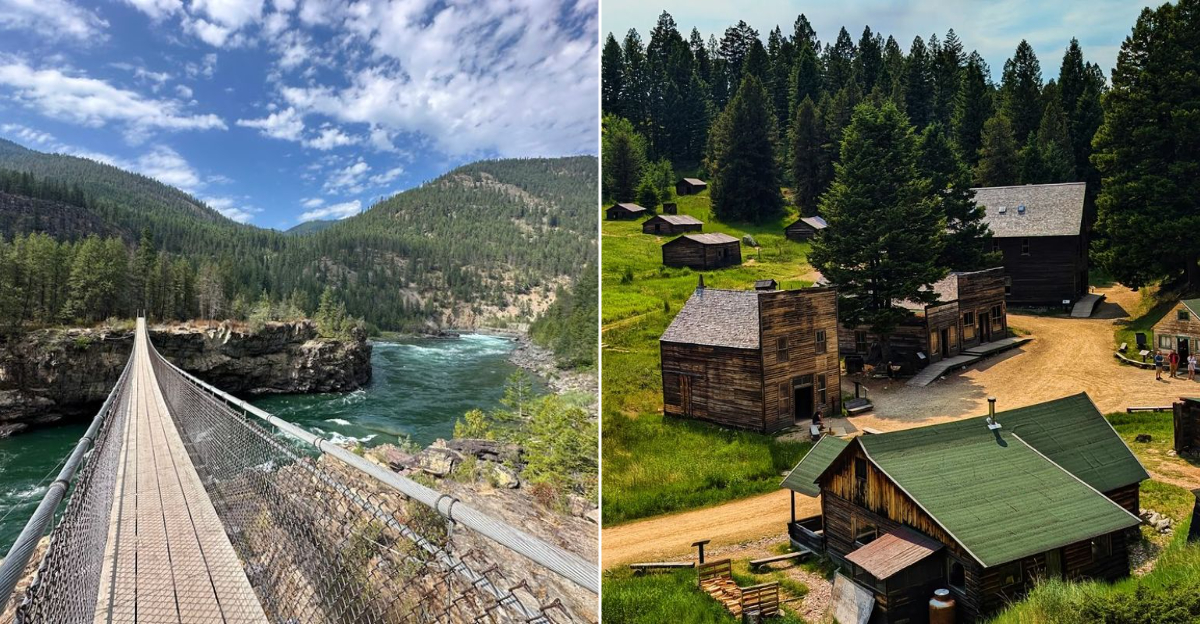
Montana is already known for its wide-open skies and jaw-dropping landscapes. But what if some of its most incredible spots are still flying under the radar? You might think you’ve seen it all.
The mountains, the rivers, the national parks. But have you really?
Hidden beyond the usual tourist maps are places so stunning they feel almost unreal, yet most people in Montana have never even heard of them. Is it secret waterfalls tucked deep in the forest? Quiet natural wonders with no crowds in sight?
Or scenic viewpoints that feel like your own private discovery? The answer is all of the above. These lesser-known gems prove that even in a state famous for its beauty, there are still surprises waiting around every bend.
Get ready to explore incredible hidden places that might just change how you see Montana forever.
1. Medicine Rocks State Park
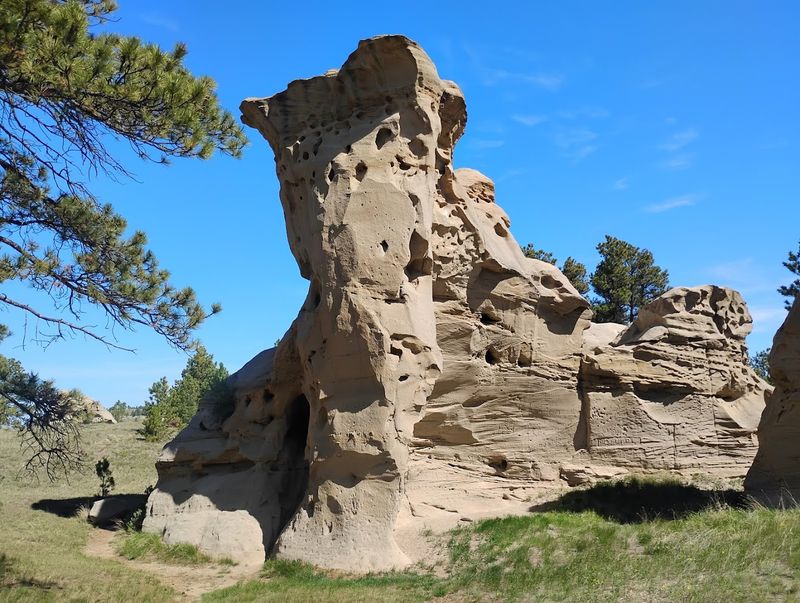
Picture the moon, but on Earth, and somehow even more mysterious. Medicine Rocks State Park is one of those places that genuinely stops you mid-sentence.
Located at 1141 MT-7, Ekalaka, MT 59324, this remote park sits quietly in the far eastern corner of Montana, far off the beaten path.
The park features massive sandstone formations carved by wind and water over millions of years. The result is a surreal landscape full of caves, holes, and sculpted pillars that look almost too artistic to be natural.
Theodore Roosevelt once camped near this area and called it a place of “fantastical beauty.” That is a strong endorsement from a man who explored a lot of wild places.
Native peoples considered these rocks sacred, using them for ceremonies and spiritual connection for centuries. That history adds a layer of meaning that makes simply walking among the formations feel surprisingly profound.
The rocks seem to hold stories inside them.
Camping here is low-key and refreshingly uncrowded. You get wide open skies, prairie silence, and some of the best stargazing in the entire state.
There are no crowds, no gift shops, and no lines. Just you, the formations, and the kind of quiet that actually makes your brain slow down.
Medicine Rocks is proof that the most powerful places are sometimes the ones nobody talks about.
2. Ringing Rocks
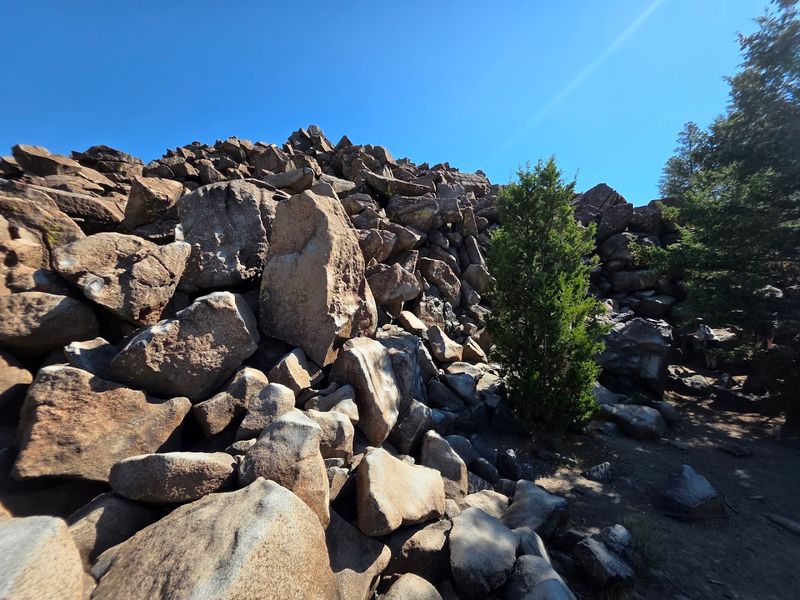
Okay, rocks that ring like bells when you tap them. That sentence alone should be enough to get you in the car.
Ringing Rocks is one of Montana’s most delightfully bizarre natural curiosities, and somehow it remains almost entirely unknown outside of the state.
Located off Ringing Rocks Rd, Whitehall, MT 59759, this boulder field sits in a forested hillside about an hour south of Butte.
The rocks are a type of igneous stone called diabase, and when struck with a hammer or another rock, many of them produce clear, bell-like tones. Scientists still debate exactly why this happens, which makes it even cooler.
Bring a small hammer, because tapping these rocks and hearing them sing back at you is an experience that genuinely does not get old. Kids absolutely lose their minds over it.
Adults pretend to be calm but are secretly just as thrilled.
The hike to the boulder field is short and easy, making it accessible for almost anyone. The surrounding forest is gorgeous, especially in the fall when the leaves turn.
There is no official trailhead infrastructure, so it keeps the vibe casual and adventurous.
Ringing Rocks is the kind of place that makes you feel like you discovered something the rest of the world forgot. And honestly, for now at least, you kind of did.
3. Ross Creek Cedars Scenic Area
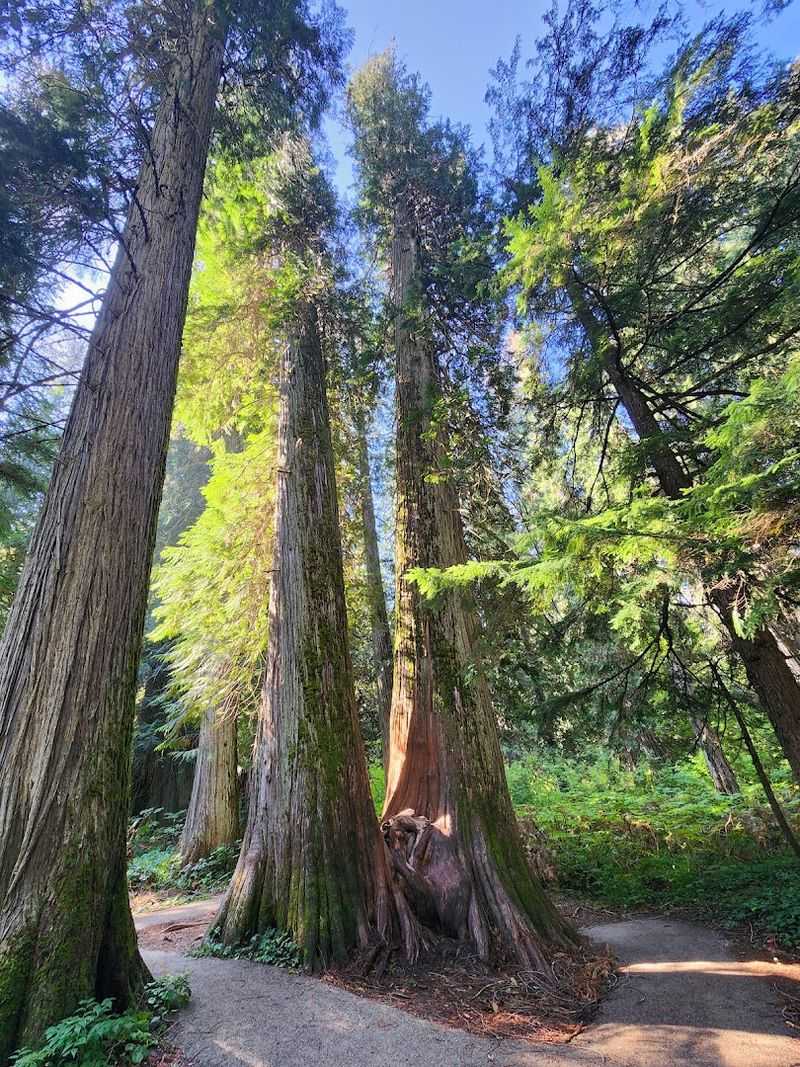
Walking into Ross Creek Cedars feels like stepping through a portal into a completely different world. These are not just big trees.
These are ancient giants, some over a thousand years old, with trunks so wide it takes several people linking arms to wrap around them.
Tucked away along Ross Creek Rd 398, Troy, MT 59935, this scenic area sits in the far northwestern corner of Montana near the Idaho border. The western red cedars here grow to incredible sizes, creating a cathedral-like forest canopy that filters light in the most dramatic way possible.
A short loop trail winds through the grove, crossing small footbridges over Ross Creek and passing trees that have been standing since before the Renaissance.
The air smells like cedar and cool water, which sounds simple but hits your senses in a way that is genuinely hard to describe. It is the kind of smell that stays with you.
This area gets surprisingly little attention compared to other Montana destinations, which means you often have the whole grove nearly to yourself.
Wildflowers bloom along the creek in spring. The forest floor is carpeted in ferns and moss year-round.
Ross Creek Cedars is one of those rare places that reminds you nature has been doing extraordinary things long before humans showed up to take photos of it.
4. Kootenai Falls
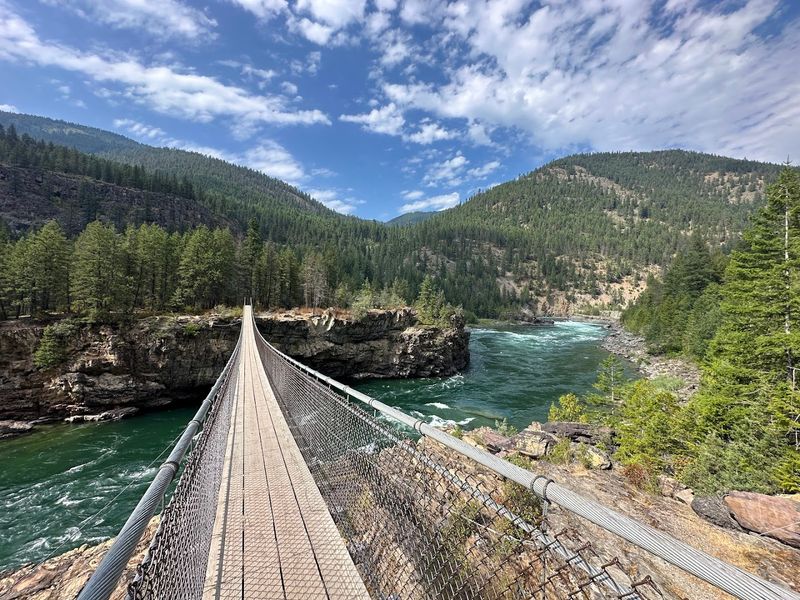
There is a waterfall in northwestern Montana that makes Niagara look like it is trying too hard. Kootenai Falls is raw, loud, and completely unfiltered power.
It is the kind of place that reminds you why waterfalls earned their reputation as one of nature’s great spectacles.
Found along Kootenai River Rd, Libby, MT 59923, the falls are the largest undammed waterfall in Montana. The Kootenai River crashes over a series of dramatic rock ledges, creating a roar you can hear long before you see it.
The Kootenai people have held this site sacred for generations, and standing here, you immediately understand why.
A short trail from the parking area leads through forest and alongside the river before opening up to stunning viewpoints. There is also a swinging suspension bridge that crosses the gorge, offering a thrilling perspective over the churning water below.
The bridge sways just enough to keep things interesting.
Unlike some of Montana’s more famous attractions, Kootenai Falls requires almost no effort to reach. The hike is easy, the views are enormous, and the experience stays with you for days.
Early morning visits offer the best light and the fewest people.
Late spring brings the highest water flow, turning the falls into something that looks almost animated. Kootenai Falls is not a hidden gem so much as it is a hidden masterpiece that somehow never made the front cover.
5. Terry Badlands Wilderness Study Area
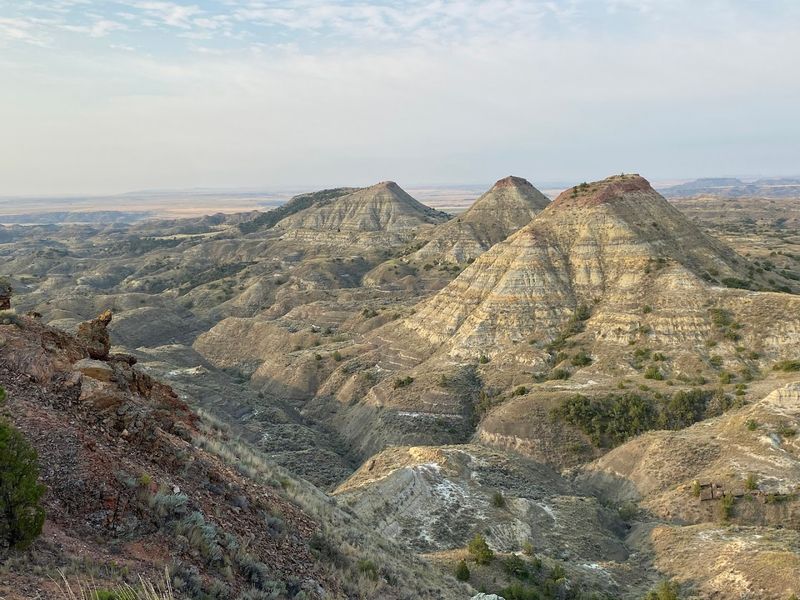
Most people hear “badlands” and think South Dakota. But Montana has its own version, and it is wilder, quieter, and somehow even more dramatic.
The Terry Badlands Wilderness Study Area is eastern Montana at its most unapologetically strange and beautiful.
Located near Scenic View Rd, Terry, MT 59349, this remote stretch of eroded landscape covers over 44,000 acres of sculpted clay buttes, colorful rock layers, and rugged coulees. The colors shift throughout the day as the sun moves across the sky.
Reds, purples, oranges, and creamy yellows all take turns dominating the view.
There are no maintained trails here, which means exploring requires a bit of confidence and a decent sense of direction. That also means almost nobody comes here.
You can wander for hours without seeing another person, which in today’s world is genuinely rare. Pronghorn antelope, mule deer, and golden eagles are common sightings.
Spring and fall are the ideal seasons to visit, when temperatures are manageable and the light is at its most photogenic.
Summer heat in eastern Montana is no joke, so plan your timing wisely. The Terry Badlands have a way of making you feel both tiny and completely alive at the same time.
If you want a Montana experience that feels truly off the grid, this is it. The silence here is not empty.
It is full of something.
6. Garnet Ghost Town
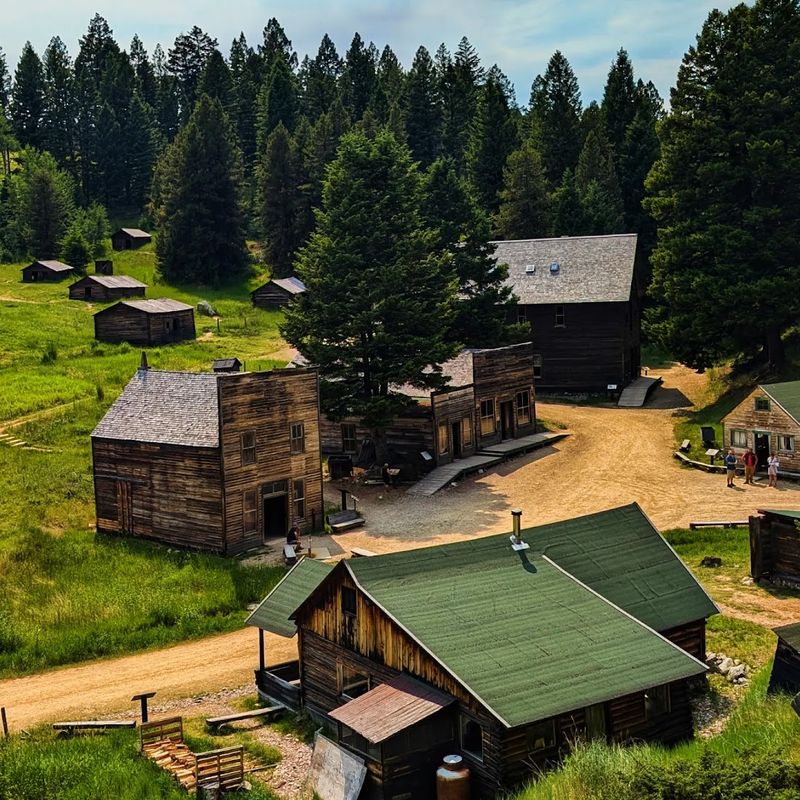
Garnet Ghost Town is the kind of place that makes you feel like you accidentally wandered onto a movie set, except everything is completely real.
Cabins, mine buildings, and storefronts sit frozen in time, slowly returning to the earth on their own schedule.
Perched in the mountains along Garnet Range Rd, Missoula, MT 59802, Garnet sits at around 6,000 feet elevation and was once a booming gold mining community. At its peak in the early 1900s, around a thousand people called this place home.
Today the buildings stand empty, creaking in the mountain wind.
The Bureau of Land Management maintains the site, and visitors can walk freely through the structures and explore what remains of the town. Some cabins are available for winter rental, which sounds absolutely incredible if you enjoy the idea of snowshoeing to your accommodation.
The access road is rough and requires a high-clearance vehicle in many conditions.
Summer visits offer the most accessible experience, with guided tours available on weekends. The detail preserved in some of the buildings is remarkable.
You can still see wallpaper clinging to interior walls and old furniture sitting in place.
Garnet is not a polished historical attraction. It is the real thing, unvarnished and unhurried.
Walking through it feels like borrowing a few minutes from another century, and honestly, those borrowed minutes are worth every bumpy mile of road to get there.
7. Granite Ghost Town State Park
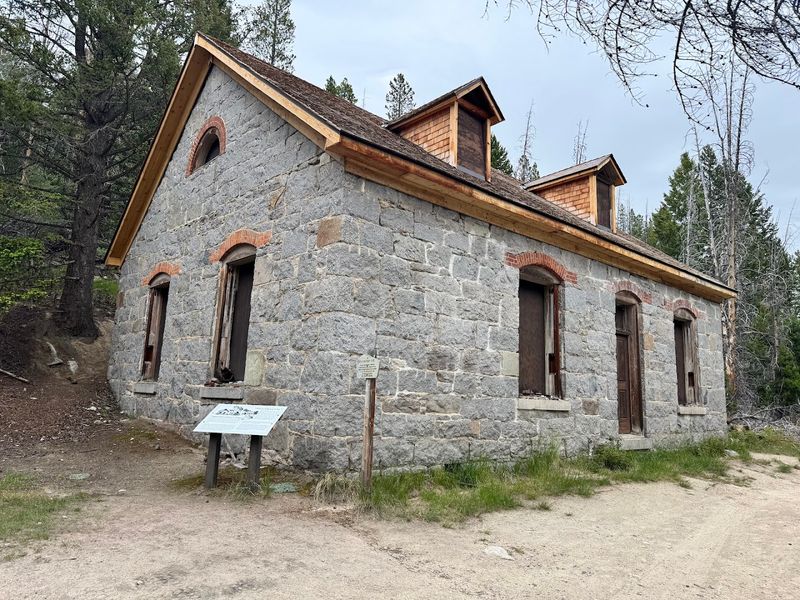
Perched nearly 7,000 feet up in the Flint Creek Range, Granite Ghost Town is not exactly easy to reach, and that is precisely what makes it so rewarding.
This was once one of the richest silver mining towns in the entire country. Now it is a spectacular ruin slowly merging back into the mountain.
Found at 347 Granite Road, Phillipsburg, MT 59858, the town boomed in the 1880s and 1890s when silver was king. At its height, Granite housed nearly 3,000 residents and produced tens of millions of dollars in silver ore.
Then the silver market collapsed, and the town emptied almost overnight.
What remains today is genuinely impressive. The Miners Union Hall still stands as a hulking stone structure commanding views over the valley below.
Other ruins dot the hillside, and interpretive signs help piece together the story of what life looked like here during the mining frenzy. The setting is dramatic in every direction.
The road to Granite is rough and typically accessible only from late spring through early fall. The hike from the parking area to the main ruins is short but steep.
Bring water, sturdy shoes, and a camera with a full battery. Granite Ghost Town has a melancholy beauty that is hard to shake.
It is a reminder that boom and bust cycles are not just economic events. They are human stories written in stone and timber and left for curious visitors to read.
8. Sluice Boxes State Park
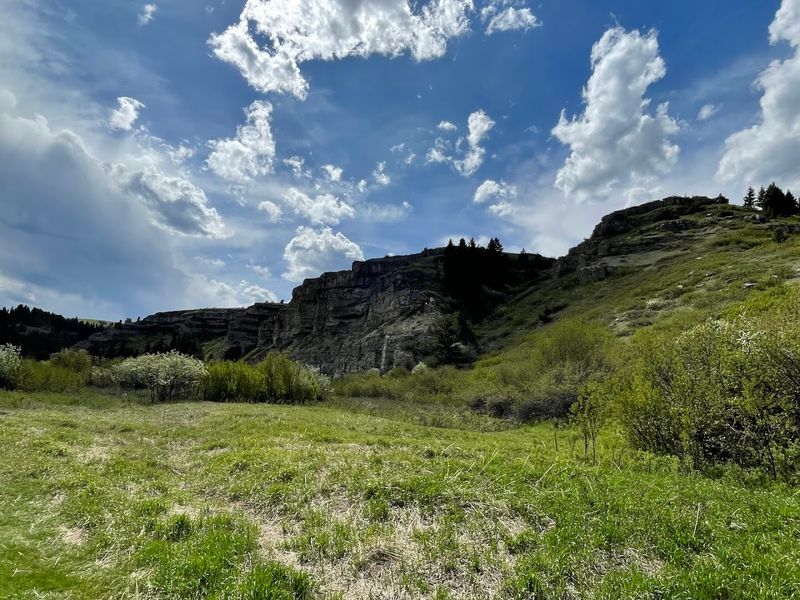
Sluice Boxes State Park sounds like something a gold prospector named on a particularly inspired afternoon, and the name absolutely delivers on its promise.
This narrow limestone canyon outside of Belt, Montana is one of the most visually striking and least visited parks in the entire state.
Located at 38 Evans Riceville Rd, Belt, MT 59412, the park sits about an hour northeast of Great Falls and follows Belt Creek as it carves through a dramatic gorge.
The canyon walls rise sharply on both sides, creating a corridor of layered rock that changes color and texture with every turn of the trail.
The main trail runs about nine miles one way, following the creek through the canyon and crossing it multiple times.
Shorter out-and-back options make it accessible even if you are not up for the full distance. The creek is clear and cold, and the sound of water bouncing off canyon walls creates a natural soundtrack that is genuinely soothing.
Wildlife sightings here are common. Deer, osprey, and even the occasional black bear have been spotted along the trail.
Wildflowers in spring and golden cottonwood leaves in autumn make seasonal visits especially rewarding.
Sluice Boxes is the kind of park that rewards curious explorers who are willing to skip the famous names on the map. Have you ever found a place so beautiful it felt almost personal?
This one does that.