
9 Nevada Places That Reveal What Happened After The Mining Boom Ended
Nevada’s mining boom had a pretty wild run.
One minute, a patch of desert was attracting fortune-seekers, saloons, hotels, and grand plans for the next big city. Then the mines stopped paying off, jobs disappeared, and some of those booming communities began emptying out almost as quickly as they had grown.
But here’s the thing. The gold rush didn’t just leave behind a few dusty old buildings.
It left stories carved into courthouse walls, abandoned streets, crumbling banks, and places that never quite recovered from their glory days.
And honestly, that’s what makes Nevada’s mining history so fascinating.
Not every town became a ghost town, and not every landmark met the same fate. Some survived, some faded, and others became reminders of just how quickly fortunes can change.
These Nevada places tell the story of what came after the boom, and what’s still standing today.
1. Rhyolite Ghost Town
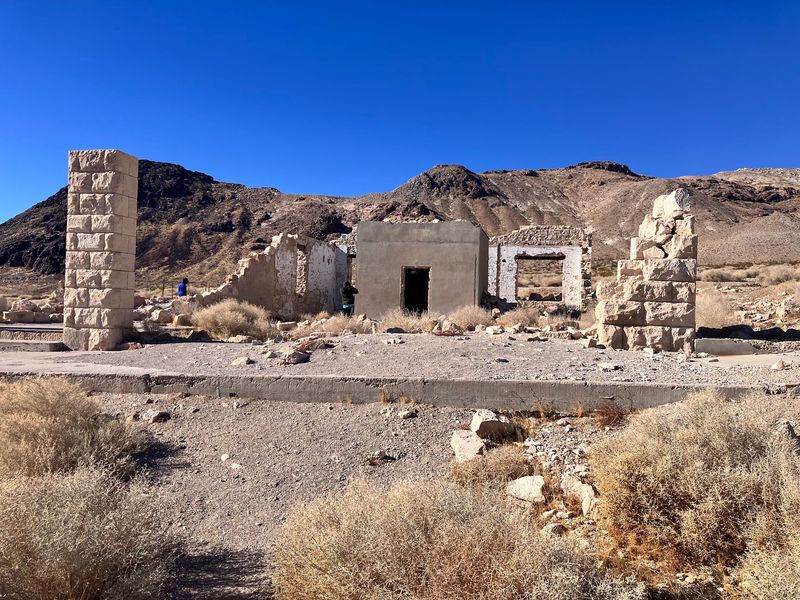
Visualize a ghost town that exploded from a desolate plot into an architectural marvel in a mere twenty-four months. Rhyolite conquered that frantic marathon, leaving behind ruins that feel frozen mid-stride.
You can wander the remains along Rhyolite Rd in Beatty, NV 89003, right at the edge of Death Valley country.
Back in 1905, gold fever turned this patch of desert into a buzzing hub. By 1907, residents enjoyed electric lights, water mains, schools, and fancy entertainment.
Thousands of folks called it home, and the future seemed shiny.
Then the 1907 financial panic arrived like an uninvited guest. Ore production slipped, the main mine closed in 1911, and families packed up.
By 1920, the population had dropped to almost nobody.
Here is where the story gets fun. Rhyolite reinvented itself as a photo magnet and a popular filming location.
The famous Tom Kelly Bottle House, built from around 50,000 bottles, is considered the oldest and largest known bottle house in America.
Talk about recycling with style! The old train depot also found fresh purpose over the years.
Today, the stone walls of the bank and school stand tall against the sky, practically posing for your camera.
Bring water, wear sturdy shoes, and visit early for soft, glowing light. Rhyolite proves that even a short story can become a classic.
2. Berlin-Ichthyosaur State Park
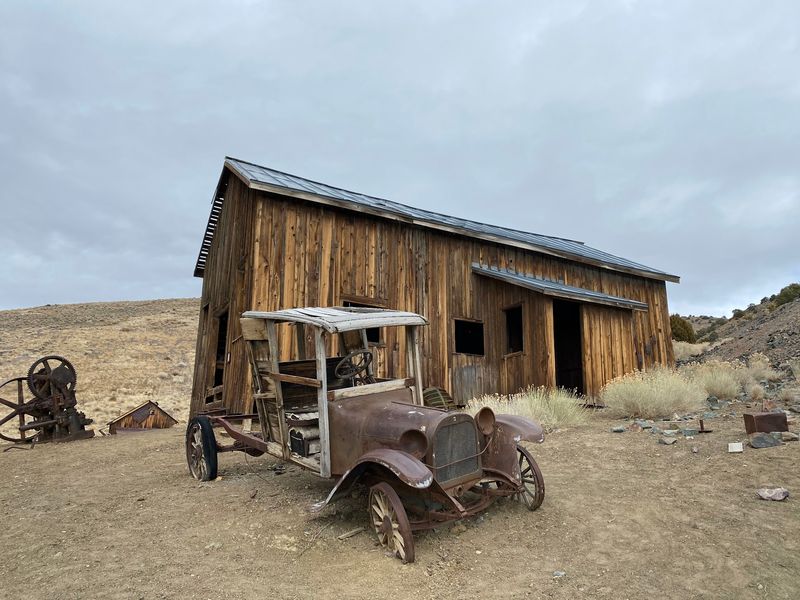
This park serves up an old mining town and giant prehistoric sea reptiles in the same scenic package. Find it along State Route 844, 20 Miles East of Gabbs, NV 89409, tucked into the Shoshone Mountains.
The town of Berlin got its start in 1897 within the Union Mining District. It never grew into a giant city, but it kept busy pulling gold from the hills.
After a miners’ strike in 1907 and shrinking ore, operations wound down by 1914.
Most residents had already moved on by 1911. Luckily, the state stepped in and acquired Berlin in 1970.
That move kept the original buildings and mining facilities in remarkably good shape.
Now for the jaw-dropper. The park protects North America’s most abundant concentration of large ichthyosaur fossils.
These marine reptiles cruised through an ocean covering Nevada around 225 million years ago.
Yes, the desert was once beachfront property! The ichthyosaur is Nevada’s official state fossil, and some reached roughly 50 feet long.
A protective building lets visitors see fossils resting right where they were found.
Plan for a long drive on remote roads, so fill your tank first. Few places let you jump from gold pans to ocean giants in one afternoon.
3. Tonopah Historic Mining Park
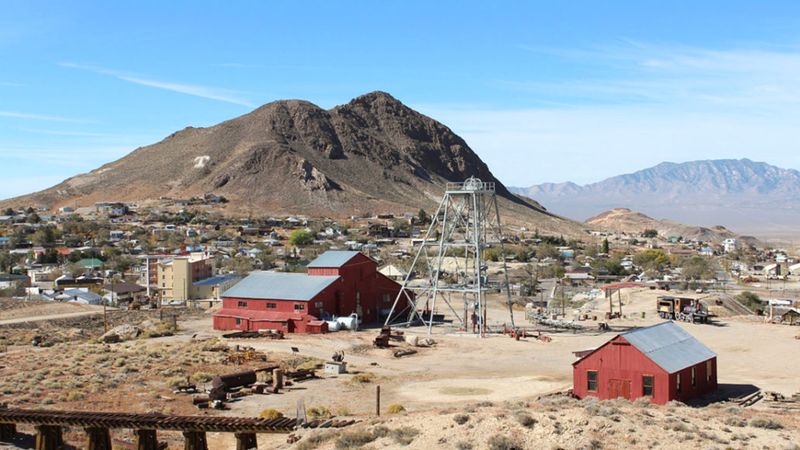
Every queen deserves a palace, and Tonopah got a whole hillside of headframes. Once called the Queen of the Silver Camps, this town still wears its crown proudly.
The mining park sits at 110 Burro Ave, Tonopah, NV 89049, perched above the heart of town.
Silver was discovered here in 1900, and the rush kicked off fast. Mines popped up across the hill, and the town grew around them.
Like many camps, Tonopah faced quieter years once the big boom calmed down.
Instead of letting its gear rust away in silence, the town preserved it. The park now protects real mine sites, buildings, and heavy machinery from the glory days.
You can see how ore traveled from deep underground to the surface.
One crowd favorite is a glass-floored viewing area over a deep stope. Peering down into that gap is a thrill for anyone with steady nerves.
Walking trails connect equipment, hoist houses, and old shafts across the property.
Plenty of signs explain the work in clear, easy language. It feels like a giant outdoor classroom where the textbook is made of steel.
Visit in spring or fall for gentler temperatures.
Tonopah turned old industry into a hands-on adventure, and that is a royal glow-up.
4. Historic Esmeralda County Courthouse
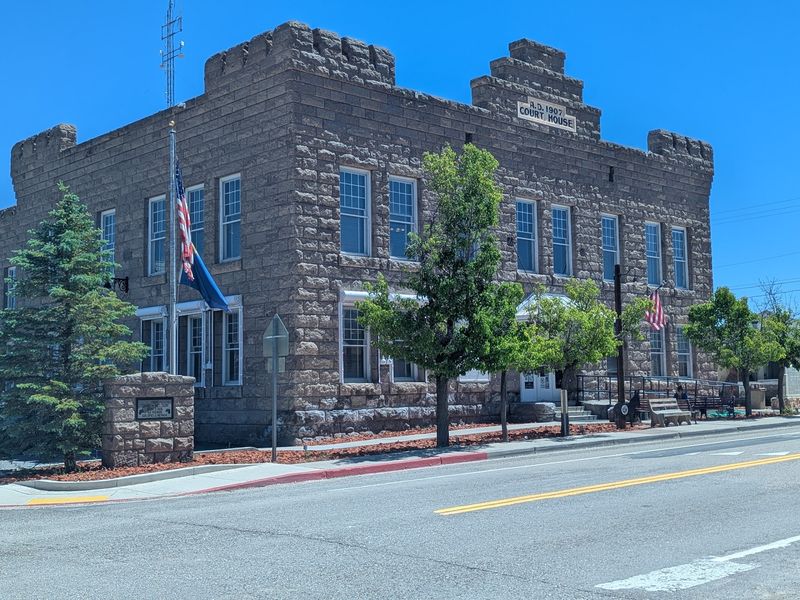
Believe it or not, Goldfield was once the biggest city in Nevada. Around 1906, more than 20,000 people crowded its streets chasing gold.
Standing tall at 233 Crook Ave, Goldfield, NV 89013, the courthouse remembers every bit of that buzz.
Built in 1907, this sturdy stone building handled all the legal business of a booming county. Claims, contracts, and disagreements over property all landed here.
With so much gold at stake, the paperwork must have been mountainous.
Then the boom faded, and the town shrank year by year. A huge fire in 1923 swept through much of the city.
Yet the courthouse kept standing firm, like a calm friend during a storm.
Here is the remarkable part: it continued serving the county for over a century. Very few boomtown buildings can claim such a long, steady career.
The architecture shows how confident early residents felt about their future.
Inside, original details like woodwork and fixtures hint at the elegance of that era. Nearby, you can spot other historic buildings, including the grand Goldfield Hotel.
Strolling the town feels like flipping through a vintage photo album.
Goldfield may be smaller now, yet its courthouse shows that strong foundations outlast any rush.
5. Historic Fourth Ward School Museum
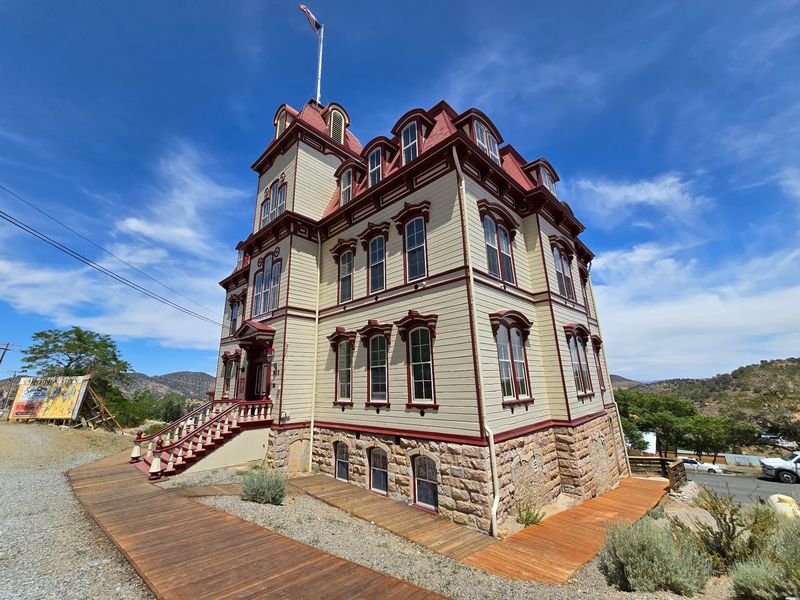
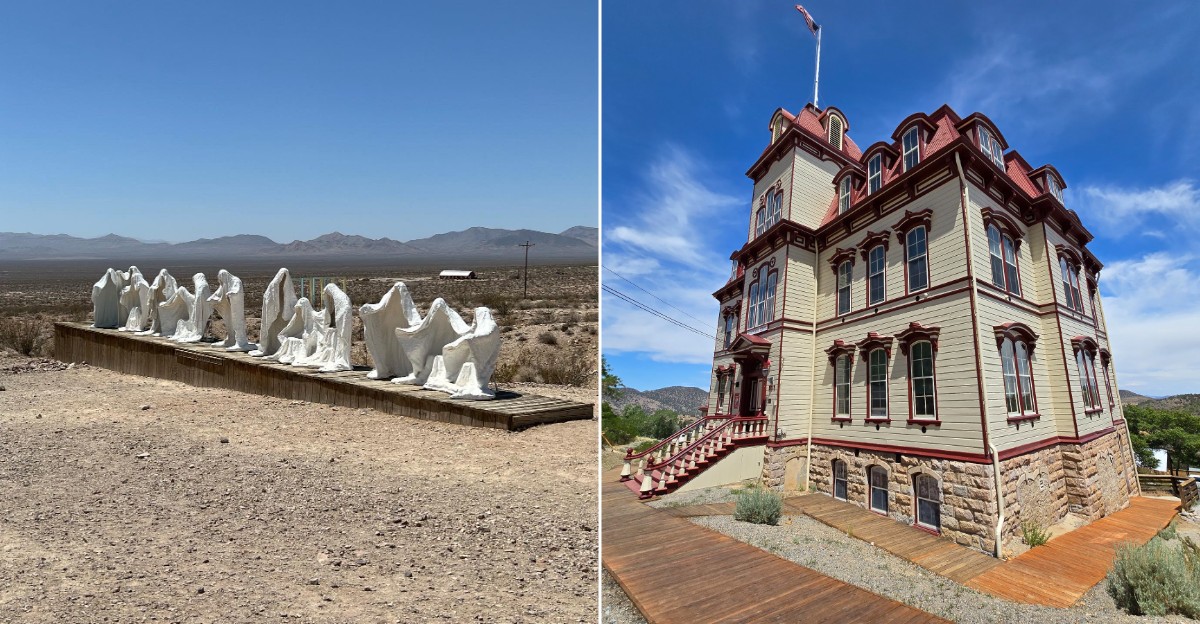
Imagine attending a school so fancy it had indoor plumbing in 1876. Students in Virginia City got exactly that, and their classroom palace still towers over town.
This four-story beauty stands at 537 S C St, Virginia City, NV 89440, near the southern end of the historic district.
The Comstock Lode made Virginia City incredibly wealthy, and the community spent big on education. The Second Empire school was designed to hold more than 1,000 students.
It even featured central heating, which felt like pure luxury back then.
As the silver dwindled, so did the number of families. Enrollment slipped year after year, and the school closed its doors in 1936.
For decades, the building simply waited on its hillside.
Thankfully, state grants helped restore this architectural treasure. It reopened as a museum in 1986, exactly fifty years after the final bell.
That timing feels almost like a movie ending.
Today, visitors can step into vintage classrooms filled with original desks and chalkboards. Exhibits share what daily life looked like in a busy mining town.
It is considered the last wooden school of its kind still standing in the country.
Bring curiosity and maybe a pencil for old times’ sake. Some lessons simply refuse to fade.
6. Eureka Sentinel Museum
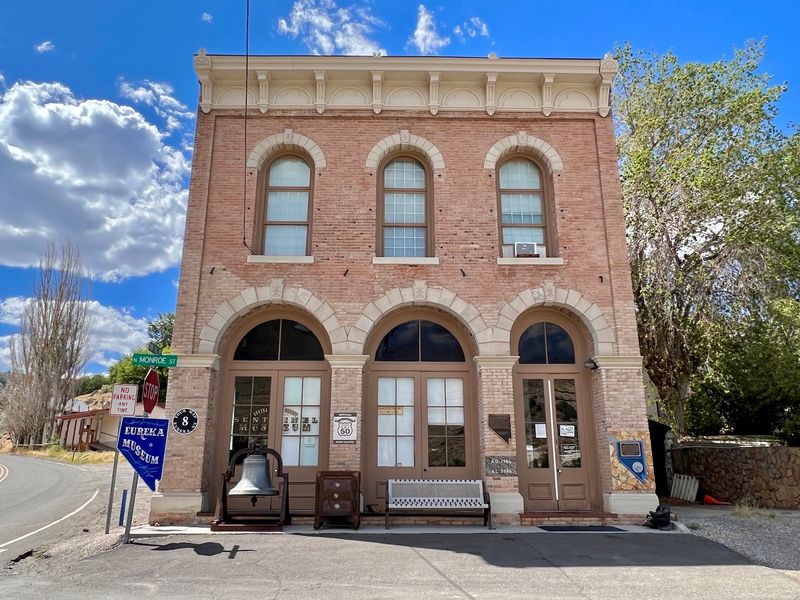
Stop the presses, because this one is a scoop. Long before scrolling news on phones, folks in Eureka waited eagerly for fresh ink.
The Eureka Sentinel Museum sits at 10 N Monroe St, Eureka, NV 89316, right off the famous Loneliest Road in America.
During the 1870s, a silver and lead boom turned Eureka into a lively hub. Smelters kept the skies smoky, earning it the nickname Little Smoky.
The Eureka Sentinel newspaper recorded the town’s ups, downs, and everyday chatter.
When mining slowed, the newspaper kept on printing anyway. Its pages captured how the community adjusted and carried on.
That steady reporting gives us a rare window into life after the frenzy.
The museum lives inside the original 1879 newspaper building. Antique printing presses and typesetting tools fill the rooms like mechanical sculptures.
The walls hold layers of old posters and ads that are surprisingly entertaining to read.
Exhibits also cover mining, household items, and small-town traditions. Each display shows how resourceful residents built lasting lives beyond silver.
Downtown Eureka itself is full of well-kept historic buildings worth a stroll.
Pair your visit with the nearby Eureka Opera House for extra charm. Here, history is not just written, it is printed.
7. Million Dollar Courthouse
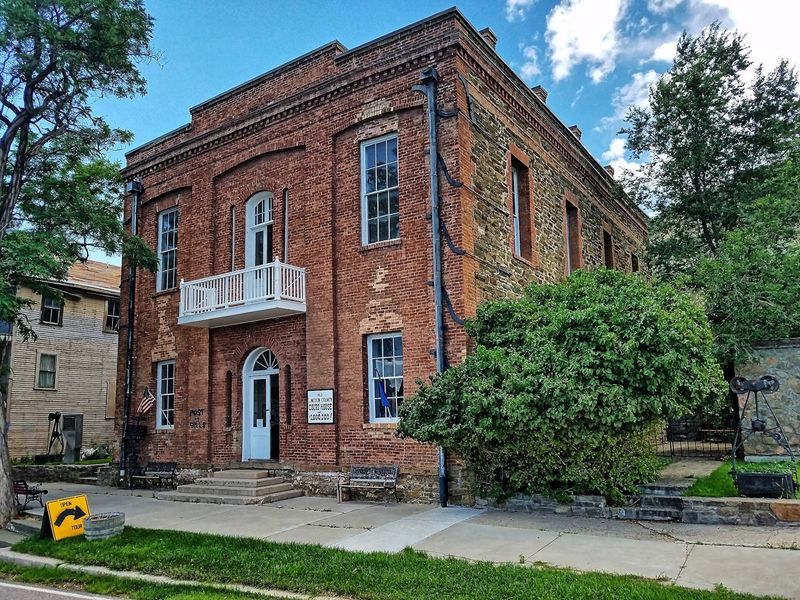
Ever had a project go a tiny bit over budget? Pioche has you beat by about 970,000 dollars.
This famous brick building waits at 69 Lacour St, Pioche, NV 89043, in a hilly town packed with mining history.
Pioche boomed with silver in the 1870s, drawing thousands of hopeful newcomers. In 1871, it became the Lincoln County seat, and courthouse plans began.
The starting budget for the courthouse and jail was a modest 26,000 dollars.
Then things snowballed. Discounted bonds, cost overruns, and high interest rates stacked up year after year.
By the end of the century, the county owed around 670,000 dollars.
Total costs eventually crept close to one million, earning the building its legendary name. The debt was finally cleared in 1938.
By then, the courthouse had already been retired from official use.
Happily, restoration in the 1970s gave it a brand new role as a museum. Visitors can tour the courtroom, offices, and old jail cells.
Displays share colorful stories of Pioche’s spirited early days.
The town also features an aerial tramway frame visible on the hillside. Pioche reminds us that some lessons in money management come with a very memorable price tag.
8. Ward Charcoal Ovens State Historic Park
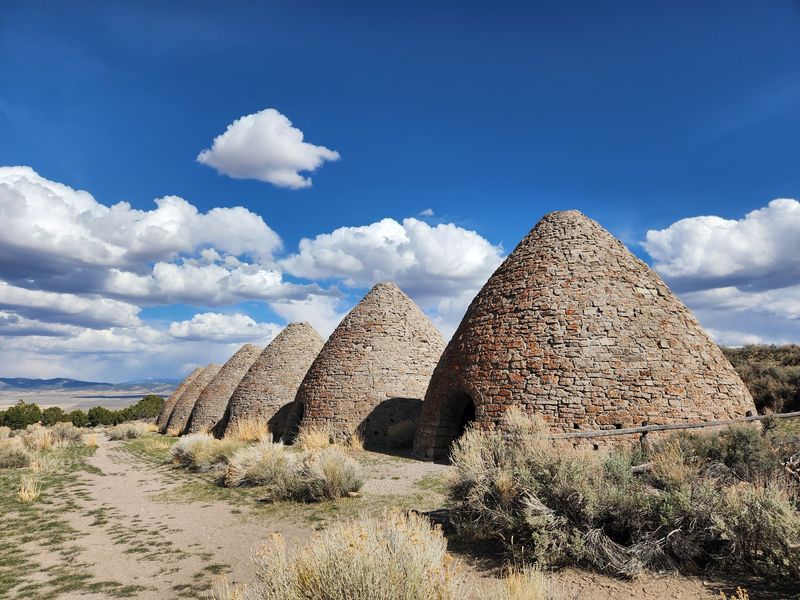
Six giant stone beehives in the middle of a sagebrush valley sound like a riddle. The answer is one of Nevada’s coolest leftovers from the silver days.
These ovens rest at 1696 Cave Valley Rd, Ely, NV 89315, south of town in the Egan Range foothills.
Skilled Italian masons built them in 1876 with impressive precision. Each oven is about 30 feet tall, shaped perfectly to hold heat.
Their job was making charcoal to fuel smelters processing ore from the nearby Ward mines.
Workers loaded them with pinyon pine and juniper, then sealed them carefully. The result was charcoal produced more efficiently than open pits.
The ovens stayed busy from roughly 1876 to 1879.
Once the ore thinned out, the fires went quiet. Yet these sturdy domes refused to retire completely.
Stockmen and prospectors used them as shelters during rough weather.
Legend says stagecoach bandits liked hiding inside too, which adds a dash of Wild West flair. Today, the park offers camping, picnic areas, hiking trails, and great wildlife viewing.
Elk and pronghorn sometimes wander through the valley.
Step inside an oven and notice the amazing acoustics. More than 140 years later, this masonry still speaks volumes.
9. Goldwell Open Air Museum
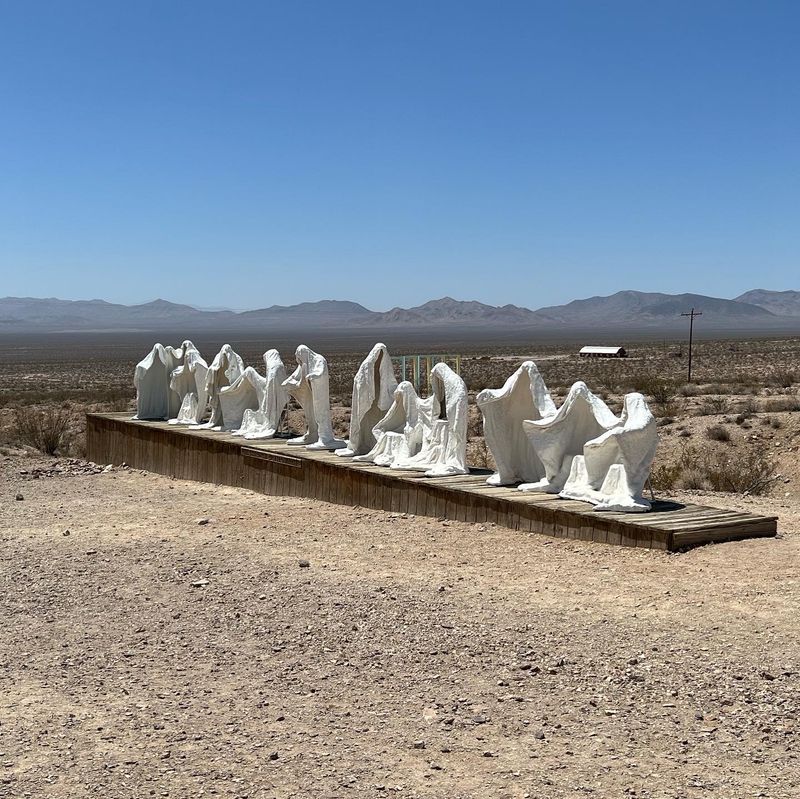
Sculptures that look like friendly ghosts? Now you have officially reached the quirkiest stop on the list.
Goldwell Open Air Museum spreads out at 1 Golden St, Beatty, NV 89003, right beside the Rhyolite ghost town.
It all began in 1984 with a piece called The Last Supper by a Belgian artist. The work features life-sized figures shaped from plaster-soaked fabric.
At sunset, they glow softly against the desert like pale lanterns.
Other artists soon felt the pull of the Mojave landscape. They added surprising creations that make visitors stop and stare.
One favorite is a towering pink woman built from cinder blocks.
Another shows a steel prospector strolling with a penguin pal. Yes, a penguin in the desert, and somehow it works beautifully.
Every piece invites you to look at the empty land in a fresh way.
The museum is free and open year-round, making it an easy add-on to a Rhyolite visit. Cooler months are best for wandering between sculptures.
Bring a camera, since the light here practically paints itself.
Goldwell shows how imagination can bloom where mines once ruled. After all these stops, which Nevada comeback story is calling your name first?