
No Other Historic Landmark In South Carolina Compares To This 400-Year-Old Tree
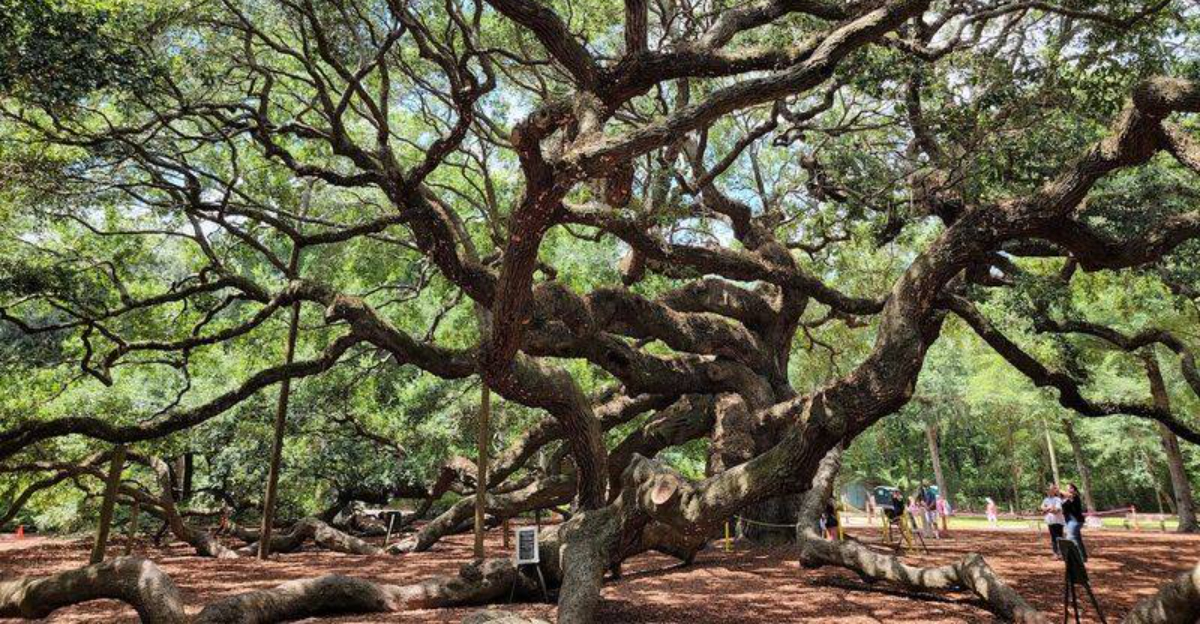
South Carolina has countless historic landmarks.
Most were built by people.
This one was shaped by time.
Long before highways, skyscrapers, or even the United States itself, a tiny acorn took root on Johns Island. Century after century, it kept growing, stretching its massive branches farther across the landscape until it became one of the most extraordinary living landmarks in America.
Standing beneath its enormous canopy, it is impossible not to feel just how small a single human lifetime really is.
That is what makes this place unforgettable.
South Carolina is rich in history, but few destinations connect the past and present as powerfully as this ancient tree. It has witnessed generations come and go, hurricanes sweep across the coast, and an entire nation grow around it, all while quietly continuing to reach toward the sky.
Some landmarks tell history.
This South Carolina giant has been living it for hundreds of years.
The Angel Oak Is Estimated To Be Between 400 And 500 Years Old
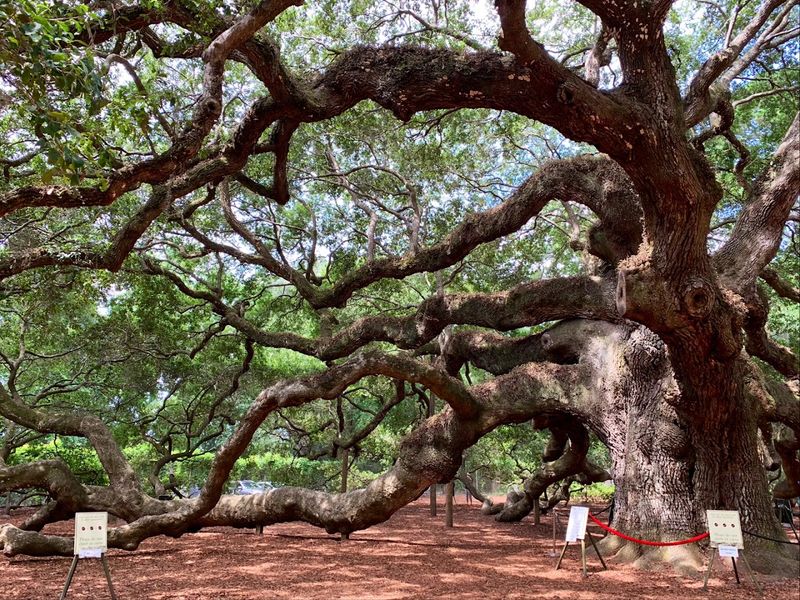
Long before the first European settlers arrived on American shores, this tree was already putting down roots in the South Carolina soil. The Angel Oak is estimated to be somewhere between 400 and 500 years old, which places its birth somewhere in the early 1500s.
That means it was already a full-grown tree when the Pilgrims landed at Plymouth Rock in 1620.
Thinking about that timeline is genuinely humbling. Generations of people have come and gone, wars have been fought, cities have risen and crumbled, and through all of it, this oak just kept growing.
Many visitors say that standing beneath its branches gives them a completely new sense of how brief a single human life really is.
Scientists and arborists have studied the tree carefully to arrive at this age estimate, and the figure continues to inspire wonder in everyone who learns it. Few living things on the East Coast can claim a lifespan this long.
The Tree Stands Nearly 67 Feet Tall With A Canopy Covering Over 17,000 Square Feet
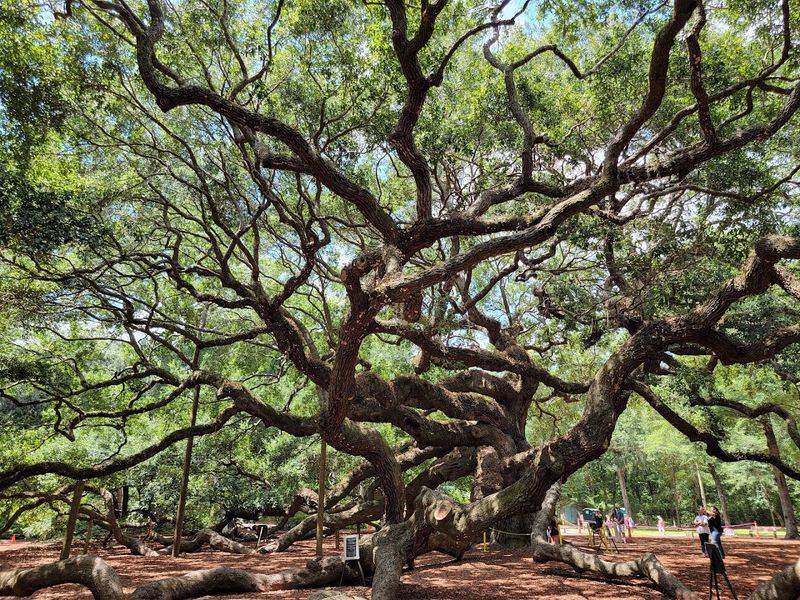
Raw numbers sometimes tell a story better than any photograph can. The Angel Oak stands nearly 67 feet tall, and its canopy spreads so far outward that it shades over 17,200 square feet of ground.
To put that in perspective, that is roughly the size of three standard basketball courts sitting side by side.
The trunk itself measures an impressive 28 feet in circumference, which means you would need several adults holding hands just to wrap around it. Branches stretch outward in every direction, some so long and heavy that they dip down and touch the ground before curving back up again.
Visitors consistently say that photographs simply do not prepare you for how large this tree actually is in person. One popular review from Google noted that the tree is “so much more beautiful and larger” than any image suggests.
You really do have to stand beneath it to fully understand the scale.
Admission To See The Angel Oak Is Completely Free
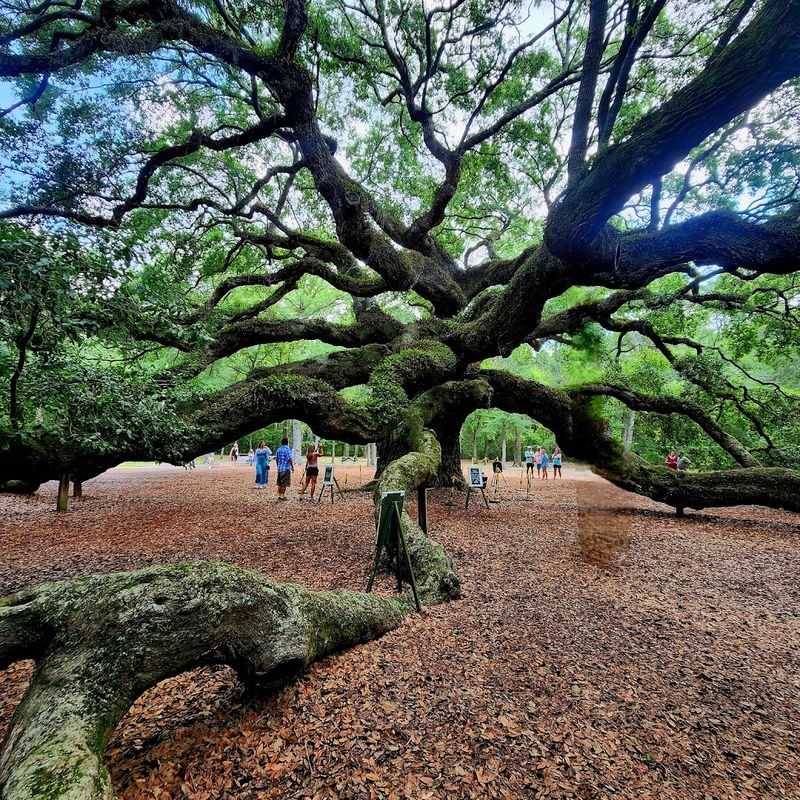
One of the most refreshing things about visiting this landmark is that it costs absolutely nothing to walk through the gates and experience it. There is no ticket booth, no reservation system, and no entry fee standing between you and one of the most spectacular natural wonders in the entire southeastern United States.
Donations are warmly welcomed and help support the continued preservation of the tree and its surrounding park, but your wallet stays in your pocket either way. Free parking is available along the street outside, though spots can fill up quickly during busy seasons.
Visitors with disabilities have access to limited parking inside the gates.
A small gift shop sits on the property where you can pick up a souvenir to remember your visit. The combination of free entry, a well-maintained park, and an unforgettable natural centerpiece makes the Angel Oak one of the best no-cost experiences anywhere near Charleston, South Carolina.
The Tree Is A Southern Live Oak, A Species Built To Last For Centuries
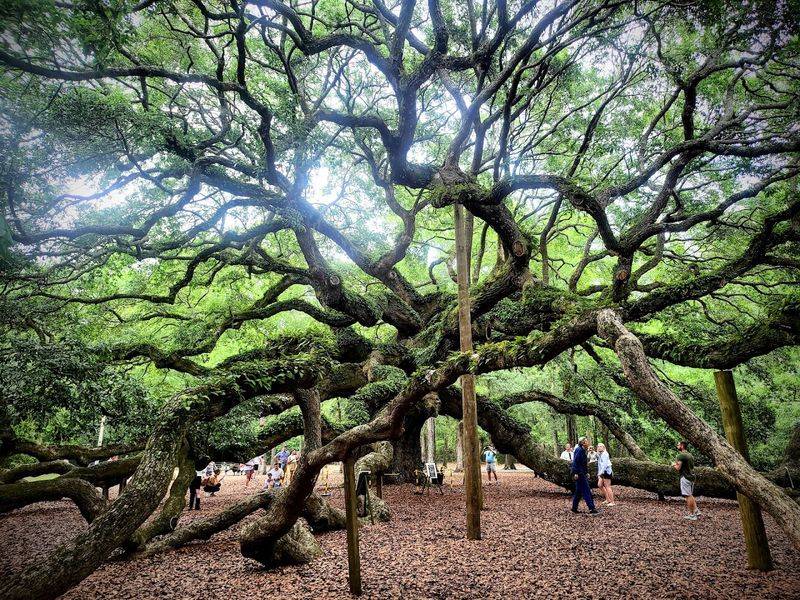
Not every tree species could survive 400-plus years of storms, droughts, and the general chaos of nature, but the Southern Live Oak was practically designed for longevity. Known scientifically as Quercus virginiana, this species is famous for its dense, incredibly hard wood and its ability to hold up against coastal weather conditions that would topple most other trees.
Unlike deciduous oaks that shed their leaves every autumn, the Southern Live Oak keeps its leaves year-round, which is where the word “live” in its name comes from. The species thrives in the warm, humid climate of the South Carolina Lowcountry, and the rich soil of Johns Island has clearly suited this particular specimen very well over the centuries.
The Angel Oak is widely considered one of the oldest and largest examples of this species on the entire East Coast of North America. Its survival is a testament to both the resilience of the species and the care that has been taken to protect it.
Visiting On A Weekday Gives You A Much More Peaceful Experience
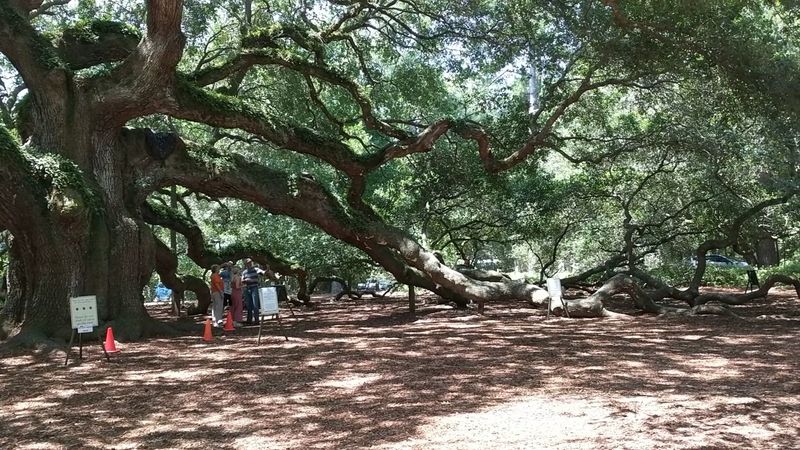
Timing your visit can make a surprisingly big difference in how you experience the Angel Oak. Weekends, especially during summer, draw large crowds, and the narrow road leading to the park can turn parking into a frustrating puzzle.
Several visitors on Google reviews specifically recommend arriving on a Tuesday, Wednesday, or Thursday morning for the calmest experience.
The park opens at 9 AM Monday through Saturday and at 1 PM on Sundays, closing at 4:50 PM every day. Getting there right when the gates open on a weekday gives you the best chance of having long stretches of quiet time to simply stand beneath the branches and take it all in without distraction.
One reviewer mentioned visiting on a Sunday right at opening and finding it very busy, then returning on a Tuesday to find “hardly anyone there.” That kind of peaceful, unhurried visit is exactly what this tree deserves. Plan accordingly and the reward is a deeply personal and memorable experience.
The Tree Has Survived Centuries Of Hurricanes And Coastal Storms
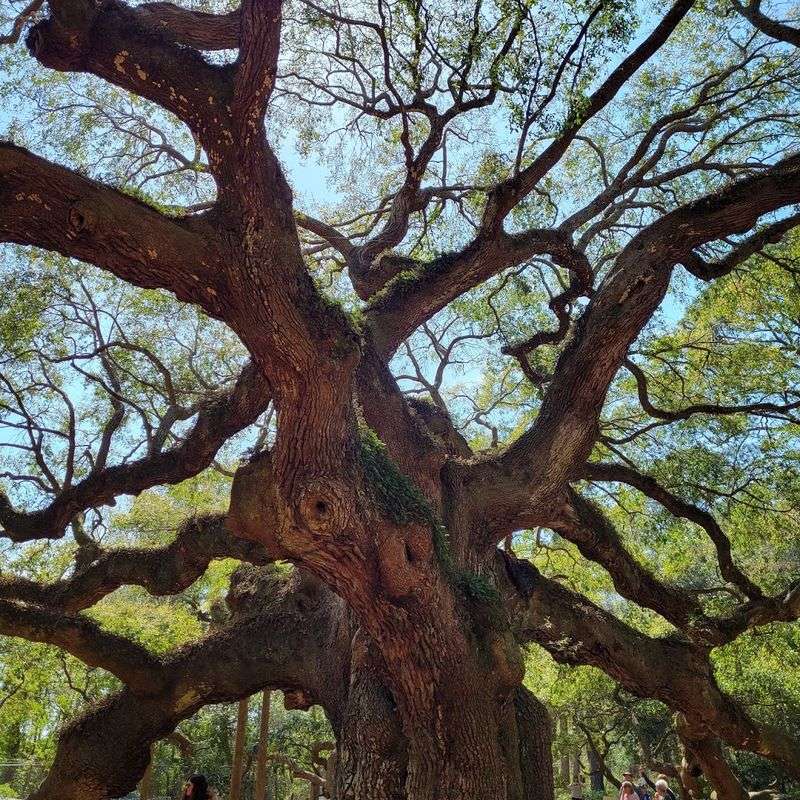
Living on a barrier island in South Carolina means facing some of the most powerful storms the Atlantic coast can produce, and this tree has weathered every single one of them. The Angel Oak has survived centuries of hurricanes, tropical storms, flooding, and the kind of punishing coastal weather that regularly reshapes the landscape around it.
Experts point to the tree’s incredibly deep and wide root system as a key reason for its survival. Those roots anchor the tree so firmly into the earth that even the strongest winds struggle to destabilize it.
The dense, flexible wood of the Southern Live Oak also plays a major role, bending under pressure rather than snapping the way more brittle trees might.
The park does close temporarily during active thunderstorm warnings, which is something to keep in mind when planning your trip. A permanent sign at the entrance explains this policy clearly.
The fact that this tree is still standing after so many centuries of coastal weather is nothing short of extraordinary.
A Small Sapling Growing Near The Trunk Is Being Carefully Nurtured
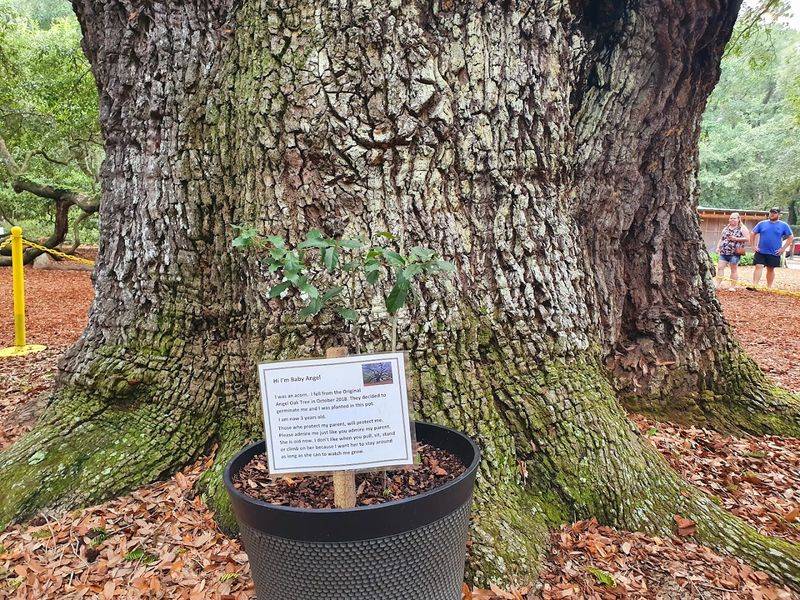
Tucked near the base of the ancient trunk, a small sapling has become a charming side attraction for visitors who take a moment to look closely. This young tree, sometimes called “Baby Angel” by visitors, is being carefully tended in a pot near the main tree and represents a hopeful continuation of the Angel Oak legacy.
Several visitors have mentioned the sapling in their reviews, noting how touching it is to see new life growing in the shadow of something so ancient. The contrast between the towering, centuries-old giant and the tiny seedling creates a moment of quiet reflection that many people find unexpectedly moving.
Park staff and the City of Charleston work to protect both the mature tree and any offspring to ensure that future generations will have the chance to witness something just as magnificent. One reviewer specifically asked visitors to be respectful of the rules that help protect both the old tree and the sapling growing beside it.
The little one has a long journey ahead.
The Angel Oak Is Owned And Protected By The City Of Charleston
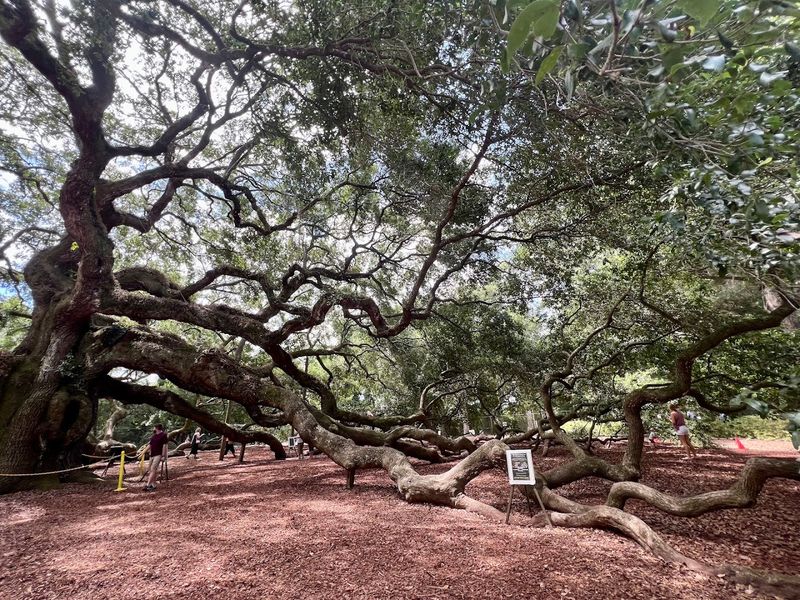
Preservation of a tree this old and this significant requires serious institutional commitment, and that is exactly what the Angel Oak has received. The City of Charleston owns the property and actively manages it as a public park, ensuring that conservation remains the top priority at every level of operation.
Visitors are asked to stay on designated pathways and are not allowed to walk too close to the trunk, which protects the massive root system that keeps the tree alive and stable. Ropes and barriers are placed thoughtfully around the tree to guide foot traffic without ruining the experience.
Dogs are welcome at the park but must stay behind the designated boundaries to avoid disturbing the roots.
The city’s official website at charleston-sc.gov provides up-to-date information on hours, closures, and park rules. Phone inquiries can be directed to the park at 843-559-3496.
The level of care and attention that goes into maintaining this site is a genuine reflection of how much the local community values this irreplaceable piece of natural history.
No Camera Can Fully Capture What This Tree Looks Like In Person
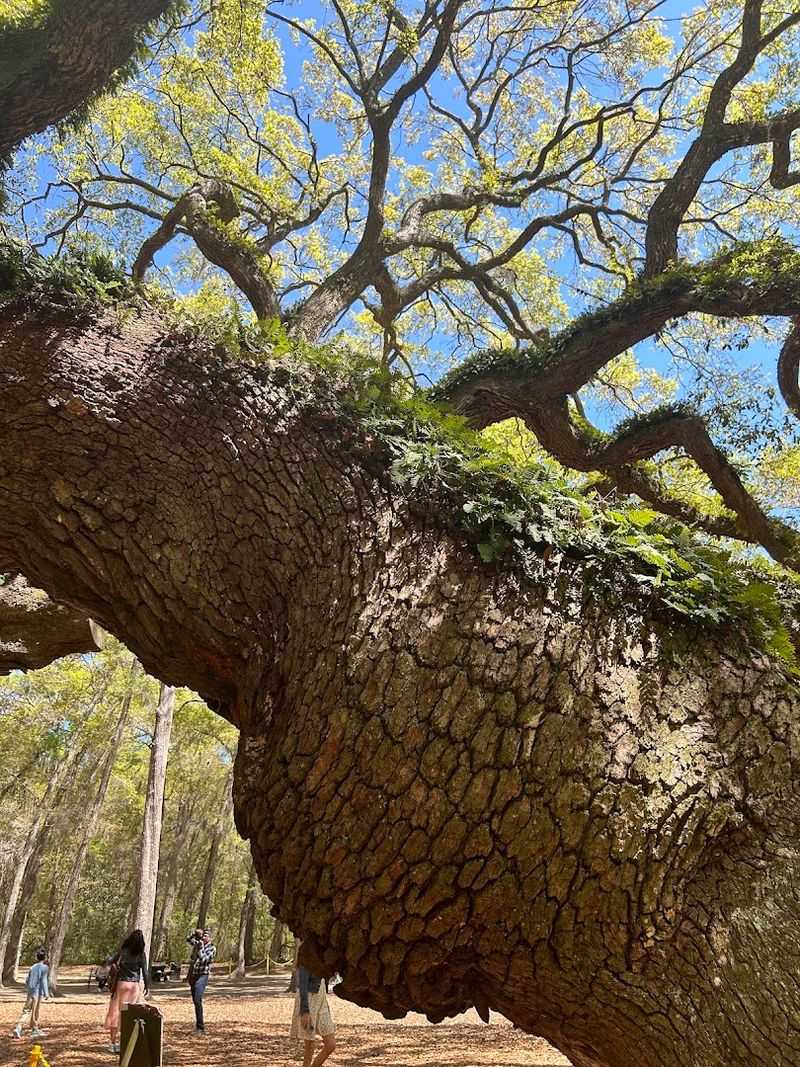
Almost every visitor who leaves a review for the Angel Oak mentions the same thing: photos simply do not do it justice. That is a bold claim for a tree that photographs beautifully from nearly every angle, but it turns out to be completely accurate once you actually stand beneath it yourself.
The sheer scale of the canopy, the way the light filters through the leaves, the texture of the enormous twisting branches, and the physical sensation of standing inside a living space that has existed for half a millennium, none of that translates to a screen. One reviewer put it plainly: “These pictures and almost every other picture I have ever seen of this Oak tree doesn’t do it justice.”
That said, photographers still flock here with serious equipment to try their best. Weekday morning light is generally considered the most flattering for photography.
Note that tripods are not permitted inside the park, so handheld shots and phone cameras are the standard tools for capturing your memories here.
The Angel Oak Sits On Johns Island, One Of South Carolina’s Most Historically Rich Areas
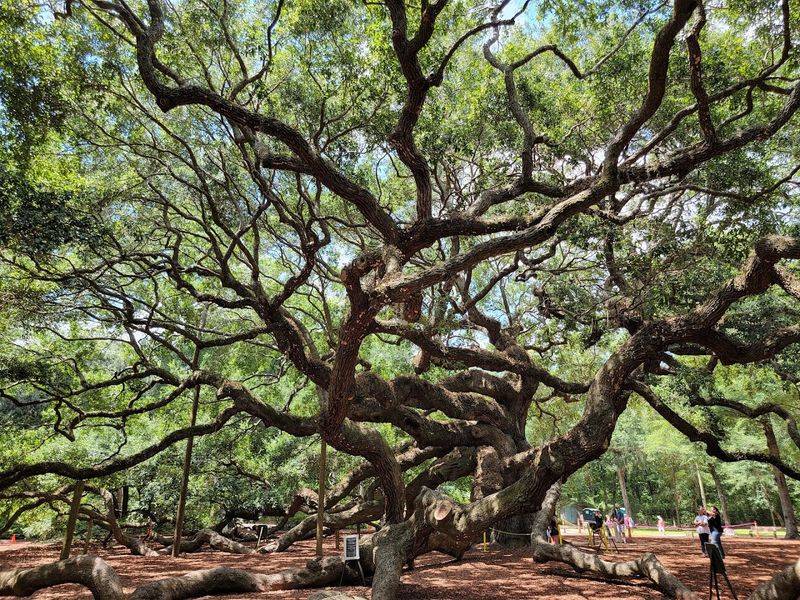
The tree does not exist in isolation. It sits on Johns Island, a place with its own deep and layered history that stretches back long before European colonization.
Johns Island is the largest island in South Carolina and one of the largest on the entire East Coast, and it has been home to Native American communities, colonial plantations, and the Gullah Geechee culture that still has a living presence there today.
The surrounding Lowcountry landscape is lush and atmospheric, with Spanish moss hanging from trees along quiet roads and marshland stretching out in every direction. Visitors often combine a trip to the Angel Oak with a stop at Boone Hall Plantation or a drive through the scenic countryside that makes this corner of South Carolina so distinctive.
The drive out to 3688 Angel Oak Rd itself is part of the experience, winding through countryside that feels a world away from the bustle of downtown Charleston, which sits only about 12 miles away. History is layered into every mile of this island.