
North Carolina’s Forgotten Industrial Creeks And 10 Mill Stops That Still Remain
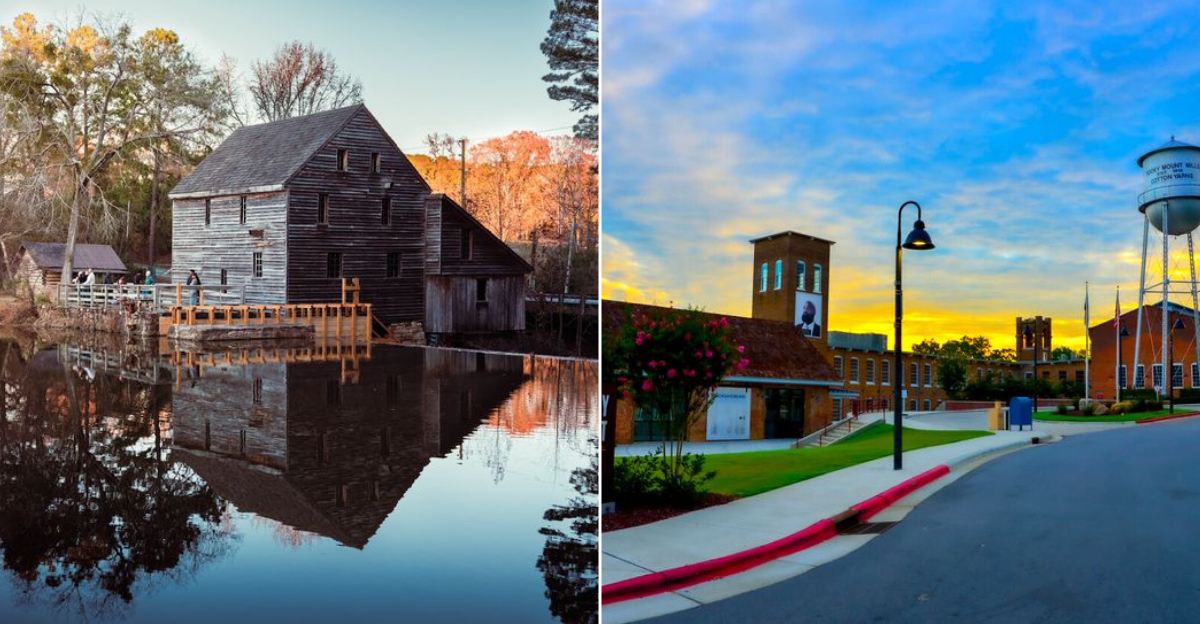
Not every piece of history disappears when industry fades. Some of it just gets reclaimed by nature and left quietly along the water. So what’s still hiding along North Carolina’s forgotten industrial creeks?
More than most people ever realize. These waterways once powered mills that shaped entire communities, setting the rhythm for work, trade, and daily life. Today, many of those sites remain in fragments.
Some crumbling, others partially standing, but all carrying traces of what once was. Is it eerie?
A little. Fascinating?
Definitely. Following these creeks feels like moving through an open-air archive, where stone foundations, weathered structures, and overgrown ruins tell their stories without a single word. Each stop offers a glimpse into a past that hasn’t fully disappeared.
It’s just become harder to see. Get ready to discover mill stops that still remain, where North Carolina’s industrial history waits quietly along the water’s edge.
1. Murray’s Mill Historic District
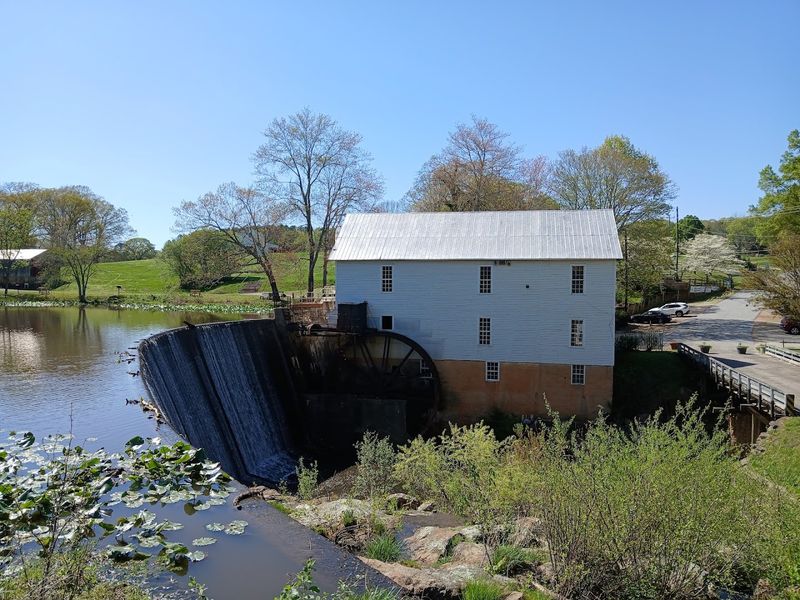
Murray’s Mill is the kind of place that makes you slow down, look around, and quietly wonder how something this well-preserved survived into the modern world.
The district dates back to 1883, when William Murray built the first mill on the banks of Balls Creek. You can find this gem at 1489 Murray’s Mill Rd, Catawba, NC 28609, tucked into the rolling countryside like a secret the landscape kept for itself.
John Murray replaced his father’s original structure with the current two-story building in 1913, and that mill is still standing strong.
The star attraction is the massive 28-foot overshot waterwheel, installed in 1938, which remains one of the most photogenic sights in Catawba County. Corn and wheat were the mill’s specialties, and the community depended on it for generations.
Beyond the mill itself, the district preserves an 1890s general store, an 1880s Wheathouse, and the 1913 John Murray House. Walking through feels like flipping through a photo album where every image is three-dimensional.
Murray’s Mill earned its place on the National Register of Historic Places, and honestly, one visit will tell you exactly why that recognition was completely deserved.
2. The Historic Old Mill Of Guilford
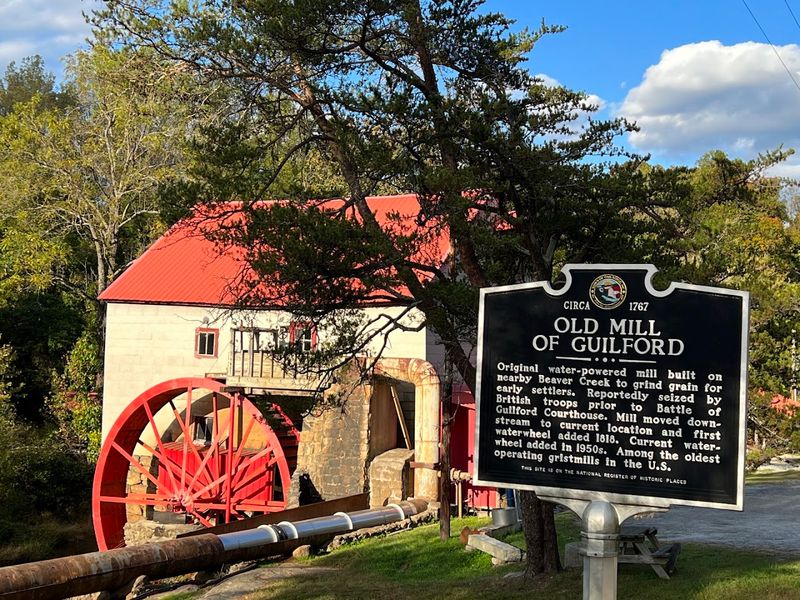
Here is a mill that has been minding its business since 1767, and it shows absolutely no signs of slowing down. Daniel Dillon constructed a small tub mill on Beaver Creek, and what started as a simple grain-grinding operation grew into something truly remarkable.
You can visit this living piece of history at 1340 NC Hwy 68 N, Oak Ridge, NC 27310, where the past and present shake hands every single day.
What makes the Old Mill of Guilford stand apart is that it is not just preserved, it is fully operational. The mill still produces all-natural, stone-ground, whole-grain foods using a working overshot water wheel.
It was the first merchant mill in Guilford County, which means it once served the entire region’s grain-processing needs.
That kind of legacy does not just fade quietly.
The mill holds a well-earned spot on the National Register of Historic Places, and visitors can also browse a charming country store stocked with stone-ground products made right on-site.
Picking up a bag of cornmeal here feels like taking a little piece of 1767 home with you. The Old Mill of Guilford is proof that the best things truly do get better with age.
3. Historic Yates Mill County Park
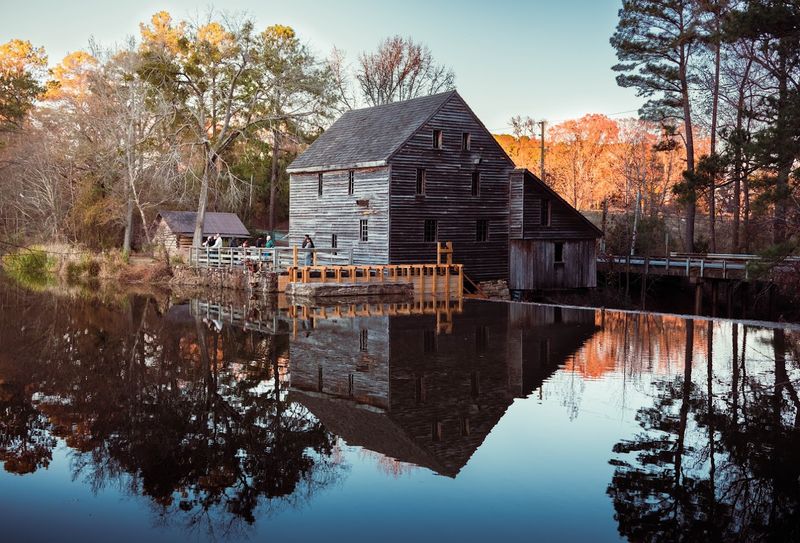
Some places feel like they exist in a gentle pause between past and present, and Yates Mill is exactly that kind of place.
Dating all the way back to 1756, this mill on Steep Hill Creek is Wake County’s last surviving water-powered gristmill. Nestled at 4620 Lake Wheeler Rd, Raleigh, NC 27603, it sits inside a gorgeous 174-acre park that makes the whole visit feel like a reward.
Samuel Pearson originally established the mill, and over the centuries it ground corn and wheat, processed lumber, and even carded wool. That is a seriously impressive resume for one building.
After careful restoration efforts, the mill resumed grinding corn in 2001, proving that old things can absolutely make a comeback.
The 1850s-era mill building anchors the property like a proud centerpiece. A sparkling 20-acre lake reflects the surrounding trees, making every photo look effortless.
The modern Finley Center on-site includes a museum where you can connect the dots between the millstones and the bigger story of North Carolina’s agricultural past. Visiting here feels less like a history lesson and more like stepping into a living postcard that somehow never went out of style.
4. Bost Grist Mill
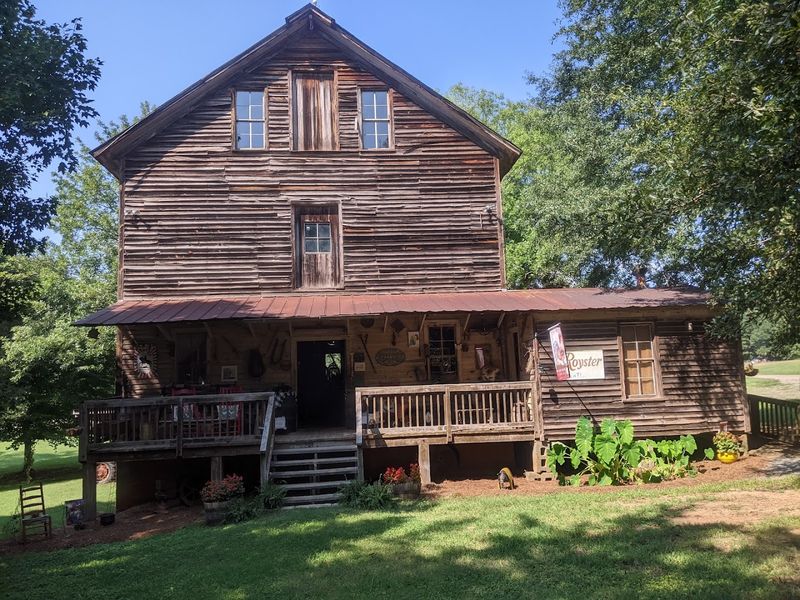
Somewhere along Highway 200 in Cabarrus County, a mill has been quietly holding its ground since around 1810, and it has quite the story to tell.
The Bost Grist Mill was founded by John H. Bost along the Rocky River, and its address today is 4701 Hwy 200, Concord, NC 28025.
It started as a water-powered operation turning out flour and cornmeal for the surrounding community, which was no small task in the early 1800s.
The current mill building dates to the 1870s, making it a survivor in its own right. A flood in 1908 forced the entire structure to be relocated about 200 yards from its original spot, which is honestly a wild flex for a building of that age.
Today the mill runs on a gasoline system rather than waterpower, but the original 48-inch French Buhr Millstone is still in use, which feels like the ultimate throwback.
The Bost family continues to offer tours and sells cornmeal and grits right on the property. There is something genuinely satisfying about buying freshly ground cornmeal from the same family that has been running this mill for generations.
Bost Grist Mill is a living, grinding reminder that some traditions are worth every ounce of effort to preserve.
5. Textile Heritage Museum At Glencoe Mill Village
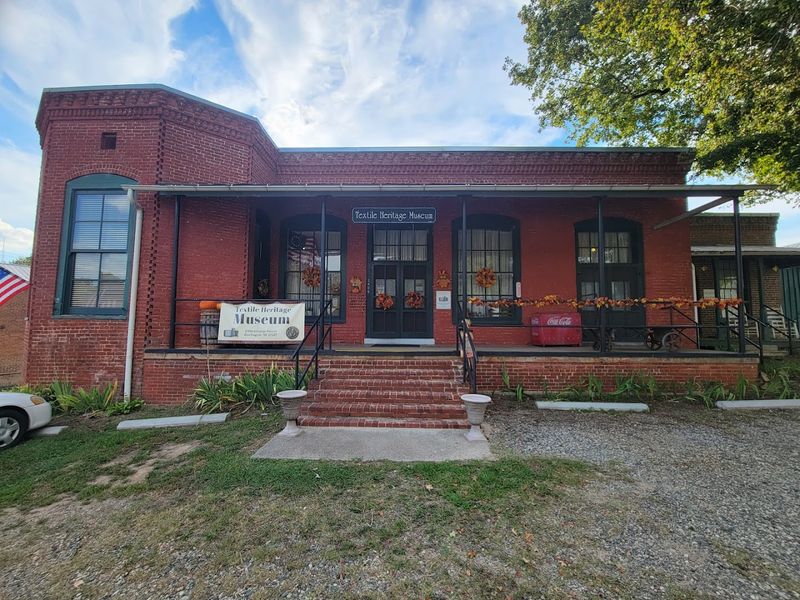
Glencoe Mill Village has a kind of quiet confidence about it, the sort that comes from being one of the best-preserved textile mill villages in the entire country.
Built between 1880 and 1882 along the Haw River, this water-powered mill produced beautiful plaid cotton fabrics that were shipped across the United States and even internationally. You can step into this extraordinary place at 2406 Glencoe St, Burlington, NC 27217, where history practically greets you at the door.
The Textile Heritage Museum now calls the former company store and offices home, offering visitors a vivid window into what mill life actually looked like.
Many of the original mill buildings and worker houses are still standing, which gives the village an authenticity that no museum replica could ever match. Walking the grounds feels like reading a chapter of North Carolina’s industrial story that most textbooks skipped entirely.
The plaid cotton fabrics made here were not just regional products. They traveled the world, representing North Carolina craftsmanship on a global stage.
Glencoe Mill Village is the kind of place that makes you appreciate how much skill and labor went into everyday textiles. It is a textile love letter written in brick, water, and cotton thread.
6. Henry River Mill Village
If you have ever watched “The Hunger Games” and thought District 12 looked hauntingly real, that is because it was filmed right here in North Carolina.
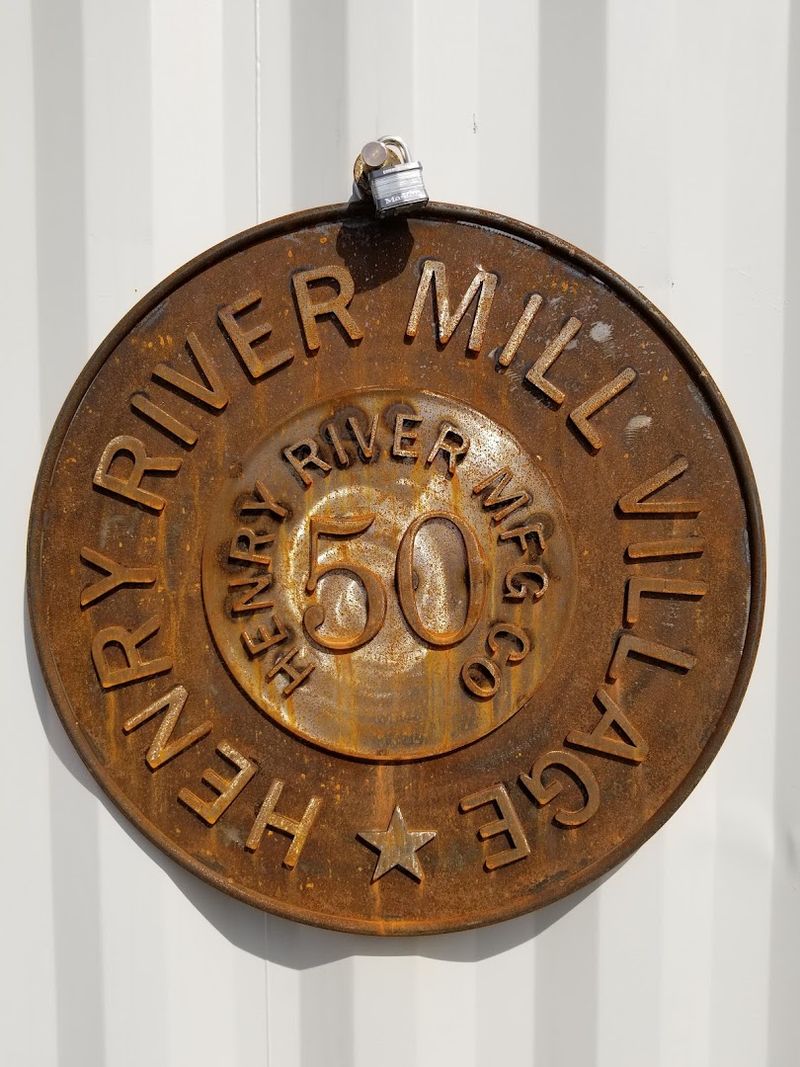
Henry River Mill Village, located at 4255 Henry River Rd, Hickory, NC 28602, served as the backdrop for those iconic scenes, and visiting it feels like walking straight into the film. The village was established in 1904 by the Henry River Manufacturing Company along the Henry River.
The mill primarily produced fine cotton yarns, starting with waterpower before transitioning to steam and eventually electricity. That evolution mirrors the broader story of American industry, compressed into one small riverside village.
The main mill building burned down in 1977, but many of the original worker houses still stand in various states of preservation.
What makes Henry River Mill Village so compelling is its unfiltered authenticity. Nothing here has been prettied up for tourists.
The weathered houses and overgrown paths tell the story of working-class mill life without any editorial polish.
It is raw, it is real, and it is genuinely moving. Whether you are a film fan chasing a “Hunger Games” moment or a history enthusiast chasing the truth of early industrial Carolina, this village delivers something unforgettable on every visit.
7. Rocky Mount Mills
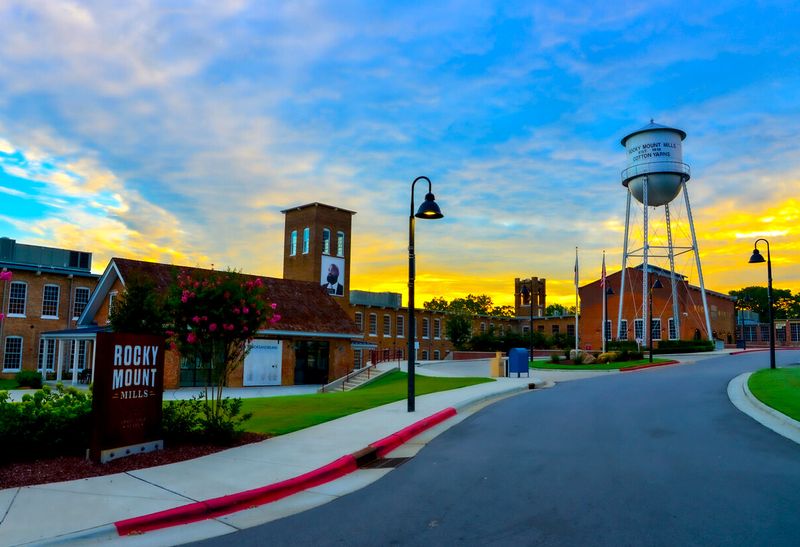
Rocky Mount Mills has one of the most remarkable second acts in North Carolina history. Founded in 1818 by Joel Battle and his partners on the falls of the Tar River, this complex operated both cotton and grist mills powered entirely by the river’s natural flow.
Today you can find this revitalized landmark at 1151 Falls Rd, Rocky Mount, NC 27804, where the past has been brilliantly reimagined for the present.
For nearly two centuries, the Tar River powered this operation, making it one of the oldest continuously active mill sites in the state.
The water-powered system was a marvel of early American engineering, and the falls location gave it a natural energy source that most mills could only dream about. The mills and surrounding village eventually became a recognized local historic district.
Today, Rocky Mount Mills is a thriving mixed-use campus with residential lofts, shops, and restaurants woven into the original brick buildings.
The transformation is stunning without being disrespectful to the architecture. You can grab a meal, explore the waterfront, and still feel the weight of two hundred years of history in the walls around you.
Rocky Mount Mills proves that industrial heritage and modern living can coexist in the most delicious way possible.
8. Revolution Mill
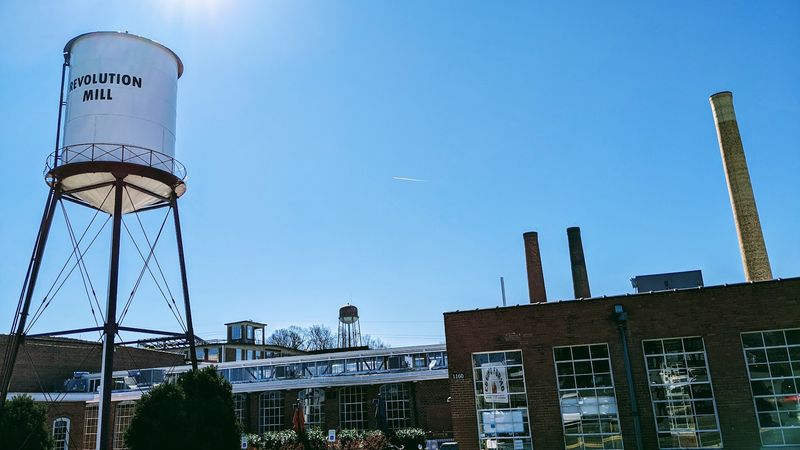
Once the world’s largest producer of flannel, Revolution Mill is the kind of place that earns its dramatic name on multiple levels. Opened in 1899 by brothers Moses and Ceasar Cone, this massive operation sat on North Buffalo Creek and hummed with industrial ambition from day one.
The address is 900 Revolution Mill Dr, Greensboro, NC 27405, and the campus today is every bit as impressive as it must have been at peak production.
The mill later shifted from flannel to corduroy, adapting to changing market demands the way only truly resilient operations can.
At its height, this facility set the standard for textile manufacturing in the American South. The Cone brothers built more than a factory here.
They built an institution.
Today, Revolution Mill houses over 150 businesses and 183 loft apartments, plus restaurants and event spaces that keep the energy alive seven days a week.
Many of the original architectural details have been carefully preserved, so the bones of that 1899 vision are still completely visible. It also holds a well-deserved place on the National Register of Historic Places.
Revolution Mill is living proof that a building with great bones and a bold vision can absolutely reinvent itself without losing a single thread of its original character.
9. Saxapahaw Rivermill
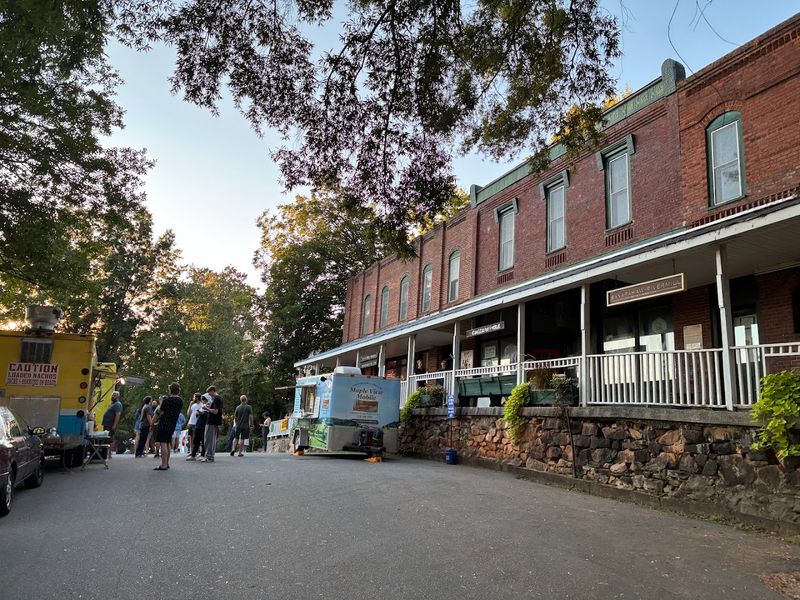
There is a small town in Alamance County that figured out something most places are still trying to crack: how to honor history while building something genuinely exciting for the future.
Saxapahaw Rivermill has roots stretching back to 1844, when Jonathan Newlin began construction on what would become a cornerstone of this Haw River community.
The mill officially opened in 1848, and you can visit it today at 1624 Jordan Dr, Saxapahaw, NC 27340.
The mill started with cotton yarn before expanding into gingham, woven fabrics, and hosiery. It ran on waterpower before making the switch to hydroelectric power in 1938, and here is the remarkable part: the plant still generates clean, renewable electricity today.
The original hydroelectric dam has been refurbished and continues to power the surrounding area, which is an environmental win that feels almost ahead of its time.
The old mill building now offers residential lofts, a pub, and a restaurant, creating a community hub that feels both rooted and refreshingly alive.
Saxapahaw has quietly become one of North Carolina’s most interesting small towns, and the Rivermill is the reason why. Have you ever visited a place that made you rethink what a small town could actually be?
10. Edenton Cotton Mill Museum Of History
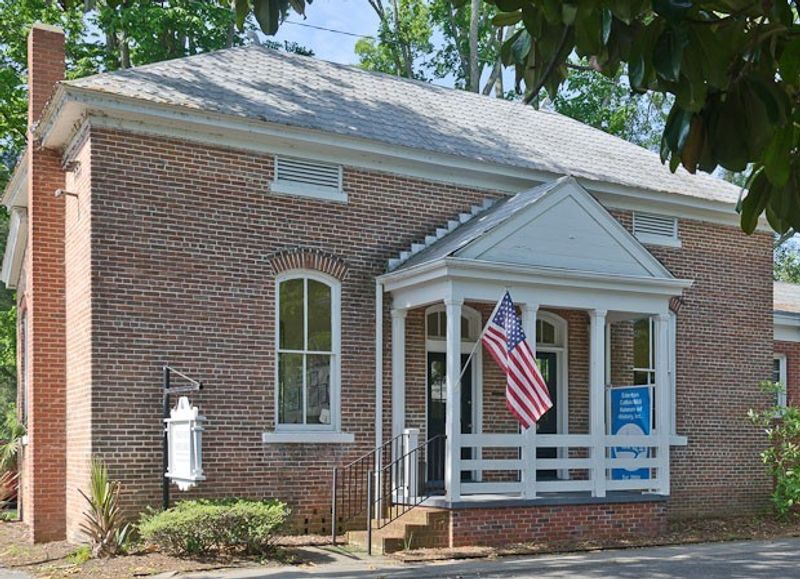
Tucked into the charming coastal town of Edenton, this cotton mill tells a story that stretches from the late 1800s all the way into today’s living rooms.
Local businessmen founded the Edenton Cotton Mill in 1898, and the main building was completed in 1900, making it one of the earliest industrial landmarks in North Carolina’s coastal plain.
You can find it at 420 Elliott St, Edenton, NC 27932, where history and community continue to share the same block.
The main mill building is a fine example of Italianate Revival architecture, which is a fancy way of saying it looks incredible and photographs beautifully.
Today that building has been converted into condominiums, giving the structure a second life that keeps it actively woven into the community. The surrounding historic district features 57 original mill houses, which creates an immersive neighborhood-scale time capsule.
The original office building now serves as the Edenton Cotton Mill Museum of History, where visitors can explore the full arc of this site’s industrial journey.
It is a thoughtful, well-curated space that puts the human story front and center. Edenton Cotton Mill is a reminder that North Carolina’s industrial heritage was not limited to the Piedmont.
The coastal plain had its own industrial heartbeat, and this museum makes sure that story is never forgotten.