
12 Stunning Natural Wonders That Prove Michigan Is The Most Beautiful State You Have Not Explored
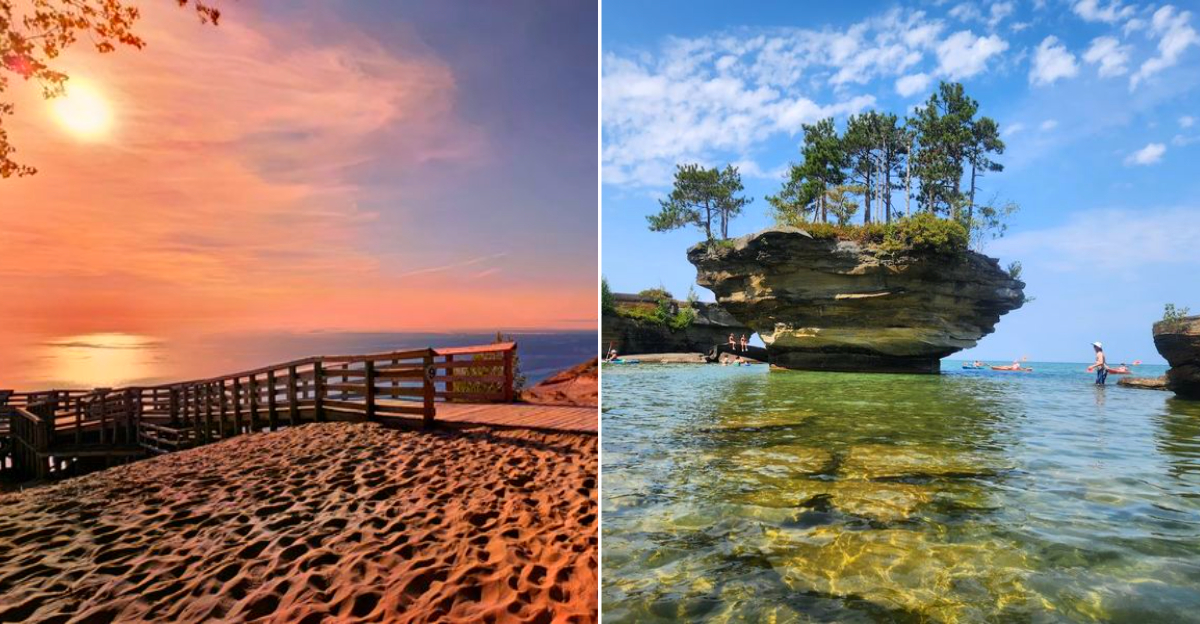
Somewhere between the highway billboard ads and the endless flat farmland that frames so much of the drive through the Midwest people forget that Michigan is essentially one giant natural wonder with a state line drawn around it.
The place holds everything from turquoise water so clear it looks imported to sand dunes that stand taller than downtown buildings. Waterfalls that freeze into columns of blue ice each winter. A spring so deep the bottom has never been found.
The state keeps collecting these places like they are going out of style tucking each one behind a different trailhead or county road so that finding them always feels like a private discovery even when the parking lot is full.
Michigan does not need to exaggerate its natural beauty because the real thing keeps exceeding whatever you thought you knew about what the Great Lakes region looks like.
1. Sleeping Bear Dunes National Lakeshore
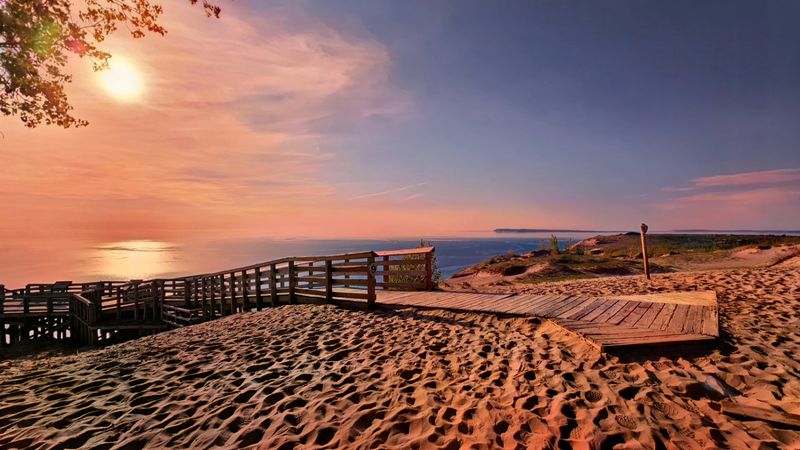
Scale is the first thing that gets you here. At Sleeping Bear Dunes National Lakeshore, near Empire and Glen Arbor, the bluffs rise up to 450 feet above Lake Michigan, and the lake below can look almost oceanic when bands of blue shift under fast-moving light.
For the classic approach, aim for the Dune Climb Parking Lot at 6748 S Dune Highway, Glen Arbor, MI 49636. The Dune Climb gives you direct access to the sand, while Pierce Stocking Scenic Drive delivers the famous overlooks without requiring you to turn the day into an endurance test.
This landscape was built by glaciers and keeps being reshaped by wind, erosion, and time. That is why even familiar slopes can seem slightly different from one visit to the next, with dune grass fluttering, sand sliding underfoot, and the lake holding steady below all that movement.
Arrive early if you want a quieter experience and cooler sand. You can walk only a short distance and still feel wonderfully removed from everything, which is the real magic of this place.
2. Pictured Rocks National Lakeshore
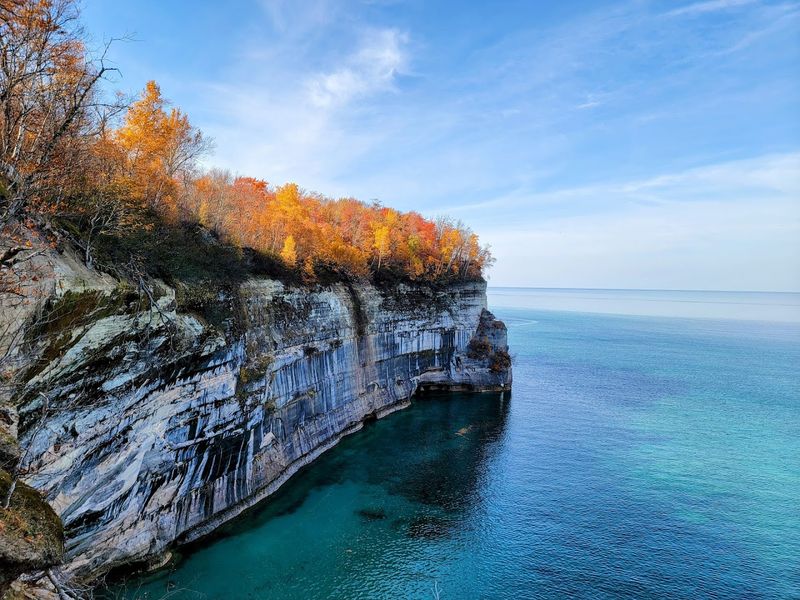
Lake Superior turns sandstone into theater along Pictured Rocks National Lakeshore, stretching northeast of Munising in Michigan’s Upper Peninsula.
The park runs along more than 40 miles of shoreline, with its most famous cliffs rising 50 to 200 feet above the water in colors that look painted rather than weathered.
For a useful starting point, head toward the Munising Falls Visitor Center at 1505 Sand Point Road, Munising, MI 49862. From there, you can build the day around boat tours, overlooks, waterfalls, or hiking routes depending on weather and energy.
The cliff colors come from mineral staining, with iron, copper, manganese, and other elements leaving streaks across the rock. Water, winter ice, and time have carved arches, caves, shelves, and coves into shapes that make the shoreline feel almost architectural.
Boat tours usually reveal the colors best, especially when afternoon light strikes the cliffs. If conditions are calm and you are properly guided, kayaking brings you closest to the walls, where the scale becomes personal and slightly humbling.
3. Tahquamenon Falls
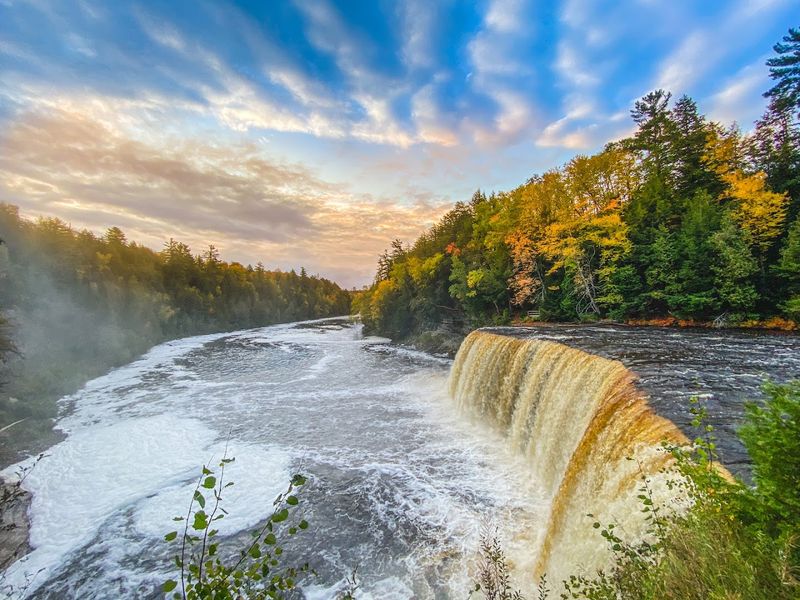
The water looks like steeped tea before you fully register the size of the falls. At Tahquamenon Falls State Park, near Paradise in the Upper Peninsula, tannins from surrounding cedar, spruce, and hemlock swamps give the river its rich amber color and make the whole scene instantly recognizable.
A practical destination for GPS is the Upper Falls area at 41382 W M-123, Paradise, MI 49768. The Upper Falls stretch more than 200 feet across and drop nearly 50 feet, making them one of the largest waterfalls east of the Mississippi River.
Four miles downstream, the Lower Falls shift the mood completely. Instead of one commanding curtain of water, you get a series of smaller cascades around an island, with bridges, trails, boardwalks, and quieter river views that invite a slower kind of wandering.
Seeing both sections is worth the time because the contrast is the point. One feels monumental and loud, while the other feels exploratory and intimate, as if the same river is showing you two different personalities in one afternoon.
4. Kitch-Iti-Kipi
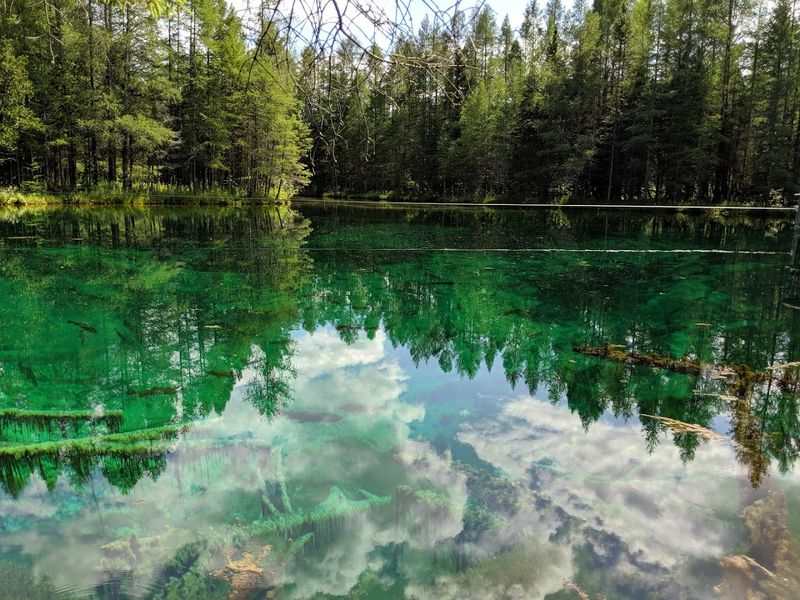
Few places in Michigan look as quietly impossible as Kitch-iti-kipi, also called the Big Spring. Inside Palms Book State Park at Sawmill Road, Manistique, MI 49854, the spring spans about 200 feet across, reaches about 40 feet deep, and releases more than 10,000 gallons of water per minute.
The clarity is what makes people go silent. Trout glide above submerged logs, sand boils pulse from the spring floor, and the water holds a bright emerald-blue cast that seems lit from below, even on days when the sky is not doing much.
Because the spring stays around 45 degrees year-round, it rarely freezes completely in winter. That constant movement gives the place a strangely living quality, like the earth is breathing upward through limestone fissures beneath the basin.
The self-operated observation raft keeps the visit simple and memorable. You turn the wheel, drift slowly across the center, stare down through the open viewing area, and realize how rare it is for water to reveal so much without asking for a long hike first.
5. Turnip Rock
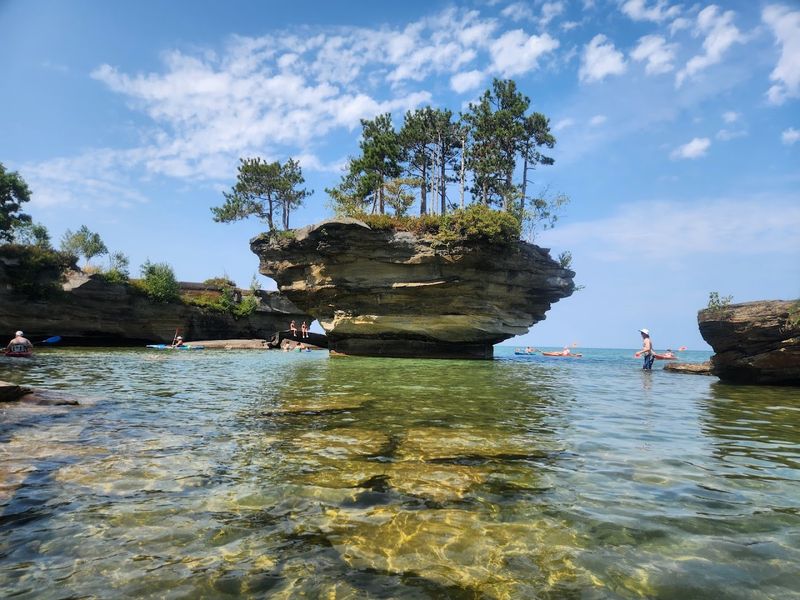
The shape sounds fictional until you paddle out and see it for yourself. Near Port Austin, Turnip Rock rises from shallow Lake Huron water with a narrow eroded base and a broader tree-topped cap, looking almost too neatly sculpted to be natural.
The usual access point is by kayak from the Port Austin area, with many paddlers starting near Port Austin Kayak at 119 E Spring Street, Port Austin, MI 48467. The route is often described as a roughly seven-mile out-and-back trip, so weather and water conditions matter.
What makes the outing special is that the rock is not the only reward. Along the shoreline, you pass smaller formations, low ledges, clear shallows, and coves that turn the trip into a full coastal experience rather than a single photo errand.
Respect is essential here because Turnip Rock and the surrounding shoreline are privately owned. Stay close to the water, do not climb the rocks, check the marine forecast, and let the effort of reaching it make the first view feel properly earned.
6. Arch Rock
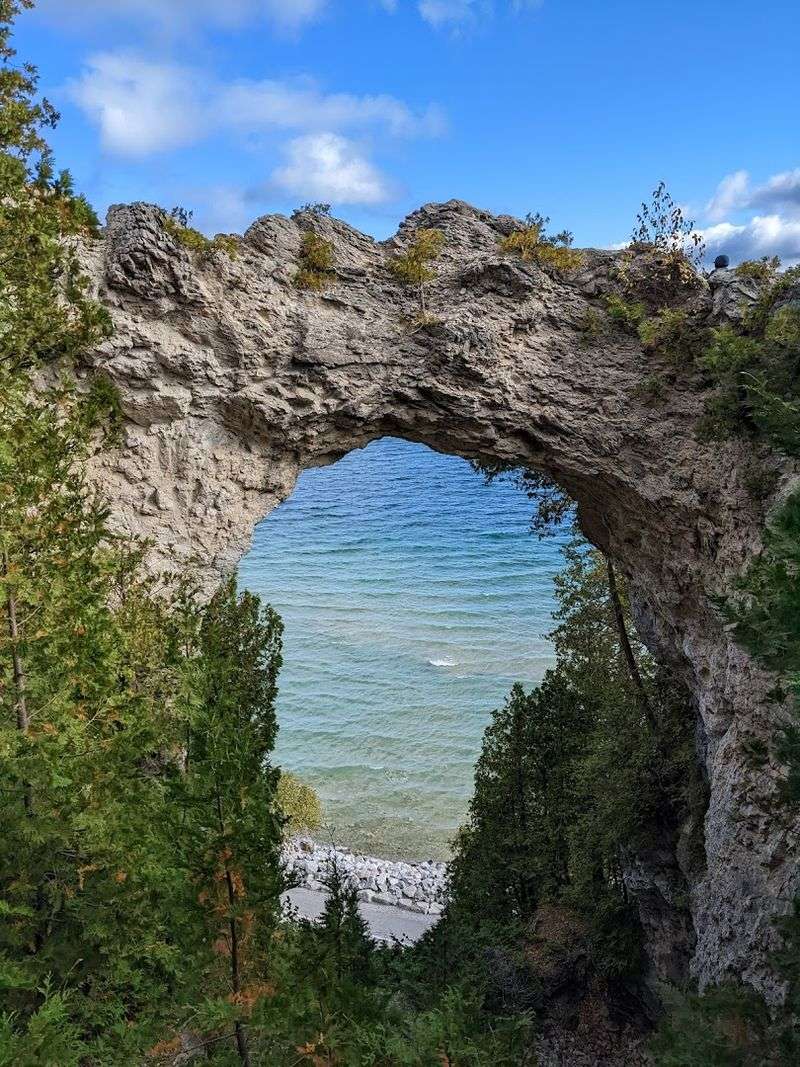
The graceful curve above Lake Huron feels both delicate and permanent, which is part of its spell. On Mackinac Island, Arch Rock rises high over the water as one of the island’s most famous limestone formations, with forest framing the opening and blue lake visible beyond it.
A good landmark is the Arch Rock viewing area inside Mackinac Island State Park, reached by foot, bike, or carriage from downtown Mackinac Island, MI 49757. Because the island is car-free, even getting there feels slower and more memorable than a standard roadside overlook.
The formation was created through natural erosion, and its clean shape makes it easy to understand why it has attracted visitors for generations. It is dramatic without being massive, a natural window that seems designed for pausing.
Go earlier or later in the day if you want a calmer overlook. When the busiest crowds thin out, the arch feels less like a checklist stop and more like a small encounter with the island’s older, quieter geology.
7. Porcupine Mountains Wilderness State Park
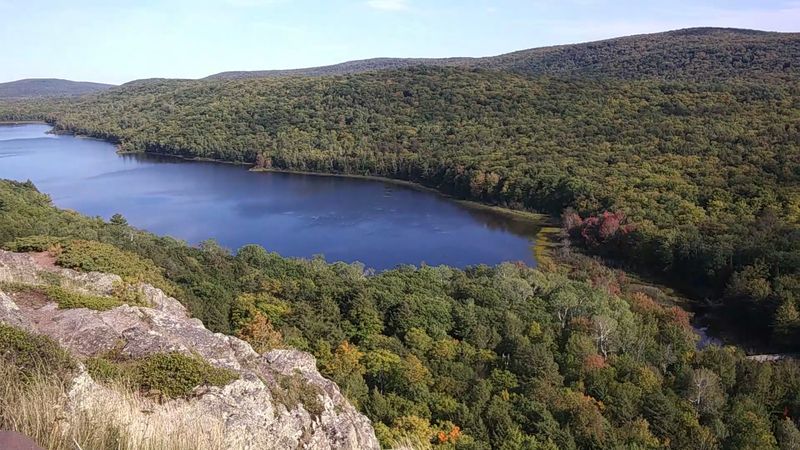
The western Upper Peninsula saves some of its deepest beauty for Porcupine Mountains Wilderness State Park, often called the Porkies.
The park spreads across roughly 60,000 acres near Ontonagon, with old-growth forest, rivers, waterfalls, ridgelines, Lake Superior shoreline, and about 90 miles of hiking trails.
For a strong first stop, use the visitor center area at 33303 Headquarters Road, Ontonagon, MI 49953. From there, most travelers aim for Lake of the Clouds, the iconic overlook where forested hills roll down toward dark water in a view that feels much larger than the Midwest is supposed to allow.
The park’s personality is not limited to one famous view. Along the Presque Isle River, waterfalls and gorge overlooks add movement and sound to the dense forest, while backcountry trails reveal how quickly the landscape can feel remote.
Bring layers and patience, because Lake Superior weather changes the mood fast. Even a short hike here can feel immersive, but the longer you stay, the more the park starts to feel like a wilderness rather than a scenic stop.
8. Torch Lake
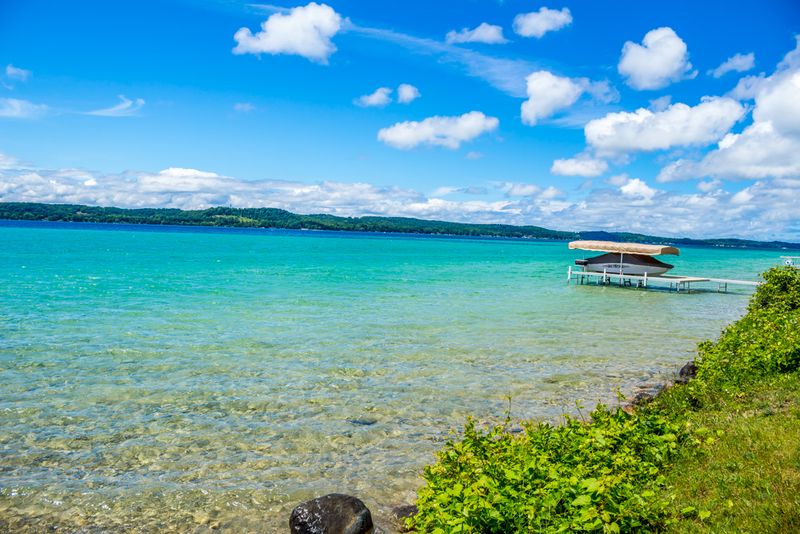
Color is the whole seduction at Torch Lake. This long inland lake in Antrim County is famous for water so clear and turquoise that first-time visitors often assume the photos have been edited, especially when sunlight hits the sandy shallows.
A useful public access point is Torch Lake Township Day Park at 12201 Pub Dock Road, Alden, MI 49612. From there, you can get a taste of the lake’s bright water, though boating gives the fullest sense of its length, sandbars, and changing blue-green tones.
The lake is not one of the Great Lakes, but it belongs in any conversation about Michigan’s most beautiful water. Its depth, clarity, and pale sandy bottom create those tropical-looking colors that make the place feel almost imported.
Simple plans work best here. Bring water shoes, check access details before you go, and give yourself enough time to watch the color change as clouds move and the sun shifts.
9. Eben Ice Caves
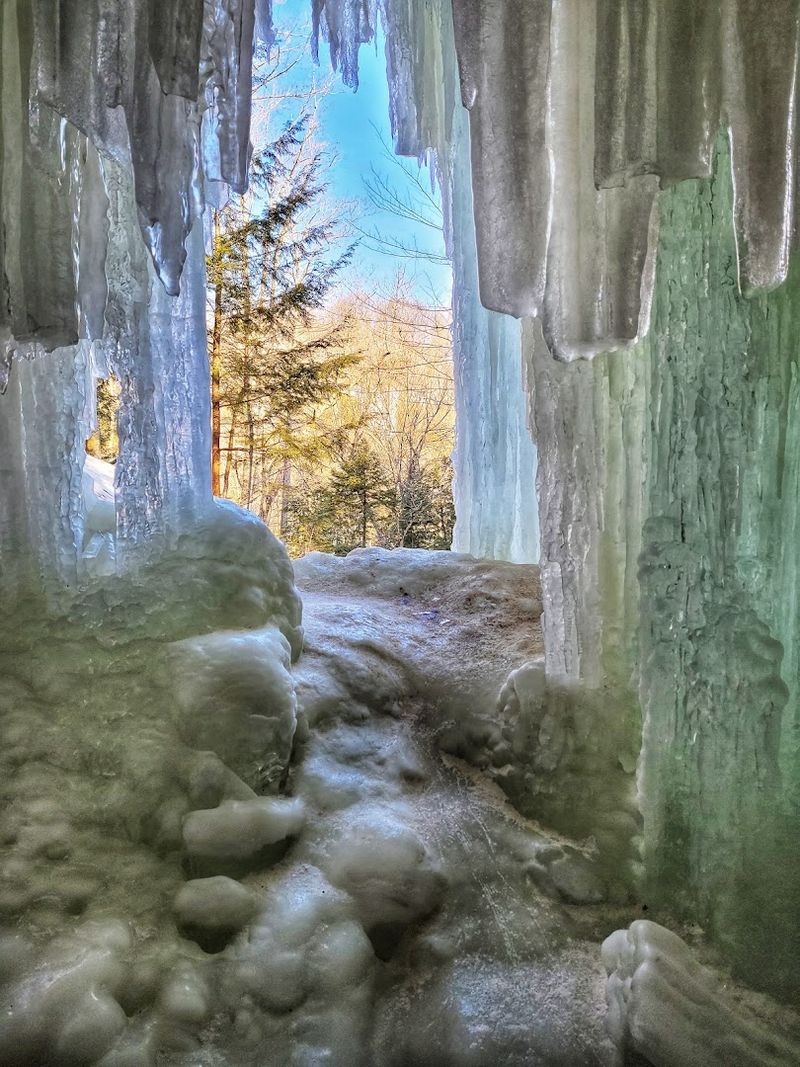
Winter does something wonderfully strange near Eben Junction. At the Eben Ice Caves, also known as the Rock River Canyon Ice Caves, water seepage freezes over sandstone walls into curtains, columns, and rounded ice shapes that can glow blue, white, or amber depending on light and conditions.
The trailhead is reached near Eben Junction in Alger County, with visitors commonly navigating toward Eben Ice Caves Trail, Eben Junction, MI 49825. The caves are located in the Rock River Wilderness area of Hiawatha National Forest, and they are seasonal rather than permanent.
The approach is part of the experience. Snow, packed ice, uneven footing, and winter woods make the outing feel more adventurous than its distance might suggest, especially once the formations begin appearing through the trees.
Traction is not optional if conditions are icy. Wear boots with grip, expect crowds on good weekends, and remember that the caves are fragile, temporary formations, which is exactly what gives them their urgency and charm.
10. Isle Royale National Park
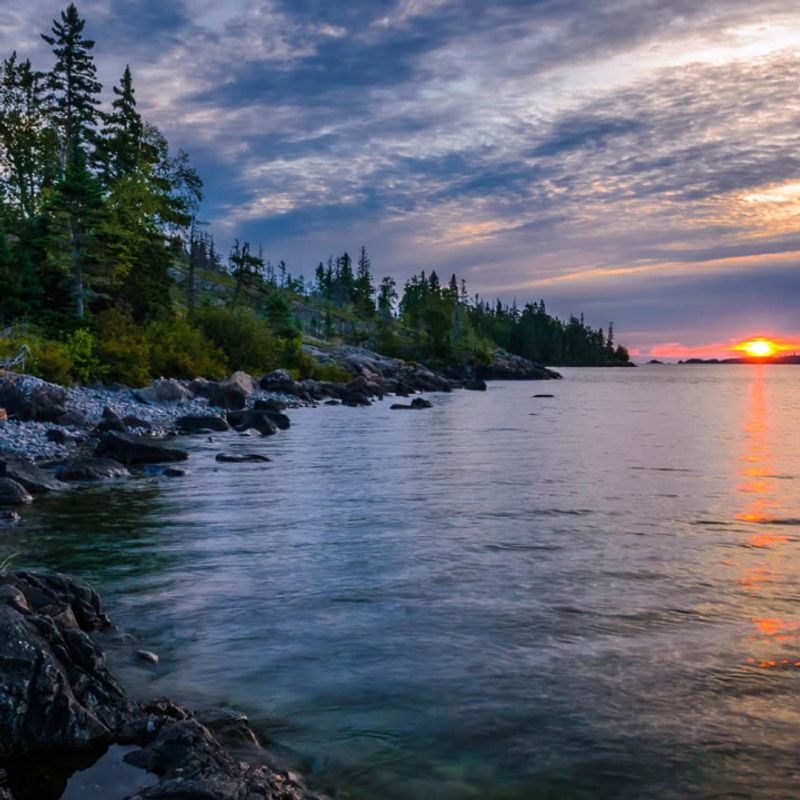
Getting to Isle Royale National Park takes commitment, and that is the first reason it feels so different. Set far out in Lake Superior, the island wilderness is accessible only by ferry, seaplane, or private watercraft, which means the trip begins with a real separation from ordinary travel.
Michigan departures commonly run from the Upper Peninsula, including the Ranger III ferry from 800 E Lakeshore Drive, Houghton, MI 49931. Once you arrive, the park opens into boreal forest, rocky shoreline, inland lakes, sheltered harbors, and long distances that cannot be rushed.
The island is known for moose and wolves, but its deeper power is atmospheric. Backpackers, paddlers, and patient hikers understand it best because the landscape reveals itself slowly through weather, water crossings, campsites, and quiet miles.
Planning matters more here than at most Michigan destinations. Lake Superior is beautiful but serious, and the remoteness that makes Isle Royale magical also means you need to respect schedules, conditions, supplies, and your own limits.
11. Brockway Mountain Drive

Drama comes easily on Brockway Mountain Drive, just west of Copper Harbor in the Keweenaw Peninsula. The paved scenic road climbs high above Lake Superior, giving wide views of forest, inland lakes, Copper Harbor, and, on clear days, Isle Royale on the far horizon.
A good starting point is Copper Harbor, MI 49918, where the drive can be accessed as a scenic route off M-26. The road is often described as the highest above-sea-level drive between the Rockies and the Alleghenies, and the view makes that claim feel less like trivia and more like a reward.
The elevation changes how the whole peninsula reads. Weather moves across the lake in visible bands, the shoreline stretches thin and distant, and the forest below seems to roll toward the water in every direction.
Sunset is the obvious time to go, but mornings can be sharper and quieter. In spring, the area is known for raptor migration, while clear nights in the Keweenaw can turn the same overlook into a serious stargazing spot.
12. Warren Dunes State Park
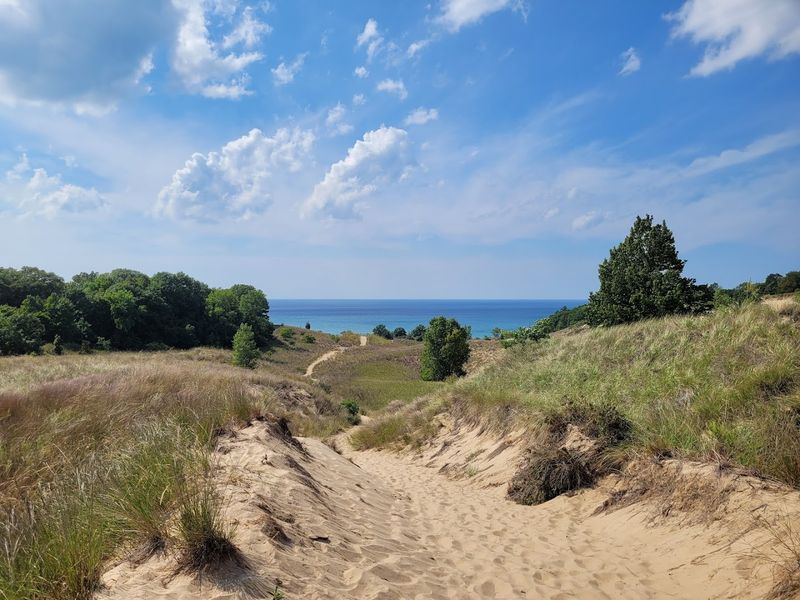
At Warren Dunes State Park, the surprise is how quickly a beach day becomes a climb. The park at 12032 Red Arrow Highway, Sawyer, MI 49125 protects a dramatic stretch of Lake Michigan shoreline, with dunes rising as much as 260 feet above the lake.
Because it sits in southwest Michigan, the park is easy to reach and often busy, but the landscape still has real force. Open sand, wooded dune trails, broad beach, and shifting lake light give the place more range than a quick stop at the parking lot suggests.
The tallest dune views make the effort worthwhile. Climbing through loose sand is harder than it looks, but the reward is a high perch over Lake Michigan and the satisfying descent back toward the water.
Go prepared for hot sand in summer and changing footing in every season. The beauty here is direct and physical: you feel it in your legs, your shoes, and the first cool step back into the lake.