
9 Texas Mineral Springs With Old Wellness Stories That Still Feel Fascinating Today
Texas is full of places where water isn’t just water. It’s history that still bubbles up from the ground.
Long before wellness became a trend, people were already showing up at mineral springs across the state, chasing relief, rest, or just a reason to slow down.
Some swore by the healing. Others just liked the ritual of it all: the soaking, the silence, the feeling that time was doing less damage for a while.
You can still find that same mood today. Weathered bathhouses, small towns built around belief, and springs that carry stories older than the roads around them. Some places are polished now, others barely touched.
But the sense of something remembered still hangs in the air. Whether you believe the old claims or not doesn’t really matter.
The draw is the same: warm water, quiet spaces, and a history that refuses to fully fade.
1. Crazy Water Bath House And Spa
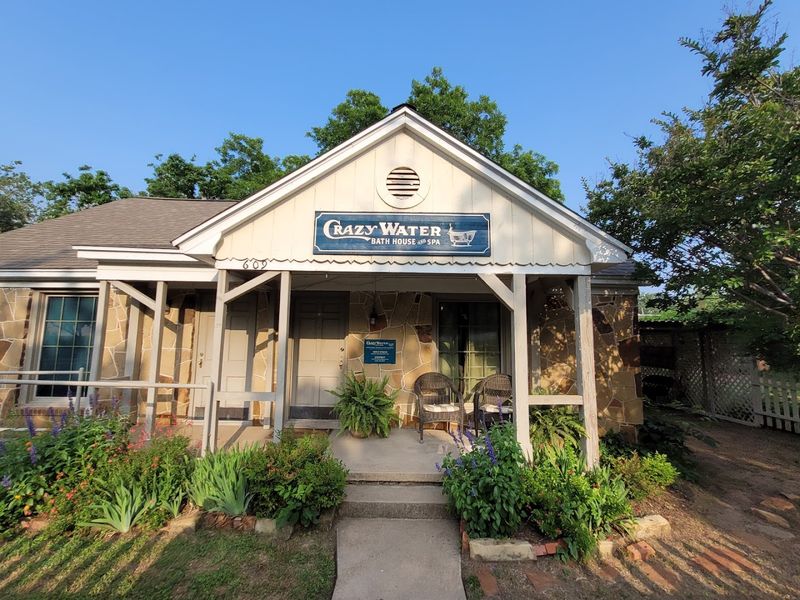
If water could talk, Mineral Wells would never stop telling stories. Nestled at 609 NW 1st Ave, Mineral Wells, TX 76067, this town became a full-blown phenomenon in the late 1800s.
People genuinely believed the local mineral water could cure everything from arthritis to what locals colorfully called “craziness,” which is exactly how the Crazy Water brand got its name.
The Crazy Water Hotel opened in 1927 as a posh resort, drawing celebrities like Clark Gable and financial titan J.P. Morgan.
The town was proudly nicknamed “Where America Drinks Its Way to Health,” and honestly, that tagline still slaps. Thousands of visitors arrived by train every week, hoping the mineral-rich water would work its magic on their bodies.
Today, the Famous Mineral Water Company still sells Crazy Water, and the Crazy Water Bath House and Spa lets guests actually soak in the legendary stuff. The mineral combination here is genuinely unique, with a natural blend believed to support digestion and ease inflammation.
Walking through Mineral Wells feels like stepping into a sepia-toned postcard that somehow stayed alive. It is part nostalgia, part curiosity, and entirely worth the drive out to Palo Pinto County.
2. Chinati Hot Springs
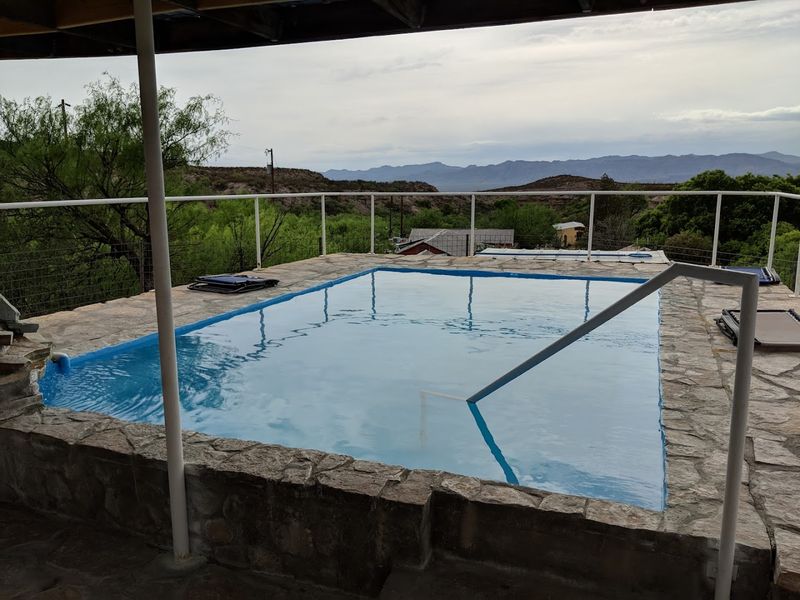
Getting to Chinati Hot Springs requires commitment, and that is honestly part of its charm. Sitting at 1 Hot Springs Rd, Presidio, TX 79845, deep in the Chihuahuan Desert, this remote retreat feels like it belongs to another era entirely.
The springs here range from a refreshing 70 degrees in the cold pools to a volcanic 110 degrees in the thermal ones, giving you options depending on how brave you are feeling.
Back in 1898, a woman named Annie Kingston purchased over 1,000 acres in this rugged landscape and built adobe bathhouses that still define the aesthetic of the property.
A formal resort operated here from the 1930s until 1990, drawing adventurous visitors who did not mind the long drive through high desert terrain.
The springs reopened as Chinati Hot Springs in 1997, reclaiming their identity as a genuine destination for the seriously curious.
The remoteness is part of what makes this place feel so rare. There are no crowds, no noise, and no distractions, just you, the desert sky, and mineral water that has been flowing through volcanic rock for longer than anyone can accurately guess.
If solitude and geological wonder sound appealing, Chinati is the kind of place that quietly rewires your sense of what relaxation actually means.
3. Ottine Mineral Springs
Accidentally striking a 106-degree artesian spring while drilling for oil sounds like a plot twist, and for Gonzales County in 1909, it absolutely was.
Located at 2033 FM 1586, Gonzales, TX 78629, Ottine Mineral Springs carries one of the most layered histories of any spa destination in Texas.
What started as an unexpected gush of mineral-rich water eventually became a place of genuine healing and historic social significance.
During the 1930s polio epidemic, the Gonzales Warm Springs Foundation established a care facility here that became nationally recognized.
It was notably the only desegregated polio treatment center in the entire country at the time, offering physical, mental, and spiritual rehabilitation. By 1947, the facility was caring for over 400 children annually, making it a true landmark in American wellness history.
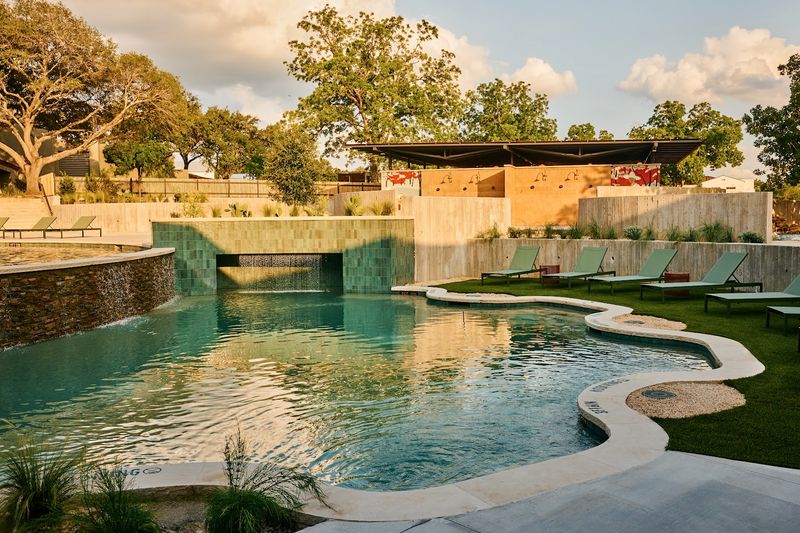
Recently remodeled and reopened, Ottine Mineral Springs now welcomes guests to soak in outdoor pools fed by the same warm Carrizo-Wilcox aquifer that surprised those wildcatters over a century ago.
The water temperature remains a soothing 106 degrees, and the setting feels peaceful and grounding. Knowing the history behind every ripple in those pools makes the experience feel richer than any ordinary spa visit could ever hope to be.
4. Hot Springs Historic District
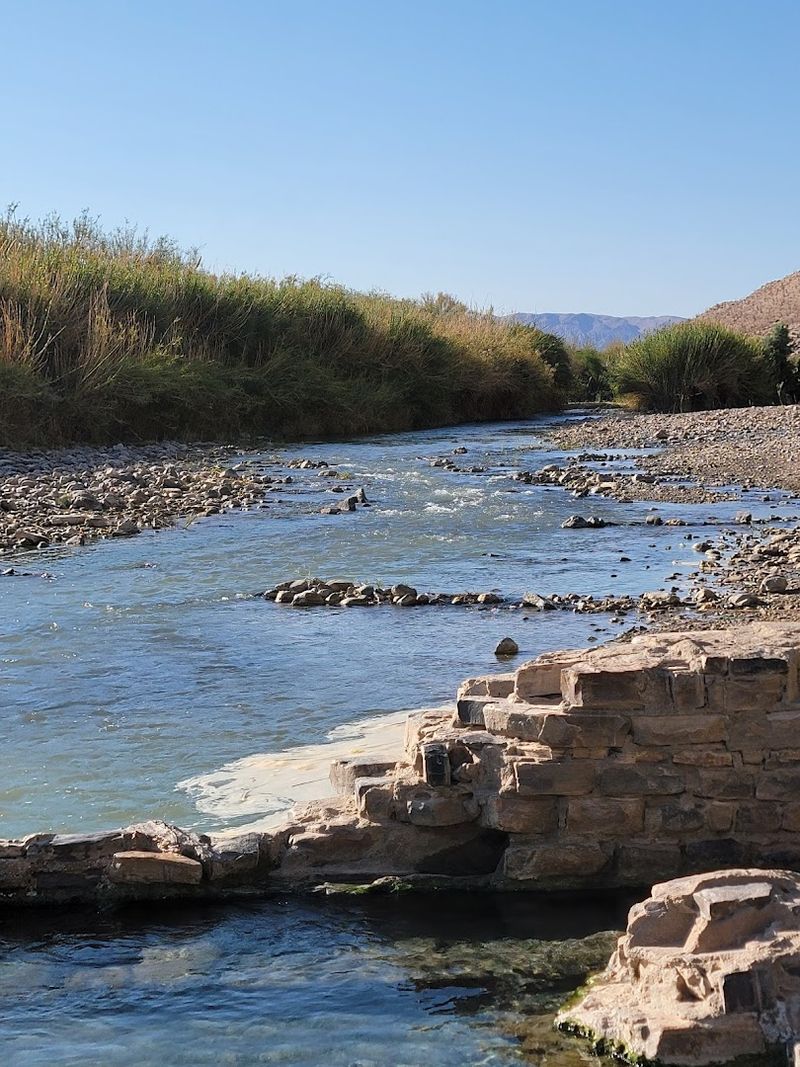
Soaking in a 105-degree hot spring while staring across the Rio Grande into Mexico is the kind of experience that makes you feel very small in the best possible way.
The Hot Springs Historic District, located along Hwy 385 in Big Bend National Park, TX 79834, sits at the remains of the J.O. Langford Bath House, a structure built over a century ago right on the riverbank.
J.O. Langford arrived here in 1909 with malaria, convinced that the mineral-rich waters could restore his health.
He built a modest resort around the springs, and word spread quickly among travelers and settlers who made the long journey through the Chihuahuan Desert.
The water emerges naturally at 105 degrees, carrying dissolved mineral salts that generations of visitors have credited with genuine therapeutic benefits.
Today, visitors to Big Bend National Park can hike a short trail to reach the ruins and slip into the open-air hot spring pools where the warm water meets the cool Rio Grande current.
The bathhouse walls still stand, worn by sun and time, framing the experience like an outdoor gallery of living history.
Few places in Texas blend landscape and legend quite so effortlessly, and the soak itself feels like a reward for the journey.
5. Camp Hot Wells
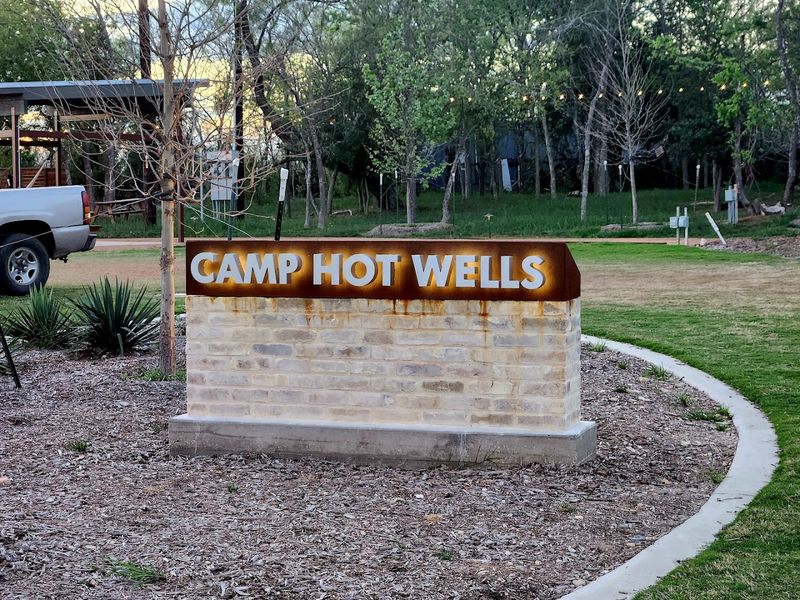
San Antonio has layers, and Camp Hot Wells is one of the more intriguing ones hiding in plain sight.
Located at 5423 Hot Wells Way, San Antonio, TX 78214, this site sits along the San Antonio River and taps into the same sulfurous mineral water that made the entire Hot Wells area famous in the late 1800s.
The water here comes from the Edwards Aquifer and emerges at a toasty 104 degrees with a distinctly sulfurous character that reminds you this is the real deal.
The area around Camp Hot Wells became a popular retreat for those seeking relief from various physical ailments, drawing visitors who believed the warm, mineral-laden water could ease joint pain and skin conditions.
The surrounding landscape along the river gives the site a lush, almost tropical feel that contrasts beautifully with the urban setting of San Antonio just minutes away.
Visiting today offers a chance to connect with a chapter of San Antonio history that most residents do not even know exists. The combination of warm mineral water, riverside scenery, and genuine historical weight makes this a spot that rewards the curious traveler.
Sometimes the most fascinating wellness destinations are not tucked away in remote mountains but hiding right inside a busy city.
6. Hot Wells Of Bexar County
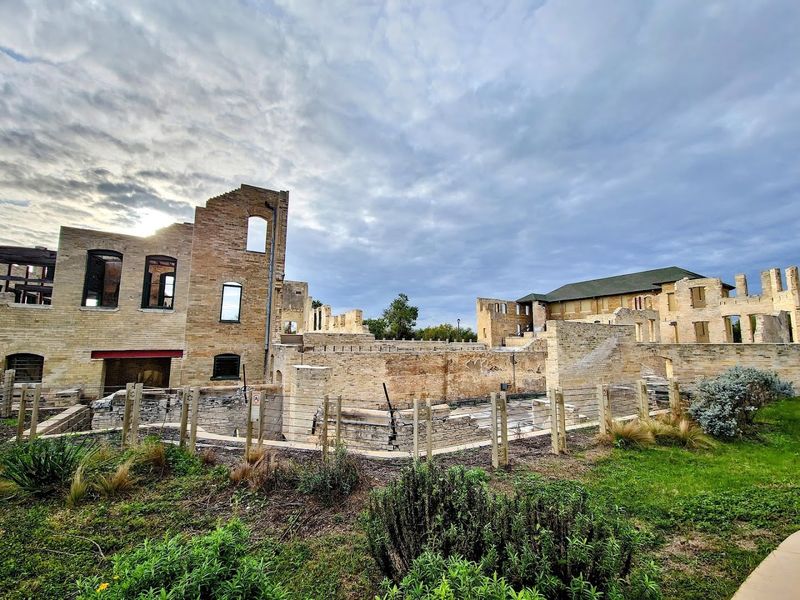
There is something genuinely cinematic about a place that burned down, sat in ruins for decades, and then came back as a public park. Hot Wells of Bexar County, located at 5503 S Presa St, San Antonio, TX 78223, has exactly that kind of dramatic biography.
Mineral water was discovered here in 1892, sparking the development of health spas along the San Antonio River that quickly attracted a remarkable crowd.
The Hot Wells Hotel and Spa, built in 1900, welcomed figures like Will Rogers, Charlie Chaplin, and Theodore Roosevelt, all of whom came for the 104-degree sulfurous pools that were believed to offer serious therapeutic benefits.
The resort operated at the intersection of glamour and wellness culture in a way that felt uniquely Texan. A significant fire in 1925 changed everything, leaving behind ruins that stood quietly for nearly a century.
Those ruins were stabilized and thoughtfully reopened as the Hot Wells of Bexar County Historical Park in 2019, giving San Antonio a genuinely unusual outdoor destination.
A space adjacent to the park now offers a foot-soaking experience in the mineral waters, letting visitors literally connect their feet to history.
Standing among those old walls while warm sulfur water bubbles nearby is a surreal and surprisingly moving experience.
7. Hancock Springs Park
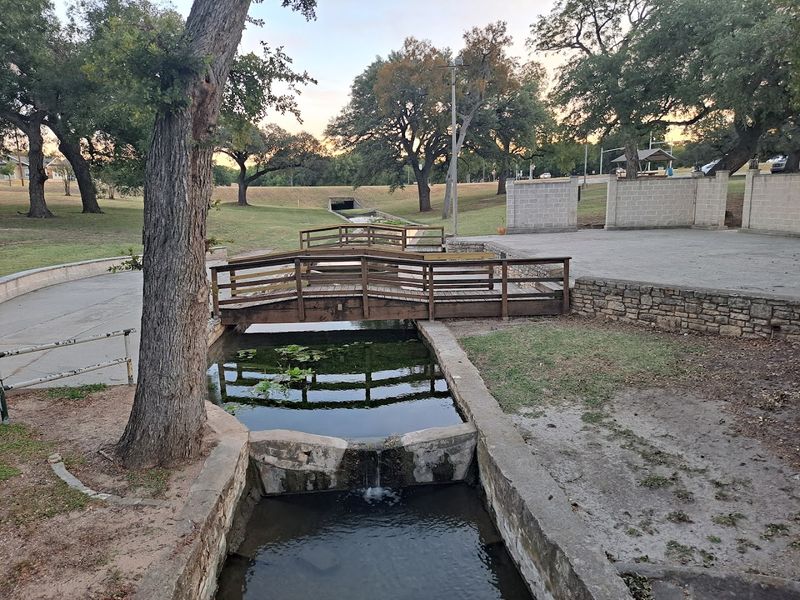
Calling Hancock Springs the oldest spring-fed pool in Texas is not just a fun fact, it is a full personality trait.
Situated at 1600 U.S. 281 South, Lampasas, TX 76550, this park has been a gathering place for wellness seekers since the 1880s, when the Park Hotel stood nearby with 200 guest rooms and a reputation that stretched across the state.
The hotel burned down in 1895, but the springs kept flowing regardless.
The water here maintains a steady 69 degrees year-round, which feels refreshing in summer and surprisingly mild in cooler months.
That consistency is part of what made Lampasas such a reliable destination for health-focused travelers who needed something they could count on.
The springs were believed to offer relief from various ailments, and the constant temperature only reinforced that sense of natural stability and therapeutic promise.
Today the city of Lampasas maintains Hancock Springs as a public park, complete with a swimming pool fed directly by the spring and a nearby golf course. It is a quietly wonderful place that blends recreation with genuine historical depth.
Floating in water that has been flowing at the same temperature for centuries has a way of making modern concerns feel remarkably temporary.
8. Campbell Park And Hanna Springs Sculpture Garden
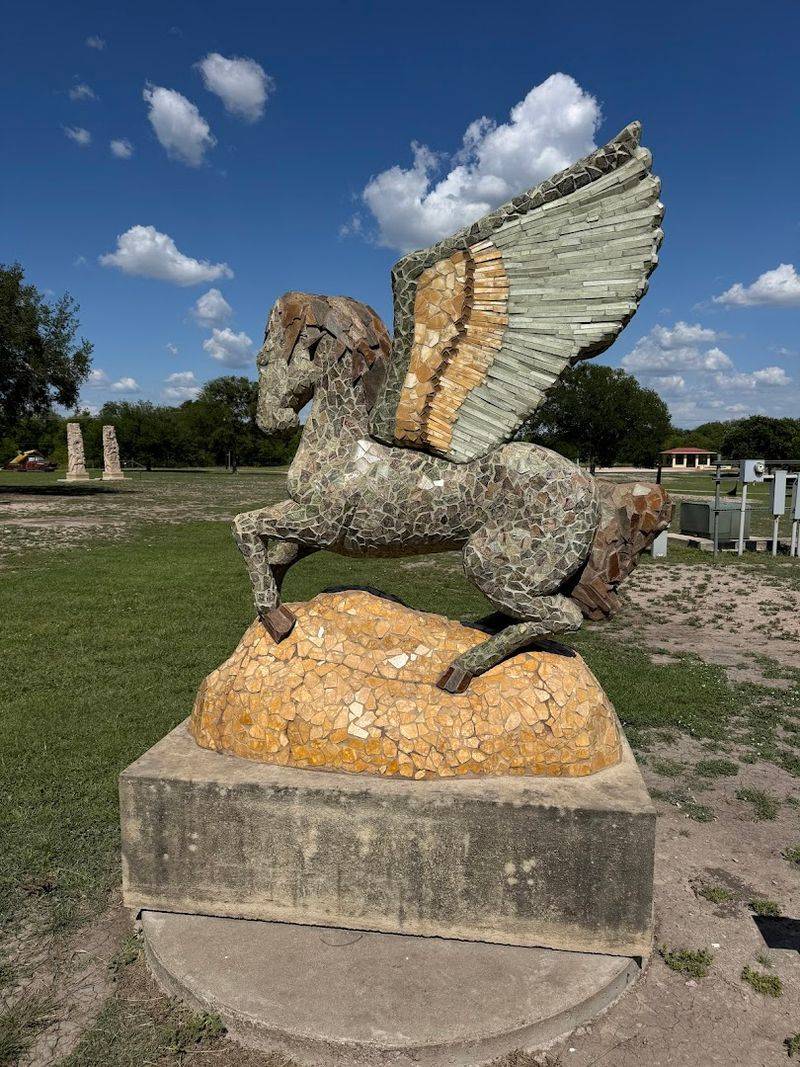
Not every wellness destination announces itself loudly, and Hanna Springs in Lampasas is proof that subtlety can be just as powerful.
Found at 501 E North Ave, Lampasas, TX 76550, this site was once one of the most celebrated sulfur spring resorts in all of Texas.
Entrepreneur John Hanna recognized the potential of these springs early on, developing the land into a destination that drew hundreds of visitors eager to experience what locals called the healing waters.
In 1888 alone, over 6,000 baths were recorded at the resort, which tells you everything about how seriously people took the experience.
The convention hall built on the property was grand enough to host the 1892 State Democratic Convention, blending political history with wellness culture in a combination that feels very Texas.
The resort eventually closed after 1900, leaving behind memories and mineral water that continued flowing quietly through the landscape.
Today the site has been reimagined as Campbell Park and the Hanna Springs Sculpture Garden, where public art installations meet the natural spring setting in a surprisingly harmonious way.
Walking through the garden, you can almost feel the layers of history beneath your feet. It is a place that honors its past while offering something fresh, and that balance is genuinely rare to find.
9. Sutherland Springs Historical Marker
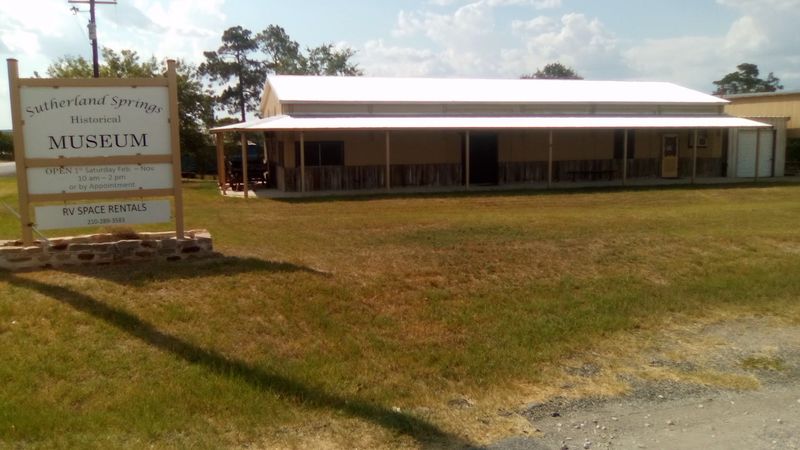
Some places earn their legend the hard way, and Sutherland Springs is one of them.
The historical marker at 411 4th St, Sutherland Springs, TX 78161, marks a spot with a wellness story that stretches back to 1849, when Dr. John Sutherland settled east of San Antonio and began incorporating the local sulfur springs into his medical practice.
He reportedly used steam and herbal treatments to address serious ailments including cholera, which was no small thing in mid-1800s Texas.
The community that grew around Sutherland’s work eventually developed into a full resort destination, complete with a hotel and a large sulfur water swimming pool.
The nickname “The Carlsbad of America” was not given lightly, and the comparison to the famous European spa town of Carlsbad suggests just how seriously the wellness world took this small Wilson County community.
Health seekers traveled significant distances to experience the waters here.
The resort’s story came to a quieter end after a flood in 1913 and the springs gradually ceasing to flow after 1920 as the water table shifted.
What remains is a historical marker and a story worth knowing, a reminder that wellness culture in Texas runs far deeper than trendy juice bars and modern spa retreats. Sometimes the most powerful healing places exist mostly in memory now.